Flooring Installation in Boise, ID: Costs, Ideas & Options
From luxury vinyl plank and hardwood to tile and carpet — we handle subfloor prep, material selection, precision installation, and every transition detail.
Quick answer
Iron Crest Remodeling Group LLC provides flooring installation in Boise, ID. Most Boise flooring installation projects cost $3,500 – $32,000. Boise flooring costs reflect both strong contractor demand in a rapidly growing market and the genuine material and labor complexity of the city's diverse housing stock.
Flooring installation in Boise has become one of the most active remodeling categories in Ada County, fueled by a wave of buyers upgrading builder-installed carpet, homeowners replacing dated tile, and a widespread shift toward the luxury vinyl plank products that have transformed what's possible at every price point in the Boise market. The city's semi-arid climate — with relative humidity regularly dipping below 20 percent — creates a set of conditions that most flooring guides written for national audiences simply don't account for, making local expertise essential for material selection and installation decisions that will stand up to Boise's unique environmental stresses. From the original fir floors hidden under decades of carpet in a North End Craftsman to the slab-on-grade foundations that define most of west Boise's 1980s and 1990s construction, Iron Crest Remodel understands the specific subfloor conditions, moisture dynamics, and material performance data that drive successful flooring projects in this market.
Upgrade your home from the ground up with professional flooring installation tailored to your lifestyle and budget.
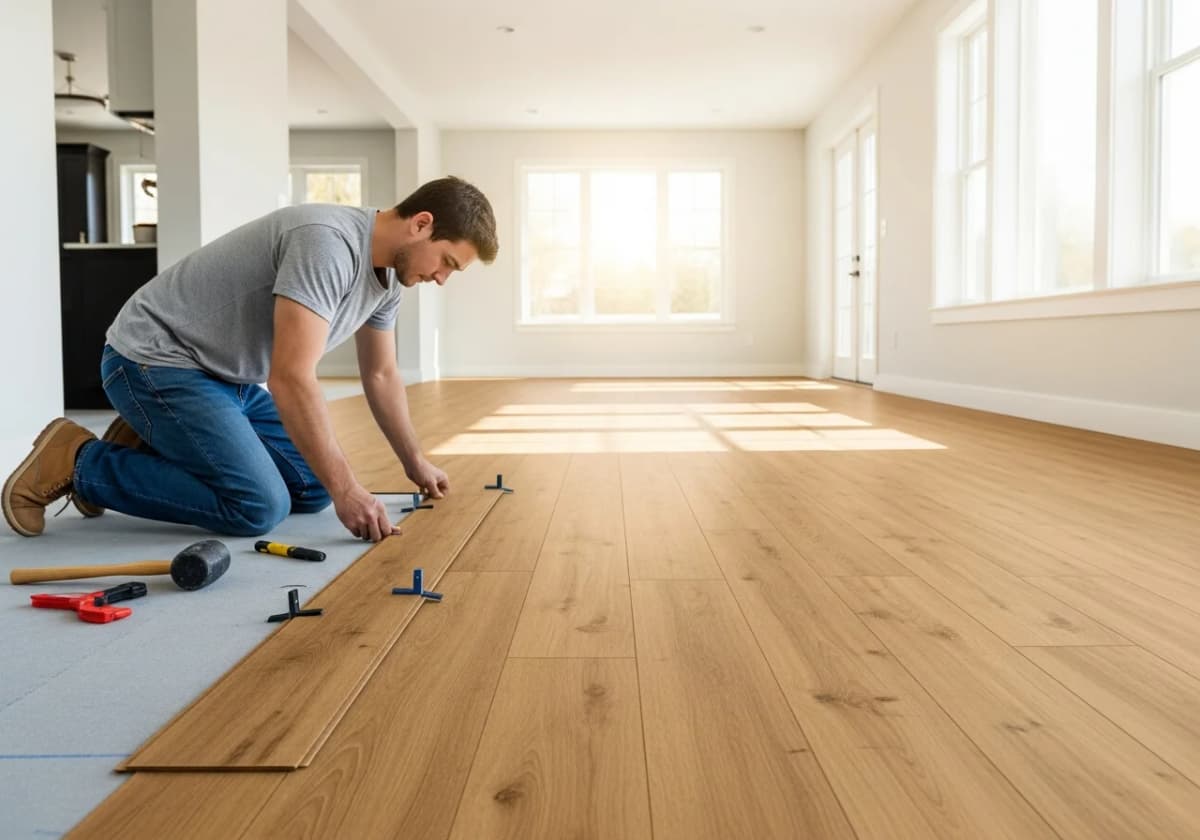
Flooring is one of the most visible and impactful elements in your home — it sets the tone for every room, absorbs daily wear from foot traffic, pets, and furniture, and needs to perform in varying moisture and temperature conditions. Professional flooring installation starts with subfloor assessment and preparation — leveling, moisture testing, and repair as needed — followed by precise material installation with tight seams, accurate cuts, and clean transitions between rooms and materials. In the Treasure Valley, luxury vinyl plank (LVP) has become the most popular flooring choice for its combination of waterproof performance, realistic wood-look appearance, durability, and affordability. Hardwood remains the premium choice for living rooms and bedrooms, tile is the standard for bathrooms and entryways, and quality laminate offers a budget-friendly alternative with improved durability. The key to a flooring project that looks great and lasts is subfloor preparation — a level, clean, dry subfloor is the foundation for every successful installation.
Boise homeowners pursue flooring installation for a variety of reasons. Here are the most common situations we see:
- ✓Homeowners replacing worn, damaged, or outdated flooring throughout the home
- ✓Families who need durable, water-resistant flooring for kitchens, bathrooms, and high-traffic areas
- ✓Homeowners who want a consistent floor surface throughout main living areas for a modern, cohesive look
- ✓Anyone building a new addition or finishing a basement who needs flooring installed on new subfloor
- ✓Homeowners preparing to sell who want to replace carpet with hard-surface flooring for maximum buyer appeal
Not every flooring installation project is the same. Here are the most common project types we complete in Boise:

Luxury Vinyl Plank (LVP) Installation
Install click-lock or glue-down luxury vinyl plank flooring throughout your home. LVP is waterproof, scratch-resistant, and available in realistic wood and stone patterns. Ideal for whole-home installations including kitchens and bathrooms.

Hardwood Flooring Installation
Install solid or engineered hardwood flooring with nail-down, glue-down, or floating installation methods. Includes species and finish selection, acclimation, subfloor prep, and transition installation.

Tile Flooring Installation
Install porcelain, ceramic, or natural stone tile on floors in bathrooms, kitchens, entryways, and laundry rooms. Includes substrate preparation, layout planning, thin-set application, grouting, and sealing.

Laminate Flooring Installation
Install floating laminate flooring with click-lock assembly. A budget-friendly option with improved durability and realistic wood-look patterns. Includes underlayment and transition strips.

Carpet Installation
Install carpet in bedrooms, bonus rooms, and basement areas. Includes pad selection, tack strip installation, seaming, and stretching for a smooth, wrinkle-free result.

Boise has over a century of residential construction, from 1900s Craftsman homes in the North End to 2020s new construction in West Boise and Southeast Boise. This diversity means remodeling contractors encounter a wide range of structural systems, plumbing types, electrical standards, and finish materials.
Pre-1940 (North End, Downtown)
Pre-war North End and downtown homes are typically the most expensive to remodel in Boise. Budget for replacing galvanized supply lines and any remaining knob-and-tube wiring, plus lath-and-plaster demolition and the historically sensitive finishes these homes call for — costs that push projects toward the high end of the range.
1940s–1960s (Bench, Central Boise)
Bench and central-Boise ranches and split-levels sit in the mid-range for remodel budgets. Plan for an electrical panel upgrade — 100-amp service is common — while the existing copper plumbing and solid hardwood floors often stay in place and hold costs down.
1970s–1990s (West Boise, South Boise)
The 1970s–1990s subdivision homes of West and South Boise are the most budget-predictable to remodel. Drywall construction and accessible copper or early-PEX plumbing keep surprises low, so spending concentrates on finishes rather than system repairs.
2000s–present (SE Boise, Harris Ranch, West Boise)
Homes from the 2000s on in SE Boise, Harris Ranch, and West Boise need the least structural investment. PEX plumbing and 200-amp service are already in place, so the budget goes almost entirely toward the higher-end finishes and fixtures buyers in these neighborhoods expect.
Common issues in Boise homes
- •Galvanized plumbing in pre-1970 homes causing low water pressure and corrosion
- •Insufficient electrical capacity (100-amp panels) for modern kitchen and bathroom demands
- •Poor or missing bathroom ventilation leading to moisture and mold issues
- •Closed-off floor plans in 1970s-1990s homes that homeowners want opened up
- •Cracked or settling foundations in some older Bench and North End homes
- •Builder-grade materials reaching end of life in 1990s-2000s subdivision homes

Material selection affects the look, durability, and cost of your flooring installation. Here are the most popular options we install in Boise:

Luxury Vinyl Plank (LVP)
$4–$10 per sq ft installedWaterproof, scratch-resistant, and available in hundreds of realistic wood and stone patterns. Modern LVP features rigid core construction, attached underlayment, and click-lock installation. The most popular flooring choice in the Treasure Valley.
Best for: Whole-home installations, kitchens, bathrooms, basements, and high-traffic areas

Engineered Hardwood
$8–$16 per sq ft installedReal wood veneer over a plywood or HDF core provides authentic hardwood appearance with better dimensional stability than solid hardwood. Available in oak, hickory, walnut, and maple with prefinished or site-finished options.
Best for: Living rooms, dining rooms, bedrooms, and hallways

Solid Hardwood
$10–$20 per sq ft installedTraditional solid wood planks (typically 3/4 inch thick) that can be sanded and refinished multiple times over their lifespan. Oak, hickory, and maple are the most popular species in the Boise market.
Best for: Main living areas in homes with controlled humidity and on-grade or above-grade subfloors

Porcelain Floor Tile
$8–$20 per sq ft installedDense, water-resistant tile available in wood-look, stone-look, and modern geometric patterns. Large-format tiles (12x24 and larger) create a seamless, contemporary look with fewer grout lines.
Best for: Bathrooms, entryways, kitchens, and laundry rooms

Laminate Flooring
$3–$7 per sq ft installedA budget-friendly floating floor with a photographic wear layer over an HDF core. Modern laminate offers improved scratch resistance, realistic patterns, and easy click-lock installation.
Best for: Budget-conscious projects, rental properties, and bedrooms

Here is how a typical flooring installation project works from first contact to final walkthrough:
In-Home Measurement and Consultation
We measure every room, assess the existing subfloor condition, check for moisture issues, discuss your lifestyle needs, and help you select the right flooring material for each area of the home. You receive a detailed estimate with material and labor costs.
Material Selection and Ordering
We help you choose flooring from our supplier partners — comparing styles, colors, wear layers, and warranties. We order material with appropriate overage for cuts and waste. Material acclimation time (especially for hardwood) is factored into the schedule.
Existing Flooring Removal
We remove existing carpet, tile, vinyl, or laminate and dispose of all material responsibly. Tack strips, staples, adhesive residue, and any damaged subfloor sections are addressed during removal.
Subfloor Preparation
This is the most important step. We level the subfloor using self-leveling compound where needed, repair any damaged sections, install moisture barriers where required, and verify the surface is clean, flat, and dry before installation begins.
Flooring Installation
Material is installed with the appropriate method — click-lock floating, nail-down, glue-down, or thin-set for tile. Each plank, board, or tile is precision-cut and placed with consistent spacing, tight seams, and proper expansion gaps at walls.
Transitions, Trim, and Completion
Transition strips are installed between different flooring types and at doorways. Baseboards are reinstalled or replaced. Quarter-round or shoe molding covers expansion gaps. A final walkthrough ensures quality and cleanliness.
Here is what to expect for project duration when planning flooring installation in Boise:
| Phase | Duration | Details |
|---|---|---|
| Consultation and Material Selection | 1–2 weeks | In-home measurement, subfloor assessment, material selection, and estimate finalization. Material ordering and delivery may add 1-2 weeks depending on availability. |
| Material Acclimation | 2–5 days | Flooring material is delivered and stored in the home to acclimate to indoor temperature and humidity. Hardwood requires the longest acclimation period; LVP and laminate require less. |
| Existing Flooring Removal | 1–3 days | Removal and disposal of existing flooring. Carpet removal is fast; tile and glued-down flooring removal takes longer. |
| Subfloor Preparation | 1–2 days | Leveling, repairs, moisture barrier installation, and surface preparation. Subfloors in good condition require minimal prep. |
| Flooring Installation | 2–5 days | Material installation throughout the home. A typical 1,500-2,000 sq ft LVP or hardwood installation takes 3-5 days. Tile floors take longer due to thin-set curing and grouting. |
| Trim, Transitions, and Cleanup | 1–2 days | Baseboard and transition strip installation, shoe molding, final cleaning, and walkthrough. |
Boise range: $3,500 – $32,000
Most Boise projects: $9,800
Boise flooring costs reflect both strong contractor demand in a rapidly growing market and the genuine material and labor complexity of the city's diverse housing stock. LVP installation — the most common project type — runs $4 to $8 per square foot installed (material plus labor) in Boise depending on product quality tier and subfloor conditions. The spread inside that band is driven by Ada County labor rates and by the subfloor preparation that is frequently required in Boise's varied housing eras; we do not publish a comparison against a national average, because we have not measured one. Hardwood flooring (engineered or solid) runs $8 to $18 per square foot installed. Tile installation in Boise ranges from $8 to $20 per square foot depending on tile size, pattern complexity, and subfloor reinforcement requirements. Carpet installation is the lowest-cost option at $3 to $6 per square foot installed, though demand for new carpet installation in Boise has declined significantly as LVP has displaced it in most applications. Those per-square-foot figures are what drive a whole-home number: across 2,000 square feet, quality LVP throughout works out to roughly $8,000 to $16,000, and engineered hardwood throughout to roughly $16,000 to $32,000 at the lower and middle of the hardwood band. Premium species, herringbone or other pattern layouts, and heavy subfloor repair push past the top of the range quoted above and are priced individually.
The final cost of flooring installation in Boise depends on several factors. Here are the biggest cost drivers:
Flooring Material Selection
high impactMaterial cost is the primary variable. Laminate and basic LVP start around $3-4/sq ft installed, while premium hardwood and large-format tile can exceed $15-20/sq ft installed.
Total Square Footage
high impactLarger projects have lower per-square-foot costs due to economies of scale in labor and material purchasing. Whole-home installations are more cost-effective per square foot than single-room projects.
Subfloor Condition and Preparation
medium impactSubfloors that need leveling, moisture barriers, plywood underlayment, or repair add $1-3 per sq ft to the project. Older homes and basements often require more subfloor work.
Existing Flooring Removal
medium impactRemoving existing carpet is relatively inexpensive ($0.50-1.00/sq ft). Removing tile, glued-down vinyl, or multiple layers of flooring is more labor-intensive and costly ($1.50-4.00/sq ft).
Room Layout Complexity
low impactRooms with many angles, closets, doorways, and transitions require more cutting time and generate more waste. Open floor plans with few interruptions install more efficiently.
Trim and Transition Work
low impactNew baseboards, quarter-round, shoe molding, and transition strips add $2-5 per linear foot. Homes that need full baseboard replacement can add $1,000-3,000 to the project.
These are the real-world projects we see most often from Boise homeowners:
Whole-Home LVP Installation — West Boise Family Home
A 2,100-square-foot west Boise home built in 1998 with original builder carpet throughout the main living areas and bedrooms, builder tile in the bathrooms, and a slab-on-grade foundation. The homeowners want to replace the carpet with LVP throughout the main living area, hallways, and bedrooms, while refreshing the bathroom tile. The slab is tested for moisture vapor transmission using a plastic sheet test; if vapor levels are acceptable, a thin foam underlayment is installed and a mid-grade LVP (7mm wear layer, 6-inch wide planks) is installed floating over the entire main level. The 2-week acclimation period typically required for hardwood is not required for LVP, allowing the project to proceed quickly. Subfloor leveling compound is applied to any areas of the slab with dips or high spots greater than 3/16 inch over 10 feet — a standard tolerance requirement for floating LVP installations.
Hardwood Refinishing and Extension — North End Craftsman
A 1927 North End home where original fir hardwood floors are hidden under 1970s-era carpet in the living room and dining room. The carpet is removed to reveal floors in fair-to-good condition — solid, sound, with some surface scratches and old finish buildup, but not damaged. The existing floors are sanded with a drum sander (three grits: 36, 60, 80) to remove all old finish and bring the boards to bare wood, then stained to a warm honey-walnut tone and finished with three coats of water-based polyurethane for durability. In the added-on back bedroom where the original floor was removed, a new solid red oak floor is installed to match the existing floor character and stained to the same color. This scenario is one of the most rewarding flooring projects in Boise — original fir floors under North End homes are a genuine treasure, and their restoration transforms the character of the rooms they are in. What it does to the home's value is a question for an appraiser, not for us.
Master Bath Tile Installation — Boise Bench Renovation
A homeowner renovating the master bathroom of a 1965 Bench home wants large-format 24x24 inch porcelain tile on the floor and 12x24 inch tile on the shower walls. The existing subfloor in this upstairs bathroom is plywood over joists — standard for the era — but it needs reinforcement before large-format tile can be installed: the TCNA Handbook calls for a maximum deflection of L/360 for ceramic and porcelain tile (L/720 applies to natural stone), and many floors of this era do not meet it. We stiffen the floor by adding blocking between joists and installing a layer of Ditra uncoupling membrane or HardieBacker cement board over the existing subfloor. Large-format tiles in particular expose any subfloor flex, which can cause grout cracking within a few years of installation if not properly addressed. The shower walls require a waterproof membrane (RedGard or Schluter Kerdi) before tile installation to protect the substrate from the steam and water exposure of daily shower use.
Carpet Removal and LVP — Full Bench Bungalow Update
A Bench homeowner purchasing a 1,450-square-foot 1955 bungalow with original carpet throughout (installed over original oak floors in the main areas, direct to slab in the added-on garage-conversion family room) wants to immediately replace all carpet before moving in. The main rooms reveal original oak floors in salvageable condition — these are evaluated for refinishing viability (enough sound wood remaining above the tongue — a 3/4-inch strip floor starts with roughly 1/4 inch there — and no significant structural damage) and are refinished in place rather than covered with LVP, saving the homeowner significant cost while preserving the original floors. The slab-on-grade family room addition receives LVP over a moisture barrier, matched as closely as possible to the oak floor color for visual continuity between the two areas. This hybrid approach — refinishing original hardwood where it exists and installing LVP on slab additions — is the most cost-effective and aesthetically sophisticated solution for Bench-era homes.
Entry, Kitchen, and Mudroom Tile — Harris Ranch New Build Upgrade
A Harris Ranch homeowner who purchased a new build with builder LVP throughout and wants to upgrade the entry foyer, kitchen, and mudroom to premium large-format porcelain tile for durability and aesthetic reasons. The slab-on-grade foundation is inspected for moisture and surface flatness — new construction slabs in Harris Ranch are typically in excellent condition but may have isolated high spots from concrete pour variations. A 24x48 inch rectified porcelain tile in a warm matte finish is installed in a staggered brick pattern throughout the three areas. The grout color is carefully coordinated with both the tile and the planned flooring transition to the adjacent LVP areas to create a cohesive floor plane throughout the main level. This upgrade is extremely popular in Harris Ranch, where the builder-supplied LVP is functional but aesthetically underwhelming in the entry areas that make first impressions on guests.
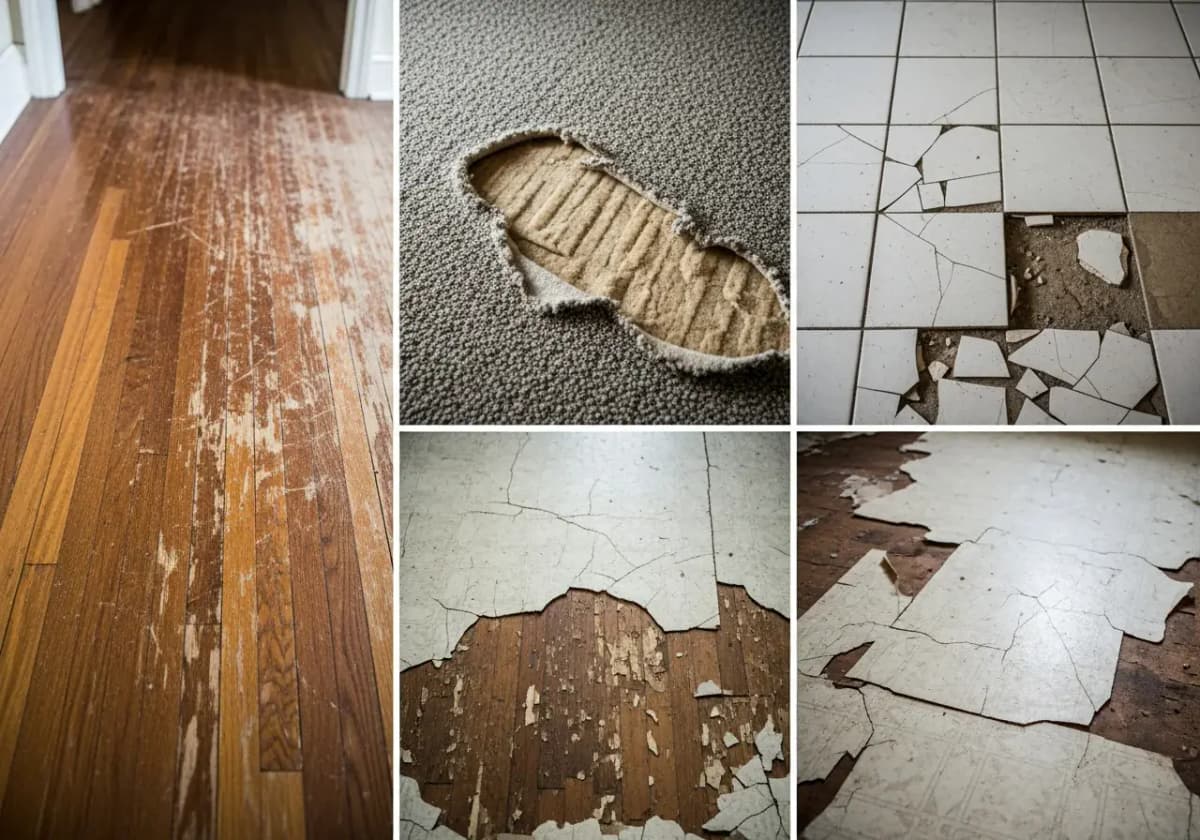
Problem: Uneven or damaged subfloor causing gaps and movement in flooring
Solution: We assess and level the subfloor using self-leveling compound, plywood underlayment, or targeted repairs to create a flat, stable surface that prevents gaps, lippage, and movement in the finished floor.
Problem: Moisture issues in basements or slab-on-grade floors
Solution: We perform moisture testing and install appropriate vapor barriers or moisture-resistant underlayment. For basements, we recommend waterproof LVP or tile over moisture-protected subfloors.
Problem: Transitions between rooms with different flooring heights or types
Solution: We use reducer strips, T-moldings, and custom transitions to create clean, safe connections between different flooring materials and heights — no tripping hazards or awkward gaps.
Problem: Carpet that traps allergens, pet odors, and stains
Solution: We remove old carpet and pad, treat any subfloor staining or odor, and install hard-surface flooring like LVP or hardwood that is easier to clean and does not harbor allergens or pet odors.
Problem: Squeaky or bouncy floors from inadequate subfloor fastening
Solution: We screw down loose subfloor panels, add blocking between joists where needed, and ensure the subfloor is tight and quiet before installing new flooring on top.

Boise has a semi-arid, four-season climate with hot, dry summers (90-105°F), cold winters (15-35°F), and low annual precipitation. This climate directly affects material choices, construction scheduling, and long-term durability of remodeling work.
Temperature Extremes (15°F to 105°F range)
Exterior materials must handle dramatic temperature swings. Windows need strong thermal performance. Interior comfort depends on insulation quality and HVAC sizing.
Low Humidity and Dry Air
Wood materials can dry, shrink, and crack. Hardwood floors may develop gaps in winter. Bathroom ventilation is still critical because bathrooms create localized high-humidity environments.
Freeze-Thaw Cycles
Exterior tile, concrete, and masonry must handle freezing and thawing without cracking. Foundation work has specific frost-depth requirements in the Boise area.
UV Exposure (300+ sunny days)
Exterior paint, siding, and stain fade faster under constant UV. South-facing and west-facing surfaces require UV-resistant materials and more frequent maintenance.
Construction Season
Foundation and exterior work is best scheduled March through November. Interior remodeling can happen year-round. Winter concrete pours require special cold-weather precautions.
North End
Boise's most historic and walkable neighborhood, with tree-lined streets, Craftsman bungalows, Tudor revivals, and mid-century homes dating from 1900 to 1960. The North End Historic District adds design review requirements for exterior work.
Common projects in North End:
- •Kitchen remodels in older homes with small, closed-off layouts
- •Bathroom updates in homes with original 1920s-1950s plumbing
- •ADU construction in larger lots for rental income
- •Home additions for growing families who love the neighborhood
Southeast Boise / Harris Ranch
A mix of established 1970s-1990s homes and newer master-planned developments like Harris Ranch. Homes range from mid-century ranch-style to modern custom builds with foothills views.
Common projects in Southeast Boise / Harris Ranch:
- •Full kitchen renovations upgrading builder-grade finishes
- •Primary suite additions in older ranch homes
- •Deck and patio construction for outdoor living
- •Whole-home remodels bringing 1970s-1980s homes to modern standards
Boise Bench
An elevated neighborhood south of downtown with a mix of post-war homes from the 1940s-1970s and newer infill construction. Known for its views and access to the Greenbelt.
Common projects in Boise Bench:
- •Bathroom remodels updating 1950s-1970s fixtures and tile
- •Kitchen updates in compact post-war floor plans
- •Basement remodels adding usable living space
- •Energy efficiency upgrades in older homes with poor insulation
West Boise
A large area with subdivisions spanning from the 1980s through the 2010s. Many homes are builder-grade with standard finishes that homeowners upgrade as the homes age.
Common projects in West Boise:
- •Kitchen and bathroom remodels replacing builder-grade finishes
- •Open-concept conversions in 1990s closed-layout homes
- •Flooring replacement throughout the home
- •Exterior painting and siding updates
Every Boise neighborhood has different housing stock, homeowner priorities, and project considerations. Here is what flooring installation looks like in each area:
North End
Boise Bench
West Boise (Meridian Border Corridor)
Southeast Boise / Harris Ranch
Permit authority: City of Boise Planning and Development Services
Online portal: pds.cityofboise.org
- ✓Residential remodeling permits are required for plumbing, electrical, structural, and mechanical changes
- ✓The North End Historic District requires design review for exterior modifications
- ✓ADUs follow Boise's Modern Zoning Code (Section 11-03-03.2B): up to 900 sq ft or 70% of the primary home's floor area, whichever is smaller, max two bedrooms; setbacks and zone dimensional standards apply, with no owner-occupancy requirement and only limited parking requirements. Idaho's 2026 ADU law (Senate Bill 1354) raises the floor to 1,000 sq ft or 75% and allows either one internal or one detached ADU per lot by February 1, 2027 — confirm with PDS
- ✓Online permit portal allows digital submission and tracking
- ✓Inspections can be scheduled online; we book them as each phase is ready
- ✓Permit review times vary with scope and workload; we build the review window into the schedule
Helpful ID resources
- City of Boise Planning and Development Services — permit applications, inspections, and code resources
- Idaho DEQ — Asbestos Program — testing and abatement requirements for pre-1980 homes
- EPA Lead Renovation, Repair and Painting (RRP) Program — required certification for work in pre-1978 homes
- ●Plank direction — running planks toward the main light source or along the longest dimension of the room creates the most visually appealing result
- ●Color and tone — lighter flooring makes rooms feel larger and more open; darker flooring adds warmth and formality but shows dust and scratches more
- ●Consistency vs. variation — using the same flooring throughout main living areas creates a seamless, spacious feel; transitioning to tile in wet areas and carpet in bedrooms is also common
- ●Wide plank vs. narrow plank — wider planks (7 inches and above) create a modern, high-end look with fewer seams; narrow planks are more traditional
- ●Texture and finish — smooth finishes show scratches more easily; wire-brushed and hand-scraped textures hide wear and add character
- ●Waterproof requirements — kitchens, bathrooms, laundry rooms, basements, and entryways benefit from waterproof flooring like LVP or tile
Here are the design trends we see most often in Boise flooring installation projects:
- →Modern farmhouse and transitional styles blending clean lines with warm textures
- →Open-concept kitchen conversions removing walls between kitchen and living areas
- →Walk-in showers replacing bathtubs in primary bathrooms
- →Matte black and brushed gold fixture finishes replacing brushed nickel
- →Large-format tile (12x24+) in bathrooms for a modern, minimal-grout look
- →Quartz countertops overtaking granite as the primary kitchen surface
- →LVP (luxury vinyl plank) replacing carpet throughout main living areas
- →Smart home integration — lighting, thermostats, and security systems
Boise's housing market has appreciated substantially over the past decade, which is part of why homeowners weigh remodeling against moving. The competitive market also means that updated, well-maintained homes sell faster and for higher prices than comparable homes with outdated finishes.
Costs and permit requirements differ by jurisdiction across the Treasure Valley. These guides cover Boise specifically.
Avoid these common pitfalls Boise homeowners encounter with flooring installation projects:
Mistake: Installing solid hardwood without adequate acclimation in Boise's dry climate
Better approach: Solid hardwood must be acclimated to the specific humidity conditions of the installation space before installation — not just placed in a closed garage or stored in the box. In Boise, this means running the HVAC system normally, allowing the floor to reach the low ambient humidity that characterizes Boise interiors (particularly in summer), and giving the boards a full 7 to 14 days — longer if the meter says so — to stabilize dimensionally before installation. Hardwood installed without proper acclimation in Boise will gap dramatically in the first summer — sometimes developing gaps wide enough to catch a heel — and may buckle in winter if the boards were too dry at installation and then absorb moisture from winter humidification. Iron Crest will not install hardwood flooring without completing the full acclimation protocol, even if a homeowner is eager to move faster.
Mistake: Selecting LVP based on price alone without considering wear layer thickness
Better approach: The most important quality differentiator in LVP is the wear layer — the clear protective coating over the decorative vinyl layer that determines scratch resistance and durability. Budget LVP products (common at big-box stores under $2.50 per square foot) typically have 6 to 8-mil wear layers that are adequate for very low-traffic applications but will show scratches and wear marks within 2 to 3 years in a normal family household — particularly one with dogs. For Boise households, the minimum recommended wear layer is 12 mil for low-traffic areas (bedrooms) and 20 mil for main living areas, hallways, and entries. The cost difference between a 6-mil and 20-mil product is approximately $1.00 to $1.50 per square foot — which translates to roughly $2,000 to $3,000 on a whole-home project — but the performance difference measured over 10 years is dramatic.
Mistake: Installing tile over a bouncy or inadequately stiff wood subfloor
Better approach: Tile is fundamentally rigid and requires a rigid substrate — any deflection in the subfloor, even deflection that seems minor and is acceptable for wood or LVP flooring, can cause grout to crack within a few years of tile installation. The TCNA Handbook calls for a maximum floor deflection of L/360 for ceramic and porcelain tile (L/720 for natural stone), which many pre-1980s Boise wood-framed floors do not meet without reinforcement. Before any tile installation in a Bench, North End, or older Boise home, Iron Crest performs a standard bounce test and, where needed, measures actual deflection to determine whether sister joists, mid-span blocking, or additional subfloor layers are required. The reinforcement cost adds to the project budget but is essential — tile installed over a soft subfloor in a Boise home is likely to fail, and the remedy is removing all the tile, fixing the subfloor, and reinstalling from scratch.
Mistake: Covering original hardwood floors in older Boise homes with LVP or carpet without investigation
Better approach: Many North End and Bench homes have original fir or oak hardwood floors hidden under carpet or vinyl that was applied during 1970s and 1980s renovations. Before any flooring installation in a Boise home built before 1970, the existing floor covering should be investigated for original hardwood underneath. The investigation is simple and non-destructive — pull up a heat register cover, check a closet corner, or remove a small area of carpet in an inconspicuous location. If original hardwood is present and in salvageable condition (enough sound wood left above the tongue to take another sanding, no widespread structural damage), refinishing it is almost always the superior choice both aesthetically and financially compared to covering it with a new surface. In the North End, original fir floors are a premium feature that buyers specifically seek and will pay for.
Mistake: Ignoring moisture testing before flooring installation in west Boise slab homes
Better approach: Slab-on-grade foundations in west Boise's 1980s and 1990s housing stock can have elevated moisture vapor transmission, particularly in areas near plumbing, in rooms adjacent to landscaping that has been over-watered over the years, or in homes where the original vapor barrier was inadequate or has deteriorated. Installing flooring over a high-moisture slab without a mitigation strategy can result in LVP seams opening and lifting, hardwood cupping and buckling, and carpet developing mold odor within months of installation. A proper moisture test before any flooring installation is a 30-minute step that costs nothing and can prevent thousands of dollars in failed flooring removal and reinstallation. Iron Crest tests every slab before flooring installation as a non-negotiable standard practice.
Most popular remodeling projects in Boise
- ✓Kitchen remodels with open-concept conversion
- ✓Primary bathroom remodels with walk-in shower
- ✓ADU construction for rental income
- ✓Whole-home remodels in 1980s-1990s homes
- ✓Home additions for primary suites
- ✓Basement finishing and remodeling
- ✓Deck and outdoor living construction
- ✓Energy efficiency upgrades (windows, insulation, HVAC)

See Your Remodel Before You Build.
Upload a few photos of your kitchen, bathroom, flooring, or exterior and get AI-generated concept visuals tailored to your space, style, and materials — free, no obligation, in about five minutes. Then request a real estimate from our Idaho registered Boise team.
Free concept preview · No credit card · Licensed Idaho contractor
Is hardwood flooring a good choice for a Boise home?
Real hardwood can work well in Boise under the right conditions, but it requires a level of climate management that many Boise homeowners aren't prepared for or aren't willing to invest in. The key challenge is Boise's low summer humidity — when indoor RH drops below 25 percent, solid hardwood boards shrink and develop gaps that can be wide enough to be unsightly or functionally problematic. Engineered hardwood handles this movement better than solid hardwood and is the better choice for most Boise applications. If you specifically want solid hardwood, the requirements for success are: a ground-floor application over a conditioned crawlspace or a proper nail-down subfloor over slab, a whole-home humidification system that maintains indoor RH between 35 and 55 percent year-round, a species with a high Janka hardness rating (white oak, hickory, or hard maple), and professional installation with a full 7 to 14 day acclimation period at Boise's ambient conditions, held until the boards actually reach the target moisture content rather than until the calendar runs out. These conditions are achievable but they add cost and ongoing effort. For homeowners who want the beauty of hardwood without the climate management requirements, premium LVP in wide-plank wood-look formats has become extremely convincing and is genuinely the more practical choice for most Boise households.
Why is LVP so popular in Boise specifically?
The LVP surge in Boise is driven by a perfect alignment of local climate factors and product technology. Boise's humidity extremes — summer dryness that causes wood floors to gap, winter heating that creates static electricity on carpet — create conditions where LVP's dimensional stability is a genuine functional advantage rather than just a marketing claim. The waterproof property of LVP is particularly valued in Boise households with dogs, where muddy paws from the city's extensive trail network are a daily reality. And the improvement in LVP aesthetics over the past five years has been dramatic — the current generation of premium LVP products (COREtec, Shaw Floorté, Pergo Extreme) features embossed-in-register textures, wide planks, and matte finishes that are genuinely difficult to distinguish from real wood in normal room lighting. Premium LVP at $6 to $8 per square foot installed provides an aesthetic and functional result that satisfies most Boise buyers without the climate management requirements of real hardwood.
What should I know about tile floors in my Boise home?
Tile performs well in Boise's conditioned interior spaces — the freeze-thaw concern that damages outdoor tile does not apply inside a heated home, and Boise's dry climate means tile grout is less susceptible to the mold and mildew problems that plague tile in humid markets. The primary considerations for Boise tile projects are: first, subfloor preparation — particularly in the pre-1980s wood-framed homes on the North End and Bench, where the floor has to be stiffened to the TCNA Handbook's L/360 limit for ceramic and porcelain tile (L/720 if you are setting natural stone) or grout cracking is likely within a few years; second, grout joint maintenance — Boise's dry climate is forgiving of grout, but a polymer-modified or epoxy grout in kitchen and bath applications will significantly extend maintenance intervals; and third, large-format tile selection for Boise — the current trend toward 24x24 and 24x48 inch large-format tiles is well-suited to the smooth, flat slabs of west Boise and Harris Ranch construction, but requires exceptional subfloor flatness (maximum 1/8 inch over 10 feet with large format) that older Bench and North End wood subfloors rarely achieve without significant prep work.
How do I know if my old Boise home has original hardwood floors under the carpet?
There are several reliable ways to check. First, look at the floor at a heat register or HVAC vent — if there's a gap around the register, you can often see the floor surface below the carpet. If it's wood, original hardwood may be present throughout. Second, find a closet or low-traffic area where the carpet meets a threshold and check the edge — often the original floor is visible at transitions. Third, look at the home's age and construction history: if it was built before 1960 in the North End, Bench, or near downtown Boise, there is a high probability of original hardwood under any carpet that was installed in the 1970s or later. Iron Crest includes a free subfloor assessment as part of all flooring project estimates — we can pull up a small corner of carpet to check without causing any damage, and hidden hardwood turns up in many Boise homes where the owners had no idea it was there.
What's the best flooring for a Boise home with dogs?
For households with large dogs in Boise — and there are many, given the city's outdoor culture and the prevalence of active breeds — the answer is unambiguously premium LVP with a 20-mil or higher wear layer. The scratch resistance of a thick-wear-layer LVP product is meaningfully better than hardwood (even with commercial-grade finish), and LVP's waterproof property means that dog accidents, muddy paws from trail runs, and water-bowl spills are cleaning events rather than floor-damage events. Rather than name a model here — LVP lines are renamed and reformulated constantly, and the spec that was current last year often is not — we spec to the number: a rigid-core product with a 20-mil or thicker wear layer from a line carried by a local Boise showroom, chosen off the current spec sheet at selection time. If pet-accident coverage matters to you, read the actual warranty document for the specific product before you buy: some manufacturers offer a separate pet warranty covering urine and stain damage, most of those exclude surface scratches from claws, and the terms differ by line. Avoid the budget-tier LVP (under 6mm, 6 to 8-mil wear layer) that is sometimes offered by big-box stores — it is not adequate for households with large active dogs and will show wear within one to two years.
What is the best flooring for a whole-home installation?
Luxury vinyl plank (LVP) is the most popular choice for whole-home installations in the Boise area. It is waterproof, scratch-resistant, comfortable underfoot, and available in realistic wood-look patterns. It can be used in every room including kitchens and bathrooms.
How long does flooring installation take?
A typical whole-home flooring installation (1,500-2,000 sq ft) takes 5-10 days including removal of existing flooring, subfloor prep, and installation. Single-room projects may take 1-3 days. Tile installations take longer due to setting and grouting time.
Is LVP or hardwood better?
LVP is more practical — it is waterproof, scratch-resistant, more affordable, and easier to maintain. Hardwood offers a warmer, more premium feel and can be refinished multiple times. Many homeowners use LVP in high-traffic and wet areas and hardwood in formal living spaces.
Do I need to remove furniture before flooring installation?
We handle furniture moving as part of the installation process. We move items out of the work area, install the flooring, and return furniture to position. Homeowners should plan to clear small items, electronics, and fragile objects from the rooms.
Can new flooring be installed over existing flooring?
In some cases, yes. LVP and laminate can often be installed over smooth, level existing floors. However, removing old flooring typically produces a better result because it allows for proper subfloor inspection, repair, and preparation.
How do you handle transitions between different flooring types?
We use manufacturer-matched transition strips — T-moldings, reducers, and thresholds — to create clean, level connections between different flooring materials. Proper transitions are both functional (no tripping hazards) and aesthetic (clean visual lines).
What flooring is best for homes with pets?
LVP with a thick wear layer (20 mil or higher) is the best flooring for homes with pets. It resists scratches, is waterproof for accidents, and is easy to clean. Avoid smooth-finish hardwood and high-gloss laminate, which scratch easily.

Talk to a real project manager
Have Questions? Call Now for a Free In-Home Consultation.
Mon–Fri 7 AM–6 PM · Idaho registered & insured · No obligation
Russ Shloma — Project Manager
Russ Shloma — Project Manager
Start your flooring installation in Boise
Get a free, no-obligation estimate for flooring installation in Boise, ID. We handle design, permits, and every detail of construction.
Get Your Free Estimate