
Bathroom Remodeling Design Ideas for Boise
Get inspired with bathroom remodeling design ideas tailored to Boise homes, from trending styles to practical layout considerations.
Quick answer
Can I keep my existing layout to save money? Yes. Keeping plumbing fixtures in their current locations avoids the cost of rerouting drain and supply lines. Many homeowners save 15-25% by refreshing finishes, tile, and fixtures without changing the floor plan.
Boise, ID · Bathroom Remodeling
Planning bathroom remodeling in Boise?
Read the full guide below — or get your project priced now. Free, no-obligation estimates from an Idaho registered local team, backed by a 1-year workmanship warranty.
- Licensed Idaho RCE-6681702
- 1-Year Workmanship Warranty
- $2M Liability Coverage
- Free, No-Obligation Estimates


Bathroom remodeling in Boise proper differs from bathroom work in Meridian, Eagle, Nampa, or Caldwell in ways that are specific, consequential, and routinely underestimated by contractors who primarily work in the Treasure Valley's newer suburban markets. **Housing stock complexity is the primary differentiator.** Meridian's bathroom remodeling market is overwhelmingly post-1990 new construction — modern plumbing, modern electrical, no environmental hazards, predictable framing, builder-grade finishes that upgrade in a straight line. Eagle is similar, with a higher proportion of custom homes but still primarily post-1980 construction on engineered lots. Boise proper has all of that, plus a substantial inventory of pre-1960 homes in the North End, Bench, Vista, and downtown-adjacent neighborhoods where every project requires environmental assessment, mechanical system evaluation, and structural inspection before a single material is ordered. The contractor who primarily remodels bathrooms in Meridian subdivisions does not have the diagnostic experience to work safely and legally in a 1952 Bench bathroom. This is not an insult to those contractors — it's a genuine skill set difference developed over years of pre-war and mid-century construction work. **Older construction changes what the permit process has to cover.** We are not going to rank building departments against one another — we have no measurement that would support it. What is true is that Boise's inspectors see far more pre-1980 construction than their counterparts in the newer suburban jurisdictions, because Boise has far more of it, and a bathroom scope that glosses over the plumbing, waterproofing, and framing realities of a 1952 bathroom draws questions here. Pulling the permit and passing the rough-in is also the only record you will have at resale that the work behind your new tile was inspected at all. **The moisture management equation is different.** Boise's semi-arid, tightly-sealed-home environment creates bathroom moisture conditions that differ from wetter climates and from Meridian or Eagle, where newer homes are built with better-specified ventilation. Older Boise homes were built with minimal ventilation investment, and decades of inadequate exhaust in bathrooms have sometimes created mold and structural moisture damage that requires remediation before new finishes are installed. Every Boise bathroom remodel we undertake includes a moisture assessment before design finalization. The remediation work — replacing damaged subfloor, treating or removing mold-affected framing, re-routing improperly terminated exhaust — is Boise-specific in its frequency and cannot be assumed away. **Design expectations reflect a sophisticated and place-specific aesthetic.** Boise homeowners — particularly in the North End and on the Bench — have a strong sense of architectural identity and expect bathroom designs that respect their homes' character. A hotel-contemporary tile pattern that reads as sophisticated in a Meridian new-build can look completely wrong in a 1945 Bench ranch. Understanding the proportional and material vocabulary of Boise's historic housing eras requires experience working in these homes, which is one of the specific things Iron Crest Remodel brings to every project in the city proper.
North End
Bathroom remodeling in the North End confronts the most interesting — and most demanding — set of conditions in Boise. These early-twentieth-century homes were built when bathrooms were an afterthought: small, single-fixture rooms tucked where the floor plan allowed, with plumbing routed through whatever walls were available, and no engineering discipline applied to ventilation, moisture management, or structural waterproofing because those concepts didn't exist in 1915 residential construction practice. The plumbing reality in North End bathrooms requires an honest pre-demolition assessment. Original galvanized steel supply lines — still in place in many North End homes — have corroded internally to a fraction of their rated flow capacity. A shower with 1-gallon-per-minute actual delivery through a corroded galvanized line will never satisfy regardless of what showerhead you install. Replacing galvanized supply lines from the main shutoff to the bathroom fixtures with copper or PEX is a $1,500–$3,500 investment that transforms shower performance and should be included in any substantive North End bathroom remodel. Similarly, cast-iron drain lines from pre-1960 construction are near or past their service life in many North End homes — camera inspection of the drain line before remodel is a $150–$250 investment that prevents discovering a cracked or root-infiltrated drain mid-project. Structural concerns in North End bathroom floors deserve specific attention. Many Craftsman-era homes have shower pans that were constructed over time — original claw-foot tub locations converted to showers in the 1950s or 1960s, with inadequate waterproofing beneath. We have opened North End bathroom floors to find significant subfloor deterioration from chronic water infiltration that was hidden under a succession of finish floors. Budget for subfloor assessment and possible replacement: a compromised 5x8 bathroom subfloor adds $800–$2,500 to the project if replacement is needed. This is not unusual — it's typical in this housing era. The aesthetic opportunity in North End bathroom remodels is as compelling as the structural challenge. These homes have a strong architectural vocabulary — wood trim profiles, tile surround wainscoting in period styles, pedestal sinks and furniture-leg vanities, clawfoot tubs — and a bathroom that honors that language looks completely at home in a way a contemporary hotel-style bathroom does not. We source period-appropriate tile patterns (subway in a traditional brick pattern, hexagonal penny tile on floors), cast-iron or fiberglass reproduction clawfoot tubs for homeowners who want the original character, and hardware in oil-rubbed bronze or brushed nickel that reads as timeless rather than trend-driven. Lighting in older North End bathrooms is frequently a single globe fixture on the vanity wall or a ceiling light — adding a proper vanity mirror with integrated sconce lighting and a separate ceiling light with a dimmer dramatically elevates both the function and feel of these small bathrooms. Finally, the North End's lot configuration — close neighbors, mature trees over foundation, street-facing entries — requires specific staging and logistics planning for bathroom remodels. We coordinate dumpster permits with the City of Boise right-of-way office for North End projects, schedule material deliveries for low-traffic hours, and take care with tree protection requirements for established street trees that Boise's Urban Forestry program actively monitors.
SE Boise / Harris Ranch
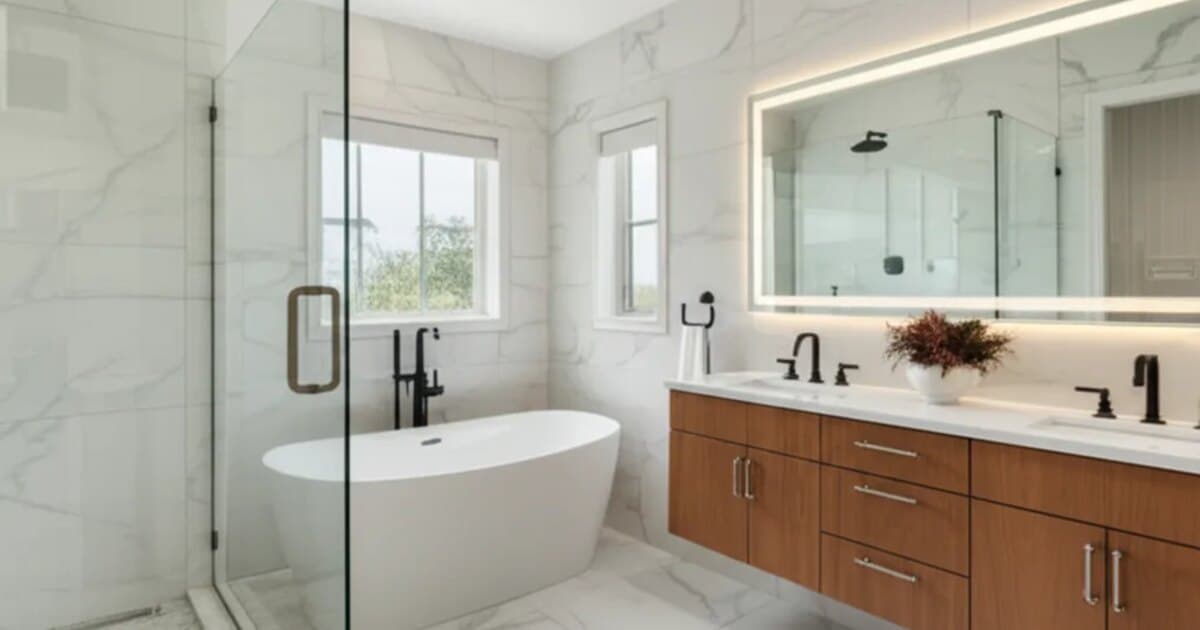
Bathroom remodeling in SE Boise and Harris Ranch occupies a uniquely favorable position compared to the rest of the city: the homes are modern enough that there are no asbestos, lead paint, or galvanized pipe concerns, the plumbing and electrical are up to current code, and the bathrooms were built with reasonable square footage allocations. The problem isn't structural — it's aesthetic and functional. Builder-grade finishes from the 2000s and early 2010s are aging out of relevance, and homeowners in this neighborhood have both the equity and the motivation to address it. The typical SE Boise / Harris Ranch primary bathroom from the 2005–2015 construction era includes a combined tub-shower with a fiberglass or cultured-marble surround, a double-sink vanity with stock cabinetry in maple or oak, a laminate or cultured-marble countertop, basic chrome fixtures, and a towel bar and toilet paper holder that may or may not have been installed straight. The toilet is a standard height round-front unit. The flooring is 12x12 ceramic tile or sheet vinyl. The lighting is a builder-grade four-globe bar across the vanity top. Nothing is wrong — but nothing is right, either. It's the residential equivalent of a hotel room that was clean and functional but completely forgettable. The transformation path for these bathrooms is well-established and highly predictable: demolish the tub-shower surround and replace with a fully tiled curbless walk-in shower with frameless glass. Replace the stock vanity with a floating or furniture-style double vanity with quartz countertop and undermount sinks. Install large-format porcelain tile on the floor. Upgrade to a freestanding soaking tub if retaining a tub is desired. Replace all chrome fixtures with matte black or brushed nickel. Add proper vanity mirror sconce lighting and a ceiling-mounted dimmer. The result is a primary bathroom that competes with new construction at a fraction of the cost of moving. One SE Boise-specific consideration: the neighborhood's proximity to the Boise River Greenbelt and the outdoor recreation culture of the area means primary bathrooms function as decompression and recovery spaces for active families. Large walk-in showers with multiple showerheads (including a rain ceiling head and a hand shower for rinsing off trail dust, bike grease, and river sand) are highly valued here. We frequently design SE Boise primary showers with two or three water delivery points on dedicated pressure-balanced valves, a bench, and at least two niches — functionality that matches the active lifestyle of the household. Harris Ranch's newer phases (2018 and beyond) have primary bathrooms that are closer to current standards, but still reflect production-builder compromises on tile quality, fixture grade, and shower design. The approach here is more surgical — upgrading specific elements (countertop and sinks, shower tile, fixtures, lighting) without full demo — and costs proportionally less. Even a $15,000–$22,000 targeted upgrade in a newer Harris Ranch primary bath delivers a disproportionate improvement in the space's daily experience and its visual appeal at listing.
Boise Bench
The Boise Bench may have the highest concentration of unrenovated, original-condition bathrooms of any neighborhood in Ada County — and that makes it simultaneously the neighborhood with the most remodeling need and the most significant opportunity for value creation. Let's be specific about what "original-condition" means on the Bench. A 1958 Bench ranch bathroom: 4x4 ceramic tile in a color palette that has not aged gracefully (pink-and-gray combinations, aqua-and-white, harvest gold), a built-in cast-iron tub with original hardware (corroded, difficult to use, unlikely to have been re-caulked in the last decade), a 24-inch vanity cabinet in a laminate finish over particleboard that has absorbed decades of bathroom moisture, a toilet from the 1990s at best (replacing the original), linoleum flooring over the original linoleum over the original subfloor, and a ventilation fan that either doesn't work, doesn't vent outside, or doesn't exist. This is not a hypothetical — it's accurate to the condition of bathrooms we encounter regularly on Van Buren, Roosevelt, Curtis, and Targee. The mandatory first step before any Bench bathroom demo: environmental testing. Pre-1980 Bench homes almost uniformly contain asbestos in floor tiles (the 9x9 and 12x12 vinyl composition tiles common in 1950s–1970s construction), joint compound, ceiling tiles, and sometimes pipe wrap. Confirmed asbestos-containing material has to be removed and disposed of under Idaho DEQ's asbestos rules, which is work for a licensed abatement contractor rather than something to disturb during demolition. Budget $1,500–$3,500 for testing and abatement in a standard Bench bathroom. EPA RRP lead-safe work practices apply to any work that disturbs painted surfaces in a pre-1978 home — bathroom vanity cabinets, walls, and window trim in older Bench homes frequently test positive. Testing first is how you avoid both the exposure and a mid-project shutdown. Post-abatement, Bench bathroom remodels follow a well-understood path. Demo to studs and subfloor, subfloor inspection and reinforcement (Bench homes have joisted wood subfloors that may show water damage concentrated around the tub, toilet, and under-vanity plumbing), supply line replacement from galvanized to copper or PEX throughout the bathroom, drain inspection and replacement if deterioration is found, cement board and waterproofing system installation in the shower area, tile, vanity, fixtures, ventilation, and finishes. The finished product in a renovated Bench bathroom delivers exceptional value. These are solidly framed homes on well-established, close-in lots. A $22,000–$32,000 bathroom remodel replaces the single most dated room in the house — which is exactly the room that sets a buyer's expectation for everything else in it. The design direction on the Bench should honor the homes' mid-century character without being slavishly retro. White subway tile in a stacked or brick pattern, hexagonal penny tile floors, a furniture-leg or pedestal vanity, matte black fixtures, and a clean frameless glass shower enclosure look intentionally modern but don't fight the house. Avoid the impulse to import a Harris Ranch contemporary aesthetic into a 1962 Bench ranch — the proportional relationships and ceiling heights are different, and what looks right in a 9-foot-ceiling 2010 home can feel top-heavy and disconnected in a 8-foot-ceiling 1960 ranch.
West Boise
West Boise's bathroom remodeling market is the highest-volume segment of Boise proper, driven by the sheer number of 1980s–2000s subdivision homes whose original bathrooms are now 20–40 years old and showing every year of their age. This is, in many ways, the most straightforward bathroom market in the city — no asbestos, no galvanized pipe, no structural surprises — but it has its own specific patterns and pitfalls. The 1985–1995 West Boise bathroom era is recognizable: fiberglass tub-shower surrounds in off-white or almond, often with a molded soap dish and shampoo ledge that has cracked at the corner seams, ceramic tile flooring in 12-inch squares with grout that has gone from white to gray to a shade best described as "unfortunately permanent," a 24-inch oak vanity base with a cultured-marble top and integral sink in a matching off-white, chrome faucets and fixtures, and a ventilation fan that runs at about 40 CFM through a 4-inch duct that terminates somewhere in the attic. The toilet has been replaced at least once. The medicine cabinet over the sink has a mirror that reflects the light in a way that makes everyone look slightly unwell. These bathrooms are functional — barely — and they communicate a specific message at listing time that significantly reduces buyer enthusiasm. The 1995–2010 West Boise bathroom is one generation better in finishes but carries many of the same fundamental problems: tub-shower combos in acrylic rather than fiberglass, ceramic tile that has started to show crack lines in the grout where the subfloor flexes slightly, and a vanity that upgraded from oak to maple but is still stock-cabinet quality with particleboard construction that has swollen at the base from years of floor-level moisture. The case for walk-in shower conversion is strongest in West Boise's master bathrooms, where there's typically sufficient floor space to install a generous (36x48 or larger) shower enclosure even after the tub footprint is reconfigured. The conversion from a tub-shower combo to a dedicated walk-in shower plus a freestanding soaking tub (positioned separately, near a window if the layout allows) is the definitive West Boise primary bath upgrade — it visually differentiates the space from the builder-original bathrooms in competing listings on the same street, and it delivers the daily experience that justifies the investment. A specific West Boise plumbing note: homes built between 1985 and 1995 in Boise used polybutylene (PB) pipe for supply lines in some developments. Polybutylene was recalled and is no longer code-compliant due to its tendency to fail at fittings over time. If your West Boise bathroom remodel reveals gray plastic pipe with gray fittings (the telltale polybutylene signature), this is the time to replace the bathroom supply lines — and to test for the presence of PB throughout the house. PB replacement cost for a single bathroom is $800–$1,500; whole-house replacement runs $3,500–$8,000. Your plumber will advise on scope once the walls are open. Storage is a chronic issue in West Boise bathrooms. The stock-cabinet vanity that came with the home maxes out at 24–36 inches wide, providing almost no storage for a household's daily bathroom needs. A recessed medicine cabinet (mortised into the wall cavity between studs), a built-in linen tower beside the vanity, or a 60-inch double vanity that replaces the original 24-inch unit dramatically changes the storage reality and the visual weight of the room. We frequently use the bathroom remodel as an opportunity to optimize storage — it's a functional priority that homeowners underestimate until they've lived with a properly designed storage solution and wonder how they managed without it.

The design phase is where your bathroom remodeling goes from a general idea to a specific plan. Good design balances aesthetics, functionality, budget, and the unique characteristics of your home and neighborhood in Boise. Here are the most popular design approaches and trends we see in Boise and the surrounding Treasure Valley.
Boise homeowners tend to favor designs that blend modern functionality with the regional character of Idaho homes. Here are the most requested design elements:
These design factors are specific to bathroom remodeling projects and affect both the look and function of the finished space:
Tile layout planning — setting a centerline, planning cut tiles, and choosing grout width and color can dramatically change the final look
Niche placement — shower niches should be positioned at a usable height and sized to fit standard bottles; recessed niches need proper waterproofing
Lighting layers — combine overhead recessed lighting with vanity sconces for even, shadow-free illumination; consider a dimmable option for nighttime use
Ventilation sizing — the exhaust fan should be rated for the room's cubic footage; undersized fans are the number one cause of bathroom moisture problems
Storage planning — recessed medicine cabinets, vanity drawer organizers, and built-in niches reduce countertop clutter and improve daily function
Color and finish coordination — select faucet, showerhead, towel bar, and hardware finishes early and keep them consistent throughout the room
The materials and finishes you choose bring your design to life. Here are the options most commonly selected for bathroom remodeling projects in Boise:
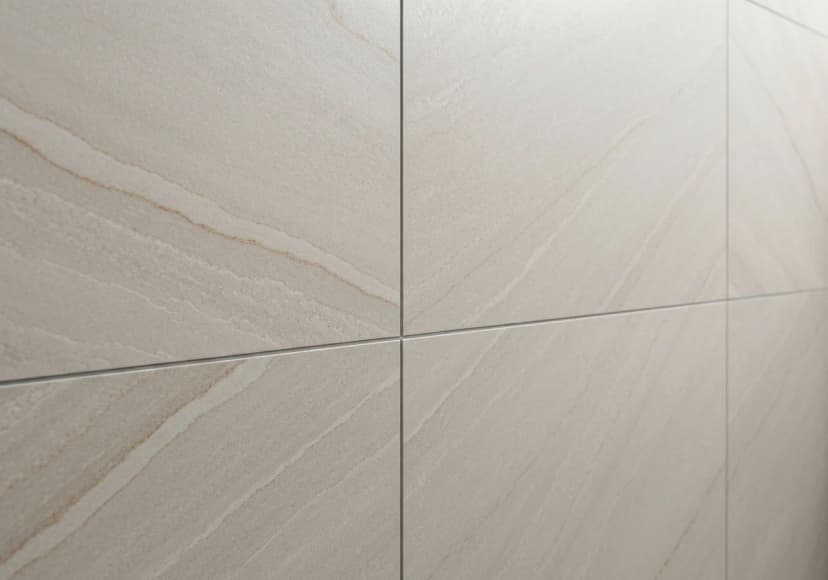
Porcelain Tile
$8–$25 per sq ft installedShower walls, floors, accent features, and niches

Ceramic Tile
$5–$15 per sq ft installedBudget-conscious floor and wall applications
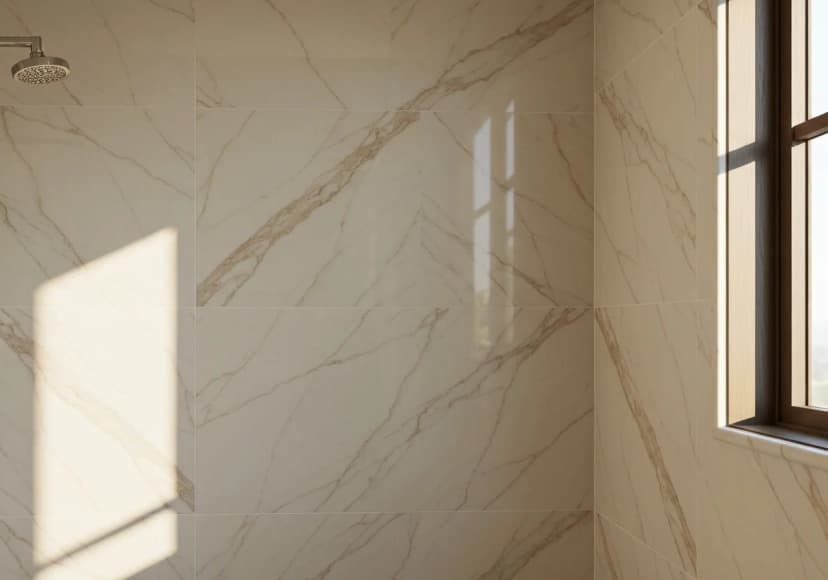
Natural Stone (Marble, Travertine, Slate)
$15–$50+ per sq ft installedFeature walls, shower surrounds, vanity tops, and floor accents
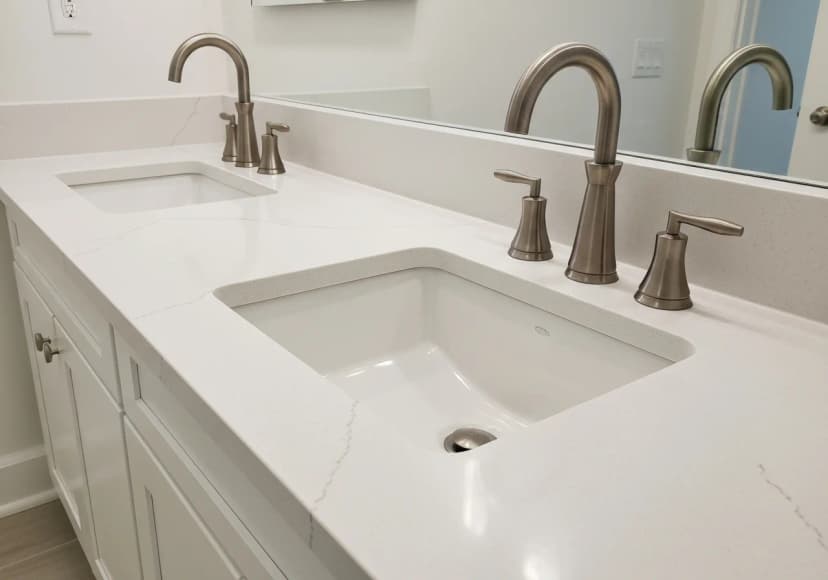
Quartz Vanity Countertop
$50–$120 per sq ft fabricated and installedVanity countertops, shelving surfaces
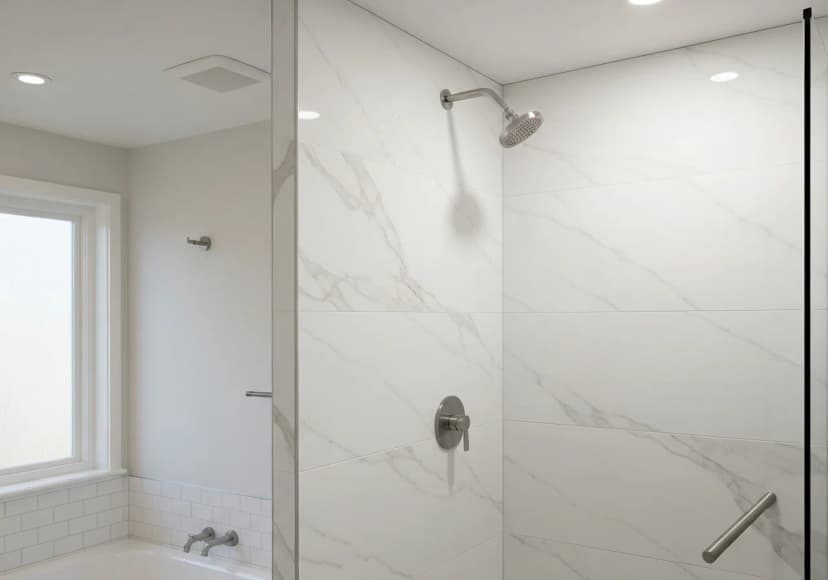
Acrylic or Solid Surface Shower Panels
$3,000–$7,000 per shower installedLow-maintenance showers, accessible bathrooms, budget-friendly updates
Learning from others' mistakes saves time and money. Here are the most common bathroom remodeling design pitfalls we see in Boise:
Outdated layout with wasted space and poor flow
We redesign the layout to maximize usable floor space, improve traffic flow, and create logical zones for the shower, vanity, and toilet areas.
Failing tile and grout with water damage behind walls
We demolish to studs, inspect and repair any water-damaged framing or subfloor, install proper waterproofing, and rebuild with modern materials.
Inadequate ventilation causing mold and moisture issues
We install a properly sized exhaust fan ducted to the exterior, with a timer or humidity-sensing switch, to control moisture and prevent mold growth.
Small or dark bathroom that feels cramped
Strategic lighting placement, lighter tile and paint colors, glass shower enclosures instead of curtains, and large-format tile with minimal grout lines all help a small bathroom feel larger.
Accessibility challenges for aging family members
We design barrier-free shower entries, install grab bars with proper blocking, add bench seating, use anti-slip flooring, and ensure doorways accommodate mobility aids.
For bathroom remodeling projects in Boise, you have two main approaches to the design process: hiring a separate interior designer then a contractor, or working with a design-build firm that handles both under one roof.
Design-build (our approach)
- ✓ Single point of contact
- ✓ Design informed by real construction costs
- ✓ Faster project delivery
- ✓ Budget aligned from day one
Separate designer + contractor
- ● More specialized design expertise
- ● Independent design perspective
- ● Requires coordination between parties
- ● Can result in budget surprises
Local factors — Boise's housing stock and typical construction eras, the climate conditions that drive material and scheduling choices, and permitting through City of Boise Planning and Development Services — are covered in full on our Boise page for this service, alongside 5 common project types.
Bathroom Remodeling in Boise: housing stock, climate & permits →Can I keep my existing layout to save money?
Yes. Keeping plumbing fixtures in their current locations avoids the cost of rerouting drain and supply lines. Many homeowners save 15-25% by refreshing finishes, tile, and fixtures without changing the floor plan.
Does the North End have special remodeling rules?
Yes. The North End Historic District has additional design review requirements for exterior modifications. Interior work is not affected, but changes to the exterior appearance — siding, windows, roofing, and additions — may require Historic Preservation Commission review.
Planning bathroom remodeling in Boise?
Get expert guidance and a free estimate for your bathroom remodeling project in Boise, ID.
Get Your Free Estimate