

Bathroom Remodeling in Eagle, ID: Costs, Ideas & Options
From outdated layouts to modern, efficient spaces — we handle design, demolition, plumbing, tile, fixtures, and every detail in between.
Quick answer
Iron Crest Remodeling Group LLC provides bathroom remodeling in Eagle, ID. Most Eagle bathroom remodeling projects cost $30,000 – $120,000+. Eagle bathroom remodels run substantially higher than the rest of the valley — our published Boise range runs $12,000–$95,000 and Meridian $18,000–$85,000 — for layered reasons.
Eagle's luxury residential market has elevated bathroom remodeling to a category of its own in the Treasure Valley — one where spa-caliber finishes, radiant-heated floors, freestanding soaking tubs, and curbless walk-in showers with body spray systems are the baseline expectation, not the upgrade. Homeowners in Legacy, Banbury, and the Historic Core are reimagining their master bathrooms as private retreats that rival boutique hotel suites, and their secondary baths as polished expressions of the same design sensibility that runs throughout their homes. Iron Crest Remodel delivers the craftsmanship, material expertise, and design integration that Eagle's discerning homeowners expect from a bathroom remodel.
Transform your bathroom with a remodeling plan built around function, comfort, and long-term value.
A bathroom remodel can range from a simple fixture and finish update to a complete gut renovation involving new plumbing lines, electrical circuits, waterproofing, tile work, and custom vanity installation. The scope depends on what you want to change — layout, fixtures, storage, accessibility, or all of the above. In the Treasure Valley, bathrooms built before 2000 often have galvanized plumbing, inadequate ventilation, and small footprints that no longer match how families use the space. A well-planned bathroom remodel addresses all of these issues while upgrading to modern materials, efficient fixtures, and a layout that works for daily life. Whether you are converting a tub to a walk-in shower, expanding a cramped primary bath, or fully renovating a hall bathroom, the key is planning every element — plumbing rough-in, waterproofing, tile layout, vanity selection, lighting, ventilation, and finish hardware — before demolition begins.
Eagle homeowners pursue bathroom remodeling for a variety of reasons. Here are the most common situations we see:
- ✓Homeowners with outdated bathrooms built in the 1980s or 1990s that need a full refresh
- ✓Families who need better storage, double vanities, or improved morning-routine flow
- ✓Aging-in-place homeowners who need accessible walk-in showers, grab bars, and barrier-free entries
- ✓Homeowners preparing to sell who want to maximize ROI with an updated primary or guest bathroom
- ✓Anyone dealing with water damage, mold, or failing tile and grout who needs a complete rebuild
Not every bathroom remodeling project is the same. Here are the most common project types we complete in Eagle:

Primary Bathroom Remodel
Full renovation of the main bathroom including layout changes, double vanity installation, walk-in shower or freestanding tub, new tile, lighting, and ventilation upgrades. This is the most common high-value bathroom project.

Guest or Hall Bathroom Remodel
Update a secondary bathroom with new fixtures, tile, vanity, and finishes. These projects focus on function and visual refresh without major layout changes.

Tub-to-Shower Conversion
Remove an existing bathtub and replace it with a walk-in shower, including new drain placement, waterproofing, tile or panel walls, glass enclosure, and updated fixtures.

Accessible Bathroom Remodel
Design and build a barrier-free bathroom with zero-threshold shower entry, grab bars, bench seating, anti-slip flooring, and wider doorways for wheelchair or mobility aid access.

Powder Room or Half-Bath Remodel
Refresh a small half-bath with a new vanity, faucet, lighting, mirror, paint, and accent tile or wallcovering. A high-impact upgrade for a modest budget.

Eagle's housing stock is primarily post-1990 construction with a higher proportion of custom-built homes than other Treasure Valley cities. Larger lot sizes, custom floor plans, and premium original finishes are common.
1990s (Banbury, older neighborhoods)
Even Eagle's oldest neighborhoods run toward the high end of the range. These were custom and semi-custom homes to begin with, so budgets reflect replacing aging natural stone, hardwood, and custom cabinetry with materials that match the quality owners expect here.
2000s–2010s (Legacy, foothills development)
These large custom homes sit at the top of the cost range. Square footage is substantial and the original finishes are premium, so even a design-focused refresh of select rooms carries a high materials budget — though sound systems mean little goes to structural work.
2015–present (new subdivisions)
Costs here split by home type: production homes need the least investment and concentrate spending on finish upgrades, while custom homes built to owner specifications carry budgets as high as the owner's chosen materials demand.
Common issues in Eagle homes
- •Premium but dated finishes from the Tuscan-style era (2000s-2010s) that homeowners want modernized
- •Large kitchens with good layouts but outdated cabinets, countertops, and backsplash
- •Custom homes with unusual layouts that require thoughtful remodel design
- •Large primary bathrooms with garden tubs that homeowners want converted to walk-in showers
- •HOA design guidelines that constrain exterior material and color choices

Material selection affects the look, durability, and cost of your bathroom remodeling. Here are the most popular options we install in Eagle:

Porcelain Tile
$8–$25 per sq ft installedThe most popular choice for bathroom floors and shower walls. Porcelain is dense, water-resistant, available in hundreds of styles including wood-look and stone-look patterns, and extremely durable in wet environments. Large-format porcelain tiles (12x24 and larger) create a modern, seamless look with fewer grout lines.
Best for: Shower walls, floors, accent features, and niches

Ceramic Tile
$5–$15 per sq ft installedA versatile and budget-friendly tile option for bathroom floors and backsplash areas. Ceramic is slightly softer than porcelain and available in a wide range of sizes, colors, and patterns. It works well for walls and dry-area floors.
Best for: Budget-conscious floor and wall applications

Natural Stone (Marble, Travertine, Slate)
$15–$50+ per sq ft installedNatural stone delivers a premium, one-of-a-kind look. Marble is the classic choice for luxury bathrooms, travertine offers warmth and texture, and slate provides a rugged, natural feel. All natural stone requires sealing and ongoing maintenance.
Best for: Feature walls, shower surrounds, vanity tops, and floor accents

Quartz Vanity Countertop
$50–$120 per sq ft fabricated and installedEngineered quartz is the top choice for bathroom vanity countertops. It is non-porous, stain-resistant, available in a wide range of colors and patterns, and does not require sealing. Quartz resists water spots and soap buildup better than natural stone.
Best for: Vanity countertops, shelving surfaces

Acrylic or Solid Surface Shower Panels
$3,000–$7,000 per shower installedFor homeowners who want a grout-free, low-maintenance shower, solid surface panels provide a smooth, seamless wall system. Available in stone-look patterns, these panels install faster than tile and require minimal upkeep.
Best for: Low-maintenance showers, accessible bathrooms, budget-friendly updates

Here is how a typical bathroom remodeling project works from first contact to final walkthrough:
Discovery and Design Consultation
We visit your home, measure the existing bathroom, discuss what is and is not working, review your goals and budget range, and photograph the space. You will receive a preliminary scope outline within a few days that includes layout options, material direction, and a ballpark estimate range.
Design Development and Material Selection
We create a detailed design plan including tile layouts, vanity specifications, fixture selections, lighting placement, and color palette. You select materials from our supplier partners or bring your own. We finalize the scope of work, confirm lead times, and prepare a fixed-price contract.
Permitting and Pre-Construction Planning
If your project involves plumbing relocation, electrical changes, or structural modifications, we pull the required permits through your local jurisdiction. We also coordinate scheduling with our tile installer, plumber, electrician, and glass supplier so every trade is lined up before demolition day.
Demolition and Rough-In
We protect adjacent rooms with dust barriers and floor coverings, then carefully demolish the existing bathroom down to studs and subfloor as needed. Plumbing and electrical rough-in happens next — this is when drain locations, water supply lines, recessed lighting, exhaust fan ducting, and any structural framing changes are completed.
Waterproofing and Substrate Preparation
Every shower and wet area receives a proper waterproofing membrane system — either sheet membrane, liquid-applied membrane, or a foam panel system like Kerdi or GoBoard. We verify proper slope to drain, inspect the substrate for flatness and stability, and prepare all surfaces for tile.
Tile, Vanity, and Fixture Installation
Tile installation begins with floor tile, then shower walls and niches, then any accent features. The vanity is set and plumbed, the mirror and lighting are installed, and all fixtures — faucets, showerhead, toilet, towel bars, and hardware — are connected and tested.
Final Inspection, Punch List, and Walkthrough
We complete a detailed punch list inspection, verify all plumbing and electrical connections, test every fixture, and confirm caulk lines, grout joints, and finish details are clean. A final walkthrough with you ensures everything meets expectations before we consider the project complete.
Here is what to expect for project duration when planning bathroom remodeling in Eagle:
| Phase | Duration | Details |
|---|---|---|
| Design and Planning | 2–4 weeks | Initial consultation, measurements, design development, material selections, and contract finalization. Material lead times (tile, vanity, glass) often extend this phase to 4-6 weeks if custom items are involved. |
| Permitting | 1–3 weeks | Permit application, review, and approval through Ada County or Canyon County. Straightforward projects may clear in a few days; projects with structural changes take longer. |
| Demolition and Rough-In | 3–5 days | Remove existing fixtures, tile, drywall, and subfloor as needed. Complete plumbing and electrical rough-in. Schedule and pass rough inspection. |
| Waterproofing and Tile Installation | 5–10 days | Apply waterproofing membranes, install cement board or backer panels, set tile (floor, walls, shower, niches), grout, and seal. This is typically the longest phase of active work. |
| Fixture and Finish Installation | 3–5 days | Install vanity, countertop, sink, faucet, toilet, mirror, lighting, exhaust fan, glass shower door, towel bars, and all finish hardware. |
| Final Inspection and Walkthrough | 1–2 days | Complete punch list, pass final inspection, and conduct walkthrough with homeowner. Ensure all caulk, grout, and finish details are clean. |
Eagle range: $30,000 – $120,000+
Most Eagle projects: $65,000
Eagle bathroom remodels run substantially higher than the rest of the valley — our published Boise range runs $12,000–$95,000 and Meridian $18,000–$85,000 — for layered reasons. Master bathroom transformations in Eagle routinely include steam shower systems ($8,000–$15,000 installed), freestanding soaking tubs ($3,000–$9,000 for the fixture alone), radiant-heated floors ($3,500–$7,000 depending on bathroom size), custom vanity cabinetry, and premium tile selections that run $15–$40/SF installed. Eagle's larger master bathrooms — often 150–250 SF — mean more linear footage of tile, more heated floor square footage, and longer custom vanity runs. The premium material tier that Eagle homeowners consistently choose amplifies these costs further. Secondary bathroom remodels in Eagle typically run $28,000–$48,000, because Eagle standards apply throughout the home. The range above covers full bathrooms; a powder room is a smaller scope and sits below it, at $12,000–$25,000.
The final cost of bathroom remodeling in Eagle depends on several factors. Here are the biggest cost drivers:
Scope of Layout Changes
high impactMoving plumbing drain locations, relocating fixtures, or expanding the footprint of the bathroom significantly increases cost due to plumbing rough-in, framing, and potential subfloor work.
Tile Selection and Coverage Area
high impactTile is often the single largest material cost in a bathroom remodel. Floor-to-ceiling tile in a large shower, intricate mosaic patterns, or premium natural stone can add thousands to the budget compared to standard subway tile.
Vanity and Countertop Selection
medium impactA stock vanity with a cultured marble top might cost $400-800. A custom or semi-custom vanity with a quartz top, undermount sinks, and soft-close hardware can run $2,000-5,000+.
Fixture and Hardware Quality
medium impactBuilder-grade faucets and showerheads start around $150-300. Mid-range fixtures from brands like Delta, Moen, or Kohler run $400-1,000. Premium or custom fixtures can exceed $2,000.
Plumbing and Electrical Updates
medium impactOlder homes may need updated water supply lines, new drain plumbing, GFCI outlet installation, recessed lighting, or exhaust fan upgrades. These hidden costs are common in pre-2000 homes.
Accessibility Features
low impactZero-threshold shower entries, blocking for grab bars, bench seating, wider doorways, and comfort-height toilets add cost but are increasingly popular for aging-in-place planning.
Permits and Inspections
low impactProjects involving plumbing or electrical changes typically require permits. Permit costs in Ada County range from $75-300 depending on scope, plus inspection scheduling time.
These are the real-world projects we see most often from Eagle homeowners:
Spa Master Bathroom Transformation
The flagship Eagle bathroom project: converting a dated garden-tub master bath into a genuine spa retreat. This project typically removes the unused garden tub, expands the shower footprint to create a large curbless walk-in with frameless glass enclosure, installs a freestanding soaking tub as a focal point, rebuilds the double vanity with custom cabinetry and quartzite or marble tops, installs heated tile floors, adds steam generator, chromatherapy lighting, and body spray shower system, and completes the space with statement mirrors and carefully specified lighting plan. The result is a master bathroom that competes with boutique hotel quality.
Large Walk-In Shower Addition
Many Eagle homeowners want to keep their existing soaking tub but dramatically upgrade the shower. This project focuses on expanding the shower footprint — often by reclaiming unused square footage from a closet or adjacent space — and building a truly exceptional walk-in shower: large-format stone tile or slab, linear drain, multiple shower heads plus rain shower, hand-held wand, steam generator, frameless glass panel enclosure, and bench seating. The vanity and floors typically get upgraded simultaneously for a cohesive result.
Full Master Bath Gut and Rebuild
Complete master bathroom demolition and reconstruction: new layout, new plumbing rough-in, new electrical including dedicated circuits for heated floors, lighting, and steam, custom tile work throughout, custom vanity cabinetry, premium fixtures, and all finish details. This is the comprehensive Eagle master bath investment that addresses layout inefficiencies — combining two small closets, relocating a toilet to a water closet, adding a window or skylight — along with every surface and fixture.
Secondary Bathroom Elevation
Eagle's secondary bathrooms — guest baths, kids' bathrooms, powder rooms — get elevated to a standard appropriate for the home's overall quality level. This project typically replaces a dated vanity and mirror with custom or semi-custom cabinetry and a statement mirror, installs a new tub-shower combo with full tile surround (or converts to a shower-only configuration), replaces toilets, hardware, and lighting, and often adds a new tile floor. The result is a bathroom that reflects the quality of the home without the luxury budget of the master bath transformation.
Powder Room Luxury Statement
In Eagle homes where the powder room is visible from the entry or main living areas, it gets treated as a design statement. This project creates a high-impact powder room with a dramatic wallcovering or specialty plaster finish, a vessel sink on a custom floating vanity, a statement mirror, perfectly specified lighting, and premium hardware. Small square footage, big impact — and an Eagle powder room transformation is often the highest cost-per-square-foot project in the home.

Problem: Outdated layout with wasted space and poor flow
Solution: We redesign the layout to maximize usable floor space, improve traffic flow, and create logical zones for the shower, vanity, and toilet areas.
Problem: Failing tile and grout with water damage behind walls
Solution: We demolish to studs, inspect and repair any water-damaged framing or subfloor, install proper waterproofing, and rebuild with modern materials.
Problem: Inadequate ventilation causing mold and moisture issues
Solution: We install a properly sized exhaust fan ducted to the exterior, with a timer or humidity-sensing switch, to control moisture and prevent mold growth.
Problem: Small or dark bathroom that feels cramped
Solution: Strategic lighting placement, lighter tile and paint colors, glass shower enclosures instead of curtains, and large-format tile with minimal grout lines all help a small bathroom feel larger.
Problem: Accessibility challenges for aging family members
Solution: We design barrier-free shower entries, install grab bars with proper blocking, add bench seating, use anti-slip flooring, and ensure doorways accommodate mobility aids.

Eagle shares the Treasure Valley's semi-arid climate. Foothills properties may experience slightly colder winter temperatures and more wind exposure than valley-floor locations.
Foothills Exposure
Properties in Eagle's foothills areas experience more wind, greater temperature variation, and more UV exposure. Material selections for these properties should prioritize durability.
Larger Lots and More Exterior Surface
Eagle's larger homes and lots mean more siding, more roof area, and longer utility runs for ADUs and additions. This affects both material quantity and project cost.
Irrigation and Landscaping
Many Eagle properties have extensive landscaping and irrigation. Addition and ADU projects must plan around existing landscape investments.
Legacy
An upscale master-planned community with custom and semi-custom homes. Homeowners here invest in premium kitchen and bathroom remodels with high-end materials.
Common projects in Legacy:
- •Luxury kitchen remodels with custom cabinetry and premium appliances
- •Spa-style bathroom remodels with heated floors and custom tile
- •Outdoor living spaces with covered patios and outdoor kitchens
- •Basement entertainment spaces
Banbury
An established neighborhood with homes from the 1990s and 2000s, many on larger lots with river or canal proximity. A mix of custom and production homes.
Common projects in Banbury:
- •Whole-home remodels updating 1990s-2000s finishes
- •Home additions for primary suites
- •Kitchen renovations with open-concept conversion
- •ADU construction on larger lots
Downtown Eagle / Historic Core
A walkable downtown area with a mix of older homes, renovated properties, and newer infill development. The downtown core has a distinct small-town character.
Common projects in Downtown Eagle / Historic Core:
- •Full home renovations of older properties
- •Kitchen and bathroom remodels in character homes
- •Home additions sensitive to the downtown aesthetic
- •Interior updates maintaining neighborhood character
Every Eagle neighborhood has different housing stock, homeowner priorities, and project considerations. Here is what bathroom remodeling looks like in each area:
Legacy (Eagle)
Banbury (Eagle)
Downtown Eagle / Historic Core
Permit authority: City of Eagle Building Department
Online portal: www.cityofeagle.org/building
- ✓Permits required for all remodeling involving plumbing, electrical, or structural changes
- ✓Some areas have specific design guidelines or overlay districts
- ✓HOA approval is commonly required before city permits for exterior work
- ✓ADU construction is subject to zoning review and specific lot requirements
- ✓Standard permit processing is typically 1-2 weeks
Helpful ID resources
- City of Eagle Building Department — permit applications, inspections, and code resources
- Idaho DEQ — Asbestos Program — testing and abatement requirements for pre-1980 homes
- EPA Lead Renovation, Repair and Painting (RRP) Program — required certification for work in pre-1978 homes
- ●Tile layout planning — setting a centerline, planning cut tiles, and choosing grout width and color can dramatically change the final look
- ●Niche placement — shower niches should be positioned at a usable height and sized to fit standard bottles; recessed niches need proper waterproofing
- ●Lighting layers — combine overhead recessed lighting with vanity sconces for even, shadow-free illumination; consider a dimmable option for nighttime use
- ●Ventilation sizing — the exhaust fan should be rated for the room's cubic footage; undersized fans are the number one cause of bathroom moisture problems
- ●Storage planning — recessed medicine cabinets, vanity drawer organizers, and built-in niches reduce countertop clutter and improve daily function
- ●Color and finish coordination — select faucet, showerhead, towel bar, and hardware finishes early and keep them consistent throughout the room
Here are the design trends we see most often in Eagle bathroom remodeling projects:
- →Transitional and contemporary design replacing Tuscan and traditional styles
- →Natural materials — real wood, stone, and metal accents
- →Premium appliance packages with professional-grade ranges
- →Heated bathroom floors and smart shower systems
- →Custom cabinetry with integrated storage solutions
- →Statement lighting — large pendants, linear fixtures, and sculptural elements
- →Outdoor kitchens and covered living spaces
- →Whole-home smart technology integration
Eagle has some of the highest property values in the Treasure Valley, with many homes valued at $500,000 to $1,000,000+. This premium market supports higher-end remodeling investments. Homeowners in Eagle expect quality craftsmanship, premium materials, and design-forward results. ROI on well-executed remodels is strong because buyers in this market pay a premium for updated, modern homes.
Costs and permit requirements differ by jurisdiction across the Treasure Valley. These guides cover Eagle specifically.
Avoid these common pitfalls Eagle homeowners encounter with bathroom remodeling projects:
Mistake: Keeping the garden tub because it feels wasteful to remove it
Better approach: In our own Eagle consultations, the deck-mounted garden tub going unused for months at a time is the observation clients volunteer before we raise it. If you genuinely use your soaking tub regularly, the right move is replacing the garden tub with a properly positioned freestanding tub that feels intentional rather than an afterthought. If you don't use it, removing it to expand the shower footprint or create a more functional layout is the better use of the square footage. Keeping a fixture nobody uses out of a sense that removing it would be wasteful costs you the room you could be using every day.
Mistake: Selecting shower tile based on tile store samples rather than installed context
Better approach: Tile samples in a showroom bear almost no relationship to how the same tile looks installed floor-to-ceiling in a shower enclosure with specific lighting and grout joints. Before committing to shower tile for an Eagle-level investment, view installed examples — visit showrooms with installed displays, look at portfolio photography, or visit a completed job site with your contractor. Iron Crest maintains a portfolio of Eagle bathroom completions for exactly this purpose. The difference between choosing tile from a 4x4 sample and seeing it in a fully finished shower can be dramatic, and changes after tile installation are expensive.
Mistake: Underspecifying the shower system for the size of the shower
Better approach: A shower with two shower heads, a rain shower, two body sprays, and a hand-held wand requires a thermostatic valve system, adequate water pressure maintenance, and a water heater that can sustain multiple outlets simultaneously. Standard pressure-balance valves provide none of this control or capacity. For Eagle master showers, thermostatic shower systems — Kohler DTV+, Hansgrohe, or Grohe — properly specified for the number of outlets are the correct specification. Budget for the shower valve and control system before finalizing the rest of the project.
Mistake: Treating the bathroom lighting as an afterthought
Better approach: Bathroom lighting in Eagle's luxury market needs a proper design: vanity lighting that eliminates shadow (wall-mounted sconces flanking the mirror at face height, supplemented by overhead task lighting), ambient lighting that creates a spa atmosphere (recessed adjustable fixtures on a dimmer), and specialty lighting inside shower niches, under floating vanities, and in toe kicks. A single overhead light centered on the bathroom ceiling — regardless of its fixture quality — produces unflattering, insufficient illumination. Eagle bathroom remodels should include a lighting plan designed specifically for the bathroom's layout and intended atmosphere.
Mistake: Choosing grout color based on what's easiest to maintain rather than what looks best
Better approach: Dark or matching grout is often recommended for ease of maintenance — and while maintenance is a legitimate consideration, defaulting entirely to maintenance concerns in an Eagle luxury bathroom produces underwhelming results. White or light grout between large-format white stone tile creates the seamless, spa-like visual impact that distinguishes truly premium bathrooms. The maintenance solution is not accepting inferior aesthetics — it's using quality grout sealer (applied at installation and annually thereafter) and epoxy grout in shower areas where discoloration risk is highest. Iron Crest specifies appropriately for both visual quality and durability in every Eagle bathroom.
Most popular remodeling projects in Eagle
- ✓Luxury kitchen remodels with custom cabinetry
- ✓Spa-style primary bathroom remodels
- ✓Outdoor living and entertainment spaces
- ✓Whole-home remodels updating 2000s finishes
- ✓Home additions for primary suites or bonus rooms
- ✓ADU construction on larger lots
- ✓Basement entertainment and living spaces
- ✓Home office conversions

See Your Remodel Before You Build.
Upload a few photos of your kitchen, bathroom, flooring, or exterior and get AI-generated concept visuals tailored to your space, style, and materials — free, no obligation, in about five minutes. Then request a real estimate from our Idaho registered Boise team.
Free concept preview · No credit card · Licensed Idaho contractor
Is a freestanding soaking tub a practical choice for an Eagle master bath?
Freestanding tubs are the prestige bath fixture in Eagle's luxury market, and they are a practical choice when properly specified and installed. The key is honest conversation about usage patterns: if you genuinely soak regularly — or aspire to build that habit in a bathroom that makes it appealing — a freestanding tub positioned beneath a window, skylight, or beside a steam shower is an extraordinary lifestyle investment. If you have young children who primarily use the master tub for baths, a built-in tub with a proper deck mount may actually serve your life better. For resale, a well-positioned freestanding tub in an Eagle master bath is a strong positive — it reads luxury immediately and photographs beautifully.
How much do heated bathroom floors add to an Eagle bathroom remodel?
Electric radiant floor heating in an Eagle master bathroom typically adds $3,500–$7,000 to the project cost depending on bathroom size and whether panel upgrade is needed. For a 150 SF master bath, expect $4,500–$6,000 all-in including the Nuheat or Warmup heating mat, thermostat, dedicated electrical circuit, and installation labor. The return is immediate and daily — cold tile floors become a non-issue — and it is one of the features our Eagle clients cite most often when they describe what they would do again. We consider it a near-standard specification for Eagle master bath projects unless the client explicitly declines.
What tile sizes work best in Eagle master bathrooms?
Large-format tile dominates Eagle's luxury bathroom aesthetic for good reasons: fewer grout joints read as cleaner and more seamless, large slabs showcase dramatic stone veining to full effect, and the overall impression is more expensive and considered. For shower walls, 24x48 or full slab porcelain panels (up to 60x120) are the current prestige choice. For floors, 24x24 or 12x24 in a stone or concrete look provides a grounded, textural base. Mosaic tile (2x2 or 1x1 marble or natural stone) remains popular for shower floors where texture aids grip. The combination of large-format wall tile with a mosaic shower floor is a classic luxury pairing that works beautifully in Eagle's natural stone aesthetic.
Do I need permits for a bathroom remodel in Eagle?
Yes — any Eagle bathroom remodel involving plumbing changes (moving fixtures, adding a shower, adding a steam system), electrical work (new circuits for radiant floors, steam, or lighting), or structural modifications requires permits from the City of Eagle Building Department. Fees are set by the City of Eagle's own schedule and scale with the project's valuation and trade count, so we confirm the current figure at application rather than quoting one here. The permitting process is important not just for compliance but for protection: permitted work is inspected, which means any rough plumbing, waterproofing, or electrical issues are caught before tile goes down. Iron Crest handles the full permit process — application, plan preparation, city coordination, and inspection scheduling — as part of every Eagle bathroom project.
Can a steam shower and soaking tub coexist in an Eagle master bath?
Yes, and this combination is increasingly the standard in Eagle's highest-end master bath projects. The design approach typically positions the steam shower as a fully enclosed glass enclosure in one area of the bathroom, with the freestanding tub positioned separately — often centered under a window, skylight, or as a visual focal point from the bathroom entry. The steam shower's enclosure requirement (sealed enough to contain steam) and the freestanding tub's open placement are not in conflict architecturally; they just require thoughtful space planning. For a master bath in the 180–250 SF range, both elements fit comfortably and create a multi-experience spa environment that is genuinely impressive.
How long does a bathroom remodel usually take?
A typical full bathroom remodel takes 4 to 8 weeks from demolition to completion, depending on scope, material lead times, and inspection scheduling. A straightforward fixture and finish update with no layout changes may take 2 to 3 weeks. Projects involving plumbing relocation, custom tile work, or structural changes take longer.
Do bathroom remodels require permits in Idaho?
Yes, most bathroom remodels that involve plumbing changes, electrical work, or structural modifications require permits in Ada County and Canyon County. A simple cosmetic update — paint, fixtures, and accessories — typically does not. We handle the permit application process and coordinate all required inspections.
What is the most expensive part of a bathroom remodel?
Tile and labor are typically the largest line items, followed by the vanity/countertop combination and plumbing rough-in. If the project involves moving drain locations or expanding the footprint, plumbing and framing costs increase significantly.
Can I keep my existing layout to save money?
Yes. Keeping plumbing fixtures in their current locations avoids the cost of rerouting drain and supply lines. Many homeowners save 15-25% by refreshing finishes, tile, and fixtures without changing the floor plan.
Should I choose a walk-in shower or a bathtub?
It depends on your household needs and resale considerations. Walk-in showers are more popular for primary bathrooms and aging-in-place planning. Having at least one bathtub in the home is generally recommended for families with young children and for resale value.
How do you handle waterproofing?
We use industry-standard waterproofing systems — either sheet membrane (like Schluter Kerdi), liquid-applied membrane, or foam panel systems — on all shower floors, walls, curbs, and niches. Proper waterproofing prevents leaks, mold, and structural damage behind tile.
What tile is best for bathroom floors?
Porcelain tile is the most popular and practical choice for bathroom floors. It is water-resistant, durable, available in many styles, and can mimic the look of wood or stone. We recommend a slight texture or matte finish for slip resistance in wet areas.
Talk to a real project manager
Have Questions? Call Now for a Free In-Home Consultation.
Mon–Fri 7 AM–6 PM · Idaho registered & insured · No obligation
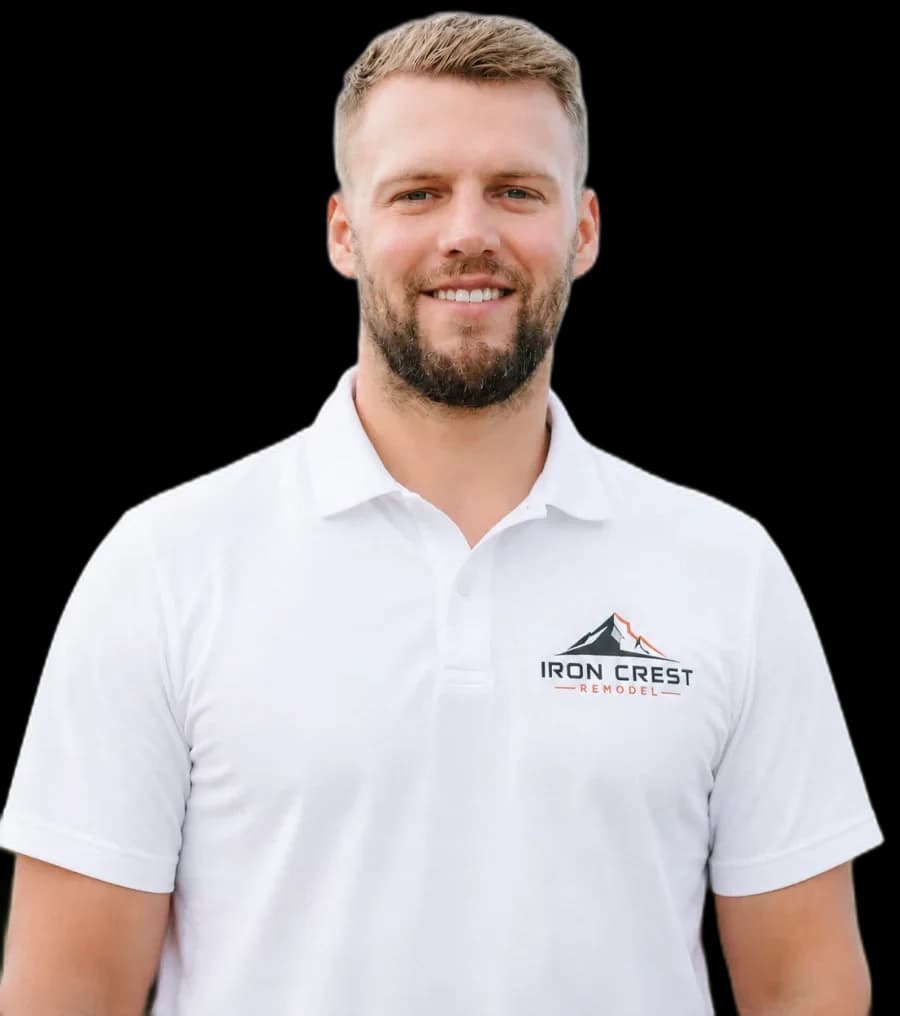
Russ Shloma — Project Manager
Russ Shloma — Project Manager
Start your bathroom remodeling in Eagle
Get a free, no-obligation estimate for bathroom remodeling in Eagle, ID. We handle design, permits, and every detail of construction.
Get Your Free Estimate