
Flooring Installation in Eagle, ID: Costs, Ideas & Options
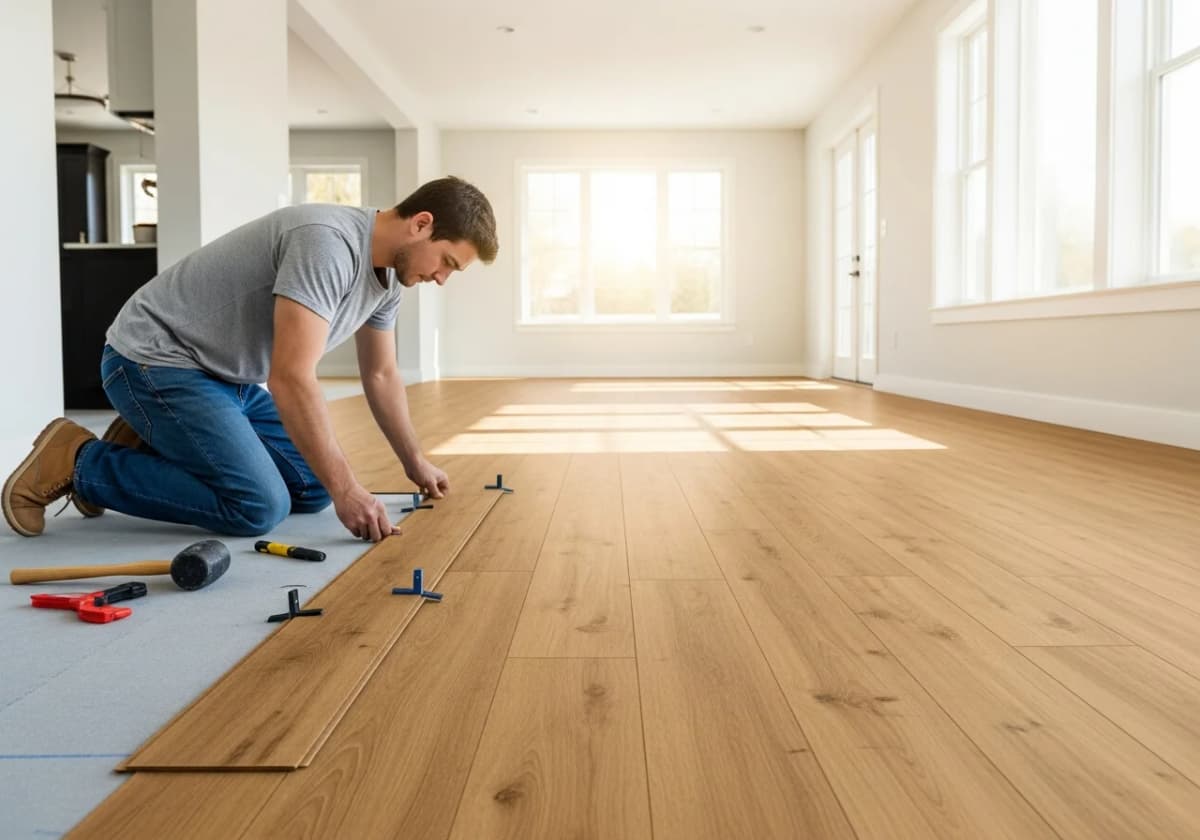
From luxury vinyl plank and hardwood to tile and carpet — we handle subfloor prep, material selection, precision installation, and every transition detail.
Quick answer
Iron Crest Remodeling Group LLC provides flooring installation in Eagle, ID. Most Eagle flooring installation projects cost $18,000 – $120,000+. Eagle flooring projects carry a premium over Boise and Meridian that reflects both the scale of the homes and the material specifications that the market demands.
Flooring in Eagle's custom-home market is one of the most transformative and most visible investments a homeowner can make — in a city where the floor is as much a design statement as a functional surface. From the grand entries of Legacy estates demanding wide-plank white oak that flows across 4,000 square feet to Banbury river homes where heated Italian porcelain tile creates spa-caliber warmth beneath every step, Eagle homeowners expect flooring craftsmanship that matches the quality of every other premium decision in their homes. Iron Crest Remodel brings the material expertise, the precision installation technique, and the design sensibility to deliver floors that anchor Eagle interiors with the permanence and beauty they deserve — tile set to ANSI large-format standards, hardwood acclimated and installed to manufacturer specifications in Eagle's specific humidity environment, and radiant heating systems integrated beneath tile and stone with engineered precision.
Upgrade your home from the ground up with professional flooring installation tailored to your lifestyle and budget.
Flooring is one of the most visible and impactful elements in your home — it sets the tone for every room, absorbs daily wear from foot traffic, pets, and furniture, and needs to perform in varying moisture and temperature conditions. Professional flooring installation starts with subfloor assessment and preparation — leveling, moisture testing, and repair as needed — followed by precise material installation with tight seams, accurate cuts, and clean transitions between rooms and materials. In the Treasure Valley, luxury vinyl plank (LVP) has become the most popular flooring choice for its combination of waterproof performance, realistic wood-look appearance, durability, and affordability. Hardwood remains the premium choice for living rooms and bedrooms, tile is the standard for bathrooms and entryways, and quality laminate offers a budget-friendly alternative with improved durability. The key to a flooring project that looks great and lasts is subfloor preparation — a level, clean, dry subfloor is the foundation for every successful installation.
Eagle homeowners pursue flooring installation for a variety of reasons. Here are the most common situations we see:
- ✓Homeowners replacing worn, damaged, or outdated flooring throughout the home
- ✓Families who need durable, water-resistant flooring for kitchens, bathrooms, and high-traffic areas
- ✓Homeowners who want a consistent floor surface throughout main living areas for a modern, cohesive look
- ✓Anyone building a new addition or finishing a basement who needs flooring installed on new subfloor
- ✓Homeowners preparing to sell who want to replace carpet with hard-surface flooring for maximum buyer appeal
Not every flooring installation project is the same. Here are the most common project types we complete in Eagle:

Luxury Vinyl Plank (LVP) Installation
Install click-lock or glue-down luxury vinyl plank flooring throughout your home. LVP is waterproof, scratch-resistant, and available in realistic wood and stone patterns. Ideal for whole-home installations including kitchens and bathrooms.

Hardwood Flooring Installation
Install solid or engineered hardwood flooring with nail-down, glue-down, or floating installation methods. Includes species and finish selection, acclimation, subfloor prep, and transition installation.

Tile Flooring Installation
Install porcelain, ceramic, or natural stone tile on floors in bathrooms, kitchens, entryways, and laundry rooms. Includes substrate preparation, layout planning, thin-set application, grouting, and sealing.

Laminate Flooring Installation
Install floating laminate flooring with click-lock assembly. A budget-friendly option with improved durability and realistic wood-look patterns. Includes underlayment and transition strips.

Carpet Installation
Install carpet in bedrooms, bonus rooms, and basement areas. Includes pad selection, tack strip installation, seaming, and stretching for a smooth, wrinkle-free result.

Eagle's housing stock is primarily post-1990 construction with a higher proportion of custom-built homes than other Treasure Valley cities. Larger lot sizes, custom floor plans, and premium original finishes are common.
1990s (Banbury, older neighborhoods)
Even Eagle's oldest neighborhoods run toward the high end of the range. These were custom and semi-custom homes to begin with, so budgets reflect replacing aging natural stone, hardwood, and custom cabinetry with materials that match the quality owners expect here.
2000s–2010s (Legacy, foothills development)
These large custom homes sit at the top of the cost range. Square footage is substantial and the original finishes are premium, so even a design-focused refresh of select rooms carries a high materials budget — though sound systems mean little goes to structural work.
2015–present (new subdivisions)
Costs here split by home type: production homes need the least investment and concentrate spending on finish upgrades, while custom homes built to owner specifications carry budgets as high as the owner's chosen materials demand.
Common issues in Eagle homes
- •Premium but dated finishes from the Tuscan-style era (2000s-2010s) that homeowners want modernized
- •Large kitchens with good layouts but outdated cabinets, countertops, and backsplash
- •Custom homes with unusual layouts that require thoughtful remodel design
- •Large primary bathrooms with garden tubs that homeowners want converted to walk-in showers
- •HOA design guidelines that constrain exterior material and color choices

Material selection affects the look, durability, and cost of your flooring installation. Here are the most popular options we install in Eagle:

Luxury Vinyl Plank (LVP)
$4–$10 per sq ft installedWaterproof, scratch-resistant, and available in hundreds of realistic wood and stone patterns. Modern LVP features rigid core construction, attached underlayment, and click-lock installation. The most popular flooring choice in the Treasure Valley.
Best for: Whole-home installations, kitchens, bathrooms, basements, and high-traffic areas

Engineered Hardwood
$8–$16 per sq ft installedReal wood veneer over a plywood or HDF core provides authentic hardwood appearance with better dimensional stability than solid hardwood. Available in oak, hickory, walnut, and maple with prefinished or site-finished options.
Best for: Living rooms, dining rooms, bedrooms, and hallways

Solid Hardwood
$10–$20 per sq ft installedTraditional solid wood planks (typically 3/4 inch thick) that can be sanded and refinished multiple times over their lifespan. Oak, hickory, and maple are the most popular species in the Boise market.
Best for: Main living areas in homes with controlled humidity and on-grade or above-grade subfloors

Porcelain Floor Tile
$8–$20 per sq ft installedDense, water-resistant tile available in wood-look, stone-look, and modern geometric patterns. Large-format tiles (12x24 and larger) create a seamless, contemporary look with fewer grout lines.
Best for: Bathrooms, entryways, kitchens, and laundry rooms

Laminate Flooring
$3–$7 per sq ft installedA budget-friendly floating floor with a photographic wear layer over an HDF core. Modern laminate offers improved scratch resistance, realistic patterns, and easy click-lock installation.
Best for: Budget-conscious projects, rental properties, and bedrooms

Here is how a typical flooring installation project works from first contact to final walkthrough:
In-Home Measurement and Consultation
We measure every room, assess the existing subfloor condition, check for moisture issues, discuss your lifestyle needs, and help you select the right flooring material for each area of the home. You receive a detailed estimate with material and labor costs.
Material Selection and Ordering
We help you choose flooring from our supplier partners — comparing styles, colors, wear layers, and warranties. We order material with appropriate overage for cuts and waste. Material acclimation time (especially for hardwood) is factored into the schedule.
Existing Flooring Removal
We remove existing carpet, tile, vinyl, or laminate and dispose of all material responsibly. Tack strips, staples, adhesive residue, and any damaged subfloor sections are addressed during removal.
Subfloor Preparation
This is the most important step. We level the subfloor using self-leveling compound where needed, repair any damaged sections, install moisture barriers where required, and verify the surface is clean, flat, and dry before installation begins.
Flooring Installation
Material is installed with the appropriate method — click-lock floating, nail-down, glue-down, or thin-set for tile. Each plank, board, or tile is precision-cut and placed with consistent spacing, tight seams, and proper expansion gaps at walls.
Transitions, Trim, and Completion
Transition strips are installed between different flooring types and at doorways. Baseboards are reinstalled or replaced. Quarter-round or shoe molding covers expansion gaps. A final walkthrough ensures quality and cleanliness.
Here is what to expect for project duration when planning flooring installation in Eagle:
| Phase | Duration | Details |
|---|---|---|
| Consultation and Material Selection | 1–2 weeks | In-home measurement, subfloor assessment, material selection, and estimate finalization. Material ordering and delivery may add 1-2 weeks depending on availability. |
| Material Acclimation | 2–5 days | Flooring material is delivered and stored in the home to acclimate to indoor temperature and humidity. Hardwood requires the longest acclimation period; LVP and laminate require less. |
| Existing Flooring Removal | 1–3 days | Removal and disposal of existing flooring. Carpet removal is fast; tile and glued-down flooring removal takes longer. |
| Subfloor Preparation | 1–2 days | Leveling, repairs, moisture barrier installation, and surface preparation. Subfloors in good condition require minimal prep. |
| Flooring Installation | 2–5 days | Material installation throughout the home. A typical 1,500-2,000 sq ft LVP or hardwood installation takes 3-5 days. Tile floors take longer due to thin-set curing and grouting. |
| Trim, Transitions, and Cleanup | 1–2 days | Baseboard and transition strip installation, shoe molding, final cleaning, and walkthrough. |
Eagle range: $18,000 – $120,000+
Most Eagle projects: $52,000–$75,000
Eagle flooring projects carry a premium over Boise and Meridian that reflects both the scale of the homes and the material specifications that the market demands. A main-level hardwood installation in a 2,000 SF Legacy home using wide-plank white oak (4"–7" face width) from premium manufacturers like Mirage, Lauzon, or Boen runs $14–$22 per square foot installed — against the $10–$18 per square foot we publish for engineered hardwood in Meridian, where the plank widths and grades specified are typically narrower and lower. Large-format porcelain tile at the 24x48 or 48x48 size category from manufacturers like Florim, Lea, or Marazzi runs $10–$25 per square foot for material alone; installed in an Eagle home with proper ANSI lippage control technique, mortar coverage requirements, and movement joint design, the installed cost runs $18–$35 per square foot. Radiant electric heating system integration (Schluter DITRA-HEAT or equivalent) beneath tile adds $10–$18 per square foot. A full main-level hardwood installation combined with premium tile in kitchen, bathrooms, and mudroom in a 3,500 SF Eagle home typically runs $55,000–$90,000. Whole-home flooring transformation including all living areas, bathrooms, and staircase in a large Legacy or Banbury home runs $75,000–$120,000+.
The final cost of flooring installation in Eagle depends on several factors. Here are the biggest cost drivers:
Flooring Material Selection
high impactMaterial cost is the primary variable. Laminate and basic LVP start around $3-4/sq ft installed, while premium hardwood and large-format tile can exceed $15-20/sq ft installed.
Total Square Footage
high impactLarger projects have lower per-square-foot costs due to economies of scale in labor and material purchasing. Whole-home installations are more cost-effective per square foot than single-room projects.
Subfloor Condition and Preparation
medium impactSubfloors that need leveling, moisture barriers, plywood underlayment, or repair add $1-3 per sq ft to the project. Older homes and basements often require more subfloor work.
Existing Flooring Removal
medium impactRemoving existing carpet is relatively inexpensive ($0.50-1.00/sq ft). Removing tile, glued-down vinyl, or multiple layers of flooring is more labor-intensive and costly ($1.50-4.00/sq ft).
Room Layout Complexity
low impactRooms with many angles, closets, doorways, and transitions require more cutting time and generate more waste. Open floor plans with few interruptions install more efficiently.
Trim and Transition Work
low impactNew baseboards, quarter-round, shoe molding, and transition strips add $2-5 per linear foot. Homes that need full baseboard replacement can add $1,000-3,000 to the project.
These are the real-world projects we see most often from Eagle homeowners:
Whole-Home Hardwood Installation — Legacy Estate
The definitive Eagle main-level flooring project: replacing 2,000–3,000 square feet of dated diagonal tile or old-growth oak strip hardwood with continuous wide-plank white oak in a natural or light wire-brushed finish. This project requires thorough subfloor preparation — checking for flatness to 3/16 inch over 10 feet and filling or grinding any high spots — and careful hardwood acclimation to Eagle's indoor humidity conditions before installation. The installation uses a full-spread adhesive system (Bostik's Best or Sika T-55) rather than nail-down to accommodate the plank widths (5"–7") common in Eagle's market and to eliminate hollow-spot issues over in-floor radiant heating systems. Staircase integration — matching treads, risers, and nosing profiles to the main floor hardwood species and finish — completes the project.
Large-Format Porcelain Tile Throughout Open Plan and Baths
For Eagle homeowners who prefer porcelain tile as their primary flooring medium, large-format installations in the 24x48 or 48x48 size category create the clean, sophisticated look of natural stone without the maintenance demands. Premium rectified porcelain in concrete, marble, or natural stone looks from Florim, Lea, or Marazzi provides the visual depth appropriate to Eagle's market. Proper installation of large-format tile requires a flat substrate (1/8" over 10 feet for tiles with minimum side dimension exceeding 15"), large-format trowel technique with back-buttering for full mortar coverage, movement joint design at perimeter and field, and lippage control that meets ANSI A108.02's stringent standard. Main living areas transition seamlessly into bathrooms with heated floors beneath.
Heated Master Bathroom and Secondary Bath Tile Package
Radiant-heated tile floors in Eagle master bathrooms are the standard the luxury market demands — and this project delivers them with the full technical precision they require. The scope includes demo of existing flooring, assessment and remediation of any substrate damage, installation of a crack-isolation and waterproofing membrane (Schluter DITRA-HEAT), integration of the electric heating element mat within the membrane, tile installation to ANSI large-format standards, thermostat installation, and final system commissioning. Material selection typically features book-matched large-format stone-look porcelain or actual natural stone (honed marble or travertine) in the master bath, with a complementary but more durable porcelain specification for secondary baths.
Hardwood and Tile Transition — Complete Main Level Rework
Many Eagle main-level reworks combine hardwood in living and dining areas with tile in kitchen and wet areas, creating a sophisticated two-material floor plan that reads as unified through careful color and tone coordination. This project requires design-level decision-making: the hardwood species, color, and finish must relate to the tile in undertone and visual weight; transition details between materials must be designed rather than improvised; and the installation sequencing must ensure that hardwood and tile meet at a clean, level transition without height differential. This is the project where design integration — matching the new floors to the cabinetry, the countertops, and the trim — matters most and where Iron Crest's collaborative design approach delivers its strongest results.
Staircase and Entry Transformation
Eagle entries and staircases are architectural statements, and flooring plays a central role in how powerfully that statement lands. This project addresses the most visible square feet in the home: a hardwood or premium tile entry floor, hardwood stair treads in a species and finish matching the main floor, painted or hardwood risers, and a landing treatment that creates a seamless visual flow between floors. Glass or steel cable balustrades paired with hardwood treads create the clean contemporary staircase aesthetic that is replacing Eagle's original ornate iron baluster staircases at a rapid pace. Herringbone or Versailles pattern tile entries are a popular Eagle statement choice for high-impact entry design.
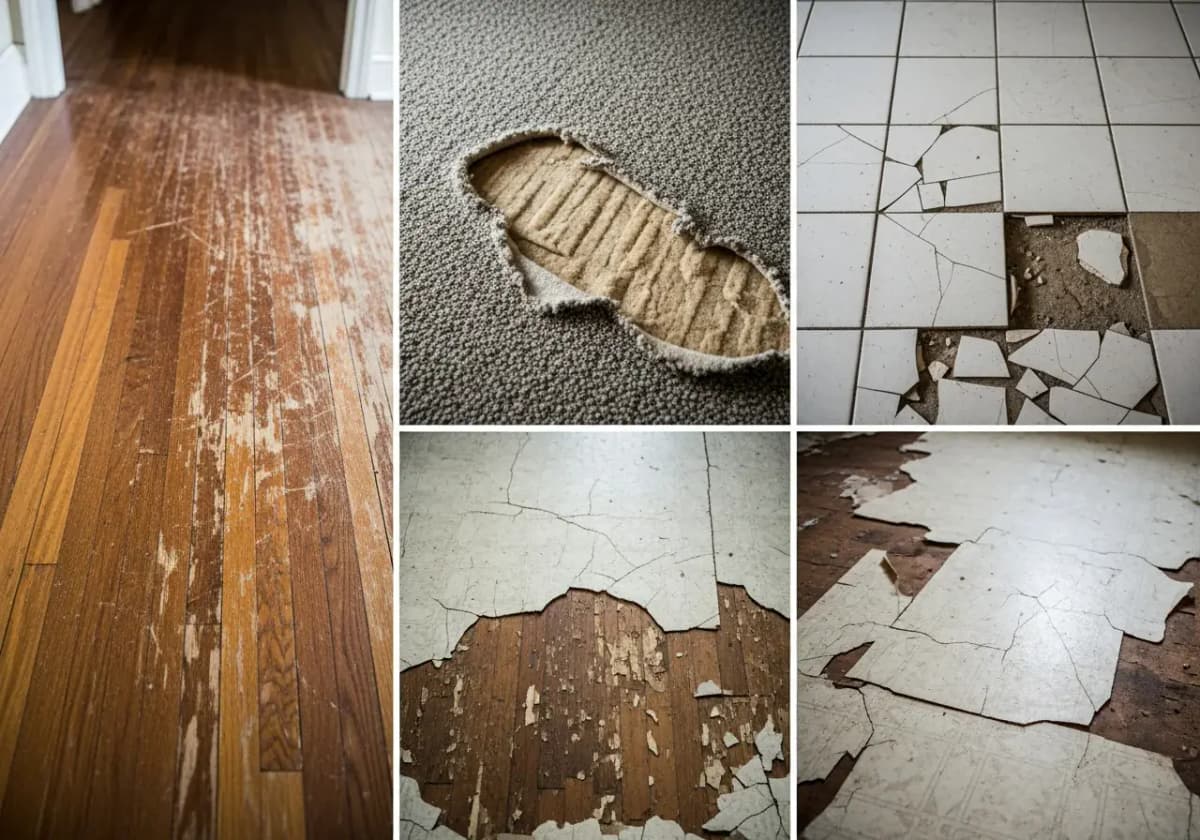
Problem: Uneven or damaged subfloor causing gaps and movement in flooring
Solution: We assess and level the subfloor using self-leveling compound, plywood underlayment, or targeted repairs to create a flat, stable surface that prevents gaps, lippage, and movement in the finished floor.
Problem: Moisture issues in basements or slab-on-grade floors
Solution: We perform moisture testing and install appropriate vapor barriers or moisture-resistant underlayment. For basements, we recommend waterproof LVP or tile over moisture-protected subfloors.
Problem: Transitions between rooms with different flooring heights or types
Solution: We use reducer strips, T-moldings, and custom transitions to create clean, safe connections between different flooring materials and heights — no tripping hazards or awkward gaps.
Problem: Carpet that traps allergens, pet odors, and stains
Solution: We remove old carpet and pad, treat any subfloor staining or odor, and install hard-surface flooring like LVP or hardwood that is easier to clean and does not harbor allergens or pet odors.
Problem: Squeaky or bouncy floors from inadequate subfloor fastening
Solution: We screw down loose subfloor panels, add blocking between joists where needed, and ensure the subfloor is tight and quiet before installing new flooring on top.

Eagle shares the Treasure Valley's semi-arid climate. Foothills properties may experience slightly colder winter temperatures and more wind exposure than valley-floor locations.
Foothills Exposure
Properties in Eagle's foothills areas experience more wind, greater temperature variation, and more UV exposure. Material selections for these properties should prioritize durability.
Larger Lots and More Exterior Surface
Eagle's larger homes and lots mean more siding, more roof area, and longer utility runs for ADUs and additions. This affects both material quantity and project cost.
Irrigation and Landscaping
Many Eagle properties have extensive landscaping and irrigation. Addition and ADU projects must plan around existing landscape investments.
Legacy
An upscale master-planned community with custom and semi-custom homes. Homeowners here invest in premium kitchen and bathroom remodels with high-end materials.
Common projects in Legacy:
- •Luxury kitchen remodels with custom cabinetry and premium appliances
- •Spa-style bathroom remodels with heated floors and custom tile
- •Outdoor living spaces with covered patios and outdoor kitchens
- •Basement entertainment spaces
Banbury
An established neighborhood with homes from the 1990s and 2000s, many on larger lots with river or canal proximity. A mix of custom and production homes.
Common projects in Banbury:
- •Whole-home remodels updating 1990s-2000s finishes
- •Home additions for primary suites
- •Kitchen renovations with open-concept conversion
- •ADU construction on larger lots
Downtown Eagle / Historic Core
A walkable downtown area with a mix of older homes, renovated properties, and newer infill development. The downtown core has a distinct small-town character.
Common projects in Downtown Eagle / Historic Core:
- •Full home renovations of older properties
- •Kitchen and bathroom remodels in character homes
- •Home additions sensitive to the downtown aesthetic
- •Interior updates maintaining neighborhood character
Every Eagle neighborhood has different housing stock, homeowner priorities, and project considerations. Here is what flooring installation looks like in each area:
Legacy (Eagle)
Banbury (Eagle)
Downtown Eagle / Historic Core
Permit authority: City of Eagle Building Department
Online portal: www.cityofeagle.org/building
- ✓Permits required for all remodeling involving plumbing, electrical, or structural changes
- ✓Some areas have specific design guidelines or overlay districts
- ✓HOA approval is commonly required before city permits for exterior work
- ✓ADU construction is subject to zoning review and specific lot requirements
- ✓Standard permit processing is typically 1-2 weeks
Helpful ID resources
- City of Eagle Building Department — permit applications, inspections, and code resources
- Idaho DEQ — Asbestos Program — testing and abatement requirements for pre-1980 homes
- EPA Lead Renovation, Repair and Painting (RRP) Program — required certification for work in pre-1978 homes
- ●Plank direction — running planks toward the main light source or along the longest dimension of the room creates the most visually appealing result
- ●Color and tone — lighter flooring makes rooms feel larger and more open; darker flooring adds warmth and formality but shows dust and scratches more
- ●Consistency vs. variation — using the same flooring throughout main living areas creates a seamless, spacious feel; transitioning to tile in wet areas and carpet in bedrooms is also common
- ●Wide plank vs. narrow plank — wider planks (7 inches and above) create a modern, high-end look with fewer seams; narrow planks are more traditional
- ●Texture and finish — smooth finishes show scratches more easily; wire-brushed and hand-scraped textures hide wear and add character
- ●Waterproof requirements — kitchens, bathrooms, laundry rooms, basements, and entryways benefit from waterproof flooring like LVP or tile
Here are the design trends we see most often in Eagle flooring installation projects:
- →Transitional and contemporary design replacing Tuscan and traditional styles
- →Natural materials — real wood, stone, and metal accents
- →Premium appliance packages with professional-grade ranges
- →Heated bathroom floors and smart shower systems
- →Custom cabinetry with integrated storage solutions
- →Statement lighting — large pendants, linear fixtures, and sculptural elements
- →Outdoor kitchens and covered living spaces
- →Whole-home smart technology integration
Eagle has some of the highest property values in the Treasure Valley, with many homes valued at $500,000 to $1,000,000+. This premium market supports higher-end remodeling investments. Homeowners in Eagle expect quality craftsmanship, premium materials, and design-forward results. ROI on well-executed remodels is strong because buyers in this market pay a premium for updated, modern homes.
Costs and permit requirements differ by jurisdiction across the Treasure Valley. These guides cover Eagle specifically.
Avoid these common pitfalls Eagle homeowners encounter with flooring installation projects:
Mistake: Selecting hardwood based on showroom appearance without considering Eagle's dry climate performance
Better approach: Solid exotic hardwood species — Brazilian cherry, Santos mahogany, tigerwood — perform unpredictably in Eagle's low winter humidity, often showing exaggerated seasonal gaps that are not a defect but a natural consequence of the wood's dimensional response to humidity cycling. Wide-plank solid hardwood in any species requires careful humidity management year-round (maintaining 35–50% RH through humidifier use during heating season) to perform within acceptable movement tolerances. For homeowners who prefer not to manage indoor humidity carefully, engineered hardwood with a premium wear layer provides an equivalent aesthetic result with significantly better stability in Eagle's environment. Iron Crest discusses climate compatibility explicitly during material selection for every Eagle hardwood project.
Mistake: Installing large-format tile without verifying subfloor flatness first
Better approach: Large-format tile (any tile with a minimum side dimension exceeding 15 inches) requires a subfloor that is flat to 1/8 inch over 10 feet — a standard that Eagle's residential framing routinely does not meet without preparation work. Installing large-format tile directly over an unverified subfloor produces lippage — height differences between adjacent tile edges — that is immediately visible and impossible to correct without re-installation. Iron Crest measures every subfloor for flatness before tile work begins and includes the grinding, patching, or self-leveling compound needed to achieve specification in the project scope. This preparation investment is always recovered in a better result.
Mistake: Mixing hardwood species or finishes from different rooms without a design transition plan
Better approach: Eagle's open floor plans create long sightlines across multiple room uses — from the kitchen through the dining area into the great room is often visible in a single 50-foot view. Different hardwood species or finishes in adjacent visible areas create jarring visual discontinuity that undermines the investment in both materials. When transitioning from hardwood to tile or between different hardwood areas, plan a clean, deliberate transition detail — a metal T-molding at a doorway threshold, a width of contrasting tile as a border, or a species change that is separated by a wall or architectural break. Transitions should be design decisions, not installation accommodations.
Mistake: Skipping the radiant heating system to save cost in a master bathroom remodel
Better approach: Radiant heat is far cheaper to install while the floor is open than to add later, when it means demolishing a finished tile floor to get at the substrate. At the $10–$18 per square foot that radiant integration adds, a 150 SF master bath comes to roughly $1,500–$2,700 — a small fraction of an Eagle master bath scope, and the only moment it can be done without redoing the tile. The quality-of-life return is a warm floor through Eagle's heating season. Treat it as part of the tile decision rather than a line item revisited when the budget tightens; skip it in a budget secondary bath if you must, but decide it before the substrate goes down.
Mistake: Choosing flooring in isolation without considering the whole-room material palette
Better approach: Flooring selections made before cabinetry, countertop, and paint decisions are finalized frequently disappoint when the room comes together — because the floor's undertone conflicts with the cabinet's wood species, the tile's cool gray fights the countertop's warm beige, or the hardwood's orange-yellow tone makes the paint color look greenish. In Eagle's comprehensive renovation projects, flooring selection should happen in the context of the full material palette, with samples of all major materials viewed together in the actual space's lighting conditions before any ordering commitments are made. Iron Crest's design coordination process ensures that flooring selections are made in the context of the whole-room design intent.
Most popular remodeling projects in Eagle
- ✓Luxury kitchen remodels with custom cabinetry
- ✓Spa-style primary bathroom remodels
- ✓Outdoor living and entertainment spaces
- ✓Whole-home remodels updating 2000s finishes
- ✓Home additions for primary suites or bonus rooms
- ✓ADU construction on larger lots
- ✓Basement entertainment and living spaces
- ✓Home office conversions

See Your Remodel Before You Build.
Upload a few photos of your kitchen, bathroom, flooring, or exterior and get AI-generated concept visuals tailored to your space, style, and materials — free, no obligation, in about five minutes. Then request a real estimate from our Idaho registered Boise team.
Free concept preview · No credit card · Licensed Idaho contractor
What's the best hardwood floor species for Eagle's dry climate?
Eagle's dry winters — indoor relative humidity can drop to 15–25% during heating season — create challenging conditions for solid wide-plank hardwood, which expands and contracts significantly with seasonal humidity changes. White oak is our primary recommendation because its tangential-to-radial shrinkage ratio is relatively stable and it accepts the natural and wire-brushed finishes Eagle's market demands. For wider planks (5" and above), engineered hardwood with a premium 3–4mm white oak wear layer over a dimensionally stable plywood core is actually a better technical choice than solid hardwood in Eagle's humidity cycling environment — it delivers the same visual result with superior stability. Acclimation of solid hardwood to the home's ambient humidity conditions before installation is critical and should run a minimum of two to four weeks in Eagle.
Are heated tile floors worth the investment in an Eagle bathroom?
Radiant-heated tile floors in master bathrooms are a common specification in Eagle's custom-home market, and they deliver genuine daily comfort that compounds over years of use. At the $10–$18 per square foot that radiant integration adds to a tile floor, a 150 SF master bath comes to roughly $1,500–$2,700 for the heating element, membrane integration, and thermostat — on top of the tile itself. Whether that reads as a feature to a future buyer is a question for a local agent, not a figure we will publish. Secondary bathroom floors are increasingly being heated in Eagle as well — particularly mudrooms adjacent to exterior doors, where cold tile after removing snowy boots is a specific Eagle climate complaint.
How do I prevent large-format tile from cracking in Eagle's climate?
Large-format tile cracking is almost always caused by insufficient crack isolation between the substrate and the tile. Inside a conditioned Eagle home there is no freeze-thaw cycling, but framing, subfloor, and slab substrates still move seasonally with temperature and moisture change; without a crack-isolation membrane between substrate and tile, that movement cracks the tile and grout joints. The correct technical approach is to install Schluter DITRA uncoupling membrane (or equivalent) beneath all large-format tile, which provides the crack isolation and load distribution that prevents crack transmission into the tile. Additionally, perimeter expansion joints and field movement joints (typically at 20–25 foot intervals) accommodate the thermal expansion of the tile field itself. Iron Crest installs DITRA as a standard specification on all large-format tile projects in Eagle.
Can existing tile floors be replaced without disturbing the radiant heating system beneath them?
It depends on the type of radiant system installed. In-slab radiant hydronic systems (hot water in PEX tubing embedded in a concrete topping slab) cannot be disturbed during tile removal without risking damage to the tubing — demo must be done carefully, and repairs to any damaged tubing are required before new flooring installation. Electric resistance heating element mats installed in a thin-bed beneath tile can be removed with the old tile but are typically destroyed in the process; a new heating element mat (relatively modest cost) is installed as part of the new tile installation. Iron Crest identifies the radiant system type at the pre-project assessment and designs the demo scope appropriately for the system present.
What size tile creates the best look for Eagle home main-level floors?
For Eagle's large, open-plan main levels, tile at 24x48 or 48x48 format creates the most sophisticated, contemporary result — the large continuous planes of material with near-invisible grout joints read as a premium surface in a way that 12x12 or 18x18 formats, regardless of material quality, simply cannot match. The grout joint specification for large-format rectified tile should be 1/16" to 1/8" — tight enough to minimize the visual interruption of the joint pattern while still providing the movement accommodation the tile requires. The tile's direction — running the long axis of a 24x48 tile parallel to the longest room dimension creates more visual sweep; running it perpendicular creates a sense of width — is a design decision worth considering deliberately rather than defaulting to installer habit.
What is the best flooring for a whole-home installation?
Luxury vinyl plank (LVP) is the most popular choice for whole-home installations in the Boise area. It is waterproof, scratch-resistant, comfortable underfoot, and available in realistic wood-look patterns. It can be used in every room including kitchens and bathrooms.
How long does flooring installation take?
A typical whole-home flooring installation (1,500-2,000 sq ft) takes 5-10 days including removal of existing flooring, subfloor prep, and installation. Single-room projects may take 1-3 days. Tile installations take longer due to setting and grouting time.
Is LVP or hardwood better?
LVP is more practical — it is waterproof, scratch-resistant, more affordable, and easier to maintain. Hardwood offers a warmer, more premium feel and can be refinished multiple times. Many homeowners use LVP in high-traffic and wet areas and hardwood in formal living spaces.
Do I need to remove furniture before flooring installation?
We handle furniture moving as part of the installation process. We move items out of the work area, install the flooring, and return furniture to position. Homeowners should plan to clear small items, electronics, and fragile objects from the rooms.
Can new flooring be installed over existing flooring?
In some cases, yes. LVP and laminate can often be installed over smooth, level existing floors. However, removing old flooring typically produces a better result because it allows for proper subfloor inspection, repair, and preparation.
How do you handle transitions between different flooring types?
We use manufacturer-matched transition strips — T-moldings, reducers, and thresholds — to create clean, level connections between different flooring materials. Proper transitions are both functional (no tripping hazards) and aesthetic (clean visual lines).
What flooring is best for homes with pets?
LVP with a thick wear layer (20 mil or higher) is the best flooring for homes with pets. It resists scratches, is waterproof for accidents, and is easy to clean. Avoid smooth-finish hardwood and high-gloss laminate, which scratch easily.

Talk to a real project manager
Have Questions? Call Now for a Free In-Home Consultation.
Mon–Fri 7 AM–6 PM · Idaho registered & insured · No obligation
Russ Shloma — Project Manager
Russ Shloma — Project Manager
Start your flooring installation in Eagle
Get a free, no-obligation estimate for flooring installation in Eagle, ID. We handle design, permits, and every detail of construction.
Get Your Free Estimate