
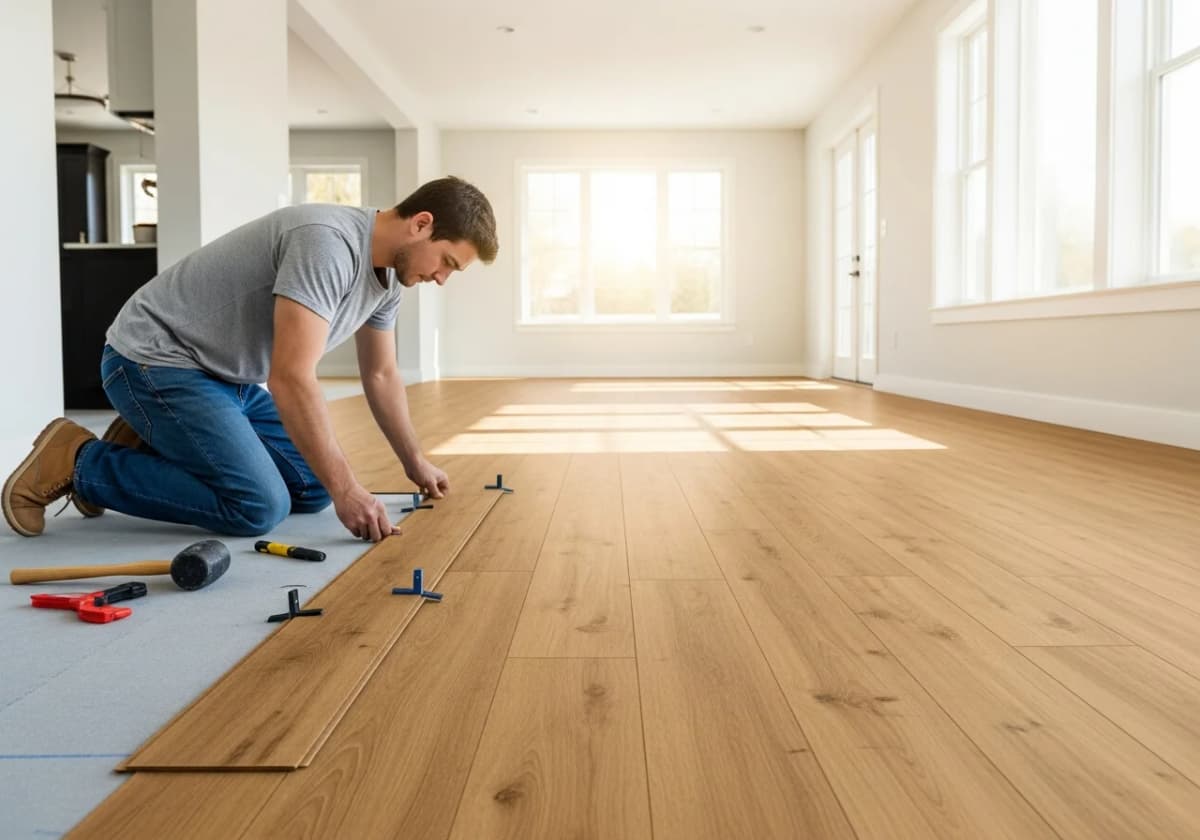
Flooring Installation in Payette, ID
From luxury vinyl plank and hardwood to tile and carpet — we handle subfloor prep, material selection, precision installation, and every transition detail.
Quick answer
Iron Crest Remodeling Group LLC provides flooring installation in Payette, ID. Most Payette flooring installation projects cost $3.50 – $30+/sq ft installed. Payette flooring pricing is driven by subfloor condition and material more than by the field installation itself. The low range covers straightforward LVP or carpet over a sound, flat subfloor in a newer home.
Flooring installation in Payette, Idaho is governed by two factors most flooring guidance overlooks: what is under the existing floor, and how dry this climate really is. Payette is a county-seat city of roughly 8,100 (2020 Census) at the Payette–Snake river confluence, with housing from 1900s–1930s downtown homes over board subfloors and original hardwood, through postwar ranches over plank or early sheet subfloors, to newer subdivision homes like Vista Hills over modern engineered subfloors. In the older stock, the subfloor is rarely flat — a century of settlement, additions meeting original structure at different heights, and moisture-damaged areas around old plumbing mean a Payette flooring project on an older home is largely a subfloor-preparation project. And Payette's semi-arid, very dry interior climate, with large seasonal humidity swings and tight winter sealing, drives wood and some products to move, gap, and cup if not chosen and acclimated correctly. A floor that performs in humid climates can fail in Payette's dryness. Iron Crest Remodel (Iron Crest Remodeling Group LLC, Idaho RCE-6681702) treats Payette flooring as a substrate-and-climate problem first: assess and correct the subfloor, select and acclimate materials for this dry environment, then install.
Upgrade your home from the ground up with professional flooring installation tailored to your lifestyle and budget.
Flooring is one of the most visible and impactful elements in your home — it sets the tone for every room, absorbs daily wear from foot traffic, pets, and furniture, and needs to perform in varying moisture and temperature conditions. Professional flooring installation starts with subfloor assessment and preparation — leveling, moisture testing, and repair as needed — followed by precise material installation with tight seams, accurate cuts, and clean transitions between rooms and materials. In the Treasure Valley, luxury vinyl plank (LVP) has become the most popular flooring choice for its combination of waterproof performance, realistic wood-look appearance, durability, and affordability. Hardwood remains the premium choice for living rooms and bedrooms, tile is the standard for bathrooms and entryways, and quality laminate offers a budget-friendly alternative with improved durability. The key to a flooring project that looks great and lasts is subfloor preparation — a level, clean, dry subfloor is the foundation for every successful installation.
Payette homeowners pursue flooring installation for a variety of reasons. Here are the most common situations we see:
- ✓Homeowners replacing worn, damaged, or outdated flooring throughout the home
- ✓Families who need durable, water-resistant flooring for kitchens, bathrooms, and high-traffic areas
- ✓Homeowners who want a consistent floor surface throughout main living areas for a modern, cohesive look
- ✓Anyone building a new addition or finishing a basement who needs flooring installed on new subfloor
- ✓Homeowners preparing to sell who want to replace carpet with hard-surface flooring for maximum buyer appeal
Not every flooring installation project is the same. Here are the most common project types we complete in Payette:

Luxury Vinyl Plank (LVP) Installation
Install click-lock or glue-down luxury vinyl plank flooring throughout your home. LVP is waterproof, scratch-resistant, and available in realistic wood and stone patterns. Ideal for whole-home installations including kitchens and bathrooms.

Hardwood Flooring Installation
Install solid or engineered hardwood flooring with nail-down, glue-down, or floating installation methods. Includes species and finish selection, acclimation, subfloor prep, and transition installation.

Tile Flooring Installation
Install porcelain, ceramic, or natural stone tile on floors in bathrooms, kitchens, entryways, and laundry rooms. Includes substrate preparation, layout planning, thin-set application, grouting, and sealing.

Laminate Flooring Installation
Install floating laminate flooring with click-lock assembly. A budget-friendly option with improved durability and realistic wood-look patterns. Includes underlayment and transition strips.

Carpet Installation
Install carpet in bedrooms, bonus rooms, and basement areas. Includes pad selection, tack strip installation, seaming, and stretching for a smooth, wrinkle-free result.

Payette's housing spans more than a century: structurally sound but systemically obsolete pre-1940 homes near downtown, a large postwar ranch belt, and newer subdivision construction. Older homes commonly need comprehensive systems and environmental work; newer homes need finish upgrades.
Pre-1940 (Downtown core)
Railroad/mill-era bungalows and four-squares with original wood siding and windows, plaster-and-lath walls, galvanized supply and cast-iron drains, little or no insulation, and frequent asbestos and lead. Strong character; deep systems needs.
1950s–1980s (Postwar ranch belt)
Ranch and rancher homes on regular lots with serviceable but dated systems, hardboard/early engineered siding, aluminum or early vinyl windows, and tight alcove-tub bathrooms. The volume remodeling stock.
2000s–present (Vista Hills and newer)
Subdivision construction with modern systems, fiber-cement siding, and builder-grade interior finishes that owners upgrade over time.
Common issues in Payette homes
- •Corroded galvanized supply lines and aging cast-iron drains in pre-1940 homes
- •Asbestos and lead in pre-1978 (often pre-1960) housing
- •Uneven, moisture-damaged, multi-elevation subfloors in older homes
- •Undersized electrical service for modern kitchen/appliance loads
- •Attic-terminated bath exhaust fans driving moisture into roof assemblies
- •Single-bathroom configurations in many older homes
- •UV/freeze-thaw degradation of wood siding and single-pane windows

Material selection affects the look, durability, and cost of your flooring installation. Here are the most popular options we install in Payette:

Luxury Vinyl Plank (LVP)
$4–$10 per sq ft installedWaterproof, scratch-resistant, and available in hundreds of realistic wood and stone patterns. Modern LVP features rigid core construction, attached underlayment, and click-lock installation. The most popular flooring choice in the Treasure Valley.
Best for: Whole-home installations, kitchens, bathrooms, basements, and high-traffic areas

Engineered Hardwood
$8–$16 per sq ft installedReal wood veneer over a plywood or HDF core provides authentic hardwood appearance with better dimensional stability than solid hardwood. Available in oak, hickory, walnut, and maple with prefinished or site-finished options.
Best for: Living rooms, dining rooms, bedrooms, and hallways

Solid Hardwood
$10–$20 per sq ft installedTraditional solid wood planks (typically 3/4 inch thick) that can be sanded and refinished multiple times over their lifespan. Oak, hickory, and maple are the most popular species in the Boise market.
Best for: Main living areas in homes with controlled humidity and on-grade or above-grade subfloors

Porcelain Floor Tile
$8–$20 per sq ft installedDense, water-resistant tile available in wood-look, stone-look, and modern geometric patterns. Large-format tiles (12x24 and larger) create a seamless, contemporary look with fewer grout lines.
Best for: Bathrooms, entryways, kitchens, and laundry rooms

Laminate Flooring
$3–$7 per sq ft installedA budget-friendly floating floor with a photographic wear layer over an HDF core. Modern laminate offers improved scratch resistance, realistic patterns, and easy click-lock installation.
Best for: Budget-conscious projects, rental properties, and bedrooms

Here is how a typical flooring installation project works from first contact to final walkthrough:
In-Home Measurement and Consultation
We measure every room, assess the existing subfloor condition, check for moisture issues, discuss your lifestyle needs, and help you select the right flooring material for each area of the home. You receive a detailed estimate with material and labor costs.
Material Selection and Ordering
We help you choose flooring from our supplier partners — comparing styles, colors, wear layers, and warranties. We order material with appropriate overage for cuts and waste. Material acclimation time (especially for hardwood) is factored into the schedule.
Existing Flooring Removal
We remove existing carpet, tile, vinyl, or laminate and dispose of all material responsibly. Tack strips, staples, adhesive residue, and any damaged subfloor sections are addressed during removal.
Subfloor Preparation
This is the most important step. We level the subfloor using self-leveling compound where needed, repair any damaged sections, install moisture barriers where required, and verify the surface is clean, flat, and dry before installation begins.
Flooring Installation
Material is installed with the appropriate method — click-lock floating, nail-down, glue-down, or thin-set for tile. Each plank, board, or tile is precision-cut and placed with consistent spacing, tight seams, and proper expansion gaps at walls.
Transitions, Trim, and Completion
Transition strips are installed between different flooring types and at doorways. Baseboards are reinstalled or replaced. Quarter-round or shoe molding covers expansion gaps. A final walkthrough ensures quality and cleanliness.
Here is what to expect for project duration when planning flooring installation in Payette:
| Phase | Duration | Details |
|---|---|---|
| Consultation and Material Selection | 1–2 weeks | In-home measurement, subfloor assessment, material selection, and estimate finalization. Material ordering and delivery may add 1-2 weeks depending on availability. |
| Material Acclimation | 2–5 days | Flooring material is delivered and stored in the home to acclimate to indoor temperature and humidity. Hardwood requires the longest acclimation period; LVP and laminate require less. |
| Existing Flooring Removal | 1–3 days | Removal and disposal of existing flooring. Carpet removal is fast; tile and glued-down flooring removal takes longer. |
| Subfloor Preparation | 1–2 days | Leveling, repairs, moisture barrier installation, and surface preparation. Subfloors in good condition require minimal prep. |
| Flooring Installation | 2–5 days | Material installation throughout the home. A typical 1,500-2,000 sq ft LVP or hardwood installation takes 3-5 days. Tile floors take longer due to thin-set curing and grouting. |
| Trim, Transitions, and Cleanup | 1–2 days | Baseboard and transition strip installation, shoe molding, final cleaning, and walkthrough. |
Payette range: $3.50–$8/sq ft installed – $14–$30+/sq ft installed
Most Payette projects: $7–$14/sq ft installed
Payette flooring pricing is driven by subfloor condition and material more than by the field installation itself. The low range covers straightforward LVP or carpet over a sound, flat subfloor in a newer home. The high range covers premium hardwood, tile with full subfloor remediation, or intricate patterns plus significant leveling and structural subfloor repair in older homes. The average range reflects the common Payette project: quality LVP, engineered wood, or tile with moderate subfloor preparation. The cost variable that moves a Payette estimate most is subfloor work in older homes — leveling out a century of settlement, replacing moisture-damaged sections around old plumbing, reconciling elevation changes where additions meet original structure, and adding underlayment for rigid materials can substantially exceed the cost of the flooring material itself. Original-hardwood refinishing, where viable, is often the best value in a downtown home and is priced separately by condition. The dry climate also argues for properly acclimated, dimensionally stable products, which may carry a modest material premium that prevents far costlier failure. Material delivery from the Boise–Nampa corridor or Ontario, Oregon adds modest logistics cost.
The final cost of flooring installation in Payette depends on several factors. Here are the biggest cost drivers:
Flooring Material Selection
high impactMaterial cost is the primary variable. Laminate and basic LVP start around $3-4/sq ft installed, while premium hardwood and large-format tile can exceed $15-20/sq ft installed.
Total Square Footage
high impactLarger projects have lower per-square-foot costs due to economies of scale in labor and material purchasing. Whole-home installations are more cost-effective per square foot than single-room projects.
Subfloor Condition and Preparation
medium impactSubfloors that need leveling, moisture barriers, plywood underlayment, or repair add $1-3 per sq ft to the project. Older homes and basements often require more subfloor work.
Existing Flooring Removal
medium impactRemoving existing carpet is relatively inexpensive ($0.50-1.00/sq ft). Removing tile, glued-down vinyl, or multiple layers of flooring is more labor-intensive and costly ($1.50-4.00/sq ft).
Room Layout Complexity
low impactRooms with many angles, closets, doorways, and transitions require more cutting time and generate more waste. Open floor plans with few interruptions install more efficiently.
Trim and Transition Work
low impactNew baseboards, quarter-round, shoe molding, and transition strips add $2-5 per linear foot. Homes that need full baseboard replacement can add $1,000-3,000 to the project.
These are the real-world projects we see most often from Payette homeowners:
Refinishing Original Hardwood in a Downtown Home
Often the highest-value flooring outcome in Payette: a 1900s–1930s downtown home with original hardwood discovered under carpet or later flooring. Scope includes assessing remaining wear-layer thickness and board soundness, repairing damaged boards with matched material, addressing squeaks and subfloor movement, and sanding and refinishing with a finish suited to the dry climate. When the original floor is refinishable, this preserves irreplaceable character and outperforms replacement on both cost and value. Where it is too far gone, the project converts to replacement with subfloor remediation.
Subfloor Remediation Plus New Flooring in an Older Home
The defining older-Payette flooring project: removing failed flooring to reveal an uneven, partially moisture-damaged, multi-elevation subfloor that must be repaired before anything new goes down. Scope includes replacing soft or rotted sections (commonly around old bathroom and kitchen plumbing), leveling settlement, reconciling elevation transitions where additions meet original structure, adding appropriate underlayment, and then installing the chosen surface — frequently dimensionally stable LVP or properly acclimated engineered wood. The subfloor work is the project; the finish floor is the easy part.
Whole-Home LVP Conversion
A very common Payette project across mid-century and newer homes: replacing dated carpet, sheet vinyl, and worn laminate throughout with a continuous waterproof-core LVP. Scope includes demo, subfloor assessment and leveling (moderate in mid-century homes, minimal in newer), transition and trim detailing, and installation. LVP's dimensional stability suits Payette's dry, swing-prone climate well, and a continuous run modernizes the whole home efficiently — a strong presentation and livability move.
Tile Installation with Proper Substrate (Wet Areas/Entries)
Tile in kitchens, baths, entries, and mudrooms (the latter valued in Payette's dusty, real-winter climate) requires a correctly prepared substrate — uncoupling or cement board, flat to tolerance, structurally sound. In older homes this means substantial subfloor work before setting; tile installed over a flexing or uneven older subfloor cracks. Scope includes substrate preparation, waterproofing in wet areas, and proper setting and grouting. The substrate discipline is what separates durable Payette tile from callback tile.
Post-Remodel and Pre-Listing Flooring
Payette's active remodeling market and competitive small-market resale generate continuous flooring tied to kitchen/bath/whole-home projects and pre-listing refreshes. Scope ranges from blending new flooring into existing runs after a remodel to a full-home reflooring for presentation, always with subfloor assessment appropriate to the home's age and climate-appropriate material selection. Coordination with the larger project sequence is the quality factor here.
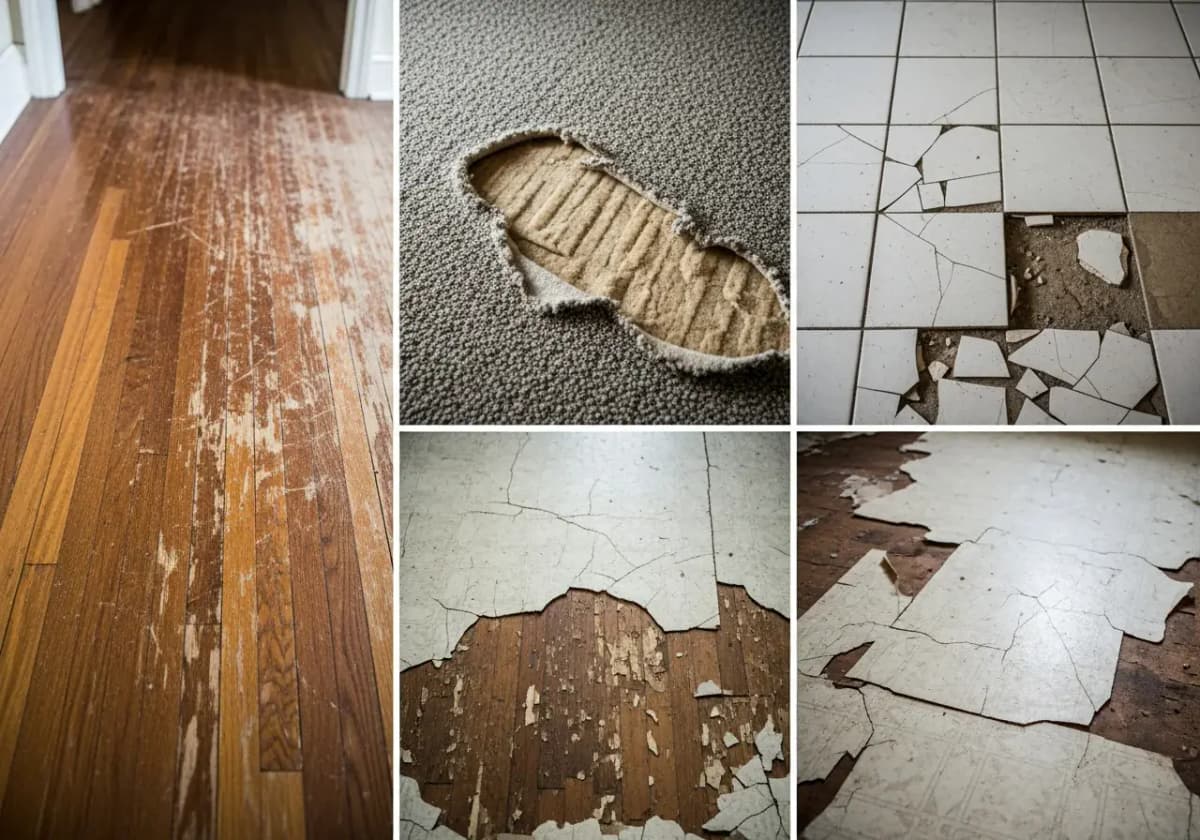
Problem: Uneven or damaged subfloor causing gaps and movement in flooring
Solution: We assess and level the subfloor using self-leveling compound, plywood underlayment, or targeted repairs to create a flat, stable surface that prevents gaps, lippage, and movement in the finished floor.
Problem: Moisture issues in basements or slab-on-grade floors
Solution: We perform moisture testing and install appropriate vapor barriers or moisture-resistant underlayment. For basements, we recommend waterproof LVP or tile over moisture-protected subfloors.
Problem: Transitions between rooms with different flooring heights or types
Solution: We use reducer strips, T-moldings, and custom transitions to create clean, safe connections between different flooring materials and heights — no tripping hazards or awkward gaps.
Problem: Carpet that traps allergens, pet odors, and stains
Solution: We remove old carpet and pad, treat any subfloor staining or odor, and install hard-surface flooring like LVP or hardwood that is easier to clean and does not harbor allergens or pet odors.
Problem: Squeaky or bouncy floors from inadequate subfloor fastening
Solution: We screw down loose subfloor panels, add blocking between joists where needed, and ensure the subfloor is tight and quiet before installing new flooring on top.

Semi-arid high-desert river-valley climate at ~2,100 ft: about 11 inches of precipitation and ~12 inches of snow annually, intense solar radiation, hot dry summers, cold winters, and large daily/seasonal temperature swings.
Intense high-desert UV
Rapid, asymmetric degradation of exterior coatings and siding (south/west elevations fail years ahead of north/east); fading of interior finishes in high-light rooms.
Freeze-thaw and frost depth
Foundation and deck footings must reach below the regional frost depth (on the order of 24 inches — verify with the permitting authority); shallow footings heave.
Ground snow load
Roof, deck, and addition structures sized for the regional ground snow load (on the order of 30 psf — verify with the permitting authority).
Very dry interior air with wide swings
Wood flooring and some click products move, gap, and cup without proper acclimation; tightly-sealed homes concentrate bathroom/shower moisture.
River confluence
Lower-lying parcels near the Payette–Snake confluence may carry FEMA special flood hazard mapping affecting footings, mechanicals, and below-grade scope.
Agricultural-area dust
Increased particulate exposure makes thorough exterior surface preparation important for coating and siding adhesion.
Historic Downtown / Main Street Core
Residential blocks fanning out from North 8th and Main around Payette's intact original central business district. Predominantly 1900s–1930s bungalows and four-squares on small, early-platted lots; the focus of the city's historic-preservation interest.
Common projects in Historic Downtown / Main Street Core:
- •Whole-home systems modernization (rewire, re-pipe, insulate) with character preservation
- •Single-bath gut renovations and second-bathroom additions
- •Historic-sympathetic window and wood-siding repair/replacement
- •Kitchen openings into living space with structural beam work
Postwar Ranch Belt
A wide belt of 1950s–1980s ranch and rancher homes between the historic core and newer subdivisions, on regular lots — where most Payette owner-occupants live.
Common projects in Postwar Ranch Belt:
- •Tub-to-curbless walk-in shower conversions for aging in place
- •Functional kitchen remodels and layout opening
- •Whole-home LVP conversion and subfloor leveling
- •Fiber-cement re-sides and whole-home window replacement
Vista Hills
A newer Payette subdivision with modern construction, current systems, larger regular lots, and builder-grade finishes.
Common projects in Vista Hills:
- •Builder-grade bathroom and kitchen finish upgrades
- •Fiberglass-to-tile walk-in shower conversions
- •Whole-home finish-and-function refreshes
- •Deck additions and window/glazing upgrades
River-Proximate / Lower-Lying Streets
Lower-elevation parcels near the Payette–Snake confluence; some fall within FEMA-mapped special flood hazard areas (Payette County had significant river flooding in 1997).
Common projects in River-Proximate / Lower-Lying Streets:
- •View-oriented elevated decks (with floodplain verification)
- •Floodplain-aware additions and below-grade scope
- •Basement bathroom additions with ejector systems
- •Foundation and structural assessments
Every Payette neighborhood has different housing stock, homeowner priorities, and project considerations. Here is what flooring installation looks like in each area:
Historic Downtown / Main Street Core
Postwar Ranch Belt (1950s–1980s Infill)
Vista Hills
Moisture-Risk and River-Proximate Areas (City-Wide)
Permit authority: City of Payette Building Department (Planning & Zoning / Building) for properties inside city limits; Payette County Building Safety for unincorporated parcels
Online portal: cityofpayette.com
- ✓City of Payette has adopted the 2018 Idaho building codes; Planning & Zoning / Building reachable at 208-642-6024
- ✓City limits and unincorporated Payette County interleave — confirm jurisdiction for the specific address before assuming a process
- ✓Permits required for plumbing, electrical, structural, siding/window, and deck work at code thresholds
- ✓Parcels on septic also involve Southwest District Health; verify lower-lying river-edge parcels against the current FEMA Flood Insurance Rate Map with the floodplain administrator
- ✓Pre-1978 homes: EPA RRP lead-safe practices; Idaho DEQ requirements govern asbestos handling
Helpful ID resources
- City of Payette Building Department (Planning & Zoning / Building) for properties inside city limits; Payette County Building Safety for unincorporated parcels — permit applications, inspections, and code resources
- Idaho DEQ — Asbestos Program — testing and abatement requirements for pre-1980 homes
- EPA Lead Renovation, Repair and Painting (RRP) Program — required certification for work in pre-1978 homes
- ●Plank direction — running planks toward the main light source or along the longest dimension of the room creates the most visually appealing result
- ●Color and tone — lighter flooring makes rooms feel larger and more open; darker flooring adds warmth and formality but shows dust and scratches more
- ●Consistency vs. variation — using the same flooring throughout main living areas creates a seamless, spacious feel; transitioning to tile in wet areas and carpet in bedrooms is also common
- ●Wide plank vs. narrow plank — wider planks (7 inches and above) create a modern, high-end look with fewer seams; narrow planks are more traditional
- ●Texture and finish — smooth finishes show scratches more easily; wire-brushed and hand-scraped textures hide wear and add character
- ●Waterproof requirements — kitchens, bathrooms, laundry rooms, basements, and entryways benefit from waterproof flooring like LVP or tile
Here are the design trends we see most often in Payette flooring installation projects:
- →Curbless/low-threshold accessible walk-in showers (strong aging-in-place demand)
- →Opening closed historic kitchens to living space with engineered beams
- →Dimensionally stable LVP and engineered wood for the dry climate
- →Historic-sympathetic windows and profile-matched wood siding repair
- →Quartz counters and plywood-box cabinetry
- →Fiber-cement re-sides with continuous weather barrier and added insulation
- →View-oriented decks on river-proximate lots
- →Main-floor primary-suite additions for single-level living
Payette home values have risen substantially in recent years. The buyer pool includes Treasure Valley commuters priced into a smaller market and cross-river buyers comparing Payette against Fruitland and Ontario, Oregon inventory. Limited move-up inventory makes additions and whole-home remodels of sound older homes financially competitive with buying up, and many older single-bath homes carry a value discount that bath additions efficiently address.
Avoid these common pitfalls Payette homeowners encounter with flooring installation projects:
Mistake: Installing rigid flooring over an unaddressed older subfloor
Better approach: Payette's older subfloors have settlement, moisture damage, and elevation changes that crack tile and telegraph through plank. Assess and remediate the subfloor — leveling, replacing compromised sections, reconciling elevations — before selecting or installing the surface. On this housing stock the subfloor is the project.
Mistake: Skipping acclimation in Payette's dry climate
Better approach: Payette's very dry, swing-prone interior air moves wood and some click products significantly. Acclimate materials to the home's actual interior conditions before installation and set realistic expectations about seasonal movement. Skipped acclimation is a leading, avoidable failure here.
Mistake: Replacing refinishable original hardwood in a downtown home
Better approach: Original hardwood under later flooring in a downtown Payette home is frequently refinishable and is the highest-value outcome — lower cost than replacement and preserved character. Assess wear layer and soundness before defaulting to tear-out; salvage where viable.
Mistake: Choosing flooring on looks alone, ignoring the climate
Better approach: Material choice in Payette is climate-driven. Favor dimensionally stable products (quality LVP, engineered wood) for much of the housing stock; treat solid wood as a climate-aware specification, not just an aesthetic one. The wrong product for this dryness fails regardless of installation quality.
Mistake: Ignoring multi-elevation transitions in older homes
Better approach: Older Payette homes where additions meet original structure have floors at different heights. Plan transition detailing deliberately rather than forcing a single plane; poorly handled elevation changes create trip hazards and failure points at the junctions.
Most popular remodeling projects in Payette
- ✓Tub-to-walk-in shower conversions
- ✓Single-bath gut renovations and second-bathroom additions
- ✓Whole-home systems modernization of older homes
- ✓Kitchen remodels with structural opening
- ✓Primary-suite and family-room additions
- ✓Whole-home LVP/flooring with subfloor remediation
- ✓Fiber-cement re-siding and window replacement
- ✓Detached and garage-conversion ADUs for multi-generational use

See Your Remodel Before You Build.
Upload a few photos of your kitchen, bathroom, flooring, or exterior and get AI-generated concept visuals tailored to your space, style, and materials — free, no obligation, in about five minutes. Then request a real estimate from our Idaho registered Boise team.
Free concept preview · No credit card · Licensed Idaho contractor
Why does my older Payette home's new floor look uneven or have cracked tiles?
Almost always because the subfloor was not properly assessed and corrected first. Payette's older homes have subfloors with a century of settlement, moisture damage around old plumbing, and elevation changes where additions meet original structure. Rigid flooring like tile or plank installed over that without leveling and remediation telegraphs the unevenness and cracks. Durable results require subfloor repair before the new floor goes down — on older Payette homes the subfloor work is typically the larger part of the project.
Should I refinish the original hardwood in my downtown Payette home or replace it?
Refinish if it is viable — it is frequently the highest-value flooring outcome in a downtown Payette home, preserving irreplaceable character at lower cost than replacement. We assess remaining wear-layer thickness, board soundness, and subfloor condition. Where enough sound material remains, refinishing (with board repairs as needed) outperforms replacement. Where the original floor is too degraded, we convert to replacement with the subfloor remediation these homes usually need.
What flooring holds up best in Payette's dry climate?
Dimensionally stable products handle Payette's very dry air and wide seasonal humidity swings best — quality waterproof-core LVP and engineered wood are strong defaults for much of the city's housing. Solid hardwood is appropriate, especially in older homes, but only with proper on-site acclimation and realistic expectations about seasonal movement in this dryness. The single biggest avoidable failure here is skipping acclimation, regardless of product.
Why does flooring acclimation matter so much in Payette?
Because Payette's interior air is very dry and swings widely between sealed winters and dry summers. Flooring installed without acclimating to the home's actual interior humidity will move after installation — wood gaps and cups, some click products buckle or separate. Proper acclimation lets the material reach equilibrium before it is fixed in place. In Payette's climate this is not a formality; it is one of the main determinants of whether the floor performs.
Can flooring be done as part of my Payette remodel?
Yes, and it usually should be sequenced within the larger project. When flooring is part of a permitted remodel, it is coordinated with the construction sequence (City of Payette permits inside city limits, 208-642-6024, under the 2018 Idaho codes; Payette County for unincorporated parcels), and any structural subfloor repair may fall under the building permit scope. Sequencing flooring with the remodel ensures subfloor work, transitions, and blend lines into existing runs are handled correctly.
What is the best flooring for a whole-home installation?
Luxury vinyl plank (LVP) is the most popular choice for whole-home installations in the Boise area. It is waterproof, scratch-resistant, comfortable underfoot, and available in realistic wood-look patterns. It can be used in every room including kitchens and bathrooms.
How long does flooring installation take?
A typical whole-home flooring installation (1,500-2,000 sq ft) takes 5-10 days including removal of existing flooring, subfloor prep, and installation. Single-room projects may take 1-3 days. Tile installations take longer due to setting and grouting time.
Is LVP or hardwood better?
LVP is more practical — it is waterproof, scratch-resistant, more affordable, and easier to maintain. Hardwood offers a warmer, more premium feel and can be refinished multiple times. Many homeowners use LVP in high-traffic and wet areas and hardwood in formal living spaces.
Do I need to remove furniture before flooring installation?
We handle furniture moving as part of the installation process. We move items out of the work area, install the flooring, and return furniture to position. Homeowners should plan to clear small items, electronics, and fragile objects from the rooms.
Can new flooring be installed over existing flooring?
In some cases, yes. LVP and laminate can often be installed over smooth, level existing floors. However, removing old flooring typically produces a better result because it allows for proper subfloor inspection, repair, and preparation.
How do you handle transitions between different flooring types?
We use manufacturer-matched transition strips — T-moldings, reducers, and thresholds — to create clean, level connections between different flooring materials. Proper transitions are both functional (no tripping hazards) and aesthetic (clean visual lines).
What flooring is best for homes with pets?
LVP with a thick wear layer (20 mil or higher) is the best flooring for homes with pets. It resists scratches, is waterproof for accidents, and is easy to clean. Avoid smooth-finish hardwood and high-gloss laminate, which scratch easily.

Talk to a real project manager
Have Questions? Call Now for a Free In-Home Consultation.
Mon–Fri 7 AM–6 PM · Idaho registered & insured · No obligation
Russ S. — Project Manager
Russ S. — Project Manager
Start your flooring installation in Payette
Get a free, no-obligation estimate for flooring installation in Payette, ID. We handle design, permits, and every detail of construction.
Get Your Free Estimate