
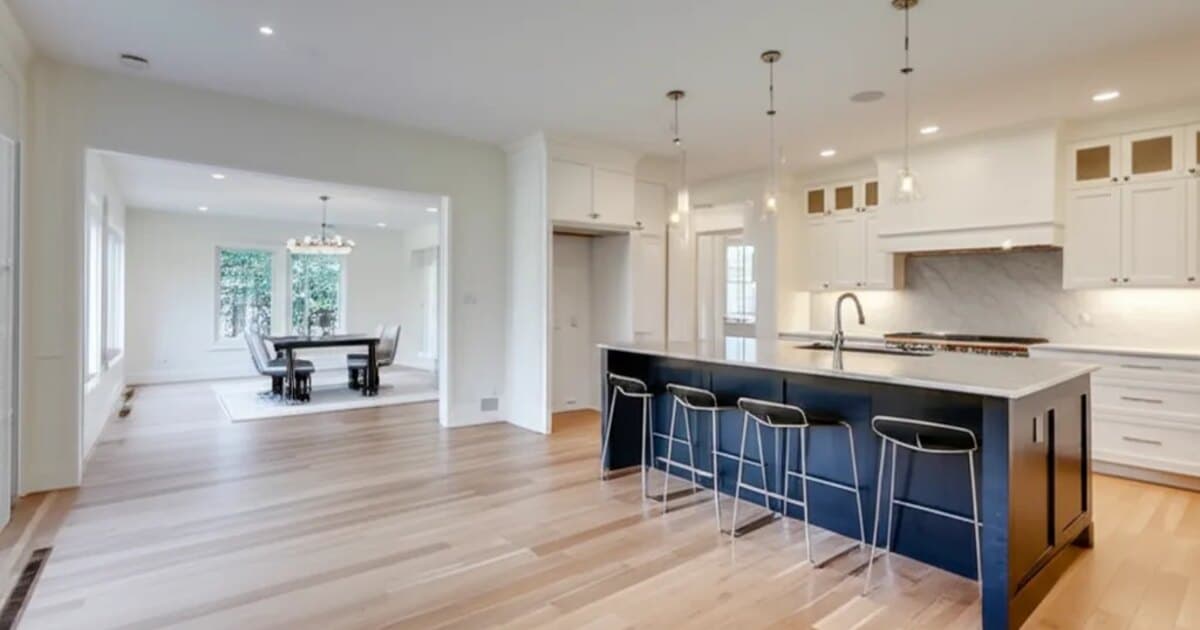
Whole-Home Interior Remodeling in Boise, Idaho
When multiple rooms need updating, a whole-home remodel delivers the best value and the most cohesive result. Iron Crest Remodel coordinates every trade — framing, plumbing, electrical, flooring, painting, and finish — under one project manager.
- Multi-room renovation coordination
- Open floor plan conversions
- Complete kitchen and bathroom remodels
- Whole-house flooring replacement
- Interior painting (all rooms)
- Lighting and electrical upgrades
- Door and trim replacement
- Built-in storage and shelving
- Laundry room renovations
- Home office and flex space builds
Timeline
3 – 6 months
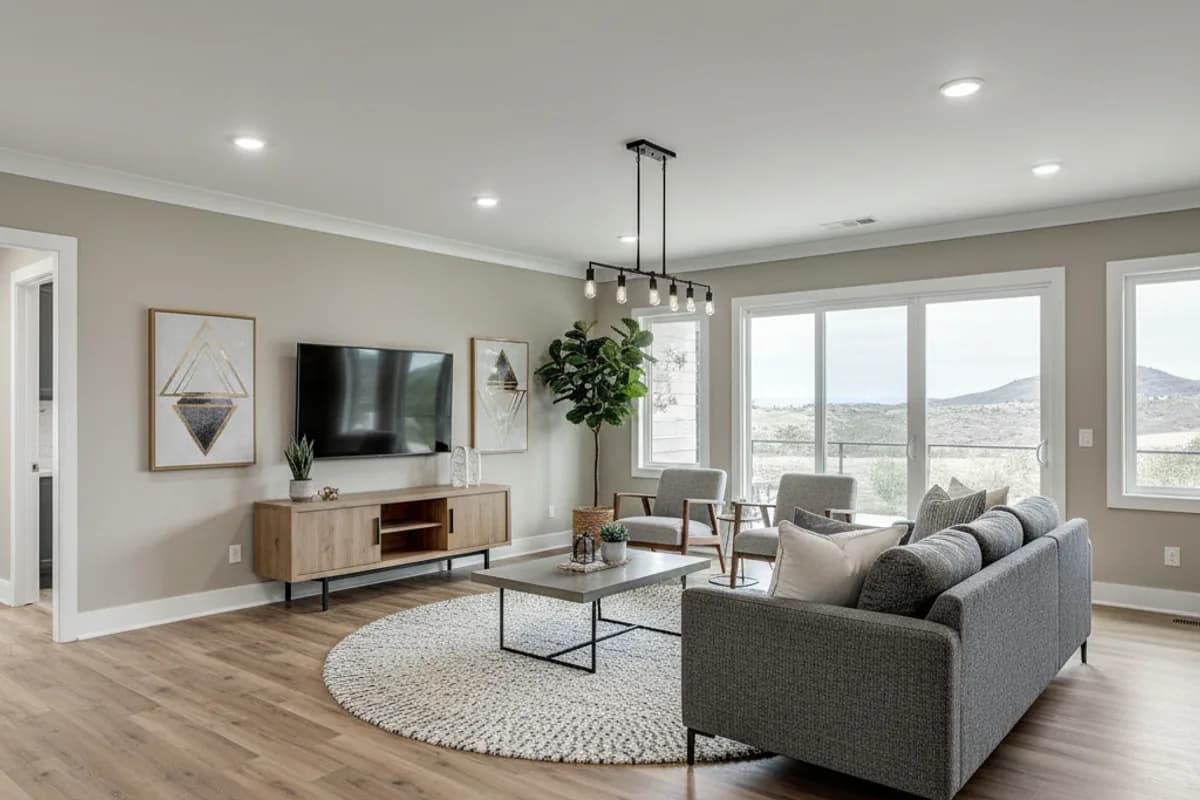
A real whole-home remodeling project — see the finished result, the project details, and the full transformation story.
Whole-Home Assessment
We walk every room of your home, document existing conditions, discuss your priorities, and create a phased renovation plan that minimizes disruption.
Comprehensive Design
Our team develops a unified design across all rooms — coordinating colors, materials, flooring transitions, and fixture styles for a cohesive look throughout.
Phased Construction
Work proceeds room by room or zone by zone so you can continue living in the home. We coordinate all trades to avoid scheduling conflicts and delays.
Quality Assurance
Each phase undergoes inspection before the next begins. A final comprehensive walkthrough covers every room and every detail before project completion.

See Your Remodel Before You Build.
Upload a few photos of your kitchen, bathroom, flooring, or exterior and get AI-generated concept visuals tailored to your space, style, and materials — free, no obligation, in about five minutes. Then request a real estimate from our Idaho registered Boise team.
Free concept preview · No credit card · Licensed Idaho contractor
How long does a whole-home remodel take?
Whole-home remodels typically take 3-6 months depending on scope. A cosmetic refresh (paint, flooring, fixtures) can be done in 6-8 weeks. Major renovations involving layout changes, kitchens, and bathrooms take 4-6 months.
Can I live in my home during a whole-home remodel?
In most cases, yes. We phase the work so you always have functioning living spaces, a usable kitchen or temporary setup, and at least one working bathroom. For extensive gut renovations, we may recommend temporary relocation for 2-4 weeks.
Is it cheaper to remodel everything at once?
Yes. Whole-home remodels are typically 10-20% more cost-effective than doing the same work as separate projects. You save on mobilization costs, material bulk pricing, and trade coordination.
Plan your whole-home remodeling project with our in-depth guides.
Explore our in-depth guides to understand whole-home remodeling costs, timelines, and planning details for cities across the Treasure Valley.
See detailed whole-home remodeling information specific to your city, including local permit requirements, housing stock insights, and neighborhood-level recommendations.

Talk to a real project manager
Have Questions? Call Now for a Free In-Home Consultation.
Mon–Fri 7 AM–6 PM · Idaho registered & insured · No obligation
Russ S. — Project Manager
Russ S. — Project Manager
Ready to Start Your Remodeling Project?
Get a free, no-obligation estimate from Boise's trusted remodeling experts. Licensed, insured, and ready to build.
Whether you’re modernizing a ranch home, creating an open floor plan, or planning a phased renovation, our in-depth guides help Boise homeowners make informed decisions.
Planning a whole-home renovation? Our guides cover budgeting, sequencing, where the money does the most work, and Boise-specific considerations.

Homeowners often wonder whether it's better to remodel one room at a time or tackle the entire home at once. While a whole-home remodel requires a larger upfront investment, it consistently delivers better value than piecemeal renovations — typically saving 10–20% compared to completing the same scope as separate projects over several years.
The savings come from several sources. Mobilization and demobilization costs — bringing crews, equipment, and dumpsters to your home — happen once instead of multiple times. Material purchasing in larger quantities unlocks contractor pricing on flooring, tile, cabinetry, and fixtures. Subcontractor scheduling is more efficient when electricians, plumbers, and HVAC technicians can address all their work in a single multi-day visit rather than returning for individual room projects.
Beyond cost, a whole-home approach ensures design cohesion. When rooms are remodeled years apart, styles shift, materials get discontinued, and the home can feel like a patchwork of different eras. A unified renovation creates a home that flows naturally from room to room with consistent finishes, proportions, and architectural character.
There's also the accountability advantage. With a single general contractor managing every aspect of your renovation, there's one point of contact, one warranty, and one team responsible for quality across every room. No finger-pointing between different contractors about where one project ends and another begins.
In Boise, many homes built between the 1960s and 1990s are reaching the age where multiple systems need attention simultaneously — outdated electrical panels, aging plumbing, worn flooring, and dated kitchens and bathrooms. For these homes, a comprehensive whole-home remodel is often the most practical and economical path to a modern, functional living space. You endure one disruption period instead of years of intermittent construction.

A well-planned phasing strategy is the difference between a manageable whole-home remodel and a chaotic one. We develop a detailed phasing plan before any demolition begins, tailored to your home's layout, your family's needs, and Boise's seasonal construction patterns.
Zone-Based Phasing
Zone-based phasing divides your home into distinct work areas that can be completed sequentially while you continue living in the unaffected zones. The typical sequence starts with bedrooms and private spaces — these are relatively straightforward (flooring, paint, trim, closet updates) and give you finished rooms to retreat to as work moves through the house. Next come the common living areas: living room, dining room, hallways, and entry. Finally, the kitchen and bathrooms are tackled last because they involve the most complex mechanical work (plumbing, electrical, ventilation) and have the biggest impact on daily living. This approach ensures you always have functional living space throughout the project.
Priority-Based Phasing
Priority-based phasing addresses the most critical systems first, regardless of room location. Structural issues (sagging beams, foundation concerns, load-bearing wall modifications) are resolved before any cosmetic work begins. Mechanical systems come next: electrical panel upgrades, plumbing re-piping, HVAC replacement or ductwork modifications. Insulation and drywall follow, and finish work (flooring, paint, trim, fixtures) happens last. This sequence prevents the costly mistake of installing beautiful finishes only to tear them out later when a hidden structural or mechanical problem surfaces.
Seasonal Phasing in Boise
Boise's climate creates natural windows for different phases of construction. We recommend starting demolition in early spring (March) when weather is mild enough to keep windows open for dust ventilation. Heavy construction — framing, mechanical rough-ins, drywall — is best scheduled through summer when long daylight hours and warm temperatures maximize crew productivity and allow outdoor material staging. The goal is to complete all finish work by Thanksgiving, so your family can enjoy the holidays in a completed home. This seasonal timeline also avoids the challenges of winter construction in Boise: frozen ground for any foundation work, heating costs in an open construction zone, and holiday scheduling disruptions.
Read our complete phasing strategy guide for detailed timelines and sequencing recommendations.
Most Boise homeowners prefer to stay in their home during a whole-home remodel, and with proper planning, it's usually feasible. The key is setting up temporary systems and establishing clear boundaries between living space and construction zones.
Temporary Kitchen Setup
When your kitchen is under construction, a temporary kitchen keeps daily life manageable. We help you set up a functional station in your garage, spare bedroom, or dining area with the essentials: a microwave, mini-fridge, electric hot plate or induction burner, and a utility table for prep space. A 5-gallon water dispenser and a plastic bin for dish washing complete the setup. Most families adapt to this arrangement within a few days, especially when they know it's temporary. We typically keep the kitchen phase to 6–8 weeks, and the temporary kitchen only needs to serve during the period between cabinet demolition and countertop installation.
Bathroom Access Planning
The single most important rule of living at home during a remodel: always maintain at least one fully working bathroom. We never take all bathrooms offline simultaneously. If your home has two or more bathrooms, we remodel them sequentially so one is always available. For homes with only one bathroom, we complete the rough-in plumbing and waterproofing as quickly as possible, typically restoring basic functionality (working toilet and shower) within 5–7 days even if finish work continues afterward.
Dust Containment
Construction dust is the quality-of-life concern clients raise most often during a whole-home remodel. Our containment strategy uses multiple layers of protection: ZipWall barrier systems create floor-to-ceiling plastic barriers between work zones and living areas, negative air pressure machines pull dust-laden air out of the work zone and exhaust it outdoors through filtered systems, and ram board floor protection covers all finished surfaces in transition areas. We also seal all HVAC supply and return vents in active work zones to prevent dust from circulating through your entire duct system. Despite these measures, we recommend covering furniture in adjacent rooms and using a standalone HEPA air purifier in your primary living space during active demolition phases.
Pets and Children Safety
Construction zones present real hazards for children and pets: exposed nails, sharp materials, open electrical boxes, and tools. We maintain locked barriers on all active work zones and conduct end-of-day safety walks to secure the site. For families with young children or pets, we recommend establishing a dedicated safe zone — typically bedrooms and a family room — that remains completely separated from construction activity. Dogs should be confined or kenneled during active demolition to prevent escape through open exterior doors and exposure to dust and debris. We also ensure all construction chemicals (adhesives, sealants, solvents) are stored in locked areas inaccessible to children and animals.
For more tips, read our guide to living at home during a remodel.

The greatest advantage of a whole-home remodel over room-by-room renovations is the opportunity to create a unified design language throughout your home. When every room is updated at once, materials, finishes, and proportions can be coordinated intentionally rather than matched after the fact.
Design cohesion starts with establishing a material palette — a set of foundational selections that carry through the entire home. This palette typically includes one primary flooring material for the main level (often luxury vinyl plank, engineered hardwood, or tile), a consistent trim and door style (shaker-style doors with clean-line casing is the most popular choice in Boise right now), coordinated hardware finishes across all rooms, and a cohesive color palette that allows individual rooms to have their own character while maintaining visual flow between spaces.
- Unified flooring material throughout the main level for seamless visual flow
- Consistent door and trim style — same profile, same paint finish in every room
- Coordinated hardware finish (matte black, brushed nickel, or satin brass) on all doors, cabinets, and fixtures
- Cohesive color palette with a base neutral and 2–3 accent tones that work across rooms
- Matching electrical outlets, switch plates, and cover plate finish throughout the home
- Consistent lighting color temperature (2700K–3000K) across all fixtures for uniform warmth
One of the most common questions we hear is "where does the money go?" in a whole-home remodel. The following breakdown is based on a $150,000 total project budget — a mid-range whole-home remodel for a typical 1,500–2,500 square foot Boise home. Your actual allocation will vary based on scope, but these percentages provide a useful planning framework.
| Room / Area | Typical % of Budget | Cost Range ($150K Total) |
|---|---|---|
| Kitchen | 25–35% | $37,500 – $52,500 |
| Master Bathroom | 15–20% | $22,500 – $30,000 |
| Secondary Bathrooms | 8–12% | $12,000 – $18,000 |
| Flooring (Whole Home) | 10–15% | $15,000 – $22,500 |
| Painting & Trim | 5–8% | $7,500 – $12,000 |
| Electrical & Lighting | 5–8% | $7,500 – $12,000 |
| Contingency | 10–15% | $15,000 – $22,500 |
The contingency line is not optional — it's essential. Whole-home remodels, especially in older Boise homes, routinely uncover hidden conditions (outdated wiring, deteriorated plumbing, insufficient insulation, termite damage) that require additional work. A 10–15% contingency protects your budget from these surprises without forcing compromises on your finish selections.
For a detailed breakdown by material and labor, read our detailed whole-home remodel cost guide.
Whole-home remodels almost always require permits — and often multiple permits across different trades. Understanding the permitting process upfront prevents costly delays and ensures your renovation meets code requirements that protect your family and your investment.
In Boise and Ada County, permits are required for any work that involves structural changes (removing or modifying walls, adding headers or beams), electrical modifications (new circuits, panel upgrades, rewiring), plumbing changes (moving or adding fixtures, re-piping), HVAC modifications (new ductwork, system replacement, adding zones), and window or door changes that alter the size or location of openings in exterior walls. Cosmetic work — painting, flooring, cabinet replacement in the same footprint — generally does not require permits.
For multi-trade projects like a whole-home remodel, the City of Boise typically requires separate permits for each discipline: a building permit for structural work, an electrical permit, a plumbing permit, and a mechanical permit for HVAC. Each permit triggers its own inspection schedule — rough-in inspections before walls are closed, and final inspections after completion. We coordinate all permit applications and schedule inspections as part of our project management, so you never have to visit the permit office or wonder about inspection timing.
For a complete overview, read our Boise permits and inspections guide.
Whole-home remodels are complex projects that benefit enormously from a design-build approach — where a single firm handles both the design and construction under one contract. The traditional alternative — hiring an architect or designer separately, then bidding out construction to a general contractor — introduces friction, miscommunication, and cost overruns that compound across a multi-room renovation.
With design-build, you have a single point of contact from the first design meeting through the final walkthrough. There's no gap between what the designer envisions and what the builder can execute, because they're the same team. Design decisions are made with real-time cost awareness — your designer knows the budget implications of every material choice, layout change, and structural modification before it's committed to paper. This prevents the painful cycle of designing a dream home, getting bids that exceed your budget, and redesigning to cut costs.
The timeline advantages are significant. A traditional design-bid-build process for a whole-home remodel can take 4–6 months before construction even begins (design phase, bid solicitation, contractor selection, value engineering). Design-build compresses that pre-construction timeline to 6–10 weeks because design and construction planning happen concurrently. For a project that may take 4–6 months to construct, starting construction 2–3 months earlier means moving into your finished home substantially sooner.
Learn more about how this process works in practice by reading our design-build process guide.

Every remodel is shaped by the home it starts with. Boise's housing stock spans nearly a century of construction practices, and understanding your home's era helps predict what we'll find behind the walls and how to best approach the renovation.
Boise Home Styles by Era
North End craftsman and bungalow homes (1910s–1940s) offer charm and character but often have knob-and-tube wiring, galvanized plumbing, plaster walls, and small room sizes that reflect their era. A whole-home remodel in the North End typically includes electrical rewiring, plumbing replacement, and creative solutions for opening up floor plans while preserving period details. Bench and Vista ranch homes (1950s–1970s) have more conventional construction but frequently feature outdated panel boxes, copper or early PVC plumbing, and minimal insulation. Southeast Boise split-level and two-story homes (1980s–1990s) are generally easier to remodel but may have builder-grade finishes throughout and awkward floor plan transitions between levels. Newer subdivision homes (2000s and later) are typically in better structural condition but may benefit from layout improvements, material upgrades, and personalization beyond the original builder-grade selections.
Insulation and Energy Upgrades
A whole-home remodel is the ideal — and most cost-effective — time to address insulation deficiencies. Many Boise homes built before 1980 have insufficient wall insulation (often R-11 or less in 2×4 walls, compared to the current code requirement of R-21 for 2×6 walls). When walls are opened for electrical, plumbing, or structural work, upgrading insulation adds minimal cost to the project but delivers significant energy savings. We evaluate attic insulation (target R-49 in Boise's climate zone), crawlspace insulation, and air sealing opportunities during the planning phase. For homes with 2×4 exterior walls that won't be re-framed, blown-in dense-pack cellulose or injection foam can improve thermal performance without altering the wall thickness.
Foundation and Structural Considerations
Boise homes sit on a variety of foundation types depending on their age and neighborhood. Older homes (pre-1960s) often have concrete block or poured concrete foundations with crawlspaces, and some show signs of settling or moisture intrusion after decades. Homes from the 1970s–1990s may have slab-on-grade or raised foundations, while newer construction frequently uses post-tension slabs. When a whole-home remodel involves opening up floor plans by removing walls, we conduct a thorough structural assessment first. Load-bearing wall removal requires properly engineered headers and support — work that must be designed by a structural engineer and permitted. We identify these requirements during the planning phase so they're included in the project scope and budget from day one, not discovered as costly surprises during demolition.
A whole-home remodel involves hundreds of individual selections. Organizing these decisions into two phases — strategic decisions that set the direction, and room-by-room selections that fill in the details — keeps the process manageable and prevents decision fatigue.
Strategic Decisions (Month 1)
- Overall scope and total budget allocation
- Phasing plan and timeline
- Design style and aesthetic direction
- Primary flooring type for main level
- General color palette (base neutrals and accent tones)
Room-by-Room Selections (Months 1–2)
- Kitchen cabinets, countertops, and backsplash
- Bathroom tile, fixtures, and vanities
- Lighting fixtures for each room
- Door and trim style and finish
- Paint colors for each room
- Hardware finishes (knobs, pulls, hinges)
Whole-home remodels, especially in older Boise homes, frequently uncover hidden conditions that weren't visible during the initial assessment. Common discoveries include hidden termite damage in framing, asbestos in older homes (popcorn ceilings, pipe insulation, floor tile mastic in pre-1980 construction), undersized HVAC systems that can't adequately condition a newly opened floor plan, and plumbing stack issues where cast-iron drain lines have corroded internally over decades. When we find something unexpected, our process is transparent:
- 1
We stop work in the affected area and document the issue with photos and measurements.
- 2
We explain the problem, its implications for the project, and the available options for addressing it.
- 3
We provide a written change order with the additional cost, any timeline impact, and the consequences of not addressing it.
- 4
You approve the change order in writing before any additional work begins.
- 5
The change is added to the project record with before-and-after documentation for your files.
No surprise charges. No scope creep without your knowledge. This process is especially important in whole-home remodels where the cumulative effect of multiple small changes can significantly impact the overall budget if not carefully managed. Our project management system tracks every change order against the original budget so you always know exactly where your project stands financially.
Boise's strong real estate market makes whole-home remodeling a sound investment, though how far the money goes varies significantly by the type of work performed. Kitchen updates consistently deliver some of the stronger returns in the Boise market: Remodeling Magazine's Cost vs. Value report has consistently shown a minor kitchen remodel recovering close to its full cost at resale, and a major mid-range remodel roughly half. Bathroom renovations recover roughly three-quarters of their cost (2024 national ≈74%), particularly when updating master bathrooms to current buyer expectations (walk-in showers, double vanities, modern tile).
Flooring replacement throughout the home changes how the entire house looks and feels for less than most room-level scopes. We publish no cost-recovery percentage for it: Cost vs. Value does not report whole-home flooring, and we have no Boise appraisal data of our own.
Whole-home remodels that modernize floor plans — opening up kitchen-to-living-room sight lines, creating open-concept main living areas, and improving flow between rooms — are the scopes we are asked for most often. We publish no recovery percentage for them. More importantly, these renovations often make the difference between a home that sells quickly at asking price and one that sits on the market because buyers see it as dated and in need of work.
Of course, resale isn't the only reason to remodel. The daily quality-of-life improvement of living in a home that functions well, looks beautiful, and reflects your family's needs is valuable in ways that transcend resale calculations. Read our Boise remodel value analysis for a breakdown by project type.
Explore our in-depth guides to plan your whole-home remodel with confidence.
How do you contain dust and debris during a whole-home remodel?
Dust containment is one of the biggest challenges in a whole-home remodel because work is happening across multiple rooms simultaneously. We use ZipWall barrier systems to isolate active work zones from living areas, combined with negative air pressure machines that pull dust away from occupied spaces and exhaust it outside. All HVAC returns in active zones are sealed to prevent dust from circulating through your ductwork. We also lay ram board or heavy-duty floor protection on all finished surfaces in transition areas. Despite these measures, some fine dust is inevitable during demolition phases — which is one reason we discuss temporary relocation options for particularly extensive projects.
How do you maintain design cohesion when remodeling every room?
Design cohesion starts in the planning phase, not during construction. Before any demolition begins, we develop a unified design package that establishes your material palette: one primary flooring type for the main level, a consistent trim and door style, coordinated hardware finishes (handles, hinges, switch plates), and a cohesive color scheme. We select a lighting color temperature (typically 2700K–3000K) that carries through every room. This palette document becomes the reference point for every room-level decision, ensuring that even as individual rooms get their own character, the home reads as a single, intentionally designed space rather than a collection of separate projects.
What order should rooms be remodeled in during a whole-home project?
The optimal phasing order depends on your home and living situation, but a common approach is: start with bedrooms and private spaces (so you have finished rooms to retreat to), then move to common areas like living and dining rooms, and tackle the kitchen and bathrooms last since they involve the most complex plumbing and mechanical work. Within each phase, we address structural and mechanical issues first (framing, electrical, plumbing rough-in), then insulation and drywall, and finally finishes. This sequence minimizes rework and keeps at least some functional living space available throughout the project.
When does it make sense to temporarily move out during a whole-home remodel?
Temporary relocation makes sense when the scope includes all bathrooms simultaneously (you need at least one working bathroom), when significant structural work affects the home's livability (removing load-bearing walls, replacing the HVAC system), or when household members have health sensitivities to dust and construction chemicals. For most whole-home remodels in Boise, we can phase the work so you retain access to a bedroom, bathroom, and temporary kitchen setup. However, if your project includes full kitchen and all-bathroom renovation at the same time, a 4–8 week temporary relocation is often less stressful and can actually shorten the project timeline by 10–15% since crews can work without occupancy constraints.
The following government agencies, industry organizations, and official resources provide additional information relevant to your remodeling project.
Research your whole-home remodeling project with our in-depth Boise-area guides.
Researched reports on the specific whole-home remodeling questions Boise homeowners run into — hard water, old housing stock, local code, and material performance in the Treasure Valley climate.
Browse completed whole-home remodeling projects from across the Treasure Valley. See real results, project details, and transformation stories.
Whole-home remodels coordinate multiple trades under one contract. These are the most commonly bundled services.
We provide whole-home remodeling to homeowners across the Treasure Valley and southwest Idaho. Each city has its own dedicated page with local permitting, climate, and project detail — and each county hub covers the surrounding communities we also serve.
Ready to Start Your Remodeling Project?
Get a free, no-obligation estimate from Boise's trusted remodeling experts. Licensed, insured, and ready to build.