
Best Materials for Whole-Home Remodeling in Boise
Explore the most popular material options for whole-home remodeling in Boise, with pricing, durability, and style comparisons to help you choose.
Quick answer
A typical whole-home remodel takes 3 to 6 months of active construction, depending on the size of the home and scope of work. Including planning, design, permitting, and material lead times, the total project timeline is usually 5 to 9 months from first meeting to final walkthrough.
Boise, ID · Whole-Home Remodeling
Planning whole-home remodeling in Boise?
Read the full guide below — or get your project priced now. Free, no-obligation estimates from an Idaho registered local team, backed by a 1-year workmanship warranty.
- Licensed Idaho RCE-6681702
- 1-Year Workmanship Warranty
- $2M Liability Coverage
- Free, No-Obligation Estimates


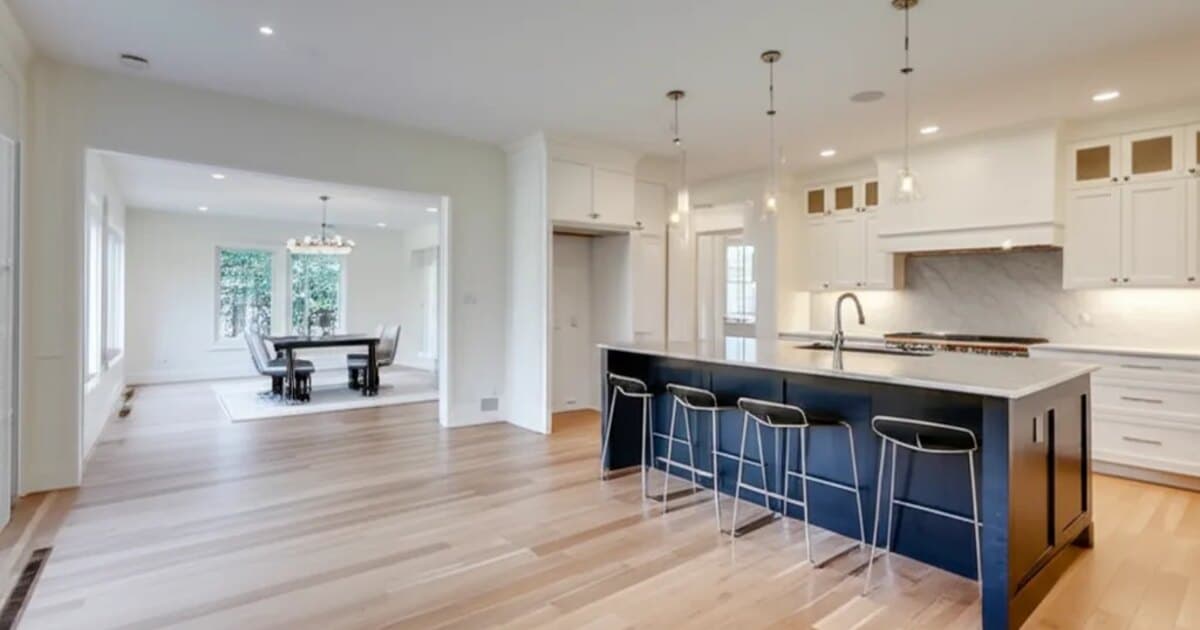
Boise's climate, housing stock, and design culture have shaped a distinct set of material preferences that experienced whole-home remodelers in Ada County know well — and that out-of-state design trends sometimes get wrong. Flooring is the single most visible whole-home investment, and Boise's semi-arid climate creates a unique set of constraints. The temperature swing across a median year — about 8°F at the coldest to about 104°F at the hottest, at the Boise Airport station — creates meaningful expansion and contraction cycles for any organic material. Solid hardwood floors — while beautiful and appropriate in the North End's Craftsmans where original fir floors set the design standard — require careful acclimation and humidity-controlled installation to prevent gapping in the dry part of a Boise winter. Engineered hardwood performs better across the full temperature range because its cross-ply construction resists the cupping and gapping that solid wood experiences. Luxury vinyl plank (LVP) at the 12-mil or higher wear layer has become the dominant choice in Boise's 1980s–2000s housing stock because it tolerates the humidity swings, performs over in-floor radiant heat systems (increasingly popular as homeowners upgrade mechanical systems), and delivers a hardwood aesthetic at a cost point that allows the flooring budget to stretch to high-quality kitchen and bath finishes. Cabinet material selection in Boise benefits from understanding that the local market has shifted decisively away from oak — the dominant finish in homes built between 1975 and 2000 — toward painted shaker, stained maple, and quarter-sawn white oak in the higher-end renovations. Painted MDF doors deliver the cleanest shaker look at a value price point, but Boise's swing between humid-weather spells and a very dry winter favors all-plywood box construction over particleboard, which can swell and delaminate at joints over time. Semi-custom and custom cabinetry suppliers in the Treasure Valley have responded to demand with lead times that typically run 6–10 weeks — a factor that Iron Crest incorporates into project scheduling from the first planning meeting so cabinet arrival never becomes the critical-path bottleneck. Countertop choices in Boise have converged strongly on quartz for kitchen surfaces and a mix of quartz and porcelain slab for bathroom vanities. Quartz's non-porous surface is ideal for a semi-arid climate because it requires no sealing, tolerates the dry air that causes natural stone to exhibit micro-cracking over decades, and holds up to the direct sun exposure that a Boise year — roughly 120 clear days and another 90 partly cloudy ones — creates for south-facing kitchen windows. Quartzite and granite remain popular for buyers who prefer natural stone, but they require sealed maintenance that many Boise homeowners underestimate. Butcher block and concrete countertops have niche followings in the North End design community and perform adequately with proper maintenance, but are less forgiving of the humidity extremes Boise creates. Tile selection for bathrooms and mudrooms benefits from understanding Boise's freeze-thaw reality: any tile installed in spaces that could be subject to temperature swings — mudrooms adjacent to exterior walls, bathrooms on exterior corners — should be specified with a freeze-thaw-rated coefficient. Large-format porcelain tiles (24x24 or 24x48) deliver the minimal-grout aesthetic that is dominant in current Boise remodel design while also providing excellent thermal performance. Mosaic glass tile has seen reduced specification in local projects as designers and clients have moved toward the larger-format, neutral-toned palettes that make small Boise bathrooms feel more spacious. Paint selections in Boise's whole-home projects trend toward warm whites, soft greiges, and earthy terracottas that complement the high-desert landscape visible from virtually every Boise neighborhood. Benjamin Moore's Chantilly Lace, Sherwin-Williams Accessible Beige, and similar warm-neutral palettes dominate the 2020s Boise remodel aesthetic, replacing the cool gray that ruled the 2010s. Exterior-grade primers are mandatory on any interior walls adjacent to Boise's western and southern exposures, where UV transmission through modern window packages fades standard interior paint faster than it does on the shaded elevations.
Choosing the right materials is one of the most important decisions in any whole-home remodeling project. The materials you select affect the look, durability, maintenance requirements, and overall cost of the finished project. Here is a detailed look at the most popular material options for whole-home remodeling in Boise and the Treasure Valley.
These are the most commonly used materials for whole-home remodeling projects in Boise. Each has different characteristics that affect cost, durability, and style:

Luxury Vinyl Plank (LVP)
$4–$10 per sq ft installedThe most popular whole-home flooring choice in the Treasure Valley. LVP is waterproof, scratch-resistant, available in realistic wood-look patterns, and installs quickly over existing subfloors. It provides a consistent look from room to room.
Best for: Main living areas, hallways, bedrooms, and kitchens

Engineered Hardwood
$8–$16 per sq ft installedA premium flooring option that provides real wood appearance and feel with better dimensional stability than solid hardwood. Available in oak, hickory, maple, and walnut species with various stain options.
Best for: Living rooms, dining rooms, and bedrooms in climate-controlled environments

Quartz Countertops
$50–$120 per sq ft fabricated and installedEngineered quartz is the go-to countertop surface for kitchen and bathroom renovations. Non-porous, stain-resistant, and available in hundreds of colors and patterns. Consistent appearance across multiple rooms.
Best for: Kitchen countertops, bathroom vanities, and laundry surfaces

Semi-Custom Cabinetry
$250–$600 per linear foot installedSemi-custom cabinets offer the best balance of quality, options, and value for whole-home projects. More door styles, finishes, and sizing flexibility than stock cabinets, with 4-8 week lead times.
Best for: Kitchen, bathroom, laundry, and built-in storage throughout the home

Interior Paint — Premium Grade
$3–$6 per sq ft of wall area (labor and material)High-quality interior paints from brands like Benjamin Moore, Sherwin-Williams, or PPG provide better coverage, durability, and washability than builder-grade paint. Consistent sheen and color throughout the home.
Best for: Every wall and ceiling surface in the home

Boise has a semi-arid, four-season climate with hot, dry summers (90-105°F), cold winters (15-35°F), and low annual precipitation. This climate directly affects material choices, construction scheduling, and long-term durability of remodeling work.
Temperature Extremes (15°F to 105°F range)
Exterior materials must handle dramatic temperature swings. Windows need strong thermal performance. Interior comfort depends on insulation quality and HVAC sizing.
Low Humidity and Dry Air
Wood materials can dry, shrink, and crack. Hardwood floors may develop gaps in winter. Bathroom ventilation is still critical because bathrooms create localized high-humidity environments.
Freeze-Thaw Cycles
Exterior tile, concrete, and masonry must handle freezing and thawing without cracking. Foundation work has specific frost-depth requirements in the Boise area.
UV Exposure (300+ sunny days)
Exterior paint, siding, and stain fade faster under constant UV. South-facing and west-facing surfaces require UV-resistant materials and more frequent maintenance.
Construction Season
Foundation and exterior work is best scheduled March through November. Interior remodeling can happen year-round. Winter concrete pours require special cold-weather precautions.
In Boise, the combination of dry summers, cold winters, and variable humidity levels means that material selection should prioritize durability and climate resistance. We recommend choosing materials rated for the temperature extremes and moisture conditions typical of Ada County.
Material availability affects both timeline and cost. Standard materials are typically available within 1-2 weeks from local suppliers in Boise. Custom or specialty materials may have lead times of 4-14 weeks. We recommend selecting materials early in the design phase to avoid schedule delays.
Typical lead times
- ● Standard/stock materials: 1-2 weeks
- ● Semi-custom orders: 3-6 weeks
- ● Full custom/specialty items: 6-14 weeks
- ● Imported or artisan materials: 8-16+ weeks
Local factors — Boise's housing stock and typical construction eras, the climate conditions that drive material and scheduling choices, and permitting through City of Boise Planning and Development Services — are covered in full on our Boise page for this service, alongside 5 common project types.
Whole-Home Remodeling in Boise: housing stock, climate & permits →How long does a whole-home remodel take?
A typical whole-home remodel takes 3 to 6 months of active construction, depending on the size of the home and scope of work. Including planning, design, permitting, and material lead times, the total project timeline is usually 5 to 9 months from first meeting to final walkthrough.
Do whole-home remodels require permits?
Yes. Most whole-home remodels involve structural, electrical, plumbing, and mechanical work that requires permits in Ada County and Canyon County. We manage all permit applications, inspections, and code compliance as part of our scope.
What are the most popular remodeling projects in Boise?
Kitchen remodels, primary bathroom remodels, ADU construction, and whole-home renovations of 1980s-1990s homes are the most common projects we complete in Boise. Open-concept kitchen conversions and walk-in shower installations are especially popular.
Planning whole-home remodeling in Boise?
Get expert guidance and a free estimate for your whole-home remodeling project in Boise, ID.
Get Your Free Estimate