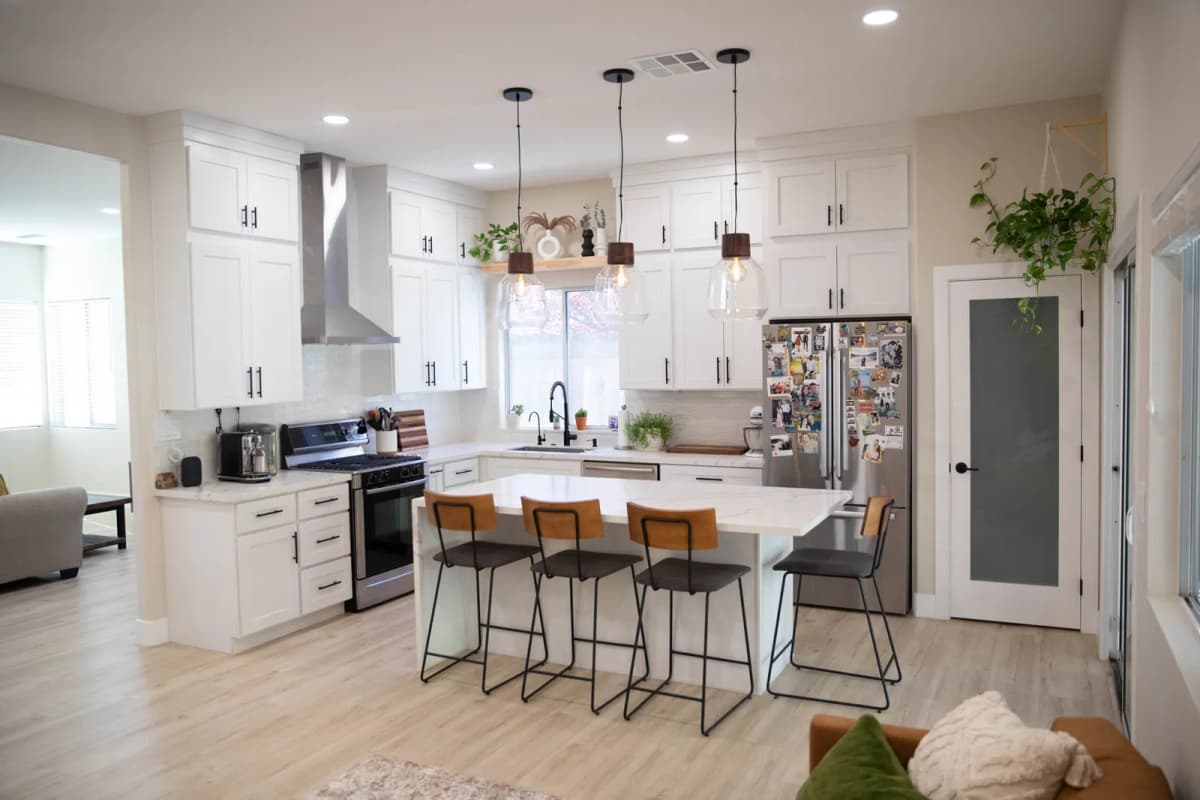
Kitchen Remodeling Services
From outdated galley kitchens to modern open-concept layouts, Iron Crest Remodel handles every aspect of your kitchen renovation — cabinets, countertops, plumbing, electrical, flooring, lighting, and finish work.

- Custom cabinet design and installation
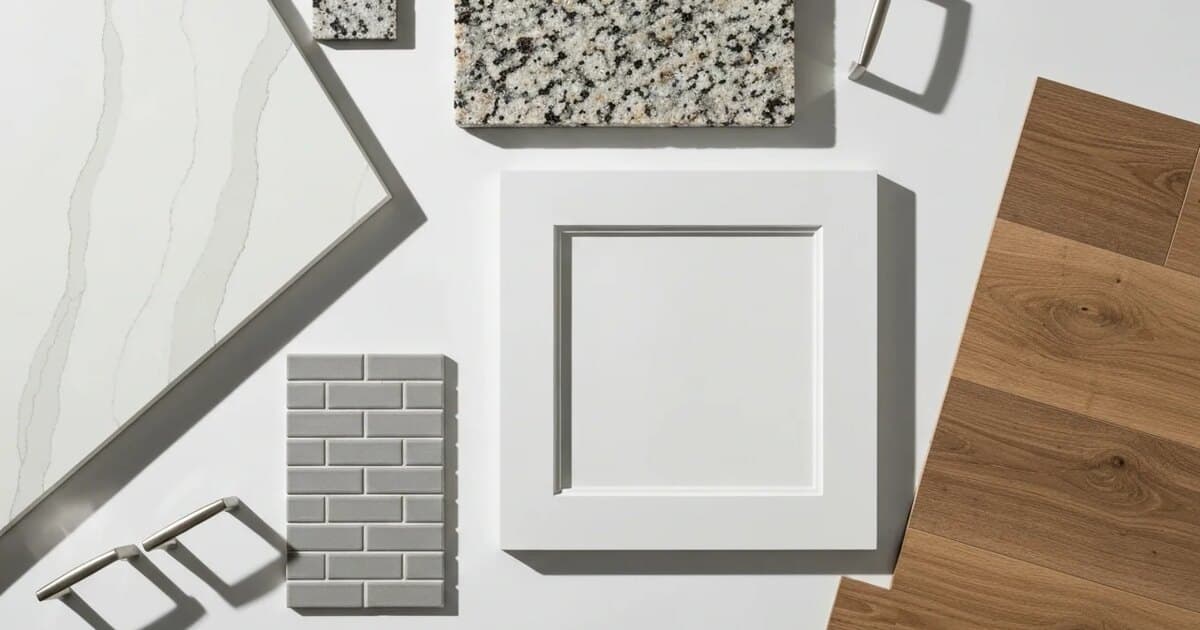
- Quartz, granite, and butcher block countertops
- Kitchen island and peninsula builds
- Backsplash tile installation
- Under-cabinet and recessed lighting
- Plumbing fixture upgrades
- Appliance installation coordination
- Open-concept wall removal (load-bearing analysis)
- Pantry and storage optimization
- Hardwood, tile, and LVP flooring
Timeline
6 – 10 weeks

In-Home Consultation
Our design team visits your home to assess the existing kitchen, discuss your goals, take measurements, and review material preferences. You receive a detailed scope of work and estimate within 48 hours.

Design & Material Selection
We create a detailed kitchen plan including layout, cabinet configuration, countertop material, backsplash, lighting, and flooring. You approve the final design before any work begins.

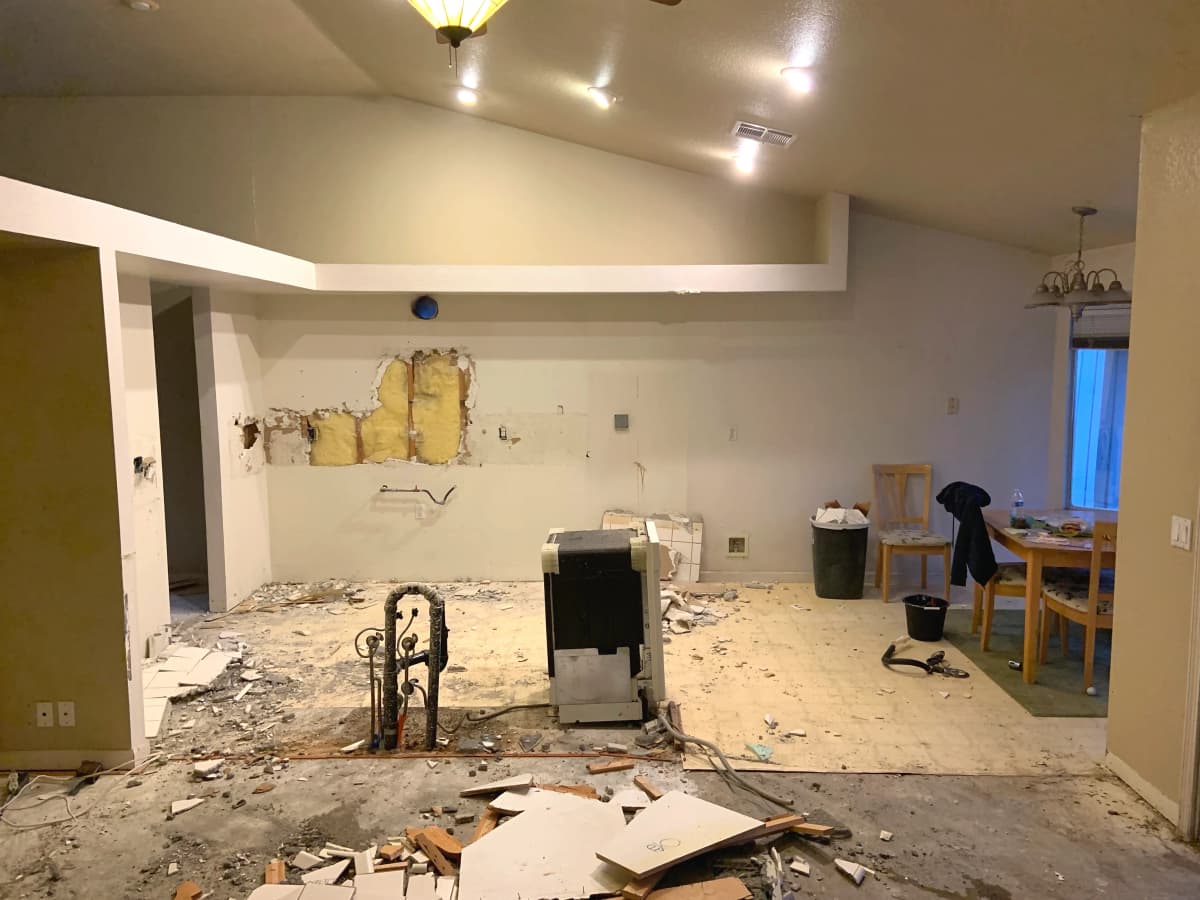
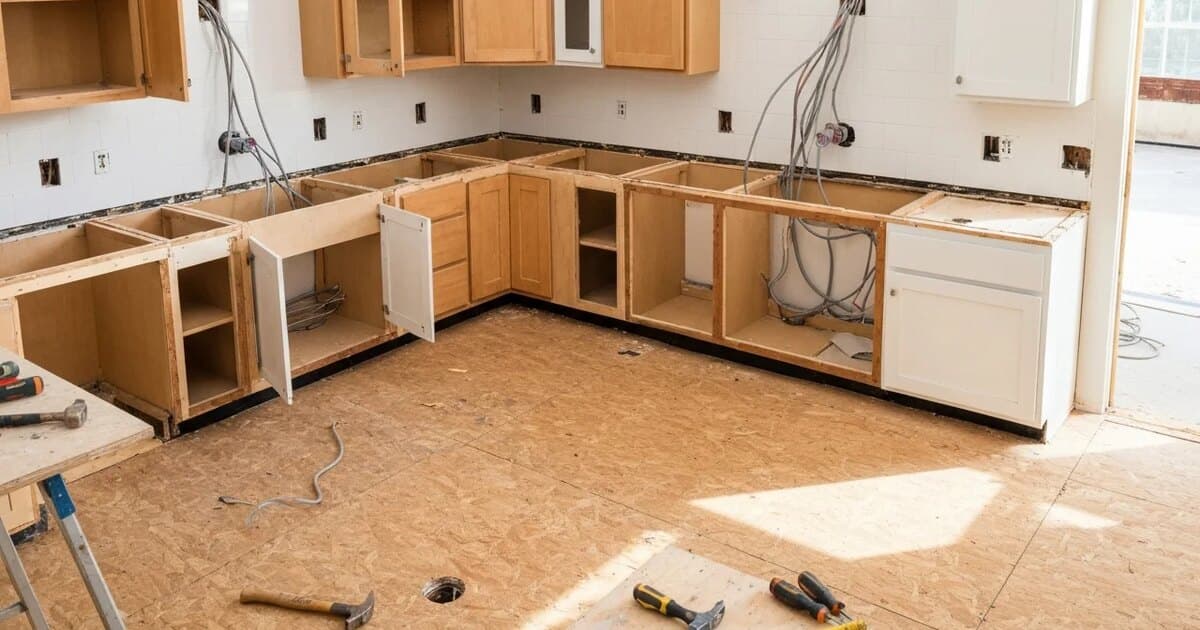
Demolition & Rough-In
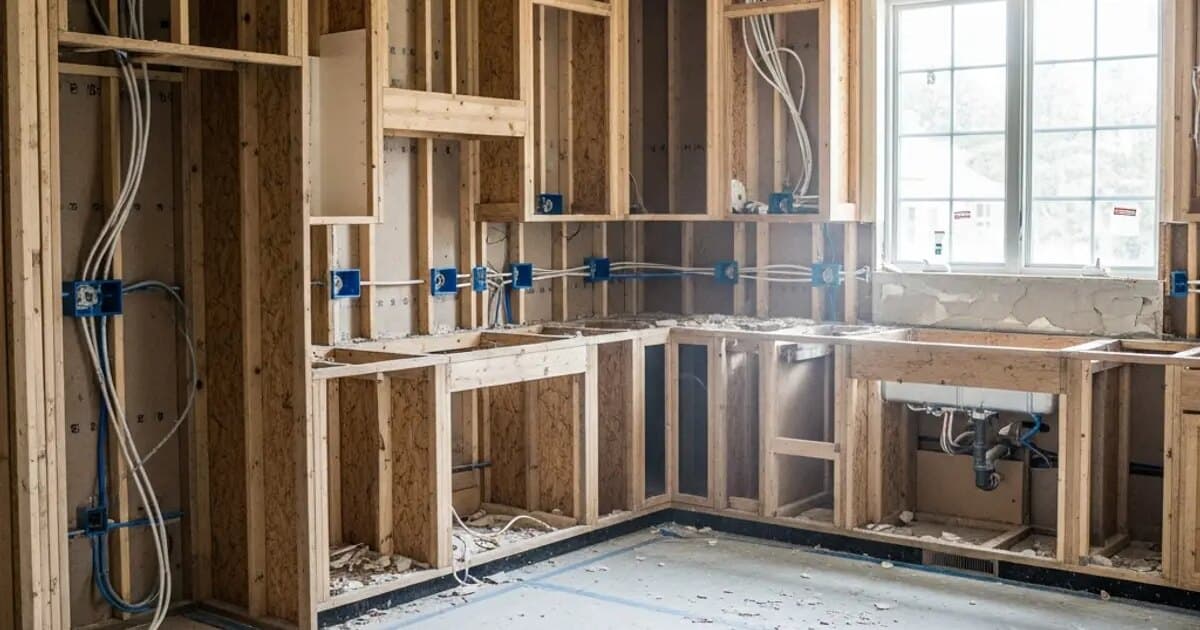
Our crew removes existing cabinets, countertops, flooring, and fixtures. We complete all rough plumbing, electrical, and structural modifications during this phase.

Installation & Finish
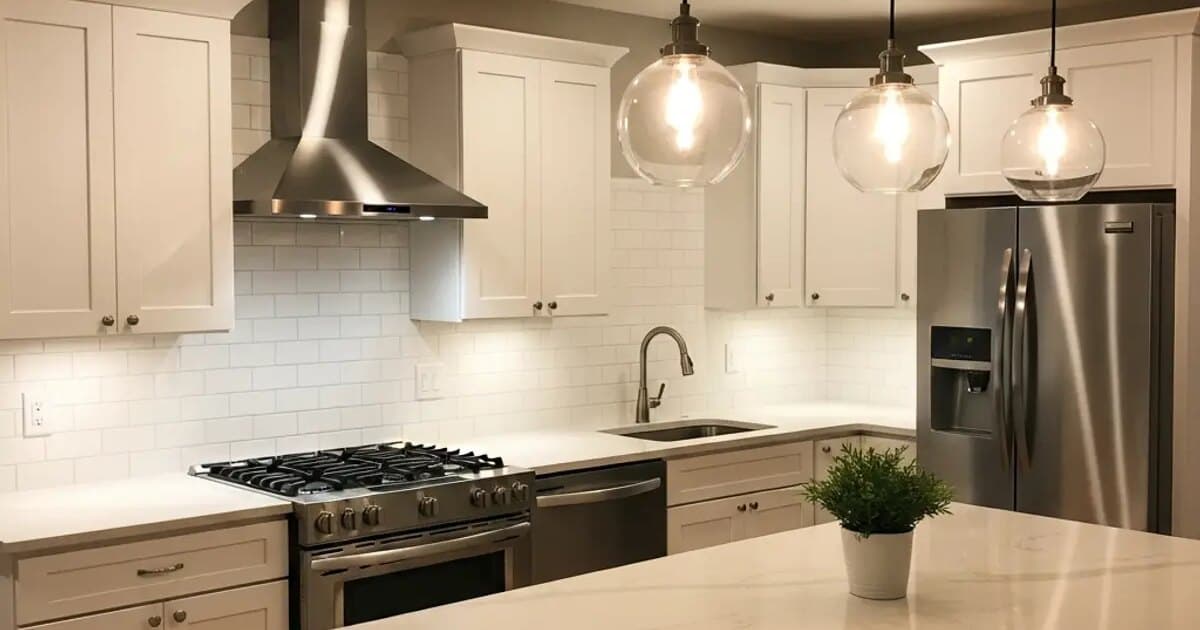
Cabinets, countertops, backsplash, flooring, fixtures, and appliances are installed by our specialized trade crews. Final inspections and punch list items are completed before handoff.

Final Walkthrough
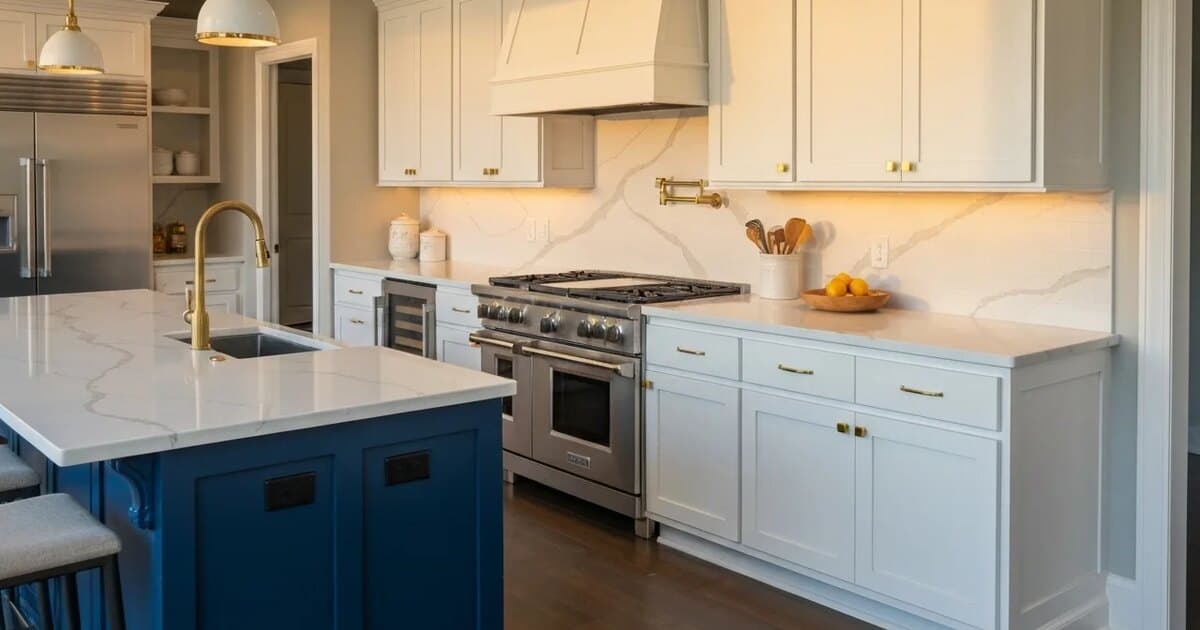
We walk through the completed kitchen together, verify every detail meets your approval, and provide maintenance guidance for your new surfaces and fixtures.
How long does a kitchen remodel take in Boise?
A typical kitchen remodel takes 6-10 weeks from demolition to completion. Partial updates like cabinet refacing or countertop replacement can be done in 2-3 weeks. Timeline depends on scope, material lead times, and whether structural changes are involved.
How much does a kitchen remodel cost in Boise, Idaho?
Kitchen remodels in the Boise area typically range from $25,000-$75,000 for a mid-range renovation and $75,000-$150,000+ for a high-end transformation. The final cost depends on kitchen size, material selections, layout changes, and appliance upgrades.
Do I need permits for a kitchen remodel in Boise?
Yes. Any kitchen remodel involving plumbing, electrical, or structural changes requires permits from Ada County or the City of Boise. Iron Crest Remodel handles all permit applications and inspections as part of our standard process.
Can you remodel my kitchen while I still live in the home?
Absolutely. Most of our kitchen remodels are completed while homeowners remain in the home. We set up temporary kitchen areas, contain dust with plastic barriers, and maintain clean access paths throughout the project.
What countertop materials do you recommend for Idaho kitchens?
Quartz is our most popular recommendation for Boise kitchens — it is durable, low-maintenance, and heat-resistant. Granite remains a strong choice for natural stone lovers. Butcher block works well for islands and prep areas. We help you choose based on your lifestyle, budget, and design goals.
Not every kitchen remodeling project is the same. Cosmetic updates are minor refreshes — not full remodels. Full remodels start at the Standard tier and above. Here are the most common scope levels we handle in the Boise area, with typical investment ranges.
Cosmetic Update
$10,000 – $25,000
Not a full remodel. Cabinet refacing, new countertops, updated hardware, backsplash, and fresh paint — no layout changes. Full remodels typically begin at $25,000.
Standard Full Remodel
$25,000 – $65,000
New cabinets, quartz countertops, flooring, lighting, backsplash, and fixture upgrades. Same layout.
High-End Renovation
$65,000 – $150,000+
Custom cabinets, premium stone, professional appliances, layout changes, island, and structural work.
Open-Concept Transformation
$80,000 – $150,000+
Wall removal, structural beam installation, full kitchen redesign with island, premium finishes throughout.
Remodeling in the Treasure Valley comes with local factors that affect scope, cost, and timeline. Here is what Boise-area homeowners should know.
Load-Bearing Walls
Many Boise homes built in the 1970s–1990s have load-bearing walls between kitchen and living areas. Removal requires structural engineering ($1,500–$3,000) plus beam and post installation ($3,000–$10,000).
Cabinet Lead Times
Custom cabinets ordered through Boise suppliers typically have 8–12 week lead times. Semi-custom options run 4–6 weeks. We recommend ordering during design phase to avoid schedule delays.
Gas Line Work
Switching from electric to gas range — or relocating a gas line — requires separate gas permits and pressure testing in Ada County. Allow $500–$2,000 for gas line modifications.
Material Shipping
Specialty materials (imported tile, custom stone slabs) ship to Boise from West Coast distributors. Lead times are 2–4 weeks longer than coastal cities. We factor this into every project schedule.
Choosing between quartz countertops and granite countertops? Here is a side-by-side comparison to help you decide.
| Factor | Quartz Countertops | Granite Countertops |
|---|---|---|
| Durability | Non-porous, stain-resistant | Porous, requires annual sealing |
| Maintenance | Wipe clean, no sealing needed | Seal annually, careful with acids |
| Heat Resistance | Good, but use trivets | Excellent natural heat resistance |
| Cost (installed) | $50 – $120 per sq ft | $40 – $100 per sq ft |
| Appearance | Consistent, engineered patterns | Unique natural veining |
Dive deeper into cost breakdowns, timelines, permit requirements, material options, and design inspiration for your kitchen remodeling project.
Plan your kitchen remodeling project with our in-depth guides.
Explore our in-depth guides to understand kitchen remodeling costs, timelines, and planning details for cities across the Treasure Valley.
See detailed kitchen remodeling information specific to your city, including local permit requirements, housing stock insights, and neighborhood-level recommendations.
Ready to Start Your Remodeling Project?
Get a free, no-obligation estimate from Boise's trusted remodeling experts. Licensed, insured, and ready to build.
Dive deeper into the key decisions that shape your Boise kitchen remodel. Compare options, understand costs, and make confident choices.
Making the biggest kitchen decisions? Our comparisons, buying guides, ROI analysis, and planning checklists help you remodel with confidence.

The kitchen work triangle — the path between your sink, range, and refrigerator — has been the foundation of efficient kitchen design for decades. Each leg of the triangle should measure between 4 and 9 feet, and the total perimeter should not exceed 26 feet. When the triangle is too compact, the kitchen feels cramped. When it's too spread out, you waste steps during meal preparation.
The best layout for your kitchen depends on the room's dimensions, your cooking style, and the age of your Boise home. Here are the most common configurations we build:
Galley Kitchen

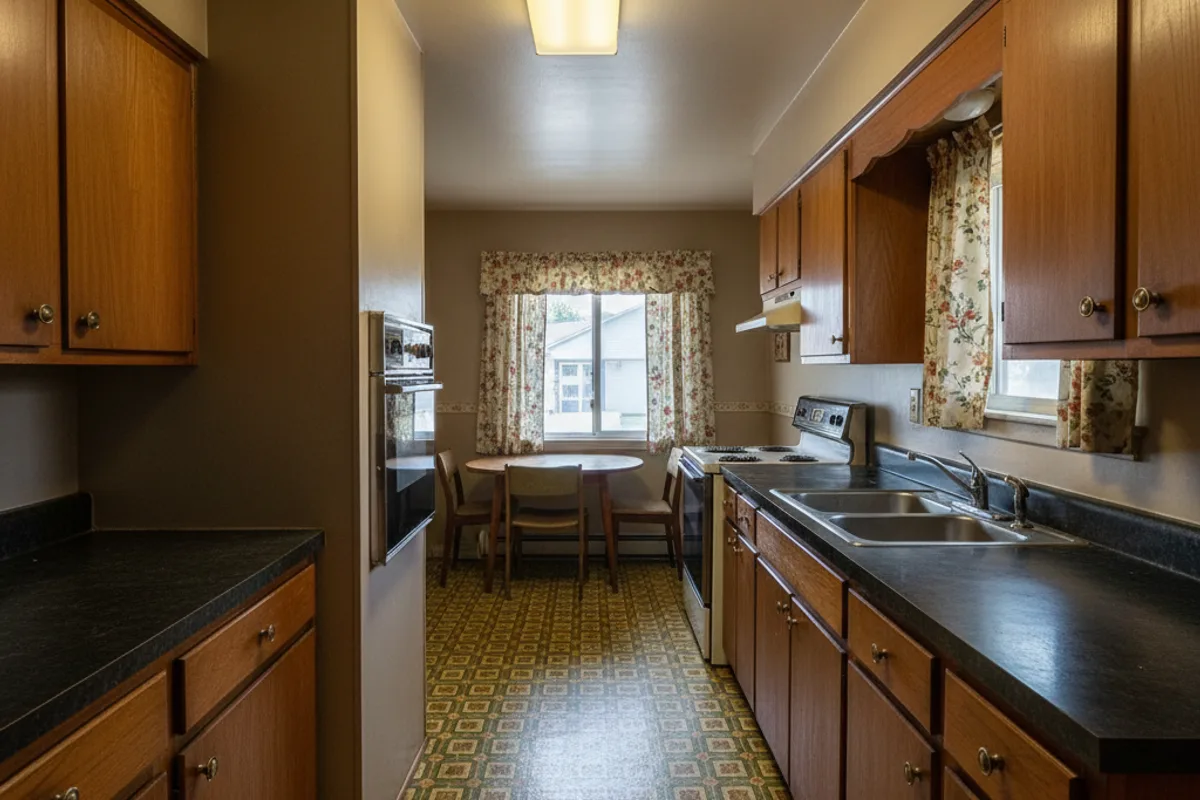
Two parallel walls with a walkway between them. This layout is highly efficient for cooking because everything is within arm's reach. Galley kitchens are common in Boise's North End bungalows and mid-century Bench homes where square footage is limited. We typically recommend a minimum 42-inch aisle width (48 inches if two people cook together) and can often improve a galley by removing upper cabinets on one side to create visual openness.
L-Shaped Kitchen
Counters along two perpendicular walls, leaving the other two sides open. L-shaped layouts work well in homes where the kitchen opens to a dining area and provide natural separation between the cooking zone and traffic flow. This is one of the most versatile layouts and adapts well to both older Boise homes and newer open floor plans.
U-Shaped Kitchen
Counters and cabinets on three walls, providing maximum storage and counter space. U-shaped kitchens are ideal for serious cooks who want dedicated zones for prep, cooking, and cleanup. They require a room width of at least 10 feet to avoid feeling closed in.
Island Kitchen

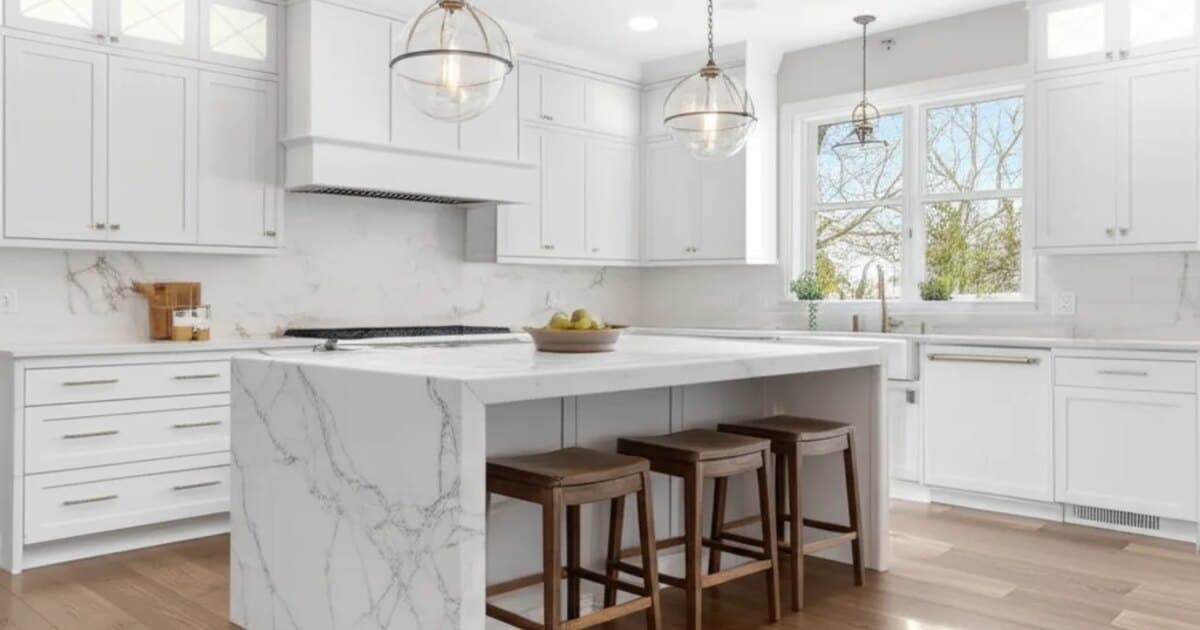
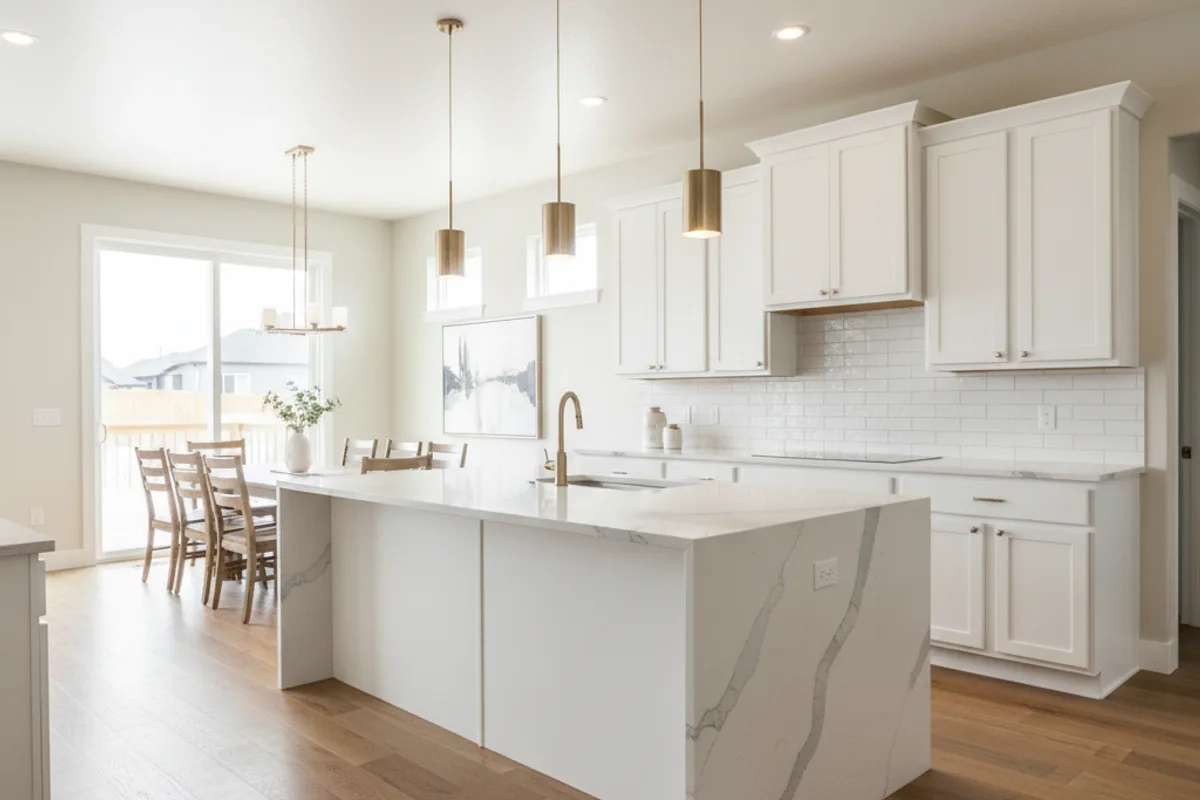
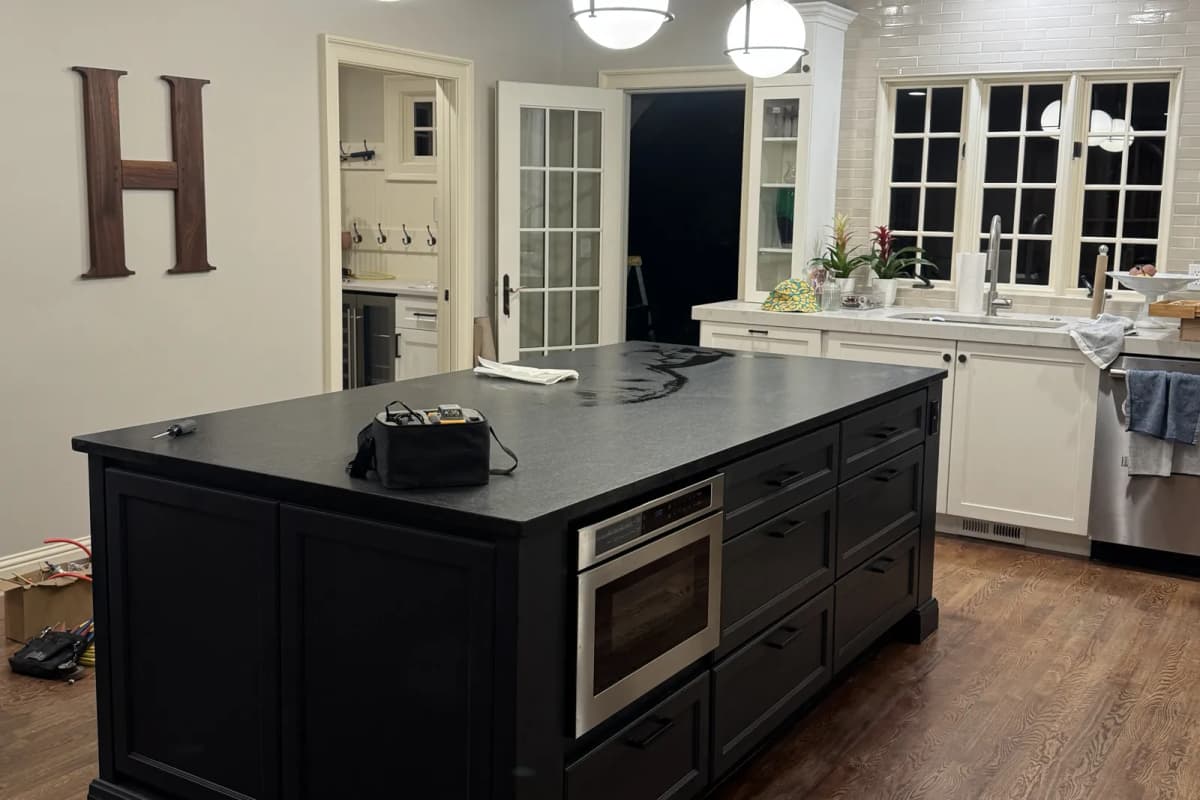
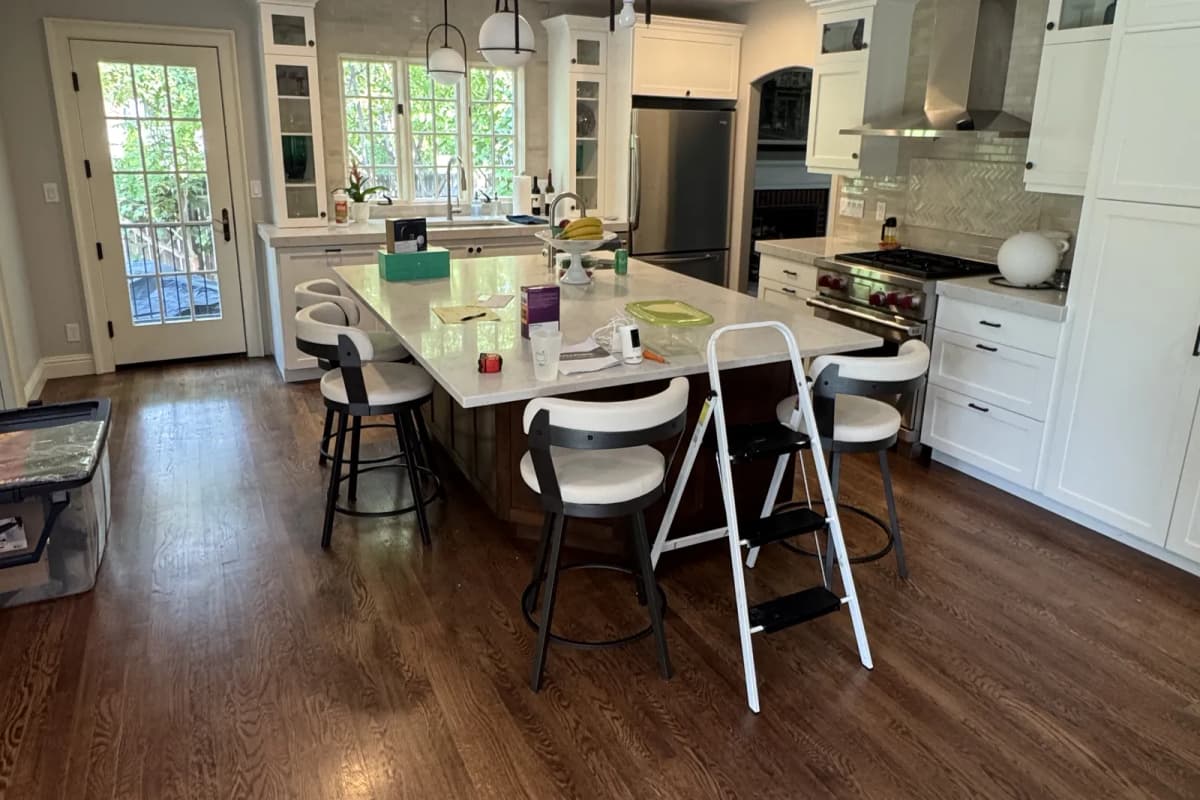
An L-shaped or galley layout with a freestanding island for additional prep space, seating, or an integrated cooktop or sink. Islands require a minimum of 36 inches of clearance on all sides (42 inches is preferred). Many Boise homeowners request island kitchens as part of an open-concept renovation, often involving the removal of a wall between the kitchen and living area.
We evaluate your home's structural constraints, plumbing and electrical locations, and how your family uses the kitchen before recommending a layout. Read our complete kitchen layout planning guide for detailed comparisons and floor plan examples.

Kitchen remodels in Boise frequently require electrical and plumbing work that goes beyond cosmetic updates. These behind-the-wall upgrades are critical for safety, code compliance, and supporting modern appliances and fixtures.
Electrical Panel Capacity
Many Boise homes built before 1980 have 100-amp electrical panels — sufficient for the era but inadequate for a modern kitchen with high-draw appliances. Electric ranges alone can require a 40- or 50-amp dedicated circuit. If your panel is at capacity, we coordinate a 200-amp panel upgrade with a licensed electrician as one of the first steps in the project. This ensures your new kitchen has the power it needs without overloading the system.
Dedicated Circuits
Modern kitchens typically require 7–10 dedicated circuits: one each for the refrigerator, dishwasher, garbage disposal, microwave, and range or cooktop, plus two 20-amp small-appliance circuits for countertop outlets (required by code). All kitchen countertop receptacles within 6 feet of a sink must be GFCI-protected. We plan circuit layouts during the design phase and complete all rough-in wiring before drywall and cabinetry installation.
Plumbing Considerations
Moving a sink to a new location — especially to an island — requires extending both supply lines and drain/vent piping. Island sinks need careful venting (typically an air admittance valve or loop vent) because they can't tie into a conventional wall-mounted vent stack. We also plan for dishwasher connections, pot filler faucets (which require a dedicated cold water line at the range), and ice maker lines for built-in refrigerators. For homes with galvanized steel supply lines, we recommend replacing the kitchen supply runs with PEX or copper during the remodel to prevent future failures. Learn more about Boise kitchen permit requirements and what inspections to expect.
One of the most common causes of kitchen remodel delays is appliance availability. Professional-grade and built-in appliances can have lead times of several months, and cabinetry must be designed around exact appliance dimensions. We coordinate appliance selection early in the design process so that everything arrives on schedule and fits precisely.
| Appliance | Lead Time | When to Order |
|---|---|---|
| Standard range | 2–4 weeks | During design |
| Built-in refrigerator | 6–12 weeks | Before demo |
| Custom range/cooktop | 8–16 weeks | Before design finalized |
| Dishwasher | 1–3 weeks | During construction |
| Ventilation hood | 4–8 weeks | During design |
| Garbage disposal | In stock | During rough-in |
We strongly recommend finalizing appliance selections — including specific model numbers and exact dimensions — before cabinetry is ordered. Built-in refrigerators, professional ranges, and custom ventilation hoods are the items most likely to cause delays. If a preferred model is backordered, we identify alternatives with matching dimensions so that cabinet and countertop fabrication can proceed on schedule.

Cabinets are the single largest line item in most kitchen remodels, typically accounting for 30–40% of the total budget. The tier you choose — stock, semi-custom, or custom — affects cost, lead time, design flexibility, and build quality.
What to Evaluate When Choosing Cabinets
- Box construction: plywood boxes outlast particleboard, especially in kitchens with heat and moisture exposure
- Drawer systems: soft-close, full-extension slides are standard in semi-custom and custom tiers
- Hinge quality: concealed hinges with 6-way adjustability ensure doors stay aligned over time
- Finish durability: painted finishes show wear faster than stained wood; thermofoil can delaminate near heat sources
- Interior options: pull-out trays, lazy Susans, spice drawers, and tray dividers add function without adding cabinets
- Warranty: stock cabinets typically carry 1–5 year warranties; quality semi-custom and custom lines offer lifetime warranties
We help you match the right cabinet tier to your budget and design goals. Read our complete cabinet comparison guide for detailed breakdowns of construction methods, materials, and pricing.

Your countertop choice affects the look, durability, maintenance, and budget of your kitchen remodel. Here are the materials we install most often in Boise kitchens, with honest assessments of each.
Quartz (Engineered Stone)
Quartz is the most popular countertop material in Boise kitchen remodels, and for good reason. It's non-porous, never needs sealing, resists stains, and is available in a wide range of colors and patterns — including convincing marble and concrete looks. Brands like Cambria, Caesarstone, and Silestone offer consistent quality. Quartz handles Boise's hard water well because mineral deposits wipe off the non-porous surface easily. The main limitation: quartz is not heat-resistant and can scorch if you set a hot pan directly on it.
Granite
Granite offers natural beauty with unique veining and color variation that engineered materials can't replicate. It's heat-resistant, extremely hard, and long-lasting. The trade-off is maintenance: granite is porous and requires professional sealing every 1–2 years to prevent staining. In Boise's hard water environment, unsealed granite near the sink can absorb mineral deposits over time. We recommend granite for homeowners who appreciate natural stone and are willing to maintain it.
Porcelain Slab
Porcelain slab countertops are a newer option gaining popularity in Boise. They're lightweight, extremely hard, non-porous, heat-resistant, and UV-stable (they won't fade in sunlight). Porcelain is available in large-format slabs that can mimic marble, concrete, or natural stone with remarkable accuracy. It's also thinner than granite or quartz, creating a sleek, modern profile. The main consideration is that porcelain can chip on edges if impacted, so it requires careful handling during fabrication and installation.
Butcher Block
Butcher block (typically hard maple, walnut, or white oak) adds warmth and texture that stone materials can't match. It's ideal for island tops or dedicated prep stations rather than full-kitchen coverage. Butcher block requires regular oiling, is susceptible to water damage near sinks, and will develop patina and knife marks over time — which many homeowners view as character rather than wear. We often recommend butcher block as an accent material paired with quartz or granite on the perimeter counters.
Boise's hard water (10–14 grains per gallon in most areas) is a practical factor in countertop selection. Non-porous materials like quartz and porcelain are significantly easier to maintain in hard-water areas because mineral deposits can't penetrate the surface. Compare the full details in our quartz vs granite vs porcelain comparison.

Kitchen ventilation is not optional — it's a code requirement and a health consideration. Range hoods remove grease, smoke, moisture, carbon monoxide (from gas ranges), and cooking odors from your kitchen. Proper ventilation also protects cabinetry and finishes from grease buildup and moisture damage over time.
CFM Requirements
The ventilation power of a range hood is measured in cubic feet per minute (CFM). For gas ranges, the general rule is 100 CFM per 10,000 BTU of total burner output. A typical gas range with 60,000 BTU total output needs a hood rated at 600 CFM. For electric ranges, the CFM requirement is lower — typically 300–400 CFM is sufficient. Undersized hoods create noise without adequate capture, while oversized hoods waste energy and may create negative pressure issues.
Ducted vs Recirculating
We always recommend ducted (externally vented) range hoods over recirculating models. Ducted hoods physically remove pollutants from your home, while recirculating hoods merely filter air through a charcoal filter and push it back into the kitchen — they do not remove moisture, carbon monoxide, or fine grease particles. The ductwork should run as directly as possible to an exterior wall or roof cap, with minimal elbows. Each 90-degree elbow reduces effective CFM by approximately 25%. Rigid metal duct is required — flexible duct is not permitted for range hood exhaust.
Make-Up Air Requirements
Under the International Residential Code (IRC), any range hood rated over 400 CFM requires a make-up air system — a dedicated pathway that introduces fresh outdoor air to replace what the hood exhausts. Without make-up air, a powerful hood can depressurize the home, backdraft gas appliances (water heaters, furnaces), and cause doors to stick or whistle. Make-up air systems add cost but are non-negotiable for safety and code compliance. We plan for make-up air during the design phase and include it in the project scope whenever the hood exceeds 400 CFM.
Boise's Dry Air Context
Boise's arid climate means kitchens don't trap moisture the way homes in humid regions do. However, cooking — especially boiling, steaming, and high-heat searing — generates significant short-term moisture. Proper ventilation exhausts this moisture before it condenses on cabinetry, windows, and ceilings. In winter months when homes are sealed tight, a well-designed range hood paired with make-up air keeps indoor air quality high without losing excessive heat.

Hard Water and Kitchen Fixtures
Boise's municipal water supply averages 10–14 grains per gallon of hardness — well above the threshold where mineral deposits become a daily maintenance consideration. In kitchens, hard water affects faucets, pot fillers, dishwashers, and ice makers. We recommend brushed or matte-finish faucets that mask water spots, and we suggest homeowners consider a water softener or under-sink filtration system as part of the remodel. Dishwashers connected to unsoftened Boise water will develop scale buildup on heating elements and spray arms over time, reducing efficiency and lifespan.
Boise Home Styles and Kitchen Ages
Boise's housing stock spans over a century, and kitchen sizes and configurations vary dramatically by era and neighborhood. North End bungalows (1920s–1950s) typically have compact, enclosed kitchens with limited counter space, single-bowl sinks, and often only one or two electrical circuits for the entire kitchen. Bench and Vista homes (1950s–1970s) usually have larger eat-in kitchens but dated layouts with minimal pantry storage. Southeast Boise and newer subdivisions (1990s–present) tend to have open-concept kitchens but may still lack features like dedicated pantry closets, pot fillers, or island electrical outlets. We design each kitchen remodel around the specific opportunities and constraints of your home's era and construction.
Energy and Water Efficiency
A kitchen remodel is the ideal time to upgrade to energy-efficient appliances and water-saving fixtures. We install WaterSense-certified kitchen faucets (1.5 GPM or less) and ENERGY STAR-rated dishwashers, refrigerators, and ranges as standard recommendations. ENERGY STAR dishwashers use approximately 3.5 gallons per cycle compared to 6+ gallons for older models. Idaho Power offers rebates on qualifying ENERGY STAR appliances, and we help identify applicable programs during the planning phase. LED under-cabinet and recessed lighting uses a fraction of the energy of older halogen or incandescent fixtures while providing better task illumination.

A kitchen remodel involves more material and fixture decisions than any other room in the house. Here's the sequence in which selections typically need to be finalized so that ordering and construction stay on schedule.
Early Decisions (Weeks 1–2)
- Layout: keep existing or reconfigure
- Cabinet style and tier (stock, semi-custom, custom)
- Countertop material (quartz, granite, porcelain, butcher block)
- Flooring type and material
- Budget allocation by category
Detailed Selections (Weeks 2–4)
- Backsplash tile pattern, size, and material
- Specific appliance models and dimensions
- Cabinet hardware (pulls, knobs, finish)
- Plumbing fixtures (faucet, pot filler, soap dispenser)
- Lighting fixtures and placement (recessed, pendant, under-cabinet)
- Paint color for walls and ceiling
- Island seating style and height

Kitchen remodels uncover hidden conditions more often than any other room because kitchens contain the densest concentration of electrical, plumbing, and structural elements in the house. Common discoveries include hidden water damage behind dishwashers, undersized or aluminum wiring, subfloor rot under vinyl flooring, and structural issues revealed during wall removal for open-concept conversions. When we encounter the unexpected, our process is transparent:
- 1
We stop work in the affected area and document the issue with photos and measurements.
- 2
We explain the problem, its implications for the project, and the available options for addressing it.
- 3
We provide a written change order detailing the additional cost, material requirements, and any timeline impact.
- 4
You approve the change order in writing before any additional work begins.
- 5
The change is added to the project record with before-and-after documentation for your files.
No surprise charges. No scope creep without your knowledge. We recommend budgeting a 10–15% contingency for kitchen remodels specifically because the probability of encountering at least one hidden condition is high, especially in Boise homes built before 1990.
Explore our in-depth guides to plan your Boise kitchen remodel with confidence.
Will my electrical panel need to be upgraded for a kitchen remodel?
Many Boise homes built before 1980 have 100-amp electrical panels that cannot support a modern kitchen. Today’s kitchens require 7–10 dedicated circuits for appliances like ranges, dishwashers, garbage disposals, microwaves, and refrigerators. If your panel lacks capacity, we coordinate a 200-amp panel upgrade with a licensed electrician before construction begins. This is one of the most common — and most important — hidden costs in kitchen remodeling.
How far in advance should I order appliances for my kitchen remodel?
Appliance lead times vary significantly. Standard ranges and dishwashers are typically available within 2–4 weeks, but built-in refrigerators can take 6–12 weeks and custom range or cooktop orders may require 8–16 weeks. We recommend ordering high-end or built-in appliances before demolition begins and confirming exact dimensions so cabinetry can be built to fit. Delays in appliance delivery are one of the most common causes of kitchen remodel timeline extensions.
Do I need a range hood, and does it have to be ducted?
Yes, every kitchen with a cooktop or range should have a ventilation hood. We strongly recommend ducted (externally vented) hoods over recirculating models because they actually remove grease, moisture, and combustion byproducts from your home. For gas ranges, the hood should provide at least 100 CFM per 10,000 BTU of burner output. Hoods rated over 400 CFM require make-up air per the International Residential Code — a detail often overlooked but required for safe operation and to pass inspection in Boise.
Can you remove a wall to create an open-concept kitchen?
In most cases, yes. Many Boise homeowners want to open their kitchen to the dining or living area. The key question is whether the wall is load-bearing. We assess the structural framing, and if the wall carries load, we engineer a beam (LVL or steel) to span the opening and transfer the load to properly sized posts or columns. This requires a structural engineering review and a building permit from the City of Boise. Non-load-bearing walls are much simpler to remove. Either way, we handle the permitting and structural coordination as part of the project.
The following government agencies, industry organizations, and official resources provide additional information relevant to your remodeling project.
Research your kitchen remodeling project with our in-depth Boise-area guides.
Browse completed kitchen remodeling projects from across the Treasure Valley. See real results, project details, and transformation stories.
Kitchen remodels often pair with flooring, painting, and whole-home projects. Bundling services saves 10–20% and ensures a cohesive design across your home.
Ready to Start Your Remodeling Project?
Get a free, no-obligation estimate from Boise's trusted remodeling experts. Licensed, insured, and ready to build.