

Quartz vs Granite vs Porcelain Countertops
A Boise homeowner's guide to choosing the right countertop material for your kitchen remodel — including costs, maintenance, durability, and how Treasure Valley conditions affect each surface.
Quick answer
Quartz and porcelain slab are the best countertops for Boise's hard water — neither needs sealing, and both resist the mineral deposits Treasure Valley water leaves behind. Granite handles hard water only when resealed every 12 months; skip that and it dulls, spots, and etches.
Explore our full Boise kitchen remodeling services
Countertop selection is one of the most visible and consequential decisions in a kitchen remodel. The surface you choose affects how your kitchen looks, how it performs during daily cooking, and how much maintenance it demands over the next 15 to 20 years. For Boise homeowners, local conditions — particularly hard water mineral content and the region's dry climate — make certain materials a better practical fit than others.
This guide compares the three most popular countertop materials we install in Boise kitchens: engineered quartz, natural granite, and porcelain slab. We cover cost, durability, maintenance requirements, appearance options, and how each material handles the specific challenges of Treasure Valley homes.
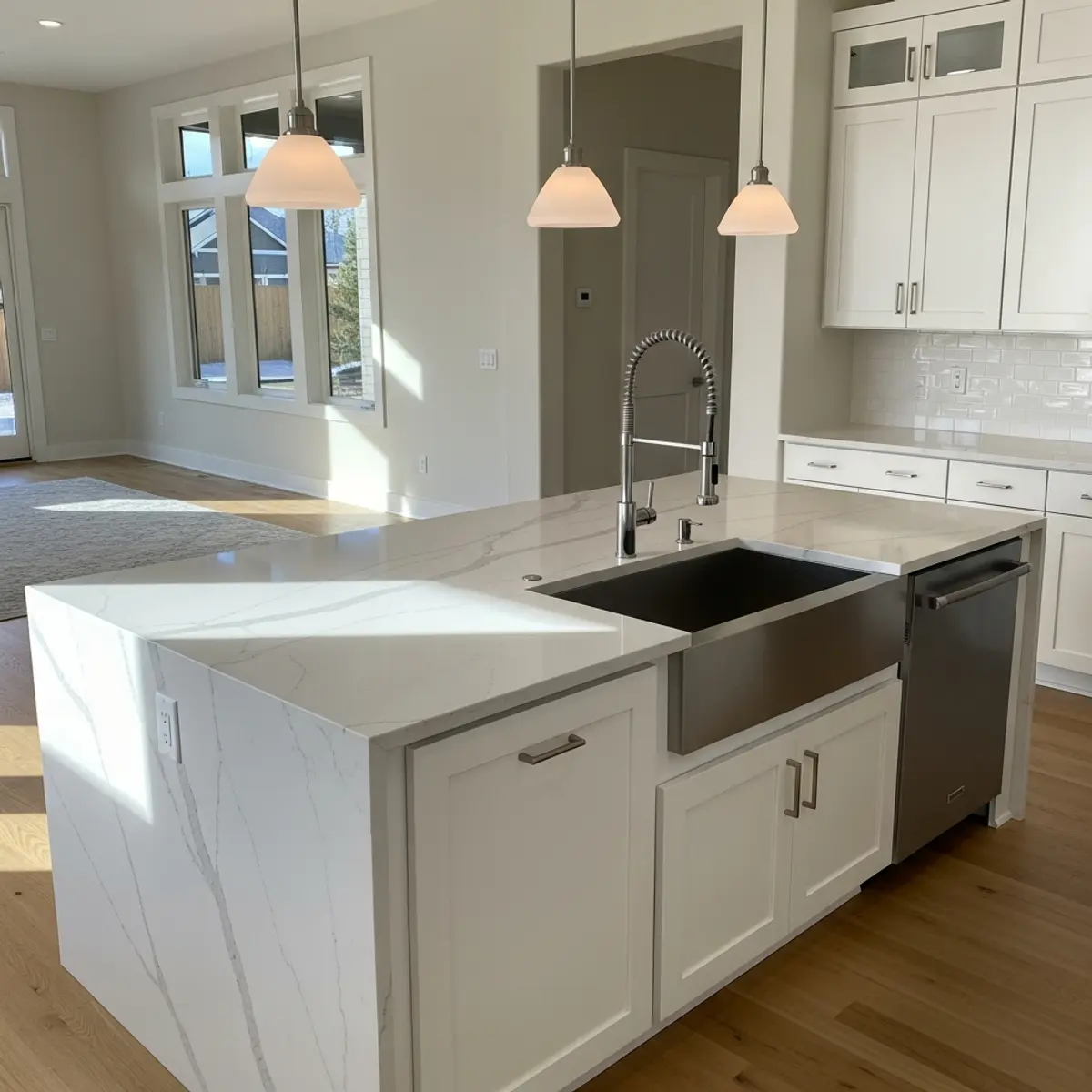
Quartz countertops are engineered surfaces made from approximately 90-94% ground natural quartz crystals bound with polymer resins and pigments. Unlike natural stone, quartz is manufactured in controlled conditions, which means every slab is consistent in color and pattern. Major brands available through Boise-area suppliers include Caesarstone, Cambria, Silestone, LG Viatera, and MSI Q Quartz.
Advantages of Quartz
- Non-porous surface requires zero sealing — ideal for Boise's mineral-heavy water supply
- Consistent color and pattern across slabs eliminates the natural stone matching challenge
- Highly stain-resistant: coffee, wine, oil, and lemon juice wipe away without damage
- Available in hundreds of colors including convincing marble, concrete, and solid-color looks
- Scratch resistance exceeds most natural stones for everyday kitchen use
- Cambria and Caesarstone offer limited lifetime warranties (check transfer terms)
Limitations of Quartz
- Heat sensitivity: direct contact with pots above 300 degrees can cause discoloration or cracking — always use trivets
- Not suitable for outdoor kitchens — UV exposure causes color fading over time
- Premium brands (Cambria, high-end Caesarstone) push costs toward the upper range
- Seams are visible on lighter colors, especially in long runs or L-shaped layouts
Quartz Cost in Boise
Installed quartz countertops in the Boise area range from $55-$100 per square foot, including templating, fabrication, and installation. Entry-level colors from Silestone and MSI start around $55/sq ft, while Cambria and premium Caesarstone collections reach $90-$100/sq ft. A typical 30-square-foot kitchen counter project costs $1,650-$3,000 total.
Maintenance
Daily cleaning requires only mild soap and water or a non-abrasive household cleaner. No sealing, polishing, or reconditioning is ever needed. Avoid abrasive pads and harsh chemicals like bleach or oven cleaner, which can dull the finish over time.
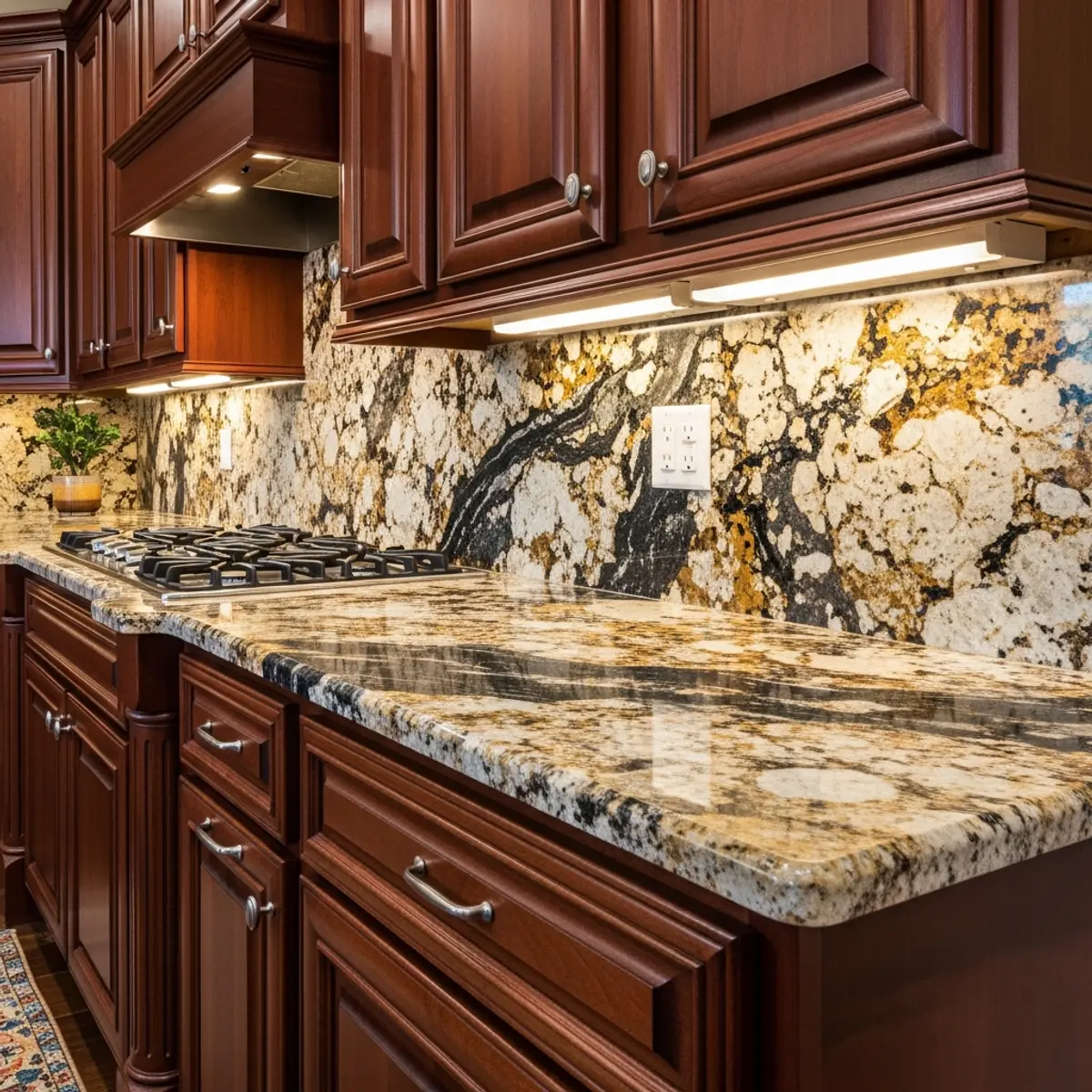
Granite is a natural igneous rock quarried from locations around the world. Each slab is unique — no two granite countertops are identical. This natural variability is granite's greatest appeal for homeowners who want a one-of-a-kind surface. Boise fabricators carry a wide range of granite slabs, from common colors like Ubatuba and Santa Cecilia to premium exotics like Blue Bahia and Patagonia.
Advantages of Granite
- Every slab is unique — natural veining, movement, and mineral deposits create a surface no one else has
- Excellent heat resistance: hot pots and baking sheets can be placed directly on the surface without damage
- Extremely hard and scratch-resistant — will not dull knives, though cutting boards are still recommended
- Wide price range makes it accessible at both budget and premium levels
- Adds genuine natural stone character that many buyers specifically seek at resale
Limitations of Granite
- Requires sealing every 12-24 months — in Boise, we recommend annual sealing due to hard water mineral deposits
- Porous surface can absorb stains (oil, wine, citrus) if sealer is compromised
- Natural variability means the showroom sample may not match the exact slab you receive
- Heavier than quartz and porcelain, which may require cabinet reinforcement for undermount installations
- Limited color consistency: matching across multiple slabs for large kitchens is challenging
Granite Cost in Boise
Installed granite countertops in Boise range from $45-$90 per square foot. Common colors like Ubatuba and Giallo Ornamental start around $45/sq ft, while exotic slabs with rare veining and coloring reach $90/sq ft or more. A 30-square-foot kitchen project runs $1,350-$2,700. Factor in lifetime sealing costs of $200-$400 every 12-24 months for a more complete cost comparison.
Boise Hard Water Impact on Granite
Boise's water supply carries higher mineral content than many regions, which creates specific challenges for granite. Water spots and calcium buildup are more visible on dark polished granite. Mineral deposits can penetrate the pores of under-sealed granite, creating permanent dull spots. We recommend keeping granite surfaces dry around the sink area and resealing on a strict annual schedule to prevent long-term mineral damage.
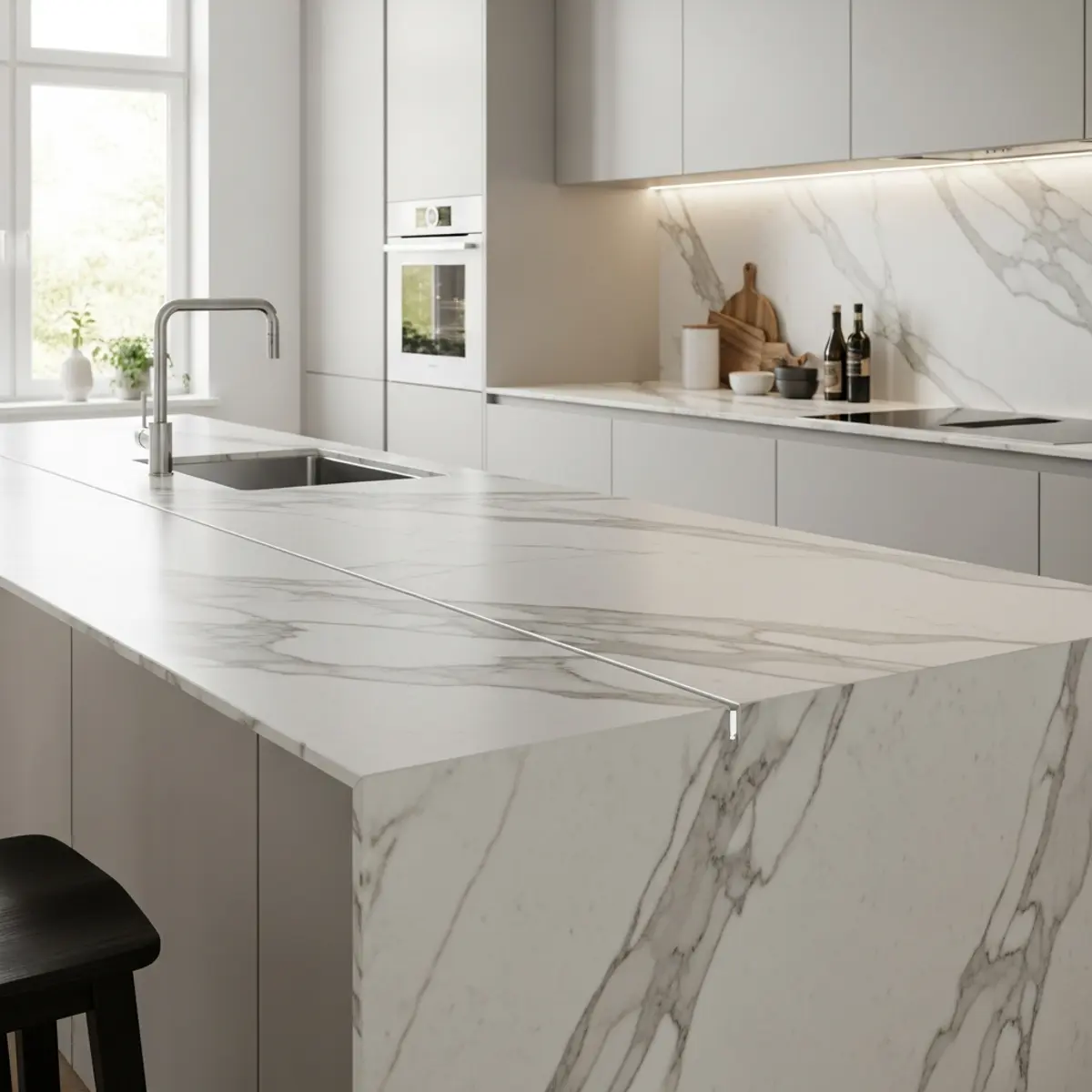
Porcelain slab countertops are a relatively new entry in the residential market, growing rapidly in popularity over the past five years. These ultra-thin surfaces (typically 6mm to 12mm thick, compared to 20-30mm for quartz and granite) are made from compressed clay, feldspar, and mineral oxides fired at extremely high temperatures. Brands like Dekton (by Cosentino), Neolith, and Lapitec lead the category.
Advantages of Porcelain Slab
- Exceptional heat resistance up to 2,000 degrees Fahrenheit — hot pans, curling irons, and baking dishes pose zero risk
- Completely non-porous: zero sealing required, and Boise hard water deposits wipe off instantly
- UV-resistant, making it the only countertop material here that also works for outdoor kitchens
- Ultra-thin profile creates a sleek, modern aesthetic that pairs well with contemporary Boise kitchen designs
- Scratch and stain resistance rivals or exceeds quartz in most independent testing
- Large-format slabs (up to 126 inches by 60 inches) reduce seam count in bigger kitchens
Limitations of Porcelain Slab
- Thinner profile means it can chip on edges during installation or from heavy impact — requires skilled fabricators
- Fewer Boise-area fabricators are equipped for porcelain slab work, which may extend lead times by 1-2 weeks
- Limited edge profile options compared to quartz and granite due to the thinner material
- Repair difficulty: chips and cracks in porcelain are harder to fix invisibly than in quartz or granite
- Higher material cost at the entry level compared to budget granite options
Porcelain Slab Cost in Boise
Installed porcelain slab countertops in Boise range from $65-$120 per square foot. The higher starting price reflects both material cost and the specialized fabrication required. A 30-square-foot kitchen project costs $1,950-$3,600. Premium Dekton and Neolith patterns with book-matched veining reach the top of the range.
This table summarizes how quartz, granite, and porcelain slab compare across the factors that matter most in a Boise kitchen remodel.
| Factor | Quartz | Granite | Porcelain Slab |
|---|---|---|---|
| Installed Cost (per sq ft) | $55-$100 | $45-$90 | $65-$120 |
| Durability | Excellent | Excellent | Excellent |
| Heat Resistance | Low (use trivets) | High | Very High (best) |
| Stain Resistance | Excellent (non-porous) | Good (requires sealing) | Excellent (non-porous) |
| Maintenance | None (soap & water) | Annual sealing | None (soap & water) |
| Scratch Resistance | Very Good | Excellent | Very Good |
| Appearance | Consistent; many options | Unique natural patterns | Modern; large-format |
| Edge Profile Options | Wide variety | Wide variety | Limited |
| Boise Hard Water Rating | Excellent | Fair (needs care) | Excellent |
| UV Resistance (outdoor use) | No | Yes | Yes |
The right countertop depends on your priorities, cooking habits, aesthetic preferences, and budget. Here is a practical decision framework based on the kitchen projects we see across the Treasure Valley.
Choose Quartz If
- You want a maintenance-free surface that handles Boise hard water without extra effort
- Consistent color matching across a large kitchen or open-concept layout is important to you
- You prefer the look of marble or concrete without the porosity and maintenance of natural stone
- Your budget falls in the $60-$100 per square foot sweet spot — the best value for performance
- You cook frequently and want reliable stain resistance for oils, wine, and spices
Choose Granite If
- You value the uniqueness and character of natural stone — no two granite countertops are the same
- Heat resistance matters: you frequently move hot cookware directly from stove to countertop
- You are comfortable with annual sealing and proactive maintenance around the sink and prep areas
- Budget flexibility allows you to start with an affordable slab or invest in a rare exotic pattern
- Your home's style leans traditional, rustic, or transitional where natural stone complements the design
Choose Porcelain Slab If
- Maximum heat resistance is a priority — you want to set hot pans anywhere without thinking
- You prefer a sleek, ultra-modern aesthetic with thin profiles and minimal seams
- You want a surface that works both indoors and on a future outdoor kitchen expansion
- Absolute zero maintenance is non-negotiable — even more resilient than quartz against staining and etching
- You are willing to invest in a premium material and wait for specialized fabrication
Edge Profile Options
Edge profiles affect both the look and cost of your countertops. Standard edges — eased (slightly rounded), beveled, and half-bullnose — are included in most fabricator pricing. Specialty edges add $10-$30 per linear foot.
| Edge Profile | Added Cost | Quartz | Granite | Porcelain |
|---|---|---|---|---|
| Eased / Beveled | Included | Yes | Yes | Yes |
| Half Bullnose | Included | Yes | Yes | Limited |
| Full Bullnose | +$10-$15/LF | Yes | Yes | No |
| Ogee | +$15-$25/LF | Yes | Yes | No |
| Mitered (thick look) | +$20-$30/LF | Yes | Yes | Yes |
| Waterfall (island side) | +$500-$1,500 | Yes | Yes | Yes |
Installation Timeline and Process
Countertop installation follows the same general process for all three materials: template measurement (1 day), fabrication (5-10 business days), and installation (1 day for most kitchens). Key differences in the Boise market include:
- Quartz: most readily available; local fabricators carry popular colors in stock, reducing lead time to 7-10 days total
- Granite: slab selection at a local yard is required; lead time runs 10-14 days after template, longer for special-order slabs
- Porcelain slab: fewer local fabricators with proper tooling means 14-21 day lead times are typical in the Boise area
- All three materials require finished, level cabinets before templating — cabinets must be fully installed and secured first
- Undermount sink cutouts, cooktop cutouts, and faucet holes are completed during fabrication at no additional charge by most Boise shops
Hard Water and Mineral Deposits
Boise's municipal water supply and well water throughout Ada County carry elevated calcium and magnesium levels. These minerals leave white residue on surfaces around sinks and near dishwashers. Non-porous materials like quartz and porcelain slab handle this effortlessly — a quick wipe removes mineral deposits completely. Granite requires more diligence: mineral-laden water can penetrate the sealer over time and create permanent dull spots, particularly on darker polished finishes.
Dry Climate Advantage
Boise's semi-arid climate (averaging less than 12 inches of rainfall annually) actually benefits countertop longevity. Low indoor humidity reduces moisture-related issues that affect granite in humid climates. Granite sealers last longer in dry conditions, and the risk of mold or mildew developing in natural stone pores is significantly lower than in coastal or humid regions.
Local Fabricator Availability
The Boise metro area has a solid base of quartz and granite fabricators, ensuring competitive pricing and reasonable lead times. Porcelain slab fabrication is more specialized — the material requires diamond-tipped tooling and vacuum-lifting equipment that not all shops carry. Iron Crest Remodel works with certified fabrication partners for all three materials, ensuring proper handling, precise cuts, and valid manufacturer warranty coverage regardless of which surface you choose.
Boise's semi-arid high-desert climate creates conditions that differ from coastal or humid regions — though not in the way most people assume. Outdoor air here is humid in winter (79% morning, 70% afternoon in January at the airport station); it is forced-air heating that dries theindoor air to levels well below what furniture and wood countertops prefer. Summers are genuinely dry, and the municipal water supply measures up to about 13 grains per gallon (gpg) in the hardest zones, about 6 on average — the top of that range well into the “hard” category. Each countertop material responds differently to these local factors.
Quartz in Boise's Climate
Engineered quartz is largely unaffected by Boise's dry climate. The resin binder that holds quartz aggregate together does not expand, contract, or degrade in low-humidity environments. No sealing is required regardless of season, and daily temperature swings between heated interiors and cold exterior walls have no measurable impact on the material. For Boise homeowners who want a surface that performs identically in January and July, quartz delivers consistent, worry-free results year-round.
Granite in Boise's Climate
Boise's dry air can accelerate sealant breakdown on granite surfaces. In humid climates, a quality impregnating sealer typically lasts 3–5 years. In the Treasure Valley's arid conditions, that same sealer may begin losing effectiveness after 1–2 years as low indoor humidity causes the sealer to dry out and become brittle. This means Boise granite owners need to reseal more frequently than the national average — we recommend every 12 months for polished granite and every 6–12 months for honed or leathered finishes. The upside: granite's natural porosity is less prone to mold or mildew growth in Boise's dry climate compared to high-humidity regions.
Porcelain in Boise's Climate
Porcelain slab countertops offer excellent UV resistance, which is a meaningful advantage in Boise kitchens with large south- or west-facing windows — a common design feature in Treasure Valley homes built to capture mountain views. Where quartz can fade or yellow under prolonged direct sunlight, porcelain maintains its color indefinitely. The material is also completely unaffected by humidity levels, making it equally stable during Boise's dry winters and occasional humid summer stretches.
Butcher Block in Boise's Climate
While butcher block is not one of the three primary materials in this comparison, it deserves a climate warning for Boise homeowners considering it. Indoor humidity here falls sharply through the heating season without a whole-house humidifier — a function of forced-air heating rather than of the outdoor air, which is humid in January. At low indoor humidity, solid wood countertops shrink, gap at seams, and can develop hairline cracks along the grain. Regular oiling (every 2–4 weeks) is essential to prevent moisture loss, and even with diligent care, seasonal movement is unavoidable. If you love the warmth of wood, consider limiting butcher block to a single island section rather than full-perimeter installation.
Marble in Boise's Climate
Marble is highly porous and etches easily from acidic foods like lemon juice, vinegar, and tomato sauce. Combined with Boise's hard water, marble kitchen countertops face a double threat: mineral deposits penetrate the pores while acid etching dulls the polished surface. Marble is a poor choice for Boise kitchen countertops but remains a beautiful option for bathroom vanities where exposure to cooking acids and heavy daily use is minimal.
Hard Water & Finish Selection
Boise's water supply measures up to about 13 grains per gallon in the hardest zones (about 6 on average) — classified as “hard” to “very hard” by the Water Quality Association. This mineral content leaves visible white spots and calcium buildup around sinks, faucets, and dishwasher areas. When choosing a countertop finish, consider that matte, honed, and leathered finishes hide water spots and mineral deposits far better than high-gloss polished surfaces. Dark polished granite shows every spot, while a honed quartz or matte porcelain surface conceals mineral residue between cleanings. If you prefer a polished look, plan on wiping down the sink area after each use or installing a water softener to reduce mineral content below 7 gpg.
Temperature Cycling Near Windows
Boise kitchens with countertops running along exterior walls or beneath large windows experience significant temperature cycling — particularly in winter when the surface near the glass can be 30–40 degrees cooler than the rest of the counter. Quartz and porcelain handle this thermal differential without issue. Natural stone (granite and marble) can develop micro-fractures over years of repeated thermal cycling, especially at seams and around sink cutouts where the stone is thinnest. If your kitchen design places countertops directly against large windows, quartz or porcelain offers a durability advantage over natural stone in Boise's climate.
Pricing for countertop materials in the Boise area reflects both national material costs and local fabrication labor rates. The following ranges are based on 2026 installed pricing from Treasure Valley fabricators and include templating, fabrication, standard edge profile, and installation.
| Material | Installed Cost / SF | 30 SF Kitchen | Popular Brands |
|---|---|---|---|
| Quartz | $55–$100/sf | $1,650–$3,000 | Caesarstone, Cambria, Silestone, MSI |
| Granite | $45–$90/sf | $1,350–$2,700 | Local slab yards, wide selection |
| Porcelain Slab | $65–$120/sf | $1,950–$3,600 | Dekton, Neolith, SapienStone |
| Butcher Block | $40–$80/sf | $1,200–$2,400 | Maple, walnut, white oak |
| Laminate | $30–$55/sf | $900–$1,650 | Formica, Wilsonart, VT Industries |
Where to Shop for Countertops in Boise
The Boise metro area offers several options for browsing and purchasing countertop slabs. Local stone yards let you hand-select the exact slab that will become your countertop — an important step for natural stone where each piece is unique.
- Local slab yards (Bedrock Quartz, Stone Center) — hand-select your exact slab, see the full veining and color in person before committing
- Fabricator showrooms — many Boise fabricators maintain their own slab inventory and offer competitive pricing when you buy material and fabrication together
- Big-box retailers (Home Depot, Lowe's) — convenient for laminate and entry-level quartz; limited slab selection for granite and porcelain
- Specialty porcelain distributors — Dekton and Neolith are carried by select distributors; your fabricator typically orders these on your behalf
Lead Times in the Boise Market
Lead times vary by material and season. Spring and summer are the busiest remodeling months in the Treasure Valley, so expect an extra 3–5 business days during peak season (April through September).
- Granite: 2–3 weeks from template to installation — slab selection at a local yard is required before templating
- Quartz: 2–3 weeks from template to installation — popular colors are often in stock at local fabricators, which can shorten lead times
- Porcelain slab: 3–5 weeks for specialty patterns — fewer local fabricators with porcelain-rated tooling extends the timeline
- Butcher block: 1–2 weeks for standard species; 3–4 weeks for custom wood species or wide-plank formats
- Laminate: 1–2 weeks — most stock colors ship within days from regional distributors
The Template-to-Install Process
Regardless of material, countertop installation follows a precise sequence that begins only after your cabinets are fully installed, leveled, and secured to the wall. Here is why the order matters and what to expect at each step:
- Cabinet installation first — countertops are custom-cut to fit your exact cabinet layout; even a 1/8-inch shift after templating means the countertop will not fit correctly
- Template measurement (Day 1) — a fabricator visits your home and creates a precise digital or physical template of every counter run, cutout, and edge
- Slab fabrication (5–10 business days) — the fabricator cuts, polishes edges, drills sink and faucet holes, and dry-fits seams at the shop
- Installation (Day 2) — the finished countertop is delivered, set on the cabinets with adhesive, seamed if needed, and the sink and cooktop cutouts are connected
- Final inspection — Iron Crest Remodel inspects every installation for fit, seam quality, edge finish, and proper support before signing off on the project
Which countertop material is best for Boise's hard water?
Quartz and porcelain slab are the best countertop materials for Boise's hard water. Neither requires sealing, and both resist the mineral deposits that Treasure Valley water leaves behind. Granite can handle hard water, but unsealed or under-sealed granite absorbs minerals over time, leading to dull spots and etching. If you choose granite, plan on resealing every 12 months rather than the typical 12-to-24-month national recommendation.
How much do quartz countertops cost installed in Boise?
Quartz countertops in Boise typically cost $55-$100 per square foot installed, depending on brand and color. A standard 30-square-foot kitchen counter project runs $1,650-$3,000. Premium brands like Cambria and certain Caesarstone lines fall at the higher end, while Silestone and LG Viatera offer competitive mid-range pricing. Installation includes templating, fabrication, and seaming.
Is granite cheaper than quartz in the Boise area?
Granite and quartz overlap significantly in price. Entry-level granite slabs start around $40-$60 per square foot installed, which is lower than most quartz. However, mid-range and premium granite ($80-$150/sq ft) costs as much as or more than quartz. When you factor in lifetime sealing costs ($200-$400 every 1-2 years) and the risk of staining or cracking, quartz often has a lower total cost of ownership over 15-20 years.
Can I put hot pans directly on porcelain slab countertops?
Yes. Porcelain slab countertops can withstand temperatures up to 2,000 degrees Fahrenheit, making them the most heat-resistant countertop option available. You can place hot pans, baking sheets, and cooking vessels directly on the surface without trivets or hot pads. Neither quartz nor granite can match this level of heat resistance - quartz can scorch at temperatures above 300 degrees, and granite can crack from thermal shock.
How do edge profiles affect countertop cost?
Standard edge profiles (eased, beveled, and bullnose) are typically included in the base price. Specialty edges like ogee, waterfall, and mitered add $10-$30 per linear foot, which translates to $200-$600 for a typical kitchen. Waterfall edges - where the countertop continues down the side of an island - are the most expensive upgrade because they require additional material and precise fabrication. Porcelain slabs have fewer edge profile options than quartz or granite due to their thinner profile.
Do Boise fabricators work with all three materials?
Most established Boise-area fabricators work with quartz and granite, but porcelain slab fabrication requires specialized tooling that not all shops have. There are currently fewer than a handful of Treasure Valley fabricators fully equipped for large-format porcelain slab work. This limited availability can add 1-2 weeks to lead times and may affect pricing. Iron Crest Remodel works with certified fabricators for all three materials to ensure proper handling and warranty coverage.
The following government agencies, industry organizations, and official resources provide additional information relevant to your remodeling project.
Get Your Kitchen Countertop Estimate
Free, detailed estimates for quartz, granite, and porcelain slab countertops in Boise, Meridian, Eagle, Nampa, and the Treasure Valley. No obligation.