

Kitchen Remodeling in Boise, ID: Costs, Ideas & Options
From cabinet and countertop upgrades to full layout redesigns — we handle every element of your kitchen renovation from design through installation.
Quick answer
Iron Crest Remodeling Group LLC provides kitchen remodeling in Boise, ID. Most Boise kitchen remodeling projects cost $22,000 – $145,000. Boise kitchen remodeling costs sit above the national average, driven primarily by a tight labor market that has kept skilled trade wages elevated since the Treasure Valley's post-2020 growth surge.
Boise's kitchen remodeling market is unlike anywhere else in the Treasure Valley — and the difference starts with the housing stock. From the 1900s Craftsman bungalows of the North End Historic District to the open-plan subdivisions rolling out across Harris Ranch and West Boise, every decade of Boise's growth left behind a distinct kitchen profile that calls for a different remodeling strategy. A well-executed kitchen remodel changes how the busiest room in the house works every single day. Iron Crest Remodel works in every Boise neighborhood, from opening up load-bearing walls in pre-war Craftsmans to full gut-and-reconfigure renovations in 1970s ranch homes on the Bench. If your Boise kitchen doesn't match the life you're actually living, we can change that — fast, cleanly, and with full City of Boise permits handled start to finish.
Create a kitchen that works better for cooking, gathering, storage, and everyday life.
A kitchen remodel is the most impactful renovation you can make in your home — for daily quality of life, for resale value, and for how your family uses the most important shared space in the house. Kitchen projects range from cabinet repainting and countertop replacement to complete gut renovations involving wall removal, electrical panel upgrades, plumbing relocation, new flooring, and custom cabinetry. In the Treasure Valley, many homes were built with builder-grade kitchens that prioritize cost over function — small islands, limited counter space, poor lighting, and closed-off layouts. A well-planned kitchen remodel solves all of these problems while creating a space that looks, feels, and works the way your household needs it to. The key to a successful kitchen remodel is sequencing: design and material selection must be complete before demolition begins, because cabinet lead times, countertop fabrication, and appliance ordering all happen on parallel timelines that must align with construction progress.
Boise homeowners pursue kitchen remodeling for a variety of reasons. Here are the most common situations we see:
- ✓Homeowners with builder-grade kitchens from the 1990s or 2000s who want a meaningful upgrade
- ✓Families who need better workflow, more counter space, and improved storage throughout the kitchen
- ✓Homeowners who want to open up a closed-off kitchen to the living or dining area
- ✓Anyone planning to sell who wants a renovation buyers notice first
- ✓Homeowners who love to cook and want professional-grade appliances, better lighting, and improved ventilation
Not every kitchen remodeling project is the same. Here are the most common project types we complete in Boise:

Full Kitchen Renovation
Complete kitchen gut and rebuild including new cabinets, countertops, flooring, backsplash, lighting, plumbing, electrical, and appliances. May include layout changes and wall removal.

Cabinet and Countertop Replacement
Replace existing cabinets and countertops while keeping the current layout. New hardware, hinges, and drawer systems are included. A high-impact upgrade without the cost of a full gut.

Open-Concept Kitchen Conversion
Remove or modify walls between the kitchen and adjacent living or dining spaces to create an open floor plan. Includes structural header installation, patching, and finish work.

Kitchen Island Addition
Design and install a kitchen island with seating, storage, and optional sink or cooktop. Requires electrical for outlets and potentially plumbing if adding a sink.

Kitchen Refresh
Update the kitchen without a full renovation: new countertops, repainted cabinets, updated hardware, new backsplash, and modern lighting fixtures.

Boise has over a century of residential construction, from 1900s Craftsman homes in the North End to 2020s new construction in West Boise and Southeast Boise. This diversity means remodeling contractors encounter a wide range of structural systems, plumbing types, electrical standards, and finish materials.
Pre-1940 (North End, Downtown)
Pre-war North End and downtown homes are typically the most expensive to remodel in Boise. Budget for replacing galvanized supply lines and any remaining knob-and-tube wiring, plus lath-and-plaster demolition and the historically sensitive finishes these homes call for — costs that push projects toward the high end of the range.
1940s–1960s (Bench, Central Boise)
Bench and central-Boise ranches and split-levels sit in the mid-range for remodel budgets. Plan for an electrical panel upgrade — 100-amp service is common — while the existing copper plumbing and solid hardwood floors often stay in place and hold costs down.
1970s–1990s (West Boise, South Boise)
The 1970s–1990s subdivision homes of West and South Boise are the most budget-predictable to remodel. Drywall construction and accessible copper or early-PEX plumbing keep surprises low, so spending concentrates on finishes rather than system repairs.
2000s–present (SE Boise, Harris Ranch, West Boise)
Homes from the 2000s on in SE Boise, Harris Ranch, and West Boise need the least structural investment. PEX plumbing and 200-amp service are already in place, so the budget goes almost entirely toward the higher-end finishes and fixtures buyers in these neighborhoods expect.
Common issues in Boise homes
- •Galvanized plumbing in pre-1970 homes causing low water pressure and corrosion
- •Insufficient electrical capacity (100-amp panels) for modern kitchen and bathroom demands
- •Poor or missing bathroom ventilation leading to moisture and mold issues
- •Closed-off floor plans in 1970s-1990s homes that homeowners want opened up
- •Cracked or settling foundations in some older Bench and North End homes
- •Builder-grade materials reaching end of life in 1990s-2000s subdivision homes

Material selection affects the look, durability, and cost of your kitchen remodeling. Here are the most popular options we install in Boise:

Quartz Countertops
$55–$100 per sq ft fabricated and installedEngineered quartz is the most popular countertop choice for kitchen remodels. It is non-porous, stain-resistant, available in hundreds of colors and patterns, and never needs sealing. Brands like Caesarstone, Cambria, and Silestone offer a wide range of options.
Best for: Most kitchen applications — especially busy households

Granite Countertops
$45–$90 per sq ft fabricated and installedNatural granite remains a popular and durable countertop choice. Each slab is unique. Granite requires periodic sealing (once per year) and is heat-resistant, making it practical for kitchens. Pricing varies widely based on rarity and origin.
Best for: Homeowners who want natural stone with unique veining

Semi-Custom Cabinets
$300–$650 per linear foot installedSemi-custom cabinets offer more size options, wood species choices, door styles, and finish options than stock cabinets, with shorter lead times and lower cost than full custom. Most kitchen remodels in the Treasure Valley use semi-custom cabinetry.
Best for: Most kitchen remodels — best balance of customization and value

Custom Cabinets
$600–$1,200+ per linear foot installedBuilt to exact specifications with no size limitations. Custom cabinets allow unique storage solutions, specialty wood species, and bespoke design details. Lead times are longer (8–12 weeks, versus 4–8 weeks for semi-custom) and cost is significantly higher.
Best for: High-end kitchens, unusual layouts, and specific design visions
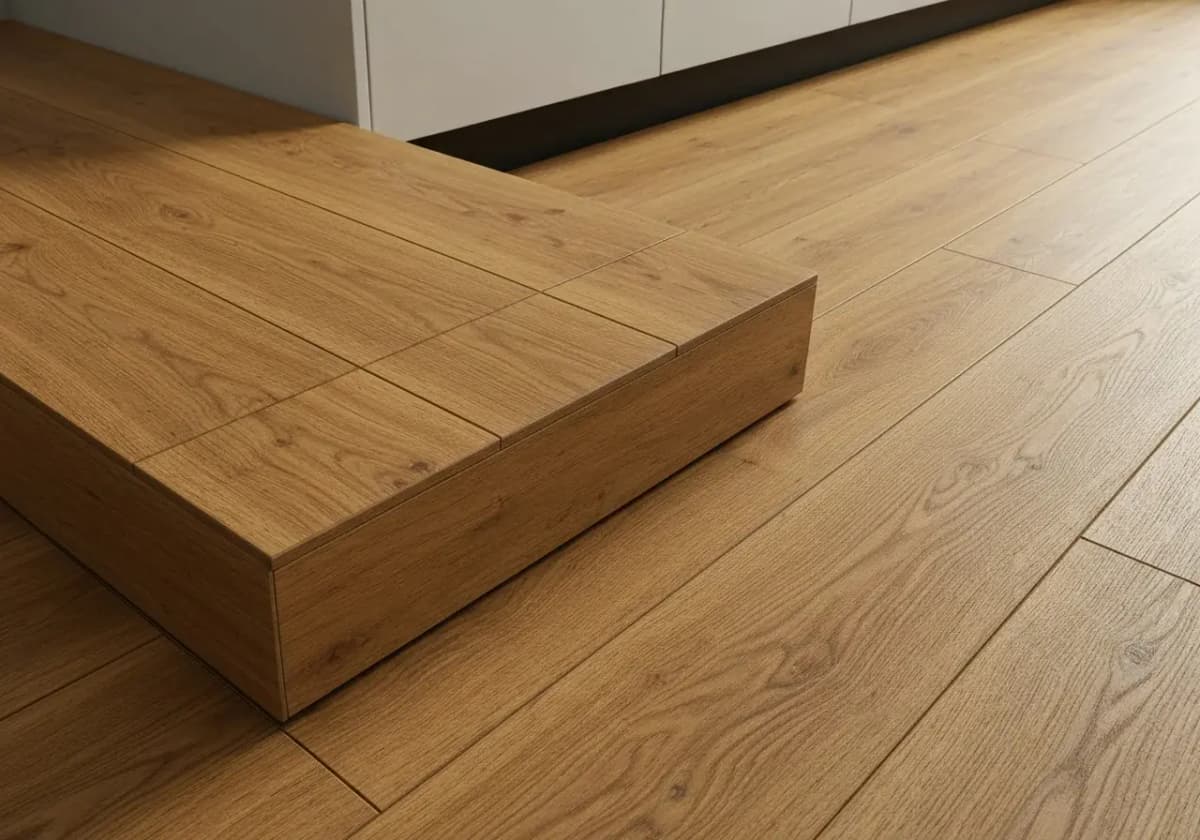
Luxury Vinyl Plank (LVP) Flooring
$5–$12 per sq ft installedLVP is the most popular kitchen flooring choice in Idaho. It is waterproof, durable, comfortable underfoot, and available in realistic wood-look patterns. Premium LVP with a thick wear layer stands up to heavy kitchen traffic.
Best for: Kitchen floors — especially homes with pets and children

Here is how a typical kitchen remodeling project works from first contact to final walkthrough:
In-Home Consultation and Needs Assessment
We visit your kitchen, take detailed measurements, discuss what is and is not working, review your cooking and entertaining habits, identify storage pain points, and establish a realistic budget range. You will receive a scope outline within a few days.
Design Development and Cabinet Layout
We create a detailed kitchen design including cabinet layout, island configuration, countertop material selection, backsplash design, lighting plan, appliance placement, and finish selections. Cabinet orders are placed early because lead times typically run 4-8 weeks.
Material Selection and Ordering
Countertops are templated after cabinets are installed, but the material (quartz, granite, butcher block) is selected during design. Appliances, flooring, backsplash tile, lighting fixtures, and hardware are all confirmed and ordered during this phase.
Permitting and Pre-Construction
We pull permits for electrical, plumbing, or structural work as required. A temporary kitchen station is set up if needed. We coordinate all trade scheduling and material deliveries to align with the construction sequence.
Demolition and Structural Work
Existing cabinets, countertops, flooring, and backsplash are removed. If walls are being opened, structural headers are installed and inspected. Plumbing and electrical rough-in for the new layout is completed and inspected.
Cabinet Installation and Countertop Fabrication
New cabinets are installed, leveled, and secured. Once cabinets are in place, countertop templating happens, followed by fabrication (typically 5-10 business days for quartz or granite). Flooring is installed during this phase as well.
Finish Installation and Final Details
Countertops are installed, backsplash tile is set and grouted, appliances are connected, plumbing fixtures are installed, and all lighting, hardware, and trim details are completed. A final walkthrough ensures everything meets your expectations.
Here is what to expect for project duration when planning kitchen remodeling in Boise:
| Phase | Duration | Details |
|---|---|---|
| Design and Material Selection (pre-construction) | 3–6 weeks | Design consultation, cabinet layout finalization, material selection, appliance ordering, and contract execution. This happens before any demolition. |
| Permitting (pre-construction) | 1–3 weeks | Permit applications for electrical, plumbing, and structural work. Local building departments typically review residential kitchen permits within a few weeks; we build that into the schedule. |
| Cabinet and Appliance Lead Time (pre-construction) | 4–12 weeks | Semi-custom cabinets typically take 4–8 weeks and custom cabinetry 8–12 weeks. Demolition is not scheduled until cabinets and appliances are confirmed en route, so this wait overlaps with permitting rather than adding to the on-site window. |
| Demolition and Rough-In (on-site) | 2–4 days | Remove existing cabinets, countertops, flooring, and backsplash. Complete structural work (wall removal, header installation), plumbing rough-in, and electrical rough-in. Pass inspections. |
| Cabinet and Flooring Installation (on-site) | 2–4 days | Install new cabinets, level and secure them, install flooring, and template the countertops. Fabrication turnaround (5–10 business days for quartz or granite) is scheduled so the install lands inside the construction window. |
| Countertop, Backsplash, and Finish Work (on-site) | 3–5 days | Install countertops, set and grout backsplash tile, connect plumbing fixtures, install appliances, mount lighting, and complete all trim and hardware details. |
| Final Inspection and Walkthrough (on-site) | 1 day | Complete punch list, pass final inspections, and conduct homeowner walkthrough. On-site work as a whole typically totals 1–2 weeks, and often just 5–6 days. |
Boise range: $22,000–$38,000 – $85,000–$145,000
Most Boise projects: $45,000–$70,000
Boise kitchen remodeling costs sit above the national average, driven primarily by a tight labor market that has kept skilled trade wages elevated since the Treasure Valley's post-2020 growth surge. City of Boise permit fees, licensed plumber and electrician requirements, and Boise's current 2018 IRC/IECC adoption also add costs that lower-regulation markets don't carry. On the material side, Boise's distance from major distribution hubs in Salt Lake City and Seattle adds shipping lead times and modest freight premiums on large items like appliance packages and custom cabinetry. The lower end of the range covers a cosmetic-to-mid-range refresh — new cabinets, quartz countertops, LVP flooring, updated fixtures — without structural changes. The high end covers full gut renovations with wall removal, structural beams, custom cabinetry, premium appliances, and premium countertop materials in larger kitchens (200+ sq ft). The average covers what most Boise homeowners actually do: a comprehensive remodel with semi-custom cabinets, quartz countertops, a modest island addition or expansion, updated appliances, LVP flooring, and a new backsplash. Compared to Meridian, Boise proper tends to run somewhat higher for the same scope due to permit complexity, older housing stock requiring more structural discovery work, and the premium trades charge for navigating established neighborhoods with limited staging and dumpster access.
The final cost of kitchen remodeling in Boise depends on several factors. Here are the biggest cost drivers:
Cabinet Selection and Quality
high impactCabinets typically represent 30-40% of a kitchen remodel budget. The gap between stock cabinets ($150/LF) and custom cabinets ($1,000+/LF) is substantial. Door style, wood species, and finish also affect pricing.
Layout Changes and Wall Removal
high impactMoving plumbing, relocating electrical, or removing walls for an open-concept design adds structural engineering, framing, patching, and trade labor costs.
Countertop Material and Edge Profile
high impactLaminate countertops run $30–$55/sf installed. Standard quartz runs $55–$100/sf installed. Premium quartzite can reach about $120/sf installed. Edge profiles, cutouts, and seam locations also affect fabrication cost.
Appliance Package
high impactA standard appliance package (range, refrigerator, dishwasher, microwave) runs $3,000-6,000. A premium package with a professional range, built-in refrigerator, and panel-ready dishwasher can exceed $15,000-25,000.
Backsplash Tile and Design Complexity
medium impactA simple subway tile backsplash costs $800-1,500. A custom tile design with mosaics, natural stone, or large-format tile with tight joints can cost $2,500-5,000+.
Electrical and Lighting Upgrades
medium impactModern kitchens need more circuits than older homes provide. Adding under-cabinet lighting, pendant fixtures, recessed cans, and dedicated appliance circuits is common.
Flooring Selection
medium impactLVP ($5-12/sf) is the budget-friendly standard. Hardwood ($8-15/sf) adds warmth. Tile ($10-25/sf) offers design flexibility. The kitchen floor area is typically 100-200+ square feet.
These are the real-world projects we see most often from Boise homeowners:
Opening a Load-Bearing Wall in a 1950s North End Ranch
The single most common kitchen project in Boise's North End: removing or replacing the wall between the kitchen and dining room in a mid-century ranch. These walls are almost always load-bearing, requiring a structural engineer's assessment, a flush-beam installation (typically a 3.5" x 9.5" LVL beam), and temporary support walls during construction. The payoff is dramatic — a 90-square-foot kitchen that felt like a closet becomes a connected 180-square-foot kitchen-dining space flooded with light. We typically combine this structural change with a full cabinet replacement, quartz countertop installation, and LVP flooring to carry the new openness through the entire space. City of Boise requires a building permit with structural drawings for any load-bearing wall modification. Plan on roughly 6–8 weeks from permit issuance to completion including cabinet lead time, with 1–2 weeks of on-site construction.
Full Gut Renovation of a 1990s West Boise Oak-Cabinet Kitchen
West Boise subdivisions built between 1988 and 2002 are packed with kitchens featuring orange-toned oak cabinets, black laminate countertops, drop-ceiling fluorescent lighting, and linoleum or 12-inch ceramic tile flooring. These kitchens are structurally fine but aesthetically frozen in a different era, and they're dragging down the perceived value of homes that are otherwise in excellent condition. A full gut renovation — demo everything to studs and subfloor, install modern semi-custom cabinetry, quartz countertops, LVP flooring, recessed and pendant lighting, a tile backsplash, and updated appliances — transforms these spaces entirely. Because the existing layout is usually well-designed for the space, we often retain the footprint while expanding the island and improving the lighting plan. No structural changes required in most cases, which keeps costs and timeline manageable.
Bench-Area Galley Kitchen Conversion to Open Concept
The Boise Bench's 1940s–1970s housing stock includes many galley kitchens — narrow two-wall configurations with 36–42 inches between facing countertops. These were efficient for one-person cooking in an era of smaller households, but they feel impossibly cramped in modern use. The standard conversion removes one wall of the galley (usually the one facing the living room), installs a support beam if load-bearing, and repositions the sink or range to the now-open perimeter wall. The result is an L-shaped or U-shaped kitchen with an island that provides seating — a transformation that adds genuinely usable working and gathering space. This conversion is common on Van Buren, Curtis, Targee, and Overland-area homes. Structural assessment is required before any galley wall removal; plan for it in your budget.
SE Boise / Harris Ranch New-Build-Era Kitchen Upgrade
Harris Ranch and SE Boise developments from the 2000s and 2010s were built with builder-grade kitchens: stock cabinets in generic maple or cherry, laminate or basic granite countertops, stainless steel appliances that have since aged, and recessed lighting with no pendant or accent layers. These kitchens have good bones — proper layout, adequate square footage, sufficient electrical service — and they respond extremely well to targeted upgrades. The most common scope: replace the cabinets with shaker-style semi-custom in a modern finish (white, sage, or navy), replace countertops with quartz including a waterfall island edge, add a subway tile or large-format porcelain backsplash, install pendant lights over the island, and update appliances to a matching stainless or panel-ready set. No structural work, no permit required in most cases (when no plumbing or electrical moves are involved). This is one of the most cost-effective remodel types in Boise's current market.
Craftsman Bungalow Kitchen Preservation Remodel (North End Historic District)
For North End homes within the Boise Historic District boundaries, exterior modifications face design review through the City of Boise Historic Preservation Commission. Interior kitchen remodels are generally exempt from design review, but homeowners with a preservation ethic — and there are many in the North End — choose materials and finishes that honor the Craftsman character of their homes. This means inset cabinet doors rather than overlay, painted or stained wood in period-appropriate colors, exposed brick if present, open shelving with wood brackets, and natural stone or butcher block countertops rather than engineered quartz. The craftsmanship level is higher, and so are the costs — but the result is a kitchen that looks like it belongs in the house rather than dropped in from a 2024 showroom catalog. We work closely with local architectural salvage sources and period-appropriate hardware suppliers to achieve authentic results.

Problem: Closed-off kitchen with poor flow to living spaces
Solution: We evaluate load-bearing walls, design structural solutions, and open the kitchen to adjacent rooms for better light, flow, and entertaining function.
Problem: Not enough counter space or storage
Solution: We redesign cabinet layouts to maximize storage with pull-out shelves, drawer organizers, pantry towers, and optimized island configurations with more usable counter surface.
Problem: Outdated builder-grade finishes and worn surfaces
Solution: We replace cabinets, countertops, backsplash, lighting, and hardware with current, durable materials that reflect your style and improve daily function.
Problem: Poor lighting — dark corners and shadows on work surfaces
Solution: We layer recessed ceiling lights, under-cabinet task lighting, and pendant fixtures over islands and sinks to eliminate shadows and brighten the entire space.
Problem: Insufficient electrical capacity for modern appliances
Solution: We upgrade circuits, add dedicated appliance outlets, install GFCI protection, and ensure the panel can support a modern kitchen's electrical load.

Boise has a semi-arid, four-season climate with hot, dry summers (90-105°F), cold winters (15-35°F), and low annual precipitation. This climate directly affects material choices, construction scheduling, and long-term durability of remodeling work.
Temperature Extremes (15°F to 105°F range)
Exterior materials must handle dramatic temperature swings. Windows need strong thermal performance. Interior comfort depends on insulation quality and HVAC sizing.
Low Humidity and Dry Air
Wood materials can dry, shrink, and crack. Hardwood floors may develop gaps in winter. Bathroom ventilation is still critical because bathrooms create localized high-humidity environments.
Freeze-Thaw Cycles
Exterior tile, concrete, and masonry must handle freezing and thawing without cracking. Foundation work has specific frost-depth requirements in the Boise area.
UV Exposure (300+ sunny days)
Exterior paint, siding, and stain fade faster under constant UV. South-facing and west-facing surfaces require UV-resistant materials and more frequent maintenance.
Construction Season
Foundation and exterior work is best scheduled March through November. Interior remodeling can happen year-round. Winter concrete pours require special cold-weather precautions.
North End
Boise's most historic and walkable neighborhood, with tree-lined streets, Craftsman bungalows, Tudor revivals, and mid-century homes dating from 1900 to 1960. The North End Historic District adds design review requirements for exterior work.
Common projects in North End:
- •Kitchen remodels in older homes with small, closed-off layouts
- •Bathroom updates in homes with original 1920s-1950s plumbing
- •ADU construction in larger lots for rental income
- •Home additions for growing families who love the neighborhood
Southeast Boise / Harris Ranch
A mix of established 1970s-1990s homes and newer master-planned developments like Harris Ranch. Homes range from mid-century ranch-style to modern custom builds with foothills views.
Common projects in Southeast Boise / Harris Ranch:
- •Full kitchen renovations upgrading builder-grade finishes
- •Primary suite additions in older ranch homes
- •Deck and patio construction for outdoor living
- •Whole-home remodels bringing 1970s-1980s homes to modern standards
Boise Bench
An elevated neighborhood south of downtown with a mix of post-war homes from the 1940s-1970s and newer infill construction. Known for its views and access to the Greenbelt.
Common projects in Boise Bench:
- •Bathroom remodels updating 1950s-1970s fixtures and tile
- •Kitchen updates in compact post-war floor plans
- •Basement remodels adding usable living space
- •Energy efficiency upgrades in older homes with poor insulation
West Boise
A large area with subdivisions spanning from the 1980s through the 2010s. Many homes are builder-grade with standard finishes that homeowners upgrade as the homes age.
Common projects in West Boise:
- •Kitchen and bathroom remodels replacing builder-grade finishes
- •Open-concept conversions in 1990s closed-layout homes
- •Flooring replacement throughout the home
- •Exterior painting and siding updates
Every Boise neighborhood has different housing stock, homeowner priorities, and project considerations. Here is what kitchen remodeling looks like in each area:
North End
SE Boise / Harris Ranch
Boise Bench
West Boise
Permit authority: City of Boise Planning and Development Services
Online portal: pds.cityofboise.org
- ✓Residential remodeling permits are required for plumbing, electrical, structural, and mechanical changes
- ✓The North End Historic District requires design review for exterior modifications
- ✓ADUs follow Boise's Modern Zoning Code (Section 11-03-03.2B): up to 900 sq ft or 70% of the primary home's floor area, whichever is smaller, max two bedrooms; setbacks and zone dimensional standards apply, with no owner-occupancy requirement and only limited parking requirements. Idaho's 2026 ADU law (Senate Bill 1354) raises the floor to 1,000 sq ft or 75% and allows either one internal or one detached ADU per lot by February 1, 2027 — confirm with PDS
- ✓Online permit portal allows digital submission and tracking
- ✓Inspections can be scheduled online; we book them as each phase is ready
- ✓Permit review times vary with scope and workload; we build the review window into the schedule
Helpful ID resources
- City of Boise Planning and Development Services — permit applications, inspections, and code resources
- Idaho DEQ — Asbestos Program — testing and abatement requirements for pre-1980 homes
- EPA Lead Renovation, Repair and Painting (RRP) Program — required certification for work in pre-1978 homes
- ●Work triangle efficiency — the relationship between sink, stove, and refrigerator determines daily cooking workflow
- ●Island sizing — a functional island needs 36 inches of clearance minimum (42–48 inches on working sides) and a 12–15 inch overhang for seating
- ●Cabinet height — standard uppers are 30 or 36 inches tall; going to the ceiling eliminates dust-catching gaps and adds storage
- ●Backsplash height — full-height backsplash from counter to upper cabinets creates a cleaner, more modern look
- ●Hardware coordination — pulls vs knobs, bar vs cup style, and finish (matte black, brushed brass, satin nickel) set the design tone
- ●Pantry planning — a dedicated pantry cabinet or walk-in pantry dramatically improves kitchen organization
Here are the design trends we see most often in Boise kitchen remodeling projects:
- →Modern farmhouse and transitional styles blending clean lines with warm textures
- →Open-concept kitchen conversions removing walls between kitchen and living areas
- →Walk-in showers replacing bathtubs in primary bathrooms
- →Matte black and brushed gold fixture finishes replacing brushed nickel
- →Large-format tile (12x24+) in bathrooms for a modern, minimal-grout look
- →Quartz countertops overtaking granite as the primary kitchen surface
- →LVP (luxury vinyl plank) replacing carpet throughout main living areas
- →Smart home integration — lighting, thermostats, and security systems
Boise's housing market has appreciated substantially over the past decade, which is part of why homeowners weigh remodeling against moving. The competitive market also means that updated, well-maintained homes sell faster and for higher prices than comparable homes with outdated finishes.
Costs and permit requirements differ by jurisdiction across the Treasure Valley. These guides cover Boise specifically.
Avoid these common pitfalls Boise homeowners encounter with kitchen remodeling projects:
Mistake: Skipping the structural assessment before buying materials for a North End or Bench kitchen
Better approach: Always commission a structural engineer's assessment — $400–$800 — before ordering cabinets or countertops for any kitchen remodel that involves or might involve wall removal. In Boise's older housing stock, walls that appear to be partition walls are often load-bearing, and discovering this after materials arrive (or worse, after demo begins) causes costly redesigns, reorders, and delays. A pre-purchase structural assessment gives you accurate information for your material layout and prevents the most common source of kitchen remodel budget overruns in Boise.
Mistake: Choosing the lowest bid without verifying Idaho contractor registration and permit history
Better approach: Boise's construction boom has brought many contractors to the market who are unregistered, uninsured, or who avoid pulling permits to reduce costs. An unpermitted kitchen remodel creates serious problems at resale (appraisers and lenders require permit verification), and work done without permits must sometimes be demolished and redone. Verify your contractor's Idaho RCE (Registered Contractor) number with the Idaho Division of Occupational and Professional Licenses (DOPL), confirm they're bonded and insured, and ask specifically about their permit process. Any contractor who suggests skipping permits to save money is suggesting you absorb legal and financial risk on their behalf.
Mistake: Ordering solid hardwood flooring for a Boise kitchen
Better approach: Solid hardwood flooring in Boise kitchens is a predictable maintenance headache. Indoor humidity in heated Boise homes drops to 15–25% in winter and swings higher in summer, which causes solid hardwood to cup, gap, and warp noticeably with the seasons. Modern rigid-core LVP provides the visual warmth of hardwood with full dimensional stability across Boise's climate range, requires no acclimation or moisture barriers, and outperforms hardwood by every practical measure in this application. If hardwood aesthetics are essential, specify 3/8" or 1/2" engineered hardwood (not solid) with a robust moisture barrier — and accept that seasonal movement will still be visible.
Mistake: Under-budgeting for older Boise kitchen demo discovery work
Better approach: Boise homes built before 1985 almost always have surprises in the walls: galvanized pipes with inadequate flow, undersized electrical circuits, water damage behind cabinets that was concealed rather than repaired, non-standard framing that complicates cabinet installation. Build a genuine 10–15% contingency into your kitchen remodel budget for any pre-1985 Boise home. This isn't pessimism — it's reality-based planning that prevents the funding crisis that occurs when a $55,000 project reveals $8,000 in necessary remediation work mid-project. Contractors who don't discuss contingency budgets upfront are either inexperienced or not being straight with you.
Mistake: Designing a kitchen for a 1905–1940 North End Craftsman bungalow using suburban open-plan principles
Better approach: The design strategies that produce beautiful kitchens in 2005 West Boise open-plan homes don't translate directly to 1920s Craftsman bungalows. North End homes have specific proportional relationships between rooms, wood species and profiles that run through the entire house, and ceiling heights that create a particular visual character. A kitchen with stark white flat-panel cabinets, a waterfall quartz island, and industrial pendant lights can look jarring in a Craftsman home — technically high-quality but aesthetically out of place. Work with a designer experienced in historic Idaho homes who can balance modern function with period-sympathetic aesthetics: inset cabinet doors, furniture-style legs on islands, painted colors drawn from Craftsman palettes, and hardware that speaks the same visual language as the rest of the house.
Most popular remodeling projects in Boise
- ✓Kitchen remodels with open-concept conversion
- ✓Primary bathroom remodels with walk-in shower
- ✓ADU construction for rental income
- ✓Whole-home remodels in 1980s-1990s homes
- ✓Home additions for primary suites
- ✓Basement finishing and remodeling
- ✓Deck and outdoor living construction
- ✓Energy efficiency upgrades (windows, insulation, HVAC)

See Your Remodel Before You Build.
Upload a few photos of your kitchen, bathroom, flooring, or exterior and get AI-generated concept visuals tailored to your space, style, and materials — free, no obligation, in about five minutes. Then request a real estimate from our Idaho registered Boise team.
Free concept preview · No credit card · Licensed Idaho contractor
Do I need a permit for a kitchen remodel in Boise, Idaho?
It depends on the scope. A purely cosmetic kitchen update — replacing countertops, installing new flooring, painting cabinets, or swapping out appliances — does not require a permit from City of Boise Planning and Development Services. However, any work involving electrical changes (adding circuits, moving outlets, upgrading the panel), plumbing modifications (moving the sink, adding a dishwasher water line, adding a pot filler), structural changes (removing walls, installing beams), or mechanical work (adding or relocating the range hood duct) requires a permit. For most substantive kitchen remodels, expect to pull at minimum an electrical permit and, for structural work, a building permit with supporting drawings. Permit fees are valuation-based under Boise's adopted fee schedule (Table 1-A, effective 10-1-21) — $70.76 plus $12.71 per additional $1,000 on valuation of $2,001–$25,000, and $362.80 plus $9.30 per additional $1,000 from $25,001–$50,000, with residential plan review adding 20%. Confirm current figures with the city. Iron Crest Remodel handles all permit applications and inspections as part of our project management — you don't need to navigate the City of Boise permit portal yourself.
How long does a kitchen remodel take in Boise?
On-site construction typically takes 1–2 weeks, and often just 5–6 days, because Iron Crest does not begin demolition until cabinets and appliances are confirmed en route. Projects involving load-bearing wall removal, structural beam installation, and re-framing add a few days to the structural phase. Design, permitting, and cabinet lead time (8–12 weeks for custom cabinetry) happen before the crew arrives, so plan on roughly 3–4 months from first meeting to finished kitchen. Permit processing for structural kitchen work is part of that pre-construction time; confirm current City of Boise turnaround when scheduling.
Is it worth remodeling a kitchen in Boise's current real estate market?
We don't publish a recapture percentage for a Boise kitchen, because what a remodel returns at sale depends on the specific home, the comparable set it is measured against and the appraiser who measures it — and we have no local appraisal or sales data of our own to draw that number from. What we can tell you is what the work actually changes. It resolves the things a home inspector writes up in an older Boise kitchen: galvanized supply lines with restricted flow, undersized or ungrounded circuits, drain runs that never met current slope requirements. It changes how your home reads against the updated kitchen in the listing two streets over. And if you're staying five to ten more years, it changes the room you use most, every day, for that entire time — which is the part of the decision that doesn't depend on anyone's market forecast.
What's the most popular kitchen style in Boise right now?
In 2026, the dominant kitchen style in Boise is transitional-modern with strong nods to the Idaho landscape. Think shaker or flat-panel cabinet doors in earthy two-tone combinations — white or cream uppers with sage green, navy, or forest green lowers — paired with quartz countertops featuring bold veining, a waterfall island edge, and warm-toned LVP flooring in a wide-plank format. The all-white kitchen that dominated Boise from 2015–2022 has given way to color and texture, but it's intentional color rather than bold accent walls — colors that feel connected to the Foothills and the high-desert landscape surrounding the city. Modern farmhouse (shaker doors, exposed wood accents, apron-front sink) remains strong in North End and Bench neighborhoods where it complements the existing architectural character. In West Boise and SE Boise, the contemporary direction leans more clean and minimal with less exposed wood.
How do I handle asbestos or lead paint in my older Boise kitchen?
Boise homes built before 1980 — which includes virtually all of the North End, the Bench, the Vista neighborhood, and parts of West Boise — should be tested for asbestos before any kitchen demolition begins. Suspect materials include vinyl floor tiles (the 9x9 and 12x12 tiles common in 1950s–1970s kitchens), sheet flooring, joint compound, ceiling tiles, and pipe insulation. Testing runs $200–$500 for a professional environmental assessment. If asbestos is confirmed, we use EPA/AHERA-accredited abatement crews before disturbance — budget $1,500–$4,500 depending on material type and quantity. Lead paint testing (homes built before 1978) involves swipe tests or XRF analysis; positive results require EPA RRP lead-safe work practices during remodeling. Iron Crest Remodel follows EPA RRP lead-safe work practices and coordinates environmental testing and abatement as part of our pre-construction process for all older Boise homes. Do not skip this step — the liability and health risks of improper asbestos or lead disturbance are serious.
What adds the most cost to a kitchen remodel?
Cabinet selection is typically the single largest cost driver, followed by countertop material, appliance package, and layout changes. Moving plumbing or removing walls adds structural and trade labor costs. The finish level you choose — stock vs semi-custom vs custom cabinets, laminate vs quartz vs granite counters — has the biggest impact on total budget.
Can I live at home during a kitchen remodel?
Yes, most homeowners stay in the home during a kitchen remodel. We help you set up a temporary kitchen station in another room with a microwave, toaster oven, and access to water. Dust barriers contain construction debris. Expect 1-2 weeks without a fully functional kitchen, and often 5-6 days — Iron Crest does not begin demolition until cabinets and appliances are confirmed en route, so material lead times fall before the crew arrives.
How long does a kitchen remodel take from start to finish?
On-site construction typically takes 1–2 weeks, and often just 5–6 days, because Iron Crest does not begin demolition until cabinets and appliances are confirmed en route. Design, permitting, and cabinet lead time (8–12 weeks for custom cabinetry) happen before the crew arrives, so plan on roughly 3–4 months from first meeting to finished kitchen.
Do kitchen remodels require permits?
Yes. Most kitchen remodels that involve electrical, plumbing, or structural changes require permits from your city or county building department. Cosmetic-only updates (painting cabinets, new hardware, replacing a faucet) typically do not. We handle all permit applications and inspections.
Is a kitchen remodel worth it for resale value?
Remodeling's 2024 Cost vs. Value Report puts a minor midrange kitchen remodel at about 96% of cost recouped and a major midrange remodel at about 49%. Those are national figures. We do not publish a Boise-specific recapture percentage, because no local dataset supports one.
What is the best countertop material for kitchens?
Quartz is the most popular choice because it is non-porous, stain-resistant, durable, and available in hundreds of colors and patterns. Granite remains popular for homeowners who prefer natural stone. Butcher block adds warmth for island tops. The best choice depends on your budget, maintenance tolerance, and design preferences.
Should I choose stock, semi-custom, or custom cabinets?
Semi-custom cabinets are the best value for most kitchen remodels — they offer more size options, door styles, and finishes than stock, with shorter lead times and lower cost than custom. Custom cabinets make sense for unusual layouts, very specific design visions, or high-end projects where every detail is bespoke.

Talk to a real project manager
Have Questions? Call Now for a Free In-Home Consultation.
Mon–Fri 7 AM–6 PM · Idaho registered & insured · No obligation
Russ Shloma — Project Manager
Russ Shloma — Project Manager
Start your kitchen remodeling in Boise
Get a free, no-obligation estimate for kitchen remodeling in Boise, ID. We handle design, permits, and every detail of construction.
Get Your Free Estimate