

Kitchen Remodel in Fruitland, ID
From cabinet and countertop upgrades to full layout redesigns — we handle every element of your kitchen renovation from design through installation.
Quick answer
Iron Crest Remodeling Group LLC provides kitchen remodeling in Fruitland, ID. Most Fruitland kitchen remodeling projects cost $22,000 – $150,000. Fruitland kitchen remodeling costs track broader Treasure Valley ranges with two local adjustments. Pulling costs up: a thinner western trade market shared with Ontario, Oregon, longer scheduling lead times, and the travel and staging built into serving a town fifty miles from Boise.
Kitchen remodeling in Fruitland, Idaho is the work of reconciling a town's farm-town past with its rapidly suburbanizing present. Fruitland anchors the western end of Payette County on the Snake River at the Oregon border, fifty miles west of Boise and minutes from Ontario. The 2020 Census counted 6,072 residents, up almost thirty percent from 2010, and the town keeps growing — Swire Coca-Cola, Woodgrain, and Dickinson Frozen Foods anchor a real local economy that pulls families across the river and out from Boise. That growth produced two kitchens that could not be more different: the compact, closed-off kitchens of Fruitland's farmhouse and orchard-era homes — built when a kitchen was a work room, not a gathering space — and the builder-grade open kitchens going into River's Edge, Bishop Ranch, Creekside, and Northview Ranch that look like every other production kitchen in the Treasure Valley. Both groups want the same thing for different reasons: a kitchen that works for how households actually live now. Iron Crest Remodel (Iron Crest Remodeling Group LLC, Idaho RCE-6681702) brings Treasure Valley craftsmanship and Fruitland-specific knowledge of the housing stock, the split City/State permit process, and material performance in this high-desert river-valley climate to every kitchen we build.
Create a kitchen that works better for cooking, gathering, storage, and everyday life.
A kitchen remodel is the most impactful renovation you can make in your home — for daily quality of life, for resale value, and for how your family uses the most important shared space in the house. Kitchen projects range from cabinet repainting and countertop replacement to complete gut renovations involving wall removal, electrical panel upgrades, plumbing relocation, new flooring, and custom cabinetry. In the Treasure Valley, many homes were built with builder-grade kitchens that prioritize cost over function — small islands, limited counter space, poor lighting, and closed-off layouts. A well-planned kitchen remodel solves all of these problems while creating a space that looks, feels, and works the way your household needs it to. The key to a successful kitchen remodel is sequencing: design and material selection must be complete before demolition begins, because cabinet lead times, countertop fabrication, and appliance ordering all happen on parallel timelines that must align with construction progress.
Fruitland homeowners pursue kitchen remodeling for a variety of reasons. Here are the most common situations we see:
- ✓Homeowners with builder-grade kitchens from the 1990s or 2000s who want a meaningful upgrade
- ✓Families who need better workflow, more counter space, and improved storage throughout the kitchen
- ✓Homeowners who want to open up a closed-off kitchen to the living or dining area
- ✓Anyone planning to sell who wants a renovation buyers notice first
- ✓Homeowners who love to cook and want professional-grade appliances, better lighting, and improved ventilation
Not every kitchen remodeling project is the same. Here are the most common project types we complete in Fruitland:

Full Kitchen Renovation
Complete kitchen gut and rebuild including new cabinets, countertops, flooring, backsplash, lighting, plumbing, electrical, and appliances. May include layout changes and wall removal.

Cabinet and Countertop Replacement
Replace existing cabinets and countertops while keeping the current layout. New hardware, hinges, and drawer systems are included. A high-impact upgrade without the cost of a full gut.

Open-Concept Kitchen Conversion
Remove or modify walls between the kitchen and adjacent living or dining spaces to create an open floor plan. Includes structural header installation, patching, and finish work.

Kitchen Island Addition
Design and install a kitchen island with seating, storage, and optional sink or cooktop. Requires electrical for outlets and potentially plumbing if adding a sink.

Kitchen Refresh
Update the kitchen without a full renovation: new countertops, repainted cabinets, updated hardware, new backsplash, and modern lighting fixtures.

Fruitland's housing is bimodal: a substantial pre-1970 farmhouse and orchard-era stock with original systems and closed plans, and a large post-2005 subdivision wave with value-engineered builder finishes. Older homes need comprehensive systemic work; newer homes need finish and function upgrades.
Pre-1970 (Farmhouse & Town Core)
Orchard-era farmhouses and orchard-keeper homes, often single-bath on generous lots, with galvanized supply lines, undersized electrical service, closed floor plans, minimal insulation, and frequent pre-1978 lead paint and pre-1980 asbestos-containing materials.
1970s–1990s
Scattered ranch and early subdivision homes with mid-era systems and finishes now reaching end of life; common candidates for systems-and-layout renovation short of a full gut.
2005–present (River's Edge, Bishop Ranch, Creekside, Northview Ranch)
Production-builder subdivision homes built to a price point — open plans and modern systems but value-engineered cabinetry, counters, fixtures, and minimal outdoor space — that age out of relevance as a set.
Common issues in Fruitland homes
- •Galvanized supply lines corroded below useful flow in pre-1970 homes
- •Electrical service inadequate for modern loads in older homes
- •Closed, walled-off farmhouse kitchens and single-bathroom layouts
- •Crawlspace and subfloor moisture on lower river-valley lots
- •End-of-life original wood siding and single-pane windows
- •Value-engineered builder finishes worn out as a set in post-2005 homes

Material selection affects the look, durability, and cost of your kitchen remodeling. Here are the most popular options we install in Fruitland:

Quartz Countertops
$55–$100 per sq ft fabricated and installedEngineered quartz is the most popular countertop choice for kitchen remodels. It is non-porous, stain-resistant, available in hundreds of colors and patterns, and never needs sealing. Brands like Caesarstone, Cambria, and Silestone offer a wide range of options.
Best for: Most kitchen applications — especially busy households

Granite Countertops
$45–$90 per sq ft fabricated and installedNatural granite remains a popular and durable countertop choice. Each slab is unique. Granite requires periodic sealing (once per year) and is heat-resistant, making it practical for kitchens. Pricing varies widely based on rarity and origin.
Best for: Homeowners who want natural stone with unique veining

Semi-Custom Cabinets
$300–$650 per linear foot installedSemi-custom cabinets offer more size options, wood species choices, door styles, and finish options than stock cabinets, with shorter lead times and lower cost than full custom. Most kitchen remodels in the Treasure Valley use semi-custom cabinetry.
Best for: Most kitchen remodels — best balance of customization and value

Custom Cabinets
$600–$1,200+ per linear foot installedBuilt to exact specifications with no size limitations. Custom cabinets allow unique storage solutions, specialty wood species, and bespoke design details. Lead times are longer (8–12 weeks, versus 4–8 weeks for semi-custom) and cost is significantly higher.
Best for: High-end kitchens, unusual layouts, and specific design visions
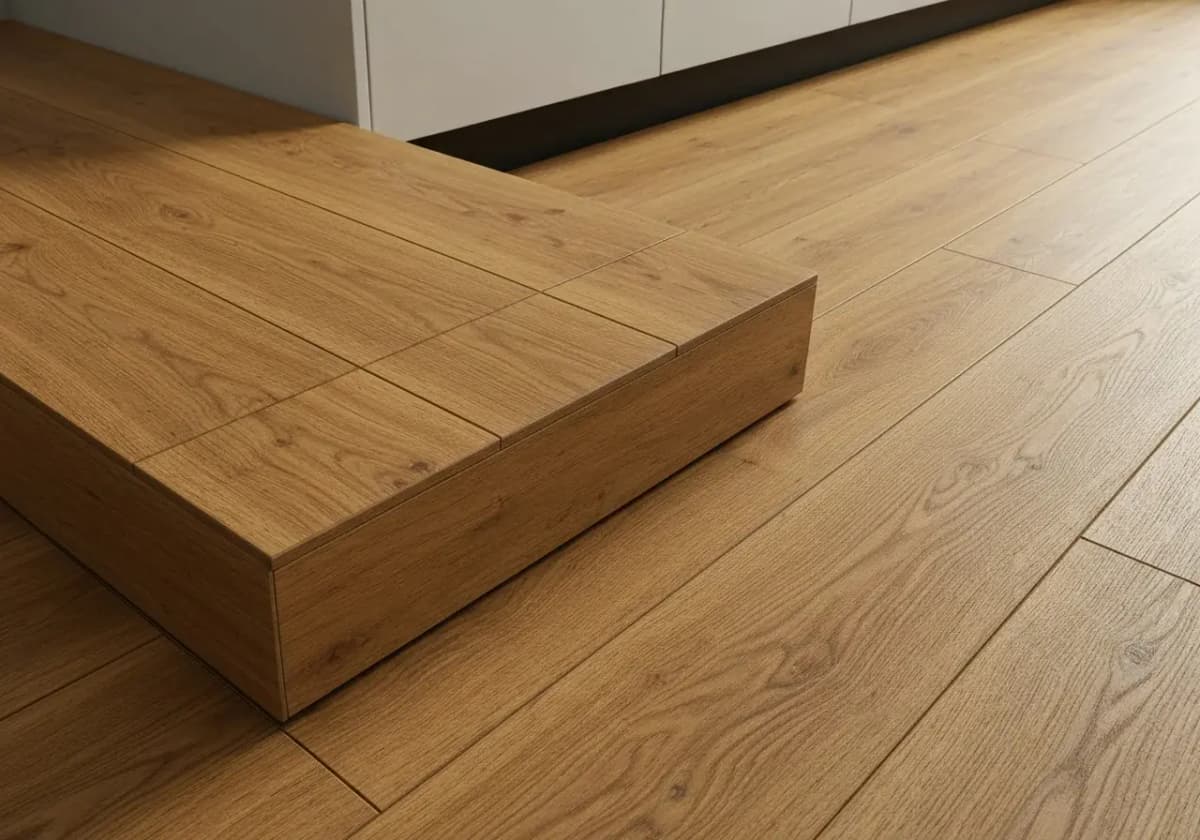
Luxury Vinyl Plank (LVP) Flooring
$5–$12 per sq ft installedLVP is the most popular kitchen flooring choice in Idaho. It is waterproof, durable, comfortable underfoot, and available in realistic wood-look patterns. Premium LVP with a thick wear layer stands up to heavy kitchen traffic.
Best for: Kitchen floors — especially homes with pets and children

Here is how a typical kitchen remodeling project works from first contact to final walkthrough:
In-Home Consultation and Needs Assessment
We visit your kitchen, take detailed measurements, discuss what is and is not working, review your cooking and entertaining habits, identify storage pain points, and establish a realistic budget range. You will receive a scope outline within a few days.
Design Development and Cabinet Layout
We create a detailed kitchen design including cabinet layout, island configuration, countertop material selection, backsplash design, lighting plan, appliance placement, and finish selections. Cabinet orders are placed early because lead times typically run 4-8 weeks.
Material Selection and Ordering
Countertops are templated after cabinets are installed, but the material (quartz, granite, butcher block) is selected during design. Appliances, flooring, backsplash tile, lighting fixtures, and hardware are all confirmed and ordered during this phase.
Permitting and Pre-Construction
We pull permits for electrical, plumbing, or structural work as required. A temporary kitchen station is set up if needed. We coordinate all trade scheduling and material deliveries to align with the construction sequence.
Demolition and Structural Work
Existing cabinets, countertops, flooring, and backsplash are removed. If walls are being opened, structural headers are installed and inspected. Plumbing and electrical rough-in for the new layout is completed and inspected.
Cabinet Installation and Countertop Fabrication
New cabinets are installed, leveled, and secured. Once cabinets are in place, countertop templating happens, followed by fabrication (typically 5-10 business days for quartz or granite). Flooring is installed during this phase as well.
Finish Installation and Final Details
Countertops are installed, backsplash tile is set and grouted, appliances are connected, plumbing fixtures are installed, and all lighting, hardware, and trim details are completed. A final walkthrough ensures everything meets your expectations.
Here is what to expect for project duration when planning kitchen remodeling in Fruitland:
| Phase | Duration | Details |
|---|---|---|
| Design and Material Selection (pre-construction) | 3–6 weeks | Design consultation, cabinet layout finalization, material selection, appliance ordering, and contract execution. This happens before any demolition. |
| Permitting (pre-construction) | 1–3 weeks | Permit applications for electrical, plumbing, and structural work. Local building departments typically review residential kitchen permits within a few weeks; we build that into the schedule. |
| Cabinet and Appliance Lead Time (pre-construction) | 4–12 weeks | Semi-custom cabinets typically take 4–8 weeks and custom cabinetry 8–12 weeks. Demolition is not scheduled until cabinets and appliances are confirmed en route, so this wait overlaps with permitting rather than adding to the on-site window. |
| Demolition and Rough-In (on-site) | 2–4 days | Remove existing cabinets, countertops, flooring, and backsplash. Complete structural work (wall removal, header installation), plumbing rough-in, and electrical rough-in. Pass inspections. |
| Cabinet and Flooring Installation (on-site) | 2–4 days | Install new cabinets, level and secure them, install flooring, and template the countertops. Fabrication turnaround (5–10 business days for quartz or granite) is scheduled so the install lands inside the construction window. |
| Countertop, Backsplash, and Finish Work (on-site) | 3–5 days | Install countertops, set and grout backsplash tile, connect plumbing fixtures, install appliances, mount lighting, and complete all trim and hardware details. |
| Final Inspection and Walkthrough (on-site) | 1 day | Complete punch list, pass final inspections, and conduct homeowner walkthrough. On-site work as a whole typically totals 1–2 weeks, and often just 5–6 days. |
Fruitland range: $22,000–$38,000 – $80,000–$150,000
Most Fruitland projects: $45,000–$75,000
Fruitland kitchen remodeling costs track broader Treasure Valley ranges with two local adjustments. Pulling costs up: a thinner western trade market shared with Ontario, Oregon, longer scheduling lead times, and the travel and staging built into serving a town fifty miles from Boise. Pulling costs down: lower Payette County land and overhead, and a simpler City of Fruitland permit process than Boise's. The low range covers a cabinet-repaint or modest pull-and-replace refresh in a smaller kitchen — repainted existing cabinetry or new stock cabinets, quartz or laminate counters, sink, faucet, lighting, and appliances, with the existing layout retained. The average range is a full mid-to-upper kitchen remodel: new semi-custom cabinetry, quartz counters, tile or full-height backsplash, updated electrical and lighting, new appliances, flooring, and modest layout changes. The high end covers a full gut with structural change — removing a load-bearing wall to open a closed farmhouse kitchen, relocating plumbing and gas, a large island, custom cabinetry, and premium appliances, common in larger River's Edge and Bishop Ranch homes. Older pre-1970 homes routinely add $4,000–$12,000 for electrical service and panel upgrades, galvanized supply replacement, and structural work to open original closed plans — none of which post-2005 subdivision kitchens require.
The final cost of kitchen remodeling in Fruitland depends on several factors. Here are the biggest cost drivers:
Cabinet Selection and Quality
high impactCabinets typically represent 30-40% of a kitchen remodel budget. The gap between stock cabinets ($150/LF) and custom cabinets ($1,000+/LF) is substantial. Door style, wood species, and finish also affect pricing.
Layout Changes and Wall Removal
high impactMoving plumbing, relocating electrical, or removing walls for an open-concept design adds structural engineering, framing, patching, and trade labor costs.
Countertop Material and Edge Profile
high impactLaminate countertops run $30–$55/sf installed. Standard quartz runs $55–$100/sf installed. Premium quartzite can reach about $120/sf installed. Edge profiles, cutouts, and seam locations also affect fabrication cost.
Appliance Package
high impactA standard appliance package (range, refrigerator, dishwasher, microwave) runs $3,000-6,000. A premium package with a professional range, built-in refrigerator, and panel-ready dishwasher can exceed $15,000-25,000.
Backsplash Tile and Design Complexity
medium impactA simple subway tile backsplash costs $800-1,500. A custom tile design with mosaics, natural stone, or large-format tile with tight joints can cost $2,500-5,000+.
Electrical and Lighting Upgrades
medium impactModern kitchens need more circuits than older homes provide. Adding under-cabinet lighting, pendant fixtures, recessed cans, and dedicated appliance circuits is common.
Flooring Selection
medium impactLVP ($5-12/sf) is the budget-friendly standard. Hardwood ($8-15/sf) adds warmth. Tile ($10-25/sf) offers design flexibility. The kitchen floor area is typically 100-200+ square feet.
These are the real-world projects we see most often from Fruitland homeowners:
Opening a Closed Farmhouse Kitchen in a Pre-1970 Fruitland Home
The defining Fruitland older-home kitchen project: a 1950s–1970s farmhouse or orchard-era home with a small kitchen walled off from the dining and living areas, the way kitchens were built when they were work rooms. The scope is structural and systemic — engineering and removing the wall (often load-bearing, requiring a beam and proper support), reconfiguring the layout into an open or semi-open plan, upgrading electrical service and the panel to carry a modern kitchen's load, replacing galvanized supply lines, relocating the sink and possibly gas, then new cabinetry, quartz counters, an island, flooring, and lighting. This is a multi-trade project requiring a City of Fruitland building/mechanical permit plus separate State of Idaho plumbing and electrical permits. Pre-1978 homes fall under EPA RRP lead-safe rules, and we recommend asbestos sampling on pre-1980 flooring and mastic before demolition. Timeline runs 6–9 weeks end to end after permitting, with 1–2 weeks on site.
Builder-Grade Kitchen Upgrade in a River's Edge or Bishop Ranch Home
The most common newer-home kitchen request in Fruitland: a 2005-and-later subdivision kitchen that is already open-plan but entirely value-engineered. Thermofoil or builder cabinets, laminate or entry-level counters, a stock island, and basic appliances come out; semi-custom cabinetry, quartz counters, a tile or full-height backsplash, a properly scaled island with seating, updated lighting and electrical, and quality appliances go in. Because the layout already works and the home has no environmental or systemic issues, the scope is predictable and the budget goes entirely into finish and function. These projects move quickly and deliver a dramatic jump in both daily use and listing appeal within Fruitland's appreciating market.
Cabinet Repaint and Counter Refresh for a Resale-Bound Fruitland Home
For owners preparing to list into Fruitland's tightening market on a controlled budget, a targeted refresh changes how the room reads without a full gut. Where the existing cabinetry is sound — common in 1990s–2000s homes — a full repaint of the boxes and doors with new hardware, paired with quartz counters, a new sink and faucet, a tile backsplash, updated lighting, and a refreshed appliance package, modernizes the kitchen at roughly half the cost of full replacement. The scope is largely finish-level with minimal permitting, making it ideal for a 3–6 month pre-listing timeline in this price band.
Full Custom Kitchen in a Larger River-Adjacent Fruitland Home
For Fruitland's higher-value homes — larger River's Edge properties and custom builds, often on river-adjacent or acreage lots — a full custom kitchen aligns the home's most-used room with its overall quality. Scope includes full custom cabinetry, a large island with prep and seating zones, quartz or quartzite counters, a designed lighting plan, premium appliances including a range and dedicated refrigeration, a walk-in or butler's pantry where space allows, and often a layout reconfiguration to capture river or valley views. These are architecturally significant rooms approached with full design discipline, and on river-adjacent lots they include attention to the moisture and seasonal humidity factors specific to Fruitland's lower valley.
Aging Subdivision Kitchen Update for a Long-Term Fruitland Household
Many Fruitland subdivision homes from the first development wave (roughly 2005–2015) are owned by settled families who intend to stay as the town grows. Their kitchens are now ten-to-twenty years old with finishes that have aged out: dated cabinet finishes, worn counters, original entry-level appliances, and lighting that was never adequate. The work here is driven by quality of life rather than resale, so material choices skew toward durability and function — solid cabinetry, quartz, durable LVP or tile flooring, and a lighting plan designed for how the household actually cooks and gathers. These projects deliver a daily-experience improvement that compounds over a decade-plus of ownership.

Problem: Closed-off kitchen with poor flow to living spaces
Solution: We evaluate load-bearing walls, design structural solutions, and open the kitchen to adjacent rooms for better light, flow, and entertaining function.
Problem: Not enough counter space or storage
Solution: We redesign cabinet layouts to maximize storage with pull-out shelves, drawer organizers, pantry towers, and optimized island configurations with more usable counter surface.
Problem: Outdated builder-grade finishes and worn surfaces
Solution: We replace cabinets, countertops, backsplash, lighting, and hardware with current, durable materials that reflect your style and improve daily function.
Problem: Poor lighting — dark corners and shadows on work surfaces
Solution: We layer recessed ceiling lights, under-cabinet task lighting, and pendant fixtures over islands and sinks to eliminate shadows and brighten the entire space.
Problem: Insufficient electrical capacity for modern appliances
Solution: We upgrade circuits, add dedicated appliance outlets, install GFCI protection, and ensure the panel can support a modern kitchen's electrical load.

Fruitland has a high-desert river-valley climate: hot dry summers, cold winters with a 10°F design temperature, intense UV, agricultural dust off surrounding Payette County farmland, and seasonal humidity at grade on lower lots near the Snake and Payette confluence.
Cold Winters / Frost
10°F winter design temperature and 24-inch frost depth (Payette County criteria) drive foundation depth, plumbing routing, and the value of insulation and heated floors.
High-Desert UV & Agricultural Dust
Intense solar load and wind-driven field particulate degrade exterior coatings and siding faster on south/west elevations; UV- and dust-rated systems required.
Wind
115 mph basic design wind drives infiltration and water intrusion, making meticulous flashing, fastening, and window air-sealing essential.
Snow Load
25 psf ground snow load governs deck and addition roof/framing design.
Seismic
Seismic Design Category C requires proper lateral bracing and connection detailing in new framing.
River-Valley Moisture
Lower lots near the Snake/Payette confluence carry elevated grade humidity and seasonal water, affecting crawlspaces, subfloors, foundations, and waterproofing.
River's Edge
A signature newer subdivision minutes from the Snake River and the Oregon line, on platted lots with mechanically modern homes and value-engineered builder finishes; lower river-valley siting makes crawlspace and slab-edge moisture a real factor.
Common projects in River's Edge:
- •Builder tub-shower to tiled walk-in conversions
- •Kitchen upgrades replacing builder-grade cabinetry and counters
- •Composite view decks oriented to river and valley sightlines
- •Whole-interior repaints from builder-flat white
Bishop Ranch
One of the newer subdivisions absorbing Fruitland's in-migration, on tighter platted lots with production-builder homes from the last fifteen years; comprehensive finish-and-function remodels are common as relocating buyers price renovations into purchases.
Common projects in Bishop Ranch:
- •Semi-custom kitchen remodels
- •Primary bath and walk-in shower upgrades
- •Bonus-room and fourth-bedroom additions
- •Fiber cement re-siding on sun-driven elevations
Creekside
A newer residential development on Fruitland's growing edge with mechanically modern homes on efficient lots; remodeling here is aesthetic and functional rather than corrective.
Common projects in Creekside:
- •Cohesive pre-listing whole-home refreshes
- •Guest and secondary bath refreshes
- •LVP and tile flooring replacing builder carpet
- •Decks adding outdoor living to builder slabs
Northview Ranch
A quieter newer neighborhood with many settled long-term residents, driving stay-and-improve and aging-in-place projects over resale staging.
Common projects in Northview Ranch:
- •Curbless accessible walk-in showers
- •Durable whole-home renovations for long-term ownership
- •Heated-tile flooring and kitchen updates
- •Multigenerational and in-law suite additions
Older Fruitland Town Core & Farmhouse Properties
The original residential core and surrounding pre-1970 farmhouse and orchard-keeper homes, often single-bath on generous lots, with galvanized plumbing, undersized electrical, closed floor plans, and pre-1980 environmental considerations.
Common projects in Older Fruitland Town Core & Farmhouse Properties:
- •Opening closed farmhouse kitchens (load-bearing wall removal)
- •Down-to-studs whole-home renovations
- •Primary suite and second-bathroom additions
- •Lead-safe interior/exterior repaints and full re-sides
Every Fruitland neighborhood has different housing stock, homeowner priorities, and project considerations. Here is what kitchen remodeling looks like in each area:
River's Edge
Bishop Ranch
Creekside
Northview Ranch
Older Fruitland Town Core and Farmhouse Properties
Permit authority: City of Fruitland Building Department (building, mechanical, sign); plumbing & electrical via State of Idaho (DOPL); unincorporated parcels via Payette County Building Department
Online portal: www.fruitland.org/building
- ✓City of Fruitland issues building, mechanical, and sign permits; inspections via 208-452-4946 (calls before 3 p.m. scheduled next day)
- ✓Plumbing and electrical permits are NOT issued by the City — obtained from the State of Idaho (DOPL)
- ✓Properties outside city limits fall under Payette County Building Department (208-642-6018)
- ✓Adopted codes: 2018 IBC, 2018 IRC, 2018 IECC, 2018 IMC
- ✓Design criteria: ground snow load 25 psf, wind 115 mph, Seismic Design Category C, frost depth 24 in, winter design temp 10°F
- ✓Pre-1980 homes: Idaho DEQ / EPA RRP asbestos and lead testing and abatement required before disturbance
- ✓No online permit portal noted; applications submitted by mail or email to Fruitland City Hall, PO Box 324, Fruitland, ID 83619
Helpful ID resources
- City of Fruitland Building Department (building, mechanical, sign); plumbing & electrical via State of Idaho (DOPL); unincorporated parcels via Payette County Building Department — permit applications, inspections, and code resources
- Idaho DEQ — Asbestos Program — testing and abatement requirements for pre-1980 homes
- EPA Lead Renovation, Repair and Painting (RRP) Program — required certification for work in pre-1978 homes
- ●Work triangle efficiency — the relationship between sink, stove, and refrigerator determines daily cooking workflow
- ●Island sizing — a functional island needs 36 inches of clearance minimum (42–48 inches on working sides) and a 12–15 inch overhang for seating
- ●Cabinet height — standard uppers are 30 or 36 inches tall; going to the ceiling eliminates dust-catching gaps and adds storage
- ●Backsplash height — full-height backsplash from counter to upper cabinets creates a cleaner, more modern look
- ●Hardware coordination — pulls vs knobs, bar vs cup style, and finish (matte black, brushed brass, satin nickel) set the design tone
- ●Pantry planning — a dedicated pantry cabinet or walk-in pantry dramatically improves kitchen organization
Here are the design trends we see most often in Fruitland kitchen remodeling projects:
- →Opening closed farmhouse floor plans to open/semi-open living
- →Tiled curbless and walk-in showers replacing builder tub-shower combos
- →LVP and porcelain tile flooring over moisture-managed subfloors
- →Quartz counters and plywood-box cabinetry suited to the humidity swing
- →Composite decks oriented to river and valley views
- →Fiber cement and engineered-wood re-siding on weathered farmhouses
- →Energy-efficient window replacement for the 10°F-winter climate
- →Accessible aging-in-place baths and main-level suites
Fruitland's median sale price has moved into the high-$300,000s to mid-$400,000s with year-over-year appreciation (roughly $385,000–$443,000 in 2025 reporting, source-dependent), driven by a ~30% population gain since 2010 and continued in-migration into the Ontario Micropolitan Area against limited inventory. Lower Payette County land and overhead make remodeling investment go further than in Ada County, and the constrained, appreciating market makes whole-home renovation and additions a rational alternative to trading up. Served by Fruitland School District #373.
Avoid these common pitfalls Fruitland homeowners encounter with kitchen remodeling projects:
Mistake: Opening a load-bearing wall without engineering or a permit
Better approach: Most closed Fruitland farmhouse kitchens are walled off by a load-bearing wall. Removing it without engineered beam sizing, proper support, a City of Fruitland building permit, and a framing inspection risks structural failure and creates a serious resale disclosure problem. The correct path is structural assessment, engineered specification, permitted construction, and inspection — on every project.
Mistake: Assuming the City issues all kitchen permits
Better approach: Fruitland's permit jurisdiction is split: the City handles building and mechanical, the State of Idaho handles plumbing and electrical, and properties outside city limits answer to Payette County. A full kitchen remodel touches all of those. Filing only with the City leaves plumbing and electrical work unpermitted, which fails inspection and surfaces at resale. Confirm jurisdiction by parcel and trade before work begins.
Mistake: Ignoring electrical capacity in an older home
Better approach: Pre-1970 Fruitland homes were not wired for a modern kitchen's load. Installing new appliances and lighting on an undersized panel is unsafe and non-compliant. Assess service capacity during planning and scope the panel and circuit upgrade upfront — it is a known, expected cost in older-home kitchens here, not a mid-project surprise.
Mistake: Specifying particleboard cabinetry in this climate
Better approach: Fruitland's wide seasonal humidity swing and elevated grade moisture on lower river-valley lots stress cabinet construction. Particleboard boxes near sinks and dishwashers swell and delaminate within years. Specify plywood-core or solid-wood boxes — the modest premium buys substantially longer service life, which matters most for the many Fruitland owners doing stay-and-improve remodels.
Mistake: Designing the kitchen without addressing river-valley moisture
Better approach: On lower-lying Fruitland lots near the Snake and Payette confluence, seasonal humidity migrates up through the floor system and shortens the life of new cabinetry and flooring. A good kitchen remodel on a river-valley lot includes a look at crawlspace ventilation and slab-edge moisture control. Ignoring the lot's hydrology is exactly the templated mistake that produces premature failure in an otherwise well-built kitchen.
Most popular remodeling projects in Fruitland
- ✓Whole-home renovations of pre-1970 farmhouses
- ✓Kitchen remodels (closed-plan openings and builder-grade upgrades)
- ✓Bathroom and walk-in shower remodels
- ✓Primary suite, second-bath, and multigenerational additions
- ✓Detached and attached ADUs on generous older lots
- ✓Fiber cement re-siding and exterior repaints
- ✓LVP and tile flooring with subfloor/crawlspace remediation
- ✓Composite deck construction

See Your Remodel Before You Build.
Upload a few photos of your kitchen, bathroom, flooring, or exterior and get AI-generated concept visuals tailored to your space, style, and materials — free, no obligation, in about five minutes. Then request a real estimate from our Idaho registered Boise team.
Free concept preview · No credit card · Licensed Idaho contractor
Can you open up the closed kitchen in my older Fruitland farmhouse?
Yes — it is the most-requested older-home kitchen project in Fruitland. These pre-1970 kitchens were built as walled-off work rooms, and the wall between the kitchen and living or dining space is frequently load-bearing. Opening it correctly means engineered beam sizing, proper support, a City of Fruitland building permit, and inspection at framing. The project typically also includes an electrical service and panel upgrade (permitted through the State of Idaho), galvanized supply replacement, and possible plumbing relocation. On pre-1980 homes, asbestos sampling and lead-safe planning come first. Plan on 8–12 weeks total including permitting. The result transforms how the home lives and resolves the systems problems that would otherwise surface later.
Who issues kitchen remodel permits in Fruitland?
It depends on location and trade. Inside Fruitland city limits, the City of Fruitland Building Department (208-452-4946) issues building and mechanical permits. Plumbing and electrical permits come separately from the State of Idaho through the Division of Occupational and Professional Licenses (DOPL). Properties outside city limits in unincorporated Payette County answer to the Payette County Building Department (208-642-6018). A full kitchen remodel with plumbing and electrical work usually involves a City building/mechanical permit plus separate State plumbing and electrical permits. We manage this multi-agency process as standard practice.
Does my older Fruitland home need an electrical upgrade for a new kitchen?
Very likely. Pre-1970 Fruitland homes were built with electrical service and panel capacity that never anticipated a modern kitchen's load — multiple dedicated appliance circuits, microwave, dishwasher, disposal, and modern lighting. A panel and circuit upgrade is a routine, expected part of an older-home kitchen remodel here, not a surprise. It is permitted through the State of Idaho rather than the City. We assess service capacity during planning so it is scoped and budgeted upfront rather than discovered mid-project.
How long does a Fruitland kitchen remodel take?
A cabinet repaint or modest refresh runs 2–4 weeks end to end. A full mid-range remodel with new cabinetry, counters, and updated systems runs 4–6 weeks end to end from design sign-off to walkthrough. A full gut with structural change — opening a closed farmhouse plan, relocating plumbing and gas, electrical upgrades — runs 8–12 weeks end to end including permitting. Within those totals, on-site construction typically takes 1–2 weeks, and often just 5–6 days, because we do not begin demolition until cabinets and appliances are confirmed en route. Two Fruitland-specific scheduling realities: the western Treasure Valley trade market is thinner and shared with Ontario, Oregon, so scheduling lead times run longer than near Boise; and peak construction season is spring through fall, so a summer start means beginning design and selection in late winter.
Is quartz or natural stone better for a Fruitland kitchen?
Quartz is the better default for most Fruitland kitchens. It is non-porous, maintenance-free, and dimensionally stable across the wide seasonal humidity and temperature swing this river-valley climate produces — dry hot summers, cold sealed winters, and elevated grade humidity on lower-lying lots. Natural stone is workable but requires ongoing sealing discipline and is the higher-risk choice in older farmhouse kitchens with seasonal grade humidity. Quartzite is appropriate in higher-end river-adjacent homes where both durability and a natural look matter. We match the recommendation to the specific home, lot, and how the household uses the kitchen.
Is a kitchen remodel worth it in Fruitland's market?
We won't give you a recapture percentage — what a kitchen returns at sale depends on the home, its comparable set and the appraiser, and we hold no Payette County sales or appraisal data to build that number from. What the context supports is this: Fruitland's population grew nearly thirty percent over the 2010s and continues climbing, with median sale prices in the high-$300,000s to mid-$400,000s (roughly $385,000–$443,000 in 2025 reporting, source-dependent), and buyers arriving from Oregon and the West Coast are comparing a closed 1965 kitchen or a generic 2010 builder kitchen against what they left behind. For resale-bound owners, the kitchen is the room that draws that comparison. For the large group of long-term Fruitland owners, it is the room used every day for the next decade-plus, which is a case that stands on its own. We scope to match the home and the owner's actual horizon rather than over-building for a market forecast.
What adds the most cost to a kitchen remodel?
Cabinet selection is typically the single largest cost driver, followed by countertop material, appliance package, and layout changes. Moving plumbing or removing walls adds structural and trade labor costs. The finish level you choose — stock vs semi-custom vs custom cabinets, laminate vs quartz vs granite counters — has the biggest impact on total budget.
Can I live at home during a kitchen remodel?
Yes, most homeowners stay in the home during a kitchen remodel. We help you set up a temporary kitchen station in another room with a microwave, toaster oven, and access to water. Dust barriers contain construction debris. Expect 1-2 weeks without a fully functional kitchen, and often 5-6 days — Iron Crest does not begin demolition until cabinets and appliances are confirmed en route, so material lead times fall before the crew arrives.
How long does a kitchen remodel take from start to finish?
On-site construction typically takes 1–2 weeks, and often just 5–6 days, because Iron Crest does not begin demolition until cabinets and appliances are confirmed en route. Design, permitting, and cabinet lead time (8–12 weeks for custom cabinetry) happen before the crew arrives, so plan on roughly 3–4 months from first meeting to finished kitchen.
Do kitchen remodels require permits?
Yes. Most kitchen remodels that involve electrical, plumbing, or structural changes require permits from your city or county building department. Cosmetic-only updates (painting cabinets, new hardware, replacing a faucet) typically do not. We handle all permit applications and inspections.
Is a kitchen remodel worth it for resale value?
Remodeling's 2024 Cost vs. Value Report puts a minor midrange kitchen remodel at about 96% of cost recouped and a major midrange remodel at about 49%. Those are national figures. We do not publish a Boise-specific recapture percentage, because no local dataset supports one.
What is the best countertop material for kitchens?
Quartz is the most popular choice because it is non-porous, stain-resistant, durable, and available in hundreds of colors and patterns. Granite remains popular for homeowners who prefer natural stone. Butcher block adds warmth for island tops. The best choice depends on your budget, maintenance tolerance, and design preferences.

Talk to a real project manager
Have Questions? Call Now for a Free In-Home Consultation.
Mon–Fri 7 AM–6 PM · Idaho registered & insured · No obligation
Russ S. — Project Manager
Russ S. — Project Manager
Start your kitchen remodeling in Fruitland
Get a free, no-obligation estimate for kitchen remodeling in Fruitland, ID. We handle design, permits, and every detail of construction.
Get Your Free Estimate