

Kitchen Remodel in Homedale, ID
From cabinet and countertop upgrades to full layout redesigns — we handle every element of your kitchen renovation from design through installation.
Quick answer
Iron Crest Remodeling Group LLC provides kitchen remodeling in Homedale, ID. Most Homedale kitchen remodeling projects cost $16,000 – $110,000. Homedale kitchen pricing tracks regional Treasure Valley labor but is shaped by two local realities. First, older-farmhouse discovery is the biggest swing: opening walls and floors in a pre-1970 Homedale kitchen routinely reveals corroded galvanized supply lines, knob-and-tube or two-wire ungrounded circuits inadequate for modern appliance loads, drain lines tied to a septic system that need re-venting or upsizing, and water-damaged subfloor under the sink run.
A Homedale kitchen is a working kitchen, and that is the starting point for any honest renovation conversation in this Owyhee County farm town of 2,881 people (2020 Census) on the south bank of the Snake River. These are not show kitchens in tract homes; they are the hardest-used room in pre-war farmhouses, 1950s ranch cottages off Idaho Avenue, and a large share of manufactured and modular homes — kitchens that cook for hay crews, can the season's produce, and run on private well water with whatever hardness and iron the Owyhee groundwater table delivers. National kitchen-design content assumes city water, city sewer, and a granite-and-island aesthetic budget that does not match how Homedale households actually live or what their homes are worth. Iron Crest Remodel (Iron Crest Remodeling Group LLC, RCE-6681702) builds Homedale kitchens around the realities behind the cabinets: corroded galvanized supply lines in older farmhouses, well-water staining and scale on every faucet and sink, septic-system flow limits on dishwashers and disposals, a cold semi-arid climate, and an Owyhee County permit office rather than a metro plan-check desk. We design kitchens that survive the way Homedale uses them. Free in-home estimates at (208) 779-5551, Monday through Friday, 7 AM to 6 PM.
Create a kitchen that works better for cooking, gathering, storage, and everyday life.
A kitchen remodel is the most impactful renovation you can make in your home — for daily quality of life, for resale value, and for how your family uses the most important shared space in the house. Kitchen projects range from cabinet repainting and countertop replacement to complete gut renovations involving wall removal, electrical panel upgrades, plumbing relocation, new flooring, and custom cabinetry. In the Treasure Valley, many homes were built with builder-grade kitchens that prioritize cost over function — small islands, limited counter space, poor lighting, and closed-off layouts. A well-planned kitchen remodel solves all of these problems while creating a space that looks, feels, and works the way your household needs it to. The key to a successful kitchen remodel is sequencing: design and material selection must be complete before demolition begins, because cabinet lead times, countertop fabrication, and appliance ordering all happen on parallel timelines that must align with construction progress.
Homedale homeowners pursue kitchen remodeling for a variety of reasons. Here are the most common situations we see:
- ✓Homeowners with builder-grade kitchens from the 1990s or 2000s who want a meaningful upgrade
- ✓Families who need better workflow, more counter space, and improved storage throughout the kitchen
- ✓Homeowners who want to open up a closed-off kitchen to the living or dining area
- ✓Anyone planning to sell who wants a renovation buyers notice first
- ✓Homeowners who love to cook and want professional-grade appliances, better lighting, and improved ventilation
Not every kitchen remodeling project is the same. Here are the most common project types we complete in Homedale:

Full Kitchen Renovation
Complete kitchen gut and rebuild including new cabinets, countertops, flooring, backsplash, lighting, plumbing, electrical, and appliances. May include layout changes and wall removal.

Cabinet and Countertop Replacement
Replace existing cabinets and countertops while keeping the current layout. New hardware, hinges, and drawer systems are included. A high-impact upgrade without the cost of a full gut.

Open-Concept Kitchen Conversion
Remove or modify walls between the kitchen and adjacent living or dining spaces to create an open floor plan. Includes structural header installation, patching, and finish work.

Kitchen Island Addition
Design and install a kitchen island with seating, storage, and optional sink or cooktop. Requires electrical for outlets and potentially plumbing if adding a sink.

Kitchen Refresh
Update the kitchen without a full renovation: new countertops, repainted cabinets, updated hardware, new backsplash, and modern lighting fixtures.

Predominantly older grain-belt building stock: pre-war wood-sided farmhouses on acreage, post-war ranch homes near the town core, and a substantial manufactured/modular-home share — the great majority on private wells and septic outside the town center.
1900s–1940s (pre-war farmhouses)
Hand-built wood-sided farmhouses on irrigated parcels, frequently with original single bathrooms, galvanized supply lines, cast-iron drains, plank subfloors over crawlspaces, minimal insulation, and shallow or rubble foundations.
1950s–1970s (post-war ranch/cottage)
Ranch and cottage homes around the Idaho Avenue core and Riverside Park; structurally sounder but typically dated finishes, undersized electrical, and single-pane windows.
Manufactured & modular (all eras, ongoing)
A large population of HUD-code and modular homes, including park communities, with non-standard openings, moisture-sensitive floor decks, smaller plumbing, and limited electrical capacity.
2000s–present (newer subdivision)
Limited newer development such as the Santa Fe subdivision with modern systems and builder-grade finishes.
Common issues in Homedale homes
- •Corroded galvanized supply lines and aging cast-iron drains in pre-1970 homes
- •Well-water hardness and iron staining/scaling fixtures and surfaces
- •Septic and drainfield capacity limits on added bedrooms/fixtures
- •Water-damaged subfloor and framing from long-failed waterproofing
- •Under-insulation and single-pane windows against a climate of extremes
- •Lead paint (pre-1978) and possible asbestos (pre-1980) in older stock

Material selection affects the look, durability, and cost of your kitchen remodeling. Here are the most popular options we install in Homedale:

Quartz Countertops
$55–$100 per sq ft fabricated and installedEngineered quartz is the most popular countertop choice for kitchen remodels. It is non-porous, stain-resistant, available in hundreds of colors and patterns, and never needs sealing. Brands like Caesarstone, Cambria, and Silestone offer a wide range of options.
Best for: Most kitchen applications — especially busy households

Granite Countertops
$45–$90 per sq ft fabricated and installedNatural granite remains a popular and durable countertop choice. Each slab is unique. Granite requires periodic sealing (once per year) and is heat-resistant, making it practical for kitchens. Pricing varies widely based on rarity and origin.
Best for: Homeowners who want natural stone with unique veining

Semi-Custom Cabinets
$300–$650 per linear foot installedSemi-custom cabinets offer more size options, wood species choices, door styles, and finish options than stock cabinets, with shorter lead times and lower cost than full custom. Most kitchen remodels in the Treasure Valley use semi-custom cabinetry.
Best for: Most kitchen remodels — best balance of customization and value

Custom Cabinets
$600–$1,200+ per linear foot installedBuilt to exact specifications with no size limitations. Custom cabinets allow unique storage solutions, specialty wood species, and bespoke design details. Lead times are longer (8–12 weeks, versus 4–8 weeks for semi-custom) and cost is significantly higher.
Best for: High-end kitchens, unusual layouts, and specific design visions
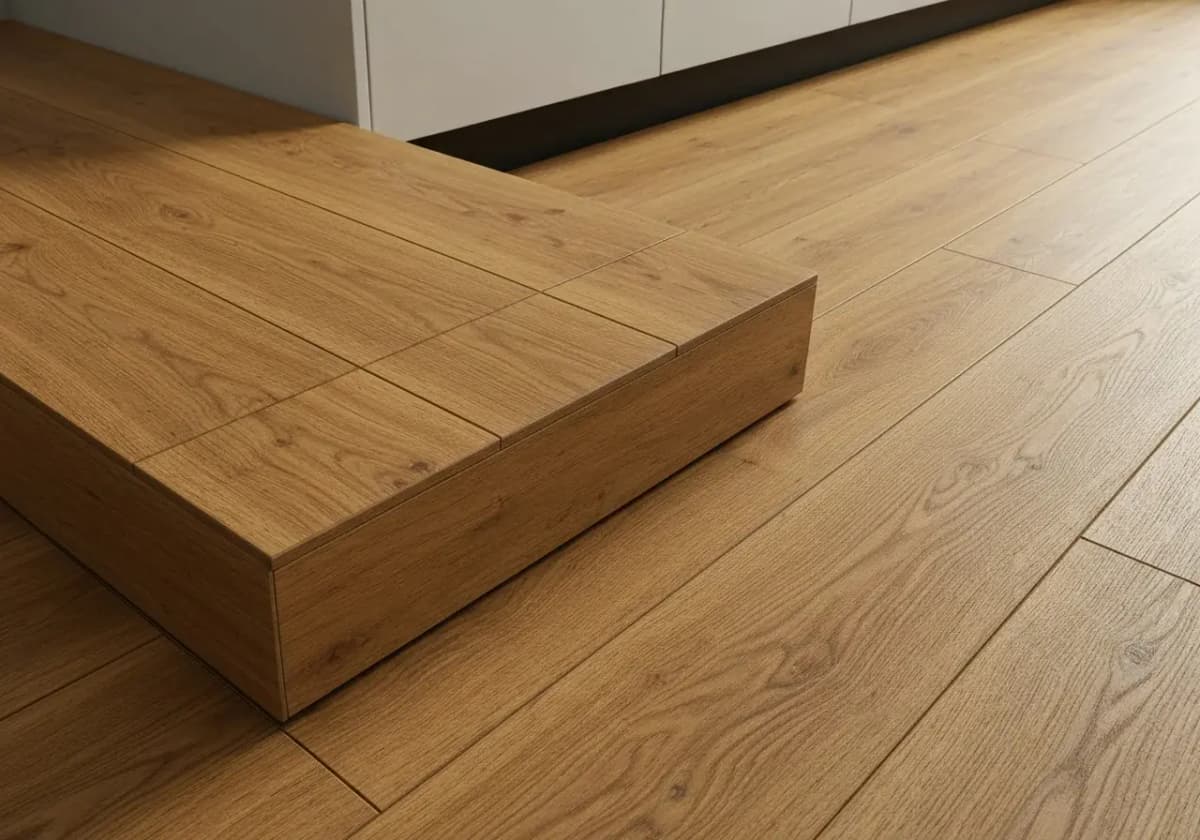
Luxury Vinyl Plank (LVP) Flooring
$5–$12 per sq ft installedLVP is the most popular kitchen flooring choice in Idaho. It is waterproof, durable, comfortable underfoot, and available in realistic wood-look patterns. Premium LVP with a thick wear layer stands up to heavy kitchen traffic.
Best for: Kitchen floors — especially homes with pets and children

Here is how a typical kitchen remodeling project works from first contact to final walkthrough:
In-Home Consultation and Needs Assessment
We visit your kitchen, take detailed measurements, discuss what is and is not working, review your cooking and entertaining habits, identify storage pain points, and establish a realistic budget range. You will receive a scope outline within a few days.
Design Development and Cabinet Layout
We create a detailed kitchen design including cabinet layout, island configuration, countertop material selection, backsplash design, lighting plan, appliance placement, and finish selections. Cabinet orders are placed early because lead times typically run 4-8 weeks.
Material Selection and Ordering
Countertops are templated after cabinets are installed, but the material (quartz, granite, butcher block) is selected during design. Appliances, flooring, backsplash tile, lighting fixtures, and hardware are all confirmed and ordered during this phase.
Permitting and Pre-Construction
We pull permits for electrical, plumbing, or structural work as required. A temporary kitchen station is set up if needed. We coordinate all trade scheduling and material deliveries to align with the construction sequence.
Demolition and Structural Work
Existing cabinets, countertops, flooring, and backsplash are removed. If walls are being opened, structural headers are installed and inspected. Plumbing and electrical rough-in for the new layout is completed and inspected.
Cabinet Installation and Countertop Fabrication
New cabinets are installed, leveled, and secured. Once cabinets are in place, countertop templating happens, followed by fabrication (typically 5-10 business days for quartz or granite). Flooring is installed during this phase as well.
Finish Installation and Final Details
Countertops are installed, backsplash tile is set and grouted, appliances are connected, plumbing fixtures are installed, and all lighting, hardware, and trim details are completed. A final walkthrough ensures everything meets your expectations.
Here is what to expect for project duration when planning kitchen remodeling in Homedale:
| Phase | Duration | Details |
|---|---|---|
| Design and Material Selection (pre-construction) | 3–6 weeks | Design consultation, cabinet layout finalization, material selection, appliance ordering, and contract execution. This happens before any demolition. |
| Permitting (pre-construction) | 1–3 weeks | Permit applications for electrical, plumbing, and structural work. Local building departments typically review residential kitchen permits within a few weeks; we build that into the schedule. |
| Cabinet and Appliance Lead Time (pre-construction) | 4–12 weeks | Semi-custom cabinets typically take 4–8 weeks and custom cabinetry 8–12 weeks. Demolition is not scheduled until cabinets and appliances are confirmed en route, so this wait overlaps with permitting rather than adding to the on-site window. |
| Demolition and Rough-In (on-site) | 2–4 days | Remove existing cabinets, countertops, flooring, and backsplash. Complete structural work (wall removal, header installation), plumbing rough-in, and electrical rough-in. Pass inspections. |
| Cabinet and Flooring Installation (on-site) | 2–4 days | Install new cabinets, level and secure them, install flooring, and template the countertops. Fabrication turnaround (5–10 business days for quartz or granite) is scheduled so the install lands inside the construction window. |
| Countertop, Backsplash, and Finish Work (on-site) | 3–5 days | Install countertops, set and grout backsplash tile, connect plumbing fixtures, install appliances, mount lighting, and complete all trim and hardware details. |
| Final Inspection and Walkthrough (on-site) | 1 day | Complete punch list, pass final inspections, and conduct homeowner walkthrough. On-site work as a whole typically totals 1–2 weeks, and often just 5–6 days. |
Homedale range: $16,000–$28,000 – $60,000–$110,000
Most Homedale projects: $30,000–$55,000
Homedale kitchen pricing tracks regional Treasure Valley labor but is shaped by two local realities. First, older-farmhouse discovery is the biggest swing: opening walls and floors in a pre-1970 Homedale kitchen routinely reveals corroded galvanized supply lines, knob-and-tube or two-wire ungrounded circuits inadequate for modern appliance loads, drain lines tied to a septic system that need re-venting or upsizing, and water-damaged subfloor under the sink run. A 12–18% contingency on pre-1975 homes is honest budgeting, not padding. Second, infrastructure upgrades that suburban kitchens take for granted are real line items here — a panel or sub-panel upgrade to support an electric range, double oven, and dedicated small-appliance circuits is common in older Homedale homes, and well-water treatment to protect the new fixtures and appliances is a justified cost. The low range covers a repainting-and-refresh or modest galley update with no layout change, common in manufactured and newer homes. The average reflects what most Homedale owners actually do to a primary farmhouse kitchen: full tear-out, new semi-custom cabinetry, quartz tops, durable flooring, updated and code-compliant electrical, new hard-water-tolerant plumbing fixtures, and lighting — sometimes with a modest wall removal. The high range covers larger farmhouse kitchens with structural wall removal, significant electrical/panel work, layout reconfiguration, and pantry/mudroom integration. Manufactured-home kitchens generally sit low-to-average but require structure-specific cabinet support and electrical detailing.
The final cost of kitchen remodeling in Homedale depends on several factors. Here are the biggest cost drivers:
Cabinet Selection and Quality
high impactCabinets typically represent 30-40% of a kitchen remodel budget. The gap between stock cabinets ($150/LF) and custom cabinets ($1,000+/LF) is substantial. Door style, wood species, and finish also affect pricing.
Layout Changes and Wall Removal
high impactMoving plumbing, relocating electrical, or removing walls for an open-concept design adds structural engineering, framing, patching, and trade labor costs.
Countertop Material and Edge Profile
high impactLaminate countertops run $30–$55/sf installed. Standard quartz runs $55–$100/sf installed. Premium quartzite can reach about $120/sf installed. Edge profiles, cutouts, and seam locations also affect fabrication cost.
Appliance Package
high impactA standard appliance package (range, refrigerator, dishwasher, microwave) runs $3,000-6,000. A premium package with a professional range, built-in refrigerator, and panel-ready dishwasher can exceed $15,000-25,000.
Backsplash Tile and Design Complexity
medium impactA simple subway tile backsplash costs $800-1,500. A custom tile design with mosaics, natural stone, or large-format tile with tight joints can cost $2,500-5,000+.
Electrical and Lighting Upgrades
medium impactModern kitchens need more circuits than older homes provide. Adding under-cabinet lighting, pendant fixtures, recessed cans, and dedicated appliance circuits is common.
Flooring Selection
medium impactLVP ($5-12/sf) is the budget-friendly standard. Hardwood ($8-15/sf) adds warmth. Tile ($10-25/sf) offers design flexibility. The kitchen floor area is typically 100-200+ square feet.
These are the real-world projects we see most often from Homedale homeowners:
Pre-War Farmhouse Kitchen, Full Modernization
The defining Homedale kitchen project: a 1920s–1940s farmhouse with its original closed-off, single-run kitchen — site-built or early stock cabinets, a small range, one or two outlets, a single deep sink, and laminate counters. Scope is a full tear-out with a real discovery allowance. We expect to replace galvanized supply lines, rewire the kitchen to current code with adequate small-appliance and appliance circuits (a panel or sub-panel upgrade is common), inspect and repair subfloor under the sink and range, and re-vent or upsize drainage tied to the septic system. The redesign typically opens the kitchen toward an adjacent dining or living space where structure allows, adds a real pantry, and specifies durable, hard-water-tolerant finishes appropriate to a working farm household. Cabinetry leans semi-custom for the non-standard wall dimensions older farmhouses always have.
1950s–1960s Ranch Kitchen Refresh and Open-Up
Post-war ranch and cottage homes around the townsite and toward Riverside Park have kitchens that are structurally sound but visually and functionally stuck: a U or galley of stock cabinets, a wall separating the kitchen from the dining or living room, a single fluorescent fixture, and original or first-replacement counters. Discovery risk is lower than the pre-war stock (though lead-safe practices apply pre-1978). Scope is new cabinetry, quartz tops, a removed or half-removed non-bearing or properly headered wall to open sightlines, layered lighting, an island or peninsula where space allows, durable flooring, and updated electrical. This is the highest-impact kitchen project available in Homedale's mid-century stock.
Manufactured / Modular Home Galley Kitchen Rebuild
Homedale's substantial manufactured- and modular-home population — including park communities like Sunset Village — has galley kitchens that are entirely remodelable when built for the structure. Scope: replace cabinetry with units properly fastened to the actual wall framing (which differs from site-built construction), address the smaller-gauge or non-standard plumbing and limited electrical capacity correctly, upgrade to a layout and finishes that modernize the space without overloading floors or walls, and coordinate any community access rules. The frequent failure is a contractor declining the work or installing site-built-weight cabinetry into framing never designed for it.
Canning / Working-Kitchen Capacity Upgrade
A genuinely Homedale-specific project: re-engineering a farm kitchen for the high-volume cooking, home canning, and produce-preserving these households actually do. Scope centers on durability and capacity rather than statement design — a heavy-duty range and dedicated circuits, a deep workhorse sink with a high-flow faucet (sized against well-pump capacity), generous heat-tolerant counter run for canning, serious pantry and bulk storage, easy-clean surfaces, and ventilation that handles steam and heat. Often paired with mudroom or back-entry integration for field access. This is the project national kitchen guides never describe because they assume a kitchen is for show, not work.
Whole-Kitchen Reconfiguration with Wall Removal
For owners committed to staying in an older Homedale farmhouse long-term, the most transformative project removes a wall to merge the historically closed kitchen with adjacent living space and rebuilds the room around modern function. This is permit-driven through Owyhee County — structural engineering for any bearing-wall removal and header, full electrical and plumbing permits — and includes the older-home discovery profile. The payoff is a one-time conversion of a dark, isolated 1930s kitchen into the home's functional center, which for a multi-decade owner is a quality-of-life change rather than a resale calculation.

Problem: Closed-off kitchen with poor flow to living spaces
Solution: We evaluate load-bearing walls, design structural solutions, and open the kitchen to adjacent rooms for better light, flow, and entertaining function.
Problem: Not enough counter space or storage
Solution: We redesign cabinet layouts to maximize storage with pull-out shelves, drawer organizers, pantry towers, and optimized island configurations with more usable counter surface.
Problem: Outdated builder-grade finishes and worn surfaces
Solution: We replace cabinets, countertops, backsplash, lighting, and hardware with current, durable materials that reflect your style and improve daily function.
Problem: Poor lighting — dark corners and shadows on work surfaces
Solution: We layer recessed ceiling lights, under-cabinet task lighting, and pendant fixtures over islands and sinks to eliminate shadows and brighten the entire space.
Problem: Insufficient electrical capacity for modern appliances
Solution: We upgrade circuits, add dedicated appliance outlets, install GFCI protection, and ensure the panel can support a modern kitchen's electrical load.

Cold semi-arid (Köppen BSk): hot dry summers peaking near 104°F, winters near and below freezing with repeated freeze-thaw, intense high-desert UV, open-country wind on ag parcels, and ~10 inches annual precipitation. Elevation ~2,241 ft.
High-desert UV
Rapid degradation of exterior coatings, decking, and glazing; UV-stable, high-performance materials required.
Freeze-thaw cycling
Frost heave on shallow footings and moisture intrusion behind failing siding; footings to county frost depth and freeze-protected supply lines required.
Large temperature swings
High heating/cooling load in under-insulated stock; envelope and glazing upgrades deliver outsized comfort and cost returns.
Open-parcel wind exposure
Unbuffered ag parcels raise wind requirements on siding systems, attachments, and deck/structure connections.
Dry interior air
Affects flooring acclimation, paint cure, and material movement; proper acclimation and detailing needed.
Old Homedale Townsite / Idaho Avenue Core
The original gridded town center along Idaho Avenue, Homedale's main commercial street, with the oldest concentrated 1920s–1950s housing on small platted lots; more likely on city water and sewer than surrounding acreage.
Common projects in Old Homedale Townsite / Idaho Avenue Core:
- •Full modernization of original single-bathroom farmhouses
- •Whole-home system rebuilds (wiring, plumbing, envelope)
- •Lead-safe interior and exterior repaints
- •Kitchen open-ups in small closed-off layouts
Riverside Park / Snake River Frontage
Homes near Riverside Park and the Snake River, including post-war ranch stock; some parcels are within or near the river's FEMA floodplain.
Common projects in Riverside Park / Snake River Frontage:
- •View-oriented deck and outdoor-living builds
- •Floodplain-aware additions and remodels
- •Bathroom and shower remodels
- •Window and siding replacement
Santa Fe Subdivision
Among Homedale's newer residential development, near schools, retail, and the route toward the Owyhee reservoir; modern construction with builder-grade finishes.
Common projects in Santa Fe Subdivision:
- •Builder-grade kitchen and bath upgrades
- •Flooring replacement
- •Walk-in shower conversions
- •Interior repaints
Surrounding Owyhee County Ag Parcels
Irrigated farm acreage outside the town limits — larger lots on private wells and septic, with farmhouses and outbuildings; the rural-systems variables peak here.
Common projects in Surrounding Owyhee County Ag Parcels:
- •Primary-suite and multi-generational additions
- •Detached ADUs for aging parents and farm housing
- •Whole-property exterior painting and re-siding
- •Well-water-resilient bath and kitchen remodels
Manufactured-Home Communities (e.g., Sunset Village)
A large manufactured- and modular-home population, including parks such as Sunset Village on South Main, requiring structure-specific remodeling methods.
Common projects in Manufactured-Home Communities (e.g., Sunset Village):
- •Structure-appropriate bath and kitchen rebuilds
- •Floor replacement with deck-appropriate underlayment
- •Freestanding deck construction
- •Exterior recoats and window replacement
Every Homedale neighborhood has different housing stock, homeowner priorities, and project considerations. Here is what kitchen remodeling looks like in each area:
Old Homedale Townsite / Idaho Avenue Core
Riverside Park / Snake River Frontage
Santa Fe Subdivision
Sunset Village / Manufactured-Home Communities
Surrounding Owyhee County Ag Parcels
Permit authority: Owyhee County Building Department (Homedale office, 130 W. Idaho Ave.); City of Homedale for certain in-city parcels under the Homedale Area of City Impact
Online portal: owyheecounty.net/departments/building-department/
- ✓Building permit generally required for construction over 200 square feet; separate plumbing, electrical, and mechanical permits for trade work
- ✓County guidance indicates roughly a four-week processing window with a complete submittal
- ✓Homedale/Owyhee Area of City Impact means governing jurisdiction can depend on the specific parcel — confirm per address
- ✓Septic-affecting work may require Southwest District Health / county environmental review
- ✓Verified design loading: ~20 psf ground snow, 25 psf minimum roof snow load below 6,000 ft; frost depth, wind speed, and seismic category to be confirmed with the county at permit time
- ✓Snake River-adjacent/low-lying parcels may fall within a FEMA Special Flood Hazard Area
Helpful ID resources
- Owyhee County Building Department (Homedale office, 130 W. Idaho Ave.); City of Homedale for certain in-city parcels under the Homedale Area of City Impact — permit applications, inspections, and code resources
- Idaho DEQ — Asbestos Program — testing and abatement requirements for pre-1980 homes
- EPA Lead Renovation, Repair and Painting (RRP) Program — required certification for work in pre-1978 homes
- ●Work triangle efficiency — the relationship between sink, stove, and refrigerator determines daily cooking workflow
- ●Island sizing — a functional island needs 36 inches of clearance minimum (42–48 inches on working sides) and a 12–15 inch overhang for seating
- ●Cabinet height — standard uppers are 30 or 36 inches tall; going to the ceiling eliminates dust-catching gaps and adds storage
- ●Backsplash height — full-height backsplash from counter to upper cabinets creates a cleaner, more modern look
- ●Hardware coordination — pulls vs knobs, bar vs cup style, and finish (matte black, brushed brass, satin nickel) set the design tone
- ●Pantry planning — a dedicated pantry cabinet or walk-in pantry dramatically improves kitchen organization
Here are the design trends we see most often in Homedale kitchen remodeling projects:
- →Accessible, aging-in-place layouts (curbless showers, single-level living, grab-bar blocking)
- →Durable, low-maintenance materials for working rural households
- →Well-water-resilient fixtures and whole-house water treatment
- →Modern low-maintenance siding to end the high-desert repaint cycle
- →Energy-efficient windows and envelope upgrades
- →Period-sympathetic finishes in older farmhouses
- →Generous covered porches and outdoor living oriented to river/farmland views
- →Multi-generational additions and detached ADUs on family acreage
Homedale has a high rate of long-tenure, owner-occupied households; about 38.7% of residents are Hispanic or Latino. Most remodeling here is a stay-and-use, decades-long investment rather than a resale flip, which prioritizes durability, well-water resilience, and aging-in-place function over trend-driven styling.
Avoid these common pitfalls Homedale homeowners encounter with kitchen remodeling projects:
Mistake: Treating electrical service as out of scope on an older farmhouse kitchen
Better approach: Pre-1970 Homedale kitchens routinely lack the circuits and panel capacity for modern appliances. Plan and price a code-compliant rewire and a likely panel or sub-panel upgrade as core scope, confirmed before finalizing the budget — not as a mid-project surprise.
Mistake: Specifying finishes as if the home runs on treated city water
Better approach: Most Homedale homes are on wells with hardness and iron. Test and, where indicated, plan a softener or iron-filter loop with the remodel; if treatment is declined, choose hard-water-tolerant faucets, stain-resistant sink materials, and quartz over natural stone, and set honest maintenance expectations.
Mistake: Designing a fragile statement kitchen for a working farm household
Better approach: Homedale kitchens do real agricultural work. Prioritize durable plywood/solid casework, quartz, easy-clean flooring, real pantry and bulk storage, and capacity for canning and large-batch cooking over delicate trend finishes that will not survive the use.
Mistake: Skipping the discovery contingency on pre-1975 homes
Better approach: Galvanized supply corrosion, ungrounded wiring, water-rotted subfloor under the sink, and septic-tied drainage issues are typical in older Homedale kitchens. Carry a 12–18% contingency and inspect before finalizing scope; it is honest budgeting, not padding.
Mistake: Adding a dishwasher and disposal without checking septic capacity
Better approach: On septic parcels, new high-flow kitchen fixtures can implicate system and drainfield capacity. Confirm capacity and any Southwest District Health / county review need during design so the permit does not stall.
Mistake: Hanging site-built-weight cabinetry in a manufactured home
Better approach: Manufactured-home framing differs from site-built construction. Fasten cabinetry to the actual framing system, address the smaller plumbing and limited electrical correctly, and build for the structure rather than overloading it.
Most popular remodeling projects in Homedale
- ✓Tub-to-walk-in/curbless shower conversions
- ✓Original farmhouse bathroom and kitchen modernizations
- ✓Primary-suite and multi-generational additions
- ✓Detached ADUs for aging parents and farm housing
- ✓Whole-home system rebuilds
- ✓Exterior repaint and re-siding of weathered wood homes
- ✓Energy-efficient window replacement
- ✓Durable flooring over restored subfloors

See Your Remodel Before You Build.
Upload a few photos of your kitchen, bathroom, flooring, or exterior and get AI-generated concept visuals tailored to your space, style, and materials — free, no obligation, in about five minutes. Then request a real estimate from our Idaho registered Boise team.
Free concept preview · No credit card · Licensed Idaho contractor
Will my older Homedale kitchen need an electrical panel upgrade?
Frequently, yes. Pre-1970 Homedale farmhouse kitchens commonly have ungrounded, undersized, or too-few circuits and a service panel that cannot support a modern electric range, double oven, dishwasher, disposal, and the code-required small-appliance circuits. A panel or sub-panel upgrade is a common and legitimate part of the real scope, and we price it honestly rather than discovering it mid-project. It is one of the most underestimated line items in a Homedale kitchen remodel.
Who permits a kitchen remodel in Homedale?
Most projects go through the Owyhee County Building Department, which keeps a local office at 130 W. Idaho Ave. A building permit is generally required for work over 200 square feet, with separate plumbing, electrical, and mechanical permits for the fixture, circuit, and ventilation changes a real kitchen remodel involves. The Homedale/Owyhee Area of City Impact means jurisdiction can depend on your parcel, which we confirm before submitting. County processing runs roughly four weeks on a complete package.
We can a lot of produce. Can you build the kitchen around that?
Yes, and it is one of the more genuinely Homedale projects we do. A canning- and working-kitchen build prioritizes heavy-duty appliances on dedicated circuits, a deep workhorse sink with a high-flow faucet sized against your well-pump capacity, a generous heat-tolerant counter run for canning batches, serious bulk and pantry storage, easy-clean surfaces, and ventilation that actually clears the steam and heat of large-batch work. We design for how the kitchen is used, not for a showroom photo.
Our home is on a well. Does that affect the kitchen?
Yes. Untreated Owyhee County well water commonly carries hardness and iron, which stains sinks, scales faucets, shortens dishwasher and fridge-water-line life, and clouds glassware. We recommend testing the well and, where indicated, we coordinate the rough-in for a softener or iron filter with a water-treatment specialist as part of the remodel to protect the new fixtures and appliances. If treatment is declined, we specify hard-water-tolerant faucets, a composite or stainless sink instead of staining-prone white surfaces, and set realistic maintenance expectations.
Can you really remodel a manufactured-home kitchen here?
Yes. Homedale has a large manufactured- and modular-home population, including communities like Sunset Village, and these galley kitchens remodel well when built for the structure — cabinetry fastened to the actual framing system, correct handling of smaller plumbing and limited electrical capacity, and coordination with any community rules. The common failure is a contractor declining the work or hanging site-built-weight cabinetry on framing never designed for it.
How long does a Homedale kitchen remodel take?
A repainting or modest galley refresh with no layout change runs three to five weeks end to end. A typical full primary-kitchen remodel — tear-out, new cabinetry, quartz, flooring, code-updated electrical, fixtures, lighting — runs five to eight weeks from design sign-off to walkthrough, with 1–2 weeks of that on site. Projects with structural wall removal and significant electrical work run eight to twelve weeks end to end including Owyhee County permit processing. On-site construction typically takes 1–2 weeks, and often just 5–6 days, because we do not begin demolition until cabinets and appliances are confirmed en route. Older-home discovery can extend any of these, which is why we build a contingency and a realistic schedule rather than an optimistic one.
What adds the most cost to a kitchen remodel?
Cabinet selection is typically the single largest cost driver, followed by countertop material, appliance package, and layout changes. Moving plumbing or removing walls adds structural and trade labor costs. The finish level you choose — stock vs semi-custom vs custom cabinets, laminate vs quartz vs granite counters — has the biggest impact on total budget.
Can I live at home during a kitchen remodel?
Yes, most homeowners stay in the home during a kitchen remodel. We help you set up a temporary kitchen station in another room with a microwave, toaster oven, and access to water. Dust barriers contain construction debris. Expect 1-2 weeks without a fully functional kitchen, and often 5-6 days — Iron Crest does not begin demolition until cabinets and appliances are confirmed en route, so material lead times fall before the crew arrives.
How long does a kitchen remodel take from start to finish?
On-site construction typically takes 1–2 weeks, and often just 5–6 days, because Iron Crest does not begin demolition until cabinets and appliances are confirmed en route. Design, permitting, and cabinet lead time (8–12 weeks for custom cabinetry) happen before the crew arrives, so plan on roughly 3–4 months from first meeting to finished kitchen.
Do kitchen remodels require permits?
Yes. Most kitchen remodels that involve electrical, plumbing, or structural changes require permits from your city or county building department. Cosmetic-only updates (painting cabinets, new hardware, replacing a faucet) typically do not. We handle all permit applications and inspections.
Is a kitchen remodel worth it for resale value?
Remodeling's 2024 Cost vs. Value Report puts a minor midrange kitchen remodel at about 96% of cost recouped and a major midrange remodel at about 49%. Those are national figures. We do not publish a Boise-specific recapture percentage, because no local dataset supports one.
What is the best countertop material for kitchens?
Quartz is the most popular choice because it is non-porous, stain-resistant, durable, and available in hundreds of colors and patterns. Granite remains popular for homeowners who prefer natural stone. Butcher block adds warmth for island tops. The best choice depends on your budget, maintenance tolerance, and design preferences.

Talk to a real project manager
Have Questions? Call Now for a Free In-Home Consultation.
Mon–Fri 7 AM–6 PM · Idaho registered & insured · No obligation
Russ S. — Project Manager
Russ S. — Project Manager
Start your kitchen remodeling in Homedale
Get a free, no-obligation estimate for kitchen remodeling in Homedale, ID. We handle design, permits, and every detail of construction.
Get Your Free Estimate