
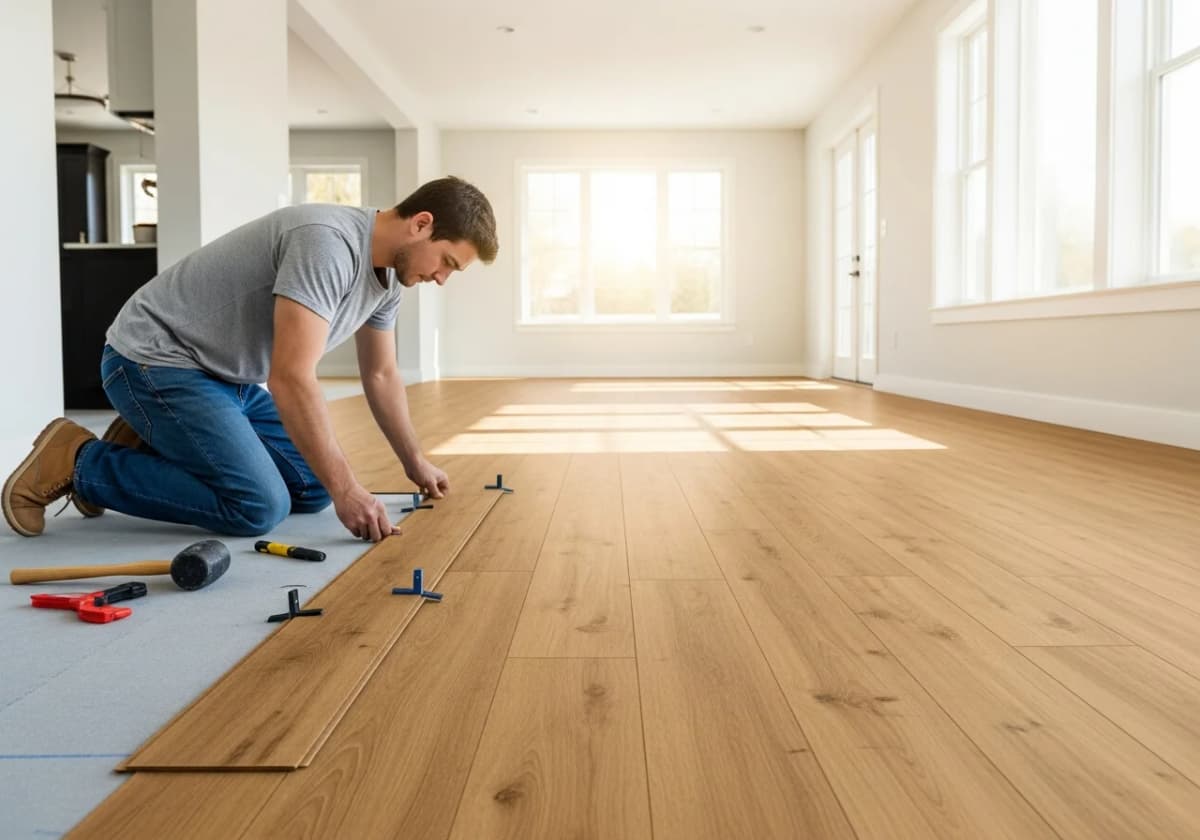
Flooring Installation in Homedale, ID
From luxury vinyl plank and hardwood to tile and carpet — we handle subfloor prep, material selection, precision installation, and every transition detail.
Quick answer
Iron Crest Remodeling Group LLC provides flooring installation in Homedale, ID. Most Homedale flooring installation projects cost $3,500 – $55,000. Homedale flooring cost is driven by subfloor condition and material durability, not by the per-square-foot sticker. The dominant variable is the substrate: in older farmhouses, plank subfloor over crawlspace frequently needs leveling, re-sheathing, fastening, and localized rot or moisture remediation before installation — work that can rival or exceed the flooring labor and is invisible until the old floor comes up.
Flooring in Homedale, Idaho succeeds or fails at the subfloor, not the showroom — and in this Owyhee County farm town of roughly 2,881 people (2020 Census) on the Snake River, the subfloor is usually old. Homedale's housing is largely pre-war and post-war: 1920s–1950s farmhouses with plank or board subfloors over crawlspaces, 1950s–1960s ranch homes near Idaho Avenue and Riverside Park, and manufactured and modular homes — a common housing type in and around town — with their own floor-structure rules. National flooring content assumes a flat, sound, modern subfloor and a household that wears slippers. Homedale floors live a harder life: field-tracked grit and mud, multi-generation farmhouse traffic, wood-heat dryness, crawlspace moisture under old houses, and floor structures that flex, slope, and rot in ways a new tract home never does. Iron Crest Remodel (Iron Crest Remodeling Group LLC, RCE-6681702) treats Homedale flooring as a substrate problem first — subfloor inspection, leveling, moisture and rot remediation — then specifies material for how these specific homes are actually used. Free in-home estimates at (208) 779-5551, Monday through Friday, 7 AM to 6 PM.
Upgrade your home from the ground up with professional flooring installation tailored to your lifestyle and budget.
Flooring is one of the most visible and impactful elements in your home — it sets the tone for every room, absorbs daily wear from foot traffic, pets, and furniture, and needs to perform in varying moisture and temperature conditions. Professional flooring installation starts with subfloor assessment and preparation — leveling, moisture testing, and repair as needed — followed by precise material installation with tight seams, accurate cuts, and clean transitions between rooms and materials. In the Treasure Valley, luxury vinyl plank (LVP) has become the most popular flooring choice for its combination of waterproof performance, realistic wood-look appearance, durability, and affordability. Hardwood remains the premium choice for living rooms and bedrooms, tile is the standard for bathrooms and entryways, and quality laminate offers a budget-friendly alternative with improved durability. The key to a flooring project that looks great and lasts is subfloor preparation — a level, clean, dry subfloor is the foundation for every successful installation.
Homedale homeowners pursue flooring installation for a variety of reasons. Here are the most common situations we see:
- ✓Homeowners replacing worn, damaged, or outdated flooring throughout the home
- ✓Families who need durable, water-resistant flooring for kitchens, bathrooms, and high-traffic areas
- ✓Homeowners who want a consistent floor surface throughout main living areas for a modern, cohesive look
- ✓Anyone building a new addition or finishing a basement who needs flooring installed on new subfloor
- ✓Homeowners preparing to sell who want to replace carpet with hard-surface flooring for maximum buyer appeal
Not every flooring installation project is the same. Here are the most common project types we complete in Homedale:

Luxury Vinyl Plank (LVP) Installation
Install click-lock or glue-down luxury vinyl plank flooring throughout your home. LVP is waterproof, scratch-resistant, and available in realistic wood and stone patterns. Ideal for whole-home installations including kitchens and bathrooms.

Hardwood Flooring Installation
Install solid or engineered hardwood flooring with nail-down, glue-down, or floating installation methods. Includes species and finish selection, acclimation, subfloor prep, and transition installation.

Tile Flooring Installation
Install porcelain, ceramic, or natural stone tile on floors in bathrooms, kitchens, entryways, and laundry rooms. Includes substrate preparation, layout planning, thin-set application, grouting, and sealing.

Laminate Flooring Installation
Install floating laminate flooring with click-lock assembly. A budget-friendly option with improved durability and realistic wood-look patterns. Includes underlayment and transition strips.

Carpet Installation
Install carpet in bedrooms, bonus rooms, and basement areas. Includes pad selection, tack strip installation, seaming, and stretching for a smooth, wrinkle-free result.

Predominantly older grain-belt building stock: pre-war wood-sided farmhouses on acreage, post-war ranch homes near the town core, and a substantial manufactured/modular-home share — the great majority on private wells and septic outside the town center.
1900s–1940s (pre-war farmhouses)
Hand-built wood-sided farmhouses on irrigated parcels, frequently with original single bathrooms, galvanized supply lines, cast-iron drains, plank subfloors over crawlspaces, minimal insulation, and shallow or rubble foundations.
1950s–1970s (post-war ranch/cottage)
Ranch and cottage homes around the Idaho Avenue core and Riverside Park; structurally sounder but typically dated finishes, undersized electrical, and single-pane windows.
Manufactured & modular (all eras, ongoing)
A large population of HUD-code and modular homes, including park communities, with non-standard openings, moisture-sensitive floor decks, smaller plumbing, and limited electrical capacity.
2000s–present (newer subdivision)
Limited newer development such as the Santa Fe subdivision with modern systems and builder-grade finishes.
Common issues in Homedale homes
- •Corroded galvanized supply lines and aging cast-iron drains in pre-1970 homes
- •Well-water hardness and iron staining/scaling fixtures and surfaces
- •Septic and drainfield capacity limits on added bedrooms/fixtures
- •Water-damaged subfloor and framing from long-failed waterproofing
- •Under-insulation and single-pane windows against a climate of extremes
- •Lead paint (pre-1978) and possible asbestos (pre-1980) in older stock

Material selection affects the look, durability, and cost of your flooring installation. Here are the most popular options we install in Homedale:

Luxury Vinyl Plank (LVP)
$4–$10 per sq ft installedWaterproof, scratch-resistant, and available in hundreds of realistic wood and stone patterns. Modern LVP features rigid core construction, attached underlayment, and click-lock installation. The most popular flooring choice in the Treasure Valley.
Best for: Whole-home installations, kitchens, bathrooms, basements, and high-traffic areas

Engineered Hardwood
$8–$16 per sq ft installedReal wood veneer over a plywood or HDF core provides authentic hardwood appearance with better dimensional stability than solid hardwood. Available in oak, hickory, walnut, and maple with prefinished or site-finished options.
Best for: Living rooms, dining rooms, bedrooms, and hallways

Solid Hardwood
$10–$20 per sq ft installedTraditional solid wood planks (typically 3/4 inch thick) that can be sanded and refinished multiple times over their lifespan. Oak, hickory, and maple are the most popular species in the Boise market.
Best for: Main living areas in homes with controlled humidity and on-grade or above-grade subfloors

Porcelain Floor Tile
$8–$20 per sq ft installedDense, water-resistant tile available in wood-look, stone-look, and modern geometric patterns. Large-format tiles (12x24 and larger) create a seamless, contemporary look with fewer grout lines.
Best for: Bathrooms, entryways, kitchens, and laundry rooms

Laminate Flooring
$3–$7 per sq ft installedA budget-friendly floating floor with a photographic wear layer over an HDF core. Modern laminate offers improved scratch resistance, realistic patterns, and easy click-lock installation.
Best for: Budget-conscious projects, rental properties, and bedrooms

Here is how a typical flooring installation project works from first contact to final walkthrough:
In-Home Measurement and Consultation
We measure every room, assess the existing subfloor condition, check for moisture issues, discuss your lifestyle needs, and help you select the right flooring material for each area of the home. You receive a detailed estimate with material and labor costs.
Material Selection and Ordering
We help you choose flooring from our supplier partners — comparing styles, colors, wear layers, and warranties. We order material with appropriate overage for cuts and waste. Material acclimation time (especially for hardwood) is factored into the schedule.
Existing Flooring Removal
We remove existing carpet, tile, vinyl, or laminate and dispose of all material responsibly. Tack strips, staples, adhesive residue, and any damaged subfloor sections are addressed during removal.
Subfloor Preparation
This is the most important step. We level the subfloor using self-leveling compound where needed, repair any damaged sections, install moisture barriers where required, and verify the surface is clean, flat, and dry before installation begins.
Flooring Installation
Material is installed with the appropriate method — click-lock floating, nail-down, glue-down, or thin-set for tile. Each plank, board, or tile is precision-cut and placed with consistent spacing, tight seams, and proper expansion gaps at walls.
Transitions, Trim, and Completion
Transition strips are installed between different flooring types and at doorways. Baseboards are reinstalled or replaced. Quarter-round or shoe molding covers expansion gaps. A final walkthrough ensures quality and cleanliness.
Here is what to expect for project duration when planning flooring installation in Homedale:
| Phase | Duration | Details |
|---|---|---|
| Consultation and Material Selection | 1–2 weeks | In-home measurement, subfloor assessment, material selection, and estimate finalization. Material ordering and delivery may add 1-2 weeks depending on availability. |
| Material Acclimation | 2–5 days | Flooring material is delivered and stored in the home to acclimate to indoor temperature and humidity. Hardwood requires the longest acclimation period; LVP and laminate require less. |
| Existing Flooring Removal | 1–3 days | Removal and disposal of existing flooring. Carpet removal is fast; tile and glued-down flooring removal takes longer. |
| Subfloor Preparation | 1–2 days | Leveling, repairs, moisture barrier installation, and surface preparation. Subfloors in good condition require minimal prep. |
| Flooring Installation | 2–5 days | Material installation throughout the home. A typical 1,500-2,000 sq ft LVP or hardwood installation takes 3-5 days. Tile floors take longer due to thin-set curing and grouting. |
| Trim, Transitions, and Cleanup | 1–2 days | Baseboard and transition strip installation, shoe molding, final cleaning, and walkthrough. |
Homedale range: $3,500–$8,000 – $25,000–$55,000
Most Homedale projects: $9,000–$22,000
Homedale flooring cost is driven by subfloor condition and material durability, not by the per-square-foot sticker. The dominant variable is the substrate: in older farmhouses, plank subfloor over crawlspace frequently needs leveling, re-sheathing, fastening, and localized rot or moisture remediation before installation — work that can rival or exceed the flooring labor and is invisible until the old floor comes up. The second variable is material: durable, water-tolerant products appropriate for hard rural use cost more than bargain goods but are the rational choice here. The third is crawlspace moisture management under older homes, which sometimes must be addressed for the new floor to perform. The low range covers a room or two of sound substrate with mid-grade resilient flooring. The average reflects multi-room or main-level replacement in an older home with normal subfloor prep and durable material. The high range covers whole-home flooring in larger older farmhouses with extensive subfloor restoration, or premium tile/material throughout. Manufactured-home flooring sits lower but needs structure-appropriate underlayment and product. Regional Treasure Valley labor applies; the Homedale premium is in subfloor restoration and moisture management.
The final cost of flooring installation in Homedale depends on several factors. Here are the biggest cost drivers:
Flooring Material Selection
high impactMaterial cost is the primary variable. Laminate and basic LVP start around $3-4/sq ft installed, while premium hardwood and large-format tile can exceed $15-20/sq ft installed.
Total Square Footage
high impactLarger projects have lower per-square-foot costs due to economies of scale in labor and material purchasing. Whole-home installations are more cost-effective per square foot than single-room projects.
Subfloor Condition and Preparation
medium impactSubfloors that need leveling, moisture barriers, plywood underlayment, or repair add $1-3 per sq ft to the project. Older homes and basements often require more subfloor work.
Existing Flooring Removal
medium impactRemoving existing carpet is relatively inexpensive ($0.50-1.00/sq ft). Removing tile, glued-down vinyl, or multiple layers of flooring is more labor-intensive and costly ($1.50-4.00/sq ft).
Room Layout Complexity
low impactRooms with many angles, closets, doorways, and transitions require more cutting time and generate more waste. Open floor plans with few interruptions install more efficiently.
Trim and Transition Work
low impactNew baseboards, quarter-round, shoe molding, and transition strips add $2-5 per linear foot. Homes that need full baseboard replacement can add $1,000-3,000 to the project.
These are the real-world projects we see most often from Homedale homeowners:
Whole-Main-Level Replacement Over an Old Plank Subfloor
The most common Homedale flooring project: a 1920s–1950s farmhouse getting its worn linoleum/carpet/hardwood replaced across the main level, where pulling the old flooring reveals an uneven, gapped, partially deteriorated plank subfloor over a crawlspace. Scope is substrate-led — level and re-sheath the subfloor, fasten and stabilize it, remediate localized rot or moisture intrusion, address crawlspace moisture if it is feeding the problem — then install durable, water-tolerant flooring. Skipping the subfloor work telegraphs every gap and slope through the new floor within months.
Farm-Durable Resilient Flooring Throughout
A project specified around hard rural use: replacing failing flooring with high-quality, water-tolerant resilient flooring (premium LVP/LVT or equivalent) chosen to take field-tracked grit, mud, pets, and multi-generation traffic with realistic maintenance. The emphasis is durability and water tolerance over delicate aesthetics — the floor of a working farmhouse, built to actually survive being one.
Tile in Wet and High-Traffic Zones
Porcelain tile in entries, mudrooms, kitchens, and baths where field entry and water demand the most durable surface, with subfloor stiffening and proper underlayment so tile does not crack over a flexing old farmhouse floor. Often paired with resilient flooring in living areas for a balanced, durable whole-home approach suited to rural use.
Manufactured-Home Floor Replacement
Replacing flooring in a manufactured or modular home, where the floor deck is thinner and more moisture-sensitive than site-built construction and requires structure-appropriate underlayment, moisture handling, and product selection. Done correctly the result is durable and transformative; done with site-built assumptions it fails. Common across Homedale's large manufactured-home population, including communities like Sunset Village.
Subfloor-Restoration-Led Project
For farmhouses where the subfloor itself is the problem — significant rot around old plumbing and entries, structural sag, or chronic crawlspace moisture damage — the project leads with genuine subfloor and structural restoration before any finish flooring. Most of the cost and craft sits in the substrate; the visible floor is the final, smallest step. This is the project that prevents a beautiful new floor from failing over a bad structure.
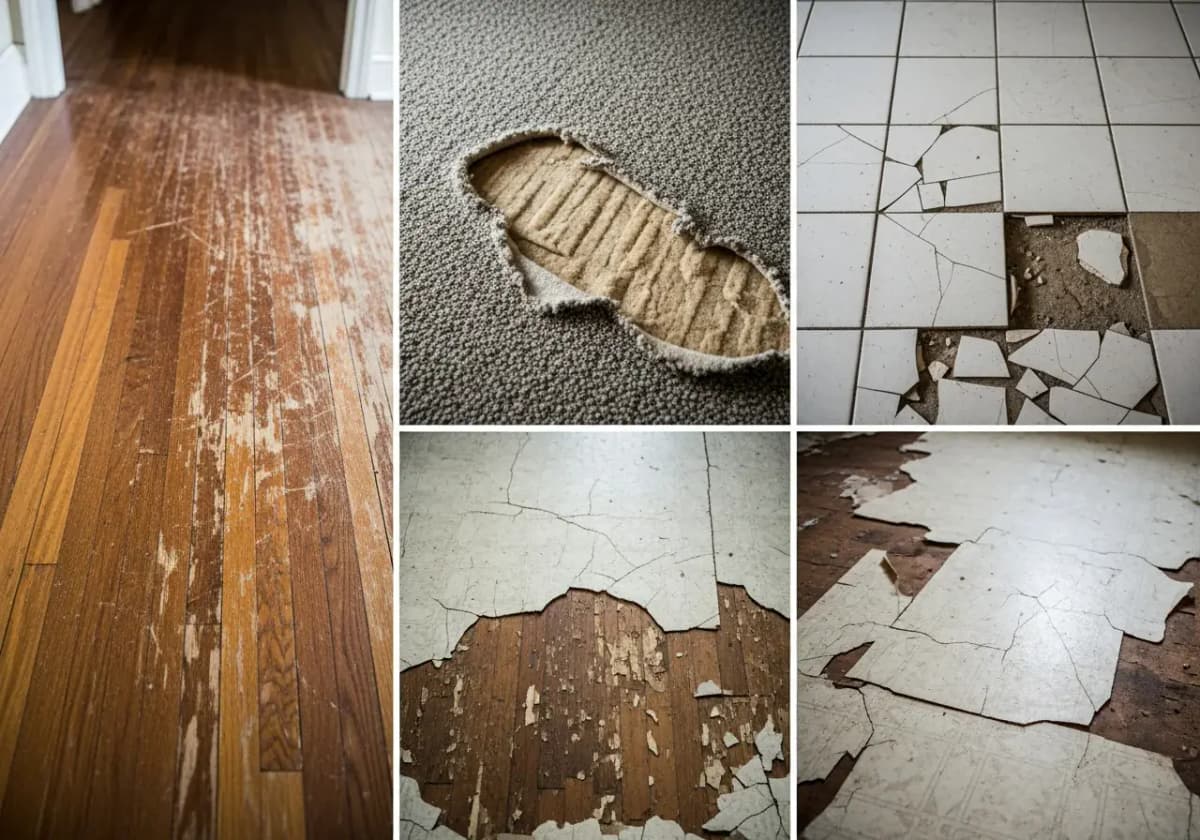
Problem: Uneven or damaged subfloor causing gaps and movement in flooring
Solution: We assess and level the subfloor using self-leveling compound, plywood underlayment, or targeted repairs to create a flat, stable surface that prevents gaps, lippage, and movement in the finished floor.
Problem: Moisture issues in basements or slab-on-grade floors
Solution: We perform moisture testing and install appropriate vapor barriers or moisture-resistant underlayment. For basements, we recommend waterproof LVP or tile over moisture-protected subfloors.
Problem: Transitions between rooms with different flooring heights or types
Solution: We use reducer strips, T-moldings, and custom transitions to create clean, safe connections between different flooring materials and heights — no tripping hazards or awkward gaps.
Problem: Carpet that traps allergens, pet odors, and stains
Solution: We remove old carpet and pad, treat any subfloor staining or odor, and install hard-surface flooring like LVP or hardwood that is easier to clean and does not harbor allergens or pet odors.
Problem: Squeaky or bouncy floors from inadequate subfloor fastening
Solution: We screw down loose subfloor panels, add blocking between joists where needed, and ensure the subfloor is tight and quiet before installing new flooring on top.

Cold semi-arid (Köppen BSk): hot dry summers peaking near 104°F, winters near and below freezing with repeated freeze-thaw, intense high-desert UV, open-country wind on ag parcels, and ~10 inches annual precipitation. Elevation ~2,241 ft.
High-desert UV
Rapid degradation of exterior coatings, decking, and glazing; UV-stable, high-performance materials required.
Freeze-thaw cycling
Frost heave on shallow footings and moisture intrusion behind failing siding; footings to county frost depth and freeze-protected supply lines required.
Large temperature swings
High heating/cooling load in under-insulated stock; envelope and glazing upgrades deliver outsized comfort and cost returns.
Open-parcel wind exposure
Unbuffered ag parcels raise wind requirements on siding systems, attachments, and deck/structure connections.
Dry interior air
Affects flooring acclimation, paint cure, and material movement; proper acclimation and detailing needed.
Old Homedale Townsite / Idaho Avenue Core
The original gridded town center along Idaho Avenue, Homedale's main commercial street, with the oldest concentrated 1920s–1950s housing on small platted lots; more likely on city water and sewer than surrounding acreage.
Common projects in Old Homedale Townsite / Idaho Avenue Core:
- •Full modernization of original single-bathroom farmhouses
- •Whole-home system rebuilds (wiring, plumbing, envelope)
- •Lead-safe interior and exterior repaints
- •Kitchen open-ups in small closed-off layouts
Riverside Park / Snake River Frontage
Homes near Riverside Park and the Snake River, including post-war ranch stock; some parcels are within or near the river's FEMA floodplain.
Common projects in Riverside Park / Snake River Frontage:
- •View-oriented deck and outdoor-living builds
- •Floodplain-aware additions and remodels
- •Bathroom and shower remodels
- •Window and siding replacement
Santa Fe Subdivision
Among Homedale's newer residential development, near schools, retail, and the route toward the Owyhee reservoir; modern construction with builder-grade finishes.
Common projects in Santa Fe Subdivision:
- •Builder-grade kitchen and bath upgrades
- •Flooring replacement
- •Walk-in shower conversions
- •Interior repaints
Surrounding Owyhee County Ag Parcels
Irrigated farm acreage outside the town limits — larger lots on private wells and septic, with farmhouses and outbuildings; the rural-systems variables peak here.
Common projects in Surrounding Owyhee County Ag Parcels:
- •Primary-suite and multi-generational additions
- •Detached ADUs for aging parents and farm housing
- •Whole-property exterior painting and re-siding
- •Well-water-resilient bath and kitchen remodels
Manufactured-Home Communities (e.g., Sunset Village)
A large manufactured- and modular-home population, including parks such as Sunset Village on South Main, requiring structure-specific remodeling methods.
Common projects in Manufactured-Home Communities (e.g., Sunset Village):
- •Structure-appropriate bath and kitchen rebuilds
- •Floor replacement with deck-appropriate underlayment
- •Freestanding deck construction
- •Exterior recoats and window replacement
Every Homedale neighborhood has different housing stock, homeowner priorities, and project considerations. Here is what flooring installation looks like in each area:
Old Homedale Townsite / Idaho Avenue Core
Riverside Park / Snake River Frontage
Santa Fe Subdivision
Manufactured-Home Communities
Permit authority: Owyhee County Building Department (Homedale office, 130 W. Idaho Ave.); City of Homedale for certain in-city parcels under the Homedale Area of City Impact
Online portal: owyheecounty.net/departments/building-department/
- ✓Building permit generally required for construction over 200 square feet; separate plumbing, electrical, and mechanical permits for trade work
- ✓County guidance indicates roughly a four-week processing window with a complete submittal
- ✓Homedale/Owyhee Area of City Impact means governing jurisdiction can depend on the specific parcel — confirm per address
- ✓Septic-affecting work may require Southwest District Health / county environmental review
- ✓Verified design loading: ~20 psf ground snow, 25 psf minimum roof snow load below 6,000 ft; frost depth, wind speed, and seismic category to be confirmed with the county at permit time
- ✓Snake River-adjacent/low-lying parcels may fall within a FEMA Special Flood Hazard Area
Helpful ID resources
- Owyhee County Building Department (Homedale office, 130 W. Idaho Ave.); City of Homedale for certain in-city parcels under the Homedale Area of City Impact — permit applications, inspections, and code resources
- Idaho DEQ — Asbestos Program — testing and abatement requirements for pre-1980 homes
- EPA Lead Renovation, Repair and Painting (RRP) Program — required certification for work in pre-1978 homes
- ●Plank direction — running planks toward the main light source or along the longest dimension of the room creates the most visually appealing result
- ●Color and tone — lighter flooring makes rooms feel larger and more open; darker flooring adds warmth and formality but shows dust and scratches more
- ●Consistency vs. variation — using the same flooring throughout main living areas creates a seamless, spacious feel; transitioning to tile in wet areas and carpet in bedrooms is also common
- ●Wide plank vs. narrow plank — wider planks (7 inches and above) create a modern, high-end look with fewer seams; narrow planks are more traditional
- ●Texture and finish — smooth finishes show scratches more easily; wire-brushed and hand-scraped textures hide wear and add character
- ●Waterproof requirements — kitchens, bathrooms, laundry rooms, basements, and entryways benefit from waterproof flooring like LVP or tile
Here are the design trends we see most often in Homedale flooring installation projects:
- →Accessible, aging-in-place layouts (curbless showers, single-level living, grab-bar blocking)
- →Durable, low-maintenance materials for working rural households
- →Well-water-resilient fixtures and whole-house water treatment
- →Modern low-maintenance siding to end the high-desert repaint cycle
- →Energy-efficient windows and envelope upgrades
- →Period-sympathetic finishes in older farmhouses
- →Generous covered porches and outdoor living oriented to river/farmland views
- →Multi-generational additions and detached ADUs on family acreage
Homedale has a high rate of long-tenure, owner-occupied households; about 38.7% of residents are Hispanic or Latino. Most remodeling here is a stay-and-use, decades-long investment rather than a resale flip, which prioritizes durability, well-water resilience, and aging-in-place function over trend-driven styling.
Avoid these common pitfalls Homedale homeowners encounter with flooring installation projects:
Mistake: Installing finish flooring over an un-restored old plank subfloor
Better approach: Plank subfloor over crawlspace in older Homedale homes routinely needs leveling, re-sheathing, fastening, and rot remediation. Restore the substrate first; finish material over a bad subfloor telegraphs and fails regardless of quality.
Mistake: Choosing delicate or moisture-sensitive flooring for a working farmhouse
Better approach: Homedale floors take field grit, mud, and multi-generation traffic. Specify durable, water-tolerant resilient flooring and tile in wet/entry zones; reserve solid hardwood for honestly assessed low-moisture conditions only.
Mistake: Ignoring crawlspace moisture under an older home
Better approach: Crawlspace moisture drives flooring failure from below. Assess and manage it (vapor control, drainage) as part of scope where present, or the new floor fails no matter the product.
Mistake: Using site-built methods on a manufactured-home floor
Better approach: Manufactured-home decks are thinner and moisture-sensitive. Use structure-appropriate underlayment and product; site-built assumptions cause early failure.
Mistake: Skipping acclimation in Homedale's dry climate
Better approach: Un-acclimated flooring shrinks, gaps, or buckles in dry semi-arid interior air. Acclimate materials to actual indoor conditions and detail expansion for large humidity swings.
Mistake: Accepting a finish-only quote on an older home
Better approach: A price that ignores subfloor condition on a pre-war Homedale farmhouse is not a real number. Insist on a substrate assessment so the quote reflects the restoration the floor actually needs.
Most popular remodeling projects in Homedale
- ✓Tub-to-walk-in/curbless shower conversions
- ✓Original farmhouse bathroom and kitchen modernizations
- ✓Primary-suite and multi-generational additions
- ✓Detached ADUs for aging parents and farm housing
- ✓Whole-home system rebuilds
- ✓Exterior repaint and re-siding of weathered wood homes
- ✓Energy-efficient window replacement
- ✓Durable flooring over restored subfloors

See Your Remodel Before You Build.
Upload a few photos of your kitchen, bathroom, flooring, or exterior and get AI-generated concept visuals tailored to your space, style, and materials — free, no obligation, in about five minutes. Then request a real estimate from our Idaho registered Boise team.
Free concept preview · No credit card · Licensed Idaho contractor
Why does my flooring project depend so much on the subfloor?
Because in older Homedale homes the subfloor is usually the real problem. Pull up the worn linoleum or carpet in a 1920s–1950s farmhouse and you typically find an uneven, gapped, partially deteriorated plank subfloor over a crawlspace that has taken decades of moisture and wear. New flooring over that telegraphs every gap and slope and can fail within months. Leveling, re-sheathing, fastening, and rot/moisture remediation are where the project succeeds or fails — the finish material is the last and easiest step. We assess the substrate before pricing because a finish-only number on an old farmhouse is not real.
What flooring holds up best in a working Homedale farmhouse?
For most of the home, high-quality water-tolerant resilient flooring (premium LVP/LVT) — it takes field-tracked grit, mud, pets, and multi-generation traffic, tolerates Homedale's dry-air-versus-crawlspace-moisture split far better than solid hardwood, and has realistic maintenance. Porcelain tile is the right choice for entries, mudrooms, kitchens, and baths where water and field entry are heaviest. Solid hardwood is risky over moisture-variable older crawlspace floors and we recommend it only with honest moisture assessment. The goal is a floor that actually survives being a working farmhouse floor.
Can you replace flooring in my manufactured home properly?
Yes. Manufactured- and modular-home floor decks are thinner and more moisture-sensitive than site-built construction and require structure-appropriate underlayment, moisture handling, and product selection. Done that way the result is durable and transformative; done with site-built assumptions it fails early. It is a common project across Homedale's large manufactured-home population, and the difference is entirely in matching the method and product to the deck.
We have crawlspace moisture. Does that affect new flooring?
Yes, significantly. Moisture in the crawlspace under an older Homedale farmhouse can drive flooring failure from below regardless of the finish material's quality. Where it is present it must be managed — vapor control and drainage as needed — for the new floor to last. We assess crawlspace conditions as part of the substrate evaluation, and if moisture is feeding the problem, addressing it becomes part of the scope rather than a deferred issue that ruins the new floor.
Do I need a permit to replace flooring in Homedale?
Standalone flooring replacement is normally not permit work, and we confirm that with the jurisdiction rather than assuming it. If structural subfloor or joist repair is needed — which is common in older Homedale homes — that structural work may fall within permitted scope, and if flooring is part of a larger remodel with permitted plumbing or system changes it is covered under that project's permits, handled through Owyhee County or the City of Homedale per parcel. We identify and confirm any permit implication with the jurisdiction during the substrate assessment.
Why does acclimation matter here?
Homedale's interior air is dry (cold semi-arid climate), and flooring materials that are not acclimated to those conditions before installation can shrink, gap, or buckle after install — and the problem compounds over large seasonal humidity swings. Proper acclimation and expansion detailing for the actual indoor conditions is part of doing the job correctly here. It is a frequently skipped step that causes avoidable callbacks in this climate.
What is the best flooring for a whole-home installation?
Luxury vinyl plank (LVP) is the most popular choice for whole-home installations in the Boise area. It is waterproof, scratch-resistant, comfortable underfoot, and available in realistic wood-look patterns. It can be used in every room including kitchens and bathrooms.
How long does flooring installation take?
A typical whole-home flooring installation (1,500-2,000 sq ft) takes 5-10 days including removal of existing flooring, subfloor prep, and installation. Single-room projects may take 1-3 days. Tile installations take longer due to setting and grouting time.
Is LVP or hardwood better?
LVP is more practical — it is waterproof, scratch-resistant, more affordable, and easier to maintain. Hardwood offers a warmer, more premium feel and can be refinished multiple times. Many homeowners use LVP in high-traffic and wet areas and hardwood in formal living spaces.
Do I need to remove furniture before flooring installation?
We handle furniture moving as part of the installation process. We move items out of the work area, install the flooring, and return furniture to position. Homeowners should plan to clear small items, electronics, and fragile objects from the rooms.
Can new flooring be installed over existing flooring?
In some cases, yes. LVP and laminate can often be installed over smooth, level existing floors. However, removing old flooring typically produces a better result because it allows for proper subfloor inspection, repair, and preparation.
How do you handle transitions between different flooring types?
We use manufacturer-matched transition strips — T-moldings, reducers, and thresholds — to create clean, level connections between different flooring materials. Proper transitions are both functional (no tripping hazards) and aesthetic (clean visual lines).

Talk to a real project manager
Have Questions? Call Now for a Free In-Home Consultation.
Mon–Fri 7 AM–6 PM · Idaho registered & insured · No obligation
Russ S. — Project Manager
Russ S. — Project Manager
Start your flooring installation in Homedale
Get a free, no-obligation estimate for flooring installation in Homedale, ID. We handle design, permits, and every detail of construction.
Get Your Free Estimate