Flooring Installation in Nampa, ID: Costs, Ideas & Options
From luxury vinyl plank and hardwood to tile and carpet — we handle subfloor prep, material selection, precision installation, and every transition detail.
Quick answer
Iron Crest Remodeling Group LLC provides flooring installation in Nampa, ID. Most Nampa flooring installation projects cost $2,500 – $42,000. These are the Nampa figures we quote, and they stand on their own — we do not publish a percentage discount against Ada County, because we have not measured one.
Flooring is the renovation that transforms a Nampa home faster and more completely than almost anything else — the single project that changes the feel of every room simultaneously, makes original furniture look better, and signals to buyers and renters that this property has been cared for. In Nampa's diverse housing market — where downtown historic bungalows share Canyon County's real estate landscape with South Nampa mid-century ranches and Northwest Nampa's newer production homes — flooring replacement opportunities are as varied as the housing stock itself, and the right flooring choice changes more of the house at once than almost any other project of comparable cost. Iron Crest Remodel installs flooring throughout Nampa with materials chosen for Canyon County's semi-arid climate, hard water environment, and the specific demands of homes that range from 80-year-old historic bungalows to 15-year-old production ranches.
Upgrade your home from the ground up with professional flooring installation tailored to your lifestyle and budget.
Flooring is one of the most visible and impactful elements in your home — it sets the tone for every room, absorbs daily wear from foot traffic, pets, and furniture, and needs to perform in varying moisture and temperature conditions. Professional flooring installation starts with subfloor assessment and preparation — leveling, moisture testing, and repair as needed — followed by precise material installation with tight seams, accurate cuts, and clean transitions between rooms and materials. In the Treasure Valley, luxury vinyl plank (LVP) has become the most popular flooring choice for its combination of waterproof performance, realistic wood-look appearance, durability, and affordability. Hardwood remains the premium choice for living rooms and bedrooms, tile is the standard for bathrooms and entryways, and quality laminate offers a budget-friendly alternative with improved durability. The key to a flooring project that looks great and lasts is subfloor preparation — a level, clean, dry subfloor is the foundation for every successful installation.
Nampa homeowners pursue flooring installation for a variety of reasons. Here are the most common situations we see:
- ✓Homeowners replacing worn, damaged, or outdated flooring throughout the home
- ✓Families who need durable, water-resistant flooring for kitchens, bathrooms, and high-traffic areas
- ✓Homeowners who want a consistent floor surface throughout main living areas for a modern, cohesive look
- ✓Anyone building a new addition or finishing a basement who needs flooring installed on new subfloor
- ✓Homeowners preparing to sell who want to replace carpet with hard-surface flooring for maximum buyer appeal
Not every flooring installation project is the same. Here are the most common project types we complete in Nampa:

Luxury Vinyl Plank (LVP) Installation
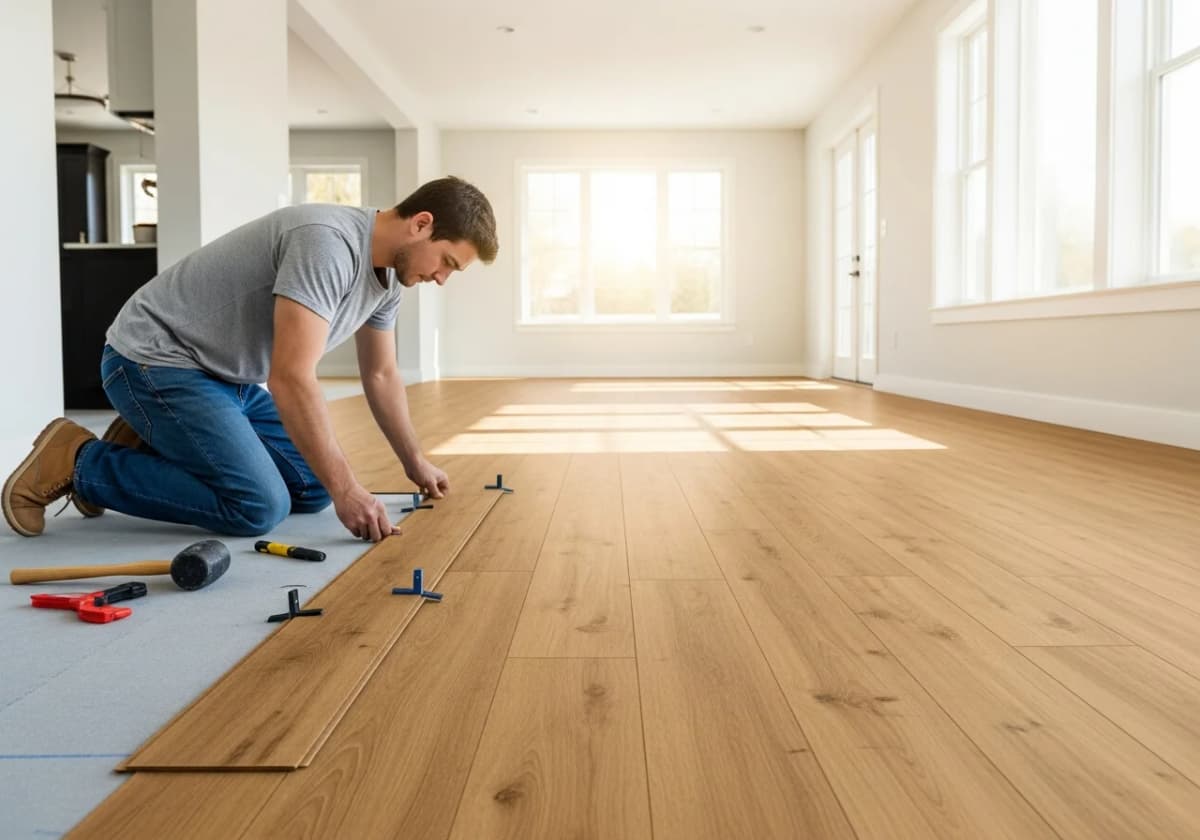
Install click-lock or glue-down luxury vinyl plank flooring throughout your home. LVP is waterproof, scratch-resistant, and available in realistic wood and stone patterns. Ideal for whole-home installations including kitchens and bathrooms.

Hardwood Flooring Installation
Install solid or engineered hardwood flooring with nail-down, glue-down, or floating installation methods. Includes species and finish selection, acclimation, subfloor prep, and transition installation.

Tile Flooring Installation
Install porcelain, ceramic, or natural stone tile on floors in bathrooms, kitchens, entryways, and laundry rooms. Includes substrate preparation, layout planning, thin-set application, grouting, and sealing.

Laminate Flooring Installation
Install floating laminate flooring with click-lock assembly. A budget-friendly option with improved durability and realistic wood-look patterns. Includes underlayment and transition strips.

Carpet Installation
Install carpet in bedrooms, bonus rooms, and basement areas. Includes pad selection, tack strip installation, seaming, and stretching for a smooth, wrinkle-free result.

Nampa has the most diverse housing stock in Canyon County, spanning from early 1900s farmhouses and bungalows to brand-new subdivision homes. This diversity means every project has unique structural and system considerations.
Pre-1950 (Downtown, older neighborhoods)
Nampa's pre-1950 downtown homes are the most expensive to remodel in the city. Budget for upgrading older plumbing and electrical and for plaster-wall demolition on top of the cosmetic work, all of which pushes projects toward the high end of the range.
1960s–1980s (Northwest Nampa, established neighborhoods)
These mid-century ranches and split-levels fall in the mid-range. Plan for a possible electrical panel upgrade to meet modern demands, while the copper or early-PEX plumbing generally stays in place and holds costs down; the rest goes to replacing original tile, carpet, and basic finishes.
1990s–2010s (South Nampa, newer subdivisions)
These South Nampa subdivision homes are budget-predictable. Construction and systems are sound, so spending concentrates on replacing standard builder-grade finishes as the homes age, keeping projects in the mid-range.
2015–present
These newest Nampa homes need the least structural investment. Modern systems and open floor plans are already in place, so the budget goes almost entirely toward upgrading finishes a few years after purchase.
Common issues in Nampa homes
- •Older plumbing systems (galvanized pipe, cast iron drains) in pre-1970 homes
- •Insufficient electrical panels in older homes
- •Foundation settling in some older downtown-area homes
- •Builder-grade finishes wearing out in 2000s-era homes
- •Small, closed-off kitchens in older floor plans
- •Inadequate insulation in pre-1990 construction

Material selection affects the look, durability, and cost of your flooring installation. Here are the most popular options we install in Nampa:

Luxury Vinyl Plank (LVP)
$4–$10 per sq ft installedWaterproof, scratch-resistant, and available in hundreds of realistic wood and stone patterns. Modern LVP features rigid core construction, attached underlayment, and click-lock installation. The most popular flooring choice in the Treasure Valley.
Best for: Whole-home installations, kitchens, bathrooms, basements, and high-traffic areas

Engineered Hardwood
$8–$16 per sq ft installedReal wood veneer over a plywood or HDF core provides authentic hardwood appearance with better dimensional stability than solid hardwood. Available in oak, hickory, walnut, and maple with prefinished or site-finished options.
Best for: Living rooms, dining rooms, bedrooms, and hallways

Solid Hardwood
$10–$20 per sq ft installedTraditional solid wood planks (typically 3/4 inch thick) that can be sanded and refinished multiple times over their lifespan. Oak, hickory, and maple are the most popular species in the Boise market.
Best for: Main living areas in homes with controlled humidity and on-grade or above-grade subfloors

Porcelain Floor Tile
$8–$20 per sq ft installedDense, water-resistant tile available in wood-look, stone-look, and modern geometric patterns. Large-format tiles (12x24 and larger) create a seamless, contemporary look with fewer grout lines.
Best for: Bathrooms, entryways, kitchens, and laundry rooms

Laminate Flooring
$3–$7 per sq ft installedA budget-friendly floating floor with a photographic wear layer over an HDF core. Modern laminate offers improved scratch resistance, realistic patterns, and easy click-lock installation.
Best for: Budget-conscious projects, rental properties, and bedrooms

Here is how a typical flooring installation project works from first contact to final walkthrough:
In-Home Measurement and Consultation
We measure every room, assess the existing subfloor condition, check for moisture issues, discuss your lifestyle needs, and help you select the right flooring material for each area of the home. You receive a detailed estimate with material and labor costs.
Material Selection and Ordering
We help you choose flooring from our supplier partners — comparing styles, colors, wear layers, and warranties. We order material with appropriate overage for cuts and waste. Material acclimation time (especially for hardwood) is factored into the schedule.
Existing Flooring Removal
We remove existing carpet, tile, vinyl, or laminate and dispose of all material responsibly. Tack strips, staples, adhesive residue, and any damaged subfloor sections are addressed during removal.
Subfloor Preparation
This is the most important step. We level the subfloor using self-leveling compound where needed, repair any damaged sections, install moisture barriers where required, and verify the surface is clean, flat, and dry before installation begins.
Flooring Installation
Material is installed with the appropriate method — click-lock floating, nail-down, glue-down, or thin-set for tile. Each plank, board, or tile is precision-cut and placed with consistent spacing, tight seams, and proper expansion gaps at walls.
Transitions, Trim, and Completion
Transition strips are installed between different flooring types and at doorways. Baseboards are reinstalled or replaced. Quarter-round or shoe molding covers expansion gaps. A final walkthrough ensures quality and cleanliness.
Here is what to expect for project duration when planning flooring installation in Nampa:
| Phase | Duration | Details |
|---|---|---|
| Consultation and Material Selection | 1–2 weeks | In-home measurement, subfloor assessment, material selection, and estimate finalization. Material ordering and delivery may add 1-2 weeks depending on availability. |
| Material Acclimation | 2–5 days | Flooring material is delivered and stored in the home to acclimate to indoor temperature and humidity. Hardwood requires the longest acclimation period; LVP and laminate require less. |
| Existing Flooring Removal | 1–3 days | Removal and disposal of existing flooring. Carpet removal is fast; tile and glued-down flooring removal takes longer. |
| Subfloor Preparation | 1–2 days | Leveling, repairs, moisture barrier installation, and surface preparation. Subfloors in good condition require minimal prep. |
| Flooring Installation | 2–5 days | Material installation throughout the home. A typical 1,500-2,000 sq ft LVP or hardwood installation takes 3-5 days. Tile floors take longer due to thin-set curing and grouting. |
| Trim, Transitions, and Cleanup | 1–2 days | Baseboard and transition strip installation, shoe molding, final cleaning, and walkthrough. |
Nampa range: $2,500 – $42,000
Most Nampa projects: $8,000
These are the Nampa figures we quote, and they stand on their own — we do not publish a percentage discount against Ada County, because we have not measured one. LVP installation for a 1,400 SF home runs $5,000 to $8,500 including removal and disposal. Hardwood refinishing for existing floors costs $2.50 to $4.50 per square foot. New hardwood installation runs $7 to $12 per square foot installed. Tile flooring for kitchen and bath areas runs $8 to $16 per square foot installed depending on tile selection and pattern complexity. Carpet for bedrooms runs $2.50 to $5 per square foot installed. Full-home flooring replacement in a 2,000 SF Northwest Nampa production home runs $8,500 to $16,000 depending on material selection. The top of the range quoted above is what those same per-square-foot figures produce on a larger home finished in hardwood or tile throughout — roughly 2,600 square feet at the upper end of the hardwood and tile bands — not a figure for a typical project.
The final cost of flooring installation in Nampa depends on several factors. Here are the biggest cost drivers:
Flooring Material Selection
high impactMaterial cost is the primary variable. Laminate and basic LVP start around $3-4/sq ft installed, while premium hardwood and large-format tile can exceed $15-20/sq ft installed.
Total Square Footage
high impactLarger projects have lower per-square-foot costs due to economies of scale in labor and material purchasing. Whole-home installations are more cost-effective per square foot than single-room projects.
Subfloor Condition and Preparation
medium impactSubfloors that need leveling, moisture barriers, plywood underlayment, or repair add $1-3 per sq ft to the project. Older homes and basements often require more subfloor work.
Existing Flooring Removal
medium impactRemoving existing carpet is relatively inexpensive ($0.50-1.00/sq ft). Removing tile, glued-down vinyl, or multiple layers of flooring is more labor-intensive and costly ($1.50-4.00/sq ft).
Room Layout Complexity
low impactRooms with many angles, closets, doorways, and transitions require more cutting time and generate more waste. Open floor plans with few interruptions install more efficiently.
Trim and Transition Work
low impactNew baseboards, quarter-round, shoe molding, and transition strips add $2-5 per linear foot. Homes that need full baseboard replacement can add $1,000-3,000 to the project.
These are the real-world projects we see most often from Nampa homeowners:
Downtown Nampa Historic Home — Original Hardwood Discovery and Refinishing
The most rewarding flooring project in downtown Nampa is uncovering and refinishing original hardwood floors beneath decades of carpet and vinyl. The process begins with careful removal of existing floor coverings and inspection of the wood beneath — evaluating species, condition, and remaining thickness to confirm refinishability. Original fir and oak strip floors in downtown Nampa homes from the 1920s through the 1950s represent wood quality that modern flooring cannot replicate. When present in refinishable condition, these floors are always worth preserving: full sanding, optional stain application, and three coats of oil-modified polyurethane produces results that are more beautiful and more historically appropriate than any replacement flooring at the same cost. The transformation from worn carpet to revealed original hardwood is consistently one of the most dramatic results per dollar in the renovation category.
South Nampa Ranch — Whole-Home LVP Installation
The highest-volume flooring project in Nampa is the whole-home LVP installation in a South Nampa ranch whose original carpet, laminate, and vinyl have reached the end of their service life. The scope: remove all existing flooring, dispose of removed material, assess and repair subfloor conditions as needed (leveling, nail popping, soft spots), install quality SPC LVP throughout main living areas and hallways, install coordinating stair nosing and transitions at all thresholds, and optionally install mid-grade carpet in bedrooms for comfort and sound management. The single most impactful renovation available to South Nampa homeowners at the figures below — transforms the entire home's appearance and feel in a single project.
Northwest Nampa Production Home — First Flooring Replacement
Northwest Nampa production homes built between 1998 and 2015 are experiencing their first major flooring replacement cycle as original carpet reaches end of service life. These projects are efficient and predictable: the subfloor is typically OSB or plywood in sound condition, the floor plans are relatively standard, and the material selection choices are well-defined. Quality SPC LVP in a wide-plank wood-look format throughout main living areas, carpet in bedrooms, and large-format porcelain tile in kitchen and bath areas represents the specification that delivers the best combination of appearance and durability for Northwest Nampa's housing stock. The whole-home consistency of LVP throughout main areas creates visual cohesion that individual room-by-room replacement never achieves.
Nampa Rental Property — Durable Flooring for Multiple Tenancy Cycles
Nampa's robust rental market creates a distinct flooring project type: the practical replacement in a rental property that needs to perform reliably through multiple tenancy cycles with minimal maintenance between turns. Commercial-grade LVP with a 20-mil wear layer throughout the main living areas, tile in bathrooms and laundry, and mid-grade carpet only in bedrooms provides the durability and ease of turnover cleaning that rental ownership demands. In Canyon County's agricultural dust environment, hard surface flooring in main living areas is significantly more practical for rental use than carpet — dust and pet dander that permanently embeds in carpet fiber cleans off LVP between tenancies, and a hard surface is cleaned at turnover rather than replaced.
Nampa Kitchen and Bath — Tile Flooring Replacement
Kitchen and bathroom tile flooring in Nampa homes is frequently the original builder installation or a first-generation replacement that is now showing its age — cracked tiles, failed grout, or simply dated colors and formats that don't reflect current design standards. Replacing kitchen and bath tile flooring with large-format porcelain (12x24 or 24x24) dramatically improves the visual quality of these spaces, reduces the grout line density that makes Canyon County's hard water maintenance challenging, and creates a surface that holds up to the wear and moisture exposure that these rooms demand. Proper subfloor preparation — leveling to ANSI tolerances, uncoupling membrane installation where subfloor movement is a concern — is the foundation that determines whether new tile performs as specified or develops cracks and grout failures within a few years.
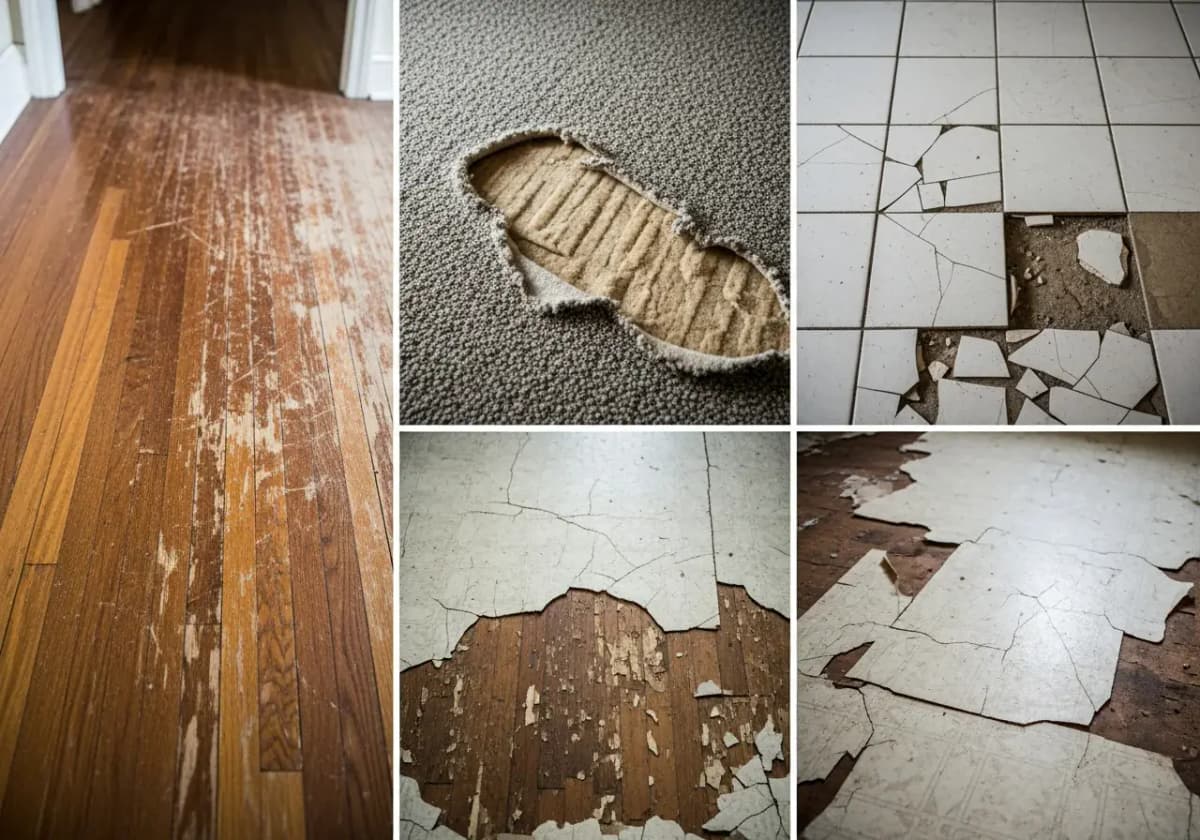
Problem: Uneven or damaged subfloor causing gaps and movement in flooring
Solution: We assess and level the subfloor using self-leveling compound, plywood underlayment, or targeted repairs to create a flat, stable surface that prevents gaps, lippage, and movement in the finished floor.
Problem: Moisture issues in basements or slab-on-grade floors
Solution: We perform moisture testing and install appropriate vapor barriers or moisture-resistant underlayment. For basements, we recommend waterproof LVP or tile over moisture-protected subfloors.
Problem: Transitions between rooms with different flooring heights or types
Solution: We use reducer strips, T-moldings, and custom transitions to create clean, safe connections between different flooring materials and heights — no tripping hazards or awkward gaps.
Problem: Carpet that traps allergens, pet odors, and stains
Solution: We remove old carpet and pad, treat any subfloor staining or odor, and install hard-surface flooring like LVP or hardwood that is easier to clean and does not harbor allergens or pet odors.
Problem: Squeaky or bouncy floors from inadequate subfloor fastening
Solution: We screw down loose subfloor panels, add blocking between joists where needed, and ensure the subfloor is tight and quiet before installing new flooring on top.

Nampa shares the Treasure Valley's semi-arid climate. Canyon County locations may be slightly warmer in summer and experience more wind than Ada County locations closer to the foothills.
Summer Heat
Nampa tends to run 2-3°F warmer than central Boise in summer. HVAC sizing and window quality matter for comfort and energy costs.
Agricultural Dust
Proximity to active farmland means more dust exposure for exterior surfaces. Durable, cleanable exterior finishes are preferred.
Freeze-Thaw
Same frost-depth and freeze-thaw considerations as Boise for foundations, exterior tile, and plumbing in exterior walls.
South Nampa
Newer subdivisions built from 2005 to present. Similar to South Meridian — builder-grade homes that homeowners customize and upgrade over time.
Common projects in South Nampa:
- •Kitchen upgrades replacing builder-grade finishes
- •Bathroom remodels with tub-to-shower conversions
- •Flooring replacement throughout
- •Deck and patio construction
Northwest Nampa
A mix of established neighborhoods with homes from the 1970s-2000s. Some areas are seeing significant investment and revitalization.
Common projects in Northwest Nampa:
- •Full kitchen renovations in 1970s-1990s homes
- •Bathroom remodels addressing outdated fixtures and tile
- •Home additions for growing families
- •Whole-home updates bringing older homes to current standards
Downtown Nampa
The historic downtown core with older homes, some dating to the early 1900s. A revitalizing area with a mix of renovation and new construction.
Common projects in Downtown Nampa:
- •Historic home renovations preserving character while updating systems
- •Kitchen remodels in homes with small, outdated layouts
- •Bathroom remodels replacing original plumbing and fixtures
- •ADU construction for rental income in the revitalizing downtown area
Every Nampa neighborhood has different housing stock, homeowner priorities, and project considerations. Here is what flooring installation looks like in each area:
Downtown / Historic Nampa
South Nampa
Northwest Nampa
Permit authority: City of Nampa Building Department
Online portal: www.cityofnampa.us/building
- ✓Permits required for plumbing, electrical, structural, and mechanical changes
- ✓Permit fees are generally lower than Ada County jurisdictions
- ✓Standard residential permit processing is typically 1-2 weeks
- ✓ADU construction is subject to zoning review
- ✓Online permit application available
Helpful ID resources
- City of Nampa Building Department — permit applications, inspections, and code resources
- Idaho DEQ — Asbestos Program — testing and abatement requirements for pre-1980 homes
- EPA Lead Renovation, Repair and Painting (RRP) Program — required certification for work in pre-1978 homes
- ●Plank direction — running planks toward the main light source or along the longest dimension of the room creates the most visually appealing result
- ●Color and tone — lighter flooring makes rooms feel larger and more open; darker flooring adds warmth and formality but shows dust and scratches more
- ●Consistency vs. variation — using the same flooring throughout main living areas creates a seamless, spacious feel; transitioning to tile in wet areas and carpet in bedrooms is also common
- ●Wide plank vs. narrow plank — wider planks (7 inches and above) create a modern, high-end look with fewer seams; narrow planks are more traditional
- ●Texture and finish — smooth finishes show scratches more easily; wire-brushed and hand-scraped textures hide wear and add character
- ●Waterproof requirements — kitchens, bathrooms, laundry rooms, basements, and entryways benefit from waterproof flooring like LVP or tile
Here are the design trends we see most often in Nampa flooring installation projects:
- →Value-driven upgrades that balance quality with budget
- →Modern farmhouse aesthetics popular in newer homes
- →White and gray kitchen palettes replacing oak and Tuscan styles
- →Walk-in showers replacing tub/shower combos
- →LVP flooring throughout main living areas
- →Energy efficiency upgrades — windows, insulation, HVAC
- →Practical storage solutions in kitchens and bathrooms
Nampa offers some of the most affordable housing in the Treasure Valley, making it attractive for first-time homeowners and investors. Lower purchase prices mean remodeling can represent a larger percentage of home value — making strategic upgrades especially impactful for equity building. The market is strong for updated homes; buyers pay a premium for move-in-ready properties with modern kitchens and bathrooms.
Costs and permit requirements differ by jurisdiction across the Treasure Valley. These guides cover Nampa specifically.
Avoid these common pitfalls Nampa homeowners encounter with flooring installation projects:
Mistake: Replacing original hardwood in downtown Nampa homes without assessing refinishability first
Better approach: Original hardwood floors in downtown Nampa's historic homes are frequently the most valuable flooring asset in the property — superior material quality, authentic character, and a cost to preserve that is materially lower than replacement at the per-square-foot figures above ($2.50 to $4.50 to refinish versus $7 to $12 for new hardwood installed). Always assess original floor conditions before committing to a replacement material. Iron Crest uncovers original floors in every room before any flooring recommendation is made. The discovery of original hardwood in refinishable condition changes the project in ways that consistently produce better results for the homeowner.
Mistake: Using flexible LVP in Nampa's temperature-extreme climate
Better approach: Flexible (non-rigid-core) LVP can expand and contract significantly with Canyon County's temperature swings, producing visible gaps at plank ends during winter contraction and buckling at room perimeters during summer expansion. Rigid core SPC LVP handles temperature variation with significantly less dimensional response and is the appropriate specification for all Nampa flooring projects. The cost difference between flexible and SPC LVP is modest — typically $0.50 to $0.75 per square foot — and the performance advantage is clear over Canyon County's annual temperature range.
Mistake: Installing tile grout without sealing it in Canyon County's hard water environment
Better approach: Unsealed cement grout in a Nampa kitchen or bathroom floor accumulates calcium and magnesium deposits in its pores within weeks of installation in Canyon County's hard water. Once mineral deposits penetrate unsealed grout pores, they are very difficult to fully remove without acidic cleaning that can etch the grout over time. Sealing grout with a penetrating impregnator sealer at installation and annually thereafter creates a barrier that prevents mineral deposit penetration and significantly reduces the maintenance burden. Alternatively, specifying epoxy grout for floor applications eliminates the sealing requirement entirely — epoxy grout is essentially non-porous and does not require sealing.
Mistake: Not testing for asbestos before demolishing flooring in pre-1980 Nampa homes
Better approach: Asbestos-containing floor tiles in downtown Nampa's pre-1980 homes create health and regulatory risks when disturbed without proper precautions. Visual identification is unreliable — the only way to confirm asbestos content is laboratory testing of a sample. Iron Crest conducts asbestos assessments on all flooring projects in pre-1980 properties as a standard practice. The assessment adds a lab fee and a few business days to the project start — a modest investment against the genuine risk of asbestos fiber exposure, and we quote the current lab cost with the estimate rather than publishing a figure here.
Most popular remodeling projects in Nampa
- ✓Kitchen remodels with functional layout improvements
- ✓Bathroom remodels updating fixtures, tile, and vanities
- ✓Whole-home remodels in 1970s-1990s homes
- ✓Home additions for growing families
- ✓Flooring replacement
- ✓Energy efficiency upgrades
- ✓ADU construction for rental income

See Your Remodel Before You Build.
Upload a few photos of your kitchen, bathroom, flooring, or exterior and get AI-generated concept visuals tailored to your space, style, and materials — free, no obligation, in about five minutes. Then request a real estimate from our Idaho registered Boise team.
Free concept preview · No credit card · Licensed Idaho contractor
What is the best flooring for a Nampa rental property?
Commercial-grade SPC LVP with a 20-mil wear layer throughout main living areas, large-format porcelain tile in kitchens and bathrooms, and mid-grade carpet only in bedrooms. The LVP specification provides durability against the wear of tenant turnover, resistance to Canyon County's agricultural dust environment, and easy cleaning between tenancies. The 20-mil wear layer (versus 12-mil in standard residential LVP) extends the product's service life through multiple tenancy cycles without needing replacement. Avoid carpet in main living areas for rental applications — agricultural dust embeds in carpet fiber permanently and creates the odor and appearance issues that drive tenant complaints and turnover.
Does my downtown Nampa home likely have original hardwood floors under the carpet?
Probably yes if the home was built before 1965. The majority of downtown Nampa homes built before that date were originally floored with hardwood — fir or oak strip, typically 2.25 to 3.25 inches wide — in main living areas and bedrooms. The carpet and vinyl installed over these floors in subsequent decades has often preserved the original wood in better condition than expected, protecting it from UV degradation and direct foot traffic. Iron Crest uncovers a corner of existing flooring in each room during the initial project assessment to evaluate what's underneath before any flooring decision is made. The discovery of original hardwood in refinishable condition changes the project from a flooring replacement to a flooring restoration — at lower cost and with superior results.
How does Canyon County's hard water affect my tile floor?
Canyon County's water is hard enough that calcium carbonate deposits accumulate in tile grout lines at a rate that creates a visible maintenance challenge over time. For the actual hardness on your street, read the current Consumer Confidence Report from your water provider rather than a number quoted on a contractor's site. The deposits are white or off-white mineral stains that embed in grout pores and resist normal cleaning. Acidic cleaners remove the deposits but need to be used carefully to avoid etching grout or stone over time. The most effective approach is specification-based prevention: large-format tile with fewer grout joints per square foot, epoxy grout in floor applications (which is essentially non-porous and resists mineral deposit penetration), and a squeegee habit in shower floors where the calcium deposit issue is most acute. Iron Crest specifies epoxy grout for all Nampa floor tile applications as a standard practice and provides clients with written maintenance guidance appropriate to Canyon County's water chemistry.
How long does a whole-home flooring replacement take in Nampa?
A whole-home LVP replacement in a typical 1,400 to 2,000 SF Nampa home takes 3 to 5 days: 1 day for removal and disposal of existing flooring, subfloor assessment and any minor repairs, and LVP installation begins; 2 to 3 days for LVP installation throughout main areas with stair nosing and transition strips; and final day for trim installation and cleanup. Tile flooring in kitchen and bath areas takes 3 to 5 additional days for substrate preparation, tile setting, and grout cure. Projects that require subfloor leveling or significant subfloor repairs take 1 to 2 additional days. We provide the specific project schedule before work begins and communicate any adjustments within 24 hours of a discovery that changes the timeline.
Is LVP or hardwood better for a Nampa home with dogs?
SPC LVP with a 20-mil wear layer is generally the better choice for Nampa pet households compared to hardwood. LVP is waterproof — pet accidents that reach the surface clean up completely without penetrating the floor material. LVP's wear layer resists scratching from dog nails better than most hardwood finishes, and SPC's rigid core resists denting from large dogs better than engineered hardwood's plywood core. Hardwood requires periodic refinishing to maintain its appearance in a pet household, and even with refinishing, deep scratches from nails may not fully sand out. The warm wood look of quality LVP is visually indistinguishable from engineered hardwood in most daily viewing conditions, and the maintenance advantage for pet households is meaningful. If the authentic warmth and refinishability of real hardwood is a priority, engineered hardwood with a factory-applied aluminum-oxide finish provides the best hardwood performance for pet households at the cost of periodic refinishing — check the specific line's finish warranty before you buy, because the terms differ by manufacturer.
What is the best flooring for a whole-home installation?
Luxury vinyl plank (LVP) is the most popular choice for whole-home installations in the Boise area. It is waterproof, scratch-resistant, comfortable underfoot, and available in realistic wood-look patterns. It can be used in every room including kitchens and bathrooms.
How long does flooring installation take?
A typical whole-home flooring installation (1,500-2,000 sq ft) takes 5-10 days including removal of existing flooring, subfloor prep, and installation. Single-room projects may take 1-3 days. Tile installations take longer due to setting and grouting time.
Is LVP or hardwood better?
LVP is more practical — it is waterproof, scratch-resistant, more affordable, and easier to maintain. Hardwood offers a warmer, more premium feel and can be refinished multiple times. Many homeowners use LVP in high-traffic and wet areas and hardwood in formal living spaces.
Do I need to remove furniture before flooring installation?
We handle furniture moving as part of the installation process. We move items out of the work area, install the flooring, and return furniture to position. Homeowners should plan to clear small items, electronics, and fragile objects from the rooms.
Can new flooring be installed over existing flooring?
In some cases, yes. LVP and laminate can often be installed over smooth, level existing floors. However, removing old flooring typically produces a better result because it allows for proper subfloor inspection, repair, and preparation.
How do you handle transitions between different flooring types?
We use manufacturer-matched transition strips — T-moldings, reducers, and thresholds — to create clean, level connections between different flooring materials. Proper transitions are both functional (no tripping hazards) and aesthetic (clean visual lines).
What flooring is best for homes with pets?
LVP with a thick wear layer (20 mil or higher) is the best flooring for homes with pets. It resists scratches, is waterproof for accidents, and is easy to clean. Avoid smooth-finish hardwood and high-gloss laminate, which scratch easily.

Talk to a real project manager
Have Questions? Call Now for a Free In-Home Consultation.
Mon–Fri 7 AM–6 PM · Idaho registered & insured · No obligation
Russ Shloma — Project Manager
Russ Shloma — Project Manager
Start your flooring installation in Nampa
Get a free, no-obligation estimate for flooring installation in Nampa, ID. We handle design, permits, and every detail of construction.
Get Your Free Estimate