
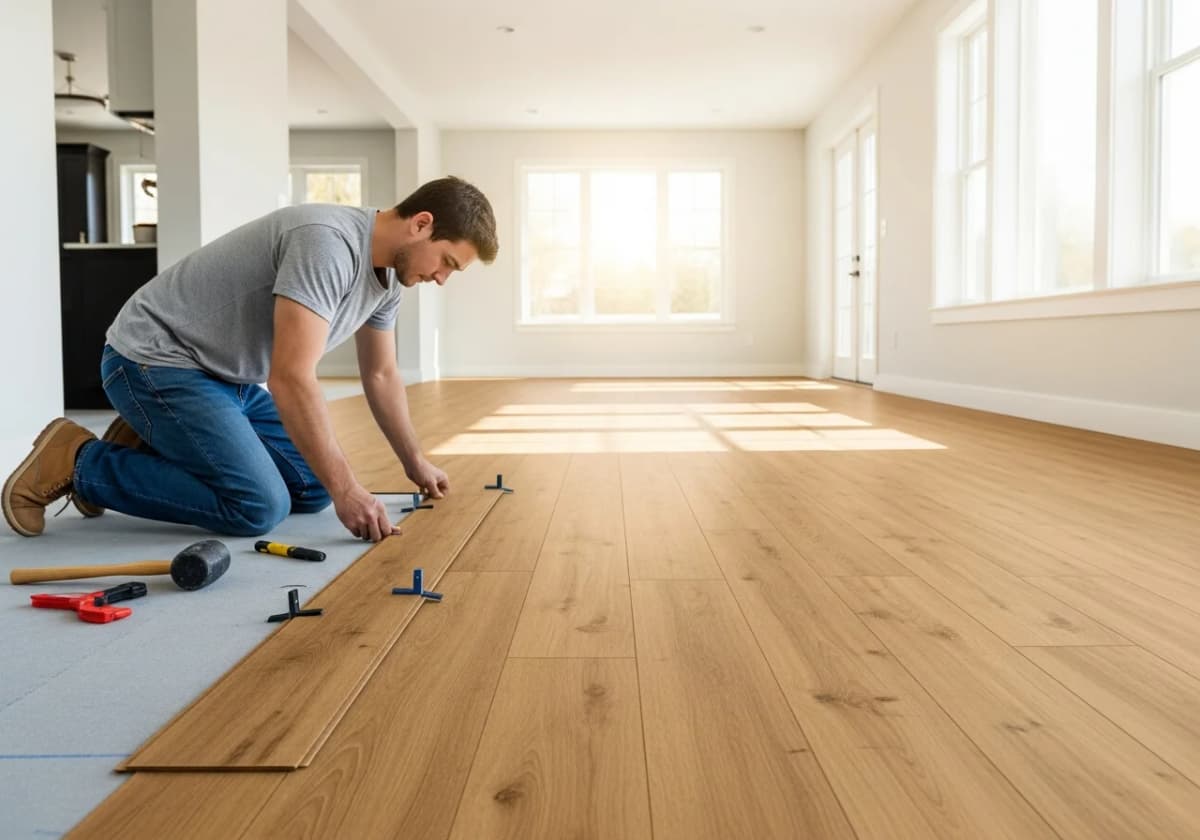
Flooring Installation in Mountain Home, ID
From luxury vinyl plank and hardwood to tile and carpet — we handle subfloor prep, material selection, precision installation, and every transition detail.
Quick answer
Iron Crest Remodeling Group LLC provides flooring installation in Mountain Home, ID. Most Mountain Home flooring installation projects cost $3,500 – $70,000. Mountain Home flooring runs modestly below Boise-proper, narrowed by thinner local trade availability and Treasure Valley crew mobilization.
Flooring installation in Mountain Home, Idaho is governed by a turnover economy and a dry-climate subfloor behavior that no national flooring guide accounts for. Mountain Home is the Elmore County seat, a community of about 16,000 (2020 Census) at roughly 3,150 feet on the western Snake River Plain, anchored by Mountain Home Air Force Base twelve miles southwest. Because the base does not house its full assigned population, a meaningful share of the city's housing turns over on two-to-four-year permanent-change-of-station cycles — which makes durable, tenant-resistant, easily-replaced flooring a recurring economic priority here rather than a once-a-decade aesthetic choice. Layered on that is a very dry interior climate that shrinks and gaps solid-wood flooring and stresses subfloors and seams differently than humid regions. Iron Crest Remodeling Group LLC, operating as Iron Crest Remodel (Idaho RCE-6681702), approaches Mountain Home flooring with the substrate prep, material selection, and pre-1980 environmental discipline these specific conditions require — not a generic install script with a city name dropped in, which is precisely the templated failure this work exists to eliminate.
Upgrade your home from the ground up with professional flooring installation tailored to your lifestyle and budget.
Flooring is one of the most visible and impactful elements in your home — it sets the tone for every room, absorbs daily wear from foot traffic, pets, and furniture, and needs to perform in varying moisture and temperature conditions. Professional flooring installation starts with subfloor assessment and preparation — leveling, moisture testing, and repair as needed — followed by precise material installation with tight seams, accurate cuts, and clean transitions between rooms and materials. In the Treasure Valley, luxury vinyl plank (LVP) has become the most popular flooring choice for its combination of waterproof performance, realistic wood-look appearance, durability, and affordability. Hardwood remains the premium choice for living rooms and bedrooms, tile is the standard for bathrooms and entryways, and quality laminate offers a budget-friendly alternative with improved durability. The key to a flooring project that looks great and lasts is subfloor preparation — a level, clean, dry subfloor is the foundation for every successful installation.
Mountain Home homeowners pursue flooring installation for a variety of reasons. Here are the most common situations we see:
- ✓Homeowners replacing worn, damaged, or outdated flooring throughout the home
- ✓Families who need durable, water-resistant flooring for kitchens, bathrooms, and high-traffic areas
- ✓Homeowners who want a consistent floor surface throughout main living areas for a modern, cohesive look
- ✓Anyone building a new addition or finishing a basement who needs flooring installed on new subfloor
- ✓Homeowners preparing to sell who want to replace carpet with hard-surface flooring for maximum buyer appeal
Not every flooring installation project is the same. Here are the most common project types we complete in Mountain Home:

Luxury Vinyl Plank (LVP) Installation
Install click-lock or glue-down luxury vinyl plank flooring throughout your home. LVP is waterproof, scratch-resistant, and available in realistic wood and stone patterns. Ideal for whole-home installations including kitchens and bathrooms.

Hardwood Flooring Installation
Install solid or engineered hardwood flooring with nail-down, glue-down, or floating installation methods. Includes species and finish selection, acclimation, subfloor prep, and transition installation.

Tile Flooring Installation
Install porcelain, ceramic, or natural stone tile on floors in bathrooms, kitchens, entryways, and laundry rooms. Includes substrate preparation, layout planning, thin-set application, grouting, and sealing.

Laminate Flooring Installation
Install floating laminate flooring with click-lock assembly. A budget-friendly option with improved durability and realistic wood-look patterns. Includes underlayment and transition strips.

Carpet Installation
Install carpet in bedrooms, bonus rooms, and basement areas. Includes pad selection, tack strip installation, seaming, and stretching for a smooth, wrinkle-free result.

Mountain Home's housing spans a pre-war downtown core, a dominant 1950s-1970s air-base-era ranch belt tied to the base's Cold War growth, 1990s-2010s subdivisions, and recent custom acreage. The 2020 census recorded about 6,600 housing units.
Pre-1940 (Downtown / Core)
Railroad-era and pre-war homes with galvanized plumbing, aged or knob-and-tube wiring in the worst cases, plaster and original wood, and frequent subfloor and structural deterioration. Pre-1978 lead and pre-1980 asbestos requirements apply.
1950s–1970s (Air-Base-Era Ranch Belt)
The city's largest layer: simply framed ranches and split-levels built as Mountain Home AFB expanded, with original single-pane aluminum windows, galvanized supply lines, undersized electrical, minimal insulation, closed kitchens, single bathrooms, and no primary suite. Pre-1980 environmental testing required.
1990s–2010s (Silverstone, Morning View)
Production subdivision homes with modern systems and builder-grade finishes now aging out of relevance. No asbestos or galvanized concerns; straightforward upgrade candidates.
2000s–present (Blue Sage / Acreage)
Custom homes on one-acre and rural parcels, many on private well and septic, built to modern code and high finish.
Common issues in Mountain Home homes
- •Single-pane aluminum windows in the air-base-era ranch belt
- •Galvanized supply lines and undersized electrical in pre-1980 homes
- •Asbestos in pre-1980 flooring/mastic and lead paint in pre-1978 homes
- •Closed mid-century kitchen layouts and single-bathroom floor plans
- •Failed shower waterproofing and resulting hidden subfloor damage
- •Under-insulated mid-century envelopes performing poorly at 3,150 ft

Material selection affects the look, durability, and cost of your flooring installation. Here are the most popular options we install in Mountain Home:

Luxury Vinyl Plank (LVP)
$4–$10 per sq ft installedWaterproof, scratch-resistant, and available in hundreds of realistic wood and stone patterns. Modern LVP features rigid core construction, attached underlayment, and click-lock installation. The most popular flooring choice in the Treasure Valley.
Best for: Whole-home installations, kitchens, bathrooms, basements, and high-traffic areas

Engineered Hardwood
$8–$16 per sq ft installedReal wood veneer over a plywood or HDF core provides authentic hardwood appearance with better dimensional stability than solid hardwood. Available in oak, hickory, walnut, and maple with prefinished or site-finished options.
Best for: Living rooms, dining rooms, bedrooms, and hallways

Solid Hardwood
$10–$20 per sq ft installedTraditional solid wood planks (typically 3/4 inch thick) that can be sanded and refinished multiple times over their lifespan. Oak, hickory, and maple are the most popular species in the Boise market.
Best for: Main living areas in homes with controlled humidity and on-grade or above-grade subfloors

Porcelain Floor Tile
$8–$20 per sq ft installedDense, water-resistant tile available in wood-look, stone-look, and modern geometric patterns. Large-format tiles (12x24 and larger) create a seamless, contemporary look with fewer grout lines.
Best for: Bathrooms, entryways, kitchens, and laundry rooms

Laminate Flooring
$3–$7 per sq ft installedA budget-friendly floating floor with a photographic wear layer over an HDF core. Modern laminate offers improved scratch resistance, realistic patterns, and easy click-lock installation.
Best for: Budget-conscious projects, rental properties, and bedrooms

Here is how a typical flooring installation project works from first contact to final walkthrough:
In-Home Measurement and Consultation
We measure every room, assess the existing subfloor condition, check for moisture issues, discuss your lifestyle needs, and help you select the right flooring material for each area of the home. You receive a detailed estimate with material and labor costs.
Material Selection and Ordering
We help you choose flooring from our supplier partners — comparing styles, colors, wear layers, and warranties. We order material with appropriate overage for cuts and waste. Material acclimation time (especially for hardwood) is factored into the schedule.
Existing Flooring Removal
We remove existing carpet, tile, vinyl, or laminate and dispose of all material responsibly. Tack strips, staples, adhesive residue, and any damaged subfloor sections are addressed during removal.
Subfloor Preparation
This is the most important step. We level the subfloor using self-leveling compound where needed, repair any damaged sections, install moisture barriers where required, and verify the surface is clean, flat, and dry before installation begins.
Flooring Installation
Material is installed with the appropriate method — click-lock floating, nail-down, glue-down, or thin-set for tile. Each plank, board, or tile is precision-cut and placed with consistent spacing, tight seams, and proper expansion gaps at walls.
Transitions, Trim, and Completion
Transition strips are installed between different flooring types and at doorways. Baseboards are reinstalled or replaced. Quarter-round or shoe molding covers expansion gaps. A final walkthrough ensures quality and cleanliness.
Here is what to expect for project duration when planning flooring installation in Mountain Home:
| Phase | Duration | Details |
|---|---|---|
| Consultation and Material Selection | 1–2 weeks | In-home measurement, subfloor assessment, material selection, and estimate finalization. Material ordering and delivery may add 1-2 weeks depending on availability. |
| Material Acclimation | 2–5 days | Flooring material is delivered and stored in the home to acclimate to indoor temperature and humidity. Hardwood requires the longest acclimation period; LVP and laminate require less. |
| Existing Flooring Removal | 1–3 days | Removal and disposal of existing flooring. Carpet removal is fast; tile and glued-down flooring removal takes longer. |
| Subfloor Preparation | 1–2 days | Leveling, repairs, moisture barrier installation, and surface preparation. Subfloors in good condition require minimal prep. |
| Flooring Installation | 2–5 days | Material installation throughout the home. A typical 1,500-2,000 sq ft LVP or hardwood installation takes 3-5 days. Tile floors take longer due to thin-set curing and grouting. |
| Trim, Transitions, and Cleanup | 1–2 days | Baseboard and transition strip installation, shoe molding, final cleaning, and walkthrough. |
Mountain Home range: $3,500–$8,000 – $30,000–$70,000
Most Mountain Home projects: $9,000–$20,000
Mountain Home flooring runs modestly below Boise-proper, narrowed by thinner local trade availability and Treasure Valley crew mobilization. The low band covers a few rooms or a turnover-grade rental re-floor with standard prep. The average band covers a typical whole-ranch re-floor in durable LVP or mid-grade material with proper subfloor prep. The high band covers large or acreage homes with premium tile, hardwood, in-floor heat, or extensive substrate remediation. The defining local cost variables: pre-1980 homes require asbestos testing of existing flooring and mastic before removal, and abatement if positive, which raises cost on the downtown core and older ranch belt; the dry-climate subfloor and acclimation prep these homes need is real, billable scope, not padding; rental work is specified for durability and sectional replaceability across rotations rather than lowest sticker; and the cold-floor reality drives optional but valuable in-floor heat in higher-end projects.
The final cost of flooring installation in Mountain Home depends on several factors. Here are the biggest cost drivers:
Flooring Material Selection
high impactMaterial cost is the primary variable. Laminate and basic LVP start around $3-4/sq ft installed, while premium hardwood and large-format tile can exceed $15-20/sq ft installed.
Total Square Footage
high impactLarger projects have lower per-square-foot costs due to economies of scale in labor and material purchasing. Whole-home installations are more cost-effective per square foot than single-room projects.
Subfloor Condition and Preparation
medium impactSubfloors that need leveling, moisture barriers, plywood underlayment, or repair add $1-3 per sq ft to the project. Older homes and basements often require more subfloor work.
Existing Flooring Removal
medium impactRemoving existing carpet is relatively inexpensive ($0.50-1.00/sq ft). Removing tile, glued-down vinyl, or multiple layers of flooring is more labor-intensive and costly ($1.50-4.00/sq ft).
Room Layout Complexity
low impactRooms with many angles, closets, doorways, and transitions require more cutting time and generate more waste. Open floor plans with few interruptions install more efficiently.
Trim and Transition Work
low impactNew baseboards, quarter-round, shoe molding, and transition strips add $2-5 per linear foot. Homes that need full baseboard replacement can add $1,000-3,000 to the project.
These are the real-world projects we see most often from Mountain Home homeowners:
Durable Whole-Home Re-Floor for an AFB Rental
The most frequent Mountain Home flooring job: re-flooring a base-area rental for durability across PCS-cycle tenancies. Scope favors waterproof-core LVP or comparable resilient flooring throughout main areas — scratch-, dent-, and moisture-resistant, easy to clean, and replaceable in sections rather than whole rooms when a tenant damages an area. Proper subfloor prep and a consistent product the owner can match on the next turn are part of the cost strategy. The objective is the lowest total cost across multiple rotations, not the lowest install sticker, which fails fast and drives repeated full replacements.
Original-Floor Replacement in an Air-Base-Era Ranch (Pre-1980)
A 1950s-1970s ranch with original worn carpet, sheet vinyl, or vinyl-asbestos tile gets a full re-floor. The defining step is pre-removal asbestos testing of the existing flooring and mastic — these homes routinely test positive — with licensed abatement if confirmed before any tear-out. Scope then includes subfloor assessment and repair (older ranch subfloors often show wear and moisture history), correct underlayment, and durable new flooring (commonly LVP or tile) installed with dry-climate acclimation. One of the highest-impact, lowest-cost modernizations on these homes.
Resale-Prep Continuous Flooring for a Relocating-Buyer Sale
A homeowner preparing to sell into the inbound-military market replaces worn or mismatched flooring with cohesive, current material throughout the main living areas to present cleanly to VA-financed buyers on relocation deadlines. Scope emphasizes continuity (eliminating the patchwork of carpet, vinyl, and tile common in older homes), proper transitions, and a defect-free result that presents cleanly to a VA appraiser's condition review.
Dry-Climate-Failed Wood Floor Correction
A solid-wood or engineered floor that has shrunk, gapped, or cupped because it was not acclimated or specified for Mountain Home's very dry interior climate. Scope addresses the substrate and humidity conditions and replaces with a properly acclimated, dimensionally stable material — or, where appropriate, a high-quality LVP that does not move with the seasonal humidity at all. This scenario is specifically about not repeating the original specification mistake that caused the failure in this climate.
Acreage / Blue Sage Premium Flooring with In-Floor Heat
On Blue Sage and acreage homes, flooring is a larger, higher-finish project — premium tile, quality hardwood properly specified for the dry climate, or large-format porcelain — frequently with electric or hydronic in-floor heat, which is genuinely valuable given Mountain Home's cold winter floors. Scope emphasizes substrate flatness for large-format material, correct acclimation, and finish quality across significant square footage. Owner-occupant forever-home projects where finish standard, not turnover economy, drives the specification.
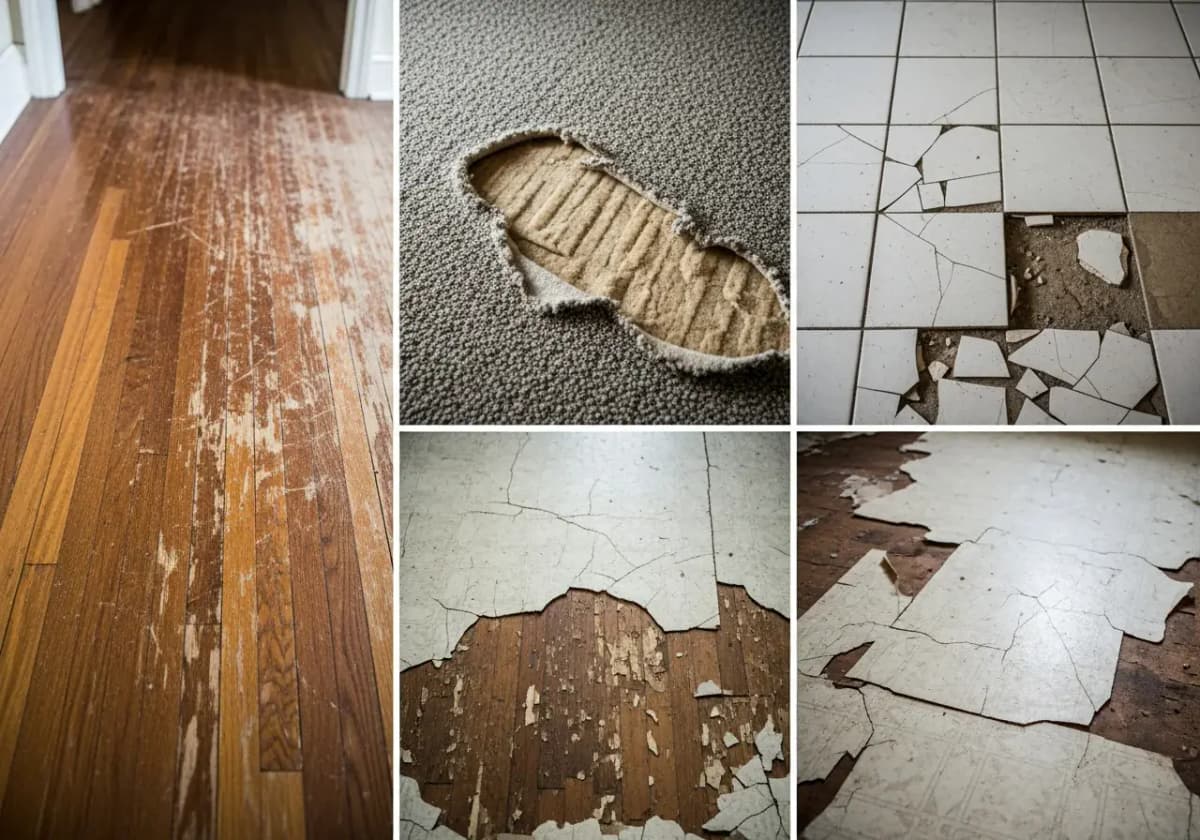
Problem: Uneven or damaged subfloor causing gaps and movement in flooring
Solution: We assess and level the subfloor using self-leveling compound, plywood underlayment, or targeted repairs to create a flat, stable surface that prevents gaps, lippage, and movement in the finished floor.
Problem: Moisture issues in basements or slab-on-grade floors
Solution: We perform moisture testing and install appropriate vapor barriers or moisture-resistant underlayment. For basements, we recommend waterproof LVP or tile over moisture-protected subfloors.
Problem: Transitions between rooms with different flooring heights or types
Solution: We use reducer strips, T-moldings, and custom transitions to create clean, safe connections between different flooring materials and heights — no tripping hazards or awkward gaps.
Problem: Carpet that traps allergens, pet odors, and stains
Solution: We remove old carpet and pad, treat any subfloor staining or odor, and install hard-surface flooring like LVP or hardwood that is easier to clean and does not harbor allergens or pet odors.
Problem: Squeaky or bouncy floors from inadequate subfloor fastening
Solution: We screw down loose subfloor panels, add blocking between joists where needed, and ensure the subfloor is tight and quiet before installing new flooring on top.

High-desert climate at roughly 3,150 feet on the open western Snake River Plain: cold winters, hot dry summers, very low humidity, large daily temperature swings, intense unobstructed UV, and strong wind.
Large diurnal temperature swings
Frequent 30+°F daily swings cycle tile, grout, caulk, siding, and waterproofing joints aggressively, making movement-accommodating detailing essential.
Intense unobstructed UV
Open, treeless plain accelerates fading and degradation of exterior paint, decking, and cladding, and interior fading on sun-exposed rooms.
Cold winters / ground snow load
30 lb ground snow load and a 24-inch frost depth (Mountain Home area, below Tollgate) govern foundations, decks, and roofed structures; cold floors raise demand for in-floor heat.
Strong wind
115 mph residential design wind speed off the open plain drives siding fastening, window structural specs, and roofed-structure engineering; wind-borne grit abrades finishes.
Low humidity
Very dry interiors shrink and gap unacclimated wood flooring and cabinetry and reopen drywall seams; sealed winter homes still concentrate bathroom moisture.
Seismic
Seismic Design Category C (south of Featherville, includes Mountain Home) applies to structural and lateral detailing on additions and reconfigurations.
Downtown / Historic Core
The oldest residential blocks around the railroad-era street grid, including landmarks like the 1910 Bengoechea building; pre-war and early-mid-century homes with aged systems.
Common projects in Downtown / Historic Core:
- •Galvanized supply-line replacement during kitchen and bath remodels
- •Whole-home systems modernization respecting period character
- •Subfloor and structural remediation in pre-1980 homes
- •Lead-safe interior and exterior repaints
Air-Base-Era Ranch Belt (1950s-1970s)
The city's largest housing layer, built as Mountain Home AFB expanded through the Cold War: simply framed three-bedroom, one-bath ranches with original systems and closed layouts. Split between owner-occupants and owner-landlords renting to base personnel.
Common projects in Air-Base-Era Ranch Belt (1950s-1970s):
- •Tub-to-walk-in-shower conversions
- •Opening closed kitchens into living space (often load-bearing)
- •Primary-suite additions
- •Durable rental rebuilds for PCS-cycle turnover
Newer Subdivisions (Silverstone, Morning View)
1990s-2010s production-home build-out on the north and east edges; modern systems, builder-grade finishes aging out, frequently sold to inbound military buyers using VA financing.
Common projects in Newer Subdivisions (Silverstone, Morning View):
- •Kitchen and bathroom finish upgrades
- •Tub-to-walk-in-shower conversions
- •Continuous flooring replacement
- •Resale-prep cosmetic and curb-appeal work
Blue Sage & Rural Acreage
Blue Sage's one-acre custom-home lots and surrounding unincorporated rural parcels, many on private well and septic and permitted through Elmore County rather than the city.
Common projects in Blue Sage & Rural Acreage:
- •Full custom kitchens and primary-suite baths
- •Wing and great-room additions
- •Detached ADUs (with septic-capacity review)
- •High-finish whole-home renovations
Every Mountain Home neighborhood has different housing stock, homeowner priorities, and project considerations. Here is what flooring installation looks like in each area:
Air-Base-Era Ranch Belt (1950s-1970s)
Downtown / Historic Core
Newer Subdivisions (Silverstone, Morning View)
Blue Sage & Rural Acreage Parcels
Permit authority: City of Mountain Home Building Department (in city limits) or Elmore County Land Use and Building Department (unincorporated)
- ✓Jurisdiction is split: City of Mountain Home Building Department, 160 South 3rd East Street, governs property inside city limits; Elmore County Land Use and Building Department, 2280 American Legion Blvd, Mountain Home, governs unincorporated property (including much surrounding acreage).
- ✓Elmore County conducts inspections in the Mountain Home area on Mondays, Wednesdays, and Fridays.
- ✓Adopted codes: 2018 IRC (residential) and 2018 IBC (commercial).
- ✓Mountain Home-area design criteria (below the Tollgate elevation line): 30 lb ground snow load, 24-inch frost depth, 115 mph residential design wind speed, Seismic Design Category C.
- ✓City applications must be preceded by a zoning permit before a building permit.
- ✓No confirmed public online self-service permit portal for either authority; applications handled directly with the building department.
- ✓Pre-1980 homes require asbestos testing (Idaho DEQ) and EPA RRP lead-safe practices; well-and-septic properties require Central District Health review for added bedrooms/bathrooms.
Helpful ID resources
- Idaho DEQ — Asbestos Program — testing and abatement requirements for pre-1980 homes
- EPA Lead Renovation, Repair and Painting (RRP) Program — required certification for work in pre-1978 homes
- ●Plank direction — running planks toward the main light source or along the longest dimension of the room creates the most visually appealing result
- ●Color and tone — lighter flooring makes rooms feel larger and more open; darker flooring adds warmth and formality but shows dust and scratches more
- ●Consistency vs. variation — using the same flooring throughout main living areas creates a seamless, spacious feel; transitioning to tile in wet areas and carpet in bedrooms is also common
- ●Wide plank vs. narrow plank — wider planks (7 inches and above) create a modern, high-end look with fewer seams; narrow planks are more traditional
- ●Texture and finish — smooth finishes show scratches more easily; wire-brushed and hand-scraped textures hide wear and add character
- ●Waterproof requirements — kitchens, bathrooms, laundry rooms, basements, and entryways benefit from waterproof flooring like LVP or tile
Here are the design trends we see most often in Mountain Home flooring installation projects:
- →Tub-to-walk-in-shower conversions
- →Opening closed mid-century ranch kitchens into living space
- →Curbless accessible showers for the veteran population
- →Durable, turnover-engineered finishes for base-area rentals
- →Primary-suite additions onto single-bath ranches
- →High-performance envelope upgrades (windows, siding, insulation)
- →Shaded/covered outdoor living (pergolas and covered decks)
- →In-floor heat against cold high-desert winter floors
Mountain Home's 2024 median home value was approximately $309,400 (Data USA), well below most of Ada County. The market is strongly influenced by Mountain Home Air Force Base: modest, fast-moving inventory, a large share of inbound military buyers using VA financing on relocation deadlines with appraisal condition review, and a substantial owner-landlord/investor segment serving base-driven rental demand. Schools are served by Mountain Home School District No. 193. This price band and buyer profile make competent, finished, defect-free remodels closer to a condition of sale than discretionary upgrades, and make durability-for-turnover the governing logic for rental work.
Avoid these common pitfalls Mountain Home homeowners encounter with flooring installation projects:
Mistake: Installing the cheapest carpet or laminate in a high-turnover base rental
Better approach: Cheap flooring fails on the second PCS-cycle tenant and forces repeated full re-floors. Specify durable waterproof-core LVP in a standardized product so damage is repaired in sections and matched on the next turn — the lower cost across many rotations.
Mistake: Tearing out pre-1980 flooring without asbestos testing
Better approach: Pre-1980 Mountain Home homes routinely have vinyl-asbestos tile and asbestos mastic. Test before any removal and abate by licensed practice if positive, under Idaho DEQ rules — a legal and health requirement sequenced into pre-installation, not discovered mid-tear-out.
Mistake: Installing solid wood without dry-climate acclimation
Better approach: Mountain Home's very low heating-season humidity shrinks and gaps unacclimated wood. Use proper on-site acclimation, substrate moisture verification, and dimensionally stable material — or a waterproof-core LVP that does not move with humidity where seasonal movement is unacceptable.
Mistake: Skipping subfloor prep to lower the bid
Better approach: Older Mountain Home subfloors carry wear and moisture history, and slabs need moisture verification. Flatness, soundness, and moisture conditions are necessary, billable scope; omitting them produces failure regardless of surface material — especially under large-format tile.
Mistake: Treating rental-turn flooring timing as flexible
Better approach: In a base-driven market a delayed rental turn costs the owner real money. Schedule turnover re-floors predictably for tight PCS-cycle timelines, and use a standardized rental product so each successive turn is faster and cheaper.
Most popular remodeling projects in Mountain Home
- ✓Air-base-era ranch bathroom and shower remodels
- ✓Closed-kitchen wall removal and modernization
- ✓Primary-suite and bedroom additions
- ✓Single-pane aluminum window replacement
- ✓Fiber-cement re-siding with envelope correction
- ✓Durable rental rebuilds for PCS-cycle turnover
- ✓Detached and in-law ADUs
- ✓Covered/shaded deck construction

See Your Remodel Before You Build.
Upload a few photos of your kitchen, bathroom, flooring, or exterior and get AI-generated concept visuals tailored to your space, style, and materials — free, no obligation, in about five minutes. Then request a real estimate from our Idaho registered Boise team.
Free concept preview · No credit card · Licensed Idaho contractor
What flooring should I put in a rental near the Air Force Base?
Durable, moisture- and scratch-resistant, and sectionally replaceable — typically a quality waterproof-core LVP, in a standardized product you can match on the next turn. Base-area rentals turn over on PCS cycles, so the cheapest carpet or laminate fails on the second tenant and drives up cost every rotation. LVP resists tenant wear, cleans easily, and lets you repair a damaged section rather than re-floor a whole room, and standardizing the product across a property or portfolio makes future turns faster and cheaper. It is a multi-turn cost strategy, not a one-time expense.
Do I need to test for asbestos before replacing my old floor in Mountain Home?
If the home was built before 1980 — much of the downtown core and ranch belt — yes. Pre-1980 Mountain Home homes routinely have vinyl-asbestos floor tile and asbestos-containing mastic, which must be tested before any tear-out and, if positive, abated by licensed practice under Idaho DEQ rules before new flooring goes down. Disturbing it without testing is a legal and health violation. We sequence this testing into pre-installation for every pre-1980 home rather than discovering it mid-tear-out.
Why did my wood floor gap and shrink in Mountain Home?
Mountain Home's very low interior humidity through the long heating season pulls moisture out of wood flooring that was not acclimated to this dry environment before installation, causing it to shrink and gap. It is a real, recurring local pattern, not a defect in the wood itself. The fix is climate discipline: proper on-site acclimation, substrate moisture verification, and dimensionally stable material selection — or, where seasonal movement is unacceptable, a quality waterproof-core LVP that does not move with humidity at all.
Is in-floor heat worth it in Mountain Home?
For higher-end and owner-occupant projects, frequently yes. Mountain Home winters are genuinely cold at 3,150 feet, and slab and ranch floors — especially tile and porcelain — are uncomfortably cold underfoot for months. Electric or hydronic in-floor heat under tile transforms the daily experience of those spaces through the long heating season. It is an optional upgrade rather than a baseline, but in this climate it delivers real daily value where the budget supports it, particularly in bathrooms and main living areas.
Why does the subfloor matter so much in older Mountain Home homes?
Because older ranch and core subfloors carry decades of wear and moisture history, and slab homes need moisture verification before resilient or wood flooring goes down. Flatness, soundness, and moisture conditions directly determine whether the new floor performs or fails — large-format tile especially needs a flat substrate. Substrate prep is real, necessary, billable scope; a bid that omits it to look cheaper produces visible failure regardless of how good the surface material is.
What is the best flooring for a whole-home installation?
Luxury vinyl plank (LVP) is the most popular choice for whole-home installations in the Boise area. It is waterproof, scratch-resistant, comfortable underfoot, and available in realistic wood-look patterns. It can be used in every room including kitchens and bathrooms.
How long does flooring installation take?
A typical whole-home flooring installation (1,500-2,000 sq ft) takes 5-10 days including removal of existing flooring, subfloor prep, and installation. Single-room projects may take 1-3 days. Tile installations take longer due to setting and grouting time.
Is LVP or hardwood better?
LVP is more practical — it is waterproof, scratch-resistant, more affordable, and easier to maintain. Hardwood offers a warmer, more premium feel and can be refinished multiple times. Many homeowners use LVP in high-traffic and wet areas and hardwood in formal living spaces.
Do I need to remove furniture before flooring installation?
We handle furniture moving as part of the installation process. We move items out of the work area, install the flooring, and return furniture to position. Homeowners should plan to clear small items, electronics, and fragile objects from the rooms.
Can new flooring be installed over existing flooring?
In some cases, yes. LVP and laminate can often be installed over smooth, level existing floors. However, removing old flooring typically produces a better result because it allows for proper subfloor inspection, repair, and preparation.
How do you handle transitions between different flooring types?
We use manufacturer-matched transition strips — T-moldings, reducers, and thresholds — to create clean, level connections between different flooring materials. Proper transitions are both functional (no tripping hazards) and aesthetic (clean visual lines).
What flooring is best for homes with pets?
LVP with a thick wear layer (20 mil or higher) is the best flooring for homes with pets. It resists scratches, is waterproof for accidents, and is easy to clean. Avoid smooth-finish hardwood and high-gloss laminate, which scratch easily.

Talk to a real project manager
Have Questions? Call Now for a Free In-Home Consultation.
Mon–Fri 7 AM–6 PM · Idaho registered & insured · No obligation
Russ S. — Project Manager
Russ S. — Project Manager
Start your flooring installation in Mountain Home
Get a free, no-obligation estimate for flooring installation in Mountain Home, ID. We handle design, permits, and every detail of construction.
Get Your Free Estimate