
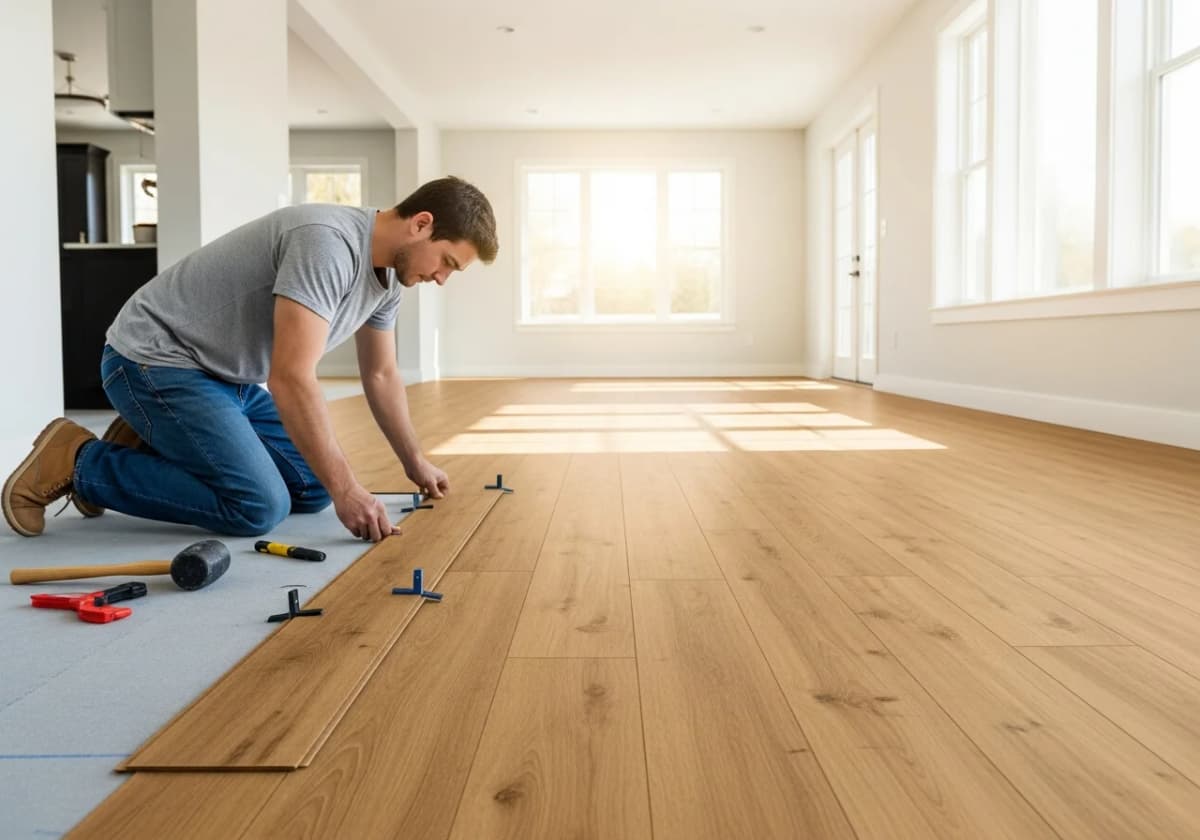
Flooring Installation in Parma, ID
From luxury vinyl plank and hardwood to tile and carpet — we handle subfloor prep, material selection, precision installation, and every transition detail.
Quick answer
Iron Crest Remodeling Group LLC provides flooring installation in Parma, ID. Most Parma flooring installation projects cost $4,500 – $65,000. Parma flooring costs are driven by subfloor remediation and pre-1980 material handling more than by the finished product's price. The low band covers a few rooms over a sound subfloor with quality LVP or laminate and minimal prep.
Flooring installation in Parma, Idaho is a subfloor-and-substrate project as much as a finished-surface one, because the town's housing stock and dry climate make what is under the floor decisive. Parma is a western Canyon County farming town of roughly 2,096 people (2020 Census), at about 2,238 feet near the Boise–Snake confluence, in open agricultural country defined by onions, sugar beets, seed crops, and dairy. Its homes are overwhelmingly pre-1980 — 1940s–1970s ranch houses and older farmhouses on acreage — which means new flooring frequently goes over decades-old plank or board subfloors, original wood floors of variable condition, and layers of prior flooring (including pre-1980 vinyl tile and mastic that can contain asbestos). Parma's cold semi-arid climate (Köppen BSk) produces very low indoor humidity through tightly heated winters, which moves wood subfloors and solid-wood flooring and makes acclimation and material choice critical. On rural properties, crawlspace and moisture conditions under farmhouses add another variable. Iron Crest Remodel (Iron Crest Remodeling Group LLC, Idaho RCE-6681702) installs Parma flooring as a substrate-first process — assess, remediate, then install the right material for this dry climate and these older homes.
Upgrade your home from the ground up with professional flooring installation tailored to your lifestyle and budget.
Flooring is one of the most visible and impactful elements in your home — it sets the tone for every room, absorbs daily wear from foot traffic, pets, and furniture, and needs to perform in varying moisture and temperature conditions. Professional flooring installation starts with subfloor assessment and preparation — leveling, moisture testing, and repair as needed — followed by precise material installation with tight seams, accurate cuts, and clean transitions between rooms and materials. In the Treasure Valley, luxury vinyl plank (LVP) has become the most popular flooring choice for its combination of waterproof performance, realistic wood-look appearance, durability, and affordability. Hardwood remains the premium choice for living rooms and bedrooms, tile is the standard for bathrooms and entryways, and quality laminate offers a budget-friendly alternative with improved durability. The key to a flooring project that looks great and lasts is subfloor preparation — a level, clean, dry subfloor is the foundation for every successful installation.
Parma homeowners pursue flooring installation for a variety of reasons. Here are the most common situations we see:
- ✓Homeowners replacing worn, damaged, or outdated flooring throughout the home
- ✓Families who need durable, water-resistant flooring for kitchens, bathrooms, and high-traffic areas
- ✓Homeowners who want a consistent floor surface throughout main living areas for a modern, cohesive look
- ✓Anyone building a new addition or finishing a basement who needs flooring installed on new subfloor
- ✓Homeowners preparing to sell who want to replace carpet with hard-surface flooring for maximum buyer appeal
Not every flooring installation project is the same. Here are the most common project types we complete in Parma:

Luxury Vinyl Plank (LVP) Installation
Install click-lock or glue-down luxury vinyl plank flooring throughout your home. LVP is waterproof, scratch-resistant, and available in realistic wood and stone patterns. Ideal for whole-home installations including kitchens and bathrooms.

Hardwood Flooring Installation
Install solid or engineered hardwood flooring with nail-down, glue-down, or floating installation methods. Includes species and finish selection, acclimation, subfloor prep, and transition installation.

Tile Flooring Installation
Install porcelain, ceramic, or natural stone tile on floors in bathrooms, kitchens, entryways, and laundry rooms. Includes substrate preparation, layout planning, thin-set application, grouting, and sealing.

Laminate Flooring Installation
Install floating laminate flooring with click-lock assembly. A budget-friendly option with improved durability and realistic wood-look patterns. Includes underlayment and transition strips.

Carpet Installation
Install carpet in bedrooms, bonus rooms, and basement areas. Includes pad selection, tack strip installation, seaming, and stretching for a smooth, wrinkle-free result.

Parma's housing is overwhelmingly pre-1980 — 1940s–1970s ranch homes on the in-town grid and older farmhouses on surrounding acreage — with limited modern subdivision and infill construction. Older homes commonly carry galvanized plumbing, undersized electrical, single-pane windows, and original or minimal waterproofing and insulation.
Pre-1940 (Older Farmhouses)
Early-twentieth-century farmhouses on surrounding agricultural land, frequently single-bathroom, with aged framing, plank subfloors, galvanized supply lines, and original wood siding and windows. Lead paint and asbestos materials are common; structural and systems remediation is typically required in any substantial remodel.
1940s–1970s (In-Town Ranch & Bungalow)
The bulk of Parma's stock: compact mid-century ranch and bungalow homes with closed floor plans, original tile-and-cast-iron baths, undersized electrical service, and minimal ventilation. Pre-1978 homes carry lead paint; pre-1980 homes commonly contain asbestos in flooring and finishes.
1980s–2000s and Newer (Subdivision & Infill)
Limited newer construction such as the Trail Ridge area off Highway 26 and scattered infill, with code-compliant systems and no environmental hazards. Remodeling here is finish-and-fixture upgrading rather than systems remediation.
Common issues in Parma homes
- •Galvanized supply lines corroded to minimal flow
- •Undersized/dated electrical service lacking modern circuits
- •Asbestos in pre-1980 flooring, mastic, and finishes; lead paint pre-1978
- •Failed or minimal original shower/tub waterproofing rotting subfloors
- •Single-pane windows and out-of-square, non-standard openings
- •Hard, often iron-rich private well water on rural properties
- •Septic-capacity limits on rural fixture additions

Material selection affects the look, durability, and cost of your flooring installation. Here are the most popular options we install in Parma:

Luxury Vinyl Plank (LVP)
$4–$10 per sq ft installedWaterproof, scratch-resistant, and available in hundreds of realistic wood and stone patterns. Modern LVP features rigid core construction, attached underlayment, and click-lock installation. The most popular flooring choice in the Treasure Valley.
Best for: Whole-home installations, kitchens, bathrooms, basements, and high-traffic areas

Engineered Hardwood
$8–$16 per sq ft installedReal wood veneer over a plywood or HDF core provides authentic hardwood appearance with better dimensional stability than solid hardwood. Available in oak, hickory, walnut, and maple with prefinished or site-finished options.
Best for: Living rooms, dining rooms, bedrooms, and hallways

Solid Hardwood
$10–$20 per sq ft installedTraditional solid wood planks (typically 3/4 inch thick) that can be sanded and refinished multiple times over their lifespan. Oak, hickory, and maple are the most popular species in the Boise market.
Best for: Main living areas in homes with controlled humidity and on-grade or above-grade subfloors

Porcelain Floor Tile
$8–$20 per sq ft installedDense, water-resistant tile available in wood-look, stone-look, and modern geometric patterns. Large-format tiles (12x24 and larger) create a seamless, contemporary look with fewer grout lines.
Best for: Bathrooms, entryways, kitchens, and laundry rooms

Laminate Flooring
$3–$7 per sq ft installedA budget-friendly floating floor with a photographic wear layer over an HDF core. Modern laminate offers improved scratch resistance, realistic patterns, and easy click-lock installation.
Best for: Budget-conscious projects, rental properties, and bedrooms

Here is how a typical flooring installation project works from first contact to final walkthrough:
In-Home Measurement and Consultation
We measure every room, assess the existing subfloor condition, check for moisture issues, discuss your lifestyle needs, and help you select the right flooring material for each area of the home. You receive a detailed estimate with material and labor costs.
Material Selection and Ordering
We help you choose flooring from our supplier partners — comparing styles, colors, wear layers, and warranties. We order material with appropriate overage for cuts and waste. Material acclimation time (especially for hardwood) is factored into the schedule.
Existing Flooring Removal
We remove existing carpet, tile, vinyl, or laminate and dispose of all material responsibly. Tack strips, staples, adhesive residue, and any damaged subfloor sections are addressed during removal.
Subfloor Preparation
This is the most important step. We level the subfloor using self-leveling compound where needed, repair any damaged sections, install moisture barriers where required, and verify the surface is clean, flat, and dry before installation begins.
Flooring Installation
Material is installed with the appropriate method — click-lock floating, nail-down, glue-down, or thin-set for tile. Each plank, board, or tile is precision-cut and placed with consistent spacing, tight seams, and proper expansion gaps at walls.
Transitions, Trim, and Completion
Transition strips are installed between different flooring types and at doorways. Baseboards are reinstalled or replaced. Quarter-round or shoe molding covers expansion gaps. A final walkthrough ensures quality and cleanliness.
Here is what to expect for project duration when planning flooring installation in Parma:
| Phase | Duration | Details |
|---|---|---|
| Consultation and Material Selection | 1–2 weeks | In-home measurement, subfloor assessment, material selection, and estimate finalization. Material ordering and delivery may add 1-2 weeks depending on availability. |
| Material Acclimation | 2–5 days | Flooring material is delivered and stored in the home to acclimate to indoor temperature and humidity. Hardwood requires the longest acclimation period; LVP and laminate require less. |
| Existing Flooring Removal | 1–3 days | Removal and disposal of existing flooring. Carpet removal is fast; tile and glued-down flooring removal takes longer. |
| Subfloor Preparation | 1–2 days | Leveling, repairs, moisture barrier installation, and surface preparation. Subfloors in good condition require minimal prep. |
| Flooring Installation | 2–5 days | Material installation throughout the home. A typical 1,500-2,000 sq ft LVP or hardwood installation takes 3-5 days. Tile floors take longer due to thin-set curing and grouting. |
| Trim, Transitions, and Cleanup | 1–2 days | Baseboard and transition strip installation, shoe molding, final cleaning, and walkthrough. |
Parma range: $4,500–$10,000 – $30,000–$65,000
Most Parma projects: $11,000–$26,000
Parma flooring costs are driven by subfloor remediation and pre-1980 material handling more than by the finished product's price. The low band covers a few rooms over a sound subfloor with quality LVP or laminate and minimal prep. The high band reflects whole-home flooring in an older farmhouse with extensive subfloor leveling and repair, asbestos abatement of old vinyl/mastic, and premium hardwood or tile. The average band is the typical Parma project: most of a home in durable LVP, tile, or engineered wood with the moderate subfloor leveling, squeak remediation, and transition work pre-1980 homes need. Parma-specific drivers: subfloor assessment and repair adds labor that newer-home installs do not require; pre-1980 asbestos testing and abatement of vinyl-asbestos tile and mastic where found is a legal line item, quoted at the current lab and abatement rates with the estimate; dry-climate acclimation adds schedule for wood products; and Parma's distance from the metro core means tight trip scheduling and longer material delivery. A flooring quote that omits subfloor evaluation and pre-1980 testing is quoting a thinner, riskier project.
The final cost of flooring installation in Parma depends on several factors. Here are the biggest cost drivers:
Flooring Material Selection
high impactMaterial cost is the primary variable. Laminate and basic LVP start around $3-4/sq ft installed, while premium hardwood and large-format tile can exceed $15-20/sq ft installed.
Total Square Footage
high impactLarger projects have lower per-square-foot costs due to economies of scale in labor and material purchasing. Whole-home installations are more cost-effective per square foot than single-room projects.
Subfloor Condition and Preparation
medium impactSubfloors that need leveling, moisture barriers, plywood underlayment, or repair add $1-3 per sq ft to the project. Older homes and basements often require more subfloor work.
Existing Flooring Removal
medium impactRemoving existing carpet is relatively inexpensive ($0.50-1.00/sq ft). Removing tile, glued-down vinyl, or multiple layers of flooring is more labor-intensive and costly ($1.50-4.00/sq ft).
Room Layout Complexity
low impactRooms with many angles, closets, doorways, and transitions require more cutting time and generate more waste. Open floor plans with few interruptions install more efficiently.
Trim and Transition Work
low impactNew baseboards, quarter-round, shoe molding, and transition strips add $2-5 per linear foot. Homes that need full baseboard replacement can add $1,000-3,000 to the project.
These are the real-world projects we see most often from Parma homeowners:
Whole-Home Flooring Over a Repaired Pre-1980 Subfloor
An older Parma farmhouse or ranch getting new flooring throughout, where the real work is the subfloor: leveling decades of deflection, re-securing to eliminate squeaks, replacing water-damaged sections near baths, kitchen, and exterior walls, and addressing any crawlspace moisture. Pre-1980 asbestos testing of existing vinyl/mastic and abatement where found. Then a durable, dry-climate-appropriate surface — LVP, tile, or properly acclimated engineered wood — installed with correct transitions. The substrate work is the substance; the finish is the visible result.
Asbestos-Tile Removal and New Flooring in a Pre-1980 Home
A 1950s–1970s home with original vinyl-asbestos tile and black mastic. Scope: testing, licensed abatement of the asbestos-containing flooring and adhesive, subfloor preparation, then a new durable surface. The abatement is integral, sequenced before installation, and priced transparently as a legal requirement. Common across Parma's older in-town and farmhouse stock.
Refinish or Replace Original Farmhouse Hardwood
An older Parma home with original wood floors worn, cupped, or previously refinished. Where thickness remains, refinishing (with dry-climate-aware sanding and finishing) preserves character cost-effectively; where the floor is past saving or moisture-damaged, replacement with properly acclimated solid or engineered wood. Decision driven by remaining wear layer and substrate condition, not assumption.
Durable Floors for a Working Rural Household
Entries, mudrooms, kitchens, and high-traffic areas of a working agricultural household specified for grit, moisture, and heavy use: high-wear-layer LVP or porcelain tile, robust transitions, and moisture-managed installation over a prepared subfloor. Built for the realities of life on a working property and the decades the family will keep the home.
Clean Flooring Install in a Newer Parma Home
In Parma's limited newer construction off Highway 26, flooring over a sound modern subfloor with no asbestos and minimal prep — quality LVP, tile, or engineered wood, still acclimated for Parma's dry indoor climate. Predictable, efficient, no substrate or environmental complications; the value is a durable, cohesive update for a household staying long-term.
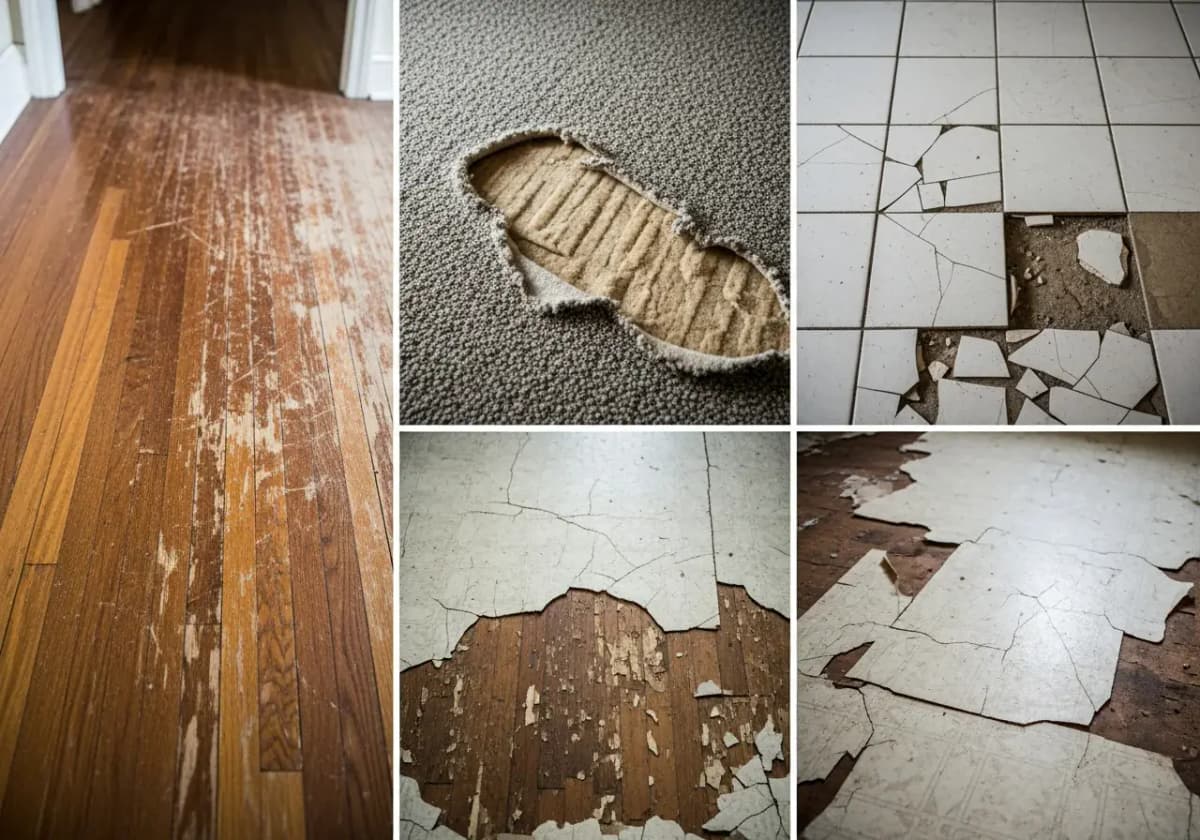
Problem: Uneven or damaged subfloor causing gaps and movement in flooring
Solution: We assess and level the subfloor using self-leveling compound, plywood underlayment, or targeted repairs to create a flat, stable surface that prevents gaps, lippage, and movement in the finished floor.
Problem: Moisture issues in basements or slab-on-grade floors
Solution: We perform moisture testing and install appropriate vapor barriers or moisture-resistant underlayment. For basements, we recommend waterproof LVP or tile over moisture-protected subfloors.
Problem: Transitions between rooms with different flooring heights or types
Solution: We use reducer strips, T-moldings, and custom transitions to create clean, safe connections between different flooring materials and heights — no tripping hazards or awkward gaps.
Problem: Carpet that traps allergens, pet odors, and stains
Solution: We remove old carpet and pad, treat any subfloor staining or odor, and install hard-surface flooring like LVP or hardwood that is easier to clean and does not harbor allergens or pet odors.
Problem: Squeaky or bouncy floors from inadequate subfloor fastening
Solution: We screw down loose subfloor panels, add blocking between joists where needed, and ensure the subfloor is tight and quiet before installing new flooring on top.

Parma has a cold semi-arid climate (Köppen BSk) with intense high-desert UV, hard freeze-thaw cycling, low humidity, and wind across open farmland. Recorded extremes range from -35°F (1924) to 110°F (2002).
Extreme temperature range
A recorded ~145-degree swing drives large expansion-contraction cycling, magnifies single-pane window energy loss, and demands climate-grade coatings, siding, and glazing.
Hard freeze-thaw
Requires deck and foundation footings to the regional ~24-inch frost depth; punishes any compromised waterproofing, caulk, or unsealed wood.
Intense UV and low humidity
Degrades under-spec exterior coatings and decking; very low heated-season indoor humidity moves wood substrates and flooring, requiring acclimation.
Open-country wind exposure
Many properties on open acreage have no sheltering structures, making wind loading a real structural input and worst-case exposure the design basis on all elevations.
In-Town Core (3rd Street / Grove Avenue Grid)
Parma's compact municipal core near City Hall on 3rd Street, dense with 1940s–1970s ranch and bungalow homes on city water and sewer.
Common projects in In-Town Core (3rd Street / Grove Avenue Grid):
- •Bathroom and shower remodels in original mid-century homes
- •Kitchen modernization and opening of closed plans
- •Whole-home systems modernization (plumbing, electrical, envelope)
- •Interior and exterior painting with lead-safe prep
Roswell / Apple Valley Rural Acreage
Rural farmhouse and ranch acreage associated with greater Parma, almost entirely on private well and septic systems.
Common projects in Roswell / Apple Valley Rural Acreage:
- •Well-water-appropriate bathroom and shower remodels
- •Home additions and multigenerational wings (septic-capacity driven)
- •Detached ADU construction on acreage
- •Durable flooring for working rural households
Old Fort Boise Area / East Edge
The eastern edge of town near the Old Fort Boise replica and the Boise/Snake river bottomland, with older homes and parcel-specific floodplain considerations.
Common projects in Old Fort Boise Area / East Edge:
- •Flood-aware additions and structural tie-in work
- •Moisture-driven flooring and substrate remediation
- •Whole-home renovation of older homes
- •Window replacement with rot/opening repair
Trail Ridge / Newer Subdivision Pockets
Parma's limited newer construction, including the Trail Ridge subdivision area off Highway 26 with up to half-acre homesites.
Common projects in Trail Ridge / Newer Subdivision Pockets:
- •Finish-and-fixture kitchen and bath upgrades
- •Clean flooring and interior painting refreshes
- •Decks and exterior updates on sound modern homes
- •Window and siding upgrades
Every Parma neighborhood has different housing stock, homeowner priorities, and project considerations. Here is what flooring installation looks like in each area:
In-Town Core (3rd Street / Grove Avenue Grid)
Roswell / Apple Valley Rural Acreage
Old Fort Boise Area / East Edge
Trail Ridge / Newer Subdivision Pockets
River-Bottom Farmland Toward the Snake
Permit authority: Canyon County Development Services (building/structural/plumbing/electrical); City of Parma (planning & zoning)
Online portal: www.canyoncounty.id.gov/building-department/
- ✓The City of Parma administers planning, zoning, and its municipal code but does not operate its own building department; building permits defer to Canyon County Development Services, 111 N. 11th Ave, Caldwell.
- ✓City Hall: 305 North 3rd Street, P.O. Box 608, Parma, ID 83660; (208) 722-5138.
- ✓Parcels near the Boise/Snake confluence may fall within FEMA-mapped floodplain; flood-zone status must be verified per parcel with Canyon County, not assumed from proximity.
- ✓Pre-1980 homes require asbestos/lead testing (Idaho DEQ / EPA RRP) before disturbance.
- ✓Rural properties on private septic require septic-capacity confirmation for fixture/dwelling additions.
- ✓Regional design criteria: ~20 psf ground snow load, 115 mph design wind speed, 24-inch minimum frost depth, and the seismic design category assigned by the county.
Helpful ID resources
- Canyon County Development Services (building/structural/plumbing/electrical); City of Parma (planning & zoning) — permit applications, inspections, and code resources
- Idaho DEQ — Asbestos Program — testing and abatement requirements for pre-1980 homes
- EPA Lead Renovation, Repair and Painting (RRP) Program — required certification for work in pre-1978 homes
- ●Plank direction — running planks toward the main light source or along the longest dimension of the room creates the most visually appealing result
- ●Color and tone — lighter flooring makes rooms feel larger and more open; darker flooring adds warmth and formality but shows dust and scratches more
- ●Consistency vs. variation — using the same flooring throughout main living areas creates a seamless, spacious feel; transitioning to tile in wet areas and carpet in bedrooms is also common
- ●Wide plank vs. narrow plank — wider planks (7 inches and above) create a modern, high-end look with fewer seams; narrow planks are more traditional
- ●Texture and finish — smooth finishes show scratches more easily; wire-brushed and hand-scraped textures hide wear and add character
- ●Waterproof requirements — kitchens, bathrooms, laundry rooms, basements, and entryways benefit from waterproof flooring like LVP or tile
Here are the design trends we see most often in Parma flooring installation projects:
- →Curbless, accessible walk-in showers for aging-in-place
- →Opening closed mid-century plans with engineered beams
- →Farmhouse-honest finishes (shaker, apron sinks, period hardware)
- →Hard-water-resistant surfaces and treated/textured shower glass
- →Durable quartz and porcelain over maintenance-heavy stone
- →Heated tile floors for cold winters
- →Large acreage decks oriented to farmland views with covered sections
- →Multigenerational and on-property accessory dwellings
The Parma market is characterized by long-tenure, often agricultural ownership and a deeply dated pre-1980 baseline stock, so remodeling is predominantly a stay-in-place quality-of-life and structure-protection investment rather than resale-driven turnover. The wide gap between original-condition older homes and competently modernized ones supports strong perceived value from quality renovation, though specific cost-recovery percentages should not be stated as fixed local figures.
Avoid these common pitfalls Parma homeowners encounter with flooring installation projects:
Mistake: Installing new flooring without assessing the pre-1980 subfloor
Better approach: Aged Parma subfloors deflect, squeak, and hide water damage. Assess, level, re-secure, and repair the substrate before installation. Laying any surface over an uncorrected old subfloor guarantees squeaks, telegraphed unevenness, and early failure regardless of product quality.
Mistake: Disturbing old vinyl tile and mastic without testing
Better approach: Pre-1980 Parma floors frequently include vinyl-asbestos tile and asbestos mastic. Test before tear-out and use licensed abatement where found, sequenced before installation. Disturbing these without testing is a legal and health violation, not a shortcut.
Mistake: Skipping acclimation of wood flooring in Parma's dry climate
Better approach: Parma's very low heated-season humidity moves wood significantly. Acclimate hardwood and engineered products to the home's actual conditions and install with movement allowance. Skipping this is the top cause of gapping and buckling in Parma installations.
Mistake: Ignoring crawlspace moisture under a rural farmhouse
Better approach: An unaddressed moisture source under an older Parma farmhouse can undermine any flooring above it. Assess and remediate crawlspace moisture before installation — the surface choice cannot compensate for a wet substrate.
Mistake: Choosing thin-wear-layer product for a working household
Better approach: Agricultural-household grit and traffic destroy budget thin-wear LVP and laminate fast. Specify high-wear-layer material suited to the real use and the decades Parma owners keep homes; the durability premium pays back over that horizon.
Most popular remodeling projects in Parma
- ✓Bathroom and shower remodels in pre-1980 homes
- ✓Whole-home systems modernization of older farmhouses
- ✓Kitchen reconfiguration and modernization
- ✓Primary-suite and multigenerational additions
- ✓Detached ADU construction on acreage
- ✓Window replacement and re-siding for the climate envelope
- ✓Durable flooring over remediated subfloors
- ✓Interior and exterior painting with lead-safe prep

See Your Remodel Before You Build.
Upload a few photos of your kitchen, bathroom, flooring, or exterior and get AI-generated concept visuals tailored to your space, style, and materials — free, no obligation, in about five minutes. Then request a real estimate from our Idaho registered Boise team.
Free concept preview · No credit card · Licensed Idaho contractor
Why does flooring in my older Parma home cost more than the product price suggests?
Because in a pre-1980 Parma home much of the work is under the new surface. Aged plank subfloors need leveling and re-securing, water-damaged sections near baths and exterior walls need replacement, squeaks need remediation, and old vinyl-asbestos tile and mastic may need licensed abatement. A quote that reflects only material and basic install is quoting a lesser, riskier project; the substrate and environmental work is what makes the new floor sound and lasting.
Could my old Parma floor contain asbestos?
Quite possibly, if the home predates 1980. Vinyl-asbestos floor tile and black asbestos mastic are common under older Parma flooring. Disturbing them during tear-out triggers the testing and licensed-abatement requirements the Idaho Department of Environmental Quality administers for asbestos. We coordinate testing as standard practice on pre-1980 Parma homes and sequence any required abatement before installation, quoting the current lab fee with the estimate. This is a legal and health requirement, not something to skip to save time.
Why does new wood flooring fail in Parma if not acclimated?
Parma's cold semi-arid climate and tightly heated winters produce very low indoor humidity, which shrinks wood and stresses rigid floor assemblies. Solid hardwood and many engineered products must be acclimated to your home's actual low-humidity conditions and installed with proper movement allowance. Skipping acclimation in Parma's dry envelope is the leading cause of gapping, cupping, and buckling as humidity swings through the seasons.
What flooring holds up best in a working Parma household?
For most spaces, high-wear-layer rigid-core luxury vinyl plank — it is dimensionally stable across Parma's dry-climate humidity swing, tolerates the moisture and grit of working rural life, and is warm underfoot in cold winters. Porcelain tile excels in entries, kitchens, and baths over a properly prepared subfloor. The key is quality: thin-wear-layer products fail fast under agricultural-household traffic, so material grade matters more in Parma than in lighter-use settings.
Do I need a permit to replace flooring in Parma?
Ordinary flooring replacement typically does not require a municipal building permit. If the flooring is part of a permitted remodel, it falls under that project's Canyon County permits. Pre-1980 asbestos handling follows Idaho DEQ requirements regardless of permitting, and EPA's RRP lead-safe rule applies separately where pre-1978 painted surfaces are disturbed. We confirm any applicable requirement with the City of Parma or Canyon County when flooring is tied to a larger renovation.
What is the best flooring for a whole-home installation?
Luxury vinyl plank (LVP) is the most popular choice for whole-home installations in the Boise area. It is waterproof, scratch-resistant, comfortable underfoot, and available in realistic wood-look patterns. It can be used in every room including kitchens and bathrooms.
How long does flooring installation take?
A typical whole-home flooring installation (1,500-2,000 sq ft) takes 5-10 days including removal of existing flooring, subfloor prep, and installation. Single-room projects may take 1-3 days. Tile installations take longer due to setting and grouting time.
Is LVP or hardwood better?
LVP is more practical — it is waterproof, scratch-resistant, more affordable, and easier to maintain. Hardwood offers a warmer, more premium feel and can be refinished multiple times. Many homeowners use LVP in high-traffic and wet areas and hardwood in formal living spaces.
Do I need to remove furniture before flooring installation?
We handle furniture moving as part of the installation process. We move items out of the work area, install the flooring, and return furniture to position. Homeowners should plan to clear small items, electronics, and fragile objects from the rooms.
Can new flooring be installed over existing flooring?
In some cases, yes. LVP and laminate can often be installed over smooth, level existing floors. However, removing old flooring typically produces a better result because it allows for proper subfloor inspection, repair, and preparation.
How do you handle transitions between different flooring types?
We use manufacturer-matched transition strips — T-moldings, reducers, and thresholds — to create clean, level connections between different flooring materials. Proper transitions are both functional (no tripping hazards) and aesthetic (clean visual lines).
What flooring is best for homes with pets?
LVP with a thick wear layer (20 mil or higher) is the best flooring for homes with pets. It resists scratches, is waterproof for accidents, and is easy to clean. Avoid smooth-finish hardwood and high-gloss laminate, which scratch easily.

Talk to a real project manager
Have Questions? Call Now for a Free In-Home Consultation.
Mon–Fri 7 AM–6 PM · Idaho registered & insured · No obligation
Russ S. — Project Manager
Russ S. — Project Manager
Start your flooring installation in Parma
Get a free, no-obligation estimate for flooring installation in Parma, ID. We handle design, permits, and every detail of construction.
Get Your Free Estimate