
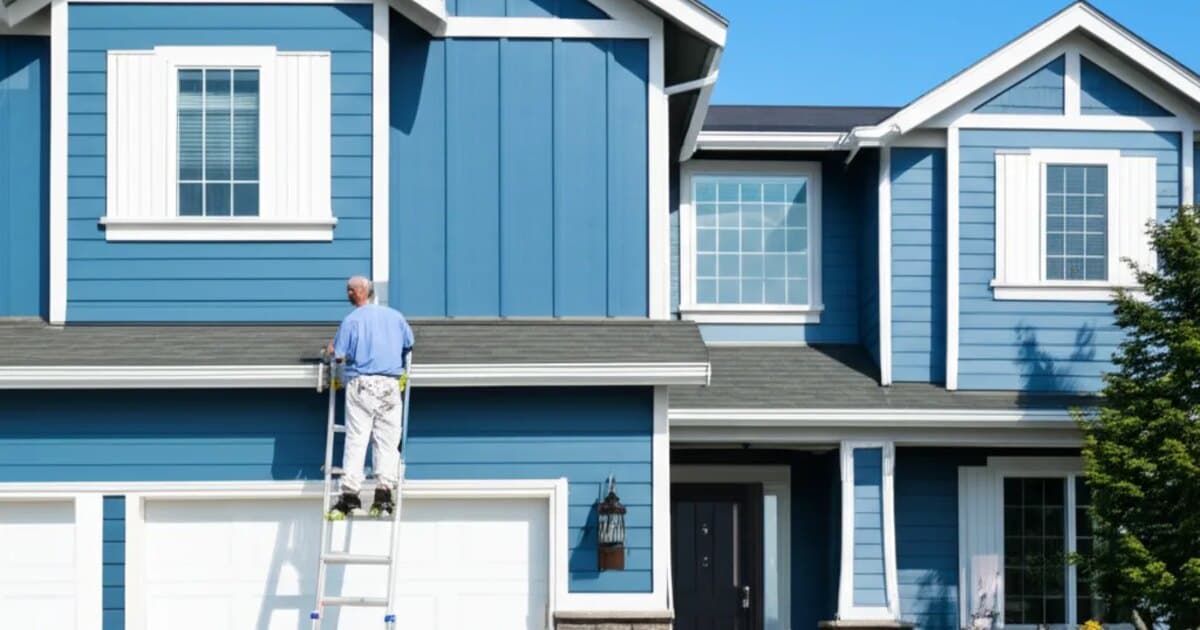
Exterior Painting in Boise, Idaho
Protect and refresh your home exterior with professional painting from Iron Crest Remodel. We handle thorough prep, premium paint application, trim and detail work, and complete cleanup — built to withstand Idaho weather.
- Full house exterior painting
- Trim, soffit, and fascia painting
- Deck and fence staining
- Power washing and surface prep
- Caulking and wood repair
- Lead paint remediation (pre-1978 homes)
- Color consultation and design
- Premium exterior paints (Sherwin-Williams, Benjamin Moore)
- Multi-story and difficult access work
- Garage and outbuilding painting
Timeline
5 – 10 days
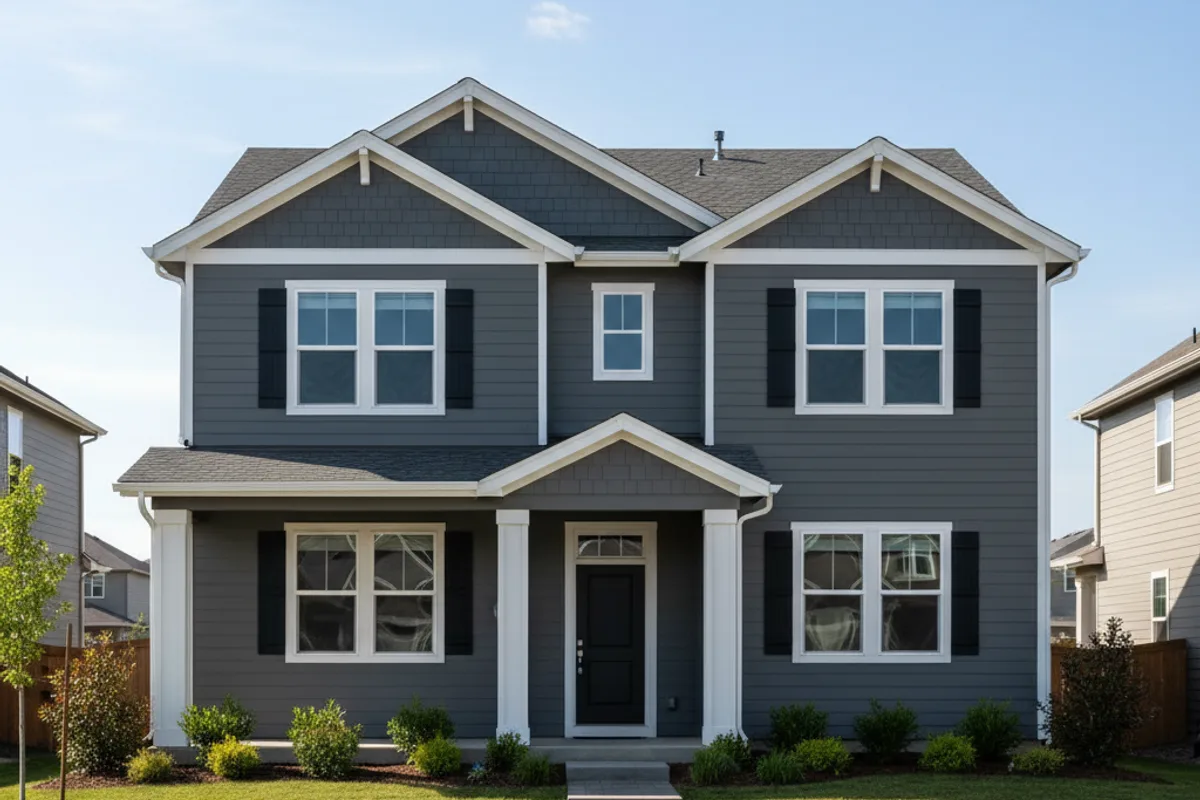
Real exterior painting projects — see the finished results, project details, and transformation stories.
Exterior Assessment
We inspect all exterior surfaces for peeling, rot, caulk failure, and substrate condition. We discuss color choices and provide a fixed-price estimate.
Surface Preparation
Power washing, scraping, sanding, caulking, wood repair, and priming. Proper prep is 70% of a lasting paint job — we never skip this step.
Paint Application
Premium exterior paint applied by spray and back-roll for even coverage and penetration. Two coats standard. Trim and detail work done by brush.
Inspection & Cleanup
We inspect every surface from ground level and elevated positions. Touch-ups are completed, masking is removed, and landscaping is cleaned.

See Your Remodel Before You Build.
Upload a few photos of your kitchen, bathroom, flooring, or exterior and get AI-generated concept visuals tailored to your space, style, and materials — free, no obligation, in about five minutes. Then request a real estimate from our Idaho registered Boise team.
Free concept preview · No credit card · Licensed Idaho contractor
How much does it cost to paint a house exterior in Boise?
Exterior painting in Boise typically costs $4,000-$8,000 for a standard single-story home and $6,000-$12,000 for a two-story home. Costs vary based on home size, surface condition, and paint quality.
How often should you paint a house exterior in Idaho?
In Idaho climate, exterior paint typically lasts 7-10 years. South-facing and west-facing surfaces may need attention sooner due to sun exposure. Regular caulk maintenance extends paint life significantly.
What is the best time of year to paint a house in Boise?
Late spring through early fall (May-October) is ideal for exterior painting in Boise. Temperatures should be above 50°F for proper paint curing. We avoid painting in direct hot sun or when rain is forecast.
Plan your exterior painting project with our in-depth guides.
Explore our in-depth guides to understand exterior painting costs, timelines, and planning details for cities across the Treasure Valley.
See detailed exterior painting information specific to your city, including local permit requirements, housing stock insights, and neighborhood-level recommendations.

Talk to a real project manager
Have Questions? Call Now for a Free In-Home Consultation.
Mon–Fri 7 AM–6 PM · Idaho registered & insured · No obligation
Russ Shloma — Project Manager
Russ Shloma — Project Manager
Ready to Start Your Remodeling Project?
Get a free, no-obligation estimate from Boise's trusted remodeling experts. Licensed, insured, and ready to build.
Every exterior surface requires different preparation, products, and techniques. Explore our specialized painting guides for Boise homeowners.
Background reading on planning an exterior repaint for a Boise home — color and product selection, seasonal timing, preparation, and what upkeep the finish needs afterwards.
Choosing the right exterior paint type is the foundation of a paint job that lasts. The two primary categories — acrylic latex and oil-based (alkyd) — have different strengths, and the best choice depends on the surface material, its condition, and Idaho's demanding climate cycle.
Acrylic Latex Paint
Acrylic latex is the industry standard for exterior house painting and what we use on the vast majority of Boise projects. It offers excellent UV resistance, flexibility through freeze-thaw cycles, breathability (allowing trapped moisture to escape), and easy cleanup with water. Modern 100% acrylic formulations have largely eliminated the performance gap that once gave oil-based paints an edge. We do not quote low-temperature flexibility limits or chalk-resistance years for the premium Sherwin-Williams and Benjamin Moore lines — those are manufacturer test conditions rather than published Boise performance, and the figures that circulate for them are not ones we can source. Acrylic latex is the clear choice for wood siding, fiber cement, stucco, and previously painted surfaces in good condition.
Oil-Based (Alkyd) Paint
Oil-based paints offer superior adhesion to bare and weathered wood, exceptional flow and leveling (producing a smoother finish), and better penetration into porous surfaces. However, they are less flexible than acrylics, making them more prone to cracking under the wide day-to-night temperature swing a Boise summer produces. Oil-based paints also yellow over time on light colors and have higher VOC content. We primarily use oil-based products for specific applications: bare wood primers, metal surfaces, and areas requiring maximum adhesion on challenging substrates. For trim, doors, and shutters where a hard, smooth finish is desired, an alkyd enamel or hybrid alkyd can be the best option.
Primer Types and When Each Is Appropriate
Primer is not optional — it's the bonding layer that determines how well your finish coats adhere and perform. We use three categories depending on the surface condition:
- Bonding primer (e.g., Zinsser 1-2-3, Kilz Adhesion): used on glossy or hard-to-coat surfaces, chalky old paint, and mixed substrates where adhesion is the primary concern
- Stain-blocking primer (e.g., Zinsser Cover Stain, Kilz Original): used over tannin-bleed from cedar and redwood, water stains, and wood knots that would bleed through latex finish coats
- High-build primer (e.g., Sherwin-Williams Loxon, Zinsser Peel Stop): used on rough or pitted surfaces to fill imperfections and create a smoother base for finish coats
Premium vs Standard Paint Longevity in Idaho Weather
The difference between premium and standard exterior paint is a difference in what is in the can: premium lines carry higher concentrations of acrylic resin and titanium dioxide, and those two ingredients are what govern film durability, color retention and fade resistance. Boise gives that film an unusually hard job. NOAA's Comparative Climatic Data for the Boise Air Terminal records 120 clear days and 90 partly cloudy days a year, so sun-facing walls take a great deal of direct exposure, and NOAA ASOS daily records for the same station (1996–2025, via the Iowa Environmental Mesonet) put the local average at 87 freeze-thaw cycles a year, with a range of 56 to 108. We do not publish a years-to-failure comparison between grades, and neither Sherwin-Williams nor Benjamin Moore publishes a list price we can quote, so there is no per-gallon premium to print here either. What we will say is that on the south and west elevations of a Boise house the grade of the paint shows itself well before the repaint is due, and that is where we spend the material budget.
The following are the products we reach for on Boise-area exteriors. Where a manufacturer makes a performance claim we cannot independently verify, we have described what the product is rather than repeating the claim.
Sherwin-Williams
Duration: Our usual recommendation for full-house exteriors. Duration is a 100% acrylic exterior coating, and Sherwin-Williams markets it as self-priming on previously painted surfaces in sound condition, which can save a step on a repaint. We are not in a position to rank it against every competing product, and we do not repeat the comparative durability language the brand uses in its own marketing; what we can say is that it is the product we have chosen for our own sun-exposed Boise elevations.
SuperPaint: The mid-tier line in the same range, priced below Duration. We use it where solar exposure is modest — north-facing and shaded walls, outbuildings, garages and fences — and where the budget needs to stretch further than the premium line allows.
Benjamin Moore
Aura Exterior: Benjamin Moore's flagship exterior line and the product we weigh against Duration on a color-critical scheme. It is a low-VOC waterborne coating, which matters on a summer application where windows nearby may be open, and it holds deep and saturated colors better than most of what we have put on a wall. We do not repeat the brand's fade-resistance or freeze-thaw claims as though they were independent findings — they are the manufacturer's own.
Behr
Dynasty Exterior: Behr's premium exterior line, sold through Home Depot, which makes it the easiest of the three for a homeowner to buy without a trip to a specialty paint store. Behr markets it on one-coat coverage and stain and mildew resistance; those are the brand's claims rather than our measurements. We still apply two finish coats, and on sun-exposed elevations we would rather specify Duration or Aura.
Regardless of brand, the key performance characteristics for Idaho exteriors are: UV resistance (fade and chalk protection), flexibility (measured by elongation at break — the ability to stretch without cracking during freeze-thaw), mildew resistance (important near irrigated landscaping), and moisture vapor permeability (allowing trapped moisture to escape without blistering). We evaluate each product against these criteria for every project.

Surface preparation is the most time-consuming and most important phase of any exterior paint project, and on a repaint of an older Boise house it routinely takes more crew hours than the painting itself. Cutting corners on preparation is the single most common reason exterior paint fails prematurely — and it is the area where the difference between professional and amateur work is most visible within two to three years.
Power Washing
Every exterior paint project begins with a thorough power wash, using a wide fan tip and the lowest pressure that will lift dirt, mildew, chalking residue, pollen, and oxidation without damaging the substrate. Concrete and masonry take more pressure than wood siding and trim, which gouge easily across the grain; where the siding manufacturer publishes a pressure limit, we work to that rather than to a generic figure. We treat mildew-prone areas — north-facing walls, anything close to landscaping — with a mildewcide solution before washing. Drying time before scraping or sanding depends on the substrate and the weather that week, and we wait for the surface rather than for the calendar.
Scraping and Sanding
All loose, peeling, flaking, and alligatored paint must be removed down to a sound surface. We use carbide scrapers for large areas and detail scrapers for window trim, fascia, and decorative elements. After scraping, we sand all edges where old paint meets bare wood to create a smooth, feathered transition — this prevents the “picture frame” effect where old paint edges show through the new finish. On homes built before 1978, we follow EPA RRP (Renovation, Repair, and Painting) lead-safe work practices, including containment, HEPA vacuuming, and proper disposal of lead-containing debris.
Caulking
Caulk is the water barrier between joints, seams, and penetrations. We remove all failed caulk and apply new high-quality paintable silicone or polyurethane caulk to every joint where different materials meet: around windows, doors, corner boards, where siding meets trim, around exterior outlets, hose bibs, and light fixtures. The joint has to stay flexible through the local temperature range rather than simply stay stuck, so we specify a high-movement paintable sealant — DAP Dynaflex Ultra or OSI Quad are the two we use most — rather than a general-purpose caulk. We do not quote a warranty term for either product; those are the manufacturers' terms to state and to honor.
Priming Bare Wood and Spot Priming
Any bare wood exposed during scraping must be primed before finish coats are applied. We use an oil-based or shellac-based primer on bare wood for maximum penetration and adhesion, then topcoat with acrylic latex. Cedar and redwood siding require a stain-blocking primer to prevent tannin bleed — a common issue in Boise where many older homes have unpainted or previously stained cedar siding. We also spot-prime all repaired areas, filled nail holes, and patches of new wood to ensure uniform adhesion and appearance.
Masking and Protection
We mask all windows, doors, light fixtures, house numbers, security cameras, and any surfaces not being painted with painter's tape and plastic sheeting or paper. Landscaping is covered with drop cloths. HVAC condensers, vehicles in driveways, and outdoor furniture are covered and protected. Proper masking takes time but prevents the overspray and drips that distinguish a professional paint job from a weekend project.
Common Boise Prep Issues
Boise's climate creates specific challenges that we encounter regularly. UV peeling is the most common — south-facing and west-facing walls receive intense solar radiation that breaks down the paint binder, causing peeling that starts at the top of the wall and works down. Chalking occurs when pigment particles release from the paint film as it degrades; you can see this as a powdery residue when you rub your hand across the surface. Wood rot is common around window sills, fascia boards, and any horizontal surface where water can pool — especially on homes with poor gutter drainage or sprinkler overspray hitting the siding. We repair or replace rotted wood before painting; covering rot with paint only hides the problem temporarily while the damage continues underneath.
Different siding and exterior materials require different preparation techniques, primers, and application methods. Using the wrong approach causes adhesion failure, peeling, and premature paint breakdown — regardless of how expensive the paint is.
Wood Siding
Wood is the most common siding material on Boise homes built before 2000, including clapboard, tongue-and-groove, board-and-batten, and cedar shingle styles. Wood requires the most thorough preparation because it absorbs and releases moisture, expands and contracts with temperature, and develops grain cracks over time. We scrape all loose paint, sand to a smooth profile, prime bare wood with an oil-based primer, caulk all joints, and apply two coats of premium acrylic latex. Cedar and redwood require stain-blocking primer to prevent tannin bleed. Wood siding is the most labor-intensive material to paint but produces excellent results when properly prepared.
Fiber Cement (Hardie Board)
James Hardie fiber cement siding is extremely common in Boise subdivisions built after 2005. Factory-primed Hardie board can be painted with two coats of acrylic latex without additional priming. Unprimed or field-cut edges must receive a coat of bonding primer before painting. Fiber cement holds paint exceptionally well because it does not expand, contract, or absorb moisture the way wood does, and on the same house with the same product we expect a longer interval on the fiber cement walls than on the wood ones. We do not put a number of years on that difference. When repainting fiber cement, we wash, lightly sand any glossy areas, and apply two coats of finish paint. No heavy scraping is usually necessary because peeling is rare on this substrate.
Vinyl Siding
Vinyl siding can be painted, but there are important limitations. The paint color must be the same shade or lighter than the original — dark colors absorb more heat and can cause vinyl to warp and buckle. We use a paint specifically formulated for vinyl (such as Sherwin-Williams VinylSafe or Benjamin Moore's vinyl-safe palette) that expands and contracts with the material. Vinyl must be thoroughly cleaned and allowed to dry, but it does not require sanding or priming. Painting vinyl is a cost-effective alternative to replacement when the siding is structurally sound but faded or outdated in color.
Stucco
Stucco is a porous, textured surface that requires an elastomeric or high-build acrylic paint designed to fill surface voids and bridge hairline cracks. We repair any cracks wider than 1/16 inch with a cementitious patch before painting. Stucco must be power washed to remove efflorescence (white mineral deposits), mildew, and dirt. We use a masonry conditioner or bonding primer on bare or patched stucco and apply finish coats by spray and back-roll to ensure full coverage in the textured surface. Elastomeric coatings are particularly effective on stucco because they stretch to bridge hairline cracks that develop as the substrate moves.
Brick
Painting brick is a significant decision because it is effectively irreversible — once painted, brick must be maintained with paint indefinitely. We discuss this thoroughly with homeowners before proceeding. If painting is the right choice, we clean the brick with a masonry cleaner, allow it to dry fully, apply a masonry primer that penetrates the porous surface, and follow with two coats of 100% acrylic latex or elastomeric paint. We do not recommend painting brick that shows signs of spalling, efflorescence, or moisture issues, as painting traps moisture inside the brick and accelerates deterioration.
Metal (Gutters, Downspouts, Flashing, Metal Siding)
Metal surfaces require a primer specifically formulated for metal adhesion and rust inhibition. We use a direct-to-metal (DTM) primer on clean, sanded metal followed by two coats of acrylic latex or alkyd enamel. All rust must be removed by sanding or wire brushing before priming. Galvanized metal (common on gutters and downspouts) requires a special galvanized metal primer because standard primers do not adhere to the zinc coating. Aluminum surfaces need light sanding and a bonding primer. We paint metal trim, gutters, and downspouts to match or complement the new body color — these details are what make a paint job look complete and professional.
What NOT to Paint
Not every exterior surface should be painted. We advise against painting natural stone, manufactured stone veneer, shake roofing, dryer vents, and roof flashing. We also do not recommend painting surfaces with active moisture problems (such as a foundation wall with water intrusion) because paint will trap moisture and make the underlying issue worse. If exterior surfaces are showing signs of rot, insect damage, or structural failure, we recommend repair or replacement rather than covering the problem with paint.
Boise's climate is unique in ways that directly affect exterior painting timing, product selection, and long-term performance. Our experience painting homes across the Treasure Valley has taught us to plan around the specific conditions that Idaho weather creates.
Best Painting Season: May Through October
Exterior paint requires surface temperatures between 50°F and 90°F for proper film formation. In Boise, this window reliably opens in mid-May and closes by mid-October. June and September are the optimal months: warm enough for proper curing, low precipitation, and long daylight hours. July and August offer the best temperatures but bring afternoon thunderstorms that can deposit moisture on fresh paint and wash uncured coatings off surfaces. We monitor weather forecasts daily and plan application timing to avoid rain windows.
Morning Dew and Moisture Management
Even in Boise's arid climate, morning dew is common from late May through September, especially on north-facing surfaces and shaded walls. Dew moisture must evaporate completely before paint can be applied — painting over dew causes adhesion failure and blistering. We typically begin prep and masking work first thing in the morning and start paint application once dew has burned off, usually by 9:00–10:00 AM depending on the time of year and wall orientation. Sprinkler overspray is another common moisture source; we ask homeowners to turn off sprinkler zones near the house during painting.
UV Intensity at Altitude
Boise sits at roughly 2,700 feet above sea level, and solar exposure here is substantial: NOAA's Comparative Climatic Data for the Boise Air Terminal records 120 clear days and 90 partly cloudy days a year. We do not publish a percentage by which ultraviolet intensity rises with altitude, because we have no measurement of our own to cite for it. What we do see on Boise houses is consistent: south-facing and west-facing walls fade, chalk and lose their binder ahead of the north-facing walls on the same building, often by a wide margin. That is the reason we specify premium paint with high UV resistance on the sun-exposed elevations, and often steer toward earth tones there, rather than spreading a mid-grade product evenly around the house.
North Wall vs South Wall Wear Patterns
The difference in paint condition between the north and south walls of a Boise home can be dramatic. South-facing walls receive the most solar radiation year-round, causing the fastest fading, chalking, and binder breakdown. West-facing walls get intense afternoon sun during the hottest part of the day, which combines UV damage with thermal cycling. North-facing walls, by contrast, receive minimal direct sun and are more susceptible to mildew growth (especially near landscaping irrigation). We often see homes where the south and west walls need complete scraping and repriming while the north and east walls only need washing and a fresh topcoat. We assess each elevation independently and tailor our preparation to its specific condition.
Wildfire Smoke and Ash Preparation
Wildfire smoke has become an increasingly common summer event in Boise, particularly in July, August, and September. Ash fallout deposits a fine, acidic particulate layer on exterior surfaces. If painting is scheduled during fire season, we monitor air quality indices daily and pause work when AQI exceeds 100 (unhealthy for sensitive groups). Ash must be washed off surfaces before painting because it interferes with paint adhesion. For homes that have accumulated ash deposits over the summer, we include an additional wash cycle in our preparation scope. We also advise homeowners that painting during heavy smoke events can trap particulates in the wet paint film, affecting the finish appearance and long-term durability.
Choosing exterior colors involves more than personal preference. In the Boise area, HOA guidelines, historic district rules, neighborhood character, and practical performance factors all influence the decision. We help homeowners navigate these considerations to select a color scheme that looks great, meets local requirements, and performs well over time.
HOA Guidelines in Eagle and Meridian Subdivisions
Many newer subdivisions in Eagle, Meridian, Star, and south Boise have HOA-enforced architectural review requirements for exterior color changes. These typically require submitting color samples or fan deck references to an architectural review committee (ARC) for approval before painting begins. Common restrictions include: no colors that “clash” with neighboring homes, no bright or non-earth-tone accent colors, and requirements that trim be lighter or darker than the body color (not the same). Some HOAs maintain an approved color palette. We help homeowners prepare ARC submissions with large-format color samples painted on poster board and held against the house in natural light so the committee can evaluate the proposed scheme accurately.
Historic District Rules for North End Boise
Homes within Boise's designated historic conservation districts (including portions of the North End, Harrison Boulevard, and the Warm Springs Avenue corridor) may be subject to design review by the Boise Historic Preservation Commission. While exterior paint color is generally not regulated on non-designated properties (only designated landmarks have strict requirements), homeowners in conservation districts are encouraged to use historically appropriate color palettes. Victorian and Craftsman-era homes look best with period-accurate color schemes that highlight architectural details: typically three colors (body, trim, and accent) drawn from historically grounded palettes. We can recommend color schemes that respect the neighborhood character while still allowing personal expression.
Curb Appeal Trends in the Treasure Valley
Current exterior color trends in the Boise market favor warm neutrals (greige, warm gray, putty), deep blues and greens (particularly navy and forest green accents), and modern farmhouse palettes with white or off-white bodies paired with dark trim and black windows. Earth tones remain consistently popular because they complement the high-desert landscape and perform well under intense UV exposure. We recommend testing any color choice with large brush-out samples (at least 2 feet by 2 feet) applied directly to the house and viewed at different times of day — colors look dramatically different in morning shade versus afternoon sun, and Boise's intense light can make colors appear lighter and more washed out than they look on a small paint chip.
Body, Trim, and Accent Color Strategy
A well-designed exterior color scheme uses three colors: a body color covering the largest surface area (siding), a trim color for window casings, corner boards, fascia, soffits, and door frames, and an accent color for the front door, shutters, and architectural details. The trim should create clear visual separation between the body and the roof line. As a general rule, the body and trim should have enough contrast to define the home's lines and proportions, while the accent color provides a focal point. Dark body with light trim is a classic combination; light body with dark trim is the current trend. We always recommend viewing the proposed scheme from the street to evaluate how the colors read from the distance at which your home is most often seen.
Exterior painting costs in Boise depend on home size, number of stories, surface condition, paint quality, and the amount of prep and repair required. The following table provides realistic cost ranges for full exterior repaints using premium paint products and professional preparation.
| Home Size (sq ft) | Prep & Repair | Materials | Labor | Trim | Total Range |
|---|---|---|---|---|---|
| 1,200 | $800–$1,200 | $500–$800 | $2,000–$3,000 | $600–$1,000 | $3,900–$6,000 |
| 1,800 | $1,000–$1,600 | $700–$1,100 | $2,800–$4,200 | $800–$1,400 | $5,300–$8,300 |
| 2,400 | $1,200–$2,000 | $900–$1,400 | $3,500–$5,500 | $1,000–$1,800 | $6,600–$10,700 |
| 3,000 | $1,500–$2,500 | $1,100–$1,800 | $4,200–$6,800 | $1,200–$2,200 | $8,000–$13,300 |
These are our own planning ranges for single-story Boise homes, not a survey of the market, and they sit inside the $2,800 to $18,000 band we publish for exterior painting across the city. A second story adds real cost for scaffolding or lift time; we price that from the elevation rather than by a fixed uplift. Homes with extensive wood rot repair, lead-safe prep on pre-1978 paint, or more than two colors can exceed these ranges, and the only figure that binds is the one on your written estimate.
Deck and Fence Staining Add-Ons
Many homeowners combine exterior painting with deck and fence staining, because the crew, the washing equipment and the masking are already on site and the scheduling only has to happen once. We do not publish per-square-foot or per-linear-foot staining rates here; what the work costs turns on the condition of the wood, whether a failing previous coating has to be stripped back, and how much of the fence is reachable. A combined deck and fence staining scope on a Boise property has run in the region of $1,800 to $3,500 on our recent work of that type. Ask for it as a line on the painting estimate and you will see the real number for your wood rather than an average.
Explore our in-depth guides to plan your Boise exterior painting and remodeling project with confidence.
How long does exterior paint last in Boise?
We do not publish a service life in years, because the honest answer varies by wall rather than by house. What holds consistently across Boise is the pattern rather than the number: south- and west-facing elevations give out first because they take the most direct sun, and fiber cement holds a paint film longer than wood siding because it does not expand and contract as much with temperature swings. Preparation is the larger variable of the two — a premium acrylic latex (such as Sherwin-Williams Duration or Benjamin Moore Aura) applied as two full coats over a bonding primer on a properly prepared surface buys the longest interval available on any given elevation, and the same paint over poor prep does not.
What is the best time of year to paint a house exterior in Boise?
The ideal exterior painting window in Boise runs from mid-May through early October. Paint manufacturers require surface temperatures between 50°F and 90°F for proper film formation and curing. In Boise, mornings can start below 50°F even in June, so we typically begin prep work early and start applying paint once surfaces warm above the minimum threshold. We avoid painting during afternoon thunderstorm season (July–August) by scheduling application in the morning hours and monitoring forecasts closely. Fall painting is possible into October, but shortened daylight and morning dew narrow the daily work window.
How many coats of paint does an exterior need?
We apply two coats of finish paint as standard on every exterior project. Two coats provide a uniform film thickness that resists UV breakdown, moisture penetration, and wear far better than a single coat. When changing from a dark color to a significantly lighter one (or vice versa), we may apply a tinted primer plus two finish coats to ensure complete color coverage without bleed-through. Bare wood always receives a coat of bonding primer before the two finish coats. Cutting corners to one coat is the single most common reason exterior paint jobs fail prematurely.
Does my house need to be pressure washed before painting?
Yes. Pressure washing is a non-negotiable first step in exterior paint preparation. It removes dirt, mildew, chalking paint residue, pollen, and oxidation that prevent new paint from bonding properly. We wash with a fan tip at the lowest pressure that will actually clean the substrate, following the siding manufacturer's own pressure-washing limits rather than a generic PSI figure, so that water is not driven behind the siding and soft wood is not gouged. After washing we let the surface dry completely before scraping, sanding, and priming. Painting over a dirty surface — even one that looks clean — is the most reliable way we know to produce an early adhesion failure.
The following government agencies, industry organizations, and official resources provide additional information relevant to your remodeling project.
Research your exterior painting project with our in-depth Boise-area guides.
Browse completed exterior painting projects from across the Treasure Valley. See real results, project details, and transformation stories.
Exterior painting often pairs with siding repairs, window replacement, and deck staining for a complete curb appeal upgrade.
We provide exterior painting to homeowners across the Treasure Valley and southwest Idaho. Each city has its own dedicated page with local permitting, climate, and project detail — and each county hub covers the surrounding communities we also serve.
Ready to Start Your Remodeling Project?
Get a free, no-obligation estimate from Boise's trusted remodeling experts. Licensed, insured, and ready to build.