
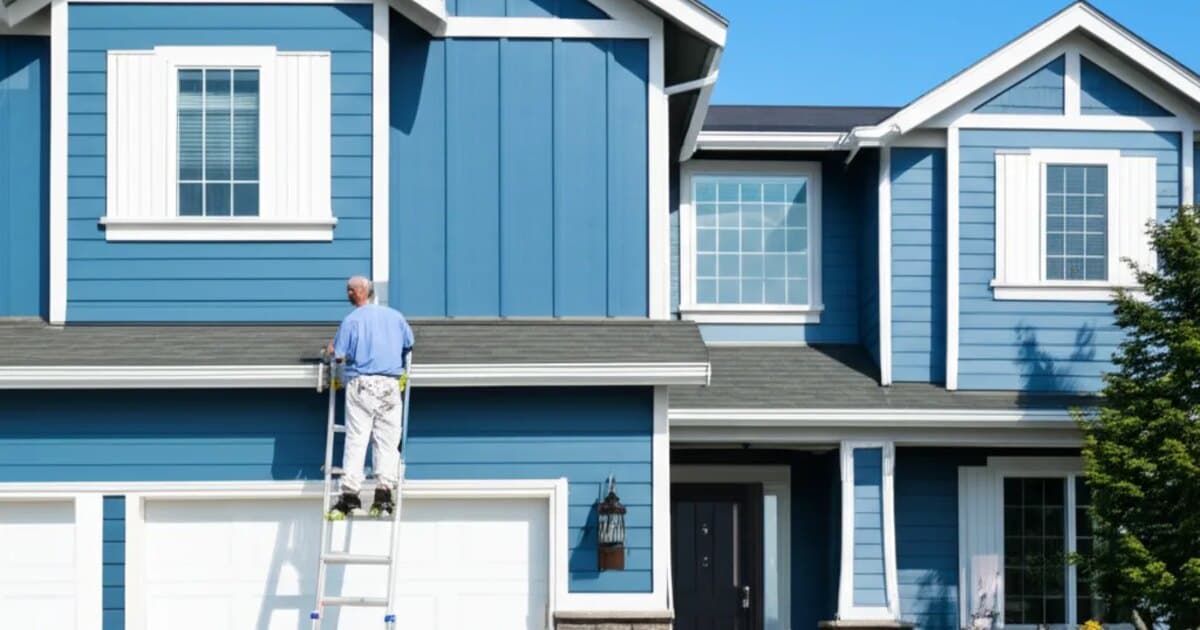
Best Materials for Exterior Painting in Boise
Explore the most popular material options for exterior painting in Boise, with pricing, durability, and style comparisons to help you choose.
Quick answer
Do I need to power wash before painting? Yes. Power washing removes dirt, mildew, chalking paint, and debris that would prevent new paint from adhering properly. We power wash all exterior surfaces before scraping, sanding, and priming.
Boise, ID · Exterior Painting
Planning exterior painting in Boise?
Read the full guide below — or get your project priced now. Free, no-obligation estimates from an Idaho registered local team, backed by a 1-year workmanship warranty.
- Licensed Idaho RCE-6681702
- 1-Year Workmanship Warranty
- $2M Liability Coverage
- Free, No-Obligation Estimates


Boise's exterior painting market has converged on a short list of products that suit the city's combination of strong UV, a wide temperature range, and winter freeze-thaw. We do not publish a years-of-service comparison between premium and budget systems — we have no test data of our own and the manufacturers do not publish one — but the failure modes differ, and on a sun-loaded elevation that difference shows up as chalking and fade rather than as a clean, gradual wear. For exterior topcoats on wood and composite siding, the two products we most often specify are Sherwin-Williams Duration Exterior and Benjamin Moore Aura Exterior. Sherwin-Williams describes Duration as "formulated with PermaLast® technology and infused with advanced acrylic co-polymers", rates it for application down to 35°F, and backs it with a lifetime limited warranty — read the warranty document itself, since it is the manufacturer's commitment, not ours. Benjamin Moore describes Aura Exterior's Color Lock® technology as embedding pigment within binding molecules to lock colour into the paint film, and pairs it with an acrylic resin the company credits with improved UV and fade resistance; Aura carries a limited lifetime warranty from Benjamin Moore. Colour retention is where those claims matter most, because fade is most visible on darker and more saturated colours. For primer selection, the choice is driven by the substrate. Original wood siding — particularly the old-growth fir and cedar found in North End homes — benefits from an oil-based or alkyd-modified primer that penetrates the wood grain and seals tannins that can bleed through latex topcoats. Zinsser Bulls Eye 1-2-3, which is labelled for interior and exterior use, and Sherwin-Williams Premium Wall & Wood Primer are both common choices on wood substrates. For stucco, a masonry-specific system is required: Sherwin-Williams Loxon Conditioner is a 100 percent acrylic sealer used to prepare masonry for topcoat, and where thermal cracking is present the crack-bridging is done by the topcoat — Loxon Masonry Topcoat, which Sherwin-Williams describes as having an elastic formula that helps bridge hairline cracking, or a ConFlex elastomeric, which the company says conceals hairline cracks and surface irregularities over Loxon primer. For decks and fences, penetrating stains outperform film-forming products under Boise's 87 freeze-thaw cycles a year. Moisture driven under a film-forming deck coating causes peeling that requires full stripping before recoating; a penetrating stain absorbs into the wood fibers rather than forming a surface film, so there is nothing to separate. TWP 1500 Series and Defy Extreme Wood Stain are the products we most often specify. TWP's own guidance is a maintenance coat every two to three years, and it notes that horizontal surfaces such as a deck floor wear faster than vertical surfaces like spindles or fence boards — which is exactly what Boise sun exposure amplifies. For colour selection, strong sun creates a practical bias toward lighter and medium tones on south and west exposures. Very dark colours — the blacks and deep charcoals currently in fashion — absorb more solar heat on sun-exposed surfaces, which raises the surface temperature and increases thermal cycling stress on the film and the substrate beneath it. There is no residential "heat-reflective" exterior paint line we can point you to; Sherwin-Williams' solar-reflective coatings are industrial products for metal roof and wall panels, not house paint. If you want a dark body colour on a Boise south elevation, plan for a shorter repainting interval rather than expecting a product to cancel the physics.
Choosing the right materials is one of the most important decisions in any exterior painting project. The materials you select affect the look, durability, maintenance requirements, and overall cost of the finished project. Here is a detailed look at the most popular material options for exterior painting in Boise and the Treasure Valley.
These are the most commonly used materials for exterior painting projects in Boise. Each has different characteristics that affect cost, durability, and style:

Sherwin-Williams Duration Exterior
$65–$85 per gallonA premium 100% acrylic exterior paint with exceptional durability, color retention, and mildew resistance. Self-priming on previously painted surfaces. Rated for extreme weather exposure.
Best for: Siding and large exterior surfaces that need maximum weather resistance

Benjamin Moore Aura Exterior
$70–$90 per gallonA top-tier exterior paint with ColorLock technology for fade resistance. Excellent adhesion and flexibility that resists cracking in temperature extremes. Low-VOC formula.
Best for: South- and west-facing walls that receive intense Boise sun exposure

Sherwin-Williams SuperDeck Stain
$45–$65 per gallonA high-performance deck and fence stain available in semi-transparent and solid formulas. Provides UV protection, water resistance, and mildew resistance for horizontal wood surfaces.
Best for: Wood decks, fences, pergolas, and horizontal wood surfaces

Exterior Caulk — DAP Dynaflex Ultra or OSI Quad
$6–$12 per tubePremium exterior caulking that remains flexible in Idaho's temperature extremes. Paintable, waterproof, and designed for long-term adhesion to wood, fiber cement, and vinyl surfaces.
Best for: Trim joints, window frames, siding gaps, and penetration sealing

Exterior Primer — Zinsser Cover Stain or Kilz Original
$30–$50 per gallonOil-based or shellac-based primers for blocking stains, tannin bleed on cedar, and ensuring adhesion on bare or weathered wood. Critical for long-lasting exterior paint adhesion.
Best for: Bare wood, cedar trim, stain-blocking, and tannin-prone surfaces

Boise has a semi-arid, four-season climate with hot, dry summers (90-105°F), cold winters (15-35°F), and low annual precipitation. This climate directly affects material choices, construction scheduling, and long-term durability of remodeling work.
Temperature Extremes (15°F to 105°F range)
Exterior materials must handle dramatic temperature swings. Windows need strong thermal performance. Interior comfort depends on insulation quality and HVAC sizing.
Low Humidity and Dry Air
Wood materials can dry, shrink, and crack. Hardwood floors may develop gaps in winter. Bathroom ventilation is still critical because bathrooms create localized high-humidity environments.
Freeze-Thaw Cycles
Exterior tile, concrete, and masonry must handle freezing and thawing without cracking. Foundation work has specific frost-depth requirements in the Boise area.
UV Exposure (300+ sunny days)
Exterior paint, siding, and stain fade faster under constant UV. South-facing and west-facing surfaces require UV-resistant materials and more frequent maintenance.
Construction Season
Foundation and exterior work is best scheduled March through November. Interior remodeling can happen year-round. Winter concrete pours require special cold-weather precautions.
In Boise, the combination of dry summers, cold winters, and variable humidity levels means that material selection should prioritize durability and climate resistance. We recommend choosing materials rated for the temperature extremes and moisture conditions typical of Ada County.
Material availability affects both timeline and cost. Standard materials are typically available within 1-2 weeks from local suppliers in Boise. Custom or specialty materials may have lead times of 4-14 weeks. We recommend selecting materials early in the design phase to avoid schedule delays.
Typical lead times
- ● Standard/stock materials: 1-2 weeks
- ● Semi-custom orders: 3-6 weeks
- ● Full custom/specialty items: 6-14 weeks
- ● Imported or artisan materials: 8-16+ weeks
Local factors — Boise's housing stock and typical construction eras, the climate conditions that drive material and scheduling choices, and permitting through City of Boise Planning and Development Services — are covered in full on our Boise page for this service, alongside 5 common project types.
Exterior Painting in Boise: housing stock, climate & permits →Do I need to power wash before painting?
Yes. Power washing removes dirt, mildew, chalking paint, and debris that would prevent new paint from adhering properly. We power wash all exterior surfaces before scraping, sanding, and priming.
How many coats of paint do you apply?
We apply two coats of premium exterior paint over properly prepped and primed surfaces. Bare wood areas receive a coat of primer plus two finish coats. Two coats ensure proper mil thickness, UV protection, and long-term durability.
What are the most popular remodeling projects in Boise?
Kitchen remodels, primary bathroom remodels, ADU construction, and whole-home renovations of 1980s-1990s homes are the most common projects we complete in Boise. Open-concept kitchen conversions and walk-in shower installations are especially popular.
Planning exterior painting in Boise?
Get expert guidance and a free estimate for your exterior painting project in Boise, ID.
Get Your Free Estimate