

ADU Construction in Parma, ID
From detached guest houses to garage conversions — we handle zoning research, design, permitting, and full construction of accessory dwelling units.
Quick answer
Iron Crest Remodeling Group LLC provides adu construction in Parma, ID. Most Parma adu construction projects cost $70,000 – $400,000. Parma ADU costs are governed less by finish level than by utilities, septic, and whether the unit is new construction or a conversion.
Accessory dwelling unit construction in Parma, Idaho operates under a different set of rules than ADU work in Boise or Meridian, and the differences are decisive: jurisdiction, lot size, and septic capacity all behave differently in this western Canyon County farming town. Parma has about 2,096 residents (2020 Census), sits at roughly 2,238 feet near where the Boise River joins the Snake, and is built around an agricultural economy of onions, sugar beets, seed crops, and dairy. Its housing is overwhelmingly pre-1980 single-family — compact in-town ranch homes and older farmhouses on acreage. That acreage is the central ADU fact: where a Boise North End lot can barely fit a detached unit, many Parma properties have abundant buildable land for a genuine secondary dwelling. The constraints, though, are equally specific: zoning and ADU allowances are set by the City of Parma while building permits run through Canyon County; rural properties depend on private well and septic whose capacity often governs whether an ADU is feasible at all; and tying a new dwelling's utilities into older infrastructure requires diagnostic care. Iron Crest Remodel (Iron Crest Remodeling Group LLC, Idaho RCE-6681702) plans every Parma ADU around verified local zoning, septic reality, and the specific property — not a template, and not assumptions carried over from a different city.
Build an ADU that adds usable space, flexibility, and long-term property value.
An ADU (Accessory Dwelling Unit) is a self-contained living space on the same lot as an existing home. ADUs have become increasingly popular in the Boise area as housing demand has grown, zoning rules have evolved, and homeowners have recognized the financial and lifestyle benefits of adding a separate living unit to their property. ADU types include detached new construction (a standalone building on the lot), garage conversions (converting an existing garage into living space), attached additions (building a unit that shares a wall with the main home), and basement conversions (converting a finished or unfinished basement into a separate unit with its own entrance). Every ADU project requires careful navigation of local zoning rules, setback requirements, utility connections, parking requirements, and building code compliance. The design must balance livability, code compliance, construction cost, and long-term value. For reference, our 600 sq ft North End ADU appraised at $155,000 in added value, with a recorded rental potential of $1,400–$1,600 per month.
Parma homeowners pursue adu construction for a variety of reasons. Here are the most common situations we see:
- ✓Homeowners who want rental income from a detached or attached unit on their property
- ✓Families who need a guest house, in-law suite, or multigenerational living space
- ✓Remote workers or creatives who want a separate studio, office, or workshop space
- ✓Property investors who want to increase property value and utility with an ADU
- ✓Homeowners who want housing flexibility — rent now, use for family later, or vice versa
Not every ADU construction project is the same. Here are the most common project types we complete in Parma:

Detached ADU (New Construction)
A standalone structure built on your property — typically 400-1,000 square feet with a bedroom, bathroom, kitchen, and living area. This is the most popular ADU type and offers the most design flexibility.

Garage Conversion ADU
Convert an existing attached or detached garage into a living space. Includes insulation, drywall, flooring, plumbing, electrical, HVAC, kitchen, and bathroom installation within the existing structure.

Attached ADU Addition
Build an ADU that shares one or more walls with the main home but has its own entrance, kitchen, bathroom, and living space. Similar to a home addition but designed as an independent unit.

Basement ADU Conversion
Convert an existing basement into a separate dwelling unit with its own entrance, kitchen, bathroom, and living area. Requires egress windows, fire separation, and independent utility metering in most jurisdictions.

Parma's housing is overwhelmingly pre-1980 — 1940s–1970s ranch homes on the in-town grid and older farmhouses on surrounding acreage — with limited modern subdivision and infill construction. Older homes commonly carry galvanized plumbing, undersized electrical, single-pane windows, and original or minimal waterproofing and insulation.
Pre-1940 (Older Farmhouses)
Early-twentieth-century farmhouses on surrounding agricultural land, frequently single-bathroom, with aged framing, plank subfloors, galvanized supply lines, and original wood siding and windows. Lead paint and asbestos materials are common; structural and systems remediation is typically required in any substantial remodel.
1940s–1970s (In-Town Ranch & Bungalow)
The bulk of Parma's stock: compact mid-century ranch and bungalow homes with closed floor plans, original tile-and-cast-iron baths, undersized electrical service, and minimal ventilation. Pre-1978 homes carry lead paint; pre-1980 homes commonly contain asbestos in flooring and finishes.
1980s–2000s and Newer (Subdivision & Infill)
Limited newer construction such as the Trail Ridge area off Highway 26 and scattered infill, with code-compliant systems and no environmental hazards. Remodeling here is finish-and-fixture upgrading rather than systems remediation.
Common issues in Parma homes
- •Galvanized supply lines corroded to minimal flow
- •Undersized/dated electrical service lacking modern circuits
- •Asbestos in pre-1980 flooring, mastic, and finishes; lead paint pre-1978
- •Failed or minimal original shower/tub waterproofing rotting subfloors
- •Single-pane windows and out-of-square, non-standard openings
- •Hard, often iron-rich private well water on rural properties
- •Septic-capacity limits on rural fixture additions

Material selection affects the look, durability, and cost of your ADU construction. Here are the most popular options we install in Parma:

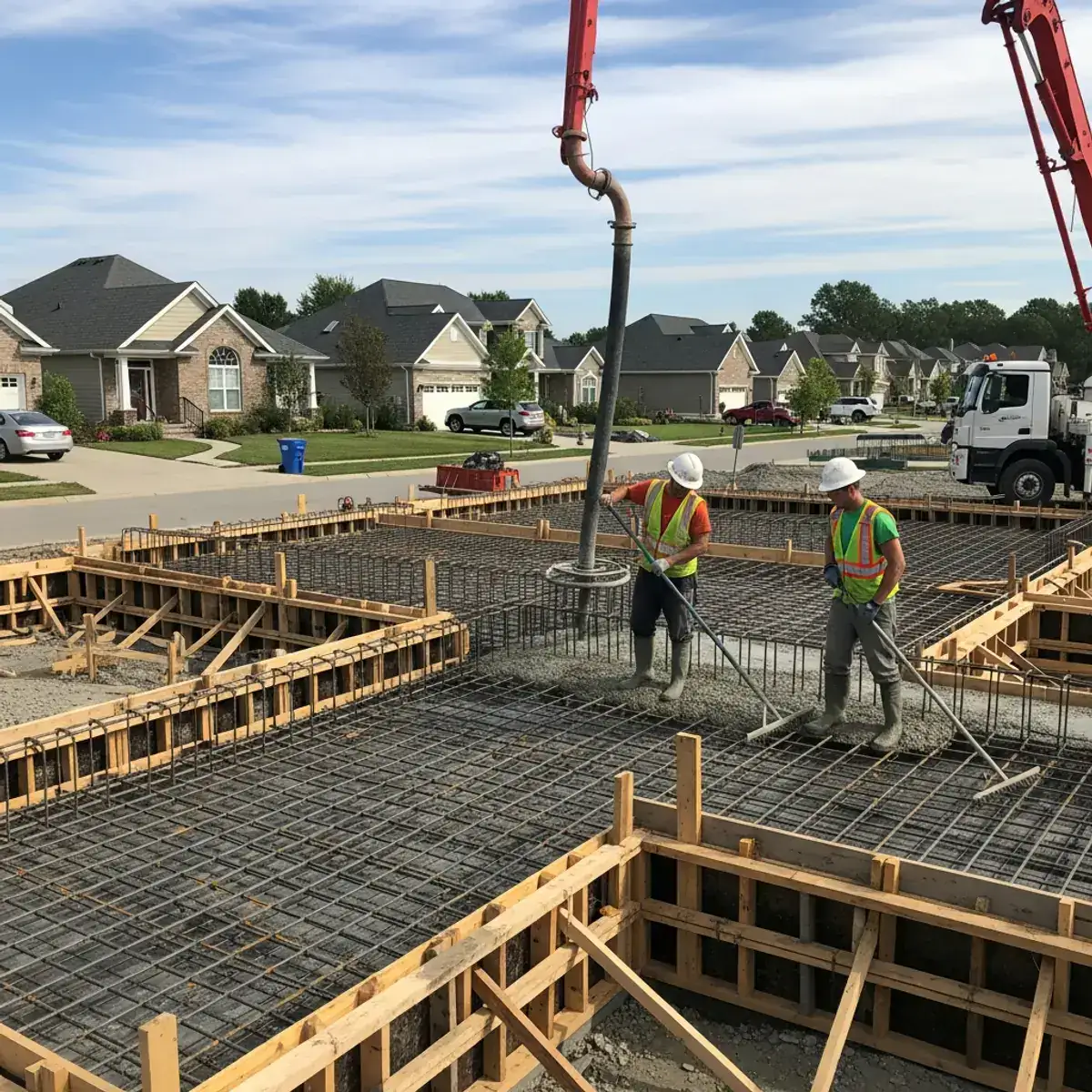
Concrete Slab or Stem Wall Foundation
$8,000–$20,000Most detached ADUs in Idaho use a concrete slab-on-grade or stem wall foundation depending on lot conditions, frost depth, and plumbing requirements. Garage conversions may use the existing slab with modifications.
Best for: Detached ADU new construction

Standard Wood Framing
$12–$22 per sq ft framed2x4 or 2x6 wood framing for walls, with trusses for the roof. ADU framing follows the same building codes as primary residences, including insulation requirements, fire separation, and structural standards.
Best for: All ADU types

Mini-Split HVAC System
$3,500–$7,000 installedThe most common heating and cooling solution for ADUs. A ductless mini-split provides efficient heating and cooling with a small exterior compressor and one or two interior wall units. No ductwork required.
Best for: Detached ADUs and garage conversions

Compact Kitchen Package
$5,000–$15,000 completeADU kitchens need to be efficient. A compact kitchen typically includes a 24-inch range, apartment-size refrigerator, single-bowl sink, and upper and lower cabinets — all designed to maximize function in a smaller footprint.
Best for: Studio and one-bedroom ADUs

Matching or Complementary Siding
$5–$15 per sq ft installedThe ADU exterior should complement the main home. Options include matching the existing siding exactly, using a contrasting but compatible material, or using a modern material like board-and-batten or metal panel for a contemporary look.
Best for: Seamless property aesthetic

Here is how a typical ADU construction project works from first contact to final walkthrough:
Zoning and Feasibility Research
We research your property's zoning designation, lot size, setback requirements, maximum ADU size allowed, parking requirements, and any HOA restrictions. Not every lot qualifies for an ADU, so this step is critical before investing in design.
Concept Design and Budget Planning
Based on feasibility findings, we develop a concept design including floor plan, placement on the lot, utility connection points, and exterior style. You receive a preliminary budget range to confirm the project is viable.
Architectural Plans and Engineering
Detailed architectural plans are prepared including floor plans, elevations, structural engineering, mechanical systems, and site plan. These plans must meet local building codes and will be submitted for permit review.
Permitting and Utility Coordination
We submit plans for permit review, coordinate utility connections (water, sewer, electrical, gas), and manage any required inspections or reviews. ADU permitting can take 4-8 weeks depending on the jurisdiction.
Site Preparation and Foundation
Excavation, grading, utility trenching, and foundation work. For detached ADUs, this typically means a new concrete foundation. Garage conversions may require foundation modifications.
Construction (Framing through Finish)
Complete construction including framing, roofing, siding, windows, insulation, drywall, flooring, kitchen, bathroom, HVAC, electrical, plumbing, and all finish work. The ADU is built to the same code standards as a primary residence.
Final Inspection and Certificate of Occupancy
All required inspections are passed, the certificate of occupancy is issued, and the ADU is ready for use. We provide a complete walkthrough and all warranty documentation.
Here is what to expect for project duration when planning ADU construction in Parma:
| Phase | Duration | Details |
|---|---|---|
| Zoning Research and Feasibility | 1–2 weeks | Confirm the property qualifies for an ADU under current zoning, identify setback and size constraints, and determine utility connection feasibility. |
| Design and Engineering | 4–8 weeks | Architectural plans, structural engineering, site plan, and mechanical design. ADU designs must meet full building code requirements. |
| Permitting | 4–8 weeks | Plan review, permit issuance, and any required revisions. ADU permitting timelines vary by jurisdiction in the Treasure Valley. |
| Site Work and Foundation | 2–4 weeks | Excavation, utility trenching, foundation pour, and curing. Weather-dependent in Idaho, especially during winter months. |
| Framing, Roofing, and Mechanical | 4–8 weeks | Framing, roof installation, windows, exterior sheathing, electrical, plumbing, HVAC, and insulation. All rough-in inspections are completed. |
| Interior Finish and Final Inspection | 4–6 weeks | Drywall, paint, flooring, kitchen, bathroom, fixtures, and all finish details. Final inspections and certificate of occupancy. |
Parma range: $70,000–$110,000 – $240,000–$400,000
Most Parma projects: $130,000–$240,000
Parma ADU costs are governed less by finish level than by utilities, septic, and whether the unit is new construction or a conversion. The low band covers a garage or accessory-structure conversion into a compact dwelling where the shell exists and utilities are reachable. The high band reflects a larger detached new-construction ADU with full foundation, independent or expanded septic, well-capacity work, and a long utility run across acreage. The average band is what most Parma ADUs run: a detached one- or two-bedroom new-construction unit with its own foundation, kitchen, bath, HVAC, and the septic and utility infrastructure a separate dwelling requires. Parma-specific cost drivers stand out. Septic is the big one: a second dwelling typically needs additional septic capacity or a dedicated system, and on rural properties this can be one of the largest single line items. Long utility runs across acreage add trenching and conduit cost a compact urban lot never sees. Well capacity for a second dwelling must be confirmed and sometimes augmented. And Parma's distance from the metro core means excavation, concrete, and trade trips cover more miles. Conversions of pre-1980 structures also require environmental testing where existing materials are disturbed.
The final cost of ADU construction in Parma depends on several factors. Here are the biggest cost drivers:
ADU Type (Detached vs. Conversion)
high impactA detached new-construction ADU costs significantly more than a garage conversion because it requires a new foundation, full framing, roofing, and all-new utility connections. Garage conversions leverage the existing structure.
Size (Square Footage)
high impactADUs range from ~300 sq ft studios to Boise's current 900 sq ft cap (the state floor under Idaho Code § 67-6541 rises to 1,000 sq ft or 75% of the primary home by February 1, 2027). Larger units cost more but provide more rental income potential and livability.
Utility Connections
high impactConnecting water, sewer, electrical, and gas to the ADU site involves trenching, new service lines, and potentially utility upgrades. Distance from the main house to the ADU affects cost.
Kitchen and Bathroom Complexity
medium impactEvery ADU needs at least a bathroom and kitchen. The finish level — basic vs. mid-range vs. premium — significantly affects the mechanical and finish costs.
Site Conditions and Access
medium impactSloped lots, limited access for equipment, rocky soil, or mature trees in the building area can increase site preparation and foundation costs.
Permitting and Impact Fees
medium impactADU permit fees, impact fees, and utility connection fees vary by jurisdiction. Under Idaho Code § 67-6541(2)(c), cities over 10,000 residents may not charge an ADU higher impact or utility-connection fees than a single-family home.
These are the real-world projects we see most often from Parma homeowners:
Detached Multigenerational ADU on Parma Acreage
The signature Parma ADU: a freestanding one- or two-bedroom dwelling built on rural acreage for an aging parent or adult family member, with its own kitchen, bath, living space, and accessible single-level layout. Scope includes foundation to frost depth, full systems, an independent or expanded septic system (frequently the governing constraint and a major line item), confirmed well capacity, and a utility run from the main home or service. City of Parma zoning sets the allowance; Canyon County issues the building permits. Built durably for long-term family use.
Garage or Accessory-Structure Conversion to an ADU
Where a property has a sound detached garage or large outbuilding, converting it to a legal dwelling is the most cost-effective Parma ADU path. Scope: structural and foundation verification, insulation and envelope upgrade to dwelling standards, full plumbing and electrical, kitchen and bath, egress, and septic capacity confirmation or expansion. Pre-1980 structures require environmental testing where materials are disturbed. The existing shell saves cost, but utilities and septic still drive the budget.
Rental ADU on a Larger In-Town Parma Lot
On the larger in-town lots near the 3rd Street grid, a detached ADU built as long-term rental housing addresses Parma's thin rental market. Scope is a compact, efficient new-construction unit with its own entrance, parking, kitchen, and bath, tied into municipal water and sewer where available, with City of Parma zoning confirming setbacks, size limits, and any owner-occupancy or parking requirements. Municipal connection avoids the rural septic question but city utility capacity and connection fees are confirmed upfront.
On-Property Dwelling Connected to an Agricultural Operation
On working agricultural properties, a permitted accessory dwelling provides on-site housing for family involved in the operation or long-term help. Scope mirrors a detached ADU with attention to siting relative to the operation, access, and septic capacity for an additional dwelling. Built to residential code and properly permitted through Canyon County, with City of Parma zoning confirming the use is allowed on the parcel.
Compact Detached ADU Within a Constrained Septic Envelope
Where a rural property's septic capacity is limited, a small, low-fixture-count detached ADU is designed to fit within what the system — or a modest expansion — can support: a studio or one-bedroom with an efficient single bath and compact kitchen. Scope leads with the septic analysis, then sizes the dwelling to it rather than the reverse. This Parma-specific design discipline produces a legal, functional unit without an outsized septic overhaul.
Problem: Need rental income but do not want to move
Solution: A detached ADU can produce rental income while you continue living in your primary home — our 600 sq ft North End one-bedroom has a recorded rental potential of $1,400–$1,600 per month.
Problem: Aging parents need close but independent living space
Solution: An ADU with a separate entrance provides privacy and independence while keeping family close. Accessibility features can be built in from the start.
Problem: Existing garage is unused and taking up valuable space
Solution: A garage conversion ADU transforms underutilized space into a functional living unit at a lower cost than new construction.
Problem: Need a dedicated workspace separate from the main home
Solution: A detached ADU configured as a studio or office provides the separation remote workers need, with the commute of a backyard walk.
Problem: Want to maximize property value and investment potential
Solution: A well-built ADU adds $100,000+ to property value and generates ongoing rental income — one of the highest-ROI improvements a homeowner can make.

Parma has a cold semi-arid climate (Köppen BSk) with intense high-desert UV, hard freeze-thaw cycling, low humidity, and wind across open farmland. Recorded extremes range from -35°F (1924) to 110°F (2002).
Extreme temperature range
A recorded ~145-degree swing drives large expansion-contraction cycling, magnifies single-pane window energy loss, and demands climate-grade coatings, siding, and glazing.
Hard freeze-thaw
Requires deck and foundation footings to the regional ~24-inch frost depth; punishes any compromised waterproofing, caulk, or unsealed wood.
Intense UV and low humidity
Degrades under-spec exterior coatings and decking; very low heated-season indoor humidity moves wood substrates and flooring, requiring acclimation.
Open-country wind exposure
Many properties on open acreage have no sheltering structures, making wind loading a real structural input and worst-case exposure the design basis on all elevations.
In-Town Core (3rd Street / Grove Avenue Grid)
Parma's compact municipal core near City Hall on 3rd Street, dense with 1940s–1970s ranch and bungalow homes on city water and sewer.
Common projects in In-Town Core (3rd Street / Grove Avenue Grid):
- •Bathroom and shower remodels in original mid-century homes
- •Kitchen modernization and opening of closed plans
- •Whole-home systems modernization (plumbing, electrical, envelope)
- •Interior and exterior painting with lead-safe prep
Roswell / Apple Valley Rural Acreage
Rural farmhouse and ranch acreage associated with greater Parma, almost entirely on private well and septic systems.
Common projects in Roswell / Apple Valley Rural Acreage:
- •Well-water-appropriate bathroom and shower remodels
- •Home additions and multigenerational wings (septic-capacity driven)
- •Detached ADU construction on acreage
- •Durable flooring for working rural households
Old Fort Boise Area / East Edge
The eastern edge of town near the Old Fort Boise replica and the Boise/Snake river bottomland, with older homes and parcel-specific floodplain considerations.
Common projects in Old Fort Boise Area / East Edge:
- •Flood-aware additions and structural tie-in work
- •Moisture-driven flooring and substrate remediation
- •Whole-home renovation of older homes
- •Window replacement with rot/opening repair
Trail Ridge / Newer Subdivision Pockets
Parma's limited newer construction, including the Trail Ridge subdivision area off Highway 26 with up to half-acre homesites.
Common projects in Trail Ridge / Newer Subdivision Pockets:
- •Finish-and-fixture kitchen and bath upgrades
- •Clean flooring and interior painting refreshes
- •Decks and exterior updates on sound modern homes
- •Window and siding upgrades
Every Parma neighborhood has different housing stock, homeowner priorities, and project considerations. Here is what ADU construction looks like in each area:
Roswell / Apple Valley Rural Acreage
In-Town Core (3rd Street / Grove Avenue Grid)
Old Fort Boise Area / East Edge
Trail Ridge / Newer Subdivision Pockets
River-Bottom Farmland Toward the Snake
Permit authority: Canyon County Development Services (building/structural/plumbing/electrical); City of Parma (planning & zoning)
Online portal: www.canyoncounty.id.gov/building-department/
- ✓The City of Parma administers planning, zoning, and its municipal code but does not operate its own building department; building permits defer to Canyon County Development Services, 111 N. 11th Ave, Caldwell.
- ✓City Hall: 305 North 3rd Street, P.O. Box 608, Parma, ID 83660; (208) 722-5138.
- ✓Parcels near the Boise/Snake confluence may fall within FEMA-mapped floodplain; flood-zone status must be verified per parcel with Canyon County, not assumed from proximity.
- ✓Pre-1980 homes require asbestos/lead testing (Idaho DEQ / EPA RRP) before disturbance.
- ✓Rural properties on private septic require septic-capacity confirmation for fixture/dwelling additions.
- ✓Regional design criteria: ~20 psf ground snow load, 115 mph design wind speed, 24-inch minimum frost depth, and the seismic design category assigned by the county.
Helpful ID resources
- Canyon County Development Services (building/structural/plumbing/electrical); City of Parma (planning & zoning) — permit applications, inspections, and code resources
- Idaho DEQ — Asbestos Program — testing and abatement requirements for pre-1980 homes
- EPA Lead Renovation, Repair and Painting (RRP) Program — required certification for work in pre-1978 homes
- ●Lot placement — ADU location affects privacy, natural light, utility run distances, and neighbor sight lines
- ●Ceiling height — code minimums apply, but taller ceilings (9 ft) make a small ADU feel significantly larger
- ●Storage planning — ADUs need creative storage: wall-mounted shelving, loft storage, and built-in solutions
- ●Outdoor space — a small patio, porch, or deck at the ADU entrance adds livability and curb appeal
- ●Parking — cities over 10,000 residents can require added ADU parking only in limited cases under Idaho Code § 67-6541, but plan where a tenant will park anyway
- ●Rental readiness — if the ADU may be rented, plan for durable finishes, separate utility metering, and tenant-friendly design
Here are the design trends we see most often in Parma ADU construction projects:
- →Curbless, accessible walk-in showers for aging-in-place
- →Opening closed mid-century plans with engineered beams
- →Farmhouse-honest finishes (shaker, apron sinks, period hardware)
- →Hard-water-resistant surfaces and treated/textured shower glass
- →Durable quartz and porcelain over maintenance-heavy stone
- →Heated tile floors for cold winters
- →Large acreage decks oriented to farmland views with covered sections
- →Multigenerational and on-property accessory dwellings
The Parma market is characterized by long-tenure, often agricultural ownership and a deeply dated pre-1980 baseline stock, so remodeling is predominantly a stay-in-place quality-of-life and structure-protection investment rather than resale-driven turnover. The wide gap between original-condition older homes and competently modernized ones supports strong perceived value from quality renovation, though specific cost-recovery percentages should not be stated as fixed local figures.
Avoid these common pitfalls Parma homeowners encounter with ADU construction projects:
Mistake: Assuming Boise-style ADU rules apply in Parma
Better approach: Small Idaho cities' ADU zoning differs from Boise's and changes. Verify the City of Parma's current ADU provisions — size, setbacks, parking, owner-occupancy — directly with the city before any design, and remember the building permit itself comes from Canyon County. Designing to assumed rules risks a unit the zoning will not allow.
Mistake: Designing the ADU before the septic analysis
Better approach: On rural Parma properties septic capacity frequently determines whether and how big an ADU can be. Run the septic analysis first and size the dwelling to it. Designing the unit and then discovering the system cannot support it forces redesign and a major unbudgeted septic line item.
Mistake: Overlooking the main home's electrical service
Better approach: An ADU needs its own subpanel, and a pre-1980 Parma main home's service often cannot carry it. Evaluate and budget the service upgrade early as part of ADU scope rather than discovering it at inspection.
Mistake: Ignoring floodplain near the rivers when siting the unit
Better approach: Parcels near the Boise/Snake confluence can be in FEMA flood zones, where a habitable ADU may require elevated construction and freeboard. Verify the parcel's flood status with Canyon County before siting; an elevation requirement discovered late reshapes design and cost.
Mistake: Underestimating utility-run cost on acreage
Better approach: A detached ADU set well away from the main service across Parma acreage carries real trenching, conduit, water, and septic-line cost that a compact urban lot never does. Price the full utility run as part of the budget from the start rather than treating the ADU as just the building.
Most popular remodeling projects in Parma
- ✓Bathroom and shower remodels in pre-1980 homes
- ✓Whole-home systems modernization of older farmhouses
- ✓Kitchen reconfiguration and modernization
- ✓Primary-suite and multigenerational additions
- ✓Detached ADU construction on acreage
- ✓Window replacement and re-siding for the climate envelope
- ✓Durable flooring over remediated subfloors
- ✓Interior and exterior painting with lead-safe prep

See Your Remodel Before You Build.
Upload a few photos of your kitchen, bathroom, flooring, or exterior and get AI-generated concept visuals tailored to your space, style, and materials — free, no obligation, in about five minutes. Then request a real estimate from our Idaho registered Boise team.
Free concept preview · No credit card · Licensed Idaho contractor
Does Parma even allow ADUs, and who decides?
Whether and how an ADU is allowed is set by the City of Parma's zoning code — size limits, setbacks, parking, owner-occupancy, and any overlay. Idaho Code § 67-6541, the 2026 state ADU law (Senate Bill 1354), applies to cities over 10,000 population; Parma's 2020 Census population was 2,096, so the city is not required to comply and the statute sets no floor here — Parma's own ordinance governs. Small Idaho cities' ADU rules differ from Boise's and can change, so we verify Parma's current ADU provisions directly with the city at the start of every project rather than assuming valley norms. If the zoning allows it, the building permit itself is issued by Canyon County Development Services in Caldwell. We coordinate both authorities and confirm current requirements before any design work.
Will my septic system support an ADU in Parma?
On rural Parma properties this is the first and often decisive question. An ADU is a second dwelling, and most existing septic systems cannot carry the added load without expansion or a dedicated system. We start with the septic analysis, then size the ADU to what the system — or a feasible expansion — can support. Septic capacity is frequently the single largest line item in a rural Parma ADU, so we resolve it before design rather than discovering the limit after framing.
Can I convert my detached garage into an ADU in Parma?
Often yes, and it is usually the most cost-effective path because the shell exists. Scope includes verifying the structure and foundation, upgrading the envelope to dwelling standards, full plumbing and electrical, kitchen and bath, code egress, and confirming septic capacity. Pre-1980 structures require environmental testing where materials are disturbed. City of Parma zoning must permit the conversion and Canyon County issues the permit. Utilities and septic still drive the budget even though the structure already stands.
How much does an ADU cost to build in Parma?
A garage or accessory-structure conversion runs roughly $70,000–$140,000. Most detached new-construction Parma ADUs run $130,000–$240,000. Larger units with significant septic and long utility runs reach $240,000–$400,000. The Parma-specific drivers are septic capacity (frequently the largest line item), long utility runs across acreage, well-capacity work, and the distance from the metro core. We price these honestly upfront rather than as later change orders.
Is my Parma property in a flood zone, and does that affect an ADU?
It can. Parcels near the Boise/Snake confluence can fall within FEMA-mapped flood zones, and a habitable ADU there may require elevated construction and freeboard with mechanical and electrical placement governed by flood elevation. We verify the parcel's flood status with Canyon County before siting the unit rather than assuming it from river proximity, because flood requirements materially change ADU design and cost.
How long does building an ADU in Parma take?
A garage conversion runs about 9–15 weeks. A detached new-construction ADU typically runs 15–24 weeks of construction, plus the combined City of Parma zoning and Canyon County permitting time and any septic-system installation lead time. Septic work and Parma's distance from the metro core can extend the schedule, so we sequence trades tightly and recommend beginning zoning verification and septic analysis well before the target start.
Do ADUs require permits and planning approval?
Yes. ADU projects require building permits, plan review, and multiple inspections. In most Boise-area jurisdictions, ADUs also require zoning compliance review to confirm lot size, setbacks, and parking requirements are met. We handle the entire permitting process.
How much does it cost to build an ADU in the Boise area?
Most Boise ADUs cost $95,000–$320,000, with a typical project near $165,000. A garage conversion typically runs $95,000–$145,000, and a new 600 sq ft one-bedroom detached ADU $145,000–$220,000; utility connection costs vary with distance to existing services and are one of the most variable line items. Our 600 sq ft detached North End ADU ran $120,000–$150,000.
How long does it take to build an ADU?
From start of design to move-in, a typical ADU project takes 6 to 12 months. This includes design (4-8 weeks), permitting (4-8 weeks), and construction (3-5 months). Garage conversions are faster; detached new construction takes longer.
Can I rent out my ADU?
In most Boise-area jurisdictions, yes. ADUs can be rented as long-term rentals. Short-term rental rules (Airbnb, VRBO) vary by city and may have additional restrictions. Check local regulations before planning a short-term rental strategy.
How much rental income can an ADU generate in Boise?
It depends on location, size, finish level, and market conditions — check current listings for comparable units. Our 600 sq ft North End one-bedroom ADU has a recorded rental potential of $1,400–$1,600 per month.
What is the maximum size for an ADU?
Maximum ADU size varies by jurisdiction. In Boise, an ADU can be up to 900 square feet or 70% of the primary structure's floor area, whichever is smaller, with no more than two bedrooms. Idaho's 2026 ADU law (Senate Bill 1354) requires every city over 10,000 residents to allow at least 1,000 square feet or 75% of the primary home by February 1, 2027, so local limits are changing. We confirm the specific rules for your property during the feasibility phase.

Talk to a real project manager
Have Questions? Call Now for a Free In-Home Consultation.
Mon–Fri 7 AM–6 PM · Idaho registered & insured · No obligation
Russ S. — Project Manager
Russ S. — Project Manager
Start your ADU construction in Parma
Get a free, no-obligation estimate for adu construction in Parma, ID. We handle design, permits, and every detail of construction.
Get Your Free Estimate