

ADU Construction in Meridian, ID: Costs, Ideas & Options
From detached guest houses to garage conversions — we handle zoning research, design, permitting, and full construction of accessory dwelling units.
Quick answer
Iron Crest Remodeling Group LLC provides adu construction in Meridian, ID. Most Meridian adu construction projects cost $90,000 – $275,000. ADU construction costs in Meridian are shaped by project type, lot configuration, HOA requirements, and the specific impact fee and utility connection costs that apply to each parcel.
Meridian has become one of the most compelling ADU markets in the entire Treasure Valley, and the reasons run deeper than its headline population milestone of 130,000 residents. This is a city built almost entirely in the post-1990 era — a housing stock of builder-grade subdivisions where growing families, multigenerational households, and equity-rich homeowners are now asking a question Meridian's original developers never anticipated: how do we get more out of this lot? Iron Crest Remodel builds ADUs throughout Meridian — garage conversions in North Meridian's 1990s subdivisions, detached backyard units in South Meridian's newer developments, and fully finished carriage houses in the Paramount and Lochsa Falls corridor — and we bring the permit process expertise, HOA navigation experience, and construction management depth that Meridian ADU projects specifically require. Meridian's ADU landscape is genuinely different from Boise's: newer homes mean different structural starting points, HOA covenants create an approval layer that most Boise projects never encounter, and Meridian's family-market rental demand means that the tenant profile — and therefore the right specification level — is distinct from a North End studio designed for a single graduate student. We have done this work here, in this market, and we understand what it actually takes to get an ADU permitted, approved, and built in a Meridian subdivision.
Build an ADU that adds usable space, flexibility, and long-term property value.
An ADU (Accessory Dwelling Unit) is a self-contained living space on the same lot as an existing home. ADUs have become increasingly popular in the Boise area as housing demand has grown, zoning rules have evolved, and homeowners have recognized the financial and lifestyle benefits of adding a separate living unit to their property. ADU types include detached new construction (a standalone building on the lot), garage conversions (converting an existing garage into living space), attached additions (building a unit that shares a wall with the main home), and basement conversions (converting a finished or unfinished basement into a separate unit with its own entrance). Every ADU project requires careful navigation of local zoning rules, setback requirements, utility connections, parking requirements, and building code compliance. The design must balance livability, code compliance, construction cost, and long-term value. For reference, our 600 sq ft North End ADU appraised at $155,000 in added value, with a recorded rental potential of $1,400–$1,600 per month.
Meridian homeowners pursue adu construction for a variety of reasons. Here are the most common situations we see:
- ✓Homeowners who want rental income from a detached or attached unit on their property
- ✓Families who need a guest house, in-law suite, or multigenerational living space
- ✓Remote workers or creatives who want a separate studio, office, or workshop space
- ✓Property investors who want to increase property value and utility with an ADU
- ✓Homeowners who want housing flexibility — rent now, use for family later, or vice versa
Not every ADU construction project is the same. Here are the most common project types we complete in Meridian:

Detached ADU (New Construction)
A standalone structure built on your property — typically 400-1,000 square feet with a bedroom, bathroom, kitchen, and living area. This is the most popular ADU type and offers the most design flexibility.

Garage Conversion ADU
Convert an existing attached or detached garage into a living space. Includes insulation, drywall, flooring, plumbing, electrical, HVAC, kitchen, and bathroom installation within the existing structure.

Attached ADU Addition
Build an ADU that shares one or more walls with the main home but has its own entrance, kitchen, bathroom, and living space. Similar to a home addition but designed as an independent unit.

Basement ADU Conversion
Convert an existing basement into a separate dwelling unit with its own entrance, kitchen, bathroom, and living area. Requires egress windows, fire separation, and independent utility metering in most jurisdictions.

Meridian's housing stock is predominantly post-1990 construction. The majority of homes feature PEX plumbing, 200-amp electrical panels, and energy-efficient windows — but with builder-grade interior finishes that homeowners upgrade as the homes age.
1990s (North Meridian)
These 1990s North Meridian homes are the most budget-predictable in the city. The systems are sound, so spending concentrates on replacing dated builder finishes — oak cabinets, laminate, carpet, and basic tile — which keeps projects in the mid-range rather than the high end.
2000s–2010s (South Meridian, Paramount)
Budgets for these 2000s–2010s homes stay in the mid-range because the floor plans and systems are already good. Money goes toward updating builder-grade cabinets, dated slab granite, fixtures, and flooring rather than toward structural or system work.
2015–present (South Meridian expansion)
These newest South Meridian homes need the least structural investment. Modern systems and open floor plans are already in place, so the budget goes almost entirely toward upgrading builder-grade countertops, hardware, lighting, and flooring.
Common issues in Meridian homes
- •Builder-grade cabinets with particle board shelves and basic hinges wearing out
- •Outdated builder-selected finishes (honey oak, Tuscan tile, slab granite) that feel dated
- •Closed-off floor plans in 1990s homes with walls between kitchen and living areas
- •Insufficient kitchen storage and counter space for today's cooking and entertaining
- •Basic builder lighting that does not adequately illuminate kitchens and bathrooms
- •Original carpet throughout that homeowners want to replace with hard flooring

Material selection affects the look, durability, and cost of your ADU construction. Here are the most popular options we install in Meridian:

Concrete Slab or Stem Wall Foundation
$8,000–$20,000Most detached ADUs in Idaho use a concrete slab-on-grade or stem wall foundation depending on lot conditions, frost depth, and plumbing requirements. Garage conversions may use the existing slab with modifications.
Best for: Detached ADU new construction

Standard Wood Framing
$12–$22 per sq ft framed2x4 or 2x6 wood framing for walls, with trusses for the roof. ADU framing follows the same building codes as primary residences, including insulation requirements, fire separation, and structural standards.
Best for: All ADU types

Mini-Split HVAC System
$3,500–$7,000 installedThe most common heating and cooling solution for ADUs. A ductless mini-split provides efficient heating and cooling with a small exterior compressor and one or two interior wall units. No ductwork required.
Best for: Detached ADUs and garage conversions

Compact Kitchen Package
$5,000–$15,000 completeADU kitchens need to be efficient. A compact kitchen typically includes a 24-inch range, apartment-size refrigerator, single-bowl sink, and upper and lower cabinets — all designed to maximize function in a smaller footprint.
Best for: Studio and one-bedroom ADUs

Matching or Complementary Siding
$5–$15 per sq ft installedThe ADU exterior should complement the main home. Options include matching the existing siding exactly, using a contrasting but compatible material, or using a modern material like board-and-batten or metal panel for a contemporary look.
Best for: Seamless property aesthetic

Here is how a typical ADU construction project works from first contact to final walkthrough:
Zoning and Feasibility Research
We research your property's zoning designation, lot size, setback requirements, maximum ADU size allowed, parking requirements, and any HOA restrictions. Not every lot qualifies for an ADU, so this step is critical before investing in design.
Concept Design and Budget Planning
Based on feasibility findings, we develop a concept design including floor plan, placement on the lot, utility connection points, and exterior style. You receive a preliminary budget range to confirm the project is viable.
Architectural Plans and Engineering
Detailed architectural plans are prepared including floor plans, elevations, structural engineering, mechanical systems, and site plan. These plans must meet local building codes and will be submitted for permit review.
Permitting and Utility Coordination
We submit plans for permit review, coordinate utility connections (water, sewer, electrical, gas), and manage any required inspections or reviews. ADU permitting can take 4-8 weeks depending on the jurisdiction.
Site Preparation and Foundation
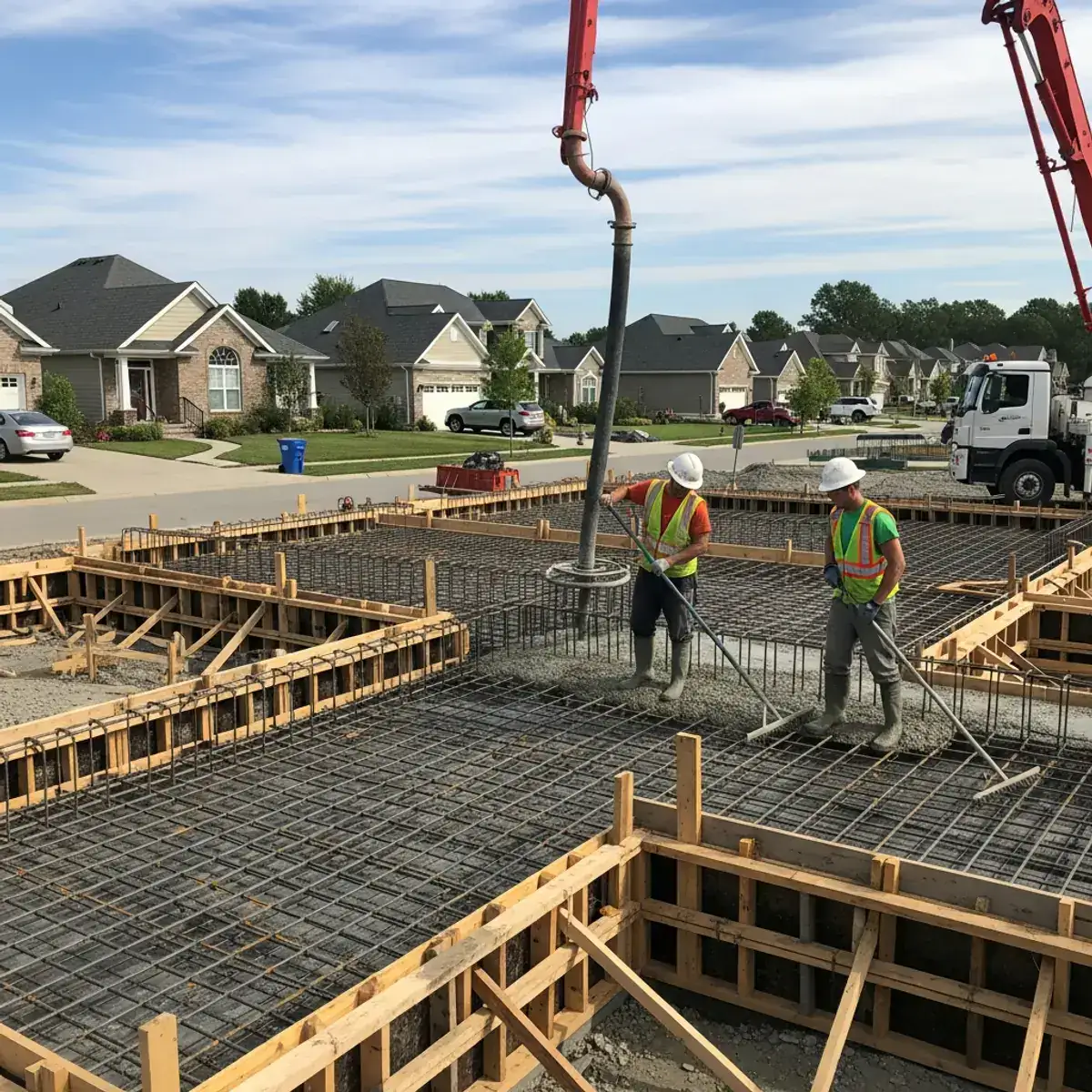
Excavation, grading, utility trenching, and foundation work. For detached ADUs, this typically means a new concrete foundation. Garage conversions may require foundation modifications.
Construction (Framing through Finish)
Complete construction including framing, roofing, siding, windows, insulation, drywall, flooring, kitchen, bathroom, HVAC, electrical, plumbing, and all finish work. The ADU is built to the same code standards as a primary residence.
Final Inspection and Certificate of Occupancy
All required inspections are passed, the certificate of occupancy is issued, and the ADU is ready for use. We provide a complete walkthrough and all warranty documentation.
Here is what to expect for project duration when planning ADU construction in Meridian:
| Phase | Duration | Details |
|---|---|---|
| Zoning Research and Feasibility | 1–2 weeks | Confirm the property qualifies for an ADU under current zoning, identify setback and size constraints, and determine utility connection feasibility. |
| Design and Engineering | 4–8 weeks | Architectural plans, structural engineering, site plan, and mechanical design. ADU designs must meet full building code requirements. |
| Permitting | 4–8 weeks | Plan review, permit issuance, and any required revisions. ADU permitting timelines vary by jurisdiction in the Treasure Valley. |
| Site Work and Foundation | 2–4 weeks | Excavation, utility trenching, foundation pour, and curing. Weather-dependent in Idaho, especially during winter months. |
| Framing, Roofing, and Mechanical | 4–8 weeks | Framing, roof installation, windows, exterior sheathing, electrical, plumbing, HVAC, and insulation. All rough-in inspections are completed. |
| Interior Finish and Final Inspection | 4–6 weeks | Drywall, paint, flooring, kitchen, bathroom, fixtures, and all finish details. Final inspections and certificate of occupancy. |
Meridian range: $90,000 – $275,000
Most Meridian projects: $155,000
ADU construction costs in Meridian are shaped by project type, lot configuration, HOA requirements, and the specific impact fee and utility connection costs that apply to each parcel. Garage-to-ADU conversions — the most common ADU project type in Meridian's 1990s and 2000s subdivisions — typically run $90,000–$140,000 depending on the garage's size, structural condition, and the extent of HVAC, plumbing, and electrical upgrading required. Detached new-construction ADUs in South Meridian and newer developments run $180–$270 per square foot for a mid-range finish, making a 600-square-foot detached ADU a $108,000–$162,000 project before impact fees. City of Meridian impact fees add $8,000–$18,000 to every new ADU project — a fixed cost that must be budgeted from day one and is frequently omitted from competing contractor quotes. Utility connection costs add another $6,000–$14,000 if the ADU requires a separate water meter and sewer lateral. Attached ADUs sharing a wall with the primary residence run $170–$250 per square foot. HOA architectural review adds $500–$2,000 in fees and 4–8 weeks to the permitting timeline. All-in project costs including fees, permits, and utility connections typically land at $110,000–$180,000 for a garage conversion and $140,000–$230,000 for a new detached unit.
The final cost of ADU construction in Meridian depends on several factors. Here are the biggest cost drivers:
ADU Type (Detached vs. Conversion)
high impactA detached new-construction ADU costs significantly more than a garage conversion because it requires a new foundation, full framing, roofing, and all-new utility connections. Garage conversions leverage the existing structure.
Size (Square Footage)
high impactADUs range from ~300 sq ft studios to Boise's current 900 sq ft cap (the state floor under Idaho Code § 67-6541 rises to 1,000 sq ft or 75% of the primary home by February 1, 2027). Larger units cost more but provide more rental income potential and livability.
Utility Connections
high impactConnecting water, sewer, electrical, and gas to the ADU site involves trenching, new service lines, and potentially utility upgrades. Distance from the main house to the ADU affects cost.
Kitchen and Bathroom Complexity
medium impactEvery ADU needs at least a bathroom and kitchen. The finish level — basic vs. mid-range vs. premium — significantly affects the mechanical and finish costs.
Site Conditions and Access
medium impactSloped lots, limited access for equipment, rocky soil, or mature trees in the building area can increase site preparation and foundation costs.
Permitting and Impact Fees
medium impactADU permit fees, impact fees, and utility connection fees vary by jurisdiction. Under Idaho Code § 67-6541(2)(c), cities over 10,000 residents may not charge an ADU higher impact or utility-connection fees than a single-family home.
These are the real-world projects we see most often from Meridian homeowners:
North Meridian Attached Garage Conversion — Two-Car Garage to Independent ADU
North Meridian's 1990s and early 2000s subdivisions are populated with homes that have attached two-car garages — typically 400 to 500 square feet — that were built as part of the original builder-grade package. Many of these garages function adequately as vehicle storage but represent a significant underutilized asset for homeowners who have accumulated equity and are looking for a rental income source. Converting an attached garage to an ADU in these neighborhoods involves a carefully sequenced set of decisions. First, HOA covenant review to understand what the governing documents say about ADU conversion and whether architectural committee approval is required. Second, a structural assessment of the existing slab and framing to identify conditions that would affect the conversion budget. Third, City of Meridian permitting for the change-of-use and new construction elements. The conversion scope typically includes insulating walls, ceiling, and the existing slab from above with a rigid foam and concrete topping or sleeper floor system; installing a full bathroom and kitchen; replacing or upgrading the electrical panel; installing a mini-split heat pump for independent HVAC; converting the garage door opening to a window-and-door assembly that provides natural light and an exterior entrance; and completing interior finish to a rental-ready standard. Because the attached garage shares a wall with the primary home, fire separation requirements apply — a one-hour fire-rated wall assembly between the ADU and the primary residence is required by code. In HOA-governed North Meridian communities, the exterior treatment of the former garage door opening is the most scrutinized design element. Iron Crest designs these conversions to match the primary home's window style, siding profile, and roofline so the end result reads as an intentional architectural feature rather than a patched-over opening.
South Meridian Detached ADU — New Construction Backyard Unit
South Meridian's 2005-and-newer subdivisions frequently feature larger lot sizes than North Meridian's earlier developments — 8,000 to 12,000 square foot parcels are common — which creates genuine room for a detached ADU in the rear yard while maintaining setback compliance and usable outdoor space for the primary home. Detached new-construction ADUs in South Meridian are typically 500-to-700-square-foot one-bedroom or two-bedroom units positioned at the rear of the lot, either with alley access where one exists or with a paved path from the primary home's driveway. These are complete new structures: poured perimeter foundations or engineered slab-on-grade, stick-frame exterior walls, a gable or hip roofline designed to complement the primary home, independent mechanical systems including mini-split HVAC, water heater, and electrical panel, and full interior finish. South Meridian's HOA communities require that detached ADU exterior materials match the primary home — the same siding profile, a complementary color palette, and the same window style. City of Meridian zoning governs lot coverage maximums, setbacks, and ADU size limitations, all of which must be confirmed for each specific parcel before design work begins. Impact fees apply to detached units regardless of square footage. A detached unit also presents to a renter as a standalone small home rather than a converted garage, which is the distinction that matters most to the family renters this part of Meridian draws, and it is the reason a new detached unit can be worth its higher per-square-foot cost on a lot that has room for one.
Paramount/Lochsa Falls — Premium Carriage House ADU
Paramount and Lochsa Falls represent Meridian's mid-to-upper market, where lot sizes are more generous, architectural standards are more exacting, and the ADU opportunity is oriented as much toward lifestyle flexibility and long-term property value enhancement as toward immediate rental income maximization. Homeowners in these neighborhoods who build ADUs are often creating a space that will serve a sequenced set of uses — guest suite now, housing for an aging parent or adult child later, and eventually a premium rental unit. That sequenced-use pattern justifies a higher specification level than a pure rental-income ADU would warrant. A Paramount carriage house ADU might be a 650-to-800-square-foot structure above a three-car garage, finished with the same quartz countertops, hardwood flooring, and trim detail level as the primary home, with a covered deck that captures park or green space views. These projects require HOA architectural committee approval and often involve a design process that coordinates directly with the committee's design guidelines — specific siding profiles, roofline pitch requirements, window specifications, and material palettes that are enforced consistently across the neighborhood. Iron Crest's experience navigating Paramount's and Lochsa Falls' architectural review processes means we know what these committees look for and how to prepare a submission that moves through approval efficiently rather than cycling through revision rounds.
Meridian Basement ADU Conversion
Meridian's post-1990 housing stock includes a meaningful number of homes with full basements — particularly in North Meridian's 1990s developments and in South Meridian's larger executive homes. Basement ADU conversions are the most cost-effective path to an independent living unit because the structure, foundation, and exterior envelope already exist, eliminating the most expensive elements of new construction. A Meridian basement ADU conversion involves installing an egress window (required for any sleeping room under Idaho building code), adding a full bathroom and kitchen or kitchenette, upgrading electrical service and adding circuits for new loads, installing independent HVAC using a mini-split, creating a separate exterior entry by cutting a new door through the foundation wall or enlarging an existing window opening with an egress well, insulating walls and ceiling for thermal and sound performance, and completing interior finish to rental-ready standards. The critical pre-design check is ceiling height — Idaho residential code requires a minimum of 7 feet in habitable rooms, and most Meridian basements finish at 8 to 9 feet, which is adequate. Basements with lower clearances are not viable without underpinning. Impact fees still apply to basement ADU conversions in Meridian, and HOA covenants must be reviewed as with any ADU project type. Basement conversions are particularly attractive for North Meridian homeowners whose lot configurations are too constrained for a detached unit and who want to preserve their garage parking capacity.
Detached Existing Structure — Workshop or Outbuilding Conversion
Some Meridian properties — particularly those on larger parcels in earlier subdivisions or on unplatted acreage at the edge of the city's growth boundary — have existing detached structures: workshops, storage buildings, or pool houses built with basic framing that are candidates for ADU conversion. These projects are evaluated case-by-case because the existing structure's compliance with current setback requirements, lot coverage limits, and structural standards is not guaranteed. A detached structure built as a workshop 15 years ago may not have been permitted, may not meet current setbacks, and may require structural upgrading before it can be permitted as an ADU. Iron Crest's pre-design assessment for these projects includes a code compliance review, a structural evaluation, and a realistic cost estimate that accounts for any remediation work required before conversion scope begins. When the existing structure is compliant or can be brought into compliance cost-effectively, conversion is a highly efficient investment — but skipping the due diligence step and discovering non-compliance during the permitting process is an expensive mistake that we work to prevent by identifying constraints upfront.
Problem: Need rental income but do not want to move
Solution: A detached ADU can produce rental income while you continue living in your primary home — our 600 sq ft North End one-bedroom has a recorded rental potential of $1,400–$1,600 per month.
Problem: Aging parents need close but independent living space
Solution: An ADU with a separate entrance provides privacy and independence while keeping family close. Accessibility features can be built in from the start.
Problem: Existing garage is unused and taking up valuable space
Solution: A garage conversion ADU transforms underutilized space into a functional living unit at a lower cost than new construction.
Problem: Need a dedicated workspace separate from the main home
Solution: A detached ADU configured as a studio or office provides the separation remote workers need, with the commute of a backyard walk.
Problem: Want to maximize property value and investment potential
Solution: A well-built ADU adds $100,000+ to property value and generates ongoing rental income — one of the highest-ROI improvements a homeowner can make.

Meridian shares Boise's semi-arid climate with hot summers, cold winters, and low humidity. The same material and construction considerations apply — UV resistance for exterior materials, freeze-thaw durability, and proper insulation.
Hot Summers (90-105°F)
Exterior materials and finishes must resist UV degradation. West-facing windows and walls get the most sun exposure. Proper insulation and HVAC sizing are critical for comfort.
Cold Winters (15-30°F)
Frost depth requirements affect foundation work for additions and ADUs. Plumbing in exterior walls and crawl spaces needs freeze protection.
Wind and Dust
Meridian's open terrain means more wind and dust exposure than central Boise. Exterior finish quality and window sealing matter for long-term durability.
Low Precipitation
Less rain means less exterior moisture exposure, which is favorable for siding and paint longevity. However, irrigation and ground moisture around foundations still require attention.
South Meridian
The largest and fastest-growing area, with subdivisions built from 2005 to present. Homes range from 1,500 to 3,500+ square feet with builder-grade finishes that homeowners customize over time.
Common projects in South Meridian:
- •Kitchen remodels upgrading builder cabinets and countertops
- •Bathroom remodels converting tub/shower combos to walk-in showers
- •Outdoor living — decks, patios, and pergolas
- •Flooring upgrades replacing builder carpet with LVP or hardwood
North Meridian
Established neighborhoods with homes from the 1990s and early 2000s. These homes are 20-30+ years old and ready for comprehensive updates.
Common projects in North Meridian:
- •Full kitchen renovations with layout changes
- •Primary bathroom remodels
- •Whole-home remodels bringing homes to current standards
- •Home additions for growing families
Paramount / Lochsa Falls
Mid-to-upper market subdivisions with larger homes (2,500-4,000+ sq ft). Homeowners here often pursue higher-end finishes and design-focused remodels.
Common projects in Paramount / Lochsa Falls:
- •Premium kitchen remodels with custom or semi-custom cabinetry
- •Luxury bathroom remodels with freestanding tubs and custom tile
- •Basement finishing for entertainment and living space
- •Home office additions or conversions
Every Meridian neighborhood has different housing stock, homeowner priorities, and project considerations. Here is what ADU construction looks like in each area:
South Meridian
North Meridian
Paramount/Lochsa Falls
Permit authority: City of Meridian Building Department
Online portal: meridiancity.org/building
- ✓Permits required for plumbing, electrical, structural, and mechanical work
- ✓HOA approval may be required before city permits for exterior changes
- ✓Online permit portal available for application and tracking
- ✓Standard residential permit processing is typically 1-2 weeks
- ✓ADU construction follows specific zoning criteria with additional review
- ✓Impact fees apply to additions and ADUs that increase square footage
Helpful ID resources
- City of Meridian Building Department — permit applications, inspections, and code resources
- Idaho DEQ — Asbestos Program — testing and abatement requirements for pre-1980 homes
- EPA Lead Renovation, Repair and Painting (RRP) Program — required certification for work in pre-1978 homes
- ●Lot placement — ADU location affects privacy, natural light, utility run distances, and neighbor sight lines
- ●Ceiling height — code minimums apply, but taller ceilings (9 ft) make a small ADU feel significantly larger
- ●Storage planning — ADUs need creative storage: wall-mounted shelving, loft storage, and built-in solutions
- ●Outdoor space — a small patio, porch, or deck at the ADU entrance adds livability and curb appeal
- ●Parking — cities over 10,000 residents can require added ADU parking only in limited cases under Idaho Code § 67-6541, but plan where a tenant will park anyway
- ●Rental readiness — if the ADU may be rented, plan for durable finishes, separate utility metering, and tenant-friendly design
Here are the design trends we see most often in Meridian ADU construction projects:
- →White and light gray kitchen cabinets replacing dark or honey oak
- →Quartz countertops replacing outdated granite slab installations
- →Open-concept kitchen and living room conversions
- →Walk-in showers with frameless glass in primary bathrooms
- →Luxury vinyl plank flooring throughout main living areas
- →Modern farmhouse and transitional design aesthetics
- →Large kitchen islands with seating and storage
- →Outdoor living spaces — covered patios, pergolas, and fire features
Meridian's real estate market has grown dramatically, with median home values rising alongside Boise's. The city's family-friendly reputation and strong school district make it one of the most desirable markets in Idaho. Homeowners who remodel in Meridian see strong returns — updated kitchens and bathrooms are the top features buyers look for in this market.
Costs and permit requirements differ by jurisdiction across the Treasure Valley. These guides cover Meridian specifically.
Avoid these common pitfalls Meridian homeowners encounter with ADU construction projects:
Mistake: Starting design and contractor conversations before reviewing the HOA CC&Rs and design guidelines in detail.
Better approach: The HOA architectural review is the critical path constraint for most Meridian ADU projects, and designing without knowing the HOA's specific requirements leads reliably to wasted design fees, redesign cycles, and project delays. The correct sequence is covenant review first, design second. Iron Crest reviews the applicable CC&Rs and design guidelines at the start of every Meridian ADU engagement and structures the design process to satisfy both city zoning requirements and HOA design standards from the beginning — not as a retrofit after the design is otherwise complete.
Mistake: Excluding City of Meridian impact fees from the project budget.
Better approach: Impact fees of $10,000–$18,000 are a fixed, non-negotiable cost of every new ADU in Meridian. Contractor quotes that do not explicitly include impact fees create a budget surprise at permit issuance that can force scope reductions or financing scrambles at the worst possible project moment. Iron Crest includes impact fee estimates — calculated from Meridian's current fee schedule for the specific project size — in every project budget. When comparing quotes from multiple contractors, always ask directly whether impact fees are included in the total number.
Mistake: Converting a North Meridian garage to an ADU without a pre-construction structural and moisture assessment.
Better approach: Meridian's 1990s and early 2000s attached garages have had 25 to 35 years to develop structural and moisture conditions that are not visible from a cursory walkthrough. Slab upheaval from frost or tree root intrusion, wet-side framing deterioration, inadequate header spans, and foundation settling are conditions that affect conversion cost significantly. Discovering these conditions during demolition rather than before permitting is the difference between a manageable scope change and a project in financial distress. Iron Crest performs a structural and conditions assessment for every garage conversion as part of the pre-construction process, documented in writing so the client understands exactly what they are committing to.
Mistake: Specifying the ADU to the minimum code-compliant level rather than to the level Meridian's rental market demands.
Better approach: A budget-specified ADU — one bedroom, kitchenette rather than full kitchen, standard-grade finishes — will satisfy the permit requirements but will rent at the bottom of the market, require more frequent maintenance, and turn over tenants more frequently than a properly specified unit. There is a real rent differential in Meridian between a properly specified and a minimum-specified ADU, and there is a second, quieter return in lower vacancy and fewer maintenance calls — but the size of that differential is something a property manager who leases in your neighborhood should quantify for you rather than something we will assert. Iron Crest's ADU proposals price the specification tiers separately so you can take those costs to that conversation and decide with both halves of the comparison in front of you.
Mistake: Assuming a detached new-construction ADU is feasible on a specific lot without verifying lot coverage and setback compliance for that parcel.
Better approach: Meridian's zoning code imposes lot coverage maximums and setback requirements that constrain the buildable area within a given residential lot. On smaller North Meridian parcels — many in the 6,500-to-8,500-square-foot range — a detached new-construction ADU may not be achievable within these limits without a variance process that adds cost and time with no guaranteed outcome. The garage conversion or basement conversion path may be the only viable ADU route for some of these properties. Iron Crest performs a zoning and site analysis for each specific address before recommending a project type, so we never propose an approach that the lot cannot legally accommodate.
Most popular remodeling projects in Meridian
- ✓Kitchen remodels upgrading builder-grade finishes
- ✓Primary bathroom remodels with walk-in shower conversion
- ✓Open-concept kitchen conversions
- ✓Flooring replacement throughout the home
- ✓Basement finishing
- ✓Deck and outdoor living construction
- ✓Home additions for primary suites
- ✓Garage-to-ADU conversions

See Your Remodel Before You Build.
Upload a few photos of your kitchen, bathroom, flooring, or exterior and get AI-generated concept visuals tailored to your space, style, and materials — free, no obligation, in about five minutes. Then request a real estimate from our Idaho registered Boise team.
Free concept preview · No credit card · Licensed Idaho contractor
Does my Meridian HOA have to allow me to build an ADU?
It depends on what your CC&Rs said when you bought. Under Idaho Code § 55-3212, as amended with Idaho's 2026 ADU law (Senate Bill 1354), an HOA cannot add, amend, or enforce anti-ADU restrictions without the owner's written consent — but restrictions that already applied when you purchased remain enforceable, and HOAs may still adopt reasonable size, height, setback, parking, and bedroom rules. Your HOA can also still regulate ADU design, placement, exterior materials, roofline compatibility, and other architectural standards — and those regulations are enforceable. In practice, most Meridian HOAs will approve a well-designed ADU that matches the primary home's architectural character but may reject a design that does not comply with their specific guidelines. Iron Crest reviews your CC&Rs and design guidelines as part of our initial ADU consultation and prepares architectural committee submissions designed to move through approval on first submission. If your HOA tries to enforce a restriction adopted after you bought, you have legal recourse under the statute — but the better outcome is a design that is approved without a dispute.
How much are Meridian's impact fees for an ADU, and when do I have to pay them?
Meridian impact fees for a new ADU typically total $10,000–$18,000 depending on the unit's square footage and the specific fee categories applicable — transportation, water, sewer, fire, and parks. These fees are assessed per dwelling unit and are collected at the time of building permit issuance, before construction begins. They are not negotiable and cannot be reduced through project design choices, though the specific fee amount scales with ADU size. Iron Crest calculates the applicable impact fees for your specific project during the budgeting phase so there are no surprises at permit issuance. Omitting impact fees from an ADU quote is one of the most common ways contractors present misleading project costs in Meridian — always confirm whether the number you are comparing explicitly includes impact fees.
Can I convert my attached garage to an ADU without losing all my parking?
A full two-car garage conversion may create a parking deficiency under Meridian's current code (Ordinance 25-2102 requires ADU parking by bedroom count and allows a garage conversion only if the required parking is provided elsewhere — rules Idaho Code § 67-6541 overrides by February 1, 2027) and under your HOA's parking requirements. The most practical solution is a partial conversion — converting one bay of a two-car garage to the ADU while maintaining the other bay as a garage — which satisfies parking requirements while still creating a 300-to-400-square-foot ADU footprint. Alternatively, adding a paved parking pad in the side yard replaces the eliminated garage parking. Iron Crest assesses both the city code and HOA parking requirements for your specific lot as part of the pre-design review and designs conversions that satisfy both. This is a solvable constraint for most North Meridian properties — the specific solutions vary by site configuration and HOA guidelines.
How long does an ADU project take in Meridian from start to certificate of occupancy?
A realistic Meridian ADU timeline must account for the HOA review layer, which is the most common source of schedule extension. For projects requiring HOA architectural committee approval — the majority of Meridian ADU projects — the total timeline from initial design to certificate of occupancy is typically 22–36 weeks. The HOA architectural review process alone takes 4–8 weeks, City of Meridian building permit review adds another 6–10 weeks after a complete application is submitted, and design and pre-permit preparation adds 4–6 weeks. Construction after permit issuance runs 10–16 weeks for a garage conversion and 14–22 weeks for a new detached unit. Projects that take significantly longer than expected are almost always delayed by HOA review complications — an initial denial requiring redesign, or a committee that meets infrequently. Iron Crest structures our Meridian ADU projects to move through the HOA process as efficiently as possible from the beginning.
What rental income can I realistically expect from a Meridian ADU?
We do not publish rent figures for Meridian, and you should be skeptical of any contractor who does. Rents move, they vary between subdivisions that are a mile apart, and a number in a marketing page is not something you can take to a lender or build a budget on. What we can tell you is which variables move it: bedroom count matters more in Meridian than in Boise because West Ada School District access is what drives family renter demand and families need two bedrooms; a private entrance, dedicated parking, and a full kitchen rather than a kitchenette separate a unit that competes with small homes from one that competes with apartments; and finish level shows up in both the rent and the turnover rate. The right way to get the number is a written rent opinion from a property manager who actively leases in your part of Meridian, on the specific configuration you are considering. Get that before you finalize the scope — it costs you nothing and it is the single input that most determines whether the project works.
Do ADUs require permits and planning approval?
Yes. ADU projects require building permits, plan review, and multiple inspections. In most Boise-area jurisdictions, ADUs also require zoning compliance review to confirm lot size, setbacks, and parking requirements are met. We handle the entire permitting process.
How much does it cost to build an ADU in the Boise area?
Most Boise ADUs cost $95,000–$320,000, with a typical project near $165,000. A garage conversion typically runs $95,000–$145,000, and a new 600 sq ft one-bedroom detached ADU $145,000–$220,000; utility connection costs vary with distance to existing services and are one of the most variable line items. Our 600 sq ft detached North End ADU ran $120,000–$150,000.
How long does it take to build an ADU?
From start of design to move-in, a typical ADU project takes 6 to 12 months. This includes design (4-8 weeks), permitting (4-8 weeks), and construction (3-5 months). Garage conversions are faster; detached new construction takes longer.
Can I rent out my ADU?
In most Boise-area jurisdictions, yes. ADUs can be rented as long-term rentals. Short-term rental rules (Airbnb, VRBO) vary by city and may have additional restrictions. Check local regulations before planning a short-term rental strategy.
How much rental income can an ADU generate in Boise?
It depends on location, size, finish level, and market conditions — check current listings for comparable units. Our 600 sq ft North End one-bedroom ADU has a recorded rental potential of $1,400–$1,600 per month.
What is the maximum size for an ADU?
Maximum ADU size varies by jurisdiction. In Boise, an ADU can be up to 900 square feet or 70% of the primary structure's floor area, whichever is smaller, with no more than two bedrooms. Idaho's 2026 ADU law (Senate Bill 1354) requires every city over 10,000 residents to allow at least 1,000 square feet or 75% of the primary home by February 1, 2027, so local limits are changing. We confirm the specific rules for your property during the feasibility phase.
Do I need to live on the property to have an ADU?
No. Idaho's 2026 ADU law (Senate Bill 1354, Idaho Code § 67-6541, in force since July 1, 2026) prohibits every city over 10,000 residents from requiring owner-occupancy of either the primary home or the ADU, so you can live in one unit and rent the other, or rent both. Boise had already dropped its owner-occupancy rule in the 2023 Modern Zoning Code. Cities of 10,000 or fewer residents (such as Emmett, Fruitland, Payette, Homedale, Parma, or New Plymouth) still set their own rules, and lenders or HOA covenants that existed when you bought may have their own conditions — we confirm all of it during the feasibility review.

Talk to a real project manager
Have Questions? Call Now for a Free In-Home Consultation.
Mon–Fri 7 AM–6 PM · Idaho registered & insured · No obligation
Russ Shloma — Project Manager
Russ Shloma — Project Manager
Start your ADU construction in Meridian
Get a free, no-obligation estimate for adu construction in Meridian, ID. We handle design, permits, and every detail of construction.
Get Your Free Estimate