

ADU Construction in Kuna, ID: Costs, Ideas & Options
From detached guest houses to garage conversions — we handle zoning research, design, permitting, and full construction of accessory dwelling units.
Quick answer
Iron Crest Remodeling Group LLC provides adu construction in Kuna, ID. Most Kuna adu construction projects cost $90,000 – $240,000. Kuna ADU construction costs reflect Ada County labor rates — Kuna is within Ada County — and the typical residential lot configurations of the city's housing stock.
Kuna families are building one of Ada County's most welcoming communities — and an ADU is one of the most powerful ways to make that community work better for your family over the long term. Whether you're building an in-law suite for an aging parent, a studio for an adult child launching into the workforce, or a rental unit that generates monthly income on land you already own, Iron Crest Remodel brings professional design coordination, Ada County permit management, and quality construction to every Kuna ADU project. Kuna's growing population and family-forward culture create conditions well suited to ADU projects that serve both immediate family needs and long-term financial goals.
Build an ADU that adds usable space, flexibility, and long-term property value.
An ADU (Accessory Dwelling Unit) is a self-contained living space on the same lot as an existing home. ADUs have become increasingly popular in the Boise area as housing demand has grown, zoning rules have evolved, and homeowners have recognized the financial and lifestyle benefits of adding a separate living unit to their property. ADU types include detached new construction (a standalone building on the lot), garage conversions (converting an existing garage into living space), attached additions (building a unit that shares a wall with the main home), and basement conversions (converting a finished or unfinished basement into a separate unit with its own entrance). Every ADU project requires careful navigation of local zoning rules, setback requirements, utility connections, parking requirements, and building code compliance. The design must balance livability, code compliance, construction cost, and long-term value. For reference, our 600 sq ft North End ADU appraised at $155,000 in added value, with a recorded rental potential of $1,400–$1,600 per month.
Kuna homeowners pursue adu construction for a variety of reasons. Here are the most common situations we see:
- ✓Homeowners who want rental income from a detached or attached unit on their property
- ✓Families who need a guest house, in-law suite, or multigenerational living space
- ✓Remote workers or creatives who want a separate studio, office, or workshop space
- ✓Property investors who want to increase property value and utility with an ADU
- ✓Homeowners who want housing flexibility — rent now, use for family later, or vice versa
Not every ADU construction project is the same. Here are the most common project types we complete in Kuna:

Detached ADU (New Construction)
A standalone structure built on your property — typically 400-1,000 square feet with a bedroom, bathroom, kitchen, and living area. This is the most popular ADU type and offers the most design flexibility.

Garage Conversion ADU
Convert an existing attached or detached garage into a living space. Includes insulation, drywall, flooring, plumbing, electrical, HVAC, kitchen, and bathroom installation within the existing structure.

Attached ADU Addition
Build an ADU that shares one or more walls with the main home but has its own entrance, kitchen, bathroom, and living space. Similar to a home addition but designed as an independent unit.

Basement ADU Conversion
Convert an existing basement into a separate dwelling unit with its own entrance, kitchen, bathroom, and living area. Requires egress windows, fire separation, and independent utility metering in most jurisdictions.

Kuna's housing stock is predominantly post-2005 construction with modern systems and builder-grade finishes. Homes are generally 1,500-3,000 square feet with standard suburban layouts.
Pre-2005 (Downtown area)
Kuna's smaller stock of pre-2005 downtown homes runs toward the higher end of the local range. Because these older homes may need system updates alongside the cosmetic work, budgets should account for more than finishes alone.
2005–present (subdivisions)
These subdivision homes — the vast majority in Kuna — need the least structural investment. PEX plumbing, 200-amp panels, and energy-efficient systems are already in place, so the budget goes almost entirely toward upgrading builder-grade finishes.
Common issues in Kuna homes
- •Builder-grade cabinets and countertops ready for upgrade
- •Standard builder lighting that needs improvement
- •Carpet throughout that homeowners want to replace with hard flooring
- •Basic landscaping and outdoor living that needs development

Material selection affects the look, durability, and cost of your ADU construction. Here are the most popular options we install in Kuna:

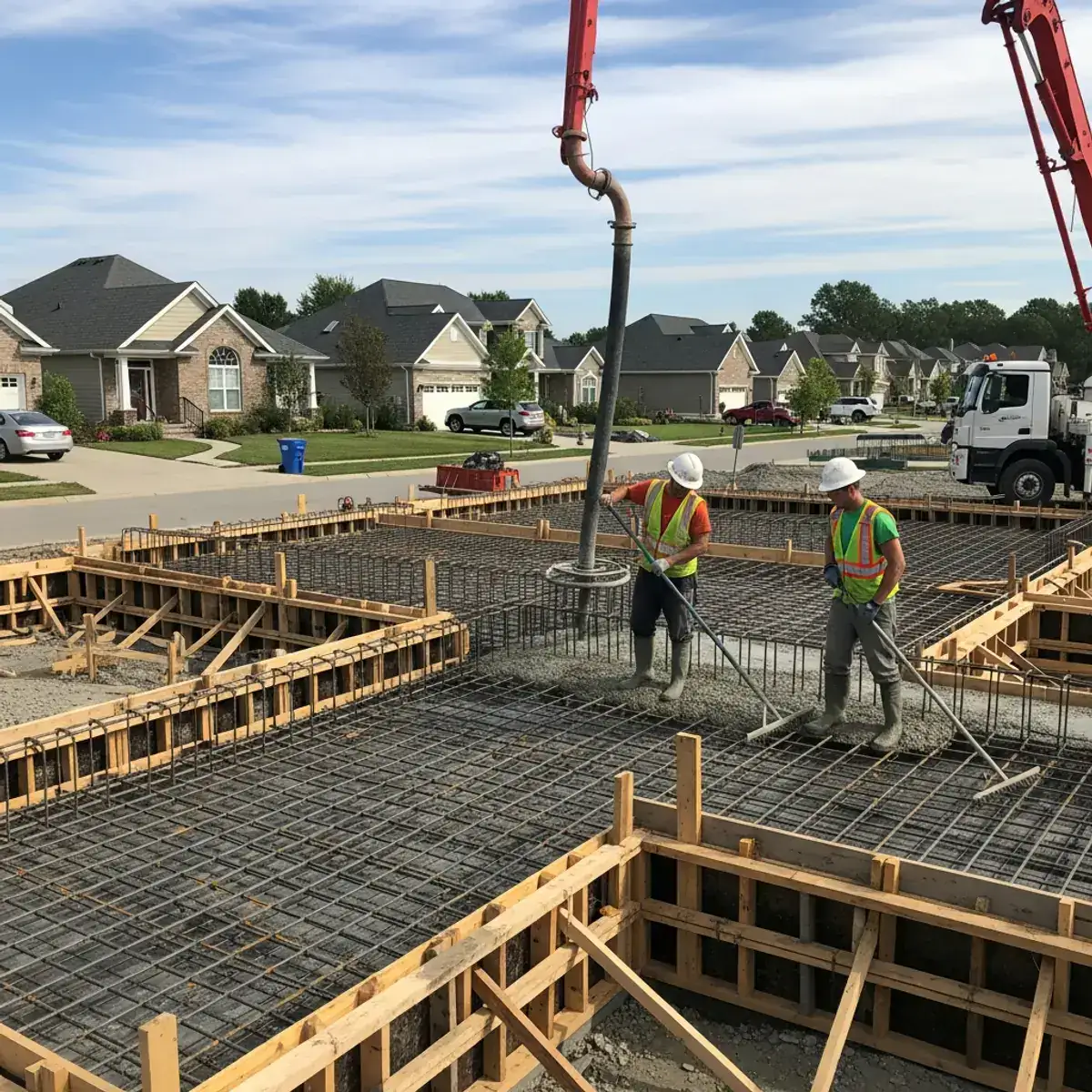
Concrete Slab or Stem Wall Foundation
$8,000–$20,000Most detached ADUs in Idaho use a concrete slab-on-grade or stem wall foundation depending on lot conditions, frost depth, and plumbing requirements. Garage conversions may use the existing slab with modifications.
Best for: Detached ADU new construction

Standard Wood Framing
$12–$22 per sq ft framed2x4 or 2x6 wood framing for walls, with trusses for the roof. ADU framing follows the same building codes as primary residences, including insulation requirements, fire separation, and structural standards.
Best for: All ADU types

Mini-Split HVAC System
$3,500–$7,000 installedThe most common heating and cooling solution for ADUs. A ductless mini-split provides efficient heating and cooling with a small exterior compressor and one or two interior wall units. No ductwork required.
Best for: Detached ADUs and garage conversions

Compact Kitchen Package
$5,000–$15,000 completeADU kitchens need to be efficient. A compact kitchen typically includes a 24-inch range, apartment-size refrigerator, single-bowl sink, and upper and lower cabinets — all designed to maximize function in a smaller footprint.
Best for: Studio and one-bedroom ADUs

Matching or Complementary Siding
$5–$15 per sq ft installedThe ADU exterior should complement the main home. Options include matching the existing siding exactly, using a contrasting but compatible material, or using a modern material like board-and-batten or metal panel for a contemporary look.
Best for: Seamless property aesthetic

Here is how a typical ADU construction project works from first contact to final walkthrough:
Zoning and Feasibility Research
We research your property's zoning designation, lot size, setback requirements, maximum ADU size allowed, parking requirements, and any HOA restrictions. Not every lot qualifies for an ADU, so this step is critical before investing in design.
Concept Design and Budget Planning
Based on feasibility findings, we develop a concept design including floor plan, placement on the lot, utility connection points, and exterior style. You receive a preliminary budget range to confirm the project is viable.
Architectural Plans and Engineering
Detailed architectural plans are prepared including floor plans, elevations, structural engineering, mechanical systems, and site plan. These plans must meet local building codes and will be submitted for permit review.
Permitting and Utility Coordination
We submit plans for permit review, coordinate utility connections (water, sewer, electrical, gas), and manage any required inspections or reviews. ADU permitting can take 4-8 weeks depending on the jurisdiction.
Site Preparation and Foundation
Excavation, grading, utility trenching, and foundation work. For detached ADUs, this typically means a new concrete foundation. Garage conversions may require foundation modifications.
Construction (Framing through Finish)
Complete construction including framing, roofing, siding, windows, insulation, drywall, flooring, kitchen, bathroom, HVAC, electrical, plumbing, and all finish work. The ADU is built to the same code standards as a primary residence.
Final Inspection and Certificate of Occupancy
All required inspections are passed, the certificate of occupancy is issued, and the ADU is ready for use. We provide a complete walkthrough and all warranty documentation.
Here is what to expect for project duration when planning ADU construction in Kuna:
| Phase | Duration | Details |
|---|---|---|
| Zoning Research and Feasibility | 1–2 weeks | Confirm the property qualifies for an ADU under current zoning, identify setback and size constraints, and determine utility connection feasibility. |
| Design and Engineering | 4–8 weeks | Architectural plans, structural engineering, site plan, and mechanical design. ADU designs must meet full building code requirements. |
| Permitting | 4–8 weeks | Plan review, permit issuance, and any required revisions. ADU permitting timelines vary by jurisdiction in the Treasure Valley. |
| Site Work and Foundation | 2–4 weeks | Excavation, utility trenching, foundation pour, and curing. Weather-dependent in Idaho, especially during winter months. |
| Framing, Roofing, and Mechanical | 4–8 weeks | Framing, roof installation, windows, exterior sheathing, electrical, plumbing, HVAC, and insulation. All rough-in inspections are completed. |
| Interior Finish and Final Inspection | 4–6 weeks | Drywall, paint, flooring, kitchen, bathroom, fixtures, and all finish details. Final inspections and certificate of occupancy. |
Kuna range: $90,000 – $240,000
Most Kuna projects: $145,000
Kuna ADU construction costs reflect Ada County labor rates — Kuna is within Ada County — and the typical residential lot configurations of the city's housing stock. A detached garage conversion ADU in Kuna's older neighborhoods runs $90,000 to $135,000 depending on the original structure's condition and the finish specification. A new detached ADU built from the ground up on a Kuna residential lot runs $130,000 to $190,000 for a 600-square-foot one-bedroom unit. Attached above-garage ADU additions run $140,000 to $210,000 depending on structural complexity and finish level. Utility connection costs follow Ada County utility fee schedules — typically $6,000 to $16,000 depending on the specific connection conditions. HOA requirements vary by subdivision — many of Kuna's newer developments have HOAs that require ARB approval for ADU construction, adding 4 to 8 weeks to pre-construction timelines and $2,000 to $5,000 in submittal preparation costs.
The final cost of ADU construction in Kuna depends on several factors. Here are the biggest cost drivers:
ADU Type (Detached vs. Conversion)
high impactA detached new-construction ADU costs significantly more than a garage conversion because it requires a new foundation, full framing, roofing, and all-new utility connections. Garage conversions leverage the existing structure.
Size (Square Footage)
high impactADUs range from ~300 sq ft studios to Boise's current 900 sq ft cap (the state floor under Idaho Code § 67-6541 rises to 1,000 sq ft or 75% of the primary home by February 1, 2027). Larger units cost more but provide more rental income potential and livability.
Utility Connections
high impactConnecting water, sewer, electrical, and gas to the ADU site involves trenching, new service lines, and potentially utility upgrades. Distance from the main house to the ADU affects cost.
Kitchen and Bathroom Complexity
medium impactEvery ADU needs at least a bathroom and kitchen. The finish level — basic vs. mid-range vs. premium — significantly affects the mechanical and finish costs.
Site Conditions and Access
medium impactSloped lots, limited access for equipment, rocky soil, or mature trees in the building area can increase site preparation and foundation costs.
Permitting and Impact Fees
medium impactADU permit fees, impact fees, and utility connection fees vary by jurisdiction. Under Idaho Code § 67-6541(2)(c), cities over 10,000 residents may not charge an ADU higher impact or utility-connection fees than a single-family home.
These are the real-world projects we see most often from Kuna homeowners:
Kuna Family ADU — In-Law Suite with Full Accessible Design
The most meaningful Kuna ADU project builds independent, safe, comfortable housing for an aging family member on the same property as their adult children. Zero-threshold shower entry that eliminates the trip hazard of a curbed shower floor, grab bar blocking installed at ADA-standard heights in the shower and toilet area during the construction phase when access is easiest and cost is lowest, lever-format door hardware throughout, 36-inch minimum clear door openings, and an accessible kitchen layout with knee clearance at work surfaces for seated users are the features that make an in-law suite genuinely livable across a full aging trajectory — not just for today's mobile parent but for the parent who will need more support in five to ten years. These ADUs are specified at a finish quality level consistent with caring for a family member, not a minimum habitability standard: quality cabinetry with full-extension drawers and soft-close hardware, stone or solid surface countertops that are easy to maintain, tile shower with frameless glass enclosure, and durable flooring that handles a walker's rubber feet without permanent marking. The private exterior entrance, independent climate control, and kitchenette or full kitchen capacity that define a true in-law suite are designed with the same architectural care as every other element of the unit.
Kuna Original Neighborhood — Detached Garage Conversion ADU
Kuna's pre-2000 residential neighborhoods — the homes along the city's original corridors near downtown and the older ranch neighborhoods east and south of the core — include properties with detached garages or accessory structures that are ideal for ADU conversion. These conversions are the most cost-efficient ADU path in Kuna's older housing stock, leveraging existing structure and foundation to minimize new construction cost while delivering a functional unit with full kitchen, bathroom, egress windows, and independent utility connections. The garage conversion approach works best when the existing structure is in sound condition — which requires a structural assessment before committing to the conversion path. Iron Crest's pre-construction structural assessments for Kuna garage conversion projects identify any foundation, framing, or roof conditions that would significantly increase the conversion cost and provide the basis for an accurate project budget before any design investment is made.
Newer Kuna Subdivision — New Detached ADU on Adequate Lot
Kuna's newer subdivisions built in the 2010s on lots of 8,500 square feet or larger have backyard space sufficient for a new detached ADU that does not consume all of the outdoor area. These projects are designed from the foundation up — new poured concrete foundation at Ada County's 24-inch frost depth, wood frame construction, mini-split HVAC, full kitchen and bathroom build-out, and exterior finishes architecturally compatible with the primary home. HOA approval is required in most of these communities, and Iron Crest prepares the full HOA submittal package as a standard project service.
Kuna Above-Garage ADU for Adult Child or Rental
Kuna homes with attached two-car garages and larger lots are candidates for above-garage ADU additions that add living space in the vertical dimension without consuming any lot coverage. These attached ADU additions require structural assessment of the existing garage framing and foundation, engineered beam additions at required bearing points, an exterior staircase and private entry for ADU functional independence, and full finish work to habitability standards. The above-garage configuration's physical connection to the primary home is an asset for family use — proximity without shared front doors — and the private exterior entry makes the unit suitable for rental use as well.
Kuna Rental ADU for Investment Income
Kuna homeowners building ADUs specifically for rental income benefit from specifications optimized for durability, low maintenance, and broad tenant appeal. LVP flooring throughout, solid surface countertops, semi-frameless glass shower enclosure, mid-tier cabinetry, and mini-split HVAC are the specification elements that minimize maintenance costs while producing a rental unit that achieves Kuna market rates. These projects are executed efficiently because the scope is defined by investment return logic, and they produce units that compete well against the rest of Kuna's small-unit rental stock. What a specific unit will actually rent for depends on its size, its finish level, and what else is listed at the time — confirm current comparable rents with a Kuna property manager before building a budget around a rental figure.
Problem: Need rental income but do not want to move
Solution: A detached ADU can produce rental income while you continue living in your primary home — our 600 sq ft North End one-bedroom has a recorded rental potential of $1,400–$1,600 per month.
Problem: Aging parents need close but independent living space
Solution: An ADU with a separate entrance provides privacy and independence while keeping family close. Accessibility features can be built in from the start.
Problem: Existing garage is unused and taking up valuable space
Solution: A garage conversion ADU transforms underutilized space into a functional living unit at a lower cost than new construction.
Problem: Need a dedicated workspace separate from the main home
Solution: A detached ADU configured as a studio or office provides the separation remote workers need, with the commute of a backyard walk.
Problem: Want to maximize property value and investment potential
Solution: A well-built ADU adds $100,000+ to property value and generates ongoing rental income — one of the highest-ROI improvements a homeowner can make.

Kuna shares the Treasure Valley climate with slightly more open exposure and wind than cities closer to the foothills.
Wind Exposure
More open terrain means higher wind loads on exterior surfaces.
Heat and UV
Standard Treasure Valley UV exposure. Exterior materials need UV resistance.
Downtown Kuna
The original town center with a mix of older homes and newer infill development. Some homes date to the 1960s-1990s with more remodeling needs.
Common projects in Downtown Kuna:
- •Kitchen and bathroom remodels in older homes
- •Whole-home updates
- •Home additions for growing families
Crimson Point / Newer Subdivisions
Post-2010 subdivision development with modern floor plans and builder-grade finishes. The majority of Kuna's housing stock falls in this category.
Common projects in Crimson Point / Newer Subdivisions:
- •Kitchen upgrades replacing builder-grade materials
- •Bathroom finish updates
- •Flooring replacement
- •Deck and outdoor living construction
Every Kuna neighborhood has different housing stock, homeowner priorities, and project considerations. Here is what ADU construction looks like in each area:
Kuna Original Core and Older Residential Areas
Quenzer Farms, Crimson Point, and Newer Kuna Subdivisions
Permit authority: City of Kuna Building Department
- ✓Permits required for plumbing, electrical, and structural work
- ✓Growing city with responsive building department
- ✓ADU regulations evolving with city growth
Helpful ID resources
- Idaho DEQ — Asbestos Program — testing and abatement requirements for pre-1980 homes
- EPA Lead Renovation, Repair and Painting (RRP) Program — required certification for work in pre-1978 homes
- ●Lot placement — ADU location affects privacy, natural light, utility run distances, and neighbor sight lines
- ●Ceiling height — code minimums apply, but taller ceilings (9 ft) make a small ADU feel significantly larger
- ●Storage planning — ADUs need creative storage: wall-mounted shelving, loft storage, and built-in solutions
- ●Outdoor space — a small patio, porch, or deck at the ADU entrance adds livability and curb appeal
- ●Parking — cities over 10,000 residents can require added ADU parking only in limited cases under Idaho Code § 67-6541, but plan where a tenant will park anyway
- ●Rental readiness — if the ADU may be rented, plan for durable finishes, separate utility metering, and tenant-friendly design
Here are the design trends we see most often in Kuna ADU construction projects:
- →Family-friendly, durable material choices
- →Modern farmhouse and transitional styles
- →Practical kitchen upgrades with better storage
- →LVP flooring throughout
- →Outdoor living spaces — decks, patios, covered areas
Kuna's rapid growth and family-oriented market make it an excellent place for practical remodeling investments. Updated homes sell quickly in this market, and finish upgrades provide strong returns.
Costs and permit requirements differ by jurisdiction across the Treasure Valley. These guides cover Kuna specifically.
Avoid these common pitfalls Kuna homeowners encounter with ADU construction projects:
Mistake: Building a Kuna in-law suite without the accessibility features that will matter in 5 to 10 years
Better approach: Accessibility needs develop gradually — a parent who is fully mobile today may need grab bars, a zero-threshold shower, and wider doorways within 5 to 10 years. Building these features in now, when the walls are open and the cost is $8,000 to $15,000, prevents the expensive and disruptive retrofitting that becomes necessary when they are needed. Iron Crest installs grab bar blocking at standard ADA heights and zero-threshold shower entries as standard included items on every Kuna family ADU project.
Mistake: Not confirming HOA requirements before committing to a Kuna ADU project in a newer subdivision
Better approach: Kuna's post-2000 subdivisions have HOA processes that add 4 to 8 weeks to the pre-construction timeline and may impose design constraints that require plan modifications. Confirming HOA requirements before beginning design prevents wasted design investment and project timeline surprises. Iron Crest reviews CC&Rs for every Kuna ADU project in a potentially governed community as the first step in the consultation process.
Mistake: Underestimating ADU project lead time for a family with a specific move-in timeline
Better approach: Kuna ADU projects take 5 to 9 months from project initiation to certificate of occupancy. Families with a specific move-in date — a parent whose current living situation is changing — need to begin the ADU process immediately to align construction completion with the family's need date. Waiting until the need is immediate is the most common mistake that Kuna family ADU clients make, and it is the mistake that results in gap-period senior housing facility costs that could have been avoided with earlier project initiation.
Mistake: Specifying an ADU kitchen without full cooking capability for a family member who will use it daily
Better approach: A kitchenette — microwave, mini-fridge, and a single-burner hotplate — is a space-saving specification that compromises the daily living quality of an in-law suite occupant who will use the kitchen for real daily cooking. A full kitchen with a four-burner range, full-size refrigerator, and dishwasher adds approximately $4,000 to $7,000 to the ADU project cost and dramatically improves the quality of daily life for a family member who will be cooking every meal in the space. For rental use, a full kitchen also expands the tenant pool and supports the upper end of the rental rate range.
Most popular remodeling projects in Kuna
- ✓Kitchen upgrades
- ✓Bathroom remodels
- ✓Flooring replacement
- ✓Deck and outdoor living
- ✓Home additions

See Your Remodel Before You Build.
Upload a few photos of your kitchen, bathroom, flooring, or exterior and get AI-generated concept visuals tailored to your space, style, and materials — free, no obligation, in about five minutes. Then request a real estimate from our Idaho registered Boise team.
Free concept preview · No credit card · Licensed Idaho contractor
Do I need HOA approval for a Kuna ADU in a newer subdivision?
Almost certainly yes. Most of Kuna's post-2000 subdivisions are governed by HOAs with CC&Rs that require formal ARB approval for exterior modifications including ADU construction. The ARB review process requires a submittal package with site plans, architectural drawings, and material specifications, and the review timeline is typically 4 to 8 weeks. Iron Crest manages the HOA submittal and approval process as a standard project service for every Kuna ADU in a governed community. Confirm your specific HOA requirements before beginning any design investment.
What is the best ADU configuration for a Kuna in-law suite?
The best configuration depends on your lot conditions and existing structures. If you have a detached garage in sound structural condition, conversion is typically the most cost-efficient path at $92,000 to $132,000. If you have a newer home with an attached garage and adequate backyard space on a lot over 8,000 square feet, a new detached ADU at $132,000 to $185,000 provides the most functional independence for the family member who will occupy it. If your lot is constrained and you have an attached two-car garage, an above-garage addition at $142,000 to $210,000 adds living space in the vertical dimension without consuming any lot coverage. Site-specific feasibility analysis confirms the most practical configuration for your specific property.
How do I ensure my Kuna in-law suite is fully accessible for aging in place?
Accessibility features are most cost-efficiently incorporated during construction. Specify zero-threshold shower entry, 36-inch minimum clear door widths throughout the unit, grab bar blocking at ADA heights in shower and toilet areas, lever-format door hardware, and a kitchen layout with adequate maneuvering clearance for a walker or wheelchair. These features add $8,000 to $15,000 to a Kuna ADU project when built in during construction. Retrofitting them after completion costs three to five times more and leaves seams in finished surfaces that are difficult to conceal. Every Kuna in-law suite Iron Crest builds includes these features as standard included items.
What rental rate can I expect from a Kuna ADU?
We do not publish rent estimates, and you should treat any contractor's rent projection with caution — rents move with the season and with whatever else is listed that month, and no one is obligated to pay the number a builder quotes. The reliable way to answer this for your property is to pull current listings for comparable Kuna one-bedrooms and studios, or ask a Kuna property manager for a rental assessment, before construction starts. What we can tell you is which specifications tend to attract the stable, family-household tenant profile that reduces management burden and turnover cost: a full kitchen rather than a kitchenette, a tile shower, in-unit laundry, dedicated off-street parking, and a private entrance with its own outdoor space. Kuna's rental demand comes primarily from households who want to live specifically in Kuna — near the school district, near the community they're connected to — rather than from renters shopping the whole valley on price.
How long does a Kuna ADU project take from start to finish?
From project initiation to certificate of occupancy, a Kuna ADU project typically takes 5 to 9 months — 6 to 8 weeks for design and permit preparation, 4 to 8 weeks for HOA review if applicable, 1 to 2 weeks for city permit review, and 3 to 5 months for construction. Garage conversions are at the shorter end of the construction range; new detached ADUs and above-garage additions are at the longer end. Iron Crest provides a project-specific schedule with milestone dates at the proposal stage.
Do ADUs require permits and planning approval?
Yes. ADU projects require building permits, plan review, and multiple inspections. In most Boise-area jurisdictions, ADUs also require zoning compliance review to confirm lot size, setbacks, and parking requirements are met. We handle the entire permitting process.
How much does it cost to build an ADU in the Boise area?
Most Boise ADUs cost $95,000–$320,000, with a typical project near $165,000. A garage conversion typically runs $95,000–$145,000, and a new 600 sq ft one-bedroom detached ADU $145,000–$220,000; utility connection costs vary with distance to existing services and are one of the most variable line items. Our 600 sq ft detached North End ADU ran $120,000–$150,000.
How long does it take to build an ADU?
From start of design to move-in, a typical ADU project takes 6 to 12 months. This includes design (4-8 weeks), permitting (4-8 weeks), and construction (3-5 months). Garage conversions are faster; detached new construction takes longer.
Can I rent out my ADU?
In most Boise-area jurisdictions, yes. ADUs can be rented as long-term rentals. Short-term rental rules (Airbnb, VRBO) vary by city and may have additional restrictions. Check local regulations before planning a short-term rental strategy.
How much rental income can an ADU generate in Boise?
It depends on location, size, finish level, and market conditions — check current listings for comparable units. Our 600 sq ft North End one-bedroom ADU has a recorded rental potential of $1,400–$1,600 per month.
What is the maximum size for an ADU?
Maximum ADU size varies by jurisdiction. In Boise, an ADU can be up to 900 square feet or 70% of the primary structure's floor area, whichever is smaller, with no more than two bedrooms. Idaho's 2026 ADU law (Senate Bill 1354) requires every city over 10,000 residents to allow at least 1,000 square feet or 75% of the primary home by February 1, 2027, so local limits are changing. We confirm the specific rules for your property during the feasibility phase.
Do I need to live on the property to have an ADU?
No. Idaho's 2026 ADU law (Senate Bill 1354, Idaho Code § 67-6541, in force since July 1, 2026) prohibits every city over 10,000 residents from requiring owner-occupancy of either the primary home or the ADU, so you can live in one unit and rent the other, or rent both. Boise had already dropped its owner-occupancy rule in the 2023 Modern Zoning Code. Cities of 10,000 or fewer residents (such as Emmett, Fruitland, Payette, Homedale, Parma, or New Plymouth) still set their own rules, and lenders or HOA covenants that existed when you bought may have their own conditions — we confirm all of it during the feasibility review.

Talk to a real project manager
Have Questions? Call Now for a Free In-Home Consultation.
Mon–Fri 7 AM–6 PM · Idaho registered & insured · No obligation
Russ Shloma — Project Manager
Russ Shloma — Project Manager
Start your ADU construction in Kuna
Get a free, no-obligation estimate for adu construction in Kuna, ID. We handle design, permits, and every detail of construction.
Get Your Free Estimate