
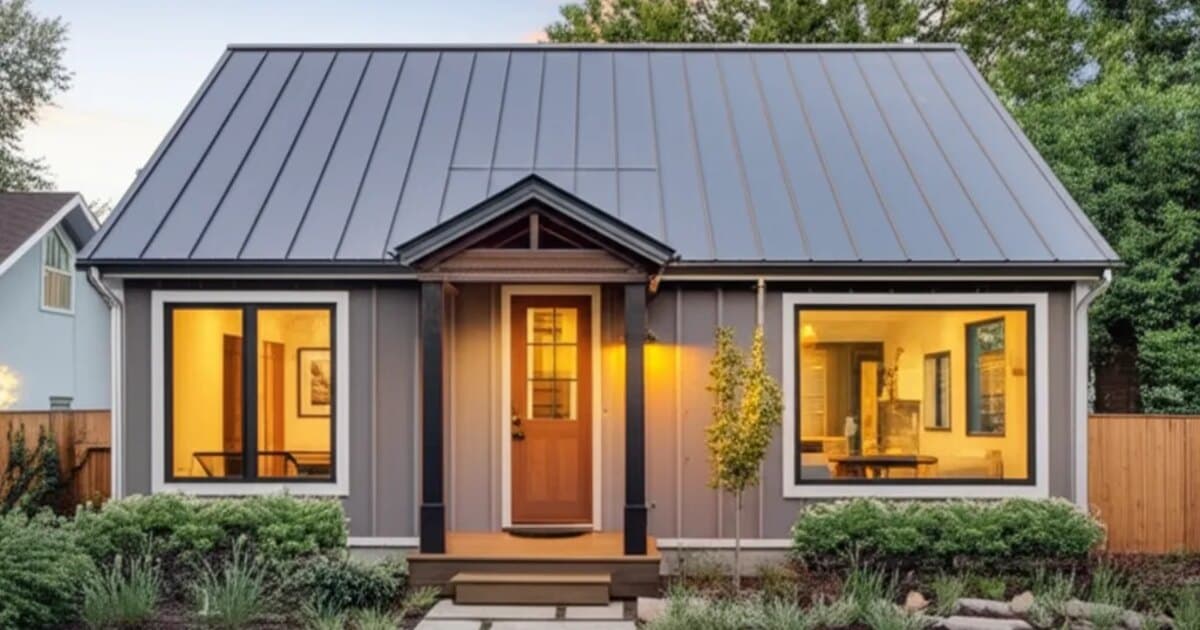
ADU Construction Design Ideas for Meridian
Get inspired with ADU construction design ideas tailored to Meridian homes, from trending styles to practical layout considerations.
Quick answer
Meridian is fundamentally different from Boise as an ADU market, and treating it as interchangeable with Boise is the most common strategic error both contractors and homeowners make when approaching ADU construction here.
Meridian, ID · ADU Construction
Planning ADU construction in Meridian?
Read the full guide below — or get your project priced now. Free, no-obligation estimates from an Idaho registered local team, backed by a 1-year workmanship warranty.
- Licensed Idaho RCE-6681702
- 1-Year Workmanship Warranty
- $2M Liability Coverage
- Free, No-Obligation Estimates


Meridian is fundamentally different from Boise as an ADU market, and treating it as interchangeable with Boise is the most common strategic error both contractors and homeowners make when approaching ADU construction here. The differences are structural, not superficial, and they affect every major dimension of project planning and execution. The HOA layer is the most obvious differentiator. Boise has HOA-governed subdivisions, but the majority of Boise's highest-ADU-activity neighborhoods — the North End, the Bench, Downtown-adjacent areas — are not subject to the active, architecturally-supervised HOA oversight that governs virtually every Meridian subdivision built since 1990. In Meridian, the HOA architectural review is not an occasional obstacle — it is a standard component of every ADU project, and designing to satisfy that review while simultaneously meeting the city's code requirements and the homeowner's functional needs requires managing three distinct sets of constraints in parallel. Contractors who do not regularly work in HOA-governed ADU environments in Meridian will consistently underestimate the time and design specificity this process requires. The impact fee environment is the second major differentiator. Meridian's aggressive impact fee schedule — a product of the city's extraordinary growth rate and sustained infrastructure investment demands — adds $10,000–$18,000 to every new ADU project, a cost that simply does not exist at the same scale in older Boise neighborhoods where infrastructure capacity was built out decades ago. This fee is real, fixed, and front-loaded, and it changes the financial calculus of Meridian ADU construction in ways that a contractor with primarily Boise ADU experience may not fully account for. The family-market rental orientation distinguishes Meridian ADU design priorities from Boise's dominant ADU market. A North End Boise ADU is often optimized for a single professional or couple — 400 to 500 square feet, studio or one-bedroom, compact kitchen. A Meridian ADU serving the family rental market needs two bedrooms, a full kitchen with family-appropriate appliance sizing, dedicated parking, and a living environment that can accommodate children whose parents chose this location for the West Ada School District. This means bigger units, more bedrooms, and specification choices oriented toward functional capacity and durability. Finally, Meridian's uniformly post-1990 housing stock means that ADU design integration is a different challenge than in Boise's architecturally diverse neighborhoods. Every Meridian home was built to a specific production builder standard in a specific era — which means matching the exterior precisely is achievable with correct specification, and failing to match is visually conspicuous in a neighborhood where every other house has the same siding and the same windows. Getting the siding profile, roofline pitch, and window style exactly right is not optional in Meridian's HOA-governed subdivisions — it is the condition for architectural committee approval.
South Meridian
South Meridian is Meridian's newest residential frontier — the neighborhoods along and south of Amity Road, Lake Hazel Road, and into the emerging communities near the Meridian-Kuna border that have been platted and built primarily since 2005. These are Meridian's most recently constructed homes: 2,000-to-3,200-square-foot production builder designs on lots typically running 7,500 to 12,000 square feet, with attached two-car or three-car garages, open-plan main floors, and primary suites specified to mid-2000s through 2010s buyer expectations. The HOA presence is universal in South Meridian's subdivisions — virtually every development platted after 2000 has an active HOA with CC&Rs and an architectural review committee that processes any exterior modification request, including ADU construction. For ADU purposes, South Meridian's combination of relatively large lots and newer construction creates a different set of opportunities and constraints than North Meridian. The larger lot sizes support detached new-construction ADUs in the rear yard without the setback tightness that affects older, smaller lots in North Meridian. But newer construction also means that garage conversions involve giving up a still-functional amenity — a homeowner surrendering a three-car garage in a 2015 subdivision is giving up parking and storage capacity the household currently uses. The ADU decision in South Meridian therefore frequently comes down to whether a new detached unit can be accommodated on the rear of the lot, because the detached path preserves the garage while still creating an income-producing unit. City of Meridian impact fees apply with full force in South Meridian — homeowners planning a new detached ADU need to budget $10,000–$18,000 for impact fees before construction costs are tallied. The HOA architectural review layer adds 4–8 weeks that must precede permit application. South Meridian's family rental demand is a consistent driver for ADU projects here: renters seeking West Ada School District access, suburban amenity infrastructure, and a well-maintained neighborhood environment are looking for exactly what a two-bedroom ADU with a full kitchen, dedicated parking, and a private entrance provides. What such a unit lists for varies by subdivision and by the month it comes to market, so treat any single figure — ours or anyone else's — as a starting point for a conversation with someone who leases here rather than as a projection.
North Meridian
North Meridian encompasses Meridian's 1990s and early 2000s residential development north of Franklin Road — neighborhoods that represent Meridian's first major growth wave and now house some of the city's longest-tenured residents. These homes are 25 to 35 years old, placing them in the maintenance and renovation cycle that every production builder subdivision enters at this stage: roofs reaching end of life, HVAC systems requiring replacement, kitchens and bathrooms still in their original builder-grade configuration, and garages with dated materials and hardware packages standard to that era. For ADU construction, North Meridian's age-of-housing profile creates both opportunities and complications specific to this part of the city. The attached garage inventory is extensive — the vast majority of North Meridian homes were built with attached two-car garages — and many of these garages represent genuine ADU conversion candidates where the homeowner is not sacrificing a heavily relied-upon space. The complication is that a 30-year-old attached garage may have foundation settling, framing moisture damage, or a slab that has developed drainage problems — conditions that must be assessed and addressed as part of the conversion scope. Iron Crest's pre-construction structural assessment for North Meridian garage conversions is a genuine due diligence step that sometimes identifies conditions — slab upheaval from frost or tree root intrusion, wet-side wall framing deterioration, inadequate header spans — that materially affect the conversion budget. Discovering these conditions during demolition rather than before permitting is the difference between a manageable scope adjustment and a project in financial difficulty. HOA governance in North Meridian is more variable than in South Meridian's newer developments. Some North Meridian HOAs are active and well-funded with clear architectural review processes; others are dormant or operating with outdated CC&Rs that have not been updated to reflect Idaho Code § 55-3212. Iron Crest's covenant review process for North Meridian properties includes assessing the HOA's operational status and enforcement history — not just reading the recorded documents — because the practical regulatory environment can differ significantly from what the CC&Rs on paper suggest. North Meridian's smaller lot sizes — most parcels run 6,500 to 9,000 square feet — create setback pressure that limits the detached new-build path on many properties, making the garage conversion path more common and more appropriate for most North Meridian ADU projects.
Paramount/Lochsa Falls
Paramount and Lochsa Falls represent Meridian's mid-to-upper residential market — planned communities developed primarily in the mid-2000s through the 2010s that offer larger lot sizes, higher specification homes, community amenities including parks and pools, and HOA governance that is among the most active and design-standard-conscious in the entire Treasure Valley. Homes in these neighborhoods typically run 2,400 to 4,000 square feet, are specified significantly above builder-grade, and sit on lots ranging from 8,500 square feet to over 15,000 square feet in the upper tiers. For ADU purposes, Paramount and Lochsa Falls present the most exacting design requirements in Meridian's ADU market. The architectural review committees in these communities are sophisticated, active, and capable of rejecting ADU proposals that do not meet their design guidelines in specific detail. This is not an obstacle — it is a defined process that a contractor who has done it before can navigate efficiently — but it requires a fundamentally different approach to ADU design than a straightforward permit-and-build project in a less-governed subdivision. Iron Crest's process for these neighborhoods begins with a complete review of CC&Rs and design guidelines before any design work begins, followed by an informal pre-consultation with the architectural review committee to understand their current priorities, and then a formal submission prepared to those specific standards. The ADU opportunity in Paramount and Lochsa Falls is oriented differently than in the rest of Meridian. These homeowners are building ADUs for multigenerational flexibility, high-quality guest accommodation, and the lifestyle value of a separate space that can transition to income-producing use if circumstances change. The right specification matches the quality level of the primary home: hardwood or premium LVP flooring, quartz countertops, solid wood cabinetry, aluminum-clad windows, and exterior finishes indistinguishable from the primary home's architectural language. Lot sizes generally provide room for detached ADU construction, and three-car garage configurations are common — the third garage bay is a natural starting point for a conversion that minimizes site disruption while using an already-permitted structure.

The design phase is where your ADU construction goes from a general idea to a specific plan. Good design balances aesthetics, functionality, budget, and the unique characteristics of your home and neighborhood in Meridian. Here are the most popular design approaches and trends we see in Meridian and the surrounding Treasure Valley.
Meridian homeowners tend to favor designs that blend modern functionality with the regional character of Idaho homes. Here are the most requested design elements:
These design factors are specific to ADU construction projects and affect both the look and function of the finished space:
Lot placement — ADU location affects privacy, natural light, utility run distances, and neighbor sight lines
Ceiling height — code minimums apply, but taller ceilings (9 ft) make a small ADU feel significantly larger
Storage planning — ADUs need creative storage: wall-mounted shelving, loft storage, and built-in solutions
Outdoor space — a small patio, porch, or deck at the ADU entrance adds livability and curb appeal
Parking — cities over 10,000 residents can require added ADU parking only in limited cases under Idaho Code § 67-6541, but plan where a tenant will park anyway
Rental readiness — if the ADU may be rented, plan for durable finishes, separate utility metering, and tenant-friendly design
The materials and finishes you choose bring your design to life. Here are the options most commonly selected for ADU construction projects in Meridian:
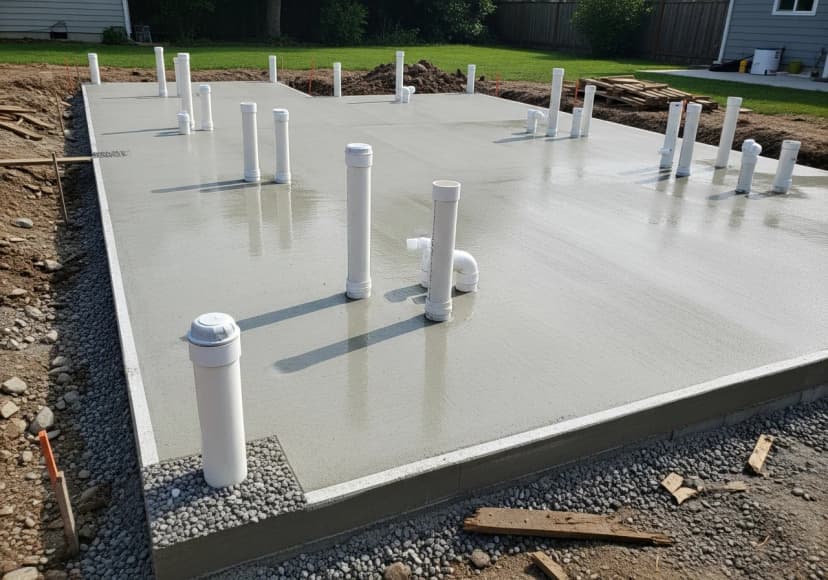
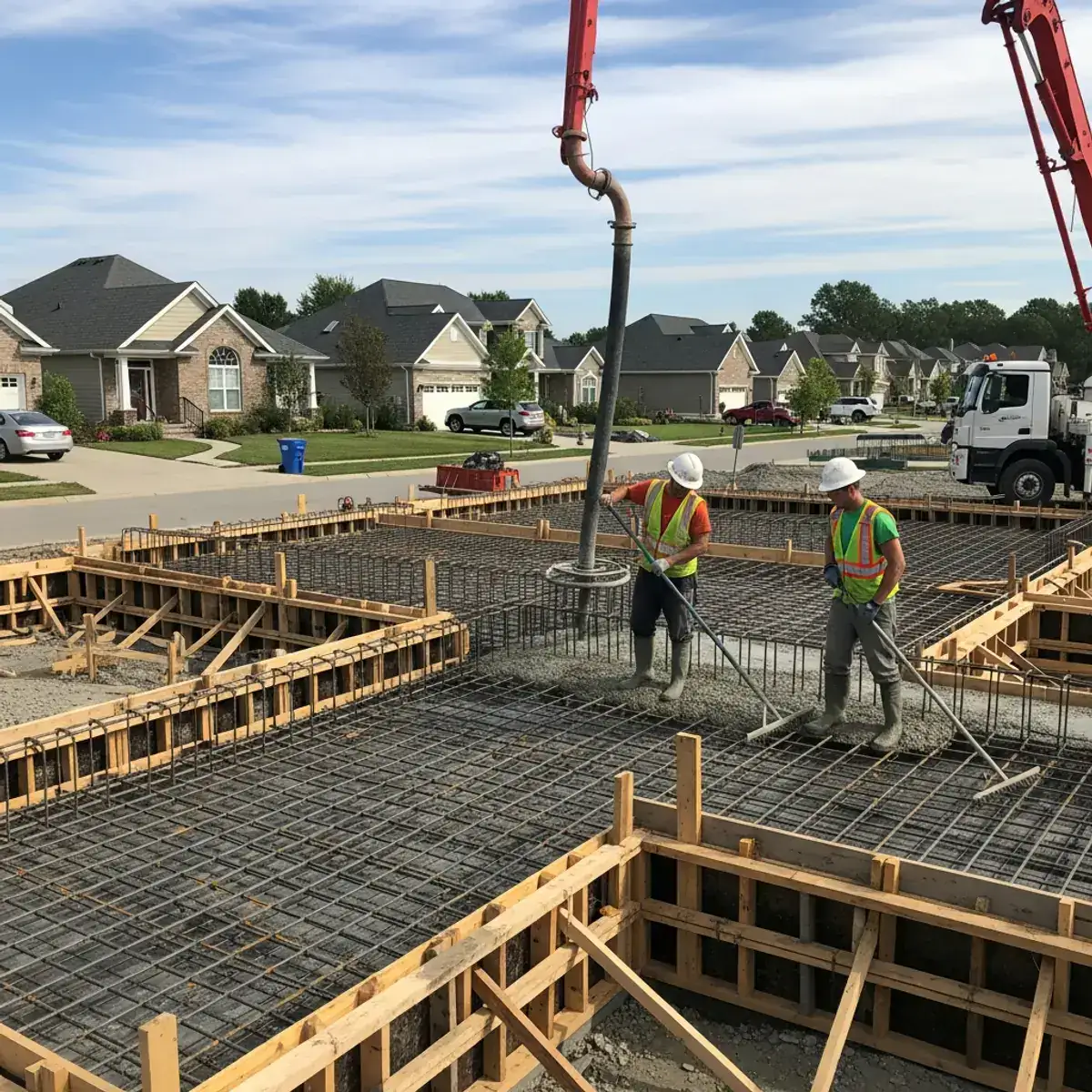
Concrete Slab or Stem Wall Foundation
$8,000–$20,000Detached ADU new construction
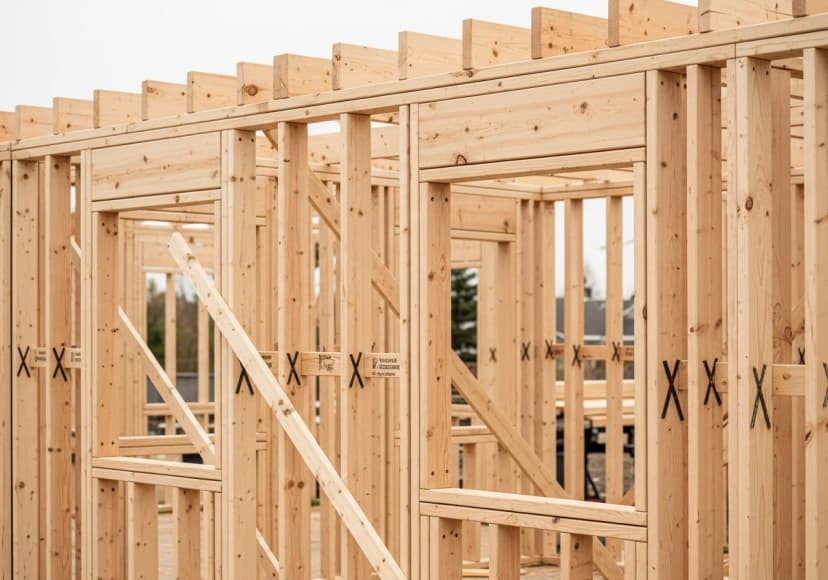
Standard Wood Framing
$12–$22 per sq ft framedAll ADU types
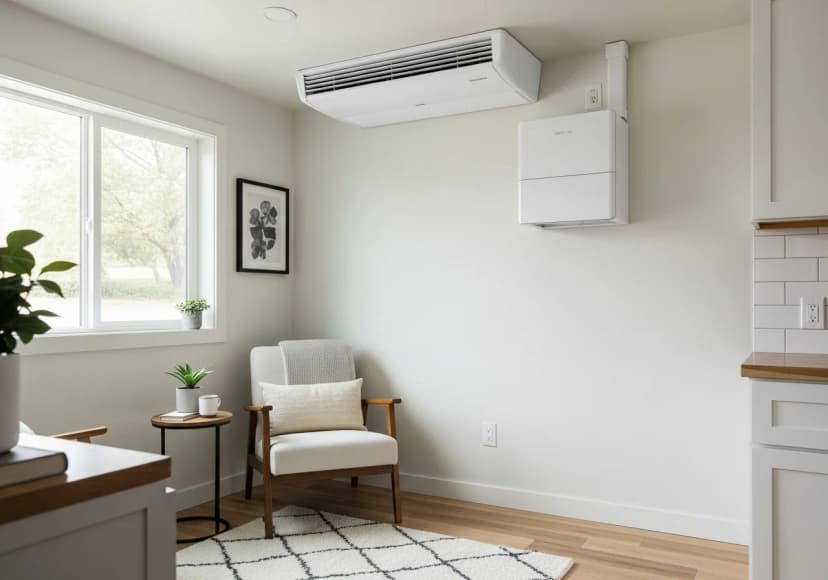
Mini-Split HVAC System
$3,500–$7,000 installedDetached ADUs and garage conversions
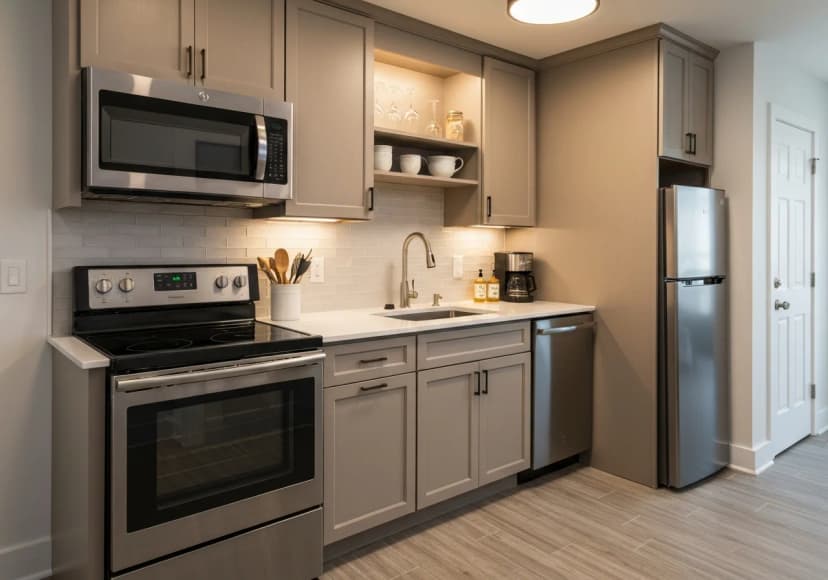
Compact Kitchen Package
$5,000–$15,000 completeStudio and one-bedroom ADUs
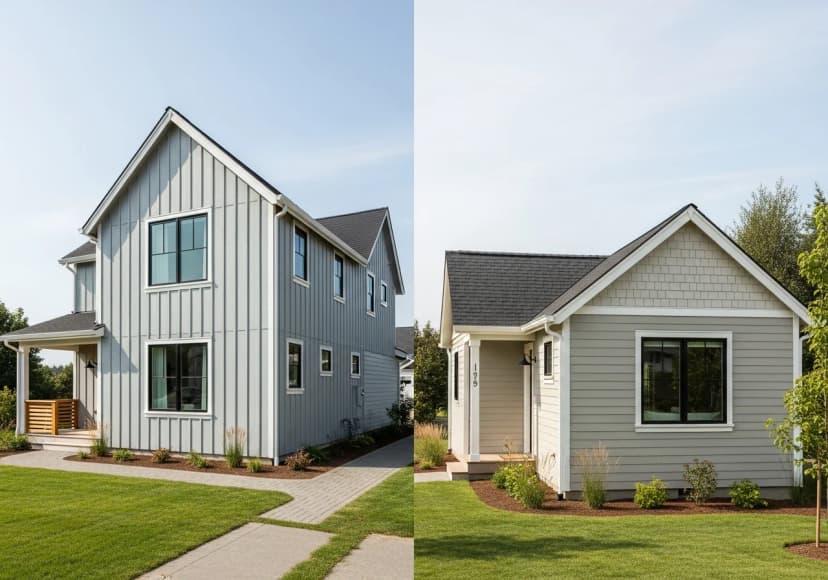
Matching or Complementary Siding
$5–$15 per sq ft installedSeamless property aesthetic
Learning from others' mistakes saves time and money. Here are the most common ADU construction design pitfalls we see in Meridian:
Need rental income but do not want to move
A detached ADU can produce rental income while you continue living in your primary home — our 600 sq ft North End one-bedroom has a recorded rental potential of $1,400–$1,600 per month.
Aging parents need close but independent living space
An ADU with a separate entrance provides privacy and independence while keeping family close. Accessibility features can be built in from the start.
Existing garage is unused and taking up valuable space
A garage conversion ADU transforms underutilized space into a functional living unit at a lower cost than new construction.
Need a dedicated workspace separate from the main home
A detached ADU configured as a studio or office provides the separation remote workers need, with the commute of a backyard walk.
Want to maximize property value and investment potential
A well-built ADU adds $100,000+ to property value and generates ongoing rental income — one of the highest-ROI improvements a homeowner can make.
For ADU construction projects in Meridian, you have two main approaches to the design process: hiring a separate interior designer then a contractor, or working with a design-build firm that handles both under one roof.
Design-build (our approach)
- ✓ Single point of contact
- ✓ Design informed by real construction costs
- ✓ Faster project delivery
- ✓ Budget aligned from day one
Separate designer + contractor
- ● More specialized design expertise
- ● Independent design perspective
- ● Requires coordination between parties
- ● Can result in budget surprises
Local factors — Meridian's housing stock and typical construction eras, the climate conditions that drive material and scheduling choices, and permitting through City of Meridian Building Department — are covered in full on our Meridian page for this service, alongside 4 common project types.
ADU Construction in Meridian: housing stock, climate & permits →Can I rent out my ADU?
In most Boise-area jurisdictions, yes. ADUs can be rented as long-term rentals. Short-term rental rules (Airbnb, VRBO) vary by city and may have additional restrictions. Check local regulations before planning a short-term rental strategy.
Will an ADU increase my property value?
Yes. A permitted, well-constructed ADU typically adds $100,000-200,000+ to property value in the Boise area — often more than the construction cost. ADUs also make a property more attractive to buyers who value rental income potential or multigenerational living flexibility.
Planning ADU construction in Meridian?
Get expert guidance and a free estimate for your adu construction project in Meridian, ID.
Get Your Free Estimate