

Kitchen Remodel in New Plymouth, ID
From cabinet and countertop upgrades to full layout redesigns — we handle every element of your kitchen renovation from design through installation.
Quick answer
Iron Crest Remodeling Group LLC provides kitchen remodeling in New Plymouth, ID. Most New Plymouth kitchen remodeling projects cost $22,000 – $150,000. New Plymouth kitchen costs track close to Treasure Valley norms on cabinetry and labor, but the older housing stock adds electrical-service and plumbing modernization that newer-home owners never face, and the small-town location adds mild logistics overhead on materials and trade scheduling roughly 50 minutes from Boise.
Kitchen remodeling in New Plymouth, Idaho is, more than almost anywhere in the Treasure Valley, about the working heart of a farm and ranch household. New Plymouth was founded in 1896 as a planned irrigation colony — the Plymouth Society of Chicago and William E. Smythe platting the town in a horseshoe shape around a mile-long Boulevard park, the open end facing the Payette River and railroad. The kitchens in those colony-era homes, and in the mid-century ranches that filled in as the irrigated farm economy matured, were built to feed working households: large, practical, used hard, and rarely renovated to modern standards. With a 2020 Census population of 1,494 in a tight agricultural community at roughly 2,257 feet of elevation, New Plymouth kitchens carry a recognizable set of conditions — original or first-generation cabinetry, knob-and-tube or early branch-circuit wiring in the oldest homes, undersized electrical service, plumbing that ranges from galvanized to aging copper, and layouts designed before the open-concept era. Iron Crest Remodel (Iron Crest Remodeling Group LLC, Idaho RCE-6681702) brings the diagnostic discipline this range demands. A 1915 Boulevard farmhouse kitchen and a 2010 Harvest Creek kitchen are fundamentally different engineering problems, and pricing them the same way is how budgets break. We treat the New Plymouth kitchen as a generational investment in a home that is likely to stay in a family — because here, it usually does.
Create a kitchen that works better for cooking, gathering, storage, and everyday life.
A kitchen remodel is the most impactful renovation you can make in your home — for daily quality of life, for resale value, and for how your family uses the most important shared space in the house. Kitchen projects range from cabinet repainting and countertop replacement to complete gut renovations involving wall removal, electrical panel upgrades, plumbing relocation, new flooring, and custom cabinetry. In the Treasure Valley, many homes were built with builder-grade kitchens that prioritize cost over function — small islands, limited counter space, poor lighting, and closed-off layouts. A well-planned kitchen remodel solves all of these problems while creating a space that looks, feels, and works the way your household needs it to. The key to a successful kitchen remodel is sequencing: design and material selection must be complete before demolition begins, because cabinet lead times, countertop fabrication, and appliance ordering all happen on parallel timelines that must align with construction progress.
New Plymouth homeowners pursue kitchen remodeling for a variety of reasons. Here are the most common situations we see:
- ✓Homeowners with builder-grade kitchens from the 1990s or 2000s who want a meaningful upgrade
- ✓Families who need better workflow, more counter space, and improved storage throughout the kitchen
- ✓Homeowners who want to open up a closed-off kitchen to the living or dining area
- ✓Anyone planning to sell who wants a renovation buyers notice first
- ✓Homeowners who love to cook and want professional-grade appliances, better lighting, and improved ventilation
Not every kitchen remodeling project is the same. Here are the most common project types we complete in New Plymouth:

Full Kitchen Renovation
Complete kitchen gut and rebuild including new cabinets, countertops, flooring, backsplash, lighting, plumbing, electrical, and appliances. May include layout changes and wall removal.

Cabinet and Countertop Replacement
Replace existing cabinets and countertops while keeping the current layout. New hardware, hinges, and drawer systems are included. A high-impact upgrade without the cost of a full gut.

Open-Concept Kitchen Conversion
Remove or modify walls between the kitchen and adjacent living or dining spaces to create an open floor plan. Includes structural header installation, patching, and finish work.

Kitchen Island Addition
Design and install a kitchen island with seating, storage, and optional sink or cooktop. Requires electrical for outlets and potentially plumbing if adding a sink.

Kitchen Refresh
Update the kitchen without a full renovation: new countertops, repainted cabinets, updated hardware, new backsplash, and modern lighting fixtures.

New Plymouth's housing is older and more layered than the suburban Treasure Valley: a 1896 colony-era and pre-1940 farmhouse core, a deep 1950s–1970s ranch layer, and a modest post-2000 subdivision minority. Most homes sit over vented crawlspaces.
1896–1940 (Colony era)
Original colony and early-twentieth-century farmhouses around The Boulevard. Plaster-and-lath interiors, original wood siding and single-pane sash, galvanized supply lines, undersized electrical service, and crawlspace subfloors. Pre-1978 lead-paint and pre-1980 asbestos handling required.
1950s–1970s (Mid-century)
Ranches and ramblers built as irrigated agriculture matured. Sound framing, aging copper plumbing, marginal panels, single-pane or early aluminum windows, thin insulation, and closed floor plans. Pre-1978/1980 environmental rules still apply.
2000–present (Subdivisions)
Post-2000 builds such as Harvest Creek. Modern PEX plumbing, adequate electrical, and builder-grade finishes on tighter lots. No environmental-testing requirements.
Common issues in New Plymouth homes
- •Undersized electrical service and too few circuits in older homes
- •Galvanized supply lines corroded to minimal flow
- •Crawlspace subfloor and joist rot from concealed leaks
- •Original single-pane windows and minimal insulation
- •Asbestos in pre-1980 flooring/mastic; lead paint in pre-1978 homes

Material selection affects the look, durability, and cost of your kitchen remodeling. Here are the most popular options we install in New Plymouth:

Quartz Countertops
$55–$100 per sq ft fabricated and installedEngineered quartz is the most popular countertop choice for kitchen remodels. It is non-porous, stain-resistant, available in hundreds of colors and patterns, and never needs sealing. Brands like Caesarstone, Cambria, and Silestone offer a wide range of options.
Best for: Most kitchen applications — especially busy households

Granite Countertops
$45–$90 per sq ft fabricated and installedNatural granite remains a popular and durable countertop choice. Each slab is unique. Granite requires periodic sealing (once per year) and is heat-resistant, making it practical for kitchens. Pricing varies widely based on rarity and origin.
Best for: Homeowners who want natural stone with unique veining

Semi-Custom Cabinets
$300–$650 per linear foot installedSemi-custom cabinets offer more size options, wood species choices, door styles, and finish options than stock cabinets, with shorter lead times and lower cost than full custom. Most kitchen remodels in the Treasure Valley use semi-custom cabinetry.
Best for: Most kitchen remodels — best balance of customization and value

Custom Cabinets
$600–$1,200+ per linear foot installedBuilt to exact specifications with no size limitations. Custom cabinets allow unique storage solutions, specialty wood species, and bespoke design details. Lead times are longer (8–12 weeks, versus 4–8 weeks for semi-custom) and cost is significantly higher.
Best for: High-end kitchens, unusual layouts, and specific design visions
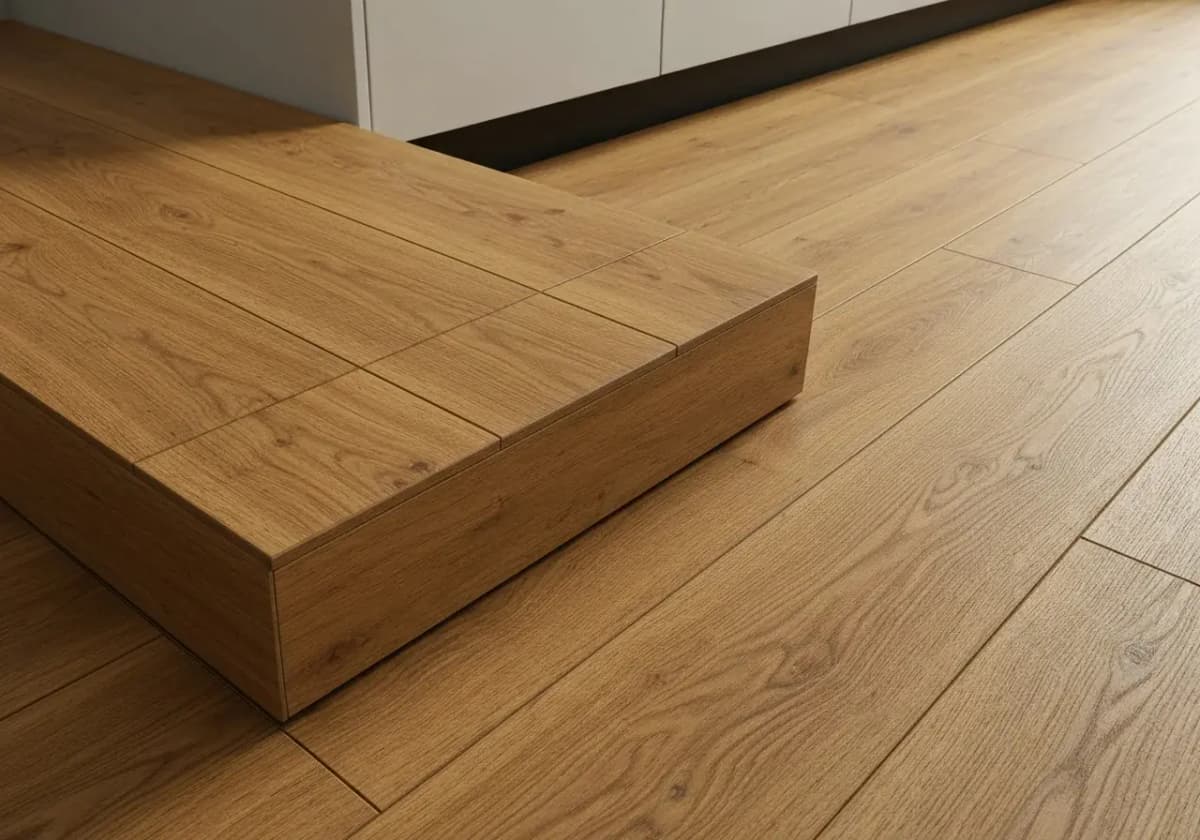
Luxury Vinyl Plank (LVP) Flooring
$5–$12 per sq ft installedLVP is the most popular kitchen flooring choice in Idaho. It is waterproof, durable, comfortable underfoot, and available in realistic wood-look patterns. Premium LVP with a thick wear layer stands up to heavy kitchen traffic.
Best for: Kitchen floors — especially homes with pets and children

Here is how a typical kitchen remodeling project works from first contact to final walkthrough:
In-Home Consultation and Needs Assessment
We visit your kitchen, take detailed measurements, discuss what is and is not working, review your cooking and entertaining habits, identify storage pain points, and establish a realistic budget range. You will receive a scope outline within a few days.
Design Development and Cabinet Layout
We create a detailed kitchen design including cabinet layout, island configuration, countertop material selection, backsplash design, lighting plan, appliance placement, and finish selections. Cabinet orders are placed early because lead times typically run 4-8 weeks.
Material Selection and Ordering
Countertops are templated after cabinets are installed, but the material (quartz, granite, butcher block) is selected during design. Appliances, flooring, backsplash tile, lighting fixtures, and hardware are all confirmed and ordered during this phase.
Permitting and Pre-Construction
We pull permits for electrical, plumbing, or structural work as required. A temporary kitchen station is set up if needed. We coordinate all trade scheduling and material deliveries to align with the construction sequence.
Demolition and Structural Work
Existing cabinets, countertops, flooring, and backsplash are removed. If walls are being opened, structural headers are installed and inspected. Plumbing and electrical rough-in for the new layout is completed and inspected.
Cabinet Installation and Countertop Fabrication
New cabinets are installed, leveled, and secured. Once cabinets are in place, countertop templating happens, followed by fabrication (typically 5-10 business days for quartz or granite). Flooring is installed during this phase as well.
Finish Installation and Final Details
Countertops are installed, backsplash tile is set and grouted, appliances are connected, plumbing fixtures are installed, and all lighting, hardware, and trim details are completed. A final walkthrough ensures everything meets your expectations.
Here is what to expect for project duration when planning kitchen remodeling in New Plymouth:
| Phase | Duration | Details |
|---|---|---|
| Design and Material Selection (pre-construction) | 3–6 weeks | Design consultation, cabinet layout finalization, material selection, appliance ordering, and contract execution. This happens before any demolition. |
| Permitting (pre-construction) | 1–3 weeks | Permit applications for electrical, plumbing, and structural work. Local building departments typically review residential kitchen permits within a few weeks; we build that into the schedule. |
| Cabinet and Appliance Lead Time (pre-construction) | 4–12 weeks | Semi-custom cabinets typically take 4–8 weeks and custom cabinetry 8–12 weeks. Demolition is not scheduled until cabinets and appliances are confirmed en route, so this wait overlaps with permitting rather than adding to the on-site window. |
| Demolition and Rough-In (on-site) | 2–4 days | Remove existing cabinets, countertops, flooring, and backsplash. Complete structural work (wall removal, header installation), plumbing rough-in, and electrical rough-in. Pass inspections. |
| Cabinet and Flooring Installation (on-site) | 2–4 days | Install new cabinets, level and secure them, install flooring, and template the countertops. Fabrication turnaround (5–10 business days for quartz or granite) is scheduled so the install lands inside the construction window. |
| Countertop, Backsplash, and Finish Work (on-site) | 3–5 days | Install countertops, set and grout backsplash tile, connect plumbing fixtures, install appliances, mount lighting, and complete all trim and hardware details. |
| Final Inspection and Walkthrough (on-site) | 1 day | Complete punch list, pass final inspections, and conduct homeowner walkthrough. On-site work as a whole typically totals 1–2 weeks, and often just 5–6 days. |
New Plymouth range: $22,000–$38,000 – $80,000–$150,000
Most New Plymouth projects: $42,000–$70,000
New Plymouth kitchen costs track close to Treasure Valley norms on cabinetry and labor, but the older housing stock adds electrical-service and plumbing modernization that newer-home owners never face, and the small-town location adds mild logistics overhead on materials and trade scheduling roughly 50 minutes from Boise. The low range covers a refresh of a newer subdivision kitchen — quality semi-custom cabinets, quartz, mid-range appliances, lighting, no layout change. The high range covers full gut renovations of larger farm homes or Boulevard properties with custom cabinetry, structural wall removal for open concept, panel upgrades, premium appliances, and high-end surfaces. The average band reflects what most New Plymouth homeowners actually do to a mid-century or older kitchen: new cabinetry, quartz counters, updated appliances, modernized electrical and plumbing to current code, flooring, and lighting — plus the panel and supply-line upgrades pre-1980 homes routinely require. We build a discovery contingency into estimates for older New Plymouth homes because opening a 1915 kitchen wall reliably reveals wiring and plumbing that must be brought to current code before finishes go in. The bands above cover a full kitchen remodel; the standalone working-pantry and canning-zone build quoted separately on this page starts below them.
The final cost of kitchen remodeling in New Plymouth depends on several factors. Here are the biggest cost drivers:
Cabinet Selection and Quality
high impactCabinets typically represent 30-40% of a kitchen remodel budget. The gap between stock cabinets ($150/LF) and custom cabinets ($1,000+/LF) is substantial. Door style, wood species, and finish also affect pricing.
Layout Changes and Wall Removal
high impactMoving plumbing, relocating electrical, or removing walls for an open-concept design adds structural engineering, framing, patching, and trade labor costs.
Countertop Material and Edge Profile
high impactLaminate countertops run $30–$55/sf installed. Standard quartz runs $55–$100/sf installed. Premium quartzite can reach about $120/sf installed. Edge profiles, cutouts, and seam locations also affect fabrication cost.
Appliance Package
high impactA standard appliance package (range, refrigerator, dishwasher, microwave) runs $3,000-6,000. A premium package with a professional range, built-in refrigerator, and panel-ready dishwasher can exceed $15,000-25,000.
Backsplash Tile and Design Complexity
medium impactA simple subway tile backsplash costs $800-1,500. A custom tile design with mosaics, natural stone, or large-format tile with tight joints can cost $2,500-5,000+.
Electrical and Lighting Upgrades
medium impactModern kitchens need more circuits than older homes provide. Adding under-cabinet lighting, pendant fixtures, recessed cans, and dedicated appliance circuits is common.
Flooring Selection
medium impactLVP ($5-12/sf) is the budget-friendly standard. Hardwood ($8-15/sf) adds warmth. Tile ($10-25/sf) offers design flexibility. The kitchen floor area is typically 100-200+ square feet.
These are the real-world projects we see most often from New Plymouth homeowners:
Full Gut of a Colony-Era Boulevard Farmhouse Kitchen
The signature New Plymouth kitchen project: a pre-1940 farmhouse on or near The Boulevard with a kitchen that has been patched, not renovated, for a century. Expect a small or compartmentalized layout, original or homemade cabinetry, an undersized electrical service with one or two circuits, galvanized supply lines, a separate pantry or porch that could be brought into the kitchen footprint, and lead-paint considerations under EPA RRP for this pre-1978 construction. Scope is a full gut, structural evaluation if walls come down, a new dedicated-circuit electrical layout (often paired with a service-panel upgrade), supply-line replacement, custom or semi-custom cabinetry sized to a working farm kitchen, quartz counters, a large primary sink, durable flooring rated for the home's crawlspace environment, and layered lighting. Design honors the farmhouse character rather than importing a generic look.
Mid-Century Ranch Kitchen Modernization
New Plymouth's 1950s–1970s ranches share a recognizable kitchen: U- or galley-shaped, original wood or early laminate cabinetry, a soffit over the uppers, a single-bowl steel sink, and a wall separating the kitchen from the dining or living space. The systems are typically aging copper and a marginal panel rather than catastrophic galvanized and knob-and-tube. Scope commonly includes removing the soffit, opening or widening the wall to the adjacent room (with proper structural support), new cabinetry to the ceiling, quartz counters, an island or peninsula where the footprint allows, updated electrical to current code, new appliances, durable flooring, and a lighting plan. These homes have good bones and respond dramatically to a thoughtful layout change.
Builder-Grade Refresh in a Harvest Creek / Newer Subdivision Home
Post-2000 New Plymouth subdivision kitchens came with stock oak or maple cabinetry, laminate counters, basic appliances, and builder lighting — modern systems but generic finishes. No knob-and-tube, no galvanized pipe, no panel deficiency. Scope is cabinetry replacement or high-quality repainting, quartz counters, a tile or full-height backsplash, updated appliances, under-cabinet and recessed lighting, and often an island upgrade. Because systems are current, the work is predictable and almost the entire budget goes into what you can see and use.
Opening the Kitchen to a Farm-Table Great Room
A frequent New Plymouth request: taking a closed mid-century or older kitchen and connecting it to the dining and living space so the kitchen becomes the household hub it functionally already is. This requires identifying load-bearing walls, engineering a beam where needed, rerouting any plumbing or electrical in the wall, and unifying flooring and ceiling planes across the new combined space. The payoff in a farm household is substantial — the cook is no longer isolated, the table seats a crew, and the room finally matches how the family lives. Structural and permit coordination is central to this scope.
Working Pantry and Canning-Kitchen Integration
In an agricultural town, harvest-season food preservation is real, and kitchens here benefit from a designed pantry or secondary prep zone — a walk-in pantry, a canning counter with a dedicated deep sink and a heavy-duty circuit, and storage scaled for bulk goods. We frequently capture an adjacent porch, mudroom, or closet to create this without expanding the footprint. This is a genuinely New Plymouth-specific design priority that suburban kitchen plans ignore.

Problem: Closed-off kitchen with poor flow to living spaces
Solution: We evaluate load-bearing walls, design structural solutions, and open the kitchen to adjacent rooms for better light, flow, and entertaining function.
Problem: Not enough counter space or storage
Solution: We redesign cabinet layouts to maximize storage with pull-out shelves, drawer organizers, pantry towers, and optimized island configurations with more usable counter surface.
Problem: Outdated builder-grade finishes and worn surfaces
Solution: We replace cabinets, countertops, backsplash, lighting, and hardware with current, durable materials that reflect your style and improve daily function.
Problem: Poor lighting — dark corners and shadows on work surfaces
Solution: We layer recessed ceiling lights, under-cabinet task lighting, and pendant fixtures over islands and sinks to eliminate shadows and brighten the entire space.
Problem: Insufficient electrical capacity for modern appliances
Solution: We upgrade circuits, add dedicated appliance outlets, install GFCI protection, and ensure the panel can support a modern kitchen's electrical load.

High-desert Payette River valley at ~2,257 ft: hot, dry, sun-intense summers and cold winters with real snow load and a 24-inch frost line, plus wind off open agricultural ground and hard water.
Ground Snow Load
Payette County design criterion of 30 psf governs roof and deck structural design.
Frost Depth
24-inch frost depth requires foundations, footings, and deck piers below grade to prevent frost heave.
Wind & Seismic
115 mph ultimate wind speed and Seismic Design Category C; wind off open farmland drives infiltration and uplift on exposed structures.
Intense UV / Temperature Swing
Open-valley sun degrades wood siding, coatings, and decking; wide hot-to-cold swing drives material movement and air leakage.
Hard Water
Hard municipal and private-well water scales glass and fixtures and degrades grout and stone; drives material/glass selection.
The Boulevard / Historic Horseshoe Core
The 1896 colony heart: two horseshoe streets around the mile-long Boulevard park with original irrigation ditches. Predominantly colony-era and pre-1940 wood-sided farmhouses on generous original acre tracts; strong period character and a protected streetscape.
Common projects in The Boulevard / Historic Horseshoe Core:
- •Full systems modernization (electrical, plumbing, insulation)
- •Period-sensitive whole-home renovation
- •Plaster repair and lead-safe interior painting
- •Bathroom and kitchen gut renovations
Mid-Century Ranch Streets (In-Town)
Grid streets around and behind the horseshoe filled with 1950s–1970s ranches and ramblers built as the irrigated farm economy matured. Sound framing, aging copper and marginal panels, closed floor plans, on municipal water and sewer.
Common projects in Mid-Century Ranch Streets (In-Town):
- •Tub-to-walk-in-shower conversions
- •Kitchen modernization and floor-plan opening
- •Whole-house window and flooring replacement
- •Wood-to-fiber-cement re-siding
Agricultural Fringe / Rural Acreage
Working farm and ranch acreage surrounding the town, outside city limits and under Payette County jurisdiction. Homes range from century-old farmsteads to modern custom builds, typically on private wells and septic systems.
Common projects in Agricultural Fringe / Rural Acreage:
- •Multi-generational additions and ADUs
- •Septic-aware bedroom additions
- •Aging-in-place bathroom and shower conversions
- •Outbuilding and barn exterior coating
Harvest Creek / Newer Subdivisions
Post-2000 subdivision pockets representing New Plymouth's modern housing minority. Modern PEX plumbing, adequate panels, and builder-grade finishes on tighter lots; no environmental-testing requirements.
Common projects in Harvest Creek / Newer Subdivisions:
- •Builder-grade kitchen and bath upgrades
- •Flooring replacement
- •Deck construction
- •Finish-level refreshes
Every New Plymouth neighborhood has different housing stock, homeowner priorities, and project considerations. Here is what kitchen remodeling looks like in each area:
The Boulevard / Historic Horseshoe Core
Harvest Creek / Newer Subdivisions
Mid-Century Ranch Streets In-Town
Agricultural Fringe / Rural Acreage
Permit authority: City of New Plymouth (building inspection contracted to the City of Fruitland Building Department) for properties inside city limits; Payette County Building Department for unincorporated rural parcels. Plumbing and electrical permits issued separately by the State of Idaho (DOPL).
Online portal: npidaho.com/building-department
- ✓New Plymouth contracts building inspection to the City of Fruitland Building Department (208-452-4946); permit forms submitted via New Plymouth City Hall or clerk@npidaho.com.
- ✓Plumbing and electrical permits are obtained directly from the State of Idaho, not the city.
- ✓Adopted codes: 2018 IRC, 2018 IBC, 2018 IECC; energy compliance testing required on every fifth residential home completed.
- ✓Payette County design criteria: 30 psf ground snow load, 115 mph wind, Seismic Design Category C, 24-inch frost depth.
- ✓Rural parcels outside city limits are permitted by Payette County; verify jurisdiction per parcel.
- ✓Pre-1978 homes: EPA RRP lead-safe practices; pre-1980 homes: asbestos testing/abatement.
Helpful ID resources
- City of New Plymouth (building inspection contracted to the City of Fruitland Building Department) for properties inside city limits; Payette County Building Department for unincorporated rural parcels. Plumbing and electrical permits issued separately by the State of Idaho (DOPL). — permit applications, inspections, and code resources
- Idaho DEQ — Asbestos Program — testing and abatement requirements for pre-1980 homes
- EPA Lead Renovation, Repair and Painting (RRP) Program — required certification for work in pre-1978 homes
- ●Work triangle efficiency — the relationship between sink, stove, and refrigerator determines daily cooking workflow
- ●Island sizing — a functional island needs 36 inches of clearance minimum (42–48 inches on working sides) and a 12–15 inch overhang for seating
- ●Cabinet height — standard uppers are 30 or 36 inches tall; going to the ceiling eliminates dust-catching gaps and adds storage
- ●Backsplash height — full-height backsplash from counter to upper cabinets creates a cleaner, more modern look
- ●Hardware coordination — pulls vs knobs, bar vs cup style, and finish (matte black, brushed brass, satin nickel) set the design tone
- ●Pantry planning — a dedicated pantry cabinet or walk-in pantry dramatically improves kitchen organization
Here are the design trends we see most often in New Plymouth kitchen remodeling projects:
- →Period-sensitive renovation of colony-era farmhouses
- →Curbless, aging-in-place walk-in showers
- →Open floor plans in closed mid-century ranches
- →Durable, low-maintenance materials (fiber cement, LVP, quartz)
- →Multi-generational suites and ADUs on farm acreage
- →Working pantries and canning/food-preservation kitchen zones
- →Energy-driven window and envelope upgrades
- →View-oriented outdoor living on generous parcels
New Plymouth and Payette County home values have appreciated well above their historic norms; local market median list prices reached roughly $485,000 with an average around $449,000 in early 2026 (Redfin), against a longer-run median home value near $277,500. Inventory is limited in a small market with homes selling in roughly 70 days. With trading up locally often impractical, long-tenure, multi-generational families predominantly renovate to keep — making durable, do-it-once work the local standard and a strong resale signal in a closely-watched market.
Avoid these common pitfalls New Plymouth homeowners encounter with kitchen remodeling projects:
Mistake: Treating an older New Plymouth kitchen as a cabinet swap instead of a systems project
Better approach: Colony-era and many mid-century kitchens here have undersized electrical service, too few circuits, and galvanized supply lines. A modern kitchen needs multiple dedicated 20-amp circuits, GFCI protection, and often a panel upgrade. Scope and budget the electrical and plumbing modernization up front — discovering it after cabinetry is ordered is how these projects derail.
Mistake: Assuming New Plymouth issues its own permits like a larger city
Better approach: Building inspection is contracted to the City of Fruitland, applications route through New Plymouth City Hall, and electrical and plumbing permits come from the State of Idaho. Confirm city-versus-county jurisdiction first and coordinate all three permits before demolition. For an electrically intensive kitchen, the separate state electrical permit is easy to overlook and costly to skip.
Mistake: Removing a wall for open concept without structural engineering
Better approach: The kitchen-to-living wall in a New Plymouth ranch is often load-bearing, and the roof carries roughly a 30 psf ground snow load under the county's published criteria. The beam must be engineered for that load, not eyeballed. Proper structural design and permitting are non-negotiable for an open-concept conversion here.
Mistake: Specifying particleboard cabinetry in a heavy-use farm kitchen over a crawlspace
Better approach: New Plymouth farm kitchens see moisture and wear that swell and delaminate particleboard boxes within a decade, accelerated in homes over vented crawlspaces. Specify plywood-box construction. The premium is modest and the service-life difference is substantial — correct for this town's use intensity and long ownership tenures.
Mistake: Designing a generic suburban kitchen with no working-pantry or canning provision
Better approach: This is an agricultural community where harvest preservation is real. A kitchen plan that ignores a working pantry, a canning counter with a dedicated circuit, and bulk storage misses how these households actually use the room. Capture an adjacent porch, mudroom, or closet to build it without expanding the footprint.
Most popular remodeling projects in New Plymouth
- ✓Whole-home systems modernization
- ✓Bathroom and shower remodels
- ✓Kitchen remodels
- ✓Home additions and ADUs
- ✓Window replacement
- ✓Re-siding (wood to fiber cement)
- ✓Flooring with subfloor repair
- ✓Deck construction

See Your Remodel Before You Build.
Upload a few photos of your kitchen, bathroom, flooring, or exterior and get AI-generated concept visuals tailored to your space, style, and materials — free, no obligation, in about five minutes. Then request a real estimate from our Idaho registered Boise team.
Free concept preview · No credit card · Licensed Idaho contractor
Will my older New Plymouth kitchen need an electrical panel upgrade?
Frequently, yes. Colony-era and many mid-century New Plymouth kitchens run on undersized service with too few circuits — a single 20-amp circuit feeding an entire pre-1960 kitchen is common. A modern kitchen requires multiple dedicated 20-amp circuits plus GFCI protection, and the existing panel often cannot support that, requiring a service upgrade. We assess the panel during design and include any upgrade in the scope and budget rather than discovering it mid-project. Note that the electrical permit for this work is issued by the State of Idaho, separate from the city building permit.
Who issues my kitchen remodel permits in New Plymouth?
Inside city limits, the building permit application goes through New Plymouth City Hall, and inspections are performed by the City of Fruitland Building Department under contract (208-452-4946). Electrical and plumbing permits are issued separately by the State of Idaho. On the rural agricultural fringe outside city limits, the building permit falls under Payette County instead. A full kitchen renovation typically needs the building permit plus separate state electrical and plumbing permits, all of which we coordinate.
Can I open my closed kitchen to the living area in a mid-century New Plymouth ranch?
Usually yes, but it requires structural engineering. The wall between a 1960s ranch kitchen and its living space is frequently load-bearing, so removing it means installing a properly sized beam — engineered to the county's published ground snow load (about 30 psf) — and rerouting any plumbing or electrical in the wall. Done correctly, this is the single highest-impact change for these homes, turning an isolated galley into the connected hub a farm household actually uses.
Should I design a dedicated canning or food-preservation zone?
For many New Plymouth households, yes — this is a genuinely local consideration. Harvest-season canning and large-batch preservation are real here, and a designed zone with a deep secondary sink, a heavy-duty dedicated circuit, heat-tolerant counter space, and bulk storage makes a meaningful difference. We frequently capture an adjacent porch, mudroom, or closet to build this without expanding the home's footprint.
How long does a New Plymouth kitchen remodel take?
A newer subdivision refresh runs 4–6 weeks end to end from design sign-off to walkthrough. A mid-century ranch modernization with a wall opening runs 6–9 weeks end to end. A full colony-era farmhouse gut with panel upgrade and structural work runs 8–12 weeks end to end. Within those totals, the crew is on site 1–2 weeks, and often just 5–6 days, because we do not begin demolition until cabinets and appliances are confirmed en route. Add permit processing through the New Plymouth/Fruitland pathway plus separate state electrical and plumbing permits. We recommend beginning design two to three months ahead of a desired start, especially for the busy spring–summer construction window.
Is quartz worth it over laminate or tile counters in a farm kitchen?
In a working New Plymouth farm kitchen, yes. Quartz is non-porous, resists the area's hard-water scale, and tolerates the heat and moisture of large-batch and canning use that destroys laminate and stains grout-lined tile. It is the durable, do-it-once choice that matches how these kitchens are actually used and the long-tenure ownership pattern in this town.
What adds the most cost to a kitchen remodel?
Cabinet selection is typically the single largest cost driver, followed by countertop material, appliance package, and layout changes. Moving plumbing or removing walls adds structural and trade labor costs. The finish level you choose — stock vs semi-custom vs custom cabinets, laminate vs quartz vs granite counters — has the biggest impact on total budget.
Can I live at home during a kitchen remodel?
Yes, most homeowners stay in the home during a kitchen remodel. We help you set up a temporary kitchen station in another room with a microwave, toaster oven, and access to water. Dust barriers contain construction debris. Expect 1-2 weeks without a fully functional kitchen, and often 5-6 days — Iron Crest does not begin demolition until cabinets and appliances are confirmed en route, so material lead times fall before the crew arrives.
How long does a kitchen remodel take from start to finish?
On-site construction typically takes 1–2 weeks, and often just 5–6 days, because Iron Crest does not begin demolition until cabinets and appliances are confirmed en route. Design, permitting, and cabinet lead time (8–12 weeks for custom cabinetry) happen before the crew arrives, so plan on roughly 3–4 months from first meeting to finished kitchen.
Do kitchen remodels require permits?
Yes. Most kitchen remodels that involve electrical, plumbing, or structural changes require permits from your city or county building department. Cosmetic-only updates (painting cabinets, new hardware, replacing a faucet) typically do not. We handle all permit applications and inspections.
Is a kitchen remodel worth it for resale value?
Remodeling's 2024 Cost vs. Value Report puts a minor midrange kitchen remodel at about 96% of cost recouped and a major midrange remodel at about 49%. Those are national figures. We do not publish a Boise-specific recapture percentage, because no local dataset supports one.
What is the best countertop material for kitchens?
Quartz is the most popular choice because it is non-porous, stain-resistant, durable, and available in hundreds of colors and patterns. Granite remains popular for homeowners who prefer natural stone. Butcher block adds warmth for island tops. The best choice depends on your budget, maintenance tolerance, and design preferences.

Talk to a real project manager
Have Questions? Call Now for a Free In-Home Consultation.
Mon–Fri 7 AM–6 PM · Idaho registered & insured · No obligation
Russ S. — Project Manager
Russ S. — Project Manager
Start your kitchen remodeling in New Plymouth
Get a free, no-obligation estimate for kitchen remodeling in New Plymouth, ID. We handle design, permits, and every detail of construction.
Get Your Free Estimate