
Kitchen Remodeling Design Ideas for Boise
Get inspired with kitchen remodeling design ideas tailored to Boise homes, from trending styles to practical layout considerations.
Quick answer
Can you open up my kitchen to the living room? Yes. If the wall between the kitchen and living room is load-bearing, we install a structural header (beam) to carry the load. This is a common modification in Treasure Valley homes and creates a dramatic improvement in light, flow, and entertaining function.
Boise, ID · Kitchen Remodeling
Planning kitchen remodeling in Boise?
Read the full guide below — or get your project priced now. Free, no-obligation estimates from an Idaho registered local team, backed by a 1-year workmanship warranty.
- Licensed Idaho RCE-6681702
- 1-Year Workmanship Warranty
- $2M Liability Coverage
- Free, No-Obligation Estimates


Boise kitchen remodeling is categorically different from kitchen work in Meridian, Eagle, Nampa, or Caldwell — and the differences are specific enough to matter when you're choosing a contractor and planning your project. **Housing stock complexity:** Meridian's kitchen remodeling market is dominated by post-2000 new construction on open lots with standard framing, modern mechanicals, and builder-grade finishes that upgrade predictably. Eagle is similar — mostly 1990s-2010s custom homes that present few structural surprises. Boise proper has all of that, plus the oldest and most architecturally complex housing stock in the Treasure Valley: Craftsman bungalows from 1905–1935, wartime construction from the 1940s, mid-century ranches from the 1950s–1960s, and infill construction from every subsequent decade. Each era carries its own material profiles, structural conventions, and code-compliance requirements. Remodeling a 1940s Bench kitchen requires a completely different skill set than remodeling a 2005 Meridian kitchen, and many Treasure Valley contractors who excel at the latter have limited experience with the former. **Permit complexity and city staff expertise:** City of Boise's Planning and Development Services department is more sophisticated and more demanding than the permit offices in Meridian, Eagle, or Ada County (which covers unincorporated areas). Boise requires more documentation for structural work, enforces its historic district overlay with rigor, and has inspection cadences that require scheduling coordination. Contractors who primarily work in newer Meridian or Star subdivisions are often caught off guard by Boise's permit requirements. Our team works with Boise's permit office regularly and understands the documentation, inspector preferences, and timing rhythms that keep projects moving. **Neighborhood identity and design expectations:** North End homeowners have a strong aesthetic identity and expect their kitchen remodel to honor the character of their home. Bench homeowners are increasingly sophisticated buyers who've done their research on what they want. SE Boise and Harris Ranch homeowners are competing in a tight resale market where quality of finishes directly impacts listing photos and buyer perception. Each Boise neighborhood has its own remodeling personality — something a contractor working primarily in master-planned Meridian subdivisions may not have the context to navigate well. **Community infrastructure:** Boise's established neighborhoods have narrower streets, older infrastructure, limited parking, and neighbors who live close. Construction staging, dumpster placement, and crew parking require specific planning in North End or Bench neighborhoods that a contractor used to working on half-acre Meridian lots simply hasn't developed. These logistics matter — poor staging in a North End kitchen remodel can create neighbor relations issues and city right-of-way violations that cause project delays.
North End
The North End is Boise's most architecturally significant residential neighborhood, and its kitchen remodeling context is unlike anywhere else in the city. The housing stock runs from genuine 1900s Craftsman bungalows on streets like 13th, 14th, and Resseguie to mid-century ranches from the 1940s–1960s that filled in the remaining lots — and both housing types present distinct challenges and opportunities for kitchen remodeling. For the Craftsman-era homes, the primary challenge is reconciling two competing goals: honoring the architectural character of a 100-plus-year-old home while building a kitchen that functions for modern life. These kitchens are small by contemporary standards — 80–120 square feet was generous for a 1915 Craftsman — and they're almost always tucked behind the dining room, separated by a wall that blocks light and constrains cooking. The wall between kitchen and dining is almost always the first thing we address, and it's almost always load-bearing. In North End Craftsmans, that beam installation — typically a flush LVL beam with period-appropriate wood trim to match the home's existing millwork — is the single highest-impact improvement we make. Post-beam, natural light floods the combined space and the cooking-to-dining flow feels effortless for the first time in the home's history. The North End Historic District overlay requires design review for exterior modifications, but interior kitchen remodels are fully exempt. That said, the community culture in the North End strongly values architectural authenticity, and homeowners here tend to be thoughtful about their material and design choices. Inset cabinet doors rather than full-overlay, shaker or flat-panel profiles that read as Craftsman-adjacent, painted finishes in period-appropriate colors (Craftsman greens, soft whites, warm creams), and natural stone or butcher block countertops over engineered quartz are common requests. Open shelving with wood and iron brackets fits the Craftsman aesthetic beautifully and is extremely popular in this neighborhood. Plumbing in North End homes often includes original galvanized steel supply lines that have reduced flow capacity due to interior corrosion — a kitchen remodel is the logical time to replace the supply line from the shutoff valve to the fixtures with modern copper or PEX. Similarly, electrical panels in pre-1960 North End homes frequently have outdated 100-amp service that can't support a modern kitchen's load requirements (induction range, dishwasher, refrigerator, microwave, outlets). An electrical panel upgrade to 200-amp service is commonly bundled into North End kitchen remodels and costs $2,500–$4,500 with a City of Boise electrical permit. North End permit applications often require additional documentation for any structural work, and processing can take a few weeks with structural review — plan accordingly when scheduling your project start date. Parking and staging logistics in the North End require extra planning. Street parking is limited, dumpsters require a City of Boise right-of-way permit on many blocks, and neighbors live close. We build North End project schedules with these realities accounted for, which is one reason North End projects tend to run slightly longer — and why inexperienced contractors often underestimate the true scope here.
SE Boise / Harris Ranch
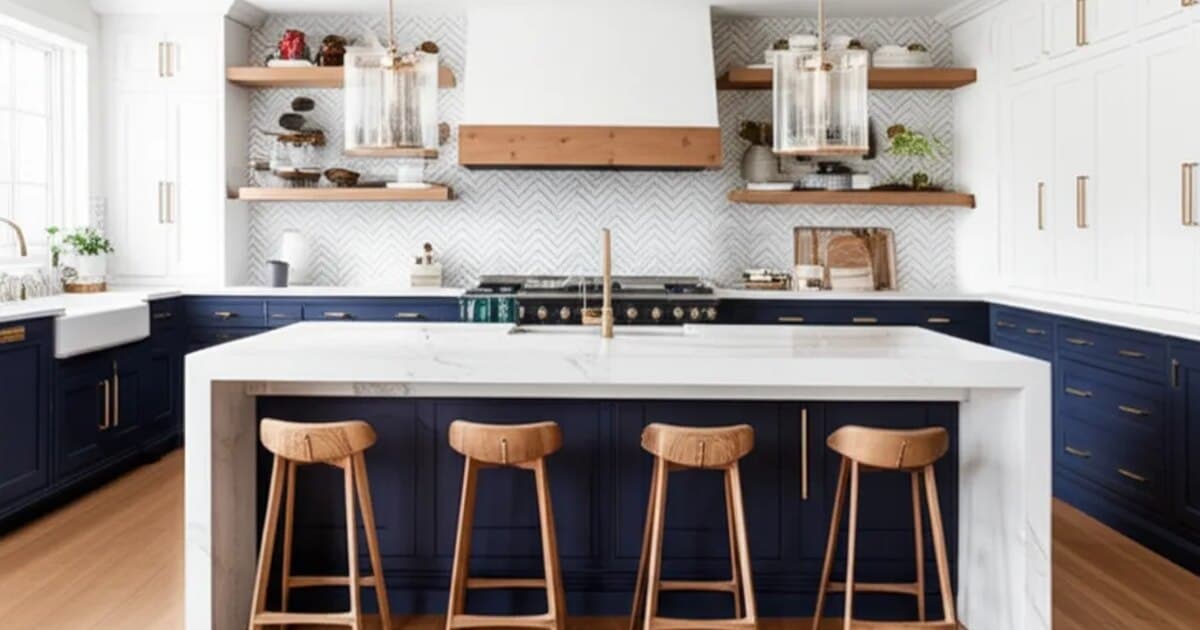
Southeast Boise and the Harris Ranch development represent the newest and most rapidly evolving kitchen remodeling market in Boise proper. Harris Ranch — the large master-planned development east of S. Boise Avenue along the Boise River — has been under construction since the early 2000s and continues adding phases through the late 2020s. The result is a neighborhood with an unusually wide range of housing ages: 2004-vintage townhomes on the western edge, 2015–2020 single-family homes in the middle phases, and brand-new construction still closing in the eastern parcels. The kitchen remodeling opportunity in SE Boise and Harris Ranch is driven by what we call "builder-grade fatigue." Production-built homes are finished to a price point that prioritizes lot value and square footage over kitchen quality. Stock maple or cherry cabinets in a raised-panel profile, granite countertops with standard edges and basic slab selection, recessed lighting with no accent or pendant layers, and stainless appliances that were mid-tier at time of install and are now showing their age: this is the standard package a Harris Ranch home received around 2010, and it looks exactly like what it is — fifteen years old. The upgrade pathway for these kitchens is efficient because the structure is sound, the layout is usually good, and the electrical and plumbing are modern. We're not solving the problems of a 1952 ranch; we're elevating an already-functional kitchen to match the home's current value and the owner's current taste. The most transformative changes in this scenario: new shaker-style cabinetry, or a full repaint of the existing cabinets, in a modern finish (white upper/navy lower two-tone is currently the most-requested combination in SE Boise), quartz countertops replacing granite with a waterfall island edge, pendant lighting over the island, a subway or large-format porcelain backsplash, and appliance upgrades to a matching current-generation package. Harris Ranch specifically benefits from excellent outdoor living conditions — the development's proximity to the Boise River Greenbelt means many homes have views and outdoor spaces that connect naturally to the kitchen. We frequently design kitchen remodels in this neighborhood with the indoor-outdoor connection in mind: large windows or sliding glass access from the kitchen to a covered patio, consistent flooring that runs from kitchen through to outdoor tile, and outdoor kitchen/grill areas that extend the entertainment space. SE Boise permits are handled through City of Boise Planning and Development Services at 150 N. Capitol Blvd, and turnaround ranges from over-the-counter for simple trade permits to a few weeks for building permits with structural review; confirm current processing times with the city.
Boise Bench
The Boise Bench — the elevated plateau running roughly between I-84 and the Boise River, from roughly Cole Road in the west to Protest Road and Federal Way in the east — contains one of Boise's most undervalued and rapidly appreciating housing inventories. Built primarily between the 1940s and the 1970s, Bench homes are honest working-class houses that were well-built for their era but have rarely been updated since their original construction. The kitchens in Bench-area homes are a time capsule. Walk into a 1958 Bench ranch on Van Buren or a 1970 split-level on Curtis Road, and you'll find original galley kitchens with Formica countertops, laminate tile flooring laid over hardwood (sometimes over another layer of linoleum), steel slab cabinets with original hardware, and single overhead globe fixtures that cast flat light across the entire room. In the 1960s–1970s homes, avocado green and harvest gold appliances have occasionally been replaced with white or almond appliances from the 1990s, which look almost as dated as the originals. These kitchens have not aged gracefully. But the bones are there. Bench homes were built on concrete foundations, with stout framing and plaster walls that hold fasteners exceptionally well. The lots are mature — 50- to 75-foot frontages with alley access, large backyards, and established trees — and the neighborhood has every practical amenity Boise offers. Buyers are discovering Bench homes specifically because they still price below the North End for comparable square footage — and the kitchen is usually the first thing they want to change. The most important thing to know about Bench kitchens before demolition: asbestos testing is strongly recommended. Pre-1980 Bench homes commonly contain asbestos in floor tiles, joint compound, and sometimes pipe insulation. We test suspect pre-1980 materials and use EPA/AHERA-accredited abatement crews when asbestos is confirmed. Budget $1,500–$4,500 for testing and abatement if your Bench home was built before 1980. Skipping it exposes your household to a real health risk. Lead paint is similarly prevalent in pre-1978 Bench homes. Kitchen cabinets and walls may have multiple layers of lead-based paint. The EPA's RRP (Renovation, Repair, and Painting) rule requires contractors working in homes with lead paint to use certified lead-safe work practices, including containment, specialized HEPA vacuuming, and proper disposal. Ask any contractor you're considering how they handle lead-safe work practices under the EPA RRP rule. Galley kitchen conversions are the dominant remodeling project on the Bench, and the results are consistently dramatic. A 9x13 galley kitchen from 1962 with one wall removed, a new LVL beam installed, and the resulting space reconfigured with an L-shaped layout and island becomes a 200-square-foot kitchen-dining hybrid that makes the entire home feel twice as large. Combined with updated mechanicals, LVP flooring to match the adjacent rooms, and semi-custom white shaker cabinets, these Bench kitchen remodels are among the most dramatic before-and-after transformations we do anywhere in Boise.
West Boise
West Boise's residential character is defined by the subdivision waves of the 1980s, 1990s, and 2000s — period-specific floor plans, builder-grade finishes from their respective eras, and large lots that gave families room to grow. The kitchen remodeling market here is enormous, driven by a generation of homeowners who bought in the 1990s–2000s, have paid down significant equity, and are now ready to invest in a home they plan to stay in for another 10–20 years. The 1985–1995 West Boise kitchen is the most common remodel target we see. Oak cabinets with raised-panel doors (not the distressed, character-oak type — the flat, honey-stained cabinet door that defined the Reagan-through-Clinton era), laminate countertops in almond or country-white, drop-ceiling fluorescent lighting in 2x2 or 2x4 grid panels, linoleum flooring, and black or white appliances that are now decades old. The layout is typically a U-shape or L-shape with a peninsula that serves as a breakfast bar, and the footprint is usually 150–180 square feet — more room to work with than the older city neighborhoods, but underutilized by decades of accumulated clutter and insufficient storage solutions. The 1996–2008 West Boise kitchen sits one generation later. Here you'll find the transition from laminate to basic tile countertops (often 4-inch ceramic tile with wide grout joints that are impossible to keep clean), and the switch from oak to maple cabinets, but the bones of the problem are similar — a kitchen whose aesthetic identity is fully rooted in the era of its construction. These homes also commonly have tile backsplashes in sage green or rust-red patterns that were installed as upgrades at the time and now feel inescapably dated. Both generations benefit from a similar remodeling approach. The structure is almost always sound — West Boise subdivisions were built to code on engineered lots with proper footings, and the mechanical systems are modern enough that the electrical panel typically has sufficient capacity for a full kitchen upgrade without a panel replacement. The scope is primarily cosmetic-to-mid: new semi-custom cabinetry, quartz countertops, LVP flooring, pendant lighting, tile backsplash, and appliance upgrades. Because the layouts in West Boise kitchens are usually well-conceived (subdivision builders had floor-plan research behind their designs), we rarely recommend major layout changes — optimizing what's there is more efficient and more cost-effective than reconfiguring. One West Boise-specific opportunity: many subdivision homes from the 1990s–2000s have formal dining rooms adjacent to the kitchen that are no longer used for formal dining. Combining the kitchen with an underutilized formal dining room — removing the partition wall, extending flooring and cabinets through the unified space, and adding a large island with seating — is one of the most transformative projects we do in West Boise. The footprint grows from 150 to 300-plus square feet, and the home's entertaining capacity expands dramatically without adding square footage.

The design phase is where your kitchen remodeling goes from a general idea to a specific plan. Good design balances aesthetics, functionality, budget, and the unique characteristics of your home and neighborhood in Boise. Here are the most popular design approaches and trends we see in Boise and the surrounding Treasure Valley.
Boise homeowners tend to favor designs that blend modern functionality with the regional character of Idaho homes. Here are the most requested design elements:
These design factors are specific to kitchen remodeling projects and affect both the look and function of the finished space:
Work triangle efficiency — the relationship between sink, stove, and refrigerator determines daily cooking workflow
Island sizing — a functional island needs 36 inches of clearance minimum (42–48 inches on working sides) and a 12–15 inch overhang for seating
Cabinet height — standard uppers are 30 or 36 inches tall; going to the ceiling eliminates dust-catching gaps and adds storage
Backsplash height — full-height backsplash from counter to upper cabinets creates a cleaner, more modern look
Hardware coordination — pulls vs knobs, bar vs cup style, and finish (matte black, brushed brass, satin nickel) set the design tone
Pantry planning — a dedicated pantry cabinet or walk-in pantry dramatically improves kitchen organization
The materials and finishes you choose bring your design to life. Here are the options most commonly selected for kitchen remodeling projects in Boise:
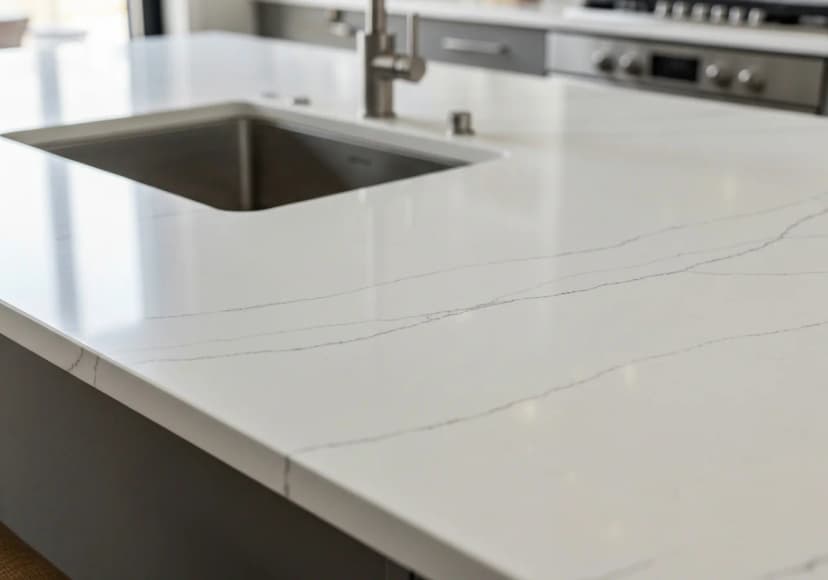
Quartz Countertops
$55–$100 per sq ft fabricated and installedMost kitchen applications — especially busy households
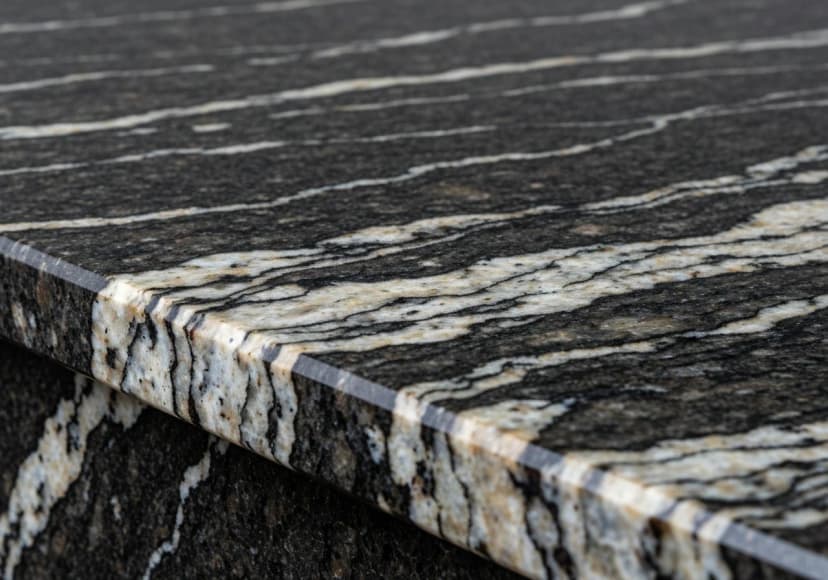
Granite Countertops
$45–$90 per sq ft fabricated and installedHomeowners who want natural stone with unique veining
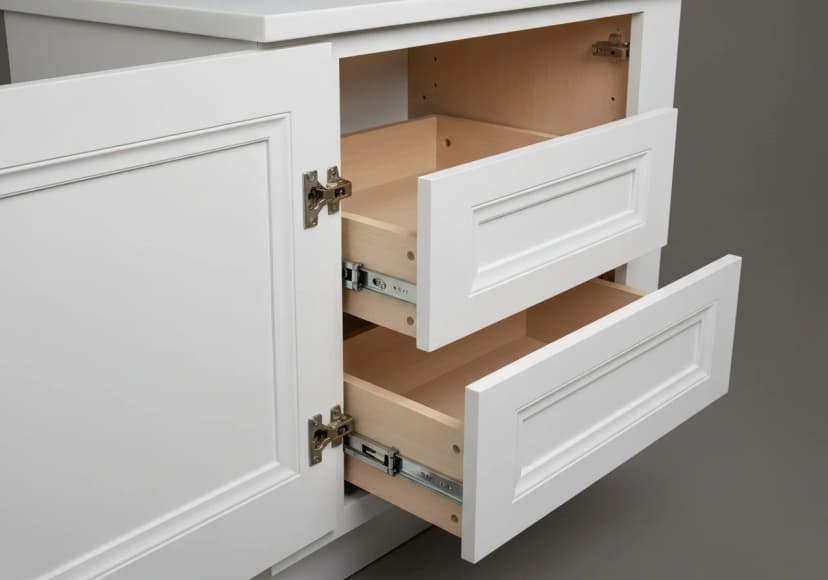
Semi-Custom Cabinets
$300–$650 per linear foot installedMost kitchen remodels — best balance of customization and value
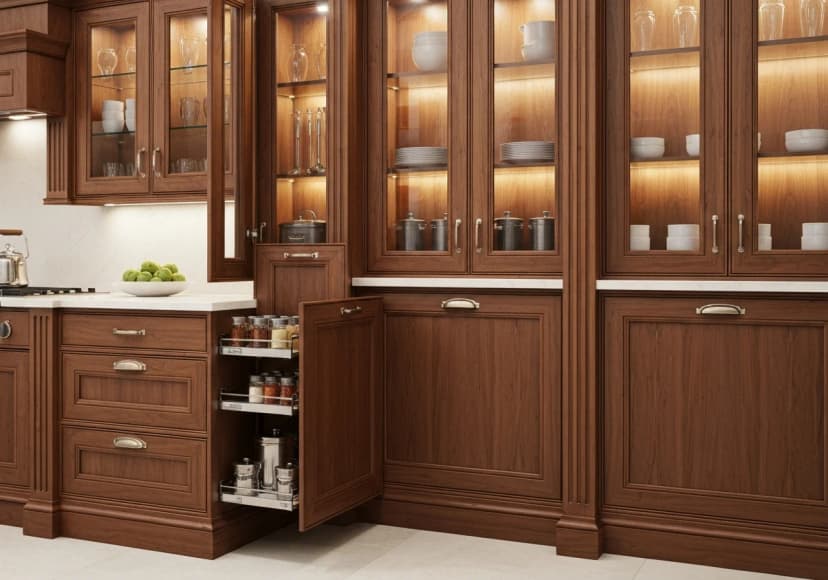
Custom Cabinets
$600–$1,200+ per linear foot installedHigh-end kitchens, unusual layouts, and specific design visions
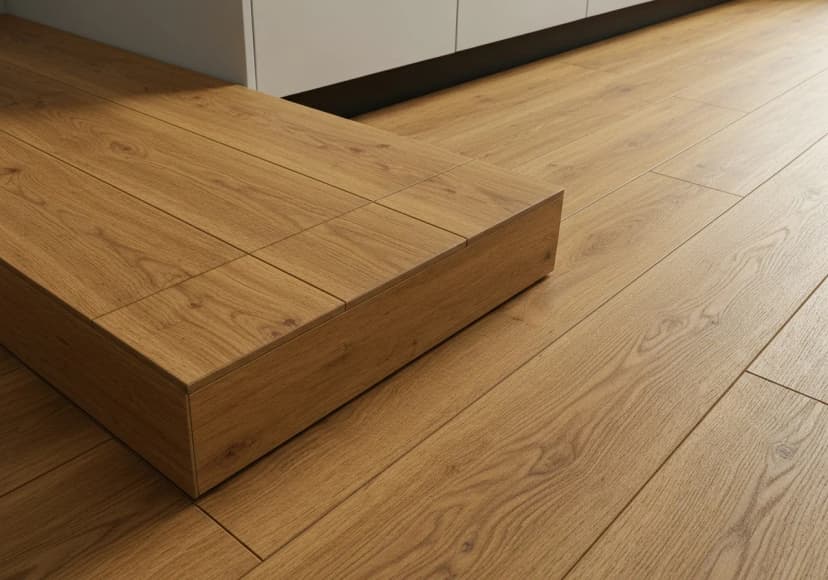
Luxury Vinyl Plank (LVP) Flooring
$5–$12 per sq ft installedKitchen floors — especially homes with pets and children
Learning from others' mistakes saves time and money. Here are the most common kitchen remodeling design pitfalls we see in Boise:
Closed-off kitchen with poor flow to living spaces
We evaluate load-bearing walls, design structural solutions, and open the kitchen to adjacent rooms for better light, flow, and entertaining function.
Not enough counter space or storage
We redesign cabinet layouts to maximize storage with pull-out shelves, drawer organizers, pantry towers, and optimized island configurations with more usable counter surface.
Outdated builder-grade finishes and worn surfaces
We replace cabinets, countertops, backsplash, lighting, and hardware with current, durable materials that reflect your style and improve daily function.
Poor lighting — dark corners and shadows on work surfaces
We layer recessed ceiling lights, under-cabinet task lighting, and pendant fixtures over islands and sinks to eliminate shadows and brighten the entire space.
Insufficient electrical capacity for modern appliances
We upgrade circuits, add dedicated appliance outlets, install GFCI protection, and ensure the panel can support a modern kitchen's electrical load.
For kitchen remodeling projects in Boise, you have two main approaches to the design process: hiring a separate interior designer then a contractor, or working with a design-build firm that handles both under one roof.
Design-build (our approach)
- ✓ Single point of contact
- ✓ Design informed by real construction costs
- ✓ Faster project delivery
- ✓ Budget aligned from day one
Separate designer + contractor
- ● More specialized design expertise
- ● Independent design perspective
- ● Requires coordination between parties
- ● Can result in budget surprises
Local factors — Boise's housing stock and typical construction eras, the climate conditions that drive material and scheduling choices, and permitting through City of Boise Planning and Development Services — are covered in full on our Boise page for this service, alongside 5 common project types.
Kitchen Remodeling in Boise: housing stock, climate & permits →Do kitchen remodels require permits?
Yes. Most kitchen remodels that involve electrical, plumbing, or structural changes require permits from your city or county building department. Cosmetic-only updates (painting cabinets, new hardware, replacing a faucet) typically do not. We handle all permit applications and inspections.
Can you open up my kitchen to the living room?
Yes. If the wall between the kitchen and living room is load-bearing, we install a structural header (beam) to carry the load. This is a common modification in Treasure Valley homes and creates a dramatic improvement in light, flow, and entertaining function.
Does the North End have special remodeling rules?
Yes. The North End Historic District has additional design review requirements for exterior modifications. Interior work is not affected, but changes to the exterior appearance — siding, windows, roofing, and additions — may require Historic Preservation Commission review.
Planning kitchen remodeling in Boise?
Get expert guidance and a free estimate for your kitchen remodeling project in Boise, ID.
Get Your Free Estimate