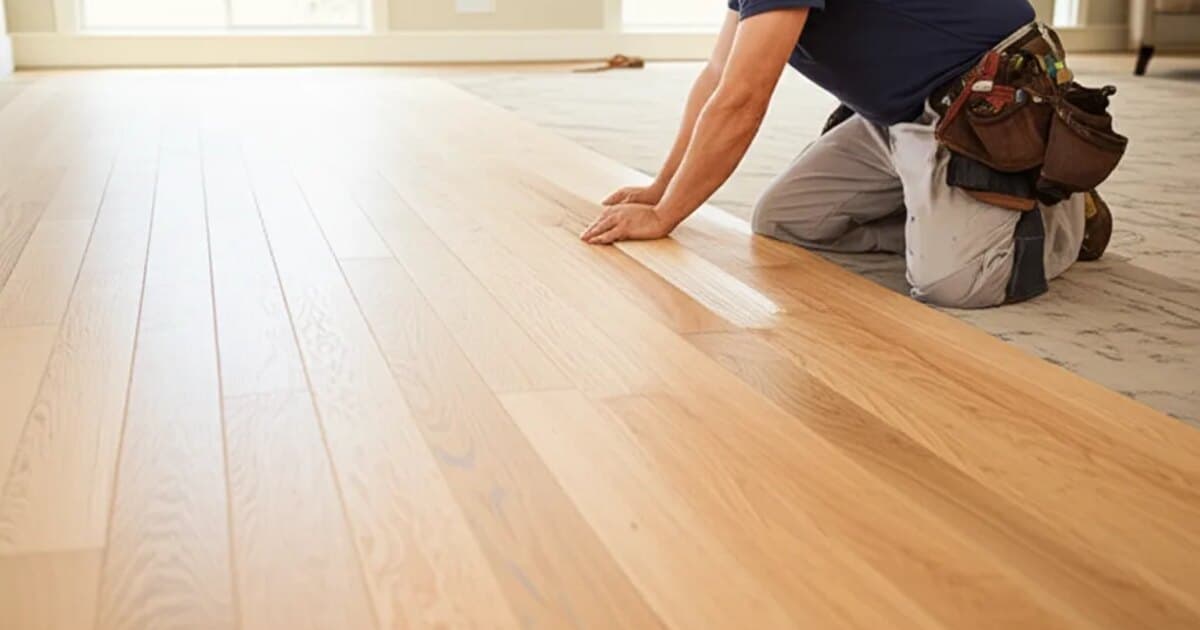
Flooring Installation in Boise, Idaho
New flooring transforms the look and feel of every room. Iron Crest Remodel installs hardwood, luxury vinyl plank (LVP), tile, laminate, and carpet with expert subfloor preparation, seamless transitions, and matching trim work.
- LicensedIdaho Contractor
- $2MLiability Insured
- 3-YearWorkmanship Warranty
- 200+Projects Completed
Idaho RCE-6681702
Licensed Contractor
$2M General Liability
Bonded + Workers' Comp
EPA RRP Certified
Lead-Safe Renovator
Schluter Certified
Lifetime Shower Warranty
Trex Pro Contractor
Authorized Installer
3-Year Workmanship
Written Warranty
Explore our detailed guides for each flooring material. Compare costs, durability, climate performance, and find the best fit for every room in your Boise home.
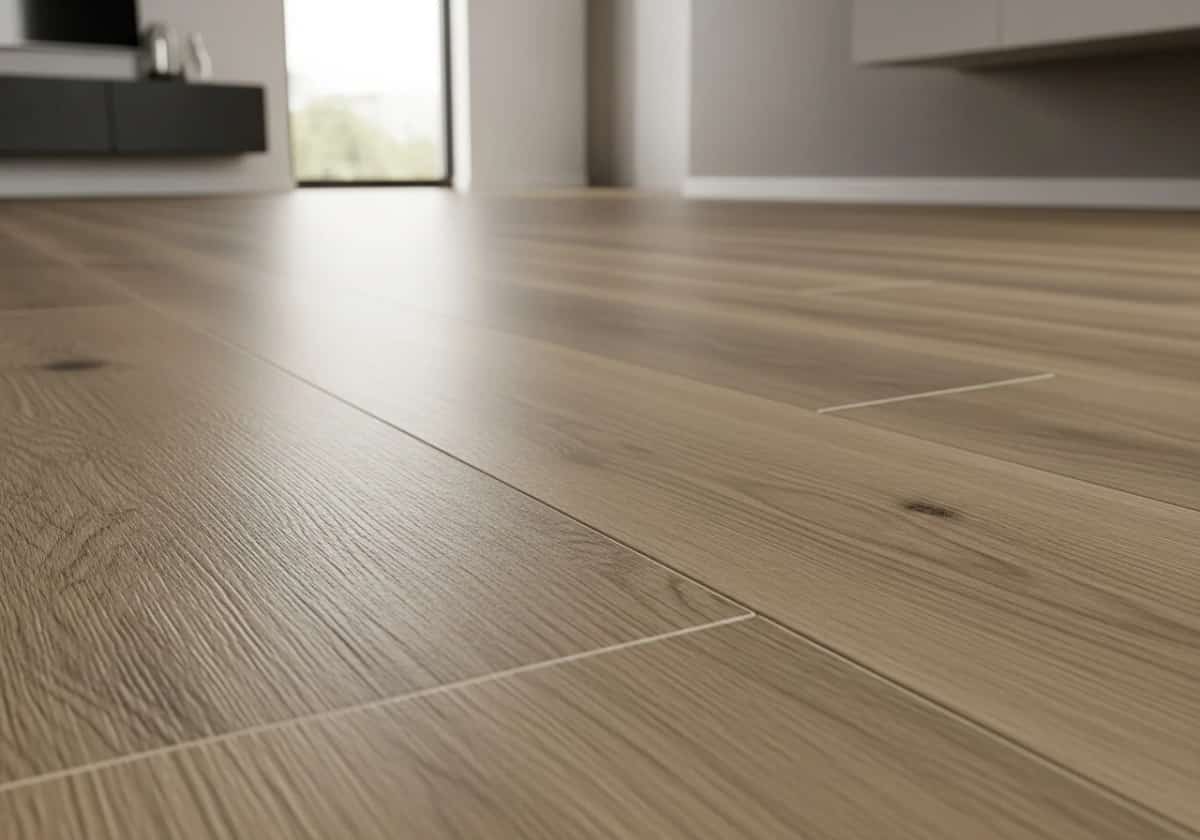
Luxury Vinyl Plank
100% waterproof, dimensionally stable in Boise’s dry climate. Click-lock installation. $5.50-$9.50/sq ft installed.
Explore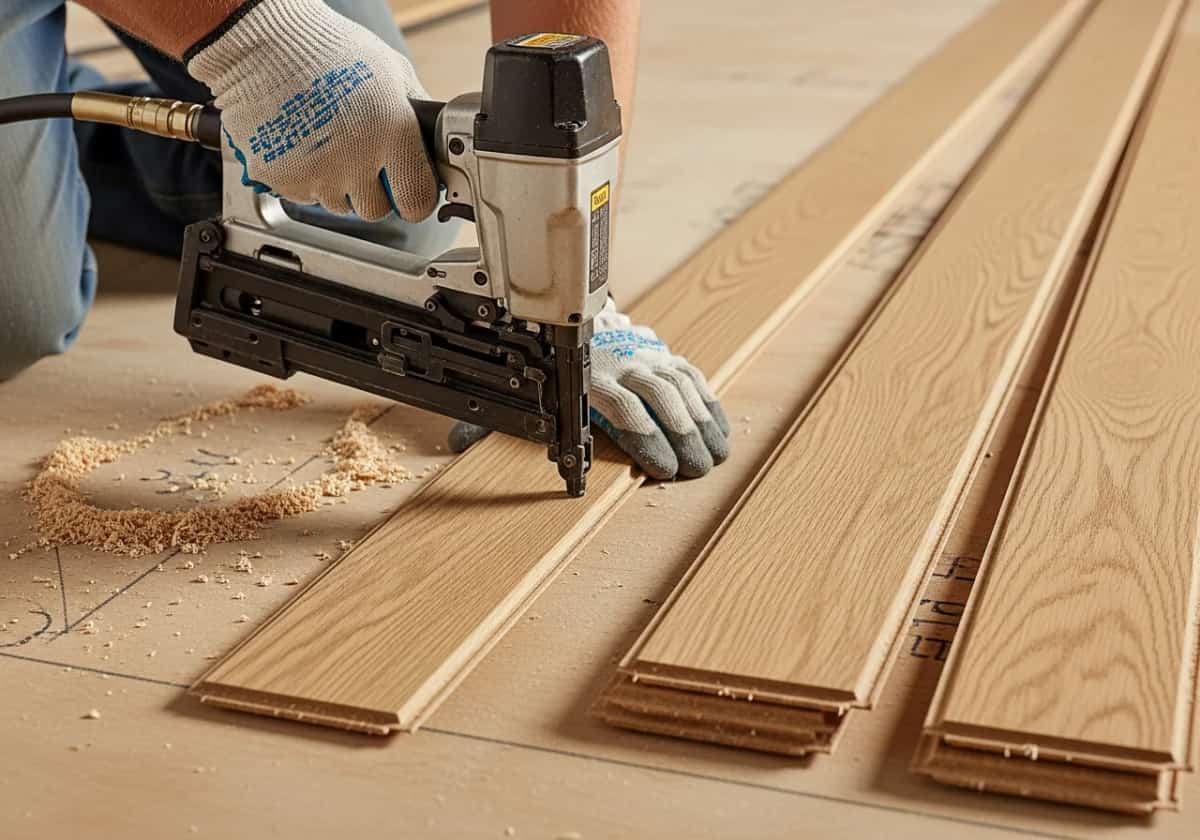
Solid Hardwood
Timeless beauty with 50+ year lifespan. Refinishable 5-7 times. Highest resale value of any flooring material.
Explore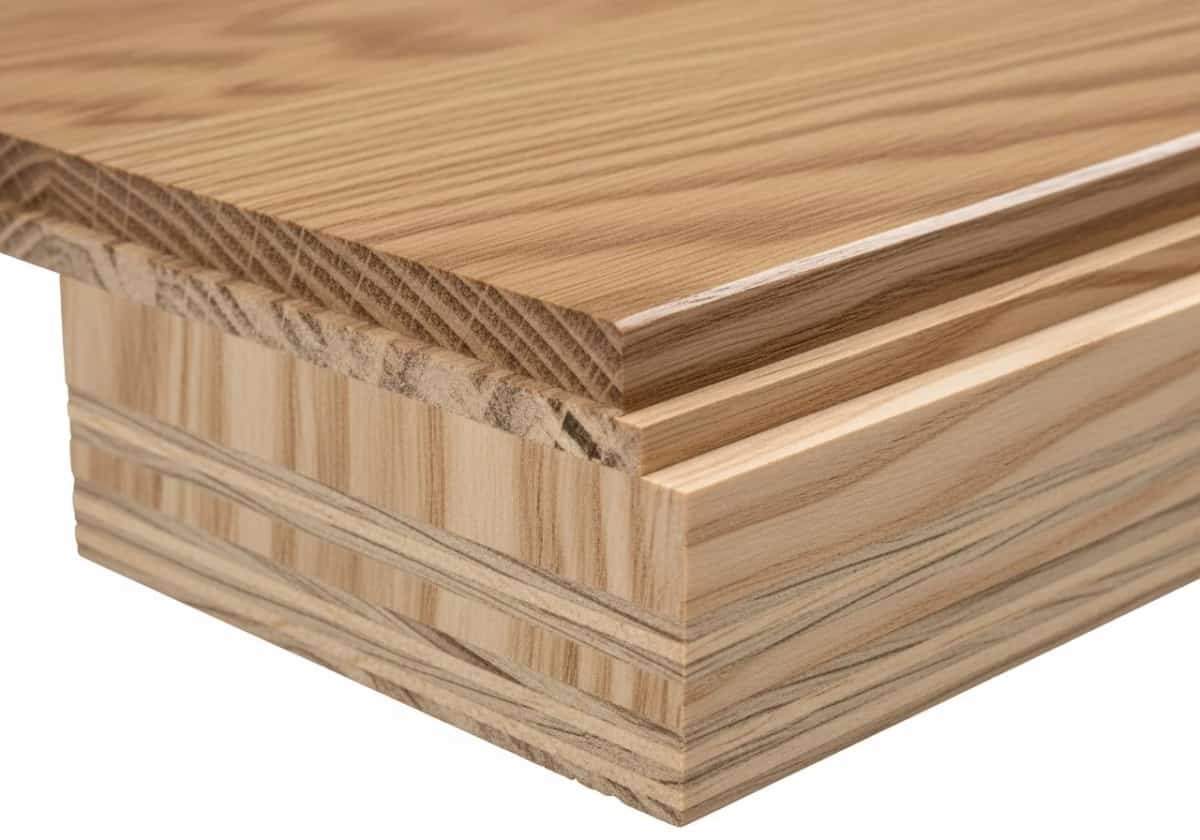
Engineered Hardwood
Real wood veneer over stable plywood core. Ideal for Boise’s humidity swings, concrete slabs, and radiant heat.
Explore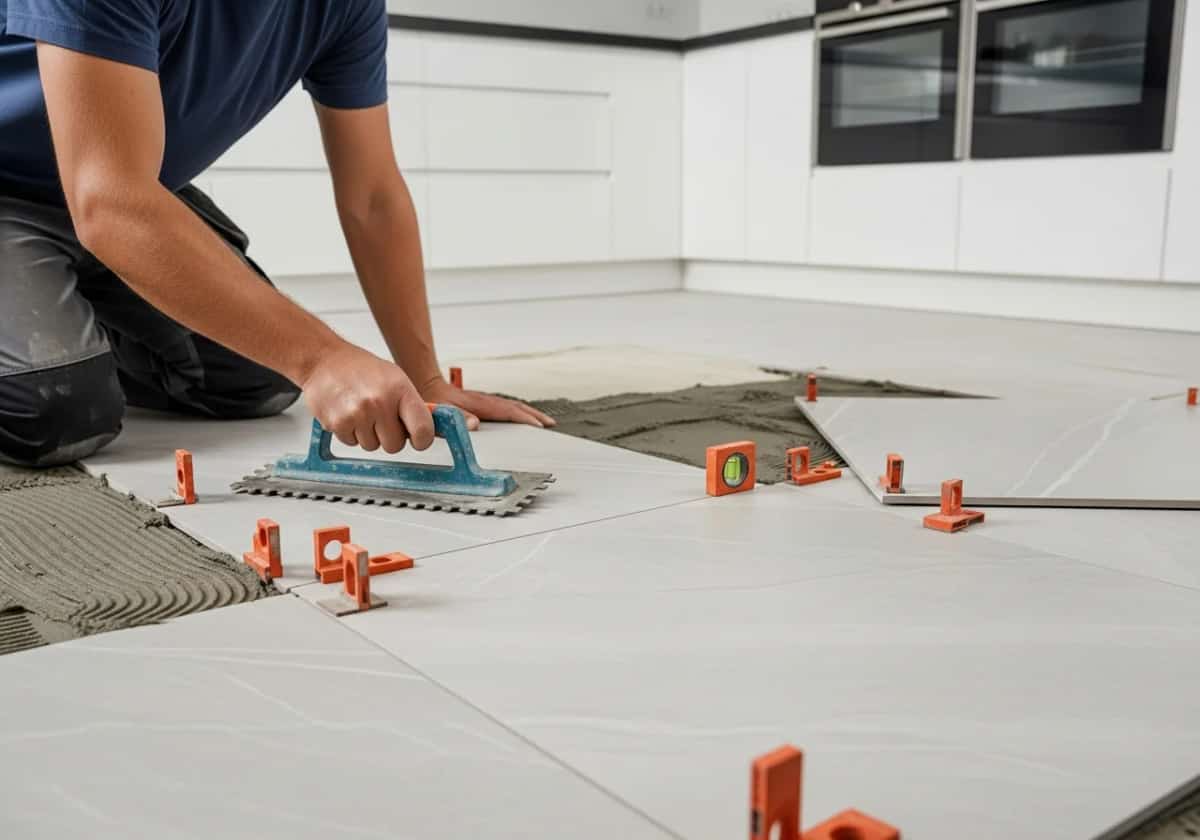
Tile Flooring
Porcelain and ceramic for bathrooms, kitchens, and entryways. Most durable option with 50+ year lifespan.
Explore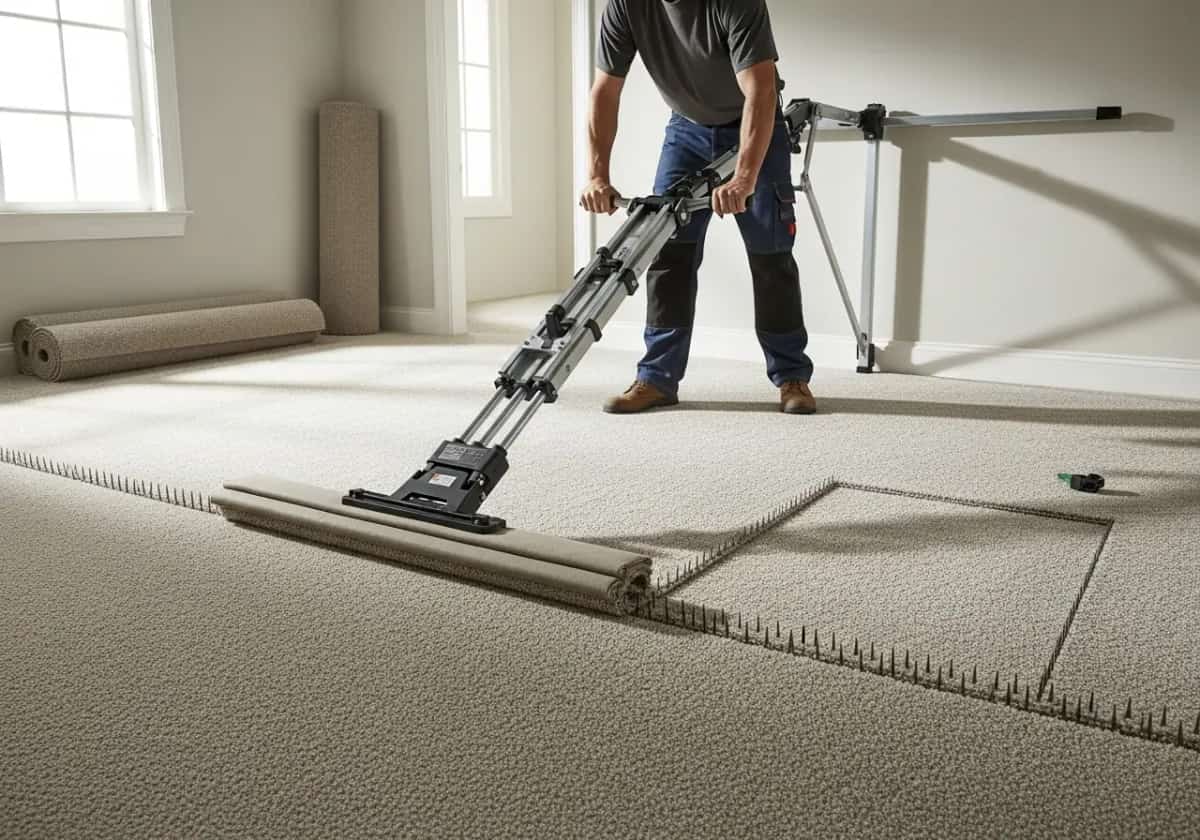
Carpet
Warmest and softest option for bedrooms and basements. Nylon, polyester, and wool. $4-$15/sq ft installed.
Explore
Talk to a real project manager
Have Questions? Call Now for a Free In-Home Consultation.
Mon–Fri 7 AM–6 PM · Licensed & insured · No obligation
Russ S. — Project Manager
Russ S. — Project Manager
- Hardwood flooring (engineered and solid)
- Luxury vinyl plank (LVP/LVT)
- Porcelain and ceramic tile
- Laminate flooring
- Carpet installation
- Subfloor leveling and repair
- Radiant heat underlayment
- Stair treads and risers
- Transition strips and thresholds
- Baseboard and quarter-round installation
Timeline
3 – 7 days
Flooring Consultation
We measure your rooms, assess subfloor conditions, discuss your lifestyle needs (pets, kids, moisture areas), and recommend the best flooring material for each space.
Material Selection
Choose from our curated selection of flooring brands and styles. We provide samples to view in your home lighting. Materials are ordered and scheduled for delivery.
Subfloor Prep & Installation
Old flooring is removed, subfloor is leveled and repaired, underlayment is installed, and new flooring is laid with precision cuts and tight seams.
Trim & Transitions
Baseboards, quarter-round, transitions, and thresholds are installed or replaced to complete the finished look. Final cleanup and walkthrough.

See Your Remodel Before You Build.
Upload a few photos of your kitchen, bathroom, flooring, or exterior and get AI-generated concept visuals tailored to your space, style, and materials — free, no obligation, in about five minutes. Then request a real estimate from our licensed Boise crew.
Free concept preview · No credit card · Licensed Idaho contractor
What is the best flooring for Boise homes?
LVP (luxury vinyl plank) is our most popular recommendation for Boise homes — it handles temperature swings, resists moisture, works with radiant heat, and stands up to pets and kids. Hardwood remains the premium choice for living areas. Tile is best for bathrooms and entryways.
How much does flooring installation cost?
Flooring installation in Boise ranges from $4-$8 per square foot for LVP, $8-$15 per square foot for hardwood, and $10-$20 per square foot for tile (including labor and materials). Subfloor repair adds to the cost if needed.
How long does flooring installation take?
Most whole-house flooring projects take 3-7 days. A single room can be completed in 1-2 days. Hardwood with sanding and finishing takes longer — typically 5-7 days including dry time.
Not every flooring installation project is the same. Cosmetic updates are minor refreshes — not full remodels. Full remodels start at the Standard tier and above. Here are the most common scope levels we handle in the Boise area, with typical investment ranges.
Single-Room Update
$2,000 – $6,000
Replace flooring in one room (bedroom, office, or living area). Includes demolition, subfloor prep, material, and installation.
Main Living Areas
$6,000 – $15,000
New flooring throughout main living spaces — living room, dining room, hallways. Typically 500–1,000 sq ft.
Whole-Home Flooring
$12,000 – $30,000+
Replace all flooring throughout the home. 1,000–2,500 sq ft including transitions, stairs, and closets. Most cost-effective approach.
Premium / Custom
$20,000 – $50,000+
Wide-plank hardwood, herringbone patterns, heated floors, custom stair treads, and high-end tile. Design-forward installations.
Remodeling in the Treasure Valley comes with local factors that affect scope, cost, and timeline. Here is what Boise-area homeowners should know.
Dry Climate Impact
Boise's low humidity (15–30% in winter) causes solid hardwood to shrink, gap, and potentially crack. Engineered hardwood and LVP handle Boise's humidity swings much better than solid wood.
Hard Water & Bathrooms
Boise's hard water (10–14 grains/gallon) means bathroom and kitchen floors need waterproof materials. LVP, porcelain tile, and engineered options resist water damage. Avoid laminate in wet areas.
Subfloor Conditions
Older Boise homes (pre-1980) may have plywood or even original fir subfloors. Subfloor leveling or replacement adds $1–$3/sq ft but is essential for a quality installation.
Radiant Heat Compatibility
Radiant floor heating is popular in Boise new construction and remodels. Not all flooring works with radiant — tile and engineered hardwood are ideal. Solid hardwood and some LVP have R-value limitations.
Choosing between luxury vinyl plank (lvp) and engineered hardwood? Here is a side-by-side comparison to help you decide.
| Factor | Luxury Vinyl Plank (LVP) | Engineered Hardwood |
|---|---|---|
| Cost (installed) | $4–$8/sq ft | $8–$15/sq ft |
| Water Resistance | 100% waterproof | Water-resistant (not waterproof) |
| Durability | 20–30 year warranty | 25+ years (can be refinished) |
| Feel / Look | Good wood-look, softer underfoot | Real wood grain, premium feel |
| Idaho Climate | Handles humidity swings well | Handles well (better than solid) |
Plan your flooring installation project with our in-depth guides.
Explore our in-depth guides to understand flooring installation costs, timelines, and planning details for cities across the Treasure Valley.
See detailed flooring installation information specific to your city, including local permit requirements, housing stock insights, and neighborhood-level recommendations.
Talk to a real project manager
Have Questions? Call Now for a Free In-Home Consultation.
Mon–Fri 7 AM–6 PM · Licensed & insured · No obligation
Russ S. — Project Manager
Russ S. — Project Manager
Ready to Start Your Remodeling Project?
Get a free, no-obligation estimate from Boise's trusted remodeling experts. Licensed, insured, and ready to build.
Iron Crest installs the full range of residential flooring — solid hardwood, engineered hardwood, luxury vinyl plank, laminate, tile, and natural stone. There is no single “best” floor; the right choice depends on the room, the traffic, your budget, and how each material behaves in the Treasure Valley's dry, high-swing climate (winter indoor humidity near 15% RH, summer near 45%). Below is an honest breakdown of every option, including where each one wins and where it doesn't.
1. Solid Hardwood
Real solid-wood planks, the same species all the way through. The highest-end feel of any floor and the only one that can be sanded and refinished five to seven times over a 50–100 year life. Common species we install: red oak, white oak, maple, hickory, and walnut — white oak and hickory are the most popular in newer Boise builds for their hardness and tight modern grain.
Highest-end look and resale value; refinishable many times; lasts generations.
Most expensive; scratches easier than vinyl; swells/gaps with water and humidity swings.
Living rooms, bedrooms, formal areas, and higher-end homes with humidity control.
Idaho note: solid hardwood performs well here only with a whole-home humidifier holding 35–45% RH year-round. Without it, expect seasonal gapping in winter. We never install solid hardwood below grade.
2. Engineered Hardwood
A real hardwood veneer bonded over a cross-laminated plywood or HDF core. It looks identical to solid hardwood on the surface but the layered core makes it dramatically more dimensionally stable — the single biggest reason it outperforms solid wood in Idaho's climate and over concrete slabs or radiant heat.
Real-wood look; far more stable than solid; works on slabs, basements, and radiant heat.
Usually refinishable only 1–2 times; costs more than LVP or laminate.
Whole-home installs, Idaho humidity swings, and remodels wanting a luxury look without full hardwood cost.
3. Luxury Vinyl Plank (LVP)
Rigid vinyl plank engineered to mimic wood — and by a wide margin the most popular remodel flooring we install today. It comes in two cores: SPC (stone-polymer composite), a rigid, dent-resistant core ideal for high-traffic and commercial-grade use, and WPC (wood-polymer composite), a slightly softer, warmer, quieter core underfoot. Both are 100% waterproof.
100% waterproof; extremely durable; pet- and kid-proof; fast install; stable in Boise's humidity range.
Not real wood; bargain-grade products can feel hollow or plasticky underfoot.
Kitchens, bathrooms, full-home remodels, high-traffic homes, rentals, and pet households.
We install mid- and premium-grade SPC/WPC only — the difference between a $2/sq ft box-store plank and a quality wear-layer product is the difference between a floor that looks tired in three years and one that still looks new in fifteen.
4. Laminate
A compressed high-density fiberboard core with a high-resolution printed wood image and a tough wear layer on top. Modern laminate visuals are excellent and its scratch resistance is genuinely strong — but the fiberboard core is the catch.
Most affordable wood-look; very scratch resistant; sharp modern visuals.
Not truly waterproof unless a specialty product; swells badly if flooded; harder and louder than LVP.
Budget remodels, bedrooms, and lower-traffic areas away from water.
5. Tile (Porcelain & Ceramic)
Fired porcelain or ceramic — the most durable and fully waterproof flooring we install. Porcelain is denser and harder than ceramic and the better choice for floors; wood-look porcelain plank is increasingly popular for clients who want hardwood's appearance with tile's indestructibility in wet zones.
Fully waterproof; extremely durable (50+ yr); ideal for wet areas; pairs with radiant heat.
Cold and hard underfoot; labor-intensive to install; grout needs periodic maintenance.
Bathrooms, laundry rooms, mudrooms, and entryways — especially over radiant heat.
6. Natural Stone
Quarried natural stone — marble, travertine, slate, and limestone — for clients who want a genuine, one-of-a-kind luxury surface. Every tile is unique.
Highest-end, unique natural character; timeless luxury appeal and resale presence.
Expensive; heavy (subfloor must be assessed); requires periodic sealing — more so with Idaho's hard water.
Feature entryways, high-end primary baths, and luxury whole-home statements.
Idaho note: the Treasure Valley's hard water leaves mineral film on polished marble and travertine. We specify the correct penetrating sealer and finish for stone in this region and walk you through realistic maintenance before you commit.
Can’t decide between flooring types? Our comparisons and buying guides break down cost, durability, and performance for Boise homes.
Choosing the right flooring material depends on your budget, room function, moisture exposure, and how your household uses the space. Idaho's climate — hot, dry summers and cold winters with indoor humidity as low as 15% — creates specific challenges for flooring materials, particularly natural wood that expands and contracts with moisture changes. Here is a side-by-side comparison of the six flooring types we install most in Boise homes.
| Material | Cost/Sq Ft | Moisture | Install Method | Lifespan |
|---|---|---|---|---|
| Luxury Vinyl Plank | $4–$8 | Waterproof | Click-lock floating | 15–25 yrs |
| Solid Hardwood | $8–$15 | Low | Nail-down | 50–100+ yrs |
| Engineered Hardwood | $6–$14 | Moderate | Float, glue, or nail | 25–50 yrs |
| Laminate | $3–$7 | Low–Moderate | Click-lock floating | 10–20 yrs |
| Porcelain/Ceramic Tile | $10–$20 | Waterproof | Mortar bed | 50–100+ yrs |
| Carpet | $3–$8 | None | Stretch-in | 8–15 yrs |
Idaho climate note: Boise's indoor humidity drops to 15–25% in winter when heating runs continuously. This extreme dryness causes solid hardwood to shrink, gap, and sometimes crack. Engineered hardwood handles these swings better. LVP is dimensionally stable in any humidity range, making it the most climate-reliable choice for Boise homes.

Luxury vinyl plank has become our single most requested flooring material — and for good reason. It combines hardwood aesthetics with waterproof performance, scratch resistance, and a price point that makes whole-house installation realistic for most budgets.
Why LVP Works in Idaho
- 100% waterproof core — handles muddy boots, pet bowls, and kitchen spills without swelling
- Dimensionally stable across Idaho's extreme humidity range (15% winter to 45% summer)
- Scratch and dent resistant — stands up to dogs, kids, and high-traffic entries
- Compatible with radiant heat systems — thin profile conducts warmth efficiently
- Installs over concrete slabs and wood subfloors — works in basements, main floors, and upper levels
- Click-lock installation — a typical room is finished in one day with no adhesive cure time
Top LVP Brands We Install
- COREtec — Industry leader with patented cork-backed construction for sound dampening. Lifetime residential warranty. Our most-installed brand.
- Shaw Floorte — Broad style selection from budget to premium. Excellent scratch resistance with attached pad option.
- LifeProof — Strong value with rigid SPC core. Waterproof, scratch-resistant. Good for rental properties and budget whole-house installs.
Wear Layer Guide
The wear layer — the transparent top coating — determines how long LVP resists scratches, stains, and UV fading. Thickness matters more than total plank thickness:
- 6 mil — Light residential: bedrooms, closets. Minimum for any application.
- 12 mil — Standard residential: living areas without pets.
- 20 mil — Our recommended minimum for Boise homes with dogs, kids, or heavy foot traffic.
- 28+ mil — Commercial-grade: entryways, mudrooms, homes with large dogs.

Hardwood remains the gold standard for Boise's higher-end remodels. Nothing matches the warmth, character, and long-term value of real wood underfoot. But Idaho's climate creates challenges homeowners must understand before choosing a species and construction type.
| Species | Janka Hardness | Character | Cost/Sq Ft |
|---|---|---|---|
| Red Oak | 1,290 | Prominent grain, warm tones, traditional | $8–$12 |
| White Oak | 1,360 | Tight grain, water-resistant, modern appeal | $9–$14 |
| Hickory | 1,820 | Heavy grain variation, extremely hard, rustic | $8–$13 |
| Hard Maple | 1,450 | Fine uniform grain, light color, contemporary | $9–$14 |
| Black Walnut | 1,010 | Rich dark brown, elegant grain, softer | $12–$18 |
Solid vs. Engineered in Idaho's Climate
Solid hardwood (3/4" thick, single piece of wood) can be refinished multiple times over 50–100+ years. But it is highly sensitive to humidity. In Boise's dry winters, indoor humidity can drop below 20%, causing boards to shrink and develop visible gaps. A whole-home humidifier maintaining 35–45% RH year-round is essential.
Engineered hardwood (real wood veneer over cross-laminated plywood core) is far more dimensionally stable — the cross-grain layers counteract expansion and contraction. It installs over concrete slabs, works with radiant heat, and handles Idaho's humidity swings with minimal movement. Can be refinished 1–2 times (3mm+ veneer recommended). For most Boise homeowners without a humidification system, we recommend engineered hardwood.
Acclimation Is Non-Negotiable
Every hardwood floor must acclimate in your home 5–7 days before installation. We deliver, open boxes, and measure moisture content of both the wood and subfloor with a pin meter — the difference must be within 2–4% depending on species. Skipping this step is the most common cause of post-installation gapping, cupping, or buckling. For Boise homes without humidity control, we strongly recommend installing a whole-home humidifier as part of the project.

Even the best flooring material will fail prematurely on a subfloor that is uneven, damaged, or has uncontrolled moisture. Subfloor preparation is where professional installation separates itself from DIY — we address every issue before the first plank is laid.
Concrete Subfloors
Common in Boise basements and slab-on-grade homes. We perform calcium chloride and relative humidity probe tests to measure moisture emission. Concrete must test below 3 lbs/1,000 sq ft/24 hours or below 75% RH. If moisture is high, we apply epoxy or membrane mitigation. The slab must be flat within 3/16" over 10 feet — we grind high spots and apply self-leveling compound to fill low areas.
Wood Subfloors
Most Boise homes have plywood or OSB subfloors. We inspect every square foot for squeaks, soft spots, water damage, and flatness. Squeaks are eliminated by screwing the subfloor to the joist. Damaged sections are cut out and replaced. If the subfloor is under 3/4" thick for nail-down hardwood, we add 1/4" plywood overlay.
Common Boise Subfloor Issues by Home Era
- 1920s–1950s (North End, Hyde Park): Diagonal plank subfloors — uneven, squeaky. Usually need plywood overlay.
- 1960s–1970s (Bench, Vista, Garden City): Particleboard subfloors that swell and crumble with moisture. Must be replaced with plywood.
- 1980s–1990s (Southeast Boise, Meridian): OSB subfloors with occasional water damage near wet areas. Usually repairable by section.
- 2000s–present (Eagle, Star, Kuna): Generally sound plywood/OSB. Minor squeaks and flatness corrections.
Underlayment Selection
- LVP over concrete: 6-mil vapor barrier + 1.5mm foam pad
- LVP over wood: 1.5–3mm foam or cork underlayment (no vapor barrier needed unless crawl space below)
- Engineered hardwood over concrete: 6-mil vapor barrier + cork/foam underlayment
- Nail-down hardwood: 15 lb asphalt-saturated felt paper or rosin paper
- Laminate: foam with vapor barrier on concrete; foam only on wood subfloor
No single flooring material is ideal for every room. Moisture exposure, foot traffic, comfort, and design continuity all influence the right choice. Here are our room-by-room recommendations based on hundreds of Treasure Valley installations.
| Room | Best Choice | Runner-Up | Avoid |
|---|---|---|---|
| Kitchen | Waterproof LVP | Porcelain tile | Solid hardwood |
| Bathroom | Porcelain/ceramic tile | Waterproof LVP | Hardwood, laminate, carpet |
| Living Room | Hardwood (solid or engineered) | LVP | — |
| Bedroom | Hardwood with area rugs | Carpet or LVP | — |
| Basement | Waterproof LVP | Engineered hardwood (dry basements) | Solid hardwood |
| Entryway / Mudroom | Porcelain tile or LVP (28+ mil) | Slate or flagstone | Carpet, solid hardwood |
| Laundry Room | Waterproof LVP or tile | Sheet vinyl | Hardwood, laminate |
| Stairs | Hardwood treads | LVP stair nosing system | Tile (slippery), carpet (wears fast) |
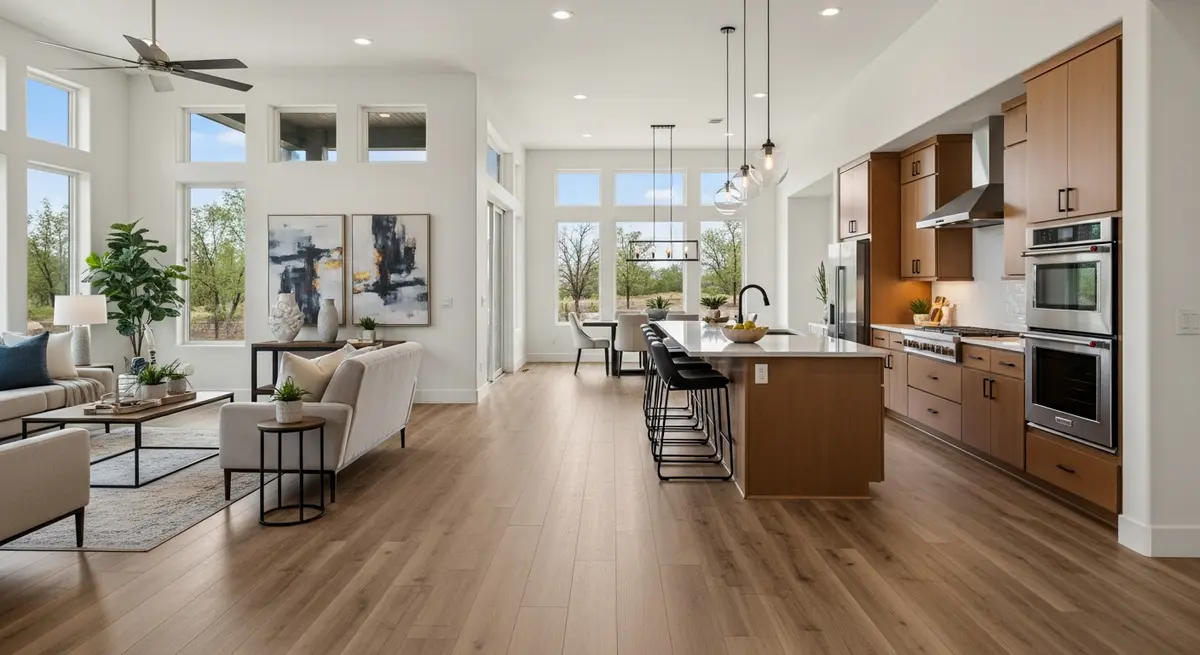
For open floor plans where the kitchen, dining, and living areas connect, we recommend running the same flooring throughout for visual continuity. Transition to a different material only at natural breakpoints — hallways, closets, bathroom entries. See our kitchen remodeling and bathroom remodeling pages for full renovation options.
Flooring costs include both materials and professional labor. Prices vary by material, subfloor condition, room complexity, and the amount of furniture moving and old flooring removal required. Here are current installed costs for the Treasure Valley.
| Material | Material/Sq Ft | Labor/Sq Ft | Installed/Sq Ft |
|---|---|---|---|
| Luxury Vinyl Plank | $2.50–$5.00 | $1.50–$3.00 | $4.00–$8.00 |
| Engineered Hardwood | $4.00–$10.00 | $2.00–$4.00 | $6.00–$14.00 |
| Solid Hardwood | $5.00–$10.00 | $3.00–$5.00 | $8.00–$15.00 |
| Laminate | $1.50–$4.00 | $1.50–$3.00 | $3.00–$7.00 |
| Porcelain/Ceramic Tile | $4.00–$12.00 | $6.00–$10.00 | $10.00–$20.00 |
| Carpet | $1.50–$5.00 | $1.00–$3.00 | $3.00–$8.00 |
Whole-House Estimates (LVP, Mid-Grade)
| Home Size | Floor Area | Project Cost |
|---|---|---|
| 1,000 sq ft home | ~800 sq ft | $4,400–$5,200 |
| 1,500 sq ft home | ~1,200 sq ft | $6,600–$7,800 |
| 2,000 sq ft home | ~1,600 sq ft | $8,800–$10,400 |
| 2,500 sq ft home | ~2,000 sq ft | $11,000–$13,000 |
Estimates assume standard subfloor prep, old flooring removal, and basic trim/transitions. Subfloor repairs, stair treads, and complex layouts add to the total.

Tile and natural stone offer unmatched durability, waterproofing, and design versatility. These materials require specialized installation skills — proper substrate preparation, waterproofing membranes, consistent thin-set application, and precision grouting — that differentiate professional work from DIY attempts.
Porcelain Tile
Porcelain tile is denser and less porous than ceramic, making it the superior choice for floors. It handles freeze-thaw cycles, is virtually waterproof, and is available in wood-look, stone-look, and concrete-look formats that are difficult to distinguish from natural materials. Large-format porcelain (24×24 and larger) creates a modern, seamless look with fewer grout lines. We use Schluter DITRA or equivalent uncoupling membrane beneath all porcelain floor installations to prevent cracking from substrate movement.
Natural Stone
Natural stone — marble, travertine, slate, and quartzite — adds luxury and character that manufactured tiles cannot replicate. Each piece is unique in color, veining, and texture. Stone flooring requires sealing upon installation and periodic resealing (annually for marble, every 2–3 years for granite and quartzite) to prevent staining and moisture absorption. Stone is the premium flooring choice for foyers, master bathrooms, and formal living areas in Boise's higher-end homes. See our stone work services for more.
Heated Tile Floors
Electric radiant floor heating beneath tile is one of the most requested upgrades in Boise bathroom and kitchen remodels. Thin electric heating mats or cables are installed over the substrate and beneath the tile, adding warmth underfoot without raising the floor height significantly. Systems cost $8–$15 per square foot for the heating element plus a dedicated thermostat ($150–$300). Operating costs in Boise are modest — $0.25–$0.50 per day for a bathroom. We recommend programmable thermostats that warm the floor before your morning routine and shut off during the day.

Transitions, baseboards, and stair treads are the finish details that separate a professional installation from a DIY job. These elements affect both the appearance and functionality of your new floors.
Transition Strips
T-molding connects two floating floors of equal height. Reducer strips step down from a thicker material to thinner. Threshold strips finish doorways between rooms with different floor types. For seamless open floor plans, we run the same material throughout connected living spaces and only transition at natural breakpoints. All strips are color-matched to the flooring.
Stair Treads

Matching stair treads to your new flooring creates a cohesive look throughout the home. Hardwood stair treads with bullnose nosing are the premium option. LVP stair nosing systems use specialized molding pieces that wrap the tread edge for a clean, durable finish. A full staircase (13–15 treads plus risers) adds 1–2 days to the project and costs $1,500–$3,500 depending on material.
Baseboards and Quarter-Round
We carefully remove existing baseboards before installation and reinstall them after the new floor is down. If baseboards are damaged during removal or you want an updated profile, we install new baseboards (primed MDF or solid wood) and paint to match. Quarter-round or shoe molding covers the expansion gap between floating floors and the wall. We include baseboard reinstallation in every flooring project — it's part of a complete, professional result.
| Project Scope | LVP/Laminate | Hardwood | Tile |
|---|---|---|---|
| Single room (150–300 sq ft) | 1 day | 1–2 days | 2–3 days |
| Main floor (600–1,000 sq ft) | 2–3 days | 3–5 days | 5–7 days |
| Whole house (1,200–2,000 sq ft) | 3–5 days | 5–7 days | 7–12 days |
| Hardwood sand & refinish | N/A | 4–6 days (incl. dry) | N/A |
Timeline Add-Ons
- Subfloor repairs: +1–2 days depending on damage extent
- Old flooring removal: +0.5–1 day for glued-down materials
- Furniture moving: adds time; heavy items need specialty movers
- Stair treads: +1–2 days for a full staircase
- Hardwood acclimation: 5–7 days before installation begins
- Site-finished hardwood: 24–48 hours cure between coats (2–3 coats typical)
Flooring is one of the first things homebuyers notice — and one of the highest-ROI upgrades you can make before selling. Here's how different flooring types impact resale value in the Treasure Valley real estate market.
| Material | ROI on Resale | Buyer Perception |
|---|---|---|
| Solid Hardwood | 70–80% | Premium, highest perceived value |
| Engineered Hardwood | 65–75% | Near-equivalent to solid in buyer eyes |
| Premium LVP (COREtec, Shaw) | 50–65% | Accepted as practical, modern choice |
| Porcelain Tile | 60–70% | Premium in bathrooms and kitchens |
| Laminate | 40–55% | Acceptable but not a selling point |
| New Carpet | 25–40% | Expected in bedrooms, not a differentiator |
Boise real estate agents consistently report that homes with hardwood floors sell faster and command 2–3% higher sale prices. For maximum resale value, we recommend hardwood on the main living floor and LVP in moisture-prone or high-traffic secondary areas. This combination gives buyers the premium look they want where it matters most, with practical durability everywhere else.
Explore our in-depth guides to plan your Boise flooring project with confidence.
Go deeper into the science and standards behind a floor that lasts. These research guides cover the wood-hardness, moisture, acclimation, waterproofing, and installation standards we build every Boise project on.
What is the best flooring for Boise's dry climate?
Luxury vinyl plank (LVP) is the most climate-resilient flooring for Boise homes. It is 100% waterproof, dimensionally stable across Idaho's extreme humidity range (15% in winter to 45% in summer), and won't gap, cup, or buckle with seasonal changes. Engineered hardwood is the second-best option — its cross-laminated core resists expansion and contraction far better than solid hardwood. Solid hardwood can perform well in Boise but requires a whole-home humidifier set to 35–45% RH year-round to prevent seasonal gapping. Iron Crest installs all three and will recommend the best fit based on your home's humidity control, budget, and design goals.
How much does whole-house flooring cost in Boise?
Whole-house flooring costs in Boise depend on material choice, home size, and subfloor condition. For a 1,500 sq ft home with approximately 1,200 sq ft of flooring area: LVP runs $6,600–$7,800 installed, engineered hardwood runs $7,200–$16,800, and porcelain tile runs $12,000–$24,000. These estimates include old flooring removal, standard subfloor prep, underlayment, material, installation labor, and basic trim/transitions. Subfloor repairs, stair treads, and complex layouts add to the total. Iron Crest provides exact pricing after an in-home measurement and subfloor inspection — not vague estimates.
Can you install flooring over radiant heat in my Boise home?
Yes — LVP, engineered hardwood, tile, and laminate all work with radiant heat systems. Solid hardwood and standard carpet do not. The flooring material must be manufacturer-rated for radiant heat, and the total R-value of flooring plus underlayment must stay below the system's maximum threshold (typically R-1.0 to R-1.5). LVP is one of the best choices for radiant heat because its thin profile conducts warmth efficiently. We verify compatibility with your specific radiant system before recommending a material.
How long does flooring installation take for a full house?
A whole-house LVP installation (1,200–2,000 sq ft) typically takes 3–5 working days. Hardwood takes 5–7 days. Tile takes 7–12 days due to mortar and grout cure times. These timelines assume standard subfloor conditions. Add 1–2 days for significant subfloor repairs, a half-day to full day for old flooring removal, and 5–7 days of pre-installation acclimation time for hardwood. Iron Crest provides a day-by-day project schedule during the planning phase so you can plan furniture storage, room-by-room access, and move-back timing.
Do I need to replace my subfloor before installing new flooring?
Not always, but subfloor inspection is critical. We check every square foot for moisture damage, flatness, squeaks, and structural integrity. Common Boise subfloor issues by era: 1920s–1950s homes (North End, Hyde Park) often have uneven diagonal plank subfloors needing plywood overlay. 1960s–1970s homes (Bench, Vista) may have particleboard subfloors that must be replaced. 1980s–1990s homes often have minor water damage near bathrooms. 2000s+ homes generally have sound subfloors needing only minor corrections. We address every issue before the first plank is laid — proper subfloor prep is what separates professional installation from DIY failures.
LVP vs. laminate — which is better for an Idaho home?
For most Treasure Valley homes, luxury vinyl plank wins. The deciding factor is water: LVP is 100% waterproof through its full thickness, while standard laminate has a fiberboard core that swells permanently if it floods or sits in standing water. LVP is also quieter and softer underfoot and more dimensionally stable across Idaho's 15–45% indoor-humidity swing. Laminate's advantages are a lower price and excellent scratch resistance, which can make it a smart pick for a budget bedroom or low-traffic area away from water. We install both and will tell you honestly when laminate is the better value for a specific room.
What's the difference between SPC and WPC luxury vinyl?
Both are rigid-core, 100% waterproof luxury vinyl. SPC (stone-polymer composite) has a denser, harder core — it's the most dent- and impact-resistant option and our recommendation for high-traffic homes, entryways, and rentals. WPC (wood-polymer composite) has a slightly softer, thicker core that feels warmer and quieter underfoot, which many homeowners prefer in living areas and bedrooms. SPC is generally more affordable; WPC is the comfort upgrade. We help you match the core to each room rather than defaulting the whole house to one.
Can engineered hardwood be refinished like solid hardwood?
Partially. Engineered hardwood has a real-wood veneer over a stable core, and that veneer can typically be sanded and refinished once or twice depending on its thickness (a 3mm+ wear layer is best for refinishing). Solid hardwood can be refinished five to seven times over its life. If long-term refinishability is a priority, solid hardwood with proper humidity control is the choice; if dimensional stability over Idaho's climate swings and slabs matters more, engineered is usually the smarter long-term value.
What is the most pet- and kid-proof flooring you install?
Premium SPC luxury vinyl plank, by a clear margin. It is fully waterproof against accidents, highly scratch- and dent-resistant against claws and dropped toys, and its wear layer cleans easily. Wood-look porcelain tile is even more indestructible and waterproof but is colder and harder underfoot. We steer pet-and-kid households away from solid hardwood and standard laminate in main living areas for exactly these reasons.
Research your flooring installation project with our in-depth Boise-area guides.
We provide flooring installation to homeowners across the Treasure Valley and southwest Idaho. Each city has its own dedicated page with local permitting, climate, and project detail — and each county hub covers the surrounding communities we also serve.
Flooring installation pairs well with painting, kitchen, and whole-home projects. Coordinating trades saves time and reduces costs.
The following government agencies, industry organizations, and official resources provide additional information relevant to your remodeling project.
Primary sources and industry standards consulted for this guide:
- 1.Red oak has a Janka hardness rating of 1,290 lbf at 12% moisture content and serves as the standard industry reference species; all species below it on the scale are expected to dent or wear more easily in residential use. Source (USDA Forest Products Laboratory — Wood Handbook (FPL-GTR-282), Chapter 5, Table 5-3b)
- 2.White oak has a Janka hardness rating of 1,360 lbf at 12% moisture content — harder than red oak by 70 lbf and a common premium alternative for residential floors. Source (USDA Forest Products Laboratory — Wood Handbook (FPL-GTR-282), Chapter 5, Table 5-3b)
- 3.Hickory/Pecan has a Janka hardness rating of 1,820 lbf at 12% moisture content — one of the hardest domestic species and well-suited for high-traffic areas. Source (USDA Forest Products Laboratory — Wood Handbook (FPL-GTR-282), Chapter 5, Table 5-3b)
- 4.Hard maple (sugar maple) has a Janka hardness rating of 1,450 lbf at 12% moisture content, making it harder than white oak and a popular choice for commercial and gym flooring. Source (USDA Forest Products Laboratory — Wood Handbook (FPL-GTR-282), Chapter 5, Table 5-3b)
- 5.Black walnut has a Janka hardness rating of 1,010 lbf at 12% moisture content — softer than red oak and best suited for lower-traffic residential spaces such as bedrooms. Source (USDA Forest Products Laboratory — Wood Handbook (FPL-GTR-282), Chapter 5, Table 5-3b)
- 6.Brazilian cherry (jatoba) averages 2,690 lbf on the Janka hardness scale — more than twice as hard as red oak and among the hardest commercially available flooring species. Source (Hardwood Floors Magazine (NWFA) — Species Specs: Jatoba (Brazilian Cherry))
- 7.For engineered wood flooring, Janka hardness cannot simply be inferred from the wear-layer species name; NWFA states it is inaccurate to claim the same hardness properties as a solid-wood counterpart. Testing must be conducted on the specific engineered product per ASTM D1037. Wear-layer thickness determines how many refinish cycles are possible, not the product's Janka value. Source (Hardwood Floors Magazine — Janka Misconceptions (Brett Miller, 2021))
- 8.Equilibrium moisture content (EMC) is the moisture level wood reaches when in equilibrium with its surrounding environment. Per USDA Forest Products Laboratory data (Table 4–2), at 70°F and 40% relative humidity the EMC for wood is approximately 7.7%. Source (USDA Forest Products Laboratory — Wood Handbook GTR-282, Chapter 4 (Table 4–2))
- 9.Western Regional Climate Center data indicates that during Idaho summer months, outdoor relative humidity at the time of daily maximum temperature is usually below 25% and often drops to 15% or lower — creating very dry conditions that pull moisture from wood flooring. Source (Western Regional Climate Center (WRCC / Desert Research Institute) — Idaho Climate Narrative)
- 10.NWFA 2025 guidelines state the jobsite environment must be controlled to a relative humidity range of 30–50% and a temperature range of 60–80°F before, during, and after wood flooring installation. Source (NWFA — Wood Flooring Installation Guidelines (© 2025))
- 11.NWFA 2025 guidelines require HVAC systems to be operating for a minimum of 5 days preceding delivery of flooring materials; longer operation may be necessary in tighter building envelopes or wet conditions. Source (NWFA — Wood Flooring Installation Guidelines (© 2025))
Ready to Start Your Remodeling Project?
Get a free, no-obligation estimate from Boise's trusted remodeling experts. Licensed, insured, and ready to build.