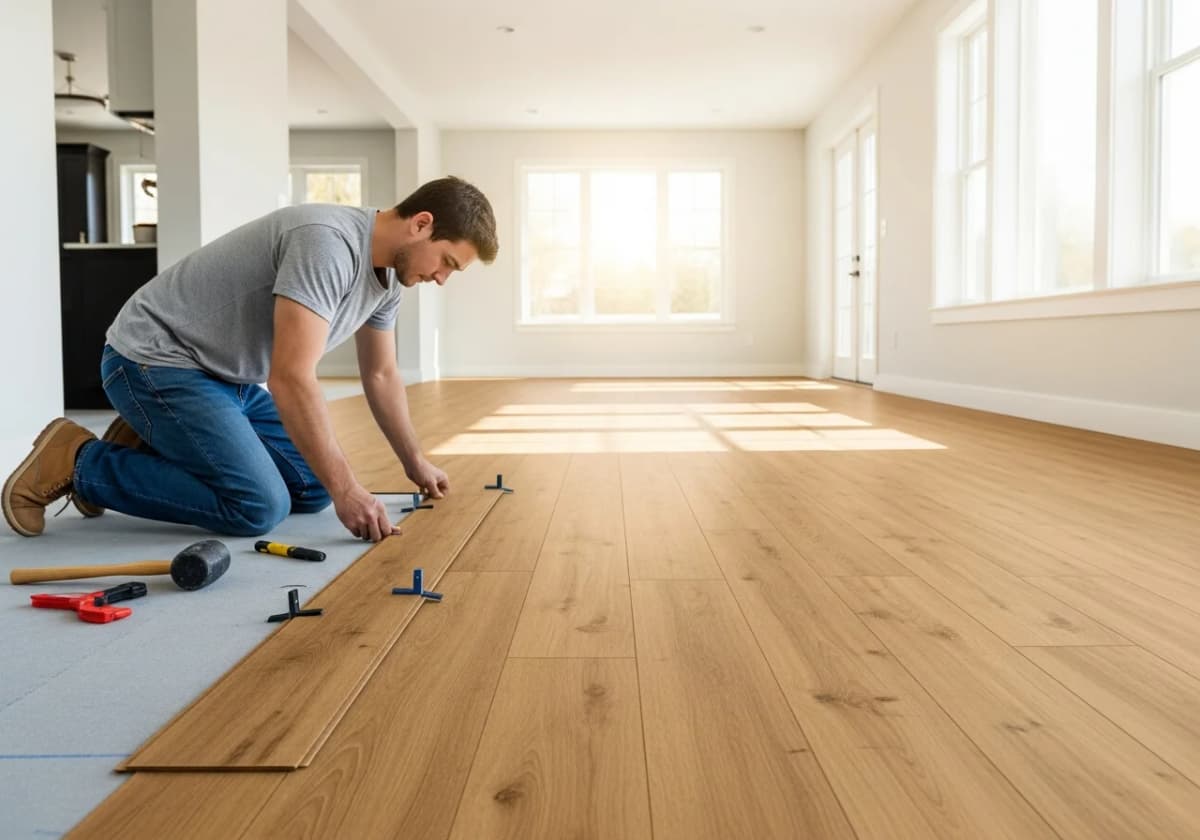
From luxury vinyl plank and hardwood to tile and carpet — we handle subfloor prep, material selection, precision installation, and every transition detail.
Flooring in Middleton is decided by three local conditions national flooring guides never mention: pervasive agricultural dust, a dry-to-freeze 5B humidity cycle that moves wood and stresses seams, and a subfloor situation that depends entirely on whether you own a pre-1970 farm home or a 2010s subdivision build. In the historic core and rural roads, flooring goes over old joisted subfloors that may hide moisture damage and almost always need assessment first. In Kestrel Estates, Bridgewater Creek, and Quail Haven, it goes over modern slab or engineered subfloor — clean substrate, but a builder-grade existing floor that has aged out. Iron Crest Remodel installs flooring across that full Canyon County range, and the value we bring is matching the material and the moisture/subfloor strategy to Middleton's actual conditions, because the difference between flooring that lasts here and flooring that cups, gaps, or telegraphs subfloor problems is almost entirely in those choices. This page is written to Middleton's real housing, climate, and dust realities, not a generic flooring overview.
Upgrade your home from the ground up with professional flooring installation tailored to your lifestyle and budget.
Flooring is one of the most visible and impactful elements in your home — it sets the tone for every room, absorbs daily wear from foot traffic, pets, and furniture, and needs to perform in varying moisture and temperature conditions. Professional flooring installation starts with subfloor assessment and preparation — leveling, moisture testing, and repair as needed — followed by precise material installation with tight seams, accurate cuts, and clean transitions between rooms and materials. In the Treasure Valley, luxury vinyl plank (LVP) has become the most popular flooring choice for its combination of waterproof performance, realistic wood-look appearance, durability, and affordability. Hardwood remains the premium choice for living rooms and bedrooms, tile is the standard for bathrooms and entryways, and quality laminate offers a budget-friendly alternative with improved durability. The key to a flooring project that looks great and lasts is subfloor preparation — a level, clean, dry subfloor is the foundation for every successful installation.
Middleton homeowners pursue flooring installation for a variety of reasons. Here are the most common situations we see:
Not every flooring project is the same. Here are the most common project types we complete in Middleton:

Install click-lock or glue-down luxury vinyl plank flooring throughout your home. LVP is waterproof, scratch-resistant, and available in realistic wood and stone patterns. Ideal for whole-home installations including kitchens and bathrooms.

Install solid or engineered hardwood flooring with nail-down, glue-down, or floating installation methods. Includes species and finish selection, acclimation, subfloor prep, and transition installation.

Install porcelain, ceramic, or natural stone tile on floors in bathrooms, kitchens, entryways, and laundry rooms. Includes substrate preparation, layout planning, thin-set application, grouting, and sealing.

Install floating laminate flooring with click-lock assembly. A budget-friendly option with improved durability and realistic wood-look patterns. Includes underlayment and transition strips.

Install carpet in bedrooms, bonus rooms, and basement areas. Includes pad selection, tack strip installation, seaming, and stretching for a smooth, wrinkle-free result.

A sharply bimodal stock: a hard core of pre-1970 farm and town homes (galvanized supply, cast-iron drains, minimal insulation, frequent single-bath, possible asbestos/lead) and a very large 2000s–2020s production-subdivision ring (sound systems, uniformly builder-grade finishes), plus higher-end foothill/acreage builds.
Original farm and town homes in the historic core; wood siding, plaster, single-bath, original or near-original systems.
Mid-century rural and town ranches; mud-set tile, galvanized/cast-iron plumbing, undersized electrical, minimal insulation.
Early subdivision and rural infill; some polybutylene-era plumbing risk, dated but sound builder finishes.
The dominant stock by volume — Kestrel Estates, Bridgewater Creek, Quail Haven, Hidden Mill, View Ridge, Middleton Lakes; modern systems, builder-grade finishes now aging out.

Material selection affects the look, durability, and cost of your flooring. Here are the most popular options we install in Middleton:

Waterproof, scratch-resistant, and available in hundreds of realistic wood and stone patterns. Modern LVP features rigid core construction, attached underlayment, and click-lock installation. The most popular flooring choice in the Treasure Valley.
Best for: Whole-home installations, kitchens, bathrooms, basements, and high-traffic areas

Real wood veneer over a plywood or HDF core provides authentic hardwood appearance with better dimensional stability than solid hardwood. Available in oak, hickory, walnut, and maple with prefinished or site-finished options.
Best for: Living rooms, dining rooms, bedrooms, and hallways

Traditional solid wood planks (typically 3/4 inch thick) that can be sanded and refinished multiple times over their lifespan. Oak, hickory, and maple are the most popular species in the Boise market.
Best for: Main living areas in homes with controlled humidity and on-grade or above-grade subfloors

Dense, water-resistant tile available in wood-look, stone-look, and modern geometric patterns. Large-format tiles (12x24 and larger) create a seamless, contemporary look with fewer grout lines.
Best for: Bathrooms, entryways, kitchens, and laundry rooms

A budget-friendly floating floor with a photographic wear layer over an HDF core. Modern laminate offers improved scratch resistance, realistic patterns, and easy click-lock installation.
Best for: Budget-conscious projects, rental properties, and bedrooms

Here is how a typical flooring project works from first contact to final walkthrough:
We measure every room, assess the existing subfloor condition, check for moisture issues, discuss your lifestyle needs, and help you select the right flooring material for each area of the home. You receive a detailed estimate with material and labor costs.
We help you choose flooring from our supplier partners — comparing styles, colors, wear layers, and warranties. We order material with appropriate overage for cuts and waste. Material acclimation time (especially for hardwood) is factored into the schedule.
We remove existing carpet, tile, vinyl, or laminate and dispose of all material responsibly. Tack strips, staples, adhesive residue, and any damaged subfloor sections are addressed during removal.
This is the most important step. We level the subfloor using self-leveling compound where needed, repair any damaged sections, install moisture barriers where required, and verify the surface is clean, flat, and dry before installation begins.
Material is installed with the appropriate method — click-lock floating, nail-down, glue-down, or thin-set for tile. Each plank, board, or tile is precision-cut and placed with consistent spacing, tight seams, and proper expansion gaps at walls.
Transition strips are installed between different flooring types and at doorways. Baseboards are reinstalled or replaced. Quarter-round or shoe molding covers expansion gaps. A final walkthrough ensures quality and cleanliness.
Here is what to expect for project duration when planning a flooring in Middleton:
| Phase | Duration | Details |
|---|---|---|
| Consultation and Material Selection | 1–2 weeks | In-home measurement, subfloor assessment, material selection, and estimate finalization. Material ordering and delivery may add 1-2 weeks depending on availability. |
| Material Acclimation | 2–5 days | Flooring material is delivered and stored in the home to acclimate to indoor temperature and humidity. Hardwood requires the longest acclimation period; LVP and laminate require less. |
| Existing Flooring Removal | 1–3 days | Removal and disposal of existing flooring. Carpet removal is fast; tile and glued-down flooring removal takes longer. |
| Subfloor Preparation | 1–2 days | Leveling, repairs, moisture barrier installation, and surface preparation. Subfloors in good condition require minimal prep. |
| Flooring Installation | 2–5 days | Material installation throughout the home. A typical 1,500-2,000 sq ft LVP or hardwood installation takes 3-5 days. Tile floors take longer due to thin-set curing and grouting. |
| Trim, Transitions, and Cleanup | 1–2 days | Baseboard and transition strip installation, shoe molding, final cleaning, and walkthrough. |
Middleton range: $3,500–$8,000 – $30,000–$70,000
Most Middleton projects: $9,000–$22,000
Middleton flooring costs are driven by square footage, material, subfloor condition, and the era of the home. The low range covers a few rooms or a single level of LVP over a sound subdivision subfloor with minimal prep. The average range reflects a whole-level or whole-home install of quality LVP, tile, or engineered wood with normal subfloor preparation and transitions. The high range applies to large or multi-level homes, premium hardwood or large-format tile, and older homes requiring asbestos abatement of existing flooring plus subfloor repair or replacement. Two Middleton-specific cost factors recur: first, pre-1980 homes frequently require EPA RRP/Idaho DEQ-compliant asbestos handling of existing tile and adhesive plus joisted-subfloor repair where chronic moisture has caused damage — real, non-optional line items that newer homes do not carry; second, the dry-to-freeze 5B humidity cycle makes proper material acclimation and a moisture-managed installation essential, which is reflected in honest installation pricing rather than a rushed lay. We assess and price subfloor work transparently on older Middleton homes rather than under-quoting it, because the substrate determines whether the new floor performs.
The final cost of your flooring in Middleton depends on several factors. Here are the biggest cost drivers:
Material cost is the primary variable. Laminate and basic LVP start around $3-4/sq ft installed, while premium hardwood and large-format tile can exceed $15-20/sq ft installed.
Larger projects have lower per-square-foot costs due to economies of scale in labor and material purchasing. Whole-home installations are more cost-effective per square foot than single-room projects.
Subfloors that need leveling, moisture barriers, plywood underlayment, or repair add $1-3 per sq ft to the project. Older homes and basements often require more subfloor work.
Removing existing carpet is relatively inexpensive ($0.50-1.00/sq ft). Removing tile, glued-down vinyl, or multiple layers of flooring is more labor-intensive and costly ($1.50-4.00/sq ft).
Rooms with many angles, closets, doorways, and transitions require more cutting time and generate more waste. Open floor plans with few interruptions install more efficiently.
New baseboards, quarter-round, shoe molding, and transition strips add $2-5 per linear foot. Homes that need full baseboard replacement can add $1,000-3,000 to the project.
These are the real-world projects we see most often from Middleton homeowners:
The most common Middleton flooring project: replacing worn builder carpet, entry-level laminate, and dated ceramic across a 2000s–2010s production home with continuous waterproof-core LVP. Scope includes removal and disposal of existing flooring, subfloor cleaning and flatness correction, moisture assessment on slab, proper underlayment, and a continuous LVP run with clean transitions. Modern substrate means predictable work; the value is a cohesive, dust- and cold-tolerant floor that transforms the home's feel and presentation against newer competing inventory.
A historic-core or rural home with layered old flooring — vinyl tile and sheet goods over a joisted subfloor — where pre-1980 tile and black mastic commonly test positive for asbestos. Scope includes testing where status is unknown, compliant abatement of asbestos-containing flooring, full subfloor inspection and repair or replacement where chronic moisture around kitchens, baths, and doors has caused damage, and a new floor — LVP or engineered wood — installed over a sound, properly prepared substrate. The subfloor and abatement work is the bulk of the project and the part that determines whether the new floor lasts.
Targeted tile in Middleton bathrooms, mudrooms, and entries where its durability and water resistance are worth the maintenance trade-off. Scope includes proper substrate (backer board or uncoupling membrane), large-format tile to minimize grout lines (critical given how aggressively Middleton's agricultural dust loads grout), epoxy or sealed grout, and — frequently specified here — electric radiant heat under the tile to counter the 10°F-winter cold-floor problem. Right substrate and grout strategy are the entire durability story in this dust environment.
For Middleton homeowners wanting real wood in living and dining areas, engineered hardwood is the climate-correct choice over solid wood: its layered construction is far more dimensionally stable through Middleton's dry-summer-to-sealed-winter humidity swing, which gaps and cups solid wood here. Scope includes acclimation in the home, subfloor moisture testing and flattening, and an installation method matched to substrate. Common in foothill and higher-end homes where the wood look is wanted without the seasonal movement problem.
Durable, low-maintenance flooring for Middleton's growing rental segment: continuous waterproof-core LVP throughout, chosen for resistance to tenant wear, agricultural dust, and moisture, with minimal seams for easy cleaning and turnover. Cost-controlled and proven to reduce maintenance calls and support rent in Middleton's tightening rental market, sized to the investment rather than over-specified.
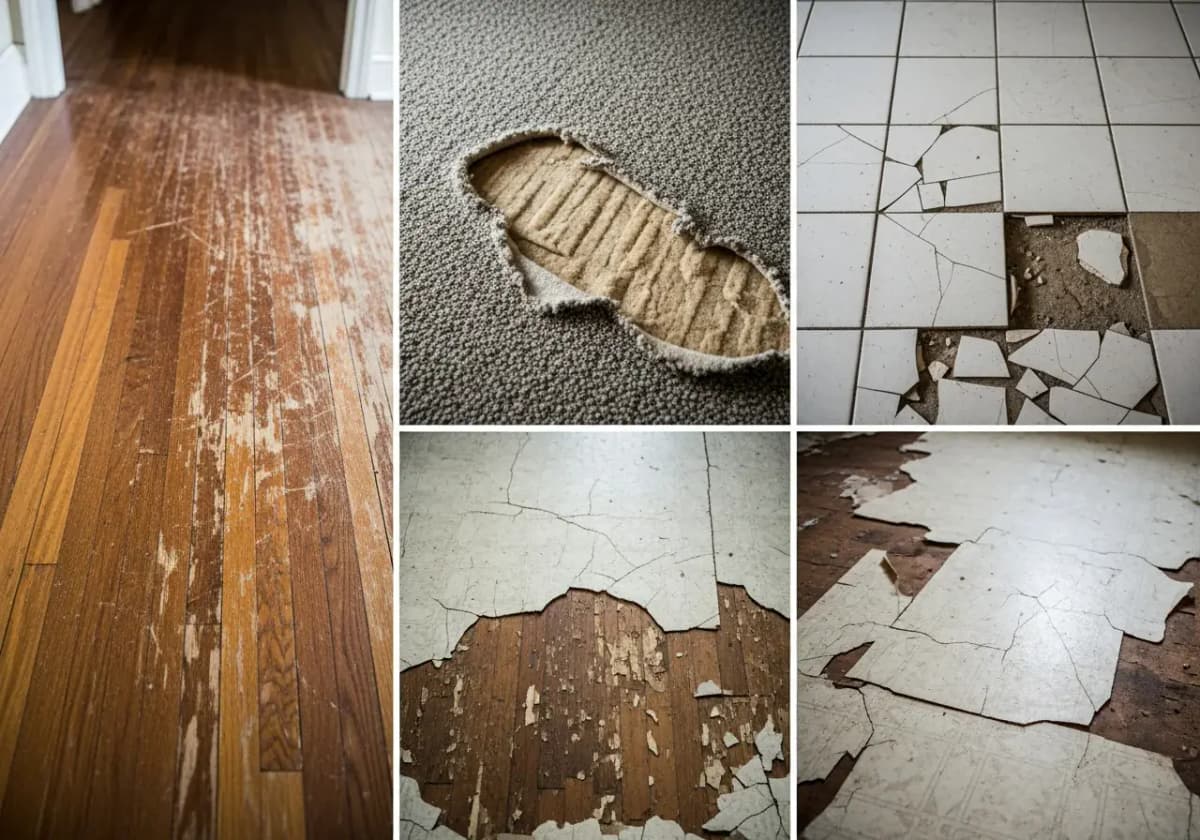
Solution: We assess and level the subfloor using self-leveling compound, plywood underlayment, or targeted repairs to create a flat, stable surface that prevents gaps, lippage, and movement in the finished floor.
Solution: We perform moisture testing and install appropriate vapor barriers or moisture-resistant underlayment. For basements, we recommend waterproof LVP or tile over moisture-protected subfloors.
Solution: We use reducer strips, T-moldings, and custom transitions to create clean, safe connections between different flooring materials and heights — no tripping hazards or awkward gaps.
Solution: We remove old carpet and pad, treat any subfloor staining or odor, and install hard-surface flooring like LVP or hardwood that is easier to clean and does not harbor allergens or pet odors.
Solution: We screw down loose subfloor panels, add blocking between joists where needed, and ensure the subfloor is tight and quiet before installing new flooring on top.

High-desert river valley at ~2,400 ft, IECC Climate Zone 5B: cold winters (≈10°F winter design temperature), intense high-elevation summer UV, dry heat, hard freeze-thaw cycling, and pervasive wind-driven agricultural dust. The City's official adopted criteria classify weathering as 'severe.'
Drives envelope and window specification, frost-depth footings, and high demand for radiant floor heat.
All footings (deck, addition, ADU) must bear below 24" — or deeper per geotechnical report on variable rural/foothill soils.
Economy siding/paint/decking fail on an accelerated, visible schedule; premium UV- and freeze-rated systems required.
Scales glass and fixtures, etches stone; drives coated glass, porcelain, brushed fixtures, and softeners.
Pervasive field dust loads tile grout and seams and demands heavier surface prep for paint adhesion.
City maintains adopted FIRM maps (Ord. 531, 4-2-2014); river-/channel-proximate work requires flood-zone verification.
The original town grid around Main Street and the historic mill site — Canyon County's oldest neighborhood, with pre-1970 farm and town homes on smaller, tighter-setback lots.
Common projects in Old Middleton / Historic Core & Mill Site:
Planned 2010s-and-later production-home subdivisions along the Middleton Road / Hwy 44 growth corridors, generally on city water and sewer, with builder-grade finishes now aging out.
Common projects in Kestrel Estates & Bridgewater Creek:
Newer growth-wave and amenity/water-feature subdivisions with strict HOA architectural review; some lots near the lower Boise River floodplain.
Common projects in Quail Haven, Hidden Mill & Middleton Lakes:
Higher-end foothill and acreage properties toward the Star border with larger lots, views, and private well/septic; finish expectations well above the city median.
Common projects in Foothill / Sage Canyon Edge & View Ridge:
Agricultural acreage outside the city sewer envelope, predominantly on private well and septic, with the highest dust and wind exposure and the most outdoor-living space.
Common projects in Rural Middleton Road Acreage:
Every Middleton neighborhood has different housing stock, homeowner priorities, and project considerations. Here is what flooring looks like in each area:
Permit authority: City of Middleton Building Department (1103 West Main Street, Middleton, ID 83644; (208) 585-3133) for properties inside city limits; Canyon County Building Department for unincorporated properties. Septic for rural/ADU work via Southwest District Health.
Online portal: middleton.id.gov/Departments/Building
Here are the design trends we see most often in Middleton flooring projects:
Middleton's median home value climbed toward and past roughly $380,000 by early-to-mid 2024, with a homeownership rate near 83% and a market rising on sustained, rapid in-migration. Because buyers entering the growth market compare resales directly against the new construction still being built in the same subdivisions, dated finishes (and, in older stock, deferred systems) act as active discounts rather than neutral features — making coherent, code-correct remodeling unusually well-rewarded here.
Avoid these common pitfalls Middleton homeowners encounter with flooring projects:
Better approach: Pre-1970 Middleton homes routinely hide moisture damage and deflection in joisted subfloors around kitchens, baths, and doors. Laying new flooring over it telegraphs every problem within a year. Assess and repair the subfloor first — no surface material performs over a compromised substrate, and this is the most common older-Middleton flooring failure.
Better approach: Pre-1980 Middleton flooring commonly contains asbestos in tile and black mastic; removing it without testing and compliant abatement is a legal and health violation. Test where status is unknown and abate where confirmed before removal — it is required, not optional, and is a real line item that must be in the plan from the start.
Better approach: Pervasive agricultural dust loads grout lines and seams continuously here, turning small-format tile or seamed flooring into a permanent cleaning burden. Default to continuous low-seam LVP, and where tile is used specify large-format with epoxy or well-sealed grout. Match the floor to the dust reality, not to a showroom that ignores it.
Better approach: Middleton's dry-to-sealed humidity swing gaps and cups solid wood. Use engineered hardwood for real-wood looks, and acclimate any wood product in the home with proper expansion allowance and a moisture-tested subfloor. Rushing installation without acclimation is a guaranteed failure in this climate.
Better approach: Replacing worn builder carpet with more entry-level flooring wastes the opportunity in a market that benchmarks against new construction. A modest step up to quality continuous LVP resets the home's perceived condition tier and returns far more in presentation and offers than the small cost difference. Match the floor to the market, not to the original build budget.
Because it matches Middleton's specific conditions better than the alternatives. Continuous waterproof-core LVP has minimal-to-no seams, which resists the pervasive agricultural dust that loads tile grout and laminate joints here; its waterproof core handles moisture; it is dimensionally stable through Middleton's dry-to-sealed humidity swing that gaps wood; and it is warmer underfoot than tile in a 10°F-winter climate. For most Middleton living areas it outperforms tile, laminate, and solid wood on every locally relevant metric — though we still spec tile or engineered wood where a specific room or design calls for it.
Not without testing it first. Vinyl tile and the black mastic under it in pre-1980 Middleton homes commonly contain asbestos, and disturbing it requires testing and, where confirmed, compliant abatement under Idaho DEQ requirements. Beyond that, older Middleton floors often hide subfloor moisture damage that must be corrected, not covered. We test, abate where required, and assess the subfloor before any new flooring — covering over an unaddressed problem floor is both a legal risk and a guarantee the new floor fails early.
Engineered hardwood will; solid hardwood is risky here. Middleton's swing from dry summers to tightly sealed winters moves solid wood enough to cause gapping and cupping over an annual cycle. Engineered hardwood's layered construction is far more dimensionally stable and is the climate-correct way to get a genuine wood floor in Middleton. Either way it must be acclimated in the home before installation and laid over a moisture-tested subfloor — acclimation is not optional in this climate.
Because it is pervasive and continuous from the active surrounding farmland, and it loads grout lines and seams faster than urban dust. That makes minimal-seam continuous flooring (like LVP) much easier to maintain here, and where tile is used it drives the strategy toward large-format tile with minimal grout and epoxy or well-sealed grout. Choosing small-format tile or heavily seamed flooring in Middleton creates a permanent cleaning burden the homeowner lives with daily.
In wet rooms and entries where you want tile, it is one of the highest-satisfaction additions here. Middleton's 10°F winter design temperature makes bare tile genuinely cold underfoot for roughly five months a year. Electric radiant mats under the tile add a modest amount to the project and change the daily experience of those rooms through the entire heating season. It is among the most consistently "worth it" upgrades we install in Middleton tile floors.
A few rooms or a rental-property LVP install runs 4–8 days. A whole-level or whole-home LVP install over sound subdivision substrate runs 1–2 weeks. An older-home project with asbestos abatement and subfloor repair runs 2–4 weeks because the abatement and substrate work is the bulk of the time. Wood and tile add acclimation and curing time. We give a realistic schedule reflecting your home's actual substrate and material rather than an optimistic finish-only estimate.
Luxury vinyl plank (LVP) is the most popular choice for whole-home installations in the Boise area. It is waterproof, scratch-resistant, comfortable underfoot, and available in realistic wood-look patterns. It can be used in every room including kitchens and bathrooms.
A typical whole-home flooring installation (1,500-2,000 sq ft) takes 5-10 days including removal of existing flooring, subfloor prep, and installation. Single-room projects may take 1-3 days. Tile installations take longer due to setting and grouting time.
LVP is more practical — it is waterproof, scratch-resistant, more affordable, and easier to maintain. Hardwood offers a warmer, more premium feel and can be refinished multiple times. Many homeowners use LVP in high-traffic and wet areas and hardwood in formal living spaces.
We handle furniture moving as part of the installation process. We move items out of the work area, install the flooring, and return furniture to position. Homeowners should plan to clear small items, electronics, and fragile objects from the rooms.
In some cases, yes. LVP and laminate can often be installed over smooth, level existing floors. However, removing old flooring typically produces a better result because it allows for proper subfloor inspection, repair, and preparation.
We use manufacturer-matched transition strips — T-moldings, reducers, and thresholds — to create clean, level connections between different flooring materials. Proper transitions are both functional (no tripping hazards) and aesthetic (clean visual lines).
Get a free, no-obligation estimate for flooring installation in Middleton, ID. We handle design, permits, and every detail of construction.
Get Your Free Estimate