
Home Remodeling in Banks, Idaho
Banks is a small community at the junction of Highways 55 and 17 along the South Fork of the Payette River, about 33 miles north of Boise. Iron Crest Remodel serves Banks homeowners and cabin owners with professional renovations built for mountain living.
Neighborhoods We Serve

Banks is a tiny mountain community at the junction of Highways 55 and 17 along the South Fork of the Payette River, about 33 miles north of Boise in Boise County. With a population of just over 20 permanent residents, Banks is primarily a gateway to the Boise National Forest, the Middle Fork of the Payette River, and the Highway 55 corridor to Cascade and McCall. Most properties in the Banks area are cabins, river retreats, and rural mountain homes.

Highway 55 Corridor Properties
Properties along Highway 55 near Banks are a mix of year-round residences and seasonal retreats, many built as rustic cabins in the 1960s through 1990s. Remodeling these properties typically involves upgrading insulation and heating for year-round comfort, replacing aging kitchens and bathrooms with modern fixtures, and installing energy-efficient windows rated for mountain weather. Many owners are converting seasonal cabins into full-time or rental properties, requiring comprehensive upgrades to meet modern living standards.

South Fork Payette River Properties
The South Fork of the Payette River runs through Banks, and riverside properties command premium values for their scenic setting and recreational access. These homes require special attention to moisture management, foundation drainage, and flood-zone compliance. River properties benefit from moisture-resistant materials in kitchens and bathrooms, proper ventilation systems, and exterior finishes that withstand the river corridor's higher humidity levels.

Remote & Forest-Adjacent Properties
Some Banks-area properties sit on remote parcels accessed by forest service roads or private drives. These homes often rely on well water, septic systems, and sometimes propane or generator-backed electrical systems. Remodeling remote properties requires careful logistics planning—material staging, crew scheduling around access conditions, and coordination with specialists for well, septic, and utility work.

Canyon & Ridge Properties
Perched above the river canyon, ridge properties near Banks offer dramatic views but face the most demanding construction conditions in the area. Steep access roads, significant elevation changes on building sites, and full exposure to mountain weather all affect project planning. Siding and exterior finishes must withstand high winds, heavy snow accumulation, and intense UV exposure at elevation. Iron Crest brings the structural engineering and logistics expertise these challenging sites demand.
Remodeling costs in the Banks area carry a mountain premium due to remote access, material delivery logistics, and specialized mountain construction requirements.
| Project Type | Typical Cost Range | Average Timeline |
|---|---|---|
| Kitchen Remodel | $22,000 – $55,000 | 10 – 16 weeks |
| Bathroom Remodel | $10,000 – $26,000 | 4 – 8 weeks |
| Cabin Renovation | $25,000 – $90,000 | 10 – 22 weeks |
| Window Replacement | $6,000 – $18,000 | 1 – 3 weeks |
| Siding Installation | $12,000 – $32,000 | 2 – 5 weeks |
| Flooring Installation | $5,000 – $14,000 | 1 – 3 weeks |
| Exterior Painting | $3,500 – $8,500 | 3 – 7 days |
* Ranges reflect mid-range to high-end finishes. Mountain access and material delivery logistics may affect final pricing. Contact us for a detailed, project-specific estimate.
Banks may be one of the smallest communities on the Highway 55 corridor, but its location at the confluence of the South Fork and main Payette River makes it a uniquely desirable spot for property owners. The tiny community sits at the crossroads of two major recreational corridors—Highway 55 heading north toward Cascade and McCall, and Highway 17 following the South Fork through one of Idaho's premier whitewater corridors. This positioning means Banks-area properties attract a specific type of owner: outdoor enthusiasts who value river access, forest proximity, and mountain solitude over suburban convenience.
Remodeling in Banks is fundamentally shaped by remoteness. Material delivery requires coordination with suppliers willing to truck loads 33+ miles up a mountain highway, and timing deliveries around winter road conditions can shift project schedules by weeks. Iron Crest addresses these logistics challenges by block-scheduling Banks projects alongside work in Horseshoe Bend, Garden Valley, and Cascade, ensuring crews deploy efficiently and materials stage on-site before weather windows close. We also maintain relationships with regional suppliers experienced in mountain delivery, reducing the lead times that catch less-prepared contractors off guard.
Seasonal access is another defining factor. Many Banks properties are used primarily from late spring through early fall, making the shoulder seasons—April through May and September through October—the prime window for renovation work. Owners who want to enjoy their property during peak summer months need a contractor who can plan around that calendar, completing work before the season begins or after it ends. Iron Crest builds seasonal use patterns into every Banks project timeline, so your cabin or river retreat is ready when you need it most.
Banks sits in Boise County along a mountain highway corridor, requiring expertise in mountain construction, remote logistics, and Boise County permitting.
Boise County Permitting
Building permits in the Banks area are issued through Boise County's planning and zoning department. Our team handles the full permitting process—applications, plan review, and inspection scheduling—and is familiar with the county's requirements for mountain and river-corridor construction.
Mountain & River Construction
Construction in the Banks area requires expertise in mountain-specific challenges: snow loads on roofing and structures, freeze-thaw cycles that affect foundations and exterior materials, moisture management for river-adjacent properties, and flood-zone compliance for homes near the South Fork of the Payette. Our team selects materials and techniques rated for these demanding conditions.
Remote Access & Logistics
Material staging, weather-dependent scheduling, and coordination with forest-area utility providers are all part of working in the Banks corridor. We block-schedule Highway 55 projects with dedicated crews, coordinating with Horseshoe Bend, Garden Valley, and Cascade work to deploy efficiently and keep your project on track despite the remote setting.
Explore our in-depth guides covering costs, timelines, and planning tips for Banks homeowners considering a remodeling project.
Kitchen Remodeling Cost
Local pricing data, material options, and budget strategies for remote mountain kitchen projects.
Read GuideBathroom Remodeling Cost
What Banks-area homeowners pay for bathroom remodels, from cabin refreshes to full gut renovations.
Read GuideKitchen Remodeling Timeline
Week-by-week breakdown of a mountain kitchen remodel, accounting for remote delivery logistics.
Read Guide
Bathroom Remodeling Materials
Compare tile, vanity, fixture, and countertop options with moisture-resistance ratings for river properties.
Read GuideIron Crest Remodel offers a full range of remodeling services in Banks, ID. Explore each service to learn about pricing, timelines, and our process for Banks homeowners.
Interior Remodeling
Exterior Remodeling
Other Service Areas
The work we do near Banks
Drag the slider to compare a completed deck builder project in Banbury Meadows, Eagle — the same work we bring to Banks homes.
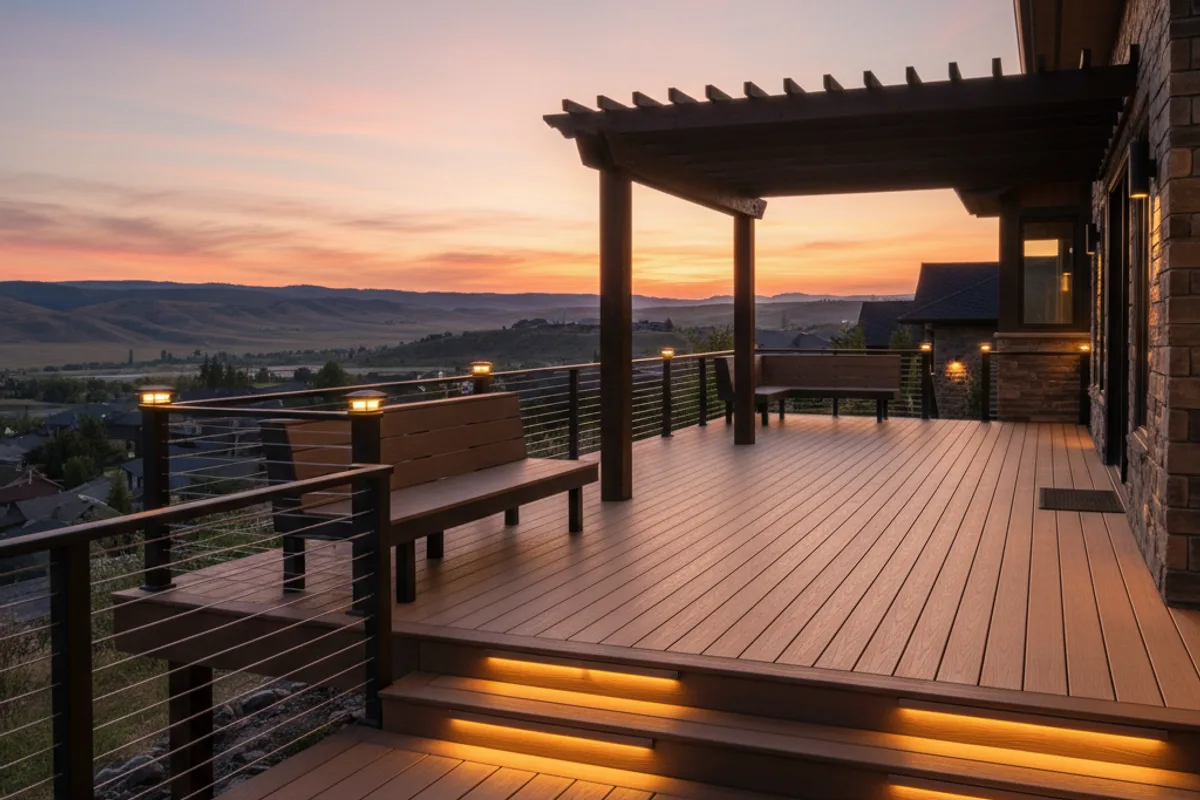
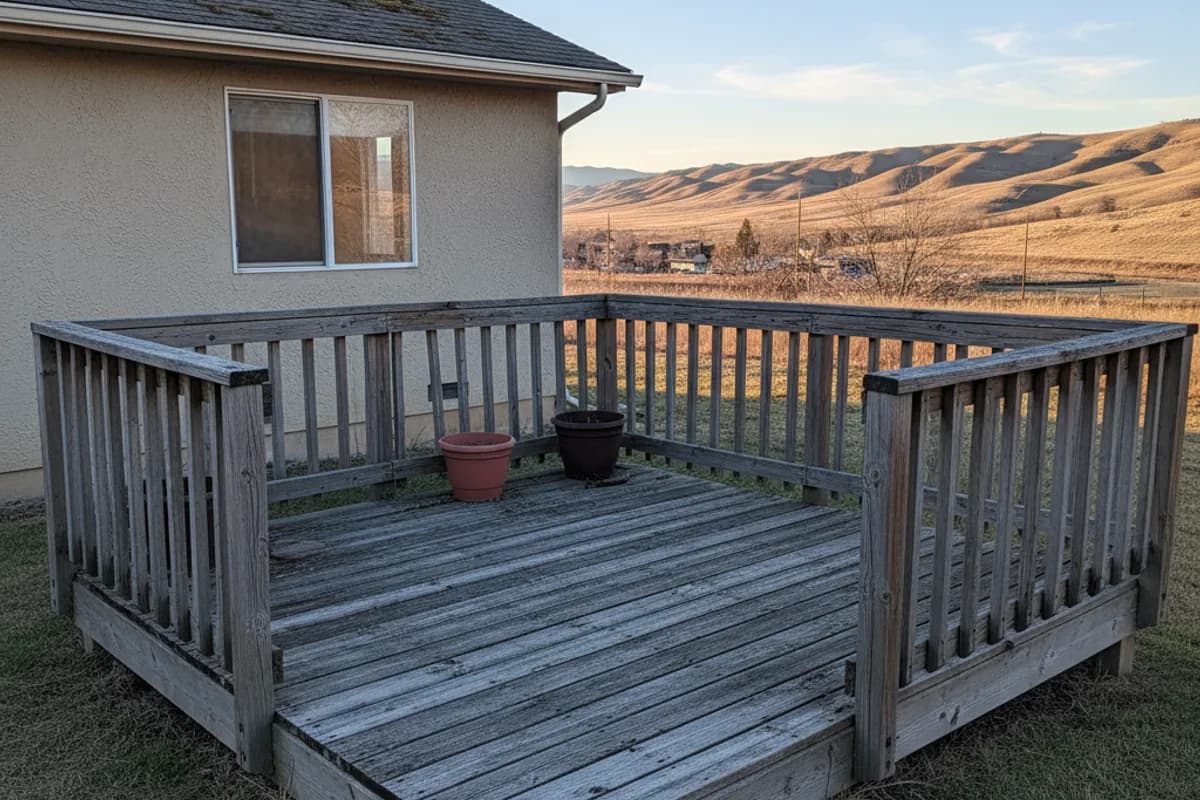
Before
After
This Banbury Meadows, Eagle deck builder project is one example of the work we bring to Banks-area homes. See the full case study or browse all our Treasure Valley projects.

Talk to a real project manager
Have Questions? Call Now for a Free In-Home Consultation.
Mon–Fri 7 AM–6 PM · Licensed & insured · No obligation
Russ S. — Project Manager
Russ S. — Project Manager
What remodeling services does Iron Crest Remodel offer in Banks?
Iron Crest Remodel provides kitchen remodeling, bathroom remodeling, whole-home renovations, interior and exterior painting, flooring installation, deck building, siding installation, window replacement, and ADU construction for Banks homeowners.
How much does a home remodel cost in Banks, Idaho?
Remodeling costs in Banks vary by project scope. Bathroom remodels typically range from $15,000 to $45,000, kitchen remodels from $25,000 to $75,000, and whole-home renovations from $80,000 to $250,000 or more. Contact us for a free, detailed estimate for your specific project.
Do I need a permit for remodeling in Banks?
Most structural, electrical, and plumbing work in Banks requires permits from the local building department. Iron Crest Remodel handles all permit applications and inspections as part of our full-service process, so you do not need to manage permits yourself.
How long does a typical remodeling project take in Banks?
Project timelines depend on scope and complexity. A bathroom remodel typically takes 3 to 6 weeks, a kitchen remodel 6 to 12 weeks, and a whole-home renovation 3 to 6 months. We provide a detailed timeline during your free consultation.
Is Iron Crest Remodel licensed and insured in Idaho?
Yes. Iron Crest Remodel holds Idaho RCE License #6681702 and is fully insured to perform residential remodeling work throughout the Boise metropolitan area, including Banks. We carry $2M general liability insurance and workers compensation coverage on every project.
Banks is not a typical Idaho community. With a permanent population hovering around 25 people, it functions less as a town and more as a geographic anchor point—the place where Highway 55 and Highway 17 diverge, where the North Fork and South Fork of the Payette River converge, and where the Boise National Forest begins to dominate the landscape. For property owners, Banks represents something specific: gateway access to Idaho's premier whitewater corridor, a 45-minute drive from Boise's urban core, and a foothold in some of the most dramatic river canyon scenery in the Mountain West.
The real estate profile in Banks reflects this identity. The vast majority of properties are vacation cabins, recreational retreats, and river-access homes rather than primary residences. Many were built between the 1960s and 1990s as seasonal-use structures—simple framing, minimal insulation, basic plumbing, and electrical systems designed for summer weekends rather than year-round habitation. As property values along the Highway 55 corridor have climbed—driven by the growth of McCall, Cascade, and Tamarack Resort as destination communities—Banks-area owners are increasingly investing in substantial renovations that transform aging cabins into comfortable four-season properties or high-performing vacation rentals.
This renovation wave is reshaping the Banks housing stock. Owners are upgrading insulation from R-11 walls to R-21 or higher, replacing single-pane windows with triple-pane units rated for mountain elevations, converting wood-burning heat to efficient propane or heat-pump systems, and modernizing kitchens and bathrooms to match the finishes expected in a $300,000-plus vacation property. The short-term rental market—driven by whitewater rafting, kayaking, fishing, and proximity to Tamarack and Brundage ski areas—has made these upgrades financially compelling. A well-renovated Banks cabin can generate meaningful rental income during peak summer and winter seasons, offsetting the cost of improvements within a few years.
Iron Crest understands this market because we work the full Highway 55 corridor from Horseshoe Bend through Garden Valley to Cascade. We see the same renovation patterns repeating across communities: aging cabin stock meeting rising expectations from both owners and renters. Our approach in Banks combines mountain construction expertise with practical design choices that maximize comfort, durability, and rental appeal—moisture-resistant materials for the river corridor, snow-load-rated structures, and finishes that withstand the wear of vacation rental use without requiring constant maintenance.
Whitewater Gateway
Banks sits at the start of Idaho's most famous whitewater corridor. The North Fork, South Fork, and main Payette all converge here, making river-access properties highly desirable for rafters, kayakers, and fishing enthusiasts. Proximity to commercial outfitters drives strong vacation rental demand from May through September.
Resort Corridor Access
Highway 55 connects Banks to Cascade, McCall, and Tamarack Resort—creating a year-round recreation corridor. Winter ski traffic and summer lake visitors pass through Banks daily, and properties here offer a more affordable entry point to the corridor than McCall or Donnelly while still capturing rental demand from resort visitors.
Cabin-to-Retreat Conversions
The dominant renovation pattern in Banks is converting aging seasonal cabins into comfortable four-season retreats. This typically involves comprehensive insulation upgrades, modern HVAC installation, full kitchen and bathroom renovations, and structural improvements to meet current snow load and seismic requirements—transforming 1970s-era structures into properties that perform year-round.
Properties in the Banks area fall into three distinct categories, each with unique construction characteristics and remodeling requirements. Understanding your property type is essential for accurate project planning, material selection, and realistic budgeting.
River-Front Properties
River-front parcels along the South Fork and main Payette command the highest property values in the Banks area, and they also present the most complex remodeling conditions. These properties sit within or adjacent to FEMA-designated flood zones, which means any substantial improvement—defined as work exceeding 50% of the structure's market value—may trigger flood zone compliance requirements including elevation certificates, flood-resistant materials below the base flood elevation, and specific foundation standards.
Beyond regulatory requirements, river-front properties face persistent moisture challenges. The Payette corridor's humidity levels run significantly higher than surrounding terrain, accelerating material degradation if standard interior finishes are used. Iron Crest specifies moisture-resistant drywall, closed-cell spray foam insulation in crawl spaces, vapor barriers rated for high-humidity environments, and bathroom tile systems with waterproof membrane underlayment for every river-front project. We also address drainage grading around foundations to direct seasonal runoff and snowmelt away from structures.
Kitchen and bathroom renovations on river-front properties benefit from material choices that embrace rather than fight the environment: porcelain tile over hardwood in high-traffic areas, quartz countertops over natural stone that can stain from mineral-rich well water, and marine-grade hardware on exterior doors and windows. These choices add 5–10% to material costs but dramatically extend the lifespan of the renovation.
River-Front Remodeling Checklist
Highway 55 Corridor Properties
The majority of Banks-area residential structures sit along or just off Highway 55, Idaho's primary north-south route through the Payette River canyon. These properties range from original 1960s log cabins to more recent construction from the 2000s building boom. Most share common characteristics: they were built to seasonal-use standards, sit on relatively accessible lots with road frontage or short driveways, and connect to the highway's utility corridor for power (though many still rely on well water and septic systems).
Highway 55 corridor properties are generally the most straightforward Banks remodeling projects from a logistics standpoint. Material delivery trucks can access these sites without navigating forest service roads or steep private drives. Crew access is reliable year-round (the highway is maintained by ITD through winter). And the relatively flat terrain along the road corridor simplifies staging and equipment placement.
The primary challenge with corridor properties is noise and dust from highway traffic, which influences design decisions. Sound-rated windows (STC 30+), solid-core exterior doors, and insulation with acoustic dampening properties improve the livability of cabins that sit within 100 feet of the highway. For properties marketed as vacation rentals, these upgrades are particularly important—guests expect a mountain retreat experience, not highway noise. Iron Crest factors road proximity into every corridor property design, selecting materials that deliver both thermal and acoustic performance.
Corridor Property Upgrade Priorities
Forest-Adjacent & Remote Properties
The most challenging—and often most rewarding—Banks remodeling projects involve properties set back from the highway on forest service roads, private drives, or remote parcels within or bordering the Boise National Forest. These homes offer the seclusion and natural setting that draws people to Banks in the first place, but they also demand the most careful project planning and the highest level of construction logistics expertise.
Remote properties typically operate on independent utility systems: well water (often from deep wells at 200–400 feet in this geology), septic systems designed for the area's rocky, granitic soil, propane for heating and cooking, and sometimes generator-backed or solar-supplemented electrical service. Any remodeling project that changes the home's water demand (adding a bathroom, upgrading a kitchen) or electrical load (modern HVAC, additional circuits) must account for these system capacities. A bathroom addition that exceeds the existing septic system's rated capacity, for example, requires a new septic design, perc testing, and Boise County health district approval before construction can begin.
Access is the defining logistical constraint. Some forest-adjacent properties are reached by roads that become impassable during spring snowmelt or after heavy rain. Material delivery may require smaller trucks or staged transfers from the highway. Heavy equipment (dumpsters, mini-excavators, concrete trucks) may not be able to reach the site at all, requiring alternative methods. Iron Crest conducts a detailed site access assessment before quoting any remote Banks project, accounting for seasonal road conditions, vehicle clearance requirements, and staging area availability. This upfront planning prevents the mid-project surprises that cost unprepared contractors—and their clients—time and money.
Remote Property Planning Factors
Building and remodeling in Banks demands expertise that goes well beyond standard residential construction. Every project here is shaped by geography, climate, access limitations, and infrastructure realities that don't exist in the Treasure Valley. Here are the specific challenges Iron Crest navigates on every Banks project.
Seasonal Access & Weather Windows
Banks sits at approximately 3,100 feet elevation in a narrow river canyon that funnels cold air and accumulates significant snowfall. The effective construction season runs from late April through mid-November, with the most reliable weather windows falling in June through September. Winter construction is possible but adds 15–25% to project costs due to temporary heating, frozen ground mitigation, and reduced crew productivity. Spring snowmelt (March–April) can make forest roads impassable for weeks, and fall storms can arrive with little warning. Iron Crest builds weather contingency into every Banks project timeline, typically adding 2–3 weeks of buffer compared to equivalent Boise projects.
Material Delivery Logistics
Every screw, tile, cabinet, and appliance must travel at least 33 miles up Highway 55 from Boise-area suppliers. Standard delivery surcharges for the Banks area range from $150 to $500 per load depending on the supplier and material type. Specialty items (custom cabinetry, large-format tile, structural steel) require coordination with carriers experienced in mountain highway delivery. Iron Crest pre-stages materials on-site before project start dates, orders in consolidated loads to reduce delivery costs, and maintains relationships with suppliers who regularly service the Highway 55 corridor. For remote properties off the highway, we may use our own vehicles for final-mile delivery to sites that commercial trucks cannot reach.
Well & Septic Systems
Banks has no municipal water or sewer infrastructure. Every property relies on private well water and an individual septic system. Remodeling projects that add fixtures (a second bathroom, a larger kitchen sink, a laundry room) must verify that the existing well produces adequate flow and that the septic system can handle the increased load. Wells in the Banks area typically draw from fractured granite aquifers at depths of 150–400 feet, and flow rates vary significantly between properties. Septic systems must comply with Central District Health Department regulations, and soil conditions in the canyon (rocky, shallow topsoil) can limit drain field options. Iron Crest coordinates well and septic assessments during the planning phase, before design work begins, so scope adjustments happen on paper rather than mid-project.
Snow Loads & Structural Requirements
Boise County's building code requires structures in the Banks area to meet ground snow load ratings of 40–60 pounds per square foot (psf), depending on specific elevation and exposure. Many older cabins were built before these standards were codified or enforced, meaning roof structures may be undersized for current code. Any remodeling project that involves roofing work, structural modifications, or additions must bring the affected structure up to current snow load requirements. This can mean sistering rafters, upgrading ridge beams, or redesigning roof connections—work that adds cost but is essential for structural safety. Iron Crest includes a structural assessment in every Banks project scope, identifying snow load deficiencies before they become change orders.
Wildfire Zones & Defensible Space
Banks lies within the wildland-urban interface (WUI), where residential properties border Boise National Forest land. The 2022 Moose Fire burned over 130,000 acres in this region, underscoring the real and present wildfire risk. Remodeling projects in Banks should incorporate fire-resistant exterior materials: Class A asphalt or metal roofing, fiber cement or metal siding, tempered or dual-pane windows, and non-combustible decking or deck-board alternatives. Iron Crest also advises on defensible space requirements—the vegetation management zones recommended by Idaho Firewise—and selects exterior finishes that meet both aesthetic goals and fire-resistance standards. Insurance carriers increasingly require these measures for mountain properties, making fire-resistant upgrades both a safety and financial priority.
Freeze-Thaw & Moisture Cycles
The Banks area experiences over 150 freeze-thaw cycles per year—far more than Boise's valley floor. This constant cycling degrades exterior materials, cracks poorly sealed joints, and stresses foundations. Concrete work requires air-entrained mix designs. Exterior paint and stain must be formulated for extreme temperature swings (Banks can see 100-degree seasonal temperature ranges). Siding fasteners need to accommodate thermal expansion. And foundation waterproofing must withstand both liquid water from snowmelt and ice pressure from frozen ground. Iron Crest specifies materials and installation methods rated for these conditions on every Banks project, avoiding the premature failures that result from using valley-standard products in mountain environments.
Banks falls under Boise County's jurisdiction for building permits, planning, and zoning—a different regulatory environment than Ada County (Boise) or Canyon County (Nampa/Caldwell) where most Treasure Valley contractors work. Boise County's Community Development department handles permit applications from its office in Idaho City, approximately 35 miles east of Banks. Understanding the county's specific requirements, timelines, and inspection logistics is essential for keeping a Banks remodeling project on schedule.
Permit requirements. Boise County requires building permits for structural modifications, electrical work, plumbing changes, mechanical (HVAC) installations, and roofing replacement. Cosmetic work—painting, flooring, countertop replacement, fixture swaps with no plumbing relocation—generally does not require a permit. The county uses the International Building Code (IBC) and International Residential Code (IRC) as its base codes, with local amendments for snow loads, seismic requirements, and wildland-urban interface construction. Permit applications require site plans, construction drawings, and engineering calculations for structural work.
Plan review timeline. Boise County's plan review typically takes 2–4 weeks for straightforward residential remodeling projects, and 4–8 weeks for additions, structural modifications, or projects in sensitive areas (flood zones, steep slopes, WUI zones). This is significantly longer than Ada County's typical 1–2 week turnaround. Iron Crest submits permit applications during the design phase—well before the target construction start date—to prevent plan review from delaying project launch.
Inspection logistics. Because Banks is remote from the county seat in Idaho City, inspection scheduling requires coordination. Boise County inspectors serve a large geographic area, and inspection availability may be limited to specific days of the week for the Banks corridor. Iron Crest batches inspection requests to align with the county's routing schedule, preventing the multi-day delays that can occur when an inspection is missed and must be rescheduled for the next available slot. We also maintain direct communication with the building department to resolve code questions before they become inspection holds.
Septic and well permits. Projects that involve new septic systems, septic system modifications, or new wells require separate permits from Central District Health Department (CDHD), not Boise County. CDHD permits involve soil percolation testing, system design review, and installation inspection. The CDHD process typically adds 4–6 weeks to the pre-construction timeline. Iron Crest initiates CDHD coordination in parallel with Boise County permit applications to keep overall timelines on track.
Boise County Permit Quick Reference
- Jurisdiction
- Boise County Community Development, Idaho City
- Base Code
- IRC/IBC with local amendments for snow load & WUI
- Plan Review
- 2–4 weeks (standard) / 4–8 weeks (complex)
- Snow Load Requirement
- 40–60 psf ground snow load (elevation-dependent)
- Septic/Well Authority
- Central District Health Department (separate process)
- Flood Zone
- FEMA-mapped zones along Payette River corridor
- WUI Requirements
- Fire-resistant exterior materials, defensible space
- Iron Crest Handles
- Full permit application, plan review, inspection scheduling, CDHD coordination
Permits Not Required
The following work typically does not require a Boise County building permit:
We hear these questions frequently from Banks property owners. They reflect the unique realities of remodeling in a remote mountain community where most properties serve as vacation homes or rentals.
What renovations maximize vacation rental income for a Banks cabin?
The highest-ROI upgrades for Banks vacation rentals focus on the kitchen, bathroom, and outdoor living spaces. A modern kitchen with durable quartz countertops, stainless appliances, and open shelving photographs well and handles rental wear. Updated bathrooms with tile showers, modern vanities, and good lighting are the second priority. Beyond interiors, a covered deck or patio with river or forest views often drives booking premiums more than any single interior upgrade. We also recommend durable, low-maintenance finishes throughout—luxury vinyl plank flooring over hardwood, solid-surface counters over marble, commercial-grade fixtures over residential. These choices reduce maintenance calls between guests and extend the renovation's lifespan from 5–7 years to 12–15 years in a rental environment.
Can you remodel my Banks cabin during winter?
Yes, with caveats. Interior work (kitchen remodels, bathroom renovations, flooring) can proceed through winter as long as the structure is enclosed and we can maintain interior temperatures above 50°F for material curing and adhesive performance. We use temporary heating systems powered by propane or the property's existing HVAC. Exterior work (siding, painting, decks) is generally not feasible from December through March due to snow cover, freezing temperatures, and material limitations. The cost premium for winter construction in Banks typically runs 15–25% above summer rates due to heating costs, reduced daylight hours, and slower crew productivity. However, winter construction offers a significant advantage: your property is ready for the peak rental season (Memorial Day through Labor Day) without sacrificing any summer revenue to a construction project.
What special considerations apply to river-front properties in Banks?
River-front properties along the Payette require attention to three areas that inland properties don't face. First, flood zone compliance—if your property sits in a FEMA-designated flood zone, substantial improvements (exceeding 50% of the structure's value) may trigger requirements for elevation certificates, flood-resistant materials below the base flood elevation, and specific foundation standards. Second, moisture management—river-corridor humidity accelerates material degradation, so we specify moisture-resistant insulation, waterproof membrane systems in wet areas, and marine-grade exterior hardware. Third, erosion and drainage—properties near the river must manage seasonal water table fluctuations and surface runoff from snowmelt, which affects foundation integrity and crawl space conditions. We assess all three during our initial site evaluation and factor them into project design and material specifications.
Does Iron Crest charge extra for the drive from Boise to Banks?
Iron Crest does not add a separate line-item travel charge for Banks projects. Instead, we build travel logistics into our project pricing and scheduling structure. We block-schedule Banks projects alongside work in Horseshoe Bend, Garden Valley, and Cascade—all communities along the Highway 55 corridor. Dedicated crews deploy for full days or multi-day stints rather than making round trips, which keeps productivity high and travel costs absorbed. For larger projects (full kitchen or bathroom remodels, cabin renovations), crews may stage locally for the duration of intensive work phases. This approach means Banks homeowners pay competitive rates comparable to Treasure Valley projects, with the mountain construction premium reflecting material delivery and specialized techniques rather than crew windshield time.
How do I plan a remodel if I don't live in Banks full-time?
Most Banks property owners live in Boise or out of state and manage their renovation remotely. Iron Crest supports this with a structured communication process: weekly photo updates documenting progress, a dedicated project manager as your single point of contact, video walkthrough calls at key milestones (demolition complete, rough-in complete, finish selections installed), and digital approval workflows for material selections and change orders. We hold keys and manage site access so you don't need to be present for inspections, deliveries, or daily crew oversight. Many Banks clients visit the property only twice during a project—once at the design walkthrough and once at final completion—and are fully informed throughout.
What insurance considerations apply to remodeling in the Banks wildfire zone?
Homeowner's insurance in the Banks area has become more complex following major wildfire events in the region. Some carriers have restricted coverage or increased premiums for properties in the wildland-urban interface. Remodeling with fire-resistant materials—Class A roofing, fiber cement siding, tempered windows, non-combustible decking—can help maintain or improve insurability. Several carriers offer premium reductions for properties that meet Firewise USA standards, including defensible space vegetation management and fire-resistant exterior construction. Iron Crest can provide documentation of fire-resistant materials and construction methods used in your remodel, which your insurance agent can submit for potential premium adjustments. We recommend discussing planned renovations with your insurance carrier before finalizing your scope to ensure the finished project meets their current underwriting requirements.
When is the best time of year to start a Banks remodeling project?
The optimal start date depends on your project type and how you use the property. For exterior work (siding, painting, decks), the construction window runs from late April through mid-October, with the most reliable weather in June through September. For interior-only projects, any season works, though winter projects carry a 15–25% cost premium. The most popular approach for vacation property owners is to begin in September after peak rental season ends, complete interior work through fall and early winter, and finish any remaining exterior work the following spring—so the property is fully renovated by Memorial Day. Iron Crest recommends contacting us 3–4 months before your desired start date for Banks projects, as permitting timelines and material lead times are longer than Treasure Valley norms.
Start Your Banks Remodeling Project
Get a free, no-obligation estimate for your Banks home. Licensed, insured, and ready to build.