

Tile and Waterproofing Systems That Last
The hidden layer behind your tile determines whether a shower lasts 5 years or 30. Here's what matters and why.
Quick answer
A shower built with a code-compliant waterproofing system — whether sheet membrane or liquid-applied — typically lasts 25 to 30 years or longer before requiring a full rebuild. The waterproofing membrane itself does not wear out under normal use.
Explore our full Boise bathroom remodeling services
Most homeowners choose tile for a shower because they like how it looks. That is the right instinct — tile is durable, cleanable, and gives a bathroom a finished quality that prefabricated inserts cannot match. But the tile itself is not what keeps water out of your walls. The waterproofing membrane behind the tile does that job, and it is the single most important decision in a shower build.
We see failed showers every month in the Treasure Valley. Tile that looks perfect on the surface, with mold and rotting studs behind it. The cause is almost always the same: no waterproofing membrane, the wrong membrane, or a membrane installed incorrectly. This guide covers the systems we trust, the tile and grout choices that complement them, and the Boise-specific factors that affect how everything performs over time.
Tile and grout are not waterproof. Cementitious grout is porous — it absorbs water. Even sealed grout allows some moisture migration over time. Natural stone tile is porous. Ceramic and porcelain tile joints allow water through at the grout lines. Every tiled shower gets water behind the surface. The question is what happens to that water when it gets there.
Without a waterproofing membrane, moisture reaches the substrate (cement board, plywood, or drywall), then the framing. Wood studs begin absorbing moisture. Mold colonizes within 48 to 72 hours in the right conditions. Over months and years, structural rot sets in. By the time you see visible signs — cracking grout, loose tiles, a musty smell — the damage behind the wall is often extensive. We have opened up five-year-old showers in Boise homes and found black mold covering entire stud bays.
What a Waterproofing System Does
- Creates a continuous waterproof barrier between the tile surface and the structural framing
- Directs water that penetrates grout lines toward the drain rather than into the wall cavity
- Prevents mold growth by eliminating the moisture source behind the wall
- Protects the structural integrity of studs, subfloor, and floor joists from rot and deterioration
- Allows the shower to be fully rebuilt (re-tiled) decades later without needing to replace the framing

Sheet membranes are factory-manufactured waterproof sheets bonded directly to the substrate with thin-set mortar. Because the membrane thickness is controlled during manufacturing, sheet systems offer the most consistent waterproof layer. They are our preferred method for custom shower builds.
Schluter KERDI Membrane
KERDI is a pliable polyethylene sheet with anchoring fleece on both sides. You bond it to cement board or KERDI-BOARD using unmodified thin-set mortar. The fleece locks into the thin-set, creating a mechanical bond. It is vapor-tight — zero water penetration. Tile goes directly on top of the KERDI with no cure time waiting. Schluter manufactures matching corners, bands, and pipe collars (KERDI-KERECK, KERDI-SEAL) that ensure every transition and penetration is waterproof.
Schluter KERDI-BOARD
KERDI-BOARD is a rigid panel that replaces cement board entirely. It is a structural, waterproof, and vapor-retardant substrate in one product. You screw it directly to the studs and tile over it. It eliminates the need for a separate membrane layer because the board itself is the waterproofing. For new construction and full gut-remodel showers, KERDI-BOARD simplifies the assembly and reduces total installation steps. It is lightweight (a fraction of cement board weight), easy to cut, and does not produce silica dust.
Laticrete Hydro Ban Sheet Membrane
Laticrete offers a bonded sheet membrane system similar to Schluter's. The Hydro Ban Sheet Membrane is a pliable, crack-isolation, and waterproofing membrane that bonds with Laticrete thin-set. It pairs with their drain systems and pre-formed accessories. It is a strong alternative to Schluter in our market, and we use it when project specifications call for a full Laticrete system.
Liquid-applied membranes are rolled or brushed directly onto the substrate. They cure into a flexible, waterproof coating. They are less expensive than sheet membranes and work well for simpler shower configurations and tub surrounds. The critical factor is achieving the correct coating thickness — too thin and the membrane will not perform.
Laticrete Hydro Ban
Hydro Ban is a thin, load-bearing liquid membrane that does not require the use of fabric in the field. Apply two coats by roller or brush to a minimum 20-mil dry film thickness. It bonds directly to cement board, concrete, and plywood substrates. Tile can be set directly into Hydro Ban with no slipsheet or additional layer needed. Cure time is approximately 12 to 16 hours under normal conditions, though Boise's dry air can shorten or complicate that window.
Custom Building Products RedGard
RedGard is the most widely recognized liquid waterproofing membrane in the residential market. It goes on pink and dries to a solid red — the color change gives a visual indicator that coverage is adequate. Apply in two coats to a minimum of 25 mils dry film thickness on walls and 55 mils on floors. It is available at most building supply retailers, which makes it popular with DIYers, but achieving consistent mil thickness across an entire shower requires experience and attention.
Custom Building Products HydroDefense
HydroDefense is Custom's newer rapid-cure liquid membrane. It is designed for faster turnaround — tile-ready in approximately 50 minutes under standard conditions. It is a good option when schedule is tight, but the fast cure time means you need to work quickly and in manageable sections. Like all liquid-applied products, thickness control is the key to performance.
Every system below meets code requirements when installed per manufacturer instructions. The differences are in consistency, labor time, cost, and tolerance for installation error.
| System | Type | Tile-Ready | Material Cost | Error Tolerance |
|---|---|---|---|---|
| Schluter KERDI | Sheet | Immediate | $1.50–$2.50/sq ft | High |
| Schluter KERDI-BOARD | Panel | Immediate | $2.00–$3.50/sq ft | High |
| Laticrete Hydro Ban Sheet | Sheet | Immediate | $1.25–$2.25/sq ft | High |
| Laticrete Hydro Ban (Liquid) | Liquid | 12–16 hours | $0.75–$1.50/sq ft | Moderate |
| RedGard | Liquid | 24 hours | $0.50–$1.00/sq ft | Lower |
| HydroDefense | Liquid | 50 minutes | $0.75–$1.25/sq ft | Moderate |
“Error Tolerance” refers to how forgiving the system is during installation. Sheet membranes maintain consistent thickness regardless of installer technique. Liquid membranes depend on the installer achieving correct mil thickness across every square inch — thin spots fail.
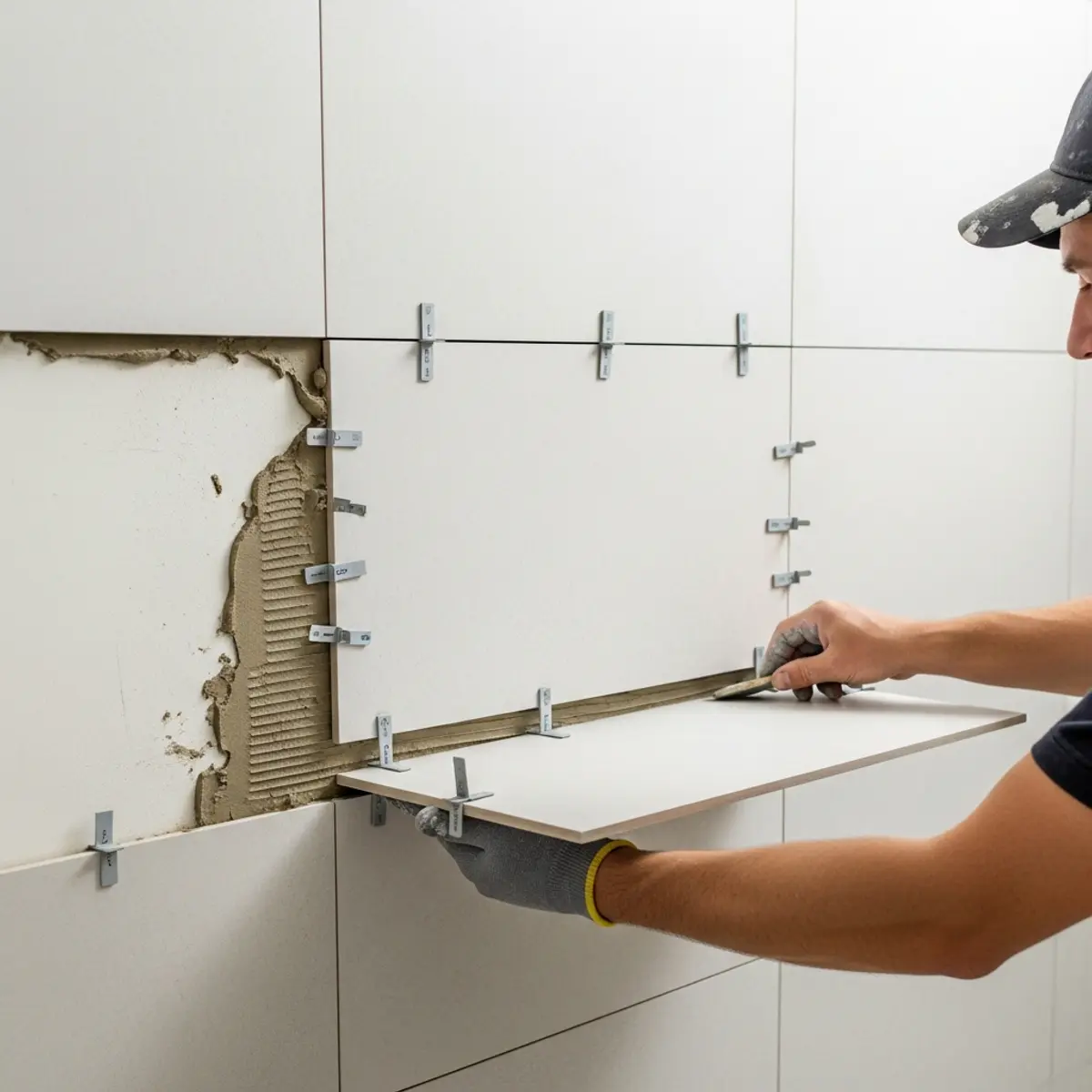
Tile choice affects appearance, durability, maintenance, and cost. Here is how the three main categories compare in a shower environment.
| Tile Type | Water Absorption | Cost (Installed) | Maintenance |
|---|---|---|---|
| Porcelain | < 0.5% | $8–$18/sq ft | Low — seal grout only |
| Ceramic | 3–7% | $6–$14/sq ft | Low — seal grout only |
| Natural Stone (Marble) | 0.2–0.5% | $15–$35/sq ft | High — seal tile and grout annually |
| Natural Stone (Slate) | 0.2–1.5% | $12–$25/sq ft | Moderate — seal tile and grout |
For most Boise homeowners, porcelain tile is the best value for shower walls and floors. Its near-zero water absorption rate means the tile itself does not contribute to moisture problems. Porcelain is harder than ceramic, more resistant to chipping, and available in an enormous range of finishes — including convincing stone and wood-look patterns. Ceramic works well on walls and in lower-splash areas but is softer and more porous. Natural stone is beautiful but demands ongoing maintenance. In our hard-water market, marble and travertine require diligent sealing to prevent mineral etching and staining.

Cementitious Grout (Sanded and Unsanded)
Cementitious grout is the standard for most residential tile work. Sanded grout is used for joints wider than 1/8 inch; unsanded for narrower joints and polished stone. It is affordable, widely available, and easy to work with. The downside is that cementitious grout is porous — it absorbs water and stains. It must be sealed after installation and resealed every one to two years in wet areas. In Boise, hard water mineral deposits build up in unsealed cementitious grout quickly, creating white haze and discoloration that is difficult to remove.
Epoxy Grout
Epoxy grout is a two-part resin system. Once cured, it is completely waterproof, stain-proof, and chemical-resistant. It never needs sealing. It resists mold growth and does not harbor bacteria. For showers, especially shower floors where standing water is constant, epoxy is the superior choice. The cost premium is roughly $3 to $5 per square foot over cementitious, and it requires an experienced installer — epoxy sets fast, is harder to tool, and mistakes are difficult to correct. We use Laticrete SpectraLOCK and Mapei Kerapoxy on our shower installations.
The substrate — what the waterproofing membrane bonds to — must be flat, stable, and free of contaminants. Cutting corners here causes failures that no amount of expensive tile or grout can prevent.
- Framing check: studs must be plumb, flat, and spaced correctly (16 inches on center). Bowed studs create uneven walls that telegraph through tile.
- Cement board installation: fasten with corrosion-resistant screws at 8-inch intervals. Tape and thin-set all seams. Cement board joints that are not taped are pathways for moisture.
- Shower pan: the floor substrate must slope to the drain at 1/4 inch per foot minimum. Pre-slope under the membrane or use a factory-sloped foam pan (Schluter KERDI-SHOWER-ST).
- Curb construction: the shower curb must be waterproofed on the top and both sides. Curb failures are one of the most common leak sources we encounter.
- Moisture testing: for concrete substrates (slab-on-grade bathrooms), test moisture vapor emission rate before applying membrane. Excess moisture vapor can delaminate the membrane from below.
Building a shower in Boise is not the same as building one in Seattle or Miami. Our climate and water quality create specific challenges that national guides do not address.
Hard Water and Mineral Deposits
Boise municipal water has a hardness level of approximately up to ~13 grains per gallon (avg ~6) — moderately hard on average, harder in well-fed zones. Calcium and magnesium deposits build up on tile surfaces, glass doors, and especially in grout joints. Porcelain tile with a smooth, glazed finish sheds mineral deposits more easily than textured or natural stone tile. Epoxy grout resists mineral buildup far better than cementitious. If you have natural stone tile, plan on a weekly cleaning routine with a pH-neutral stone cleaner to prevent permanent etching.
Dry Climate and Curing
Indoor humidity in a Boise home falls steeply once the furnace is running, even though outdoor winter humidity is high — forced-air heating is what dries the air inside. Thin-set mortar and cementitious grout need moisture to cure properly — they hydrate, not just dry. In our climate, rapid moisture loss from the surface causes weak bonds, surface cracking, and reduced adhesion. Professional installers address this by dampening the substrate before application, using polymer-modified thin-set (which retains moisture longer), and covering freshly grouted surfaces with plastic sheeting for 24 to 48 hours. These steps are standard practice in our shop for every tile installation.
After years of repairing and rebuilding failed showers across the Treasure Valley, we see the same problems repeatedly. Every one of them is preventable.
No waterproofing membrane
Tile set directly over cement board or greenboard with no membrane. Water migrates through grout joints, saturates the substrate, and can cause mold and rot within a few years.
Liquid membrane applied too thin
RedGard or similar product rolled on in one thin coat instead of two proper coats at the required mil thickness. Pinholes and thin spots allow water through.
Unsealed penetrations
Shower valve, showerhead pipe, and mixing valve penetrations left without membrane collars or sealant. Water follows the pipe into the wall cavity.
Curb not waterproofed on all three sides
Membrane applied to the shower-side face only. Water wicks over the top and down the outside face of the curb, damaging the bathroom floor.
Wrong thin-set for the substrate
Using unmodified thin-set on plywood or using modified thin-set under KERDI membrane (Schluter requires unmodified). Incorrect thin-set causes delamination of the membrane or tile.
Inadequate shower pan slope
Floor substrate without proper 1/4-inch-per-foot slope to the drain. Standing water sits against the membrane at seams and transitions, testing the waterproofing at its weakest points.
National product reviews and manufacturer spec sheets tell part of the story. What they do not cover is how these systems perform in the field — specifically in Boise's climate, with our water quality and building conditions. From installing tiled showers across the Treasure Valley, we have formed clear opinions on which systems deliver the most reliable long-term results for different project types.
Schluter KERDI Sheet Membrane
Liquid-Applied Membranes (RedGard, Hydro Ban, AquaDefense)
Foam Board Systems (GoBoard, Wedi, KERDI-BOARD)
Iron Crest's Recommendations by Project Type
Why Boise's Dry Climate Makes Leak Detection Harder
In humid climates like the Pacific Northwest, a waterproofing failure often shows symptoms quickly — mold growth, musty odors, visible water staining. In Boise's dry climate, moisture from a slow shower leak can evaporate before it reaches visible surfaces. The framing behind the wall absorbs and releases moisture in a cycle that can continue for months or even years without any obvious sign. By the time damage becomes visible — a soft spot on the wall, discoloration on the ceiling below, or persistent grout cracking — the rot is typically extensive. This is precisely why we insist on proper waterproofing systems from the start rather than relying on “catching problems early.” In Boise, early detection of a slow leak is the exception, not the rule.
Choosing tile for a Boise bathroom is not purely an aesthetic decision. Our local water quality, climate, and usage patterns all influence which materials will look good and perform well over a 15- to 25-year service life. Here is what we recommend based on years of installations across the Treasure Valley.
How Boise's Hard Water Affects Tile & Grout
Boise's municipal water hardness ranges from about 6 grains per gallon on average up to roughly 13 in well-fed zones (gpg), depending on your neighborhood — the hardest zones reaching the “very hard” classification. That means every shower produces a steady stream of calcium and magnesium deposits that settle on tile surfaces, accumulate in grout joints, and etch sensitive stone over time. Smooth, glazed porcelain sheds these deposits easily with routine cleaning. Textured tile, matte finishes, and natural stone trap mineral buildup in their surface irregularities, requiring more aggressive and more frequent cleaning. Grout is especially vulnerable — unsealed cementitious grout in a hard-water environment develops a white mineral haze within months that is extremely difficult to remove once it sets.
Best Tile Types for Boise Bathrooms
Porcelain Tile
Porcelain is the most popular choice for Boise bathroom remodels, and for good reason. It has a water absorption rate below 0.5%, making it virtually impervious to moisture. It is harder than ceramic (rated 7+ on the Mohs scale), highly resistant to chipping and scratching, and available in an enormous range of styles — from marble-look and wood-look patterns to contemporary large-format slabs. Porcelain's smooth glaze resists hard-water mineral deposits better than any other tile material. For shower floors, choose a porcelain tile with a textured or matte finish that meets DCOF (Dynamic Coefficient of Friction) slip-resistance requirements.
Ceramic Tile
Ceramic is the budget-friendly alternative to porcelain. It costs $2 to $5 less per square foot (installed) and comes in a wide variety of colors, patterns, and sizes. Ceramic works well on walls and in lower-splash zones where water exposure is moderate. However, ceramic has a higher water absorption rate (3% to 7%), is softer, and chips more easily than porcelain. For shower floors, ceramic is less durable under foot traffic and standing water over time. We typically recommend ceramic for tub surrounds, accent walls, and backsplash areas — and porcelain for primary shower walls and floors.
Natural Stone (Marble, Travertine, Slate)
Natural stone is the luxury option — nothing matches the look and feel of real marble or travertine in a shower. But in Boise's hard-water environment, stone demands significantly more maintenance. Marble and travertine are calcium-based and react with acidic cleaners, leading to etching and dullness. They require professional-grade sealing before grouting, after grouting, and then annually thereafter. Slate is more durable but has its own challenges with flaking and uneven surfaces. We install natural stone for clients who understand and accept the maintenance commitment — and we always pair it with epoxy grout to minimize one major maintenance variable.
Large-Format Tile (12×24 and Larger)
Large-format tiles — 12×24, 24×48, and even full-slab panels — are increasingly popular in Boise bathroom remodels. Fewer grout lines mean a cleaner, more modern aesthetic and less grout maintenance over time. However, large-format tile requires an exceptionally flat substrate. Any variation in the wall or floor plane telegraphs through the tile as lippage (uneven edges between adjacent tiles). Proper substrate preparation with self-leveling compound on floors and shimmed or furred-out walls is essential. Large tiles also require back-buttering in addition to troweling the substrate to achieve full coverage — without it, voids behind the tile create weak spots and hollow-sounding areas.
Grout Selection in a Hard-Water Market
Grout choice matters more in Boise than in most markets. Sanded grout is standard for joints wider than 1/8 inch — it is strong, affordable, and easy to work with. Unsanded grout is used for narrow joints (1/16 to 1/8 inch) and polished stone where sanded grout could scratch the tile face. Both types are cementitious and porous, meaning they absorb water and are susceptible to hard-water mineral staining without regular sealing.
Epoxy grout eliminates the porosity issue entirely. It is waterproof, stain-proof, and never requires sealing. In Boise's hard-water conditions, epoxy grout resists mineral deposit buildup far more effectively than any cementitious option — even sealed ones. The trade-off is cost (roughly $3 to $5 more per square foot) and installation difficulty (epoxy sets quickly and requires experienced hands). For shower floors and full-tile shower surrounds, we strongly recommend epoxy grout. For accent walls and low-moisture areas, quality cementitious grout with a penetrating sealer is a reasonable and more budget-friendly choice.
Color selection also matters with hard water. Light-colored grout — white, cream, light gray — shows mineral deposits and discoloration more readily. Medium to dark grout tones hide mineral buildup better and age more gracefully in our market. We walk through color samples with every client, taking Boise's water conditions into account alongside the tile selection.
Slip Resistance for Shower Floors
The ANSI A326.3 standard requires a minimum Dynamic Coefficient of Friction (DCOF) of 0.42 for wet surfaces in residential showers. This is not a suggestion — it is a measurable safety standard. Shower floor tiles must have a textured or matte finish that provides traction when wet. Polished or high-gloss tiles, regardless of material, are unsafe on shower floors. Small-format mosaic tiles (2×2 or smaller) are popular for shower floors because the increased grout line density adds additional traction. We verify DCOF ratings on every tile specified for a shower floor and will recommend alternatives if a client's preferred tile does not meet the 0.42 threshold.
Waterproofing failures are preventable. Every failed shower we have opened up in Boise traces back to one of a handful of installation mistakes. Understanding these failure modes helps homeowners evaluate contractor quality and ask the right questions before signing a contract.
Top 5 Waterproofing Mistakes Contractors Make
1. Skipping the Membrane Behind Tile
The most fundamental and most damaging mistake. Some contractors still tile directly over cement board or — worse — moisture-resistant drywall (greenboard) without any waterproofing membrane. They assume the substrate is “water-resistant enough.” It is not. Cement board resists moisture damage to itself, but it does not stop water from passing through to the framing behind it. Without a membrane, every shower produces a slow, steady moisture migration into the wall cavity. Mold, rot, and structural damage can follow within a few years.
2. Insufficient Membrane Overlap at Seams
Sheet membranes like Schluter KERDI require a minimum 2-inch overlap at all seams, with full thin-set coverage behind the overlap. If the overlap is too narrow, or if there are voids in the thin-set behind the seam, water finds the gap. Seam failures are particularly insidious because they produce small, localized leaks that can go undetected for years — slowly saturating a single stud bay while the rest of the shower appears fine. We mark and verify every seam overlap during installation.
3. No Pre-Slope Under the Membrane
The shower floor must slope toward the drain at a minimum of 1/4 inch per foot — and this slope must exist beneath the waterproofing membrane, not just in the tile surface above it. Without a pre-slope, water that reaches the membrane level pools in low spots instead of flowing to the drain. Pooled water sits against membrane seams, transitions, and the drain connection — testing the waterproofing at its most vulnerable points. Over time, even a well-installed membrane can fail under sustained standing water at a seam. A proper mud bed or factory-sloped foam pan (like Schluter KERDI-SHOWER-ST) eliminates this risk.
4. Penetration Points Not Properly Sealed
Every shower has multiple penetrations through the waterproofing membrane — the shower valve body, the showerhead pipe exit, any body spray or handheld fittings, and potentially a niche or bench connection. Each penetration requires a manufacturer-specific seal: KERDI-SEAL pipe collars for Schluter systems, or fabric-reinforced liquid membrane for liquid-applied systems. Cutting a hole in the membrane and running a pipe through it without sealing the perimeter is one of the fastest paths to a wall cavity leak. We treat every penetration as a critical waterproofing detail.
5. Not Flood-Testing Before Tiling
A flood test (also called a dam test or leak test) involves plugging the drain, filling the shower pan with 1 to 2 inches of water, and leaving it for 24 hours to verify that the membrane holds. It is the only definitive way to confirm waterproofing integrity before tile covers everything permanently. Many contractors skip this step because it adds a day to the schedule. Once tile is installed, a membrane failure requires complete demolition to access and repair. A 24-hour flood test is trivially inexpensive insurance against a $5,000 to $15,000 rebuild. We flood-test every shower pan we install.
How to Verify Your Contractor's Waterproofing Approach
Before hiring a contractor for a tiled shower, ask these questions. The answers will tell you whether they take waterproofing seriously or treat it as an afterthought.
- What waterproofing system do you use, and why? A qualified contractor should name a specific product (Schluter KERDI, RedGard, Hydro Ban, etc.) and explain why they chose it for your project.
- Do you waterproof the entire shower area, including the curb and all penetrations? The answer must be yes — partial waterproofing is not waterproofing.
- Do you perform a flood test before tiling? If the answer is no, that is a disqualifying response. Move on to another contractor.
- What thin-set do you use with your membrane? The answer should match the membrane manufacturer's specification. Schluter KERDI requires unmodified thin-set. Liquid membranes typically require modified.
- Can I see photos of your waterproofing work before tile was installed? A contractor who documents their membrane installation demonstrates confidence in their process. A contractor who cannot show pre-tile photos may not be installing membranes at all.
- What warranty do you provide on waterproofing and tile work? Look for a written warranty that specifically covers waterproofing failure — not just a general “workmanship” guarantee with vague terms.
Iron Crest's Waterproofing Warranty & Quality Control
Every tiled shower we build is covered by our one-year workmanship warranty, which includes membrane integrity, proper drainage, and sealed penetrations. Our quality control process includes documented pre-tile inspections with photographs of the completed waterproofing assembly — including every seam, corner, penetration, and the shower pan — before a single tile is set. We flood-test every shower pan for a minimum of 24 hours and document the results. These records become part of the project file that the homeowner receives at completion. If a waterproofing failure occurs within that warranty period, we cover the cost of remediation, including demolition and reinstallation of tile, membrane, and any framing we damaged getting to it.
How long does a properly waterproofed shower last in Boise?
A shower built with a code-compliant waterproofing system — whether sheet membrane or liquid-applied — typically lasts 25 to 30 years or longer before requiring a full rebuild. The waterproofing membrane itself does not wear out under normal use. Failures happen when the membrane is installed incorrectly, penetrated by fasteners, or omitted entirely. Boise's hard water can wear grout and fixtures faster, but the waterproofing layer underneath remains intact if properly installed.
Can I tile directly over cement board without a waterproofing membrane?
No — and this is one of the most common mistakes we see. Cement board (Durock, Hardiebacker) is moisture-resistant, not waterproof. Water passes through it, reaches the studs and subfloor, and causes mold, rot, and structural damage over time. Every tiled shower requires a separate waterproofing membrane over the substrate. The IRC (International Residential Code) requires a moisture barrier in shower and tub surrounds. Skipping it saves a few hundred dollars and costs thousands in repairs within 5 to 10 years.
What is the difference between Schluter KERDI and RedGard?
Schluter KERDI is a polyethylene sheet membrane that you physically bond to the substrate with thin-set. It provides a consistent, factory-controlled waterproof layer with zero cure time — you can tile immediately after installation. RedGard is a liquid-applied membrane that you roll or brush onto cement board. It requires two coats and 24 hours of cure time before tiling. Both are effective when installed correctly. KERDI is more forgiving because its thickness is factory-controlled. RedGard performance depends entirely on achieving the correct mil thickness during application — too thin and it fails.
Is epoxy grout worth the extra cost for a shower?
For shower floors and high-splash zones, epoxy grout is worth the investment. It costs roughly $3 to $5 more per square foot than cementitious grout, but it is completely waterproof, stain-proof, and does not require sealing — ever. In Boise's hard-water environment, epoxy grout resists mineral deposit buildup far better than cementitious grout. The trade-off is that epoxy is harder to work with during installation (it sets fast and is less forgiving), so it requires an experienced tile setter. We use epoxy on all shower floors and recommend it for shower walls in full-tile surrounds.
How do I know if my existing shower has a waterproofing failure?
Common signs include: soft or spongy drywall adjacent to the shower, musty smell in or near the bathroom, visible mold at the base of the shower or along the ceiling below a second-floor bathroom, loose or hollow-sounding tiles, grout that cracks and crumbles repeatedly after re-grouting, and water stains on the ceiling of the room below. If you notice any of these, the damage is already occurring behind the wall. A moisture meter test through the wall or an exploratory opening can confirm the extent of the problem.
Does Boise's dry climate affect tile and grout installation?
Yes, significantly. Indoor relative humidity in a Boise home drops sharply in winter under forced-air heating, well below the outdoor figure. Low humidity causes thin-set mortar and cementitious grout to cure too quickly, which reduces bond strength and increases cracking. Professional installers compensate by misting the substrate before setting tile, using modified thin-set with higher polymer content for better flexibility, and covering freshly grouted areas with plastic sheeting to slow moisture loss during curing. These steps are not optional in our climate — they are essential for long-term performance.
The following government agencies, industry organizations, and official resources provide additional information relevant to your remodeling project.
Bathroom Remodeling reads differently in each Boise neighborhood — different housing era, different permit overlay, different finish-tier expectations. 9 neighborhood-specific guides:
Build a Shower That Lasts Decades
Proper waterproofing and professional tile installation for Boise bathrooms. Free estimates — registered with Idaho DOPL, insured, and built to last.