

Small Bathroom Remodel Ideas for Boise Homes
Space-saving layouts, storage strategies, tile techniques, and fixture choices that make compact bathrooms work harder — from Boise's remodeling experts.
Quick answer
A small bathroom remodel in Boise typically costs $8,000 to $18,000 depending on scope. A cosmetic refresh — new vanity, toilet, paint, and hardware — runs $8,000 to $12,000. A full gut-and-rebuild with new plumbing, tile, and fixtures ranges from $14,000 to $18,000+.
Explore our full Boise bathroom remodeling services
Small bathrooms are one of the most common remodeling challenges in Boise. Many homes built during the city's 1960s through 1980s building booms — ranch-style homes in the Bench, split-levels in Southeast Boise, and bungalows in the North End — have secondary bathrooms that measure between 35 and 50 square feet. These compact spaces were designed for basic function, not comfort or storage.
The good news: with the right layout decisions, storage solutions, tile strategy, and fixture selections, a compact bathroom can feel open, organized, and genuinely comfortable. This guide covers the strategies we use when remodeling small bathrooms across the Treasure Valley — practical ideas based on real project experience.

Layout is the single biggest factor in how a small bathroom feels and functions. Moving even one fixture by 6 inches can be the difference between a bathroom that feels cramped and one that feels comfortable. Here are the layout principles we follow for small Boise bathroom remodels:
- Keep the door swing clear: If the bathroom door opens inward and hits the vanity or toilet, consider a pocket door or barn-style slider. This alone can reclaim 6 to 8 square feet of usable floor space.
- Place the toilet in the least visible location: Tuck the toilet into the far corner or behind the door swing so it is not the first thing you see when entering. This simple move makes the room feel less utilitarian.
- Use the longest wall for the shower or tub: Orienting the wet zone along the longest wall maximizes shower space and allows for a wider entry — critical for comfort in tight quarters.
- Maintain minimum clearances: Code requires 15 inches from toilet center to any wall or fixture and 21 inches of clear space in front of the toilet. Working within these minimums requires precise measurement and layout planning.
- Consider a corner shower: A 36-by-36-inch neo-angle corner shower uses approximately 30% less floor space than a standard 30-by-60-inch alcove tub while providing a comfortable shower experience.
In many Boise ranch homes and split-levels, the secondary bathroom shares a wet wall with the kitchen or laundry room. When possible, we keep plumbing on the existing wet wall to avoid the cost of running new supply and drain lines — a savings of $1,500 to $3,000 on a typical project.

Lack of storage is the number-one complaint homeowners have about small bathrooms. The key is building storage into the architecture of the room rather than adding freestanding furniture that eats up floor space.
Recessed Shower Niches
A built-in shower niche eliminates hanging caddies and suction-cup shelves. We install niches between studs (3.5 inches deep, 12 to 24 inches wide) and tile them to match the surrounding wall. Double-stacked niches at different heights keep bottles organized. Cost to add during a remodel: $200 to $500 depending on size and tile.
Floating Vanities
A wall-mounted floating vanity is one of the most effective tools for making a small bathroom feel larger. By exposing 8 to 10 inches of floor beneath, you create the illusion of more square footage. A 24- or 30-inch floating vanity provides storage for daily essentials while keeping the room feeling open. Choose models with deep drawers rather than doors — drawers use space more efficiently.
Over-Toilet Cabinets and Shelving
The wall space above the toilet is often wasted. A built-in cabinet or shelving unit provides 4 to 6 cubic feet of storage without using additional floor space. We recommend closed cabinets for a cleaner look, but open shelving with neatly arranged towels works for a more relaxed style.
Recessed Medicine Cabinets
A recessed medicine cabinet sits flush with the wall, providing mirror and storage without protruding into the room. Unlike a surface-mounted cabinet that projects 4 to 5 inches, a recessed unit adds zero visual bulk. In small bathrooms where every inch matters, this difference is significant.
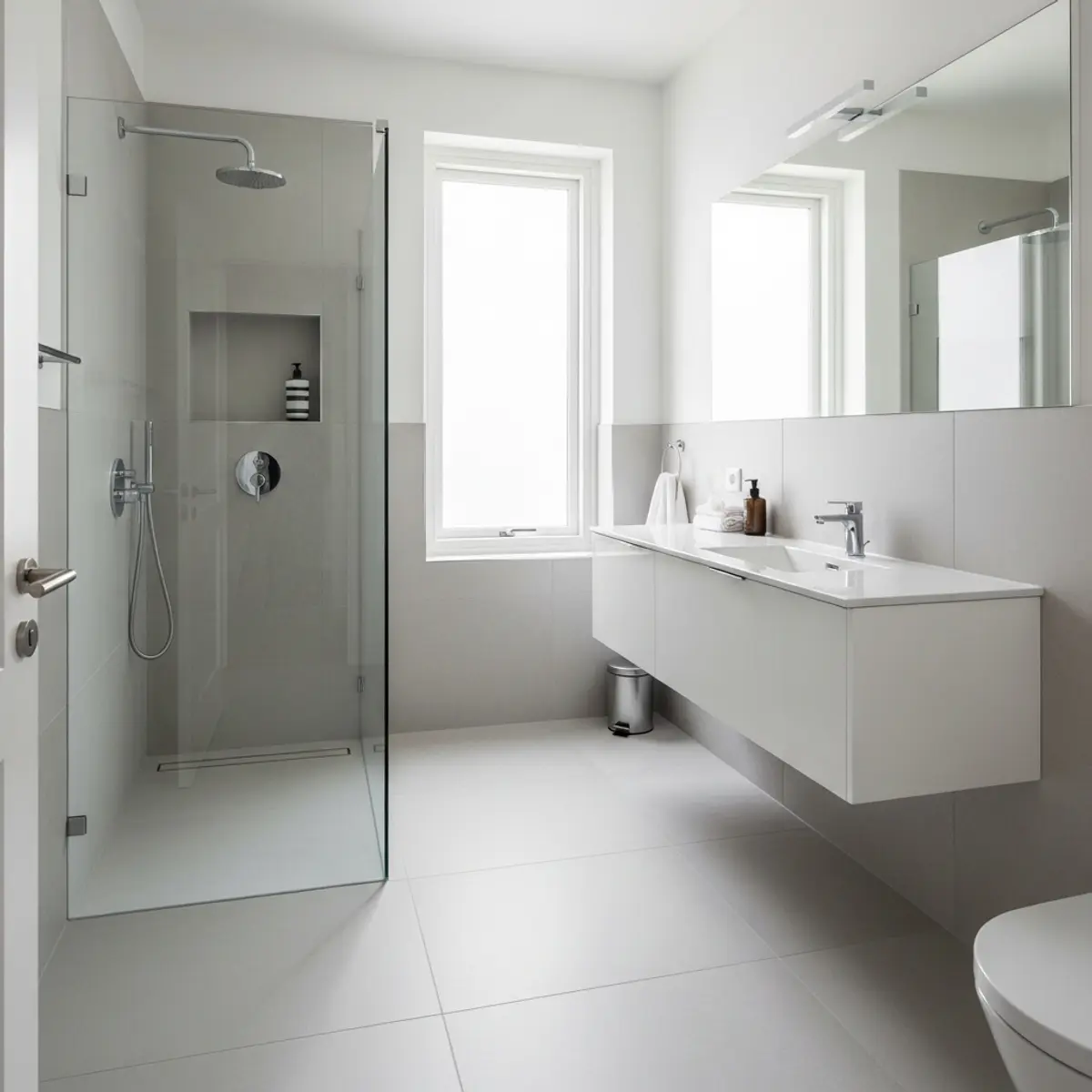
Tile selection and installation pattern have an outsized impact on how spacious a small bathroom feels. The wrong tile choice can make a compact room feel cluttered, while the right approach creates visual continuity and depth. For detailed guidance on tile installation methods and waterproofing, see our guide on bathroom tile and waterproofing systems.
- Use large-format tile: 12-by-24-inch or larger tiles create fewer grout lines, reducing visual clutter and making floors and walls appear more expansive. This is the single most effective tile strategy for small spaces.
- Run floor tile into the shower: Eliminating the threshold between bathroom floor and shower floor creates an unbroken visual plane. A curbless or low-curb entry paired with continuous floor tile makes the room feel dramatically larger.
- Carry wall tile from floor to ceiling: Full-height tile in the shower area draws the eye upward and creates a seamless vertical plane. Stopping tile at 48 or 60 inches creates a visual break that shrinks the perceived height.
- Choose light, neutral colors: White, soft gray, warm beige, and light greige reflect more light and make walls feel like they recede. Dark tile looks stunning in larger bathrooms but tends to close in a small room.
- Minimize color transitions: Using the same tile or color family on floors and walls reduces visual fragmentation. Two or three tile colors maximum keeps a small bathroom from feeling busy.
- Consider vertical subway tile: Running subway tile vertically draws the eye upward and emphasizes ceiling height. A vertical stack bond pattern reads as more contemporary than the traditional horizontal brick layout.
Every fixture in a small bathroom needs to earn its space. Choosing compact, proportional fixtures is not about cutting corners — it is about selecting products designed for tight footprints.
Compact Toilets
Standard toilets project 28 to 30 inches from the wall. Compact elongated-bowl models from TOTO, Kohler, and American Standard project 25 to 27 inches while maintaining a comfortable seat shape. This 3- to 5-inch savings can be the difference between comfortable clearance and a cramped feel. Round-front bowls save even more depth but sacrifice some comfort.
Vanity Sizing: 24 to 30 Inches Is the Sweet Spot
In a bathroom under 50 square feet, a 24- to 30-inch vanity provides adequate counter and storage without dominating the room. Skip the double vanity — it belongs in master bathrooms with 70+ square feet. A single-sink vanity with a deep drawer and integrated countertop saves space and simplifies cleaning.
Corner and Neo-Angle Showers
A 36-by-36-inch corner shower with a frameless neo-angle glass door is one of the most space-efficient configurations available. The angled door entry takes up less swing space than a standard pivot door, and the glass keeps the room visually open. For ultra-compact bathrooms, 32-by-32-inch models exist, though we recommend 36 inches minimum for comfort.
Towel Bars and Accessories
Replace traditional towel bars (which project 6+ inches from the wall) with towel hooks. A single hook holds a folded towel in 2 inches of wall projection versus 6 to 8. Mount hooks on the back of the door or beside the shower to keep towels accessible without cluttering the space.
Lighting has a direct impact on how spacious a bathroom feels. A single overhead fixture — common in older Boise homes — creates shadows and makes the room feel smaller. A layered lighting plan transforms the experience.
- Vanity sconces at eye level: Wall-mounted sconces on either side of the mirror provide even, shadow-free light for grooming. This eliminates harsh overhead shadows and spreads light more evenly across the room.
- Recessed ceiling lights: One or two 4-inch recessed LED lights provide ambient illumination without the visual bulk of a surface-mounted fixture, keeping the ceiling plane clean.
- Backlit mirrors: An LED-backlit mirror combines task lighting and ambient glow in a single fixture. The soft perimeter light creates depth on the wall behind the mirror, making the room feel less enclosed.
- Shower lighting: A dedicated waterproof recessed light in the shower brightens the wet zone. Many older Boise bathrooms have no shower lighting — adding one makes a significant difference.
- Color temperature matters: Choose 3000K (warm white) for a residential feel. Avoid 5000K+ daylight bulbs in small bathrooms — they create a clinical atmosphere that emphasizes compact dimensions.
Boise's reputation as a dry climate misleads people about bathroom ventilation. The outdoor air is not dry in winter — January humidity at the airport station averages 79% in the morning and 70% in the afternoon — and even in the genuinely dry months, a compact bathroom concentrates shower steam in a very small volume. Without proper exhaust, moisture condenses on cool surfaces, leading to mold, paint peeling, and grout deterioration.
- Install a properly sized exhaust fan: Small bathrooms need a minimum 50 CFM fan. For quiet operation, choose a fan rated at 1.0 sone or less. Panasonic WhisperCeiling and Broan InVent are reliable options we install frequently.
- Duct to the exterior: Many older Boise homes have fans venting into the attic — a code violation and moisture problem. Always duct exhaust fans through the roof or sidewall to outside.
- Use a humidity-sensing switch: An automatic sensor turns the fan on when moisture rises and off when the room dries. This is particularly valuable in secondary bathrooms used by kids or guests who forget to run the fan.
- Run the fan for 20 minutes after showering: A timer switch (Lutron Maestro is our standard recommendation) ensures the fan runs long enough to clear residual moisture.
Proper ventilation protects your remodeling investment. In small bathrooms, moisture load per square foot is much higher than in larger rooms. A $150 fan upgrade during a remodel prevents thousands in moisture damage down the road.
A common misconception is that small bathrooms cost proportionally less to remodel. While total material costs are lower, the cost per square foot is often higher because labor-intensive tasks — tile work, plumbing, waterproofing — take nearly as long in a compact space as in a larger one.
Cosmetic refresh: $8,000–$12,000
New vanity, toilet, paint, hardware, light fixture, mirror. Existing tile and plumbing stay.
Mid-range remodel: $12,000–$18,000
New tile (floor and shower), vanity, toilet, fixtures, lighting, exhaust fan. Plumbing stays in place.
Full gut remodel: $16,000–$24,000+
Complete demo, new subfloor, plumbing relocation, custom tile, frameless glass, floating vanity, recessed storage, layered lighting.
One advantage of small bathroom remodels: the total investment is manageable enough that homeowners can afford higher-quality materials. Upgrading from builder-grade to premium tile may add only $300 to $600 in a 40-square-foot bathroom compared to $1,500+ in a large master bath. Small bathrooms let you use luxury materials without a luxury budget.
Understanding typical small bathroom configurations in Boise helps set realistic expectations. Challenges and opportunities vary by home era and neighborhood.
1960s–1980s Ranch Homes and Split-Levels
The Bench, West Boise, and Southeast Boise are filled with ranch and split-level homes from this era. Secondary bathrooms are typically 5 by 7 or 5 by 8 feet with a fiberglass tub/shower combo, small vanity, and toilet. Walls are usually standard drywall (not cement board), and ventilation often vents into the attic. Remodeling these bathrooms frequently reveals water damage behind the tub surround that must be addressed before new finishes go in.
North End Bungalows
Boise's North End has charming early-1900s bungalows and cottages with vintage small bathrooms — some as compact as 4 by 6 feet. These bathrooms often have original hex tile floors, cast-iron clawfoot tubs, and pedestal sinks. Homeowners in the North End frequently want to preserve the character while improving function. We approach these projects with period-appropriate fixtures and tile patterns that respect the home's architectural history while adding modern conveniences like better lighting, ventilation, and waterproofing.
1990s–2000s Subdivision Homes
Newer subdivisions in Meridian, South Boise, and Eagle often have half-baths and three-quarter baths that are small by design — the builder allocated square footage to the master suite. These bathrooms are generally in better structural condition but have dated builder-grade fixtures. They are excellent candidates for a mid-range remodel that upgrades materials without major structural work.
Every layout decision in a small bathroom starts with the room's dimensions. Boise's housing stock includes a predictable range of small bathroom sizes, and each one calls for a different approach. Understanding what you're working with — and what's realistic — is the first step toward a remodel that actually improves your daily experience.
5×7 (35 Square Feet) — Most Common in Pre-1980s Homes
This is the tightest standard bathroom footprint in Boise, found throughout North End bungalows, Bench ranch homes, and older split-levels built between the 1950s and 1970s. At 35 square feet, every inch is accounted for. A standard 30×60-inch alcove tub dominates one wall, leaving just enough room for a small vanity and toilet. Layout solutions at this size include a 32–36-inch corner shower to replace the tub (freeing 6–10 square feet), a 24-inch wall-mounted vanity instead of a 30-inch cabinet model, and a pocket door to eliminate 7–10 square feet of door-swing clearance. In many 5×7 bathrooms, swapping the inward-swinging door for a pocket door is the single most impactful change you can make.
5×8 (40 Square Feet) — Standard in 1980s–2000s Homes
The 5×8 footprint is the most common small bathroom in Boise subdivisions built during the 1980s through early 2000s — neighborhoods like South Boise, West Boise, and parts of Meridian. The extra 5 square feet over a 5×7 gives meaningful flexibility. You can fit a 30-inch vanity with drawers, maintain the alcove tub/shower combo if needed, and still have comfortable clearance around the toilet. For homeowners who want a walk-in shower, the 8-foot length accommodates a 36×36-inch or 36×48-inch shower enclosure with a frameless glass panel. Wall-mount toilets save 3–4 inches of depth compared to floor-mount models, which matters when fixtures are arranged in a single line.
6×8 (48 Square Feet) — Comfortable Small Bath
At 48 square feet, a bathroom crosses the threshold from “tight” to “workable.” The 6-foot width allows for a vanity and toilet on opposite walls without feeling cramped, and there's room for a 48-inch shower enclosure — wide enough for a comfortable entry without a tight squeeze. This size is common in updated homes from the 1990s and newer builds where the secondary bathroom received slightly more floor space. A corner sink or wall-mount vanity opens up even more floor area. Glass shower enclosures are especially effective at this size because the room is large enough that the glass panel creates a genuine sense of depth rather than simply reflecting a cramped space.
6×9 (54 Square Feet) — Borderline Medium, Good Flexibility
A 6×9 bathroom sits right on the border between small and medium. You have enough room for a 36-inch vanity, a full-size toilet, and either a generous shower or a tub/shower combo with room to spare. Layout options multiply: you can split the room into a dry zone (vanity and toilet) and wet zone (shower) with a partial glass wall, or add a linen niche into the wall opposite the shower. This size is common in newer Eagle and Meridian subdivisions where builders allocated slightly more square footage to the guest bath. The 9-foot length also means large-format 12×24-inch tile lays out with minimal cuts, reducing waste and creating a cleaner visual pattern.
Layout Solutions That Apply Across All Sizes
- Compact fixtures: Smaller vanities (24–30 inches), wall-mount toilets, and corner sinks reclaim inches that add up fast in a tight footprint. A wall-mount toilet alone can save 3–4 inches of projection compared to a standard floor-mount model.
- Door solutions: Pocket doors save 7–10 square feet of swing clearance — space that becomes usable floor area for a wider vanity or more comfortable movement. Barn-style sliding doors are an alternative when wall framing cannot accommodate a pocket.
- Shower vs. tub: In bathrooms under 45 square feet, a walk-in shower with frameless glass almost always outperforms a tub for both function and visual openness. Keep a tub only if this is the home's sole bathroom or if resale value is the primary concern.
- Visual expansion tricks: Large-format tile (12×24 or larger) with minimal grout lines, continuous floor-to-shower tile, glass shower enclosures, and floating vanities all trick the eye into perceiving more space than exists. These are not cosmetic extras — they are core design tools for small bathrooms.
Budgeting for a small bathroom remodel in Boise requires understanding both the scope of work and the local cost factors that affect pricing. Labor rates in the Treasure Valley have risen steadily since 2020, and material costs — particularly for tile, vanities, and plumbing fixtures — fluctuate with supply chain conditions. The numbers below reflect real project costs from Boise-area small bathroom remodels completed between 2024 and 2026.
Budget Refresh: $3,000–$6,000
A budget refresh keeps the existing layout, plumbing, and tile in place. The scope includes fresh paint, new hardware (cabinet pulls, towel hooks, toilet paper holder), an updated mirror, a new light fixture, and possibly a new faucet or showerhead. This tier works well when the bathroom is structurally sound and the tile is in good condition but the overall look feels dated. Homeowners who are preparing a home for sale often choose this level — it delivers strong visual impact for minimal investment. Most budget refreshes take 3–5 working days.
Mid-Range Remodel: $8,000–$15,000
The mid-range tier is the most popular scope for small bathroom remodels in Boise. It includes new floor tile, a new shower surround or tub/shower tile, a replacement vanity with countertop, a new toilet, updated fixtures (faucet, showerhead, drain), and new lighting. Plumbing stays in its existing locations, which avoids the cost of rerouting supply and drain lines. Waterproofing the shower area with a modern membrane system (Schluter Kerdi or similar) is included at this tier. Expect 2–3 weeks for completion. This level of remodel delivers the best return on investment for most Boise homeowners.
Full Renovation: $15,000–$25,000
A full renovation means gutting the bathroom to the studs and rebuilding from scratch. This includes new subfloor, updated plumbing (supply lines, drain relocation if needed), new electrical (dedicated GFCI circuits, recessed lighting, exhaust fan), cement board substrate, premium tile on floors and walls, a custom or semi-custom vanity, frameless glass shower enclosure, floating vanity, recessed medicine cabinet, built-in shower niches, and layered lighting. This tier is appropriate when the bathroom has underlying issues — water damage behind walls, outdated galvanized plumbing, inadequate electrical, or a layout that simply does not work. Full renovations take 3–4 weeks and occasionally longer if structural surprises emerge during demo.
Remodel vs. Enlarge: Cost Comparison
Some homeowners consider expanding a small bathroom by borrowing space from an adjacent closet, hallway, or bedroom. While this can be worthwhile, it significantly increases cost. Tearing into an adjacent room typically adds $5,000–$12,000 to the project — framing, drywall, flooring transitions, and potentially moving HVAC ducts or electrical panels. For a bathroom that gains 10–15 square feet, the effective cost per added square foot is $350–$800. In most cases, optimizing the existing footprint with smart layout decisions and compact fixtures delivers better value than expansion. We evaluate both options during our design consultation and present the cost-benefit tradeoff clearly.
Most Impactful Upgrades Per Dollar
- New vanity and countertop ($400–$1,200): The vanity is the visual anchor of any bathroom. Replacing a dated 1990s oak vanity with a clean-lined modern unit transforms the room's entire aesthetic.
- Shower tile upgrade ($1,500–$3,500 installed): Moving from a fiberglass surround to real tile with proper waterproofing is the biggest quality-of-life improvement in most small bathroom remodels.
- Frameless glass shower panel ($800–$1,500 installed): Replacing a shower curtain or framed glass door with a frameless panel opens the room visually. This is especially effective in bathrooms under 45 square feet.
- Lighting upgrade ($300–$800): Adding vanity sconces, a recessed shower light, and replacing a single overhead fixture with recessed LEDs changes how the entire room feels. Per dollar, lighting delivers the highest perceived impact.
- Pocket door ($400–$900 installed): Reclaiming 7–10 square feet of swing clearance with a pocket door has an immediate, dramatic effect on usable floor space.
How Boise Home Age Affects Renovation Costs
The age of your Boise home directly impacts what you will encounter behind the walls — and that affects cost. Pre-1980s homes frequently have galvanized steel supply lines that should be replaced with copper or PEX during a remodel (add $800–$2,000). Homes built before 1978 may have lead paint on walls and trim, requiring proper abatement procedures (add $500–$1,500). Older North End bungalows sometimes have non-standard framing spacing, making recessed niches and medicine cabinets more challenging to install. Homes from the 1990s and 2000s typically have fewer hidden issues, but builder-grade materials — thin drywall in wet areas, basic flex-duct ventilation, minimal insulation on exterior walls — still need attention during a gut remodel. We factor home age into every estimate so there are no surprises once demo begins.
Storage is the number-one complaint homeowners bring up during small bathroom consultations. Toiletries, towels, cleaning supplies, and grooming tools compete for space in a room that barely has room for the fixtures themselves. The solution is designing storage into the structure of the bathroom during the planning phase — not treating it as an afterthought that gets solved with freestanding shelves and over-the-door hooks.
Recessed Medicine Cabinets
A recessed medicine cabinet mounts between wall studs, gaining 4+ inches of wall depth without projecting into the room. Standard recessed cabinets fit between 16-inch on-center studs and provide 3 to 4 shelves of concealed storage for medications, grooming supplies, and daily-use items. Pair it with an integrated LED light or a mirrored door for dual functionality. In small Boise bathrooms where counter space is limited, a recessed cabinet becomes the primary storage hub for everything you reach for daily.
Over-Toilet Shelving & Cabinets
The wall above the toilet is the most underutilized storage zone in a small bathroom. A built-in cabinet (12–24 inches wide, 24–36 inches tall) provides 4–6 cubic feet of enclosed storage for extra toilet paper, towels, and cleaning supplies. For a cleaner look, use a cabinet with a solid door that matches the vanity finish. Open shelving works in guest bathrooms where neatly folded towels and decorative items add warmth. Either option uses zero additional floor space — a critical advantage when every square foot is committed.
Vanity With Drawers vs. Pedestal Sink
This is one of the most common tradeoff decisions in small bathroom design. A pedestal sink takes up less visual space and can make a very small bathroom feel more open. However, it eliminates all under-sink storage — no drawers, no cabinet, no shelf. A 24-inch floating vanity with one or two deep drawers provides meaningful storage (hair dryer, toiletries, cleaning supplies) while still revealing the floor beneath for that open, airy feel. In almost every small bathroom remodel we do in Boise, a compact floating vanity outperforms a pedestal sink on both function and aesthetics. The only exception is a true powder room (half-bath) where storage can be handled entirely by a nearby hallway closet.
Built-In Shower Niches
Shower caddies that hang over the showerhead or suction-cup to the wall are the hallmark of a bathroom without enough built-in storage. A properly installed shower niche — recessed between studs, waterproofed with a bonded membrane, and tiled to match the surrounding wall — eliminates the need for any freestanding shower storage. We recommend double-stacked niches: one at chest height for shampoo and body wash, and a smaller one at waist height for razors, soap, and smaller items. Cost to add during a tile remodel is $200–$500 per niche depending on size and tile complexity.
Towel Hooks vs. Towel Bars
A standard towel bar projects 6–8 inches from the wall and requires 18–24 inches of unobstructed wall length. In a small bathroom, that is a significant amount of wall real estate. Individual towel hooks project just 2 inches and each one holds a folded towel. Mount hooks on the back of the bathroom door, beside the shower entry, or in a vertical row on a narrow wall section. For a family bathroom, four hooks take up less space than a single 24-inch towel bar while accommodating the same number of towels.
Under-Vanity Pull-Out Organizers
If you opt for a vanity with cabinet doors rather than drawers, a pull-out organizer tray transforms the under-sink area from a cluttered cave into an accessible storage system. Slide-out trays, U-shaped organizers that wrap around the drain pipe, and stackable shelf inserts make it possible to use 80–90% of the under-sink volume instead of the typical 40–50%. These organizers cost $30–$80 each and can be installed after the remodel — but planning for them during the design phase ensures the vanity dimensions accommodate them properly.
Iron Crest's Approach to Small Bathroom Storage
We design storage into every small bathroom project during the planning phase — not after the tile is set and the vanity is installed. During our initial consultation, we inventory what the homeowner needs to store and where they need access. That inventory drives decisions about niche placement, vanity configuration, cabinet locations, and accessory mounting. The result is a bathroom where everything has a home, nothing sits on the counter unnecessarily, and the room feels clean and organized from day one. In small Boise bathrooms where space is the ultimate constraint, integrated storage is what separates a good remodel from a great one.
How much does a small bathroom remodel cost in Boise?
A small bathroom remodel in Boise typically costs $8,000 to $18,000 depending on scope. A cosmetic refresh — new vanity, toilet, paint, and hardware — runs $8,000 to $12,000. A full gut-and-rebuild with new plumbing, tile, and fixtures ranges from $14,000 to $18,000+. Small bathrooms cost less in total materials but often have comparable labor costs because of the precision work required in tight spaces.
What is the best layout for a small bathroom?
The most space-efficient layout places the toilet in the far corner, the vanity opposite or adjacent to the door, and the shower or tub along the longest wall. A single-wall wet zone avoids awkward transitions. For bathrooms under 40 square feet, a corner shower with a neo-angle door opens up floor space better than a standard alcove tub. We design layouts specific to the room dimensions and door swing direction.
Can you make a small bathroom feel bigger without expanding it?
Yes. Several design strategies make a small bathroom feel significantly larger without moving walls: large-format tile with minimal grout lines, continuous floor-to-wall tile in the shower, a frameless glass panel instead of a curtain, a floating vanity that reveals floor space, light colors, recessed medicine cabinets, and proper lighting. These techniques can make a 40-square-foot bathroom feel nearly twice its size.
Should I use a pedestal sink or a vanity in a small bathroom?
A vanity is almost always the better choice. While a pedestal sink takes up slightly less visual space, it eliminates all under-sink storage. A wall-mounted or floating vanity (24 to 30 inches wide) provides drawer and cabinet storage while revealing the floor beneath for a spacious feel. The only scenario where a pedestal sink makes sense is a true half-bath where storage is handled elsewhere.
Is a walk-in shower or bathtub better for a small bathroom?
For most small secondary bathrooms in Boise, a walk-in shower is more practical. A corner shower with frameless glass takes up less visual and physical space than a standard 5-foot alcove tub. However, if it is the only bathroom in the home, keeping a tub can be important for resale. In that case, a shower-tub combo with a curved curtain rod maximizes usable space. We evaluate this case by case during design consultation.
How long does a small bathroom remodel take in Boise?
A typical small bathroom remodel takes 2 to 4 weeks from demo to completion. Cosmetic updates (vanity swap, new toilet, paint, hardware) can finish in 5 to 7 working days. A full gut remodel with new tile, plumbing relocation, and electrical work takes 3 to 4 weeks. Material lead times — particularly for custom vanities and specialty tile — can extend the project if not ordered early. We provide a detailed timeline during planning.
The following government agencies, industry organizations, and official resources provide additional information relevant to your remodeling project.
Plan Your Small Bathroom Remodel
Free design consultations and detailed estimates for small bathroom remodels across Boise, Meridian, Eagle, and the Treasure Valley.