
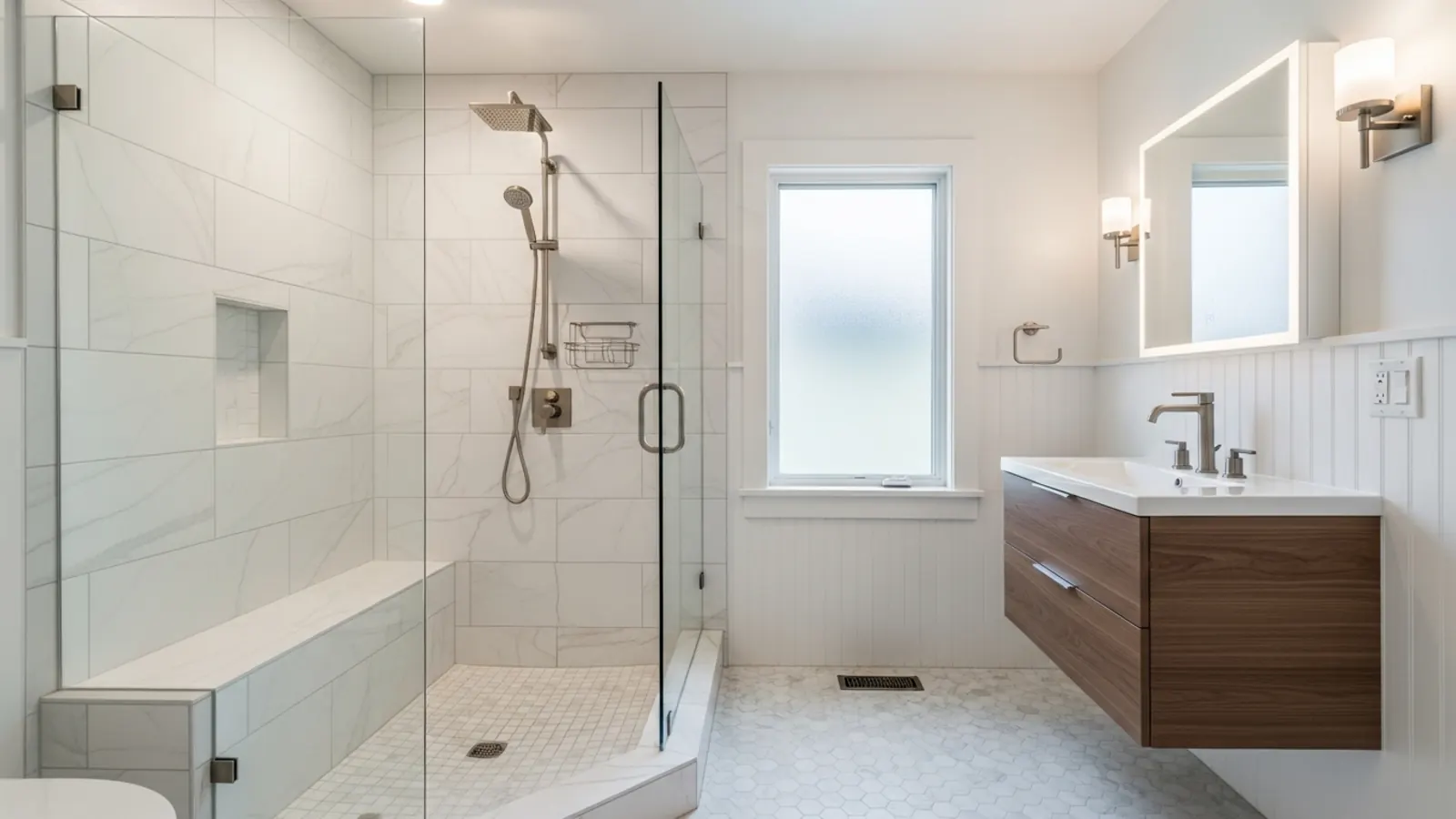
Bathroom Remodeling on the Boise Bench
Mid-century pink-tile bathrooms turned into modern walk-in showers, primary bath modernization on 1950s and 1960s ranch homes — bathroom design done with the asbestos awareness and structural practicality these older Bench homes require.
Quick answer
Aesthetically, almost no one wants to. Original colored ceramic tile from 1950s–1970s Bench bathrooms is recognizable as period-specific in a way that doesn't translate to modern listings or daily livability.
Bathroom remodeling on the Boise Bench is one of the most-requested home improvements in this neighborhood right now — driven by a generation of mid-century pink, blue, mint-green, and yellow tile bathrooms that have aged out of taste alongside their original cast-iron alcove tubs and pedestal sinks. The original Bench bathrooms were tiny by modern standards, with a 5-foot tub against one wall, a vanity and toilet across, and tile from floor to mid-wall in whatever 1950s–1970s color the original buyer chose. Modernizing one of these bathrooms requires careful demolition (asbestos in pre-1980 floor tiles, lead paint on every painted surface), proper waterproofing of any new shower, and design decisions that respect the home's mid-century bones rather than installing Craftsman-revival aesthetics that don't fit. Iron Crest Remodel works on Bench bathrooms regularly and brings the specific competence these older Boise bathrooms require.
Bench bathrooms reflect three primary mid-century construction waves, each with its own original fixtures, tile patterns, and remodeling considerations.
1940–1955: Early post-war minimal traditional
Tiny bathrooms often shoehorned into former closet spaces. Original cast-iron alcove tubs (still in place under decades of paint), pedestal or wall-hung sinks with separate hot/cold cross-handle taps, hex floor tile or original wood floor, beadboard wainscoting to chair-rail height. Original galvanized supply and cast-iron drain. Many homes had only one full bathroom — adding a second was sometimes done in the 1960s–1970s.
1955–1965: Classic post-war ranch
The defining Bench bathroom era. Bathrooms with steel alcove tubs (lighter than cast iron — easier to remove during remodel), tile from floor to mid-wall in pink, blue, mint green, or yellow ceramic with tile or laminate counters, single overhead globe fixture, ceiling exhaust vent (often non-functional). Plumbing is copper supply (replacing earlier galvanized in many homes), cast-iron drains.
1965–1975: Expanded ranch and split-level era
Slightly larger bathrooms with second bathrooms increasingly standard from original construction. Tile palettes shifted from pastels to earth tones (avocado, harvest gold, mauve). Tub-shower combinations became standard rather than separate fixtures. Wood-look paneling on bathroom walls is common in this era.
1985–present: Updated and infill bathrooms
Modern bathrooms from original construction or 1990s–2010s renovations. Standard mechanical systems and no environmental complications. 1990s renovations often have their own dated aesthetic (oak vanities, tan tile, cultured marble counters) that warrants its own update.
Bench bathroom projects fall into recognizable shapes shaped by the mid-century housing stock and the typical small original footprints.
1. The Tub-to-Shower Conversion — the dominant Bench bathroom project
Remove the original 5-foot steel or cast-iron alcove tub and install a curbless or low-curb walk-in shower in the same footprint. Standard scope: tub removal, drain location adjustment, Schluter Kerdi waterproofing, large-format porcelain or subway tile walls and mosaic floor, frameless glass enclosure, new thermostatic shower valve and rain head. Removes the tub from the bathroom entirely, freeing 30–35 sq ft of footprint for a more spacious shower experience.
Target homes: Any Bench bathroom with an existing tub the owner doesn't want to keep. Permit: plumbing permit; building permit if any structural change.
2. The Pink/Blue/Mint Tile Removal — comprehensive aesthetic refresh
Remove all original colored ceramic tile (typically asbestos-bearing setting bed under the tile), install modern tile in a contemporary palette (white subway, large-format porcelain, hex floor mosaic), replace vanity, sink, toilet, and fixtures. Often combined with tub-to-shower conversion. Transforms the bathroom from era-frozen to current.
Target homes: Any Bench bathroom with original colored tile the owner wants gone. Permit: plumbing permit; environmental abatement permit.
3. The Full Reconfigure — borrowing space from a closet or bedroom
When the original Bench bathroom is too small to deliver modern function, borrowing 12–24 sq ft from an adjacent closet or section of bedroom transforms the space. Requires structural assessment of the wall being moved, building permit, electrical and plumbing rework, and finish work to integrate the new layout. Result: a cramped bathroom becomes one that accommodates a real walk-in shower, vanity, and separate toilet.
Target homes: Bench homes where the existing bathroom is too small and an adjacent space can be sacrificed. Permit: building permit with structural drawings.
4. The Powder-Bath Add — converting a closet to a half bath
Many original Bench ranches have only one bathroom. Adding a powder bath (toilet + sink) on the main floor by converting an under-stair closet, coat closet, or section of laundry/utility room is a high-impact, lower-cost project. Requires plumbing access (often through floor or ceiling cavities), electrical for lighting and fan, and ventilation.
Target homes: Bench homes with only one bathroom or wanting an additional half bath. Permit: plumbing and building permits.
5. The Aging-in-Place Conversion — universal design
For Bench homeowners committed to staying in their homes long-term, a comprehensive aging-in-place bathroom remodel addresses fall-prevention, mobility-friendly fixtures, and accessible storage. Curbless walk-in shower with bench and grab bar blocking, comfort-height toilet, lever-handle faucets, accessible vanity at proper height, slip-resistant flooring, motion-activated lighting. Designed to read as a beautiful modern bathroom rather than institutional.
Target homes: Bench owners 55+ planning to stay through retirement. Permit: full bath permit suite.
The Boise Bench is made up of distinct sub-neighborhoods, each with its own remodeling personality.
Vista
One of the most recognized sub-neighborhoods on the Boise Bench, centered around Vista Avenue between the Boise River and Overland Road. Post-war homes on uniform lots with mature street trees and good walkability to local commercial corridors. A heavy concentration of small ranch and minimal-traditional homes that respond well to galley-kitchen open-ups, primary-suite additions, and aesthetic modernization.
Central Bench (Curtis & Targee corridor)
The geographic core of the Bench, running along Curtis Road and Targee Street between I-84 and Overland. The City of Boise's Central Bench Neighborhood Plan records that the neighbourhood changed significantly during and after World War II, when agricultural land was subdivided into residential lots, and that new homes were built west of Orchard Street from the mid-1950s through the 1970s. Blueprint Boise designates the Central Bench primarily for compact-neighbourhood form — small lots, typically between 5,000 and 7,000 square feet, predominantly single-family, on an interconnected network of sidewalks and streets. Galley kitchen conversions are the dominant remodeling project type here.
Eastern Bench / Overland
The eastern edge of the Bench around Overland Road, with a mix of ranch and split-level homes. Lots tend to be slightly larger. Closer to mall-adjacent commercial corridors and major transit routes.
Western Bench / Roosevelt Market area
The western edge of the Bench near the Roosevelt Market and Capitol corridor. Some of the older Bench housing stock sits here, with steeper roof pitches and smaller footprints than the post-war ranches further east. Closer to downtown amenities and walkable.
Greenbelt-adjacent Bench
Bench properties along the elevated edges of the Boise River bluff with views down to the Greenbelt and the river. Frequently subject to view-preserving design considerations during exterior work — though without formal Historic District constraints.
Lower Bench (I-84 frontage)
The southern edge of the Bench close to I-84, on smaller lots and often with more traffic noise from the freeway. Common to combine kitchen, bathroom, and primary-suite remodels into a single comprehensive scope.
Most Boise bathroom remodel projects run $12,000 to $95,000 — the band published on our Boise bathroom remodel page. Bench pricing sits inside that band: no Historic District review accelerates permitting, while environmental abatement costs (asbestos in pre-1980 tile and joint compound, lead paint) are the same as anywhere else in the pre-1980 stock.
Boise Bench bathroom remodeling ranges
Cosmetic refresh (new vanity, fixtures, tile floor, paint — no plumbing relocation): $16,000–$24,000 / 3–5 weeks end to end
Standard remodel (new tub or shower, vanity, tile floor, lighting, fixtures, partial plumbing work): $22,000–$36,000 / 5–7 weeks end to end
Tub-to-shower conversion (tub removal, full waterproof shower build with tile and glass enclosure): $24,000–$42,000 / 6–9 weeks end to end
Reconfigure / borrow space (add square footage by absorbing adjacent closet or bedroom section): $38,000–$58,000 / 8–12 weeks end to end
Premium / aging-in-place (curbless shower, universal-design fixtures, premium materials, comfort detail throughout): $42,000–$58,000 / 8–12 weeks end to end
Pricing assumes Iron Crest's standard scope: full City of Boise permitting, environmental testing and required abatement on any pre-1980 home, EPA RRP lead-safe work practices for pre-1978 homes, professional waterproofing (Schluter Kerdi system), porcelain or ceramic tile, semi-custom or custom vanity, all new fixtures, and a 3-year workmanship warranty. Contingency budget of 12–15% above contract value should be held for older-home discovery work.
The City of Boise designates ten historic districts, and the Boise Bench is not one of them and does not sit inside one. There is no Historic Preservation Commission review for exterior modifications, so siding changes, window replacements, additions, and exterior colour changes don't trigger the Certificate of Appropriateness process that constrains North End and East End projects. That removes a review step from the pre-construction schedule on any Bench exterior scope; confirm current review timelines with Boise PDS for your specific project.
City of Boise standard permits still apply for any work involving electrical, plumbing, structural changes, or mechanical systems. A scope that includes new circuit additions, moving a gas line, or removing a load-bearing wall requires a building permit from City of Boise Planning and Development Services. Permit processing for Bench projects takes about two weeks for online plan review per Boise PDS, longer with structural drawings — without the historic-review overlay that North End projects carry. Building Division: (208) 608-7070. Planning & Zoning: (208) 608-7100.
Asbestos and lead paint remain serious considerations on the Bench, despite the absence of Historic District review. Pre-1980 Bench homes (which is most of the housing stock) commonly contain asbestos in floor tiles, joint compound, and sometimes pipe insulation. We test suspect pre-1980 materials and arrange AHERA-accredited abatement when asbestos is confirmed. Pre-1978 Bench homes contain lead paint. The EPA RRP rule requires lead-safe work practices for any renovation in lead-paint homes — including containment, specialized HEPA vacuuming, and proper disposal. Iron Crest follows EPA RRP lead-safe work practices and incorporates them into the standard scope on every pre-1980 Bench project.
Bench-specific permit consideration: setbacks. Blueprint Boise designates the Central Bench primarily for compact-neighbourhood form, with small lots typically between 5,000 and 7,000 square feet, so additions or detached structures must navigate side and rear setbacks carefully. Boise's residential zoning code sets no maximum lot coverage, so the binding constraint on a Bench addition is almost always the setback envelope rather than a coverage percentage. Zoning verification during initial design is critical to avoid late-stage redesigns.
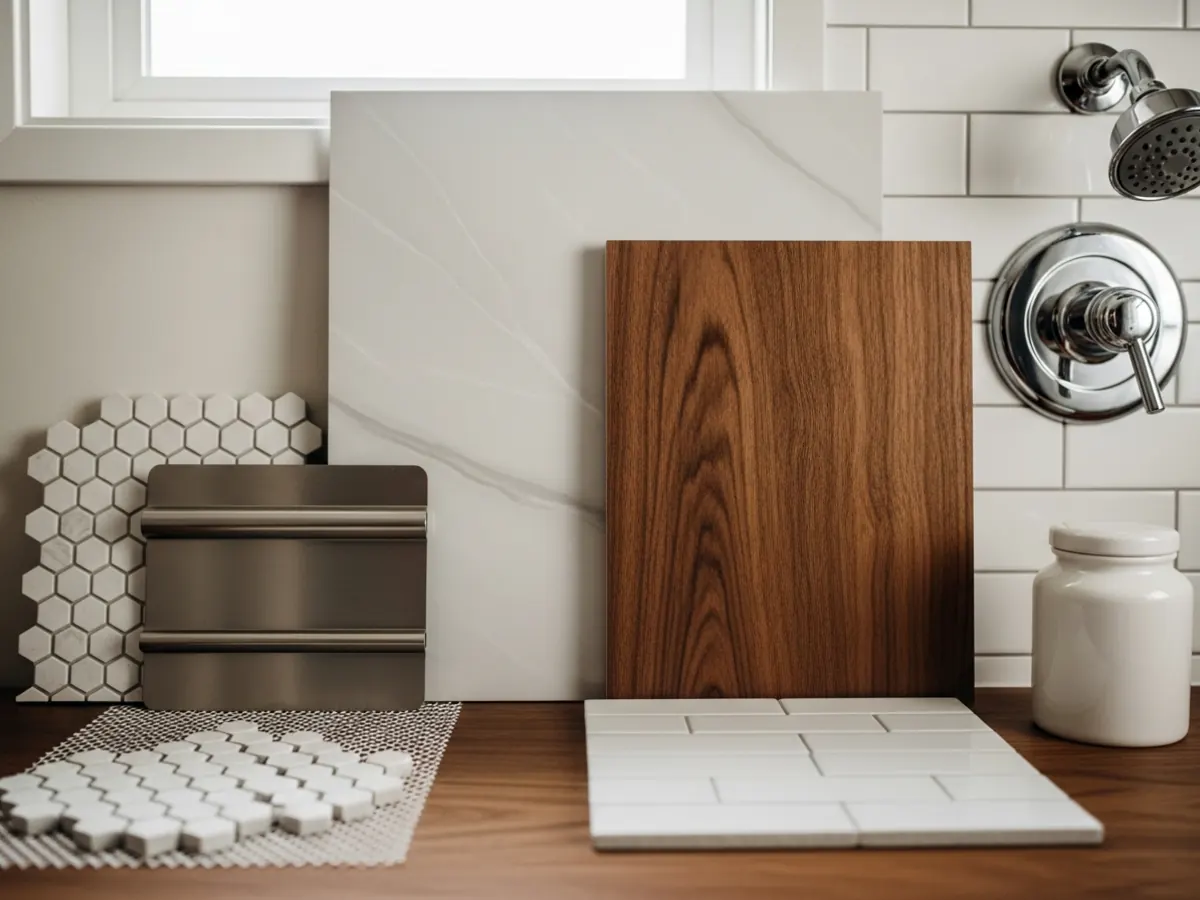
Bench bathroom material strategy emphasizes clean modern lines that complement the home's mid-century bones. Period-correct here doesn't mean recreating the pink tile — it means choosing materials that read as a deliberate update of mid-century architecture rather than a Craftsman or Tudor costume change.
Floor tile
White hex mosaic (1″–2″) is the broadly compatible choice and reads as both contemporary and respectful of mid-century bathroom tradition. Penny round mosaic is another period-friendly option. Large-format porcelain (12x24, 24x24) in stone-look provides a more contemporary aesthetic. Avoid: small-format glossy tile in colored patterns (recreates the pink-tile look you're trying to escape), wood-look LVP (water + bathroom = wrong material).
Wall tile
Subway tile in 3x6 or 4x12 with thin sanded grout is the safe and attractive choice. Matte or honed finish reads more contemporary than glossy. Stack pattern is the modern choice (offset reads as more traditional). Large-format porcelain slab on shower walls is the highest-end modern option — minimal grout joints, easier cleaning. For wainscoting in non-shower areas of the bathroom, white painted shiplap or vertical board wainscoting reads as modern farmhouse-meets-mid-century, which works well in Bench context.
Tub & shower
For tub-to-shower conversions, a frameless glass walk-in shower with the existing tub footprint converted to a generous walk-in is the dominant Bench project. Schluter Kerdi waterproofing, large-format porcelain walls, mosaic floor for slip resistance, frameless 3/8″ glass, brushed nickel or polished chrome thermostatic valve trim, rain shower head with hand-shower on slide bar. For homes keeping a tub: drop-in or alcove tubs in modern white acrylic or cast iron work well. Avoid: ornate clawfoot tubs (too period-traditional for mid-century), heavy traditional shower curtain rods.
Vanity & sink
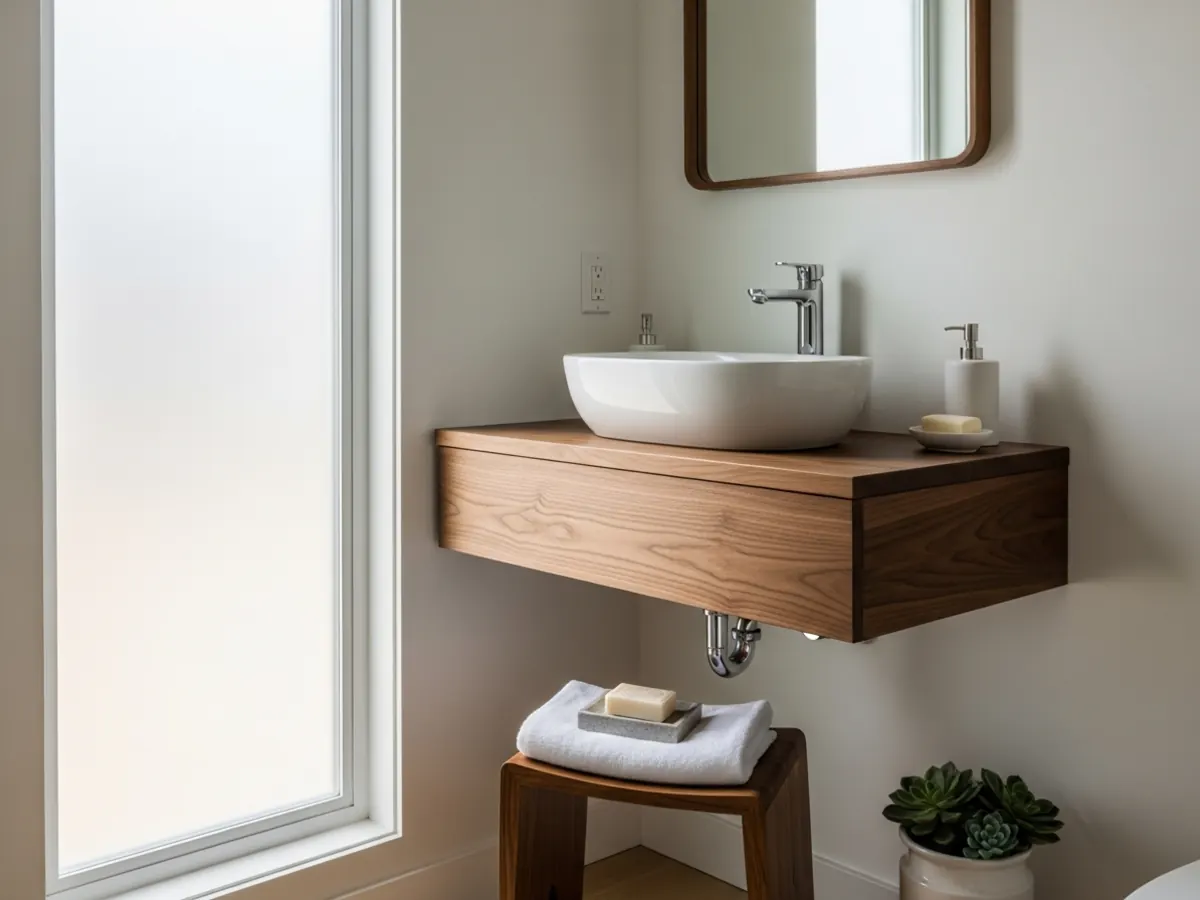
Wall-hung floating vanity in walnut or oak wood-grain finish reads as the most contemporary and most flattering choice for Bench bathrooms — visually lightens the small footprint, provides modern aesthetic that complements mid-century architecture. Single white ceramic vessel sink or undermount sink in matching white. For larger remodels, a freestanding or wall-hung vanity in painted shaker (white or navy) with quartz top works well too. Brushed-nickel or polished-chrome single-handle widespread faucet.
Fixtures & hardware
Brushed nickel, polished chrome, or matte black are the three contemporary finish families. Brushed nickel is the most broadly compatible and most common request. Polished chrome reads slightly more modern; matte black makes a stronger design statement. Avoid: polished gold, brushed gold, oil-rubbed bronze — these read as 1990s or period-traditional in a mid-century context. Cabinet hardware: simple bar pulls; faucet: single-handle gooseneck or modern profile widespread. Toilet: comfort-height (17″) skirted toilet for clean modern aesthetic.
Lighting & ventilation
Sconces flanking the medicine cabinet or mirror, plus recessed cans for general illumination. Modern profiles in matching finish (brushed nickel or polished chrome). Backlit medicine cabinet or LED-edge mirror is the high-end touch. Color temperature 2700K–3000K for warm flattering light. Ventilation is non-negotiable: a code-compliant exhaust fan rated for the room's cubic footage with humidity-sensing controls, ducted to the exterior. Original Bench bathrooms had minimal mechanical ventilation; this is a required modern upgrade.
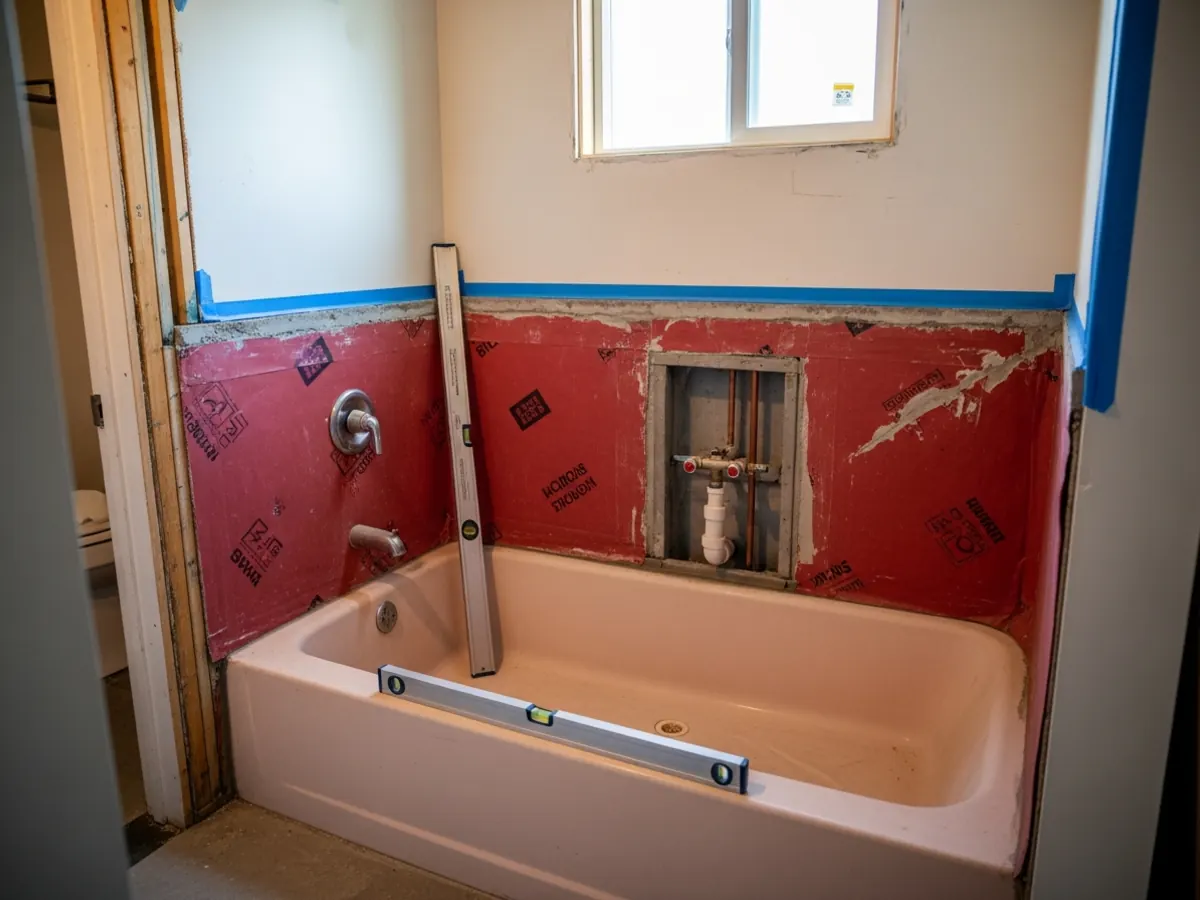
Bench bathroom demolition routinely surfaces conditions specific to mid-century construction. Build these into your contingency budget upfront.
- •Asbestos in original vinyl floor tiles and sheet linoleum. Pre-1980 Bench bathrooms typically have asbestos-containing floor materials. Required testing identifies. Idaho DEQ-licensed abatement before disturbance: $1,200–$3,500 typical for a Bench bathroom.
- •Asbestos in tile setting bed. The mortar bed under original ceramic tile in 1950s–1970s installations sometimes contains asbestos. Testing identifies. If positive, abatement before tile removal: $800–$2,500 incremental.
- •Lead paint on bathroom walls and trim. Universal in pre-1978 Bench homes. EPA RRP lead-safe work practices required. Built into Iron Crest's labor pricing for pre-1978 homes.
- •Galvanized steel supply lines. Common in pre-1965 Bench homes. Internal corrosion has reduced flow capacity. Replacement of bathroom supply lines with PEX or copper: $800–$2,200.
- •Cast iron drain stacks with deteriorated joints. 60–80-year-old cast iron sometimes has joint failures. Spot replacement: $400–$1,200 per fitting; full bathroom drain replacement: $1,800–$3,500.
- •Subfloor damage from undetected leaks. Long-term water leaks under original tubs or around toilets can damage subfloor and joists. Patch repair: $400–$1,500. Joist sister or replacement: $800–$2,500.
- •Failed waterproofing under existing tub or shower. Vinyl or felt-paper waterproofing from original installations rarely survives intact. Subfloor damage from long-term leaks is common. Repair: $600–$2,500.
- •Inadequate or non-existent ventilation. Original Bench bathrooms had minimal mechanical ventilation. Modern code requires exhaust fan ducted to exterior. Routing the duct from a small interior bathroom to an exterior wall sometimes requires creative solutions. $400–$1,500 above baseline.
- •Original bathroom door undersized for accessibility. Original Bench bathroom doors are often 24″–28″ wide, below the 32″ minimum for accessibility. If aging-in-place is part of the goal, door replacement and frame widening: $800–$2,500.
Consultation and home assessment (Week 1)
In-home walkthrough at no cost. We measure the bathroom, photograph existing conditions, identify mechanical concerns, discuss your goals.
Environmental testing (Week 1–2)
Asbestos and lead testing on suspect materials. Results back in 5–7 business days.
Design finalization and detailed estimate (Weeks 2–3)
Bathroom layout, fixture selections, tile and material specifications, and a line-item estimate with the contingency budget called out separately.
Permitting and material ordering (Weeks 3–4)
Plumbing, electrical, and (if applicable) building permits to City of Boise. Confirm current turnaround with Boise PDS. Materials ordered with delivery aligned to construction sequence.
Asbestos/lead abatement and demolition (Week 4–5)
Licensed abatement contractor handles required asbestos work. Once cleared, containment and demolition begin.
Plumbing and electrical rough-in (Week 5–6)
Supply and drain reworks. New shower valve, drain location adjustments. Electrical: dedicated GFCI circuits, fan circuit, lighting circuits. City of Boise rough-in inspections.
Waterproofing, tile, and finish prep (Weeks 6–7)
Schluter Kerdi membrane installed across all wet areas with proper slope to drain. Wall and floor tile installed. Drywall and paint prep on non-tile surfaces.
Vanity, fixture, and finish installation (Weeks 7–8)
Vanity install, sink and counter set, faucet and handle install, toilet, shower glass templated and ordered (1-week fabrication), accessories, mirror, lighting.
Final inspections and walkthrough (Weeks 8–9)
City of Boise final inspections. Glass enclosure installed last. Punch-list walk with you. Items addressed within 1 week. 3-year workmanship warranty begins.
Bench bathroom remodels combine the mid-century housing stock realities with the same waterproofing and environmental practices that any pre-1980 bathroom requires. The contractor needs verified Schluter waterproofing skill and EPA RRP lead-safe work practices — neither is optional in this neighborhood.
- City of Boise Planning & Development Services — Building, electrical, plumbing, and mechanical permits. Online portal and in-person plan check.
- Idaho DEQ Air Quality (Asbestos) — Testing and abatement guidance for pre-1980 homes via the Idaho Department of Environmental Quality.
- EPA Lead Renovation, Repair and Painting (RRP) Program — Required certification and work practices for renovation in pre-1978 lead-paint homes.
- Idaho Power — Rebates & Offers — Idaho Power's residential incentives: the Heating and Cooling Efficiency Program (heat pumps, central air conditioners, duct sealing, smart thermostats, heat pump water heaters, whole-house fans and similar equipment), the A/C Cool Credit, and the Shade Tree Project. Windows and insulation are not covered.
- Idaho DOPL — Contractor Search — Verify any contractor's RCE registration through the official Idaho DOPL license search.
Should I save my original mid-century pink/blue/mint tile?
Aesthetically, almost no one wants to. Original colored ceramic tile from 1950s–1970s Bench bathrooms is recognizable as period-specific in a way that doesn't translate to modern listings or daily livability. Even tile-preservation enthusiasts typically choose to remove rather than retain. Practical issue: pre-1980 tile setting beds often contain asbestos, requiring abatement during removal. The choice isn't usually 'save vs replace' — it's 'plan for proper abatement and replace with confidence.'
Can I do a tub-to-shower conversion in my small Bench bathroom?
Almost always yes, and it dramatically improves the bathroom's sense of space. Removing a 5-foot alcove tub frees 30–35 sq ft of footprint that becomes a generous walk-in shower with bench and niche. Standard scope for Bench tub-to-shower conversions: $22,000–$38,000, timeline 5–8 weeks. Permit: plumbing permit with City of Boise required.
What waterproofing system do you use?
Schluter Kerdi membrane on all wet areas — orange polyethylene fabric bonded to substrate with thin-set mortar that creates a fully waterproof barrier behind the tile. We install Schluter systems to the manufacturer's published specifications. The Kerdi system far outperforms the old vinyl-and-felt or cement-board-only methods that failed in countless Bench bathrooms over the decades. For curbless designs, we use Schluter Kerdi-Line linear drains with properly-sloped mortar beds.
How do you handle 60-year-old plumbing in a Bench bathroom?
We assume galvanized supply lines and original cast-iron drains in any pre-1965 Bench bathroom and budget for replacement of supply runs feeding the bathroom fixtures. New supply: PEX or copper from main shutoff or branch tap to fixtures. New drain: PVC from bathroom drain back to existing main stack (or replacement of main stack if shows deterioration). This work is part of standard scope, not a surprise change order.
Can I do an aging-in-place bathroom in a Bench ranch?
Yes — Bench ranches are uniquely well-suited for aging-in-place modifications because they're single-story homes (no stairs to navigate). The bathroom remodel itself adds curbless walk-in shower with bench and grab-bar blocking, comfort-height toilet, lever-handle faucets, accessible vanity at proper height, slip-resistant flooring, motion-activated lighting. Cost: $28,000–$48,000. Designed to read as beautiful modern bathroom rather than institutional.
What if my Bench home has only one bathroom?
Common situation. Options for living through the renovation: portable shower trailer rented for construction phase ($800–$2,000/month); use of an unrenovated half bath if one exists; staying with family or short-term rental for the most disruptive 2–3 weeks; scheduling so the toilet and a temporary sink can be reinstalled most evenings. We discuss options upfront. Adding a powder bath (toilet + sink) elsewhere in the home as a separate project before the main bathroom remodel is also a strategic move — costs $12,000–$22,000 and provides a working bathroom during the main remodel.
How much does a Bench bathroom remodel cost?
$16,000–$58,000 depending on scope. Cosmetic refresh: $16,000–$24,000. Standard remodel: $22,000–$36,000. Tub-to-shower conversion: $24,000–$42,000. Reconfigure with structural work: $38,000–$58,000. Aging-in-place: $28,000–$48,000. Each estimate is line-item with contingency called out separately.
How long does a Bench bathroom remodel take?
5–9 weeks for standard scope (new tub or shower, vanity, tile, fixtures); 8–12 weeks if reconfiguring or borrowing space. Faster than equivalent North End scope because there's no Historic Preservation Commission review and the housing stock is generally more straightforward. Confirm current permit turnaround with Boise PDS.
Ready to start your Boise Bench bathroom remodeling project?
Free in-home consultation, honest contingency-based budgeting, and the experience Boise homes require. Iron Crest Remodel — Idaho RCE #6681702, EPA RRP lead-safe work practices, $2M general liability, 3-year workmanship warranty.
Get Your Free Estimate