
Flooring Installation Design Ideas for Boise
Get inspired with flooring installation design ideas tailored to Boise homes, from trending styles to practical layout considerations.
Quick answer
Boise's flooring market is distinguished from Nampa, Meridian, Caldwell, and other Treasure Valley cities by the combination of housing age diversity, humidity extremes, elevated home values, and a sophisticated homeowner demographic that understands flooring materials at a level unusual for a mid-size American city.
Boise, ID · Flooring Installation
Planning flooring installation in Boise?
Read the full guide below — or get your project priced now. Free, no-obligation estimates from an Idaho registered local team, backed by a 1-year workmanship warranty.
- Licensed Idaho RCE-6681702
- 1-Year Workmanship Warranty
- $2M Liability Coverage
- Free, No-Obligation Estimates


Boise's flooring market is distinguished from Nampa, Meridian, Caldwell, and other Treasure Valley cities by the combination of housing age diversity, humidity extremes, elevated home values, and a sophisticated homeowner demographic that understands flooring materials at a level unusual for a mid-size American city. The housing age factor is significant. While Meridian and Nampa are dominated by post-2000 construction where the subfloor conditions and material choices are relatively uniform, Boise's housing stock spans more than a century of construction techniques, from original plank subfloors in North End Craftsmans to post-tension slab construction in Harris Ranch. Each era presents different challenges and opportunities, and a flooring contractor who has only worked in new-build Meridian subdivisions is genuinely underprepared for a North End hardwood restoration or a Bench-era hybrid subfloor situation. The humidity factor is Boise's most distinctive attribute relative to the broader Treasure Valley. Nampa and Caldwell share Boise's general high-desert climate, so the humidity concerns that drive LVP adoption and hardwood caution apply across the Treasure Valley. What differs in Boise is the housing stock those concerns land on: a century of construction eras, many of them with wood subfloors and original hardwood still in place. Finally, Boise home values sit at the top of the Treasure Valley, so a flooring choice that compromises livability, durability, or market appearance carries a larger dollar consequence here than in the surrounding cities.
North End
The North End flooring market is defined by one extraordinary opportunity that most other Boise neighborhoods don't offer: original old-growth fir and oak hardwood floors, installed between 1900 and 1940, that were built to last generations and often survive in excellent condition under decades of carpet. When a North End homeowner or buyer discovers original hardwood floors during a renovation, they have found one of the most valuable finish elements their home can offer — and the decision of whether to refinish in place, restore, or cover deserves serious consideration. Original fir floors in North End homes are typically 3/4-inch tongue-and-groove boards installed directly to the floor joists, often with a layer of kraft paper between the boards and the subfloor for dust sealing. The fir grain in these boards has a distinctive cathedral pattern that is simply not available in any contemporary flooring product, and the boards themselves are old-growth timber — denser, tighter-grained, and more dimensionally stable than any lumber available today. A professional refinish of original fir floors restores a character detail that cannot be bought new at any price. What preserving it is worth in dollars at resale is a question for an agent or appraiser working current North End comparables — we have no transaction-level data to put a figure on it. The challenges of original hardwood in North End homes are real and must be assessed honestly. Boards that have been repeatedly refinished may be thinner than the original 3/4 inch — professional measurement is required to determine whether another sanding cycle is viable. Boards with significant moisture damage, rot, or beetle damage may need spot replacement before refinishing, and finding matching old-growth fir for repairs is both possible and increasingly expensive. In some cases, the floor has been so damaged or altered over the decades that refinishing is not viable, and an appropriate alternative — a wide-plank engineered white oak in a warm honey tone — can approximate the character of the original while solving the structural problems. For North End homes without original hardwood, LVP is the recommended primary flooring for main levels because of Boise's humidity dynamics. Wide-plank LVP in warm oak tones is visually compatible with the Craftsman architecture of the neighborhood and provides the durability required for the active family households that make up most of the North End's owner-occupant population.
Boise Bench
The Boise Bench is the most flooring-complex neighborhood in Boise, and the reason is simple: the 1945–1975 construction era produced an enormous range of subfloor conditions and original floor materials, and almost every Bench home has been through at least one — often multiple — flooring iterations since original construction. Understanding what's underneath the current floor surface is the essential first step of any Bench flooring project, and it frequently produces surprises. Many Bench homes have original oak or fir hardwood under carpet that was installed during the 1970s or 1980s. These floors can range from excellent condition (perfectly salvageable with refinishing) to significantly damaged by moisture, improper installation of previous floor coverings, or the gradual movement and bounce of aging joist systems. A floor bounce test — walking the floor and noting areas of significant deflection — is standard practice before any Bench flooring project. Significant bounce indicates undersized or deteriorated floor joists and must be corrected before any tile or rigid flooring is installed; the correction typically involves sister-joisting or adding mid-span blocking, which adds cost but is non-negotiable for a tile installation that will hold up over time. The Bench also has a significant number of homes where the original main floor is a slab-on-grade in part of the house — particularly in garage conversions and rear additions that were built on slab while the original structure was on a raised foundation. These hybrid conditions are common and require careful moisture assessment of each area before flooring material selection. Wood subfloors are checked against the flooring that will go over them rather than against a single fixed number — see the acclimation and moisture-testing notes below — and on slab, a calcium chloride test showing vapor emission above the flooring manufacturer's stated limit requires a moisture mitigation strategy before any installation. The Bench renovation market is also price-sensitive relative to other Boise neighborhoods, and LVP provides excellent value at every quality tier — allowing homeowners to achieve a high-impact flooring transformation without the installation complexity or cost of hardwood or large-format tile.
West Boise (Meridian Border Corridor)
West Boise's flooring market is driven by three realities that define virtually every project Iron Crest encounters in this submarket: slab-on-grade foundations, original builder carpet at or past its useful life, and a homeowner demographic — young families with children, pets, and active lifestyles — that prioritizes durability and washability over premium aesthetics. Slab-on-grade is the standard construction in west Boise's 1980s–2010s housing, and it creates a specific set of flooring constraints. Nail-down solid hardwood installation is not possible on slab without a wood subfloor system installed over the concrete, which adds cost and raises the finished floor height (a potential issue at door thresholds). Glue-down engineered hardwood is possible on slab but requires a moisture-sealed, flat, and debris-free surface and a premium construction adhesive formulated for concrete-to-wood bonding. LVP floating installation is the most practical and cost-effective choice for slab applications — no adhesive, no fasteners, and no special moisture requirements beyond a standard 6-mil poly vapor barrier on slabs with elevated moisture readings. The carpet replacement cycle in west Boise is currently running at a high rate. The builder carpet installed in 1990s and 2000s west Boise homes — thin, low-pile, and chosen for cost rather than durability — is reaching and exceeding its practical lifespan simultaneously across thousands of homes. What we are asked to install in its place is almost always LVP rather than new carpet, and the reasons homeowners give us are consistent: family-friendly durability, easy cleanup after pet accidents, and a preference for hard-surface floors. That is what we see on the west Boise jobs we quote — it is not a measured share of the submarket, and we have no survey data to offer as one. The west Boise pet-owner market deserves specific attention in any flooring discussion. Dogs are a fixture of the west Boise households we work in, and Boise's outdoor lifestyle means wet, muddy paws are a routine reality in a lot of them. LVP with a 20-mil wear layer is the only flooring product that honestly meets the demands of west Boise's pet-owner households — it handles the scratch marks of large dogs, cleans completely from pet accidents (provided they don't sit for extended periods and seep under the seams), and stands up to the grit and debris tracked in from Boise's trails and parks. Hardwood, even with finish, shows dog nail scratches quickly and is susceptible to urine damage if accidents are not immediately cleaned.
Southeast Boise / Harris Ranch
Southeast Boise and Harris Ranch represent the premium end of Boise's flooring market — newer homes where builder-supplied LVP and carpet are the baseline and homeowners are investing in premium upgrades that reflect their expectations for finish quality. The flooring decisions in this submarket are more complex, involve higher material costs, and have a more direct connection to both home value and buyer behavior than in any other Boise neighborhood. The standard builder flooring package in Harris Ranch and southeast Boise new construction typically includes a mid-grade LVP in the main living areas, tile in the bathrooms, and carpet in the bedrooms. This package is entirely adequate functionally but underwhelming aesthetically at the price point these homes command, and the upgrade-before-move-in or upgrade-within-first-year pattern is extremely common. The most popular upgrade in this submarket is a full main-level replacement: removing the builder LVP and upgrading to either engineered hardwood (for buyers who want real wood) or premium LVP (for buyers who prioritize durability) in a wider plank format, coupled with large-format tile upgrades in the entry, kitchen, and mudroom. Engineered hardwood has its best Boise application in this submarket because the homes are newer, the slabs are in excellent condition, and the buyers are willing to invest in a whole-home humidification system that maintains indoor RH at the 35–50 percent range needed for hardwood to perform well year-round. Wide-plank white oak in a wire-brushed or matte finish is the aesthetic we are asked for most often in this submarket. The HOA architectural standards in Harris Ranch apply to interior flooring in shared-wall units, where impact noise transmission is a neighbor-relations issue. For the single-family homes that make up most of the neighborhood, there are no HOA restrictions on interior flooring choice, but Iron Crest always recommends premium acoustic underlayment beneath hard-surface floors in two-story homes to minimize impact noise between levels — a detail that is particularly appreciated in households with upstairs children or in homes where a future sale to a multi-generational buyer is anticipated.

The design phase is where your flooring installation goes from a general idea to a specific plan. Good design balances aesthetics, functionality, budget, and the unique characteristics of your home and neighborhood in Boise. Here are the most popular design approaches and trends we see in Boise and the surrounding Treasure Valley.
Boise homeowners tend to favor designs that blend modern functionality with the regional character of Idaho homes. Here are the most requested design elements:
These design factors are specific to flooring installation projects and affect both the look and function of the finished space:
Plank direction — running planks toward the main light source or along the longest dimension of the room creates the most visually appealing result
Color and tone — lighter flooring makes rooms feel larger and more open; darker flooring adds warmth and formality but shows dust and scratches more
Consistency vs. variation — using the same flooring throughout main living areas creates a seamless, spacious feel; transitioning to tile in wet areas and carpet in bedrooms is also common
Wide plank vs. narrow plank — wider planks (7 inches and above) create a modern, high-end look with fewer seams; narrow planks are more traditional
Texture and finish — smooth finishes show scratches more easily; wire-brushed and hand-scraped textures hide wear and add character
Waterproof requirements — kitchens, bathrooms, laundry rooms, basements, and entryways benefit from waterproof flooring like LVP or tile
The materials and finishes you choose bring your design to life. Here are the options most commonly selected for flooring installation projects in Boise:
Luxury Vinyl Plank (LVP)
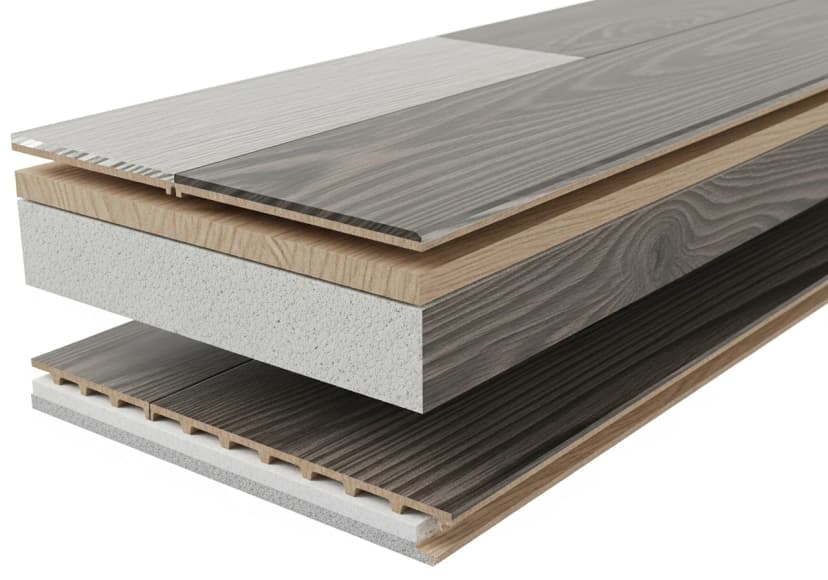
$4–$10 per sq ft installedWhole-home installations, kitchens, bathrooms, basements, and high-traffic areas
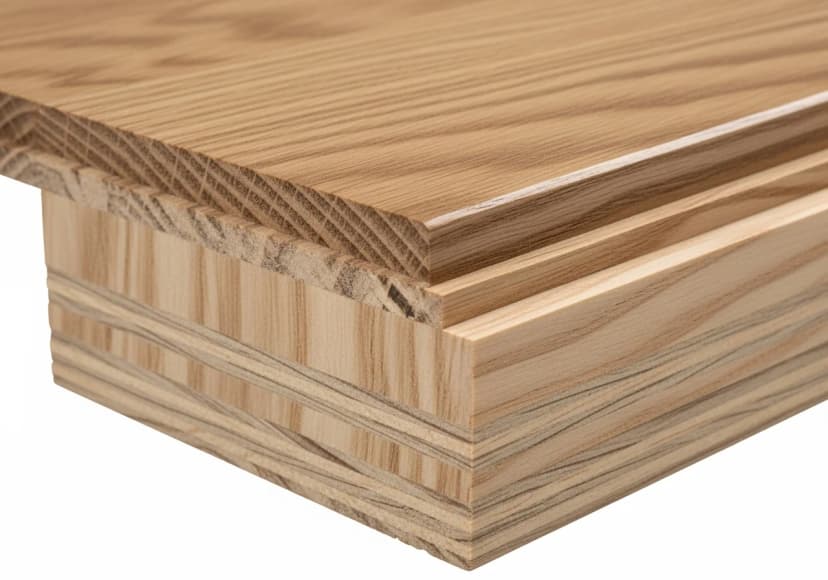
Engineered Hardwood
$8–$16 per sq ft installedLiving rooms, dining rooms, bedrooms, and hallways
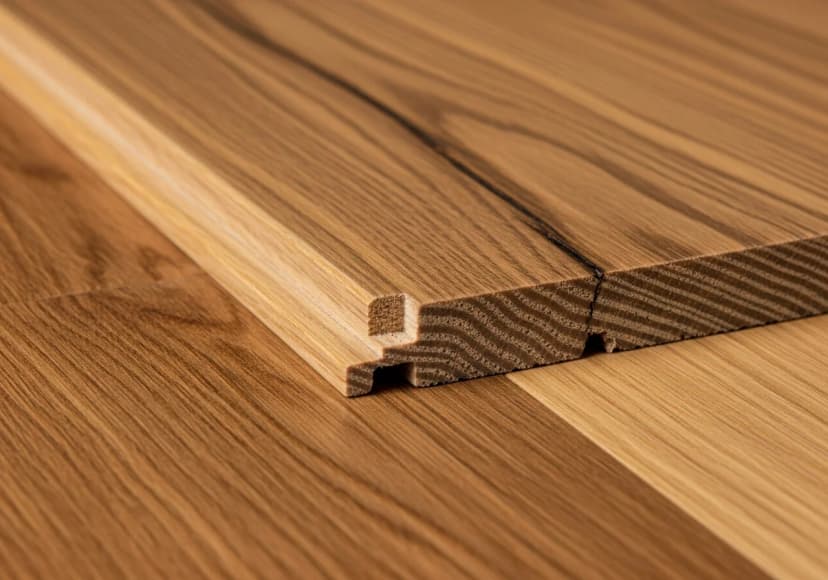
Solid Hardwood
$10–$20 per sq ft installedMain living areas in homes with controlled humidity and on-grade or above-grade subfloors
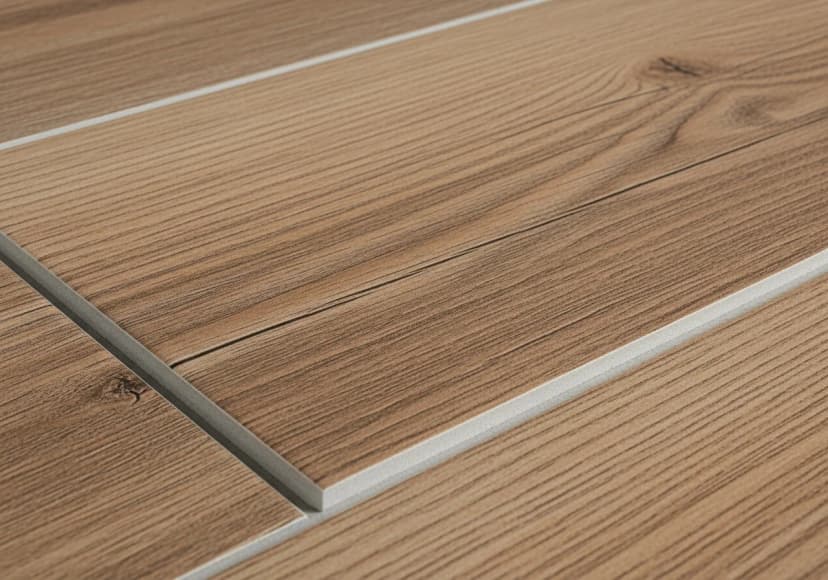
Porcelain Floor Tile
$8–$20 per sq ft installedBathrooms, entryways, kitchens, and laundry rooms
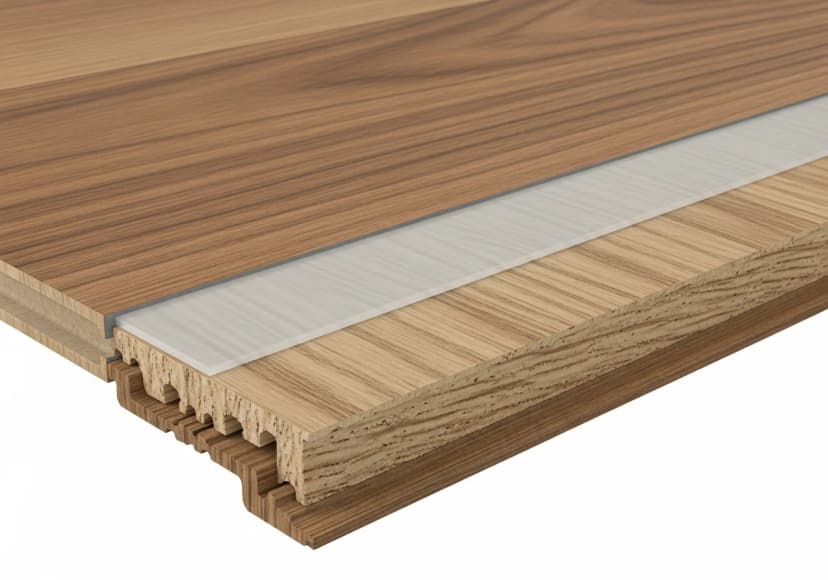
Laminate Flooring
$3–$7 per sq ft installedBudget-conscious projects, rental properties, and bedrooms
Learning from others' mistakes saves time and money. Here are the most common flooring installation design pitfalls we see in Boise:
Uneven or damaged subfloor causing gaps and movement in flooring
We assess and level the subfloor using self-leveling compound, plywood underlayment, or targeted repairs to create a flat, stable surface that prevents gaps, lippage, and movement in the finished floor.
Moisture issues in basements or slab-on-grade floors
We perform moisture testing and install appropriate vapor barriers or moisture-resistant underlayment. For basements, we recommend waterproof LVP or tile over moisture-protected subfloors.
Transitions between rooms with different flooring heights or types
We use reducer strips, T-moldings, and custom transitions to create clean, safe connections between different flooring materials and heights — no tripping hazards or awkward gaps.
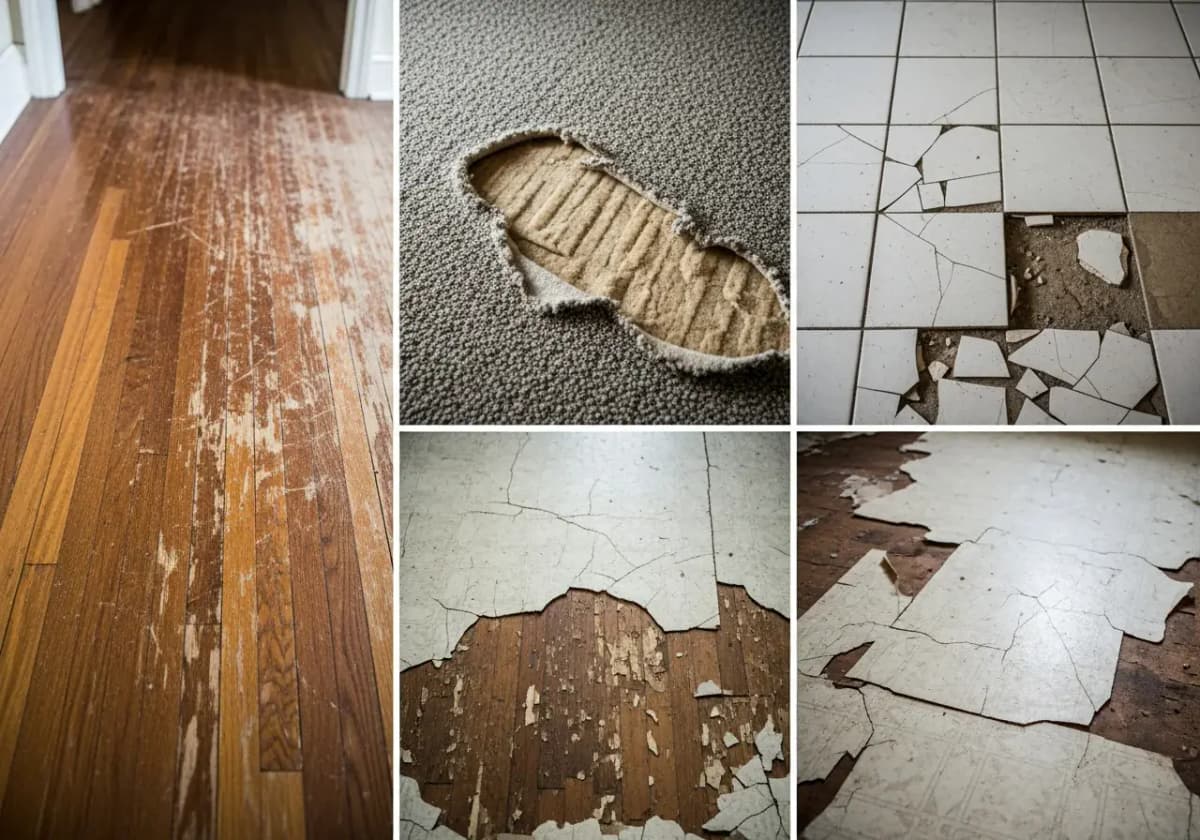
Carpet that traps allergens, pet odors, and stains
We remove old carpet and pad, treat any subfloor staining or odor, and install hard-surface flooring like LVP or hardwood that is easier to clean and does not harbor allergens or pet odors.
Squeaky or bouncy floors from inadequate subfloor fastening
We screw down loose subfloor panels, add blocking between joists where needed, and ensure the subfloor is tight and quiet before installing new flooring on top.
For flooring installation projects in Boise, you have two main approaches to the design process: hiring a separate interior designer then a contractor, or working with a design-build firm that handles both under one roof.
Design-build (our approach)
- ✓ Single point of contact
- ✓ Design informed by real construction costs
- ✓ Faster project delivery
- ✓ Budget aligned from day one
Separate designer + contractor
- ● More specialized design expertise
- ● Independent design perspective
- ● Requires coordination between parties
- ● Can result in budget surprises
Local factors — Boise's housing stock and typical construction eras, the climate conditions that drive material and scheduling choices, and permitting through City of Boise Planning and Development Services — are covered in full on our Boise page for this service, alongside 5 common project types.
Flooring Installation in Boise: housing stock, climate & permits →What is the best flooring for a whole-home installation?
Luxury vinyl plank (LVP) is the most popular choice for whole-home installations in the Boise area. It is waterproof, scratch-resistant, comfortable underfoot, and available in realistic wood-look patterns. It can be used in every room including kitchens and bathrooms.
What flooring is best for homes with pets?
LVP with a thick wear layer (20 mil or higher) is the best flooring for homes with pets. It resists scratches, is waterproof for accidents, and is easy to clean. Avoid smooth-finish hardwood and high-gloss laminate, which scratch easily.
Does the North End have special remodeling rules?
Yes. The North End Historic District has additional design review requirements for exterior modifications. Interior work is not affected, but changes to the exterior appearance — siding, windows, roofing, and additions — may require Historic Preservation Commission review.
Planning flooring installation in Boise?
Get expert guidance and a free estimate for your flooring installation project in Boise, ID.
Get Your Free Estimate