
From cabinet and countertop upgrades to full layout redesigns — we handle every element of your kitchen renovation from design through installation.
Kitchen remodeling in Mountain Home, Idaho is governed by a few facts about this town that no template guide accounts for: a Cold-War-era housing layer of closed-off ranch kitchens built when the Air Force Base was expanding, a steady stream of owner-occupants who relocate every few years on military orders, and a high-desert location near 3,150 feet where seasonal swings and a dry interior climate change how cabinetry and surfaces behave. Mountain Home is the Elmore County seat — a community of just under 16,000 anchored economically by Mountain Home Air Force Base twelve miles southwest and historically by the Oregon Short Line Railroad that pulled the original downtown into place after 1883. Iron Crest Remodeling Group LLC, doing business as Iron Crest Remodel (Idaho RCE-6681702), approaches Mountain Home kitchens with the distinctions they require: the small, walled-off galley in a 1965 air-base-era ranch needs structural and layout work that a builder-grade Silverstone kitchen from 2008 simply does not, and a kitchen in a home likely to sell to an inbound military family on a VA loan within a few years has different priorities than a forever-home kitchen on a Blue Sage acre. We design for the home and the household actually in front of us rather than swapping a city name into one shared script — which is precisely the failure this kind of work exists to eliminate.
Create a kitchen that works better for cooking, gathering, storage, and everyday life.
A kitchen remodel is the most impactful renovation you can make in your home — for daily quality of life, for resale value, and for how your family uses the most important shared space in the house. Kitchen projects range from cabinet refacing and countertop replacement to complete gut renovations involving wall removal, electrical panel upgrades, plumbing relocation, new flooring, and custom cabinetry. In the Treasure Valley, many homes were built with builder-grade kitchens that prioritize cost over function — small islands, limited counter space, poor lighting, and closed-off layouts. A well-planned kitchen remodel solves all of these problems while creating a space that looks, feels, and works the way your household needs it to. The key to a successful kitchen remodel is sequencing: design and material selection must be complete before demolition begins, because cabinet lead times, countertop fabrication, and appliance ordering all happen on parallel timelines that must align with construction progress.
Mountain Home homeowners pursue kitchen remodeling for a variety of reasons. Here are the most common situations we see:
Not every kitchen remodel project is the same. Here are the most common project types we complete in Mountain Home:

Complete kitchen gut and rebuild including new cabinets, countertops, flooring, backsplash, lighting, plumbing, electrical, and appliances. May include layout changes and wall removal.

Replace existing cabinets and countertops while keeping the current layout. New hardware, hinges, and drawer systems are included. A high-impact upgrade without the cost of a full gut.

Remove or modify walls between the kitchen and adjacent living or dining spaces to create an open floor plan. Includes structural header installation, patching, and finish work.

Design and install a kitchen island with seating, storage, and optional sink or cooktop. Requires electrical for outlets and potentially plumbing if adding a sink.

Update the kitchen without a full renovation: new countertops, painted or refaced cabinets, updated hardware, new backsplash, and modern lighting fixtures.

Mountain Home's housing spans a pre-war downtown core, a dominant 1950s-1970s air-base-era ranch belt tied to the base's Cold War growth, 1990s-2010s subdivisions, and recent custom acreage. The 2020 census recorded about 6,600 housing units.
Railroad-era and pre-war homes with galvanized plumbing, aged or knob-and-tube wiring in the worst cases, plaster and original wood, and frequent subfloor and structural deterioration. Pre-1978 lead and pre-1980 asbestos requirements apply.
The city's largest layer: simply framed ranches and split-levels built as Mountain Home AFB expanded, with original single-pane aluminum windows, galvanized supply lines, undersized electrical, minimal insulation, closed kitchens, single bathrooms, and no primary suite. Pre-1980 environmental testing required.
Production subdivision homes with modern systems and builder-grade finishes now aging out of relevance. No asbestos or galvanized concerns; straightforward upgrade candidates.
Custom homes on one-acre and rural parcels, many on private well and septic, built to modern code and high finish.

Material selection affects the look, durability, and cost of your kitchen remodel. Here are the most popular options we install in Mountain Home:

Engineered quartz is the most popular countertop choice for kitchen remodels. It is non-porous, stain-resistant, available in hundreds of colors and patterns, and never needs sealing. Brands like Caesarstone, Cambria, and Silestone offer a wide range of options.
Best for: Most kitchen applications — especially busy households

Natural granite remains a popular and durable countertop choice. Each slab is unique. Granite requires periodic sealing (once per year) and is heat-resistant, making it practical for kitchens. Pricing varies widely based on rarity and origin.
Best for: Homeowners who want natural stone with unique veining

Semi-custom cabinets offer more size options, wood species choices, door styles, and finish options than stock cabinets, with shorter lead times and lower cost than full custom. Most kitchen remodels in the Treasure Valley use semi-custom cabinetry.
Best for: Most kitchen remodels — best balance of customization and value

Built to exact specifications with no size limitations. Custom cabinets allow unique storage solutions, specialty wood species, and bespoke design details. Lead times are longer (8-14 weeks) and cost is significantly higher.
Best for: High-end kitchens, unusual layouts, and specific design visions
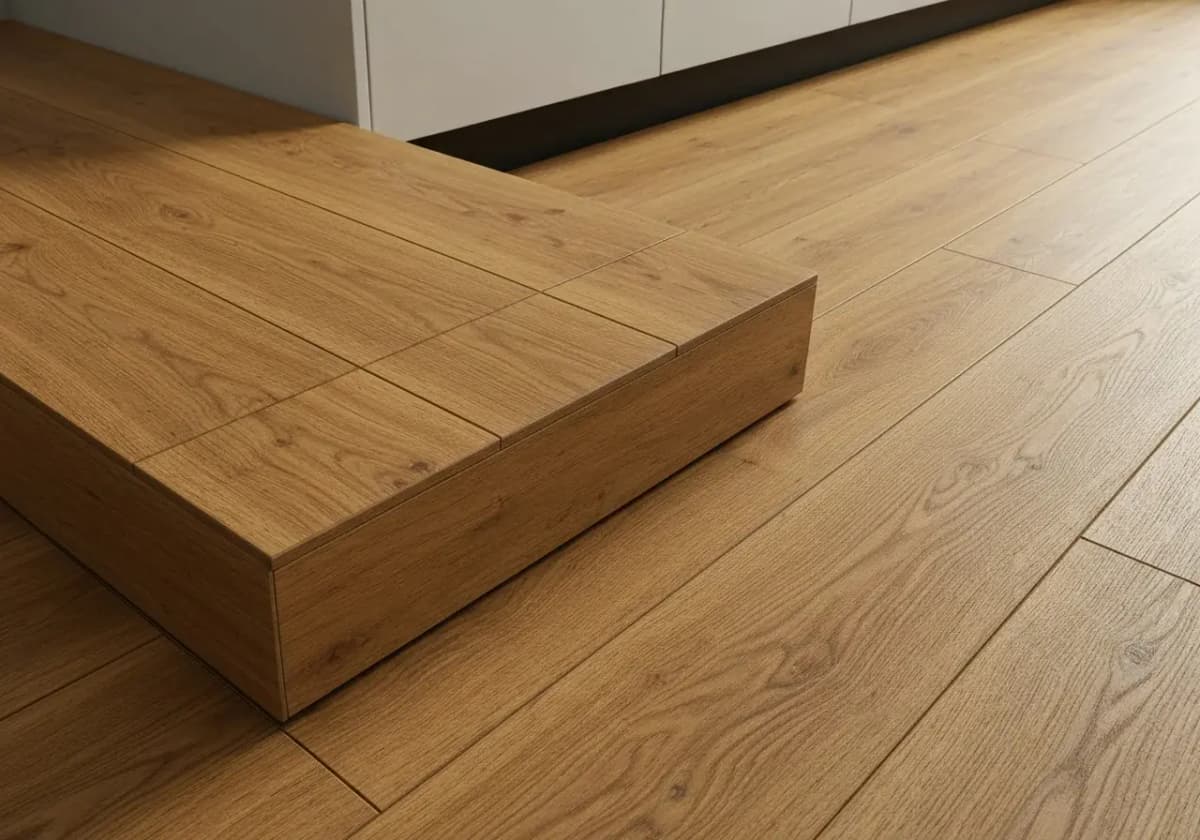
LVP is the most popular kitchen flooring choice in Idaho. It is waterproof, durable, comfortable underfoot, and available in realistic wood-look patterns. Premium LVP with a thick wear layer stands up to heavy kitchen traffic.
Best for: Kitchen floors — especially homes with pets and children

Here is how a typical kitchen remodel project works from first contact to final walkthrough:
We visit your kitchen, take detailed measurements, discuss what is and is not working, review your cooking and entertaining habits, identify storage pain points, and establish a realistic budget range. You will receive a scope outline within a few days.
We create a detailed kitchen design including cabinet layout, island configuration, countertop material selection, backsplash design, lighting plan, appliance placement, and finish selections. Cabinet orders are placed early because lead times typically run 4-8 weeks.
Countertops are templated after cabinets are installed, but the material (quartz, granite, butcher block) is selected during design. Appliances, flooring, backsplash tile, lighting fixtures, and hardware are all confirmed and ordered during this phase.
We pull permits for electrical, plumbing, or structural work as required. A temporary kitchen station is set up if needed. We coordinate all trade scheduling and material deliveries to align with the construction sequence.
Existing cabinets, countertops, flooring, and backsplash are removed. If walls are being opened, structural headers are installed and inspected. Plumbing and electrical rough-in for the new layout is completed and inspected.
New cabinets are installed, leveled, and secured. Once cabinets are in place, countertop templating happens, followed by fabrication (typically 5-10 business days for quartz or granite). Flooring is installed during this phase as well.
Countertops are installed, backsplash tile is set and grouted, appliances are connected, plumbing fixtures are installed, and all lighting, hardware, and trim details are completed. A final walkthrough ensures everything meets your expectations.
Here is what to expect for project duration when planning a kitchen remodel in Mountain Home:
| Phase | Duration | Details |
|---|---|---|
| Design and Material Selection | 3–6 weeks | Design consultation, cabinet layout finalization, material selection, appliance ordering, and contract execution. Cabinet lead times (4-8 weeks for semi-custom) often define the overall schedule. |
| Permitting | 1–3 weeks | Permit applications for electrical, plumbing, and structural work. Ada County and Canyon County typically process residential permits within 1-2 weeks. |
| Demolition and Rough-In | 1–2 weeks | Remove existing cabinets, countertops, flooring, and backsplash. Complete structural work (wall removal, header installation), plumbing rough-in, and electrical rough-in. Pass inspections. |
| Cabinet and Flooring Installation | 1–2 weeks | Install new cabinets, level and secure them, install flooring, and prepare for countertop templating. Countertop fabrication begins after template (5-10 business days for quartz/granite). |
| Countertop, Backsplash, and Finish Work | 1–2 weeks | Install countertops, set and grout backsplash tile, connect plumbing fixtures, install appliances, mount lighting, and complete all trim and hardware details. |
| Final Inspection and Walkthrough | 2–3 days | Complete punch list, pass final inspections, and conduct homeowner walkthrough. |
Mountain Home range: $16,000–$28,000 – $70,000–$120,000
Most Mountain Home projects: $32,000–$58,000
Mountain Home kitchen costs run modestly below Boise-proper pricing, but the gap is narrower than the home-value difference implies because Elmore County's skilled-trade pool is thinner and crews frequently mobilize from the Treasure Valley, adding travel to the bid. The low band covers a durable cabinet-and-counter refresh or a rental-grade rebuild without layout change. The average band reflects the city's signature project: removing the wall between a closed mid-century kitchen and the adjacent room, new cabinetry, quartz counters, an island, updated appliances, lighting, and flooring. The high band covers full custom kitchens in Blue Sage and acreage homes — custom cabinetry, premium stone, large islands, high-end appliances, structural reconfiguration. The biggest local cost variable is the wall: opening a kitchen in a 1960s ranch frequently means a load-bearing wall with a beam and post detail, which carries engineering and structural cost a cosmetic refresh does not. Pre-1980 homes also add asbestos/lead testing (EPA RRP, Idaho DEQ) and frequently knob-and-tube or undersized electrical-service upgrades to carry a modern kitchen load.
The final cost of your kitchen remodel in Mountain Home depends on several factors. Here are the biggest cost drivers:
Cabinets typically represent 30-40% of a kitchen remodel budget. The gap between stock cabinets ($150/LF) and custom cabinets ($1,000+/LF) is substantial. Door style, wood species, and finish also affect pricing.
Moving plumbing, relocating electrical, or removing walls for an open-concept design adds structural engineering, framing, patching, and trade labor costs.
Laminate countertops start at $15/sf. Standard quartz runs $55-80/sf. Premium granite or quartzite can exceed $150/sf. Edge profiles, cutouts, and seam locations also affect fabrication cost.
A standard appliance package (range, refrigerator, dishwasher, microwave) runs $3,000-6,000. A premium package with a professional range, built-in refrigerator, and panel-ready dishwasher can exceed $15,000-25,000.
A simple subway tile backsplash costs $800-1,500. A custom tile design with mosaics, natural stone, or large-format tile with tight joints can cost $2,500-5,000+.
Modern kitchens need more circuits than older homes provide. Adding under-cabinet lighting, pendant fixtures, recessed cans, and dedicated appliance circuits is common.
LVP ($5-12/sf) is the budget-friendly standard. Hardwood ($8-15/sf) adds warmth. Tile ($10-25/sf) offers design flexibility. The kitchen floor area is typically 100-200+ square feet.
These are the real-world projects we see most often from Mountain Home homeowners:
The defining Mountain Home kitchen project: a 1950s-1970s ranch with a small kitchen sealed off by a full wall from the living or dining room. The homeowner wants the open plan the home never had. Scope: structural assessment of the dividing wall (frequently load-bearing in these homes), engineering and installation of a flush or dropped beam with proper posts and footing, full cabinet replacement, quartz counters, an island or peninsula that anchors the new open space, relocated and upsized electrical for modern appliance loads, recessed and task lighting, and continuous flooring tying the newly joined rooms together. Pre-1980 testing for asbestos and lead is part of the sequence. This is the project that transforms one of these homes more than any other single change, and it is structural work — done right the first time, not patched.
For owner-landlords and investors renting to base personnel, a kitchen engineered to survive back-to-back two-to-four-year tenancies with minimal turn cost. Scope favors total cost of ownership: plywood-box cabinetry with durable doors rather than the cheapest particleboard, a quartz or solid-surface counter that does not delaminate or scorch, a single-bowl stainless or composite sink, slip-resistant LVP flooring, durable mid-grade appliances a property manager can source and replace easily, and lighting and finishes chosen for serviceability over fashion. The objective is a kitchen a manager can reset between PCS rotations without a rebuild. This is deliberately not the lowest sticker — it is the lowest cost across multiple tenancies.
In Mountain Home's 1990s-2010s subdivision stock, kitchens are functional but generic: oak or maple stock cabinets, laminate counters, builder appliances, and a layout that often already has reasonable flow but dated finishes. Scope is a clean upgrade rather than a structural rebuild: new or refaced cabinetry, quartz counters, a tiled or full-height backsplash, an undermount sink, updated appliances, layered lighting, and flooring. Because these homes sell heavily to inbound military families on VA financing, the design target is a kitchen that photographs well and clears a VA appraiser's condition review with no flagged repairs.
Near Mountain Home's railroad-era downtown, pre-war and early-mid-century homes have small, compartmentalized kitchens with original or much-patched systems. Scope must combine modernization with systems repair: galvanized supply-line replacement, electrical-service and circuit upgrades for a modern kitchen, often subfloor remediation, plus a layout reconfiguration that respects the home's period character. Mandatory pre-1980 environmental testing precedes demolition. The result keeps the home's character while delivering a kitchen that actually works for current life.
On Blue Sage's one-acre lots and surrounding rural parcels — many on private well and septic — homeowners build kitchens to match the home's quality. Scope: custom cabinetry, premium quartzite or quartz, a large multi-function island, high-end appliances including frequently a separate range and built-in refrigeration, a butler's or prep pantry, and layered designer lighting. The well-and-septic factor matters: water chemistry on the plain is often hard and iron-bearing, which influences fixture finishes and any pot-filler or filtration choices, and these projects are engineered around the property's actual utilities rather than a municipal default.

Solution: We evaluate load-bearing walls, design structural solutions, and open the kitchen to adjacent rooms for better light, flow, and entertaining function.
Solution: We redesign cabinet layouts to maximize storage with pull-out shelves, drawer organizers, pantry towers, and optimized island configurations with more usable counter surface.
Solution: We replace cabinets, countertops, backsplash, lighting, and hardware with current, durable materials that reflect your style and improve daily function.
Solution: We layer recessed ceiling lights, under-cabinet task lighting, and pendant fixtures over islands and sinks to eliminate shadows and brighten the entire space.
Solution: We upgrade circuits, add dedicated appliance outlets, install GFCI protection, and ensure the panel can support a modern kitchen's electrical load.

High-desert climate at roughly 3,150 feet on the open western Snake River Plain: cold winters, hot dry summers, very low humidity, large daily temperature swings, intense unobstructed UV, and strong wind.
Frequent 30+°F daily swings cycle tile, grout, caulk, siding, and waterproofing joints aggressively, making movement-accommodating detailing essential.
Open, treeless plain accelerates fading and degradation of exterior paint, decking, and cladding, and interior fading on sun-exposed rooms.
30 lb ground snow load and a 24-inch frost depth (Mountain Home area, below Tollgate) govern foundations, decks, and roofed structures; cold floors raise demand for in-floor heat.
115 mph residential design wind speed off the open plain drives siding fastening, window structural specs, and roofed-structure engineering; wind-borne grit abrades finishes.
Very dry interiors shrink and gap unacclimated wood flooring and cabinetry and reopen drywall seams; sealed winter homes still concentrate bathroom moisture.
Seismic Zone C (south of Featherville, includes Mountain Home) applies to structural and lateral detailing on additions and reconfigurations.
The oldest residential blocks around the railroad-era street grid, including landmarks like the 1910 Bengoechea building; pre-war and early-mid-century homes with aged systems.
Common projects in Downtown / Historic Core:
The city's largest housing layer, built as Mountain Home AFB expanded through the Cold War: simply framed three-bedroom, one-bath ranches with original systems and closed layouts. Split between owner-occupants and owner-landlords renting to base personnel.
Common projects in Air-Base-Era Ranch Belt (1950s-1970s):
1990s-2010s production-home build-out on the north and east edges; modern systems, builder-grade finishes aging out, frequently sold to inbound military buyers using VA financing.
Common projects in Newer Subdivisions (Silverstone, Morning View):
Blue Sage's one-acre custom-home lots and surrounding unincorporated rural parcels, many on private well and septic and permitted through Elmore County rather than the city.
Common projects in Blue Sage & Rural Acreage:
Every Mountain Home neighborhood has different housing stock, homeowner priorities, and project considerations. Here is what kitchen remodel looks like in each area:
Permit authority: City of Mountain Home Building Department (in city limits) or Elmore County Land Use and Building Department (unincorporated)
Here are the design trends we see most often in Mountain Home kitchen remodel projects:
Mountain Home's 2024 median home value was approximately $309,400 (Data USA), well below most of Ada County. The market is strongly influenced by Mountain Home Air Force Base: modest, fast-moving inventory, a large share of inbound military buyers using VA financing on relocation deadlines with appraisal condition review, and a substantial owner-landlord/investor segment serving base-driven rental demand. Schools are served by Mountain Home School District No. 193. This price band and buyer profile make competent, finished, defect-free remodels closer to a condition of sale than discretionary upgrades, and make durability-for-turnover the governing logic for rental work.
Avoid these common pitfalls Mountain Home homeowners encounter with kitchen remodel projects:
Better approach: In Mountain Home's air-base-era ranch belt the kitchen dividing wall is frequently load-bearing. Removing it requires engineered beam sizing, proper posts and footings, and a permitted structural review under the 2018 IRC. Assess the wall and price the structural scope before committing, so the project is engineered correctly rather than patched after the ceiling sags.
Better approach: Mountain Home's low heating-season humidity checks and cracks bargain and wide solid-wood cabinetry faster than the moderated valley floor. Specify dimensionally stable construction — plywood boxes and door styles and finishes engineered for a dry, swing-prone interior — which is the most climate-relevant kitchen decision in this city.
Better approach: Pre-1980 Mountain Home kitchens routinely lack modern circuit count and service capacity, and the oldest downtown homes can carry knob-and-tube. Scope the panel/service upgrade up front as part of the project rather than discovering it mid-build when appliance circuits won't pass.
Better approach: A rental kitchen near the base must survive back-to-back PCS-cycle tenancies. Cheap particleboard and laminate fail and rebuild repeatedly at the owner's cost. Specify plywood boxes, quartz or quality solid surface, durable flooring, and serviceable mid-grade appliances — the lower cost across three rotations even though it isn't the lowest sticker.
Better approach: Jurisdiction is split: city for in-limits property, Elmore County for unincorporated surrounding acreage, each a separate office with its own process and inspection days. Confirm which governs the parcel before design, not at the permit counter.
Almost always yes — it's the most common and most transformative kitchen project in the city — but it is structural work, not a cosmetic one. In Mountain Home's air-base-era ranch belt the wall between the kitchen and the adjacent room is frequently load-bearing, which means engineered beam sizing, proper posts and footings, and a building permit with structural review under the adopted 2018 IRC. We assess the wall before quoting so the structural scope and cost are known up front rather than discovered mid-demo. Done correctly, removing that wall does more to modernize one of these homes than any other single change.
Build for total cost across multiple two-to-four-year PCS tenancies, not the lowest sticker. The pattern that works in Mountain Home: plywood-box cabinetry with durable doors instead of the cheapest particleboard, a quartz or solid-surface counter that won't delaminate or scorch, a durable single-bowl sink, slip-resistant LVP flooring, and mid-grade appliances a property manager can source and swap easily. The goal is a kitchen a manager can reset between rotations without a rebuild. That typically runs $17,000–$29,000 and is cheaper across three tenancies than a cosmetic refresh that fails on the second tenant.
It depends on jurisdiction. Property inside Mountain Home city limits is permitted and inspected by the City of Mountain Home Building Department on South 3rd East Street. Unincorporated Elmore County property — including much of the surrounding acreage — goes through the Elmore County Land Use and Building Department on American Legion Boulevard, with Mountain Home-area inspections on Mondays, Wednesdays, and Fridays. They're separate offices with separate processes. We confirm jurisdiction first on every project and handle the application and inspection scheduling.
It's the dry high-desert interior climate. Mountain Home's low humidity through the long heating season dries solid-wood doors and face frames and stresses joinery and finish more aggressively than a humid climate does — older site-built and bargain cabinets in the mid-century stock visibly check at the joints. That's why we specify dimensionally stable construction here: plywood boxes and door styles and finishes engineered to tolerate a dry, swing-prone interior. It's the single most climate-relevant kitchen specification in this city.
Frequently, yes. Pre-1980 Mountain Home kitchens — especially in the downtown core and air-base-era ranch belt — routinely lack the dedicated circuits and service capacity a modern kitchen needs, and the oldest downtown homes can still carry knob-and-tube near the kitchen. A panel or service upgrade is a common and necessary part of these remodels. We scope the electrical reality up front so it's part of the plan and budget, not a mid-project surprise.
Significantly. A large share of Mountain Home buyers are inbound military families on PCS deadlines using VA financing with an appraisal condition review. An open, finished kitchen — versus a dated, closed-off one — both shortens days-on-market and helps the home clear the VA appraiser's review without flagged repairs. In a sub-$310,000 median market where buyers scrutinize condition closely, a competent kitchen is closer to a condition of sale than a discretionary upgrade. If you have a listing date, start design 6–10 weeks ahead.
Cabinet selection is typically the single largest cost driver, followed by countertop material, appliance package, and layout changes. Moving plumbing or removing walls adds structural and trade labor costs. The finish level you choose — stock vs semi-custom vs custom cabinets, laminate vs quartz vs granite counters — has the biggest impact on total budget.
Yes, most homeowners stay in the home during a kitchen remodel. We help you set up a temporary kitchen station in another room with a microwave, toaster oven, and access to water. Dust barriers contain construction debris. Expect 6-12 weeks without a fully functional kitchen depending on project scope.
A typical kitchen remodel takes 8 to 14 weeks from demolition to completion. The total project timeline, including design, ordering, and permitting before construction starts, is typically 14-22 weeks. Cabinet and countertop lead times are usually the schedule-defining factors.
Yes. Most kitchen remodels that involve electrical, plumbing, or structural changes require permits in Ada County and Canyon County. Cosmetic-only updates (painting cabinets, new hardware, replacing a faucet) typically do not. We handle all permit applications and inspections.
Kitchen remodels consistently deliver the highest ROI of any home renovation. A mid-range kitchen remodel typically recoups 60-80% of its cost at resale, and an updated kitchen is the number one feature buyers look for in the Treasure Valley market.
Quartz is the most popular choice because it is non-porous, stain-resistant, durable, and available in hundreds of colors and patterns. Granite remains popular for homeowners who prefer natural stone. Butcher block adds warmth for island tops. The best choice depends on your budget, maintenance tolerance, and design preferences.
Get a free, no-obligation estimate for kitchen remodeling in Mountain Home, ID. We handle design, permits, and every detail of construction.
Get Your Free Estimate