
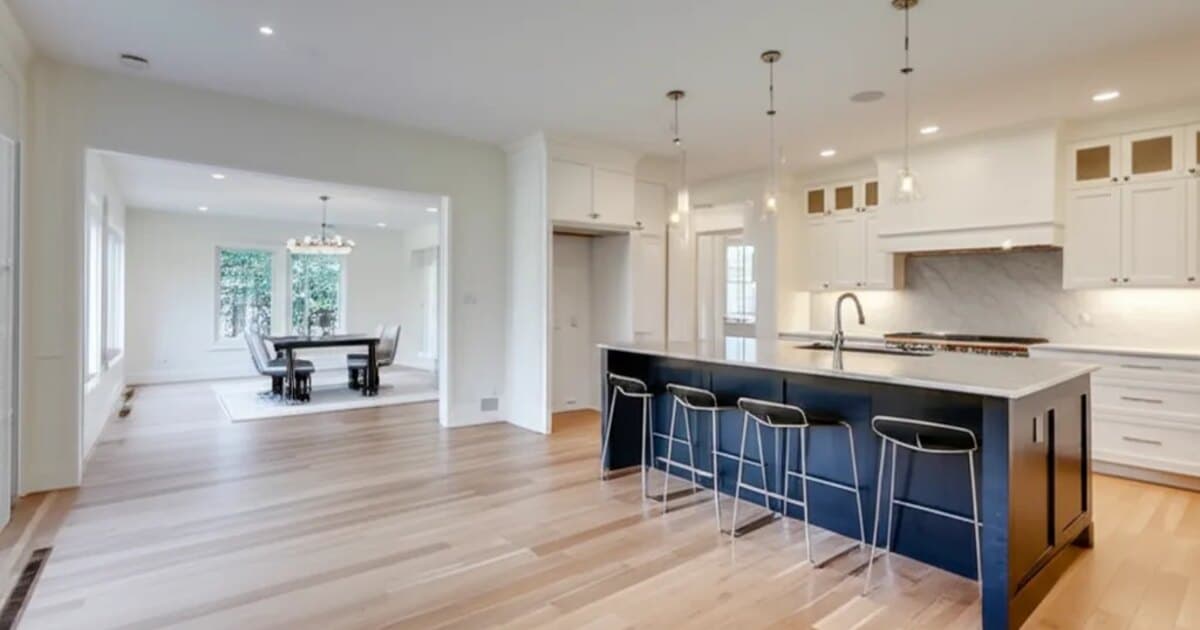
Whole-Home Remodeling Design Ideas for Meridian
Get inspired with whole-home remodeling design ideas tailored to Meridian homes, from trending styles to practical layout considerations.
Quick answer
We develop a whole-home design package before construction begins — selecting flooring, trim profiles, door hardware, paint colors, lighting fixtures, and plumbing finishes that work together across every room. This ensures a cohesive result rather than a collection of disconnected renovations.
Meridian, ID · Whole-Home Remodeling
Planning whole-home remodeling in Meridian?
Read the full guide below — or get your project priced now. Free, no-obligation estimates from an Idaho registered local team, backed by a 1-year workmanship warranty.
- Licensed Idaho RCE-6681702
- 1-Year Workmanship Warranty
- $2M Liability Coverage
- Free, No-Obligation Estimates


Meridian whole-home remodels are fundamentally different from Boise projects because the starting point is different. In Boise, you're working with homes that span 100+ years of construction — each with its own structural character, historical quirks, and hidden complexity. In Meridian, you're almost always starting with a post-1990 suburban tract home that was built fast, built to a budget, and built to a formula. That formula is both a limitation and an advantage. The limitation: there's little architectural character to preserve or celebrate. The advantage: the structural and mechanical systems are generally in good working order, the layouts are rational, and there are fewer surprises behind the walls. Meridian whole-home remodels are more predictable in scope, timeline, and budget than equivalent Boise projects — which matters enormously when you're coordinating the full scope of a whole-home transformation. The other key difference is Meridian's family-market demographic. Meridian homeowners skew younger than Boise, with more children in the household and more dual-income professional families. This creates specific design priorities: durable finishes that survive active kids, functional mudrooms and drop zones, flexible spaces that serve multiple purposes, and home offices that work for remote professionals. A Meridian whole-home remodel is optimized for how young families actually live, not for the showroom photo.
South Meridian
South Meridian is the newest and fastest-developing zone in the city, with most homes built between 2005 and the present. Subdivisions like Movado Estates, Bellingham Park, and Copper Basin are predominantly 2,200–3,500 square foot homes with open floor plans, 9-foot ceilings, and builder-grade finishes that were standard for their construction date. Whole-home remodels in South Meridian have a specific character: the bones are excellent — modern framing, updated electrical, 2×6 exterior walls in newer builds — but the finishes are universally builder-grade. Granite-look laminate counters, hollow-core interior doors, basic builder carpet, and stock cabinetry are the starting point for almost every project. The opportunity is to elevate these already-functional homes with finishes that reflect the income and taste of the families who now live in them. HOA activity is intense in South Meridian. Most subdivisions have active design review processes, and exterior changes — even paint colors — typically require pre-approval. Iron Crest's project managers are experienced in navigating South Meridian HOA requirements and can help homeowners prepare submissions that get approved on the first review. Interior projects are generally HOA-exempt, but any work visible from the street or affecting the exterior envelope needs documentation. South Meridian sits inside West Ada School District's newer campuses, which is a fact about the area rather than a claim about its market. We do not publish resale or days-on-market figures for it — we have no transaction data — but the scoping principle holds regardless: bring finishes to match the neighborhood's price point rather than over-improving for the block, and ask an appraiser where that point actually is.
North Meridian
North Meridian's housing stock from the 1990s and early 2000s represents the most complex whole-home remodel market in the city. These homes — many in subdivisions like Woodbridge, Heritage Subdivision, and older Meridian Village-area neighborhoods — are 20 to 30 years old and frequently need more than cosmetic work. Electrical panels in North Meridian homes built in the late 1990s are often 100-amp services that were adequate for the era but struggle with today's EV chargers, hot tubs, and high-draw kitchen appliances. A whole-home remodel is the ideal time to upgrade to a 200-amp panel. Similarly, original HVAC systems in these homes are typically at or beyond their 20-year life expectancy — integrating an HVAC replacement into a whole-home project allows ductwork to be rerouted or replaced without double demolition. The aesthetic starting point in North Meridian is distinctly 1990s: oak cabinetry, linoleum or vinyl tile flooring, small secondary bathrooms, and the kind of divided floor plans that feel cramped compared to today's open concepts. Whole-home remodels here often include removing a non-load-bearing wall between the kitchen and living area to create the open layout that buyers and residents expect. This level of structural work requires engineered beam sizing and City of Meridian permits — Iron Crest handles both as standard practice. Despite the additional complexity, North Meridian is where a whole-home scope has the most room to work, because the finishes and systems being replaced are the oldest in the city. Whether the block supports the budget you have in mind is a comparables question — ask an appraiser before the scope is locked.
Paramount / Lochsa Falls
Paramount and Lochsa Falls represent the upper tier of Meridian's residential market — master-planned communities with architecture standards, amenity packages, and home sizes (2,800–5,000+ sq ft) that attract Meridian's most discerning buyers and residents. Homes here were built to a higher initial spec than most Meridian subdivisions, but even premium builder finishes from 2005–2015 are now showing their age against today's design standards. Whole-home remodels in Paramount and Lochsa Falls are characterized by elevated material expectations and a more design-forward clientele. These homeowners are researching trends on Houzz and Instagram, they've visited showrooms, and they have specific visions for their spaces. The scope of work is broader — custom cabinetry, engineered hardwood or large-format tile, waterfall quartz islands, spa-level primary baths with heated floors and steam showers, and smart home integration are all common requests. HOA requirements in both communities are among the most structured in Meridian. The Paramount HOA has specific architectural guidelines for exterior modifications, including approved paint palettes, deck and patio design standards, and fencing specifications. Lochsa Falls has similar oversight. Working with a contractor who understands and proactively engages these processes — rather than treating them as an afterthought — is essential for keeping projects on schedule. These are Meridian's upper-tier communities by build spec and by architectural standard, which is observable from the guidelines themselves. We do not publish a premium figure for them, and we have no transaction data that would support one. What a whole-home remodel does here is close the distance between a builder-spec finish and a custom-home finish in a neighborhood whose architecture was already built to carry it.

The design phase is where your whole-home remodeling goes from a general idea to a specific plan. Good design balances aesthetics, functionality, budget, and the unique characteristics of your home and neighborhood in Meridian. Here are the most popular design approaches and trends we see in Meridian and the surrounding Treasure Valley.
Meridian homeowners tend to favor designs that blend modern functionality with the regional character of Idaho homes. Here are the most requested design elements:
These design factors are specific to whole-home remodeling projects and affect both the look and function of the finished space:
Floor plan flow — ensure natural traffic patterns between kitchen, dining, living, and bedrooms without bottlenecks or wasted hallway space
Flooring continuity — using the same flooring material throughout main living areas creates a seamless, spacious feel and simplifies transitions
Lighting plan — layer ambient, task, and accent lighting in every room; use consistent fixture finishes and consider smart lighting controls
Storage strategy — plan built-in storage, closet systems, and cabinetry for every room to reduce clutter and maximize function
Color palette — select a cohesive whole-home color scheme with complementary tones that flow naturally from room to room
Mechanical system placement — plan HVAC returns, electrical panels, and plumbing access points so they do not conflict with the finished design
The materials and finishes you choose bring your design to life. Here are the options most commonly selected for whole-home remodeling projects in Meridian:
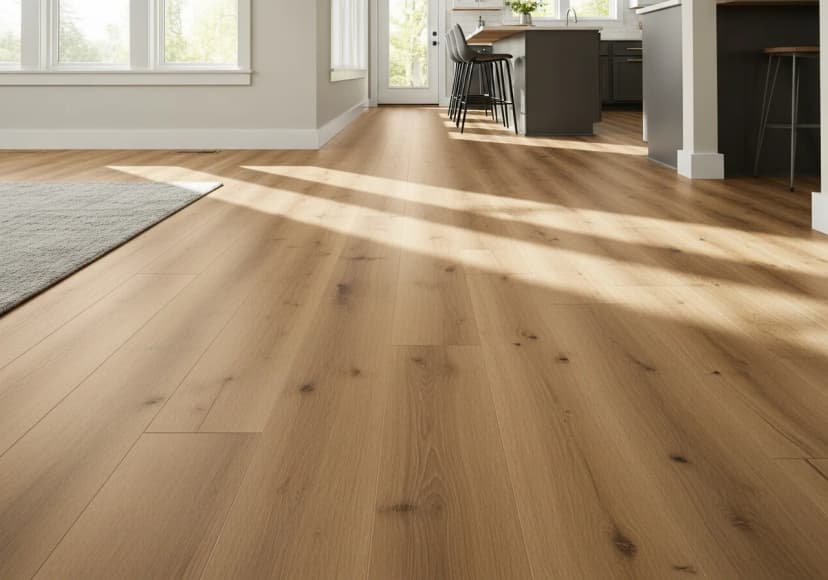
Luxury Vinyl Plank (LVP)
$4–$10 per sq ft installedMain living areas, hallways, bedrooms, and kitchens
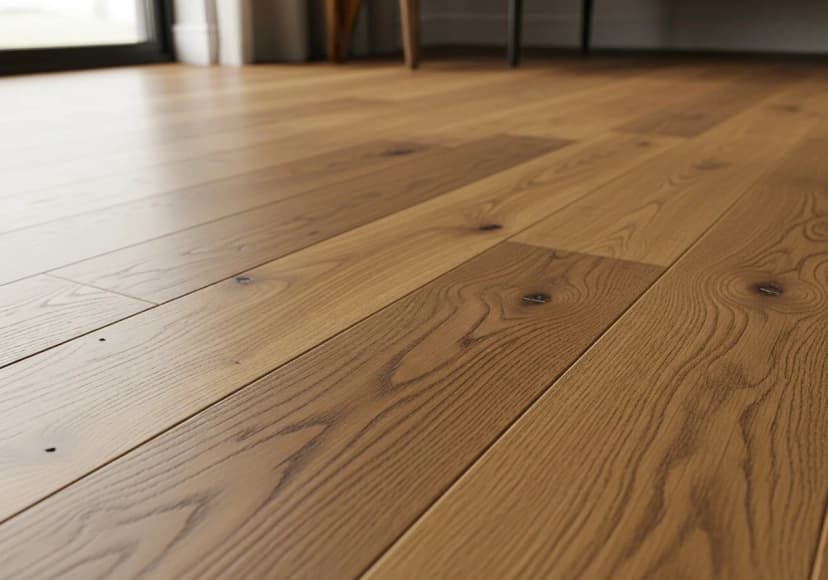
Engineered Hardwood
$8–$16 per sq ft installedLiving rooms, dining rooms, and bedrooms in climate-controlled environments
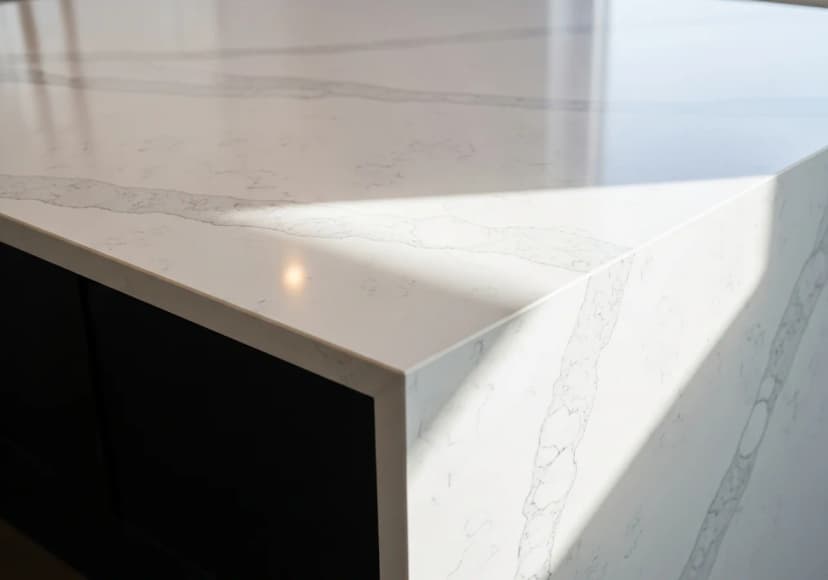
Quartz Countertops
$50–$120 per sq ft fabricated and installedKitchen countertops, bathroom vanities, and laundry surfaces

Semi-Custom Cabinetry
$250–$600 per linear foot installedKitchen, bathroom, laundry, and built-in storage throughout the home

Interior Paint — Premium Grade
$3–$6 per sq ft of wall area (labor and material)Every wall and ceiling surface in the home
Learning from others' mistakes saves time and money. Here are the most common whole-home remodeling design pitfalls we see in Meridian:
Compartmentalized floor plan with poor flow between rooms
We remove or modify interior walls to create open-concept living areas, install structural headers where needed, and unify flooring and finishes across the connected spaces.
Inconsistent finishes from years of piecemeal updates
A whole-home remodel ensures consistent flooring, trim profiles, paint colors, door hardware, and fixture finishes throughout — eliminating the patchwork look of decades of small projects.
Outdated electrical system that cannot support modern loads
We upgrade the electrical panel, add dedicated circuits for kitchens and bathrooms, install GFCI and AFCI protection where required by code, and add outlets and lighting throughout the home.
Poor insulation and energy inefficiency
During the renovation, we upgrade insulation in walls, attics, and crawlspaces — improving comfort and reducing heating and cooling costs in Boise's hot summers and cold winters.
Deferred maintenance hidden behind walls and under floors
A whole-home renovation exposes framing, plumbing, and wiring that may have been hidden for decades. We identify and repair water damage, pest damage, improper wiring, and failing plumbing during the demolition phase.
For whole-home remodeling projects in Meridian, you have two main approaches to the design process: hiring a separate interior designer then a contractor, or working with a design-build firm that handles both under one roof.
Design-build (our approach)
- ✓ Single point of contact
- ✓ Design informed by real construction costs
- ✓ Faster project delivery
- ✓ Budget aligned from day one
Separate designer + contractor
- ● More specialized design expertise
- ● Independent design perspective
- ● Requires coordination between parties
- ● Can result in budget surprises
Local factors — Meridian's housing stock and typical construction eras, the climate conditions that drive material and scheduling choices, and permitting through City of Meridian Building Department — are covered in full on our Meridian page for this service, alongside 5 common project types.
Whole-Home Remodeling in Meridian: housing stock, climate & permits →How do you handle design consistency across rooms?
We develop a whole-home design package before construction begins — selecting flooring, trim profiles, door hardware, paint colors, lighting fixtures, and plumbing finishes that work together across every room. This ensures a cohesive result rather than a collection of disconnected renovations.
What is included in a whole-home remodel?
A comprehensive whole-home remodel typically includes flooring throughout, kitchen renovation, bathroom renovations, paint and trim, lighting and electrical updates, plumbing updates, HVAC improvements, and any layout or structural changes. The exact scope is customized to your goals and budget.
Planning whole-home remodeling in Meridian?
Get expert guidance and a free estimate for your whole-home remodeling project in Meridian, ID.
Get Your Free Estimate