
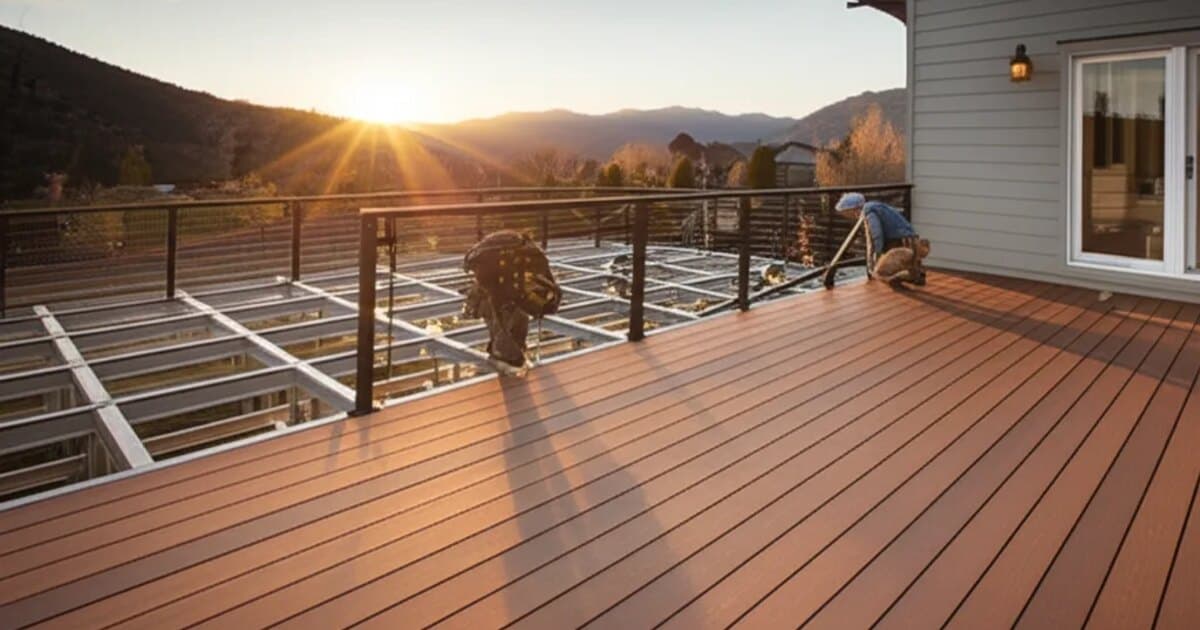
How Long Does It Take to Build a Deck in Meridian?
Understand the typical timeline for deck construction in Meridian, from design to final inspection.
Quick answer
A typical residential deck takes 2-4 weeks from permit approval to completion. The design, permitting, and material ordering phase before construction begins usually takes 2-4 additional weeks. Total project timeline is typically 4-8 weeks.
Meridian, ID · Deck Builder
Planning deck building in Meridian?
Read the full guide below — or get your project priced now. Free, no-obligation estimates from an Idaho registered local team, backed by a 1-year workmanship warranty.
- Licensed Idaho RCE-6681702
- 1-Year Workmanship Warranty
- $2M Liability Coverage
- Free, No-Obligation Estimates


How long each type of deck building project actually takes in Meridian, from our completed work:
| Project | On-site duration |
|---|---|
| Pressure-Treated Replacement with Composite Upgrade | 3–5 weeks |
| Expanded Entertaining Deck with Covered Pergola | 6–10 weeks |
| Multi-Level Deck with Hot Tub Integration | 5–8 weeks |
| New Construction Deck Addition | 4–6 weeks |
| Deck Repair and Restoration | 1–2 weeks |
Scope detail and pricing for each of these is on the Meridian deck building cost guide.
Understanding the timeline for deck builder in Meridian helps you plan around daily life disruptions, coordinate schedules, and set realistic expectations for when the project will be complete. Every project is different, but most deck building projects in Meridian follow a predictable sequence of phases.
Design and Planning
1–3 weeksSite assessment, design development, material selection, and contract finalization.
Permitting
1–3 weeksPermit application, plan review, and approval through Ada County or Canyon County. Straightforward residential deck permits typically process within 1-2 weeks.
Footing Excavation and Concrete
1–2 daysFooting holes excavated below the frost line, concrete poured, and post hardware set. Concrete requires 24-48 hours to cure before framing begins.
Framing
2–4 daysPost, beam, joist, and ledger installation. Framing inspection is scheduled and passed before decking is installed.
Decking, Railing, and Stairs
3–5 daysDeck board installation, railing system assembly and installation, and stair construction. Larger or more complex decks take longer.
Final Inspection and Walkthrough
1–2 daysFinal building inspection, punch list completion, and homeowner walkthrough.
Here is the full step-by-step process for a deck building in Meridian, including what happens at each stage:
Step 1: Site Assessment and Design Consultation
We visit your property, evaluate the site conditions — grade, soil, access, existing structures — and discuss your vision for size, layout, features, and material preferences. We take measurements and photos for design development. You receive a preliminary concept and budget range.
Step 2: Design Development and Material Selection
We create a detailed deck design including dimensions, layout, elevation, railing style, stair configuration, and any built-in features. You select decking material, color, railing system, and lighting options. We finalize the design and prepare a fixed-price contract.
Step 3: Permitting
Deck construction in Ada County and Canyon County requires a building permit with structural plans showing footing locations, beam spans, joist spacing, ledger attachment details, and railing specifications. We prepare and submit the permit application and manage the approval process.
Step 4: Footing Excavation and Post Installation
Footings are excavated below the frost line (24 inches minimum in the Boise area) and poured with concrete. Steel post brackets or direct-embed posts are set at precise locations per the structural plan. This is the most critical phase for long-term structural integrity.
Step 5: Framing: Beams, Joists, and Ledger
Pressure-treated beams and joists are installed per the engineered span tables. The ledger board is attached to the house with code-compliant lag bolts or through-bolts and proper flashing to prevent water intrusion at the connection point.
Step 6: Decking, Railing, and Stair Installation
Deck boards are installed with proper gapping for drainage and expansion. Railing posts, rails, and balusters are installed to code height and spacing requirements. Stairs with proper rise and run are built with secure handrails.
Step 7: Final Inspection and Walkthrough
We schedule and pass the final building inspection, verify all structural connections, railing heights, stair dimensions, and fastener patterns meet code. A walkthrough with you confirms everything meets the agreed design and quality standards.
Several factors specific to Meridian and the Treasure Valley can affect your deck building timeline:
Material lead times
Custom materials, specialty items, and premium products can have lead times of 4-14 weeks. We order materials as early as possible in the design phase to minimize schedule impact.
Permit processing
City of Meridian Building Department typically processes residential permits in 1-3 weeks. More complex projects with structural changes may take longer. We submit permits immediately after design approval.
Seasonal factors
Meridian shares Boise's semi-arid climate with hot summers, cold winters, and low humidity. The same material and construction considerations apply — UV resistance for exterior materials, freeze-thaw durability, and proper insulation. Interior remodeling can happen year-round, but projects with exterior components are best scheduled during the building season (March through November).
Existing conditions
Meridian's housing stock is predominantly post-1990 construction. The majority of homes feature PEX plumbing, 200-amp electrical panels, and energy-efficient windows — but with builder-grade interior finishes that homeowners upgrade as the homes age. Older homes may reveal unexpected conditions during demolition — water damage, outdated wiring, or structural issues — that add time to the schedule. We build contingency into every project timeline.
Decision-making speed
One of the most common causes of project delays is slow decision-making during the design and material selection phase. Having a clear vision and making timely selections keeps the project on track.
- ✓Complete all material selections before demolition begins — this is the single most important thing you can do
- ✓Make decisions promptly when options or changes are presented during construction
- ✓Avoid making changes to the scope after construction has started — change orders add time and cost
- ✓Plan for materials with long lead times early in the design process
- ✓Work with a contractor who manages the schedule proactively and communicates regularly
Local factors — Meridian's housing stock and typical construction eras, the climate conditions that drive material and scheduling choices, and permitting through City of Meridian Building Department — are covered in full on our Meridian page for this service, alongside 5 common project types.
Deck Builder in Meridian: housing stock, climate & permits →How long does it take to build a deck?
A typical residential deck takes 2-4 weeks from permit approval to completion. The design, permitting, and material ordering phase before construction begins usually takes 2-4 additional weeks. Total project timeline is typically 4-8 weeks.
Can you build a deck on a sloped lot?
Yes. Sloped lots often create excellent opportunities for elevated or multi-level decks with walkout access, built-in stairs, and dramatic views. We design and engineer the structure to work with the existing grade rather than against it.
Do Meridian HOAs affect remodeling projects?
For interior work, HOAs are generally not involved. For exterior changes — siding, paint colors, roofing, fencing, and additions — many Meridian HOAs require pre-approval. We recommend checking your HOA guidelines before starting exterior work.
Planning deck building in Meridian?
Get expert guidance and a free estimate for your deck builder project in Meridian, ID.
Get Your Free Estimate