
Best Materials for Deck Builder in Meridian
Explore the most popular material options for deck building in Meridian, with pricing, durability, and style comparisons to help you choose.
Quick answer
Quality composite decking from brands like Trex, TimberTech, and AZEK typically lasts 25-50 years with minimal maintenance. The boards resist fading, staining, scratching, and moisture damage. The pressure-treated framing underneath should be inspected periodically.
Meridian, ID · Deck Builder
Planning deck building in Meridian?
Read the full guide below — or get your project priced now. Free, no-obligation estimates from an Idaho registered local team, backed by a 1-year workmanship warranty.
- Licensed Idaho RCE-6681702
- 1-Year Workmanship Warranty
- $2M Liability Coverage
- Free, No-Obligation Estimates


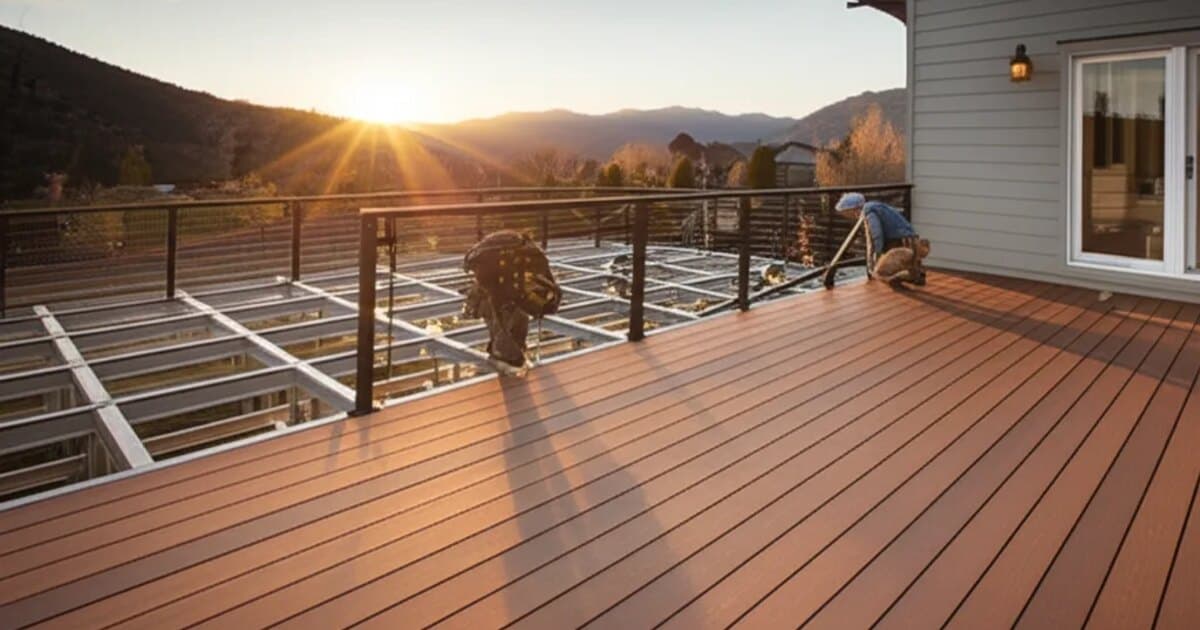
Material selection for Meridian decks is one of the most consequential decisions in the entire project, because the climate here is genuinely hard on outdoor building materials and the wrong choice creates ongoing maintenance costs that often exceed the initial savings. Pressure-treated lumber remains the lowest-cost option, but its lifecycle economics in Meridian are challenging. A dry, largely cloudless summer combined with seasonal moisture cycling degrades the surface quickly. Untreated pressure-treated lumber greys and checks within a couple of seasons. Cleaned and re-stained every two to three years, a pressure-treated deck can last 15–20 years. That recurring cleaning-and-staining cost is what composite buyers avoid. Composite decking is the dominant choice for Meridian deck projects today, and for good reason. Capped composite from Trex and cellular PVC from TimberTech's AZEK line are engineered for UV resistance, dimensional stability and mould resistance. Surface temperature is a real consideration either way: composite decking in direct Meridian summer sun gets hot enough to be uncomfortable underfoot. The mitigation is shade: a pergola or covered section over the primary seating area makes composite decks comfortable through August. For deck framing, aluminium framing systems are an increasingly specified alternative to pressure-treated lumber for the substructure. Aluminium does not rot, will not warp or shrink with moisture changes, and is dimensionally consistent in a way that pressure-treated lumber is not. It costs more up front, and that premium buys a substructure that outlasts the boards on top of it. Railing systems in Meridian HOA communities are frequently subject to HOA design review. Aluminum railings with cable infill or glass panels are popular in higher-end Meridian subdivisions but may require specific HOA approval. Traditional turned-baluster composite railing is the standard option in most Meridian neighborhoods and is generally pre-approved by HOA design guidelines. Fasteners are a detail that matters in Idaho's temperature extremes. Concealed clip fasteners (Trex Hideaway, EB-TY, and others) are worth the additional cost over surface screws because they eliminate the screw-head corrosion and deck-board cracking that occurs around surface fasteners after multiple freeze-thaw cycles.
Choosing the right materials is one of the most important decisions in any deck building project. The materials you select affect the look, durability, maintenance requirements, and overall cost of the finished project. Here is a detailed look at the most popular material options for deck building in Meridian and the Treasure Valley.
These are the most commonly used materials for deck building projects in Meridian. Each has different characteristics that affect cost, durability, and style:

Trex Composite Decking
$8–$16 per sq ft (material only)The most popular composite decking brand in the Treasure Valley. Made from recycled materials, available in multiple color lines (Enhance, Select, Transcend), fade- and scratch-resistant with a 25-year limited warranty.
Best for: Homeowners who want a low-maintenance, long-lasting deck surface with consistent color

TimberTech / AZEK Composite Decking
$10–$22 per sq ft (material only)Premium composite and PVC decking with realistic wood grain patterns, excellent fade and stain resistance, and industry-leading warranties up to 50 years. AZEK PVC boards offer superior moisture resistance.
Best for: Premium projects where appearance, longevity, and warranty are top priorities

Cedar Decking
$6–$12 per sq ft (material only)Natural western red cedar provides a warm, beautiful deck surface with natural resistance to rot and insects. Requires staining or sealing every 2-3 years to maintain its color and prevent graying.
Best for: Homeowners who prefer natural wood appearance and are willing to maintain it

Pressure-Treated Lumber (Framing and Economy Decking)
$3–$6 per sq ft (material only)Chemically treated pine or fir that resists rot and insect damage. Used for all deck framing (posts, beams, joists) and available as an economy decking surface option. Requires staining or sealing.
Best for: Deck framing, budget-conscious projects, and utility decks

Aluminum or Composite Railing Systems
$30–$80 per linear foot installedPre-engineered railing systems that provide clean lines, code-compliant baluster spacing, and low maintenance. Available in multiple colors and styles including cable rail, glass panel, and traditional baluster designs.
Best for: All deck railing applications — especially with composite decking for a unified low-maintenance design

Meridian shares Boise's semi-arid climate with hot summers, cold winters, and low humidity. The same material and construction considerations apply — UV resistance for exterior materials, freeze-thaw durability, and proper insulation.
Hot Summers (90-105°F)
Exterior materials and finishes must resist UV degradation. West-facing windows and walls get the most sun exposure. Proper insulation and HVAC sizing are critical for comfort.
Cold Winters (15-30°F)
Frost depth requirements affect foundation work for additions and ADUs. Plumbing in exterior walls and crawl spaces needs freeze protection.
Wind and Dust
Meridian's open terrain means more wind and dust exposure than central Boise. Exterior finish quality and window sealing matter for long-term durability.
Low Precipitation
Less rain means less exterior moisture exposure, which is favorable for siding and paint longevity. However, irrigation and ground moisture around foundations still require attention.
In Meridian, the combination of dry summers, cold winters, and variable humidity levels means that material selection should prioritize durability and climate resistance. We recommend choosing materials rated for the temperature extremes and moisture conditions typical of Ada County.
Material availability affects both timeline and cost. Standard materials are typically available within 1-2 weeks from local suppliers in Meridian. Custom or specialty materials may have lead times of 4-14 weeks. We recommend selecting materials early in the design phase to avoid schedule delays.
Typical lead times
- ● Standard/stock materials: 1-2 weeks
- ● Semi-custom orders: 3-6 weeks
- ● Full custom/specialty items: 6-14 weeks
- ● Imported or artisan materials: 8-16+ weeks
Local factors — Meridian's housing stock and typical construction eras, the climate conditions that drive material and scheduling choices, and permitting through City of Meridian Building Department — are covered in full on our Meridian page for this service, alongside 5 common project types.
Deck Builder in Meridian: housing stock, climate & permits →How long does a composite deck last?
Quality composite decking from brands like Trex, TimberTech, and AZEK typically lasts 25-50 years with minimal maintenance. The boards resist fading, staining, scratching, and moisture damage. The pressure-treated framing underneath should be inspected periodically.
Is composite or wood decking better?
Composite costs more upfront but requires virtually no maintenance and lasts 25-50 years. Wood costs less initially but requires staining or sealing every 2-3 years and typically lasts 15-25 years. Most Boise homeowners choose composite for the long-term value and low maintenance.
What is the most common remodel in Meridian?
Kitchen remodels are the most common project in Meridian. Most involve replacing builder-grade cabinets, upgrading to quartz countertops, adding a larger island, improving lighting, and installing new flooring. Many also include opening the kitchen to the living area.
Planning deck building in Meridian?
Get expert guidance and a free estimate for your deck builder project in Meridian, ID.
Get Your Free Estimate