
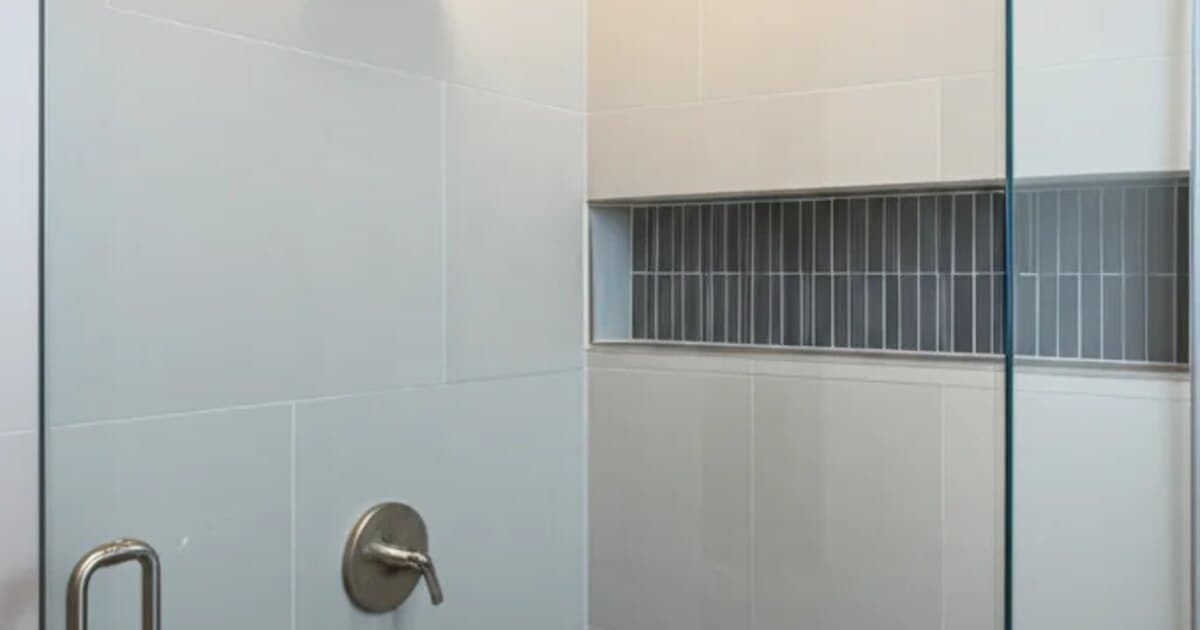
Shower Remodeling Services
Upgrade your shower to a modern, spa-inspired space. Iron Crest Remodel specializes in custom tile showers, frameless glass enclosures, multi-head shower systems, and accessible shower designs for Boise homeowners.
- Custom tile shower builds (porcelain, natural stone, mosaic)
- Frameless glass enclosure installation
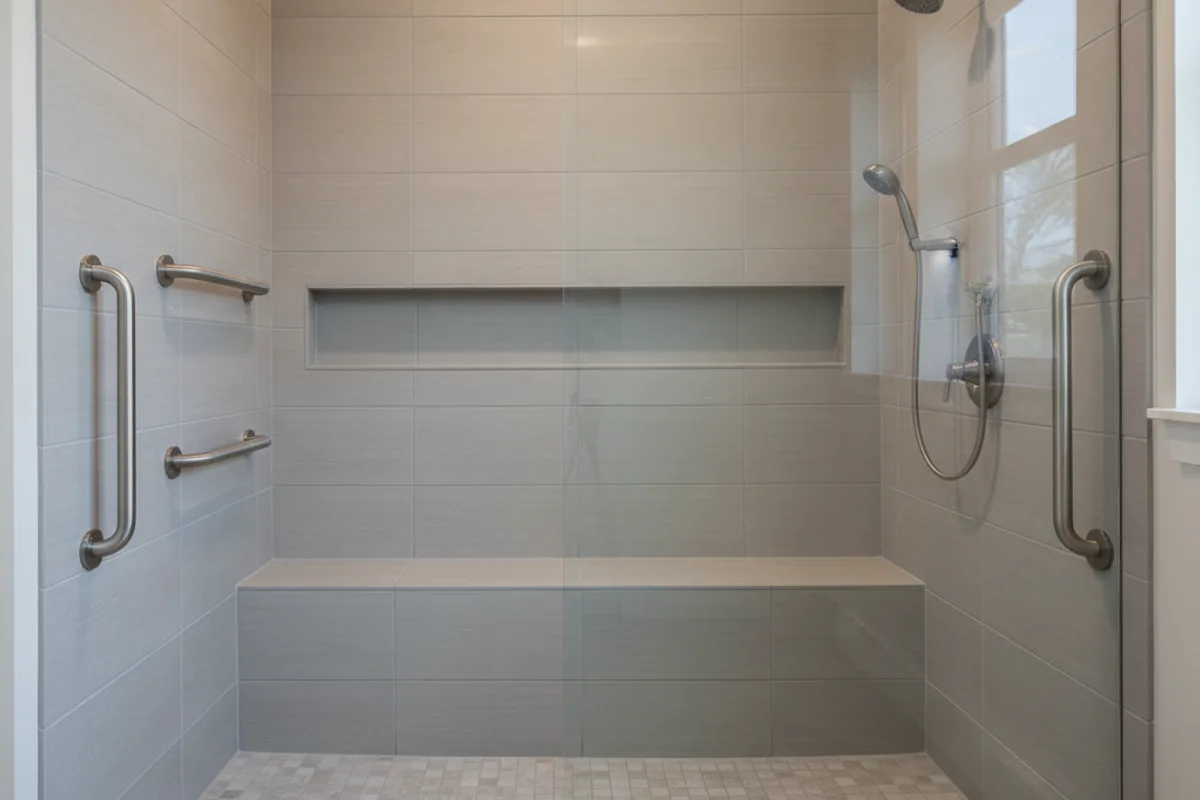
- Rainfall and handheld showerhead systems
- Built-in bench seats and corner shelves
- Recessed niches for storage
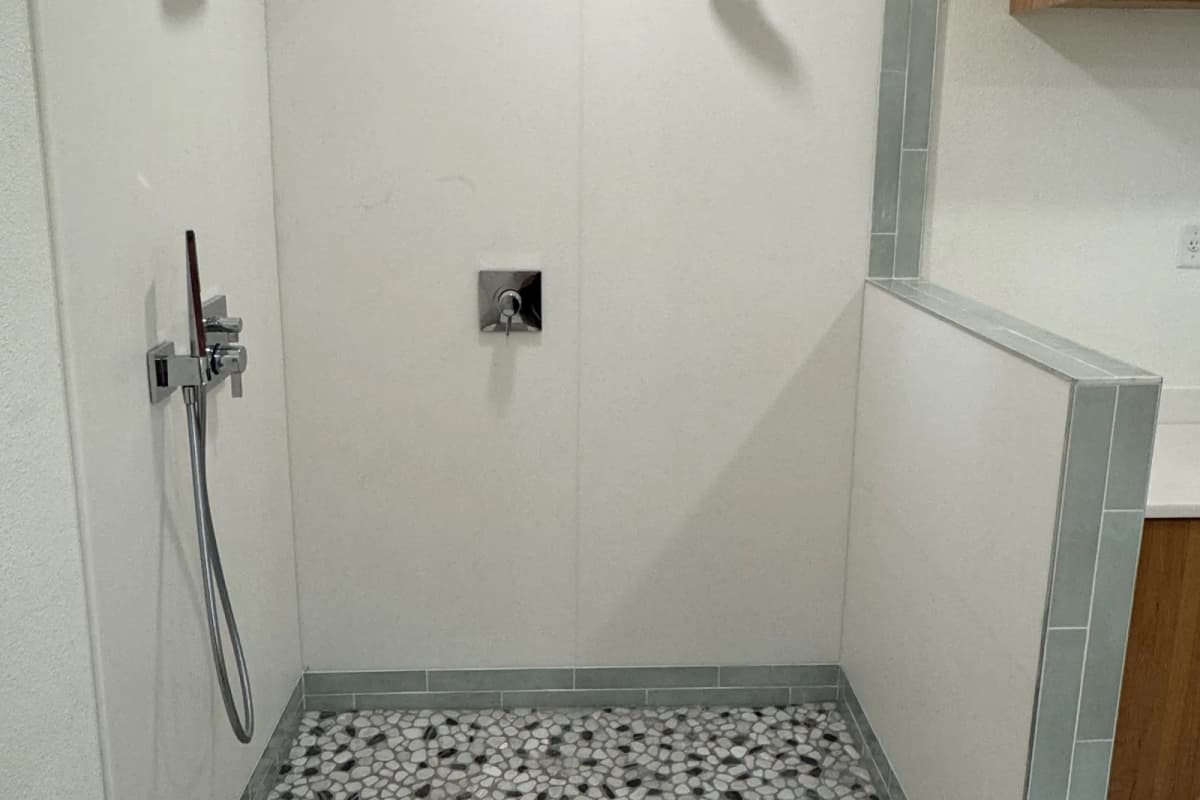
- Linear drain installation
- Curb-less/zero-entry shower builds
- Shower lighting (recessed LED, niche lighting)
- Steam shower systems
- Schluter waterproofing systems
Timeline
1 – 3 weeks
Real shower remodeling projects — see the finished results, project details, and transformation stories.
Shower Design Consultation
We assess your current shower space, discuss tile choices, showerhead preferences, glass options, and accessibility needs.
Material & Fixture Selection
Select tile, glass type, showerheads, drains, and hardware from our material partners. We provide samples and design mockups.
Demolition & Waterproofing
Old shower materials are removed. We install Schluter or equivalent waterproofing membrane, pre-slope the shower floor, and prepare for tile.
Tile & Glass Installation
Wall and floor tile installed with precision, grout sealed, glass enclosure measured and installed. All plumbing connections completed and tested.

See Your Remodel Before You Build.
Upload a few photos of your kitchen, bathroom, flooring, or exterior and get AI-generated concept visuals tailored to your space, style, and materials — free, no obligation, in about five minutes. Then request a real estimate from our Idaho registered Boise team.
Free concept preview · No credit card · Licensed Idaho contractor
How much does a shower remodel cost?
Shower remodels in Boise cost $8,500 to $35,000. A standard tile shower starts around $8,500, most projects land near $17,500, and a luxury build with frameless glass, multiple showerheads, and premium tile reaches $35,000.
How long does a shower remodel take?
A typical shower remodel takes 1-3 weeks depending on tile complexity, glass lead time, and whether plumbing needs to be relocated.
What is the best tile for a shower in Idaho?
Large-format porcelain tile is our top recommendation — it minimizes grout lines, resists moisture, and is easy to maintain. Natural stone (marble, travertine) adds luxury but requires sealing. Glass mosaic works well for accent walls and niches.
Plan your shower remodeling project with our in-depth guides.
Explore our in-depth guides to understand shower remodeling costs, timelines, and planning details for cities across the Treasure Valley.
See detailed shower remodeling information specific to your city, including local permit requirements, housing stock insights, and neighborhood-level recommendations.
Talk to a real project manager
Have Questions? Call Now for a Free In-Home Consultation.
Mon–Fri 7 AM–6 PM · Idaho registered & insured · No obligation
Russ S. — Project Manager
Russ S. — Project Manager
Ready to Start Your Remodeling Project?
Get a free, no-obligation estimate from Boise's trusted remodeling experts. Licensed, insured, and ready to build.
From tile patterns to waterproofing systems and fixture upgrades, explore our in-depth shower remodeling guides for Boise homeowners.

One of the first decisions in a shower remodel is whether to keep a tub/shower combination or convert to a dedicated walk-in shower. The right choice depends on which bathroom you're remodeling, your household composition, and how the decision affects your home's resale value in the Boise market.
When a Walk-In Shower Makes Sense
Walk-in showers are the bathroom feature Boise clients ask us for most often. They make the strongest impact in master bathrooms and en-suite baths, where homeowners prioritize daily comfort over bathing flexibility. A walk-in shower with a bench seat, handheld showerhead, and frameless glass enclosure transforms a dated master bath into a modern, spa-like space. Walk-in showers are also the preferred solution for aging-in-place remodels — they eliminate the step-over hazard of a tub and can be built with zero-threshold entry for wheelchair or walker access.
When to Keep a Tub
Every home should retain at least one bathtub, and in most cases that tub belongs in a secondary or guest bathroom. Families with young children need a tub for bathing, and real estate agents in Boise consistently report that homes without any bathtub are harder to sell to families with kids. If your home has only one full bathroom, we strongly recommend keeping a tub/shower combo unless aging-in-place is the primary driver. In homes with two or more full baths, converting the master bath tub to a walk-in shower while keeping a tub in the secondary bath is the ideal configuration for both daily use and resale value.
Boise Market Considerations
The Boise housing market trends toward open, modern bathrooms. Buyers in the $350,000–$600,000+ range — the heart of the Boise market — expect a walk-in shower in the master bath. Large soaking tubs are falling out of favor in master suites because they consume floor space and are rarely used. If your master bath currently has a separate tub and shower stall, reclaiming the tub footprint to build a larger walk-in shower is one of the highest-ROI bathroom improvements you can make. Our tub-to-shower conversion service covers this process in detail.

Waterproofing is the most critical step in any shower remodel. Tile and grout are not waterproof — they are water-resistant at best. Without a properly installed waterproofing membrane behind the tile, water will eventually reach the framing, cause mold growth, rot structural members, and require a complete tear-out. We see failed waterproofing more than any other shower defect in Boise-area homes, particularly in DIY installations and work done by handymen who skipped this step.
Schluter Kerdi System
Schluter Kerdi is a polyethylene sheet membrane that bonds directly to the substrate with unmodified thin-set mortar. It provides a continuous waterproof barrier on walls and floors, and tile is set directly over the membrane with unmodified thin-set. The Kerdi system includes pre-formed inside corners, outside corners, pipe collars, and mixing valve seals that create watertight transitions at every penetration. This is our primary waterproofing method for shower walls because it is fast to install, highly reliable, and backed by the Schluter warranty when installed as a complete system. The Kerdi-Board product also serves as both the substrate and the waterproofing layer, eliminating the need for separate cement board.
Liquid-Applied Membranes (RedGard, Hydroban, AquaDefense)
Liquid-applied waterproofing membranes are roller- or trowel-applied coatings that cure into a flexible, waterproof film. RedGard (by Custom Building Products), Hydroban (by Laticrete), and AquaDefense (by Mapei) are the most common. They require two coats applied to cement board, with fabric reinforcement at seams and corners. Liquid membranes are effective when applied to the correct mil thickness (typically 30–60 mils wet) and allowed to fully cure before tiling. The main risk is inconsistent application — thin spots and missed areas compromise the entire waterproof envelope. We use liquid membranes on shower floors (over mud beds or foam pans) and as a secondary barrier in high-risk areas.
Common Waterproofing Failures
- No waterproofing installed at all — the most common failure we see in Boise-area showers built before 2005
- Waterproofing membrane not carried up the wall at least 6 inches above the shower curb or to the full height of the wet area
- Missed penetrations: valve openings, showerhead stub-outs, and niche edges left unsealed
- Using modified thin-set under Kerdi membrane (manufacturer requires unmodified thin-set for proper bond)
- Insufficient liquid membrane thickness — one thin coat instead of two proper coats at the required mil thickness
- No pre-slope under the shower pan liner, allowing water to pool rather than drain
Boise Inspector Requirements
When a plumbing permit is pulled for a shower remodel in Boise, the City requires a plumbing rough-in inspection before walls are closed. The inspector verifies drain connections, water supply lines, and venting. While the City does not currently mandate a specific waterproofing method, the International Residential Code (IRC) Section P2709.2 requires that “shower receptors shall be lined and made watertight.” We waterproof every shower we build regardless of permit scope because it is the single most important quality step in the entire project. Learn more in our guide to bathroom tile and waterproofing systems.

Tile is where your shower remodel becomes personal. The tile you select determines the visual impact, maintenance requirements, and long-term durability of the finished shower. Here are the four primary tile categories we install in Boise shower remodels, with honest assessments of each.
Large-Format Porcelain
Large-format porcelain tile (12×24, 24×24, or larger) is our most recommended shower wall material. Porcelain is nearly impervious to water (less than 0.5% absorption rate), extremely durable, and available in patterns that convincingly replicate marble, travertine, concrete, and wood. Fewer grout joints mean less grout to clean and maintain, which is a significant advantage in Boise's hard-water environment where mineral deposits accumulate in grout lines. For shower floors, we use smaller porcelain mosaics (2×2 or hexagonal) to achieve the slope to drain and provide adequate slip resistance.
Ceramic Tile
Ceramic tile is a budget-friendly option that works well on shower walls. It is softer and more porous than porcelain (3%–7% absorption rate), so it is not ideal for shower floors in heavy-use showers. Ceramic is available in a wide variety of colors, sizes, and patterns, including subway tile, which remains one of the most popular shower wall treatments. The lower cost of ceramic tile — typically $2–$8 per square foot compared to $5–$15 for porcelain — makes it a practical choice for guest bathrooms and secondary showers where the budget is tighter.
Natural Stone (Marble, Travertine, Slate)
Natural stone creates a luxurious, one-of-a-kind shower. Marble is the most popular natural stone for showers in the Boise market, followed by travertine and slate. However, natural stone requires more care than porcelain or ceramic: it must be sealed before grouting and re-sealed annually, it can etch from acidic cleaners, and Boise's hard water will leave visible mineral deposits on unsealed stone surfaces. We recommend natural stone for homeowners who appreciate its beauty and are committed to ongoing maintenance. Honed finishes perform better in showers than polished finishes because they provide better slip resistance and show water spots less readily.
Glass Mosaic
Glass mosaic tile is typically used as an accent rather than a full shower surface. It adds depth, color, and visual interest to niches, accent bands, and feature walls. Glass tile is non-porous and resists staining, but it requires a white thin-set mortar (the adhesive shows through translucent glass) and careful installation to avoid visible lippage. We commonly pair glass mosaic accent strips with large-format porcelain walls for a high-impact design that balances aesthetics with low maintenance.
Slip Resistance and Grout Selection
Shower floor tile must meet slip-resistance standards. We select floor tile with a Dynamic Coefficient of Friction (DCOF) rating of 0.42 or higher per ANSI A326.3, the standard for wet areas. Matte and textured finishes outperform polished surfaces in wet conditions. For grout, we recommend epoxy grout on shower floors and in high-moisture zones. Epoxy grout is non-porous, stain-resistant, and does not require sealing — a significant advantage over traditional cement-based grout, which absorbs water and stains over time, especially in Boise's hard-water conditions. On shower walls, sanded grout with an annual sealer application is an acceptable and more cost-effective option.
The shower entry type affects accessibility, water containment, aesthetics, and construction complexity. Understanding the differences helps you choose the right approach for your bathroom and your household's needs.
Standard Curb (4–6 inches)
A standard shower curb is a raised threshold — typically 4 to 6 inches high — that contains water inside the shower area. This is the most common and least expensive entry type. The curb is built from stacked cement board or a pre-formed foam curb, waterproofed, and tiled to match the shower walls. Standard curbs provide reliable water containment and work with all drain configurations, including center drains. They are the practical choice when the shower is enclosed on three sides by walls and a glass door or curtain covers the entry.
Low-Threshold Curb (1–2 inches)
A low-threshold curb reduces the step-over height to 1–2 inches, making the shower easier to enter while still providing a physical water barrier. This is a practical middle ground for homeowners who want improved accessibility without the complexity and cost of a fully curbless build. Low-threshold entries work well with hinged or sliding glass doors and are compatible with standard drain configurations. They are especially popular in master bath remodels where the homeowner wants a modern look with reliable water containment.
Curbless / Zero-Threshold
A curbless shower has no step at all — the bathroom floor transitions seamlessly into the shower floor. This is the gold standard for aging-in-place design, ADA-compliant bathrooms, and contemporary open-concept bathrooms. Curbless showers require the shower floor to be recessed below the surrounding bathroom floor so that water slopes toward the drain rather than flowing out into the room. This means modifying the subfloor structure to create the necessary depth for the pre-slope, waterproof membrane, and tile. On slab foundations common in some Boise-area homes, the concrete may need to be channeled to create the recess.
Drain Options: Linear vs Center
Center drains are the traditional choice and work with any entry type. The shower floor must slope from all four sides toward the center drain, which limits tile format on the floor to smaller pieces (typically 2×2 or smaller mosaics). Linear drains are installed along one wall or at the shower entry and allow the floor to slope in a single direction, enabling the use of larger floor tiles and creating a sleeker, more contemporary look. Linear drains are the preferred choice for curbless showers because they can be positioned at the shower entry to act as a water barrier. We install Schluter Kerdi-Line, Infinity Drain, and QuickDrain linear drain systems, all of which integrate with bonded waterproofing membranes. Read more in our aging-in-place accessibility guide.
Pre-Sloped Shower Systems
Pre-sloped foam shower pan systems from Schluter (Kerdi-Shower-ST/T) and Laticrete (Hydro Ban Pre-Sloped Shower Pan) eliminate the need for a hand-formed mortar bed on the shower floor. These factory-made foam panels are engineered to the correct slope (typically 1/4 inch per foot to the drain) and integrate directly with the manufacturer's waterproofing membrane. Pre-sloped systems reduce installation time, eliminate the risk of an incorrectly sloped mud bed, and are lighter than traditional mortar — an important advantage in upper-floor shower installations where weight matters.
Shower fixtures affect both the daily shower experience and the long-term reliability of your remodel. The valve system you choose determines water temperature control, the number of outlets you can run simultaneously, and the complexity of the rough-in plumbing.
Pressure-Balance vs Thermostatic Valves
Pressure-balance valves are standard in most residential showers. They maintain a consistent ratio of hot and cold water so the temperature doesn't swing when someone flushes a toilet or runs a faucet elsewhere in the house. They have a single handle that controls both volume and temperature simultaneously. Thermostatic valves are the premium option — they maintain a precise set temperature regardless of pressure changes and use separate controls for temperature and volume. This allows you to set your preferred temperature once and simply turn the water on and off at full flow. Thermostatic valves are the right choice for multi-outlet showers (rain head plus handheld plus body sprays) because they maintain consistent temperature across all outlets. We install Delta, Kohler, and Moen thermostatic systems with proven track records for parts availability and long-term reliability.
Rain Showerheads
Ceiling-mounted or arm-mounted rain showerheads (8–12 inch diameter) deliver a wide, gentle water pattern that simulates rainfall. They create a luxurious shower experience but have lower water pressure per square inch than standard showerheads. For the best performance, we recommend pairing a rain head with a handheld showerhead on a slide bar for rinsing and targeted water flow. Rain heads should be centered in the shower — if mounted off-center, water cascades away from the user. Ceiling-mounted rain heads require in-wall or in-ceiling plumbing run during the rough-in phase, so this decision must be made before tile installation begins.
Handheld Showerheads and Slide Bars
A handheld showerhead on a slide bar is the single most versatile fixture in a shower. It adjusts in height for users of different statures, makes rinsing and cleaning easy, and is essential for aging-in-place bathrooms where seated showering is anticipated. We recommend a 30-inch slide bar mounted vertically with the hose connection at the bottom. Handheld units with a 60–72-inch flexible hose provide the greatest reach. Most handheld showerheads also include a fixed-mount bracket at the top of the slide bar for use as a conventional showerhead.
Body Sprays
Body sprays are wall-mounted jets installed at various heights to deliver targeted water across the body. A typical installation uses 4–6 body sprays arranged in two vertical columns. Body spray systems require a thermostatic valve with sufficient volume capacity (typically a 3/4-inch valve system rather than the standard 1/2-inch) to supply adequate water pressure to all outlets simultaneously. They also require significantly more rough-in plumbing — each spray needs its own dedicated supply line. Body sprays are a premium upgrade that adds $1,500–$4,000 to the project depending on the number of sprays and the valve system required.
Brand Recommendations and Rough-In Planning
We install Delta, Kohler, and Moen fixtures because they offer the widest selection of trim styles, have established distribution networks for replacement parts, and provide proven valve cartridge reliability. This matters: when a valve cartridge eventually fails, you need to be able to get a replacement without tearing out tile. All three brands offer universal rough-in valves that accept multiple trim styles, allowing you to update the look of your shower handles and plates in the future without touching the plumbing behind the wall. The rough-in valve must be installed before the waterproofing membrane goes on, so fixture selection — or at minimum, brand selection and valve type — must be finalized before demolition begins.
Hard Water Impact on Showers
Boise's drinking water averages about 6 grains per gallon of hardness — moderately hard, with well-fed zones testing “hard” to “very hard.” In a shower environment, hard water creates white mineral deposits on glass enclosures, fixture chrome, tile surfaces, and grout. Without regular cleaning, these deposits etch glass permanently. We recommend protective glass coatings (EnduroShield, Diamon-Fusion, or ShowerGuard factory-applied coating) that create a hydrophobic surface and dramatically reduce cleaning frequency. For fixtures, brushed nickel and matte black finishes mask water spots far better than polished chrome. A whole-house water softener is the most effective long-term solution — it protects all fixtures and makes shower cleaning significantly easier.
Common Issues in Boise-Era Homes
Shower conditions vary by the era your home was built. Homes built in the 1960s and 1970s in Boise's Bench and Vista neighborhoods commonly have one-piece fiberglass or acrylic shower/tub units with galvanized steel drain and supply piping. The galvanized pipes are often corroded or partially blocked after 50+ years of hard-water exposure. Homes from the 1980s and 1990s may have tile showers installed over greenboard (moisture-resistant drywall) instead of cement board — greenboard is no longer considered an acceptable substrate for wet areas. Homes from the 2000s typically have better substrates but may lack proper waterproofing membranes behind the tile. During demolition, we assess the condition of the framing, subfloor, plumbing, and existing waterproofing and address any deficiencies before the new shower is built.
Permit and Inspection Requirements
The City of Boise requires a plumbing permit for any shower remodel that involves altering plumbing rough-in: moving a drain, relocating or adding supply lines, or changing valve positions. A cosmetic re-tile over existing, functional plumbing does not require a permit. When a permit is required, the inspection process typically includes a plumbing rough-in inspection (before walls are closed) and a final plumbing inspection (after fixtures are installed and tested). If the shower remodel involves electrical work — such as adding recessed lighting, a vent fan, or heated flooring — a separate electrical permit is required. We handle all permit applications and coordinate inspection scheduling as part of the project. More details are available in our Boise permit and inspection guide.
Ventilation and Moisture Control
While Boise's climate is semi-arid, the inside of a shower generates significant humidity. A properly sized exhaust fan is essential in every bathroom with a shower. We recommend a minimum 80 CFM fan (110 CFM for larger bathrooms or if the toilet is in the same room) with a timer or humidity sensor so it runs for at least 20 minutes after showering. Inadequate ventilation leads to mold growth in grout joints, behind tile, and on ceiling surfaces — problems that are preventable with the right fan and ductwork. If your existing bathroom has no exhaust fan or the ductwork terminates in the attic rather than outside, we correct this as part of the shower remodel scope.
Shower remodel costs in the Boise area vary based on the scope of work, tile selection, glass type, and fixture quality. Below are representative cost ranges for the three most common shower remodel types we build, broken down by line item.
| Line Item | Basic Tub-to-Shower | Mid-Range Walk-In | Luxury Spa Shower |
|---|---|---|---|
| Demolition & disposal | $500–$1,000 | $800–$1,500 | $1,000–$2,000 |
| Plumbing rough-in | $600–$1,200 | $1,000–$2,000 | $2,000–$4,000 |
| Waterproofing system | $400–$800 | $600–$1,200 | $800–$1,500 |
| Tile (material + labor) | $1,500–$3,000 | $2,500–$5,000 | $5,000–$10,000 |
| Glass enclosure | $800–$1,500 | $1,500–$3,000 | $2,500–$5,000 |
| Fixtures (valve, heads, trim) | $300–$600 | $600–$1,500 | $1,500–$4,000 |
| Bench seat / niche | $200–$400 | $400–$800 | $600–$1,200 |
| Electrical (fan, lighting) | $200–$500 | $400–$800 | $600–$1,500 |
| Permits & inspection | $150–$300 | $150–$300 | $200–$400 |
| Estimated Total | $4,650–$9,300 | $7,950–$16,100 | $14,200–$29,600 |
These ranges represent typical Boise-area pricing as of 2025–2026. Actual costs depend on your tile selection, glass type, fixture tier, and whether plumbing or structural modifications are needed. We recommend budgeting a 10–15% contingency for unexpected conditions discovered during demolition, particularly in homes built before 1990 where hidden water damage, outdated plumbing, or inadequate framing may need to be addressed. Every Iron Crest Remodel project receives a detailed, line-item estimate before work begins.
Explore our in-depth guides to plan your Boise shower remodel with confidence.
How long does a shower remodel take in Boise?
A standard shower remodel takes 1–3 weeks depending on tile complexity, waterproofing method, and glass lead time. A simple re-tile with existing plumbing can be completed in 5–7 business days, while a full gut-and-rebuild with custom tile, a curbless threshold, frameless glass, and relocated plumbing typically takes 2–3 weeks. Frameless glass enclosures require field measurements after tile is complete, adding 1–2 weeks of lead time for fabrication.
Do I need a permit for a shower remodel in Boise?
In Boise, a building permit is required whenever you alter plumbing rough-in (moving the drain, adding or relocating supply lines, or changing valve positions). A cosmetic re-tile over existing waterproofing with no plumbing changes typically does not require a permit. However, if you are converting a tub to a shower, adding a curbless entry, or installing a new shower where one did not exist, you will need a plumbing permit and possibly a building permit. The City of Boise Planning and Development Services office processes residential plumbing permits, and inspections are required before walls are closed.
Can I install a curbless shower on an upper floor?
Yes, but it requires careful planning. Curbless showers on upper floors need a recessed shower pan or a pre-sloped mortar bed set below the finished floor level so the shower floor sits flush with or slightly below the bathroom floor. This often means sistering or modifying floor joists to create the necessary depth for the drain and slope. A linear drain at the shower entry provides the most reliable water containment. We also install a secondary waterproofing layer beneath the shower area as added protection against leaks reaching the ceiling below. It is more complex and costly than a ground-floor curbless install, but it is absolutely achievable when engineered correctly.
What are my options for a glass shower enclosure?
The three main options are frameless, semi-frameless, and framed enclosures. Frameless enclosures use 3/8-inch or 1/2-inch tempered glass with minimal hardware and no metal frame — they offer the cleanest look and are the most popular choice in Boise. Semi-frameless enclosures frame the door but leave the fixed panels unframed, offering a balance of clean aesthetics and lower cost. Framed enclosures use aluminum channels around all edges and are the most affordable option but create a more dated appearance. All three options are available in clear, ultra-clear (low-iron), frosted, and rain glass. We recommend applying a protective glass coating (such as EnduroShield or Diamon-Fusion) to reduce hard water spotting — a significant maintenance factor in Boise.
The following government agencies, industry organizations, and official resources provide additional information relevant to your remodeling project.
Research your shower remodeling project with our in-depth Boise-area guides.
Researched reports on the specific shower remodeling questions Boise homeowners run into — hard water, old housing stock, local code, and material performance in the Treasure Valley climate.
Browse completed shower remodeling projects from across the Treasure Valley. See real results, project details, and transformation stories.
Shower remodels pair naturally with full bathroom renovations and tile work. Consider bundling for a cohesive result.
We provide shower remodeling to homeowners across the Treasure Valley and southwest Idaho. Each city has its own dedicated page with local permitting, climate, and project detail — and each county hub covers the surrounding communities we also serve.
Ready to Start Your Remodeling Project?
Get a free, no-obligation estimate from Boise's trusted remodeling experts. Licensed, insured, and ready to build.