

Shower Remodeling in Boise, ID: Costs, Ideas & Options
From tub-to-shower conversions to luxury walk-in designs with frameless glass, rain showerheads, and built-in niches — we handle every detail from waterproofing to finish hardware.
Quick answer
Iron Crest Remodeling Group LLC provides shower remodeling in Boise, ID. Most Boise shower remodeling projects cost $8,500 – $35,000. Boise shower remodel costs reflect the scope complexity that the city's diverse housing stock creates. A basic tub-to-shower conversion in a Bench ranch home — removing the original tub, installing a proper waterproofed shower pan with Schluter KERDI or similar, tiling walls and floor, and installing a basic frameless or semi-frameless enclosure — typically runs $8,500–$14,000.
Boise homeowners are transforming their bathrooms at a remarkable rate, and the driver is almost always the same: the original bathtub-centric bathroom that came standard in 1950s through 1990s construction no longer reflects how Boise families actually live. Walk-in showers with large-format tile, frameless glass enclosures, and built-in niches are replacing tub surrounds across every neighborhood — from Craftsman bungalows in the North End to ranch homes on the Bench to Harris Ranch contemporaries. Iron Crest Remodel brings the full technical stack to Boise shower remodels: Schluter Systems waterproofing, precision tile installation, and frameless glass fabrication, all executed with the attention to detail that protects the investment and keeps water out of the framing behind the tile.
Design and build the shower you have always wanted — from custom tile work to barrier-free walk-ins.
A shower remodel transforms one of the most-used spaces in your home — from a basic, builder-grade enclosure into a custom-designed space that fits your daily routine, aesthetic preferences, and long-term needs. Shower remodeling involves demolition of the existing shower or tub, plumbing rough-in for new drain and supply locations, structural preparation, waterproofing membrane installation, tile or panel application, glass enclosure installation, and fixture mounting. In the Treasure Valley, many homes built in the 1990s and 2000s have small, dark, builder-grade showers with fiberglass surrounds, poor drainage, and inadequate waterproofing that leads to hidden water damage over time. A properly planned shower remodel addresses all of these issues while creating a space that is both beautiful and built to last. The most critical element of any shower build is waterproofing — every surface that receives water must be properly membraned, sealed, and sloped to prevent moisture from reaching the framing and subfloor behind the finished surface.
Boise homeowners pursue shower remodeling for a variety of reasons. Here are the most common situations we see:
- ✓Homeowners who want to convert an unused bathtub into a spacious walk-in shower
- ✓Families who need a larger, more functional shower with better water pressure, storage, and lighting
- ✓Aging-in-place homeowners who need a barrier-free, zero-threshold shower with grab bars and bench seating
- ✓Anyone with a dated or failing shower that has grout problems, leaks, mold, or inadequate waterproofing
- ✓Homeowners who want a spa-like shower experience with rain showerheads, body sprays, and custom tile design
Not every shower remodeling project is the same. Here are the most common project types we complete in Boise:

Tub-to-Shower Conversion
Remove an existing bathtub and replace it with a custom walk-in shower. Includes new drain placement, curb or zero-threshold entry construction, waterproofing, tile installation, glass enclosure, and updated fixtures.

Walk-In Shower Remodel
Redesign and rebuild an existing shower with new tile, fixtures, glass enclosure, niches, and lighting. May include expanding the shower footprint, adding a bench, or changing the layout.

Barrier-Free / ADA Accessible Shower
Design and build a zero-threshold shower with curbless entry, linear drain, anti-slip tile flooring, grab bars, fold-down bench seating, and handheld showerhead for accessible daily use.

Luxury Shower Upgrade
High-end shower build with premium tile, rain showerhead, body sprays, thermostatic valve system, LED lighting, large-format niches, and frameless glass enclosure. Designed for a spa-like daily experience.

Shower Panel or Solid Surface Installation
Install grout-free solid surface shower panels for a clean, low-maintenance alternative to tile. Ideal for homeowners who want a fresh shower without the upkeep of grout cleaning and sealing.

Boise has over a century of residential construction, from 1900s Craftsman homes in the North End to 2020s new construction in West Boise and Southeast Boise. This diversity means remodeling contractors encounter a wide range of structural systems, plumbing types, electrical standards, and finish materials.
Pre-1940 (North End, Downtown)
Pre-war North End and downtown homes are typically the most expensive to remodel in Boise. Budget for replacing galvanized supply lines and any remaining knob-and-tube wiring, plus lath-and-plaster demolition and the historically sensitive finishes these homes call for — costs that push projects toward the high end of the range.
1940s–1960s (Bench, Central Boise)
Bench and central-Boise ranches and split-levels sit in the mid-range for remodel budgets. Plan for an electrical panel upgrade — 100-amp service is common — while the existing copper plumbing and solid hardwood floors often stay in place and hold costs down.
1970s–1990s (West Boise, South Boise)
The 1970s–1990s subdivision homes of West and South Boise are the most budget-predictable to remodel. Drywall construction and accessible copper or early-PEX plumbing keep surprises low, so spending concentrates on finishes rather than system repairs.
2000s–present (SE Boise, Harris Ranch, West Boise)
Homes from the 2000s on in SE Boise, Harris Ranch, and West Boise need the least structural investment. PEX plumbing and 200-amp service are already in place, so the budget goes almost entirely toward the higher-end finishes and fixtures buyers in these neighborhoods expect.
Common issues in Boise homes
- •Galvanized plumbing in pre-1970 homes causing low water pressure and corrosion
- •Insufficient electrical capacity (100-amp panels) for modern kitchen and bathroom demands
- •Poor or missing bathroom ventilation leading to moisture and mold issues
- •Closed-off floor plans in 1970s-1990s homes that homeowners want opened up
- •Cracked or settling foundations in some older Bench and North End homes
- •Builder-grade materials reaching end of life in 1990s-2000s subdivision homes

Material selection affects the look, durability, and cost of your shower remodeling. Here are the most popular options we install in Boise:

Porcelain Tile (Walls and Floor)
$8–$25 per sq ft installedThe most popular shower surface material. Dense, water-resistant, available in hundreds of styles including large-format, wood-look, stone-look, and mosaic options. Large-format tiles (12x24 and up) create a modern, seamless look.
Best for: Shower walls, floors, niches, and accent features

Natural Stone Tile (Marble, Travertine)
$15–$50+ per sq ft installedPremium tile option that delivers a luxurious, one-of-a-kind look. Marble hexagon floors, marble slab walls, and travertine accents create a spa-like atmosphere. Requires sealing and careful maintenance.
Best for: Feature walls, luxury shower floors, accent strips, and niche interiors

Waterproofing Membrane (Schluter Kerdi / Laticrete)
$1,500–$3,500 per shower (material and labor)Bonded waterproofing membrane system applied to every shower surface. Available as sheet membrane, liquid-applied membrane, or foam board panels. The single most critical material in any shower build — it prevents water from reaching the structure.
Best for: Every shower floor, wall, curb, niche, and bench surface — no exceptions

Frameless Glass Enclosure
$1,200–$3,500 installedCustom-measured and fabricated clear tempered glass panels and door with minimal hardware for a clean, modern look. Available in 3/8-inch and 1/2-inch glass thicknesses with various hardware finishes.
Best for: Walk-in showers where visual openness and modern design are priorities

Shower Valve and Fixture Set
$300–$1,500 per setPressure-balancing or thermostatic shower valve with trim, showerhead, and optional handheld sprayer. Quality fixtures from Moen, Delta, Kohler, or Grohe provide reliable temperature control and water delivery.
Best for: Every shower — the valve is the functional heart of the shower system

Here is how a typical shower remodeling project works from first contact to final walkthrough:
Shower Design Consultation
We visit your bathroom, evaluate the existing shower or tub space, discuss your daily routine and wish list, and review layout options, material choices, and fixture selections. You receive a design concept and detailed estimate.
Design Finalization and Material Selection
We finalize the shower layout, tile design, niche locations, fixture selections, glass enclosure style, and any accessibility features. Materials are ordered and lead times are confirmed. A fixed-price contract is prepared.
Demolition and Plumbing Rough-In
The existing shower or tub is demolished, and we inspect the framing, subfloor, and drain condition. New plumbing rough-in is completed for the reconfigured drain location, supply lines, and valve placement. Framing modifications for niches, benches, and shower size are completed.
Waterproofing
This is the most critical phase. We apply a bonded waterproofing membrane system (Schluter Kerdi, Laticrete Hydro Ban, or equivalent) to every shower surface — floor, walls, curb, niches, and bench. The shower pan is sloped to the drain and tested for leak-proof integrity before tile begins.
Tile Installation
Floor tile is installed first with proper slope to drain, followed by wall tile, niche tile, bench tile, and any accent or feature tile. Grout is applied, cleaned, and sealed. Large-format tiles, mosaics, and accent patterns are laid out precisely per the design plan.
Glass, Fixtures, and Hardware Installation
The glass enclosure (frameless, semi-frameless, or framed) is measured, fabricated, and installed. Showerhead, valve trim, diverter, handheld sprayer, grab bars, towel hooks, and all hardware are mounted and tested.
Final Testing and Walkthrough
We run the shower for an extended test to verify drainage, water pressure, valve operation, and leak-free performance. Grout sealant is applied, and a final walkthrough ensures every detail meets expectations.
Here is what to expect for project duration when planning shower remodeling in Boise:
| Phase | Duration | Details |
|---|---|---|
| Design and Material Selection | 1–3 weeks | Consultation, design development, tile and fixture selection, and contract finalization. Material lead times for specialty tile and glass can add 2-4 weeks. |
| Demolition and Plumbing Rough-In | 2–3 days | Remove existing shower or tub, inspect framing and subfloor, complete plumbing rough-in for new drain and supply locations, and frame any niches or benches. |
| Waterproofing | 1–2 days | Apply waterproofing membrane to all shower surfaces. Test the shower pan for leak-proof performance. This phase must be completed and verified before tile begins. |
| Tile Installation | 3–6 days | Floor tile, wall tile, niche tile, and accent tile installation. Grouting and sealing. This is typically the longest phase of active construction. Complex designs take longer. |
| Glass and Fixture Installation | 1–2 days | Glass enclosure measurement, fabrication (if not pre-ordered), and installation. Showerhead, valve trim, hardware, and accessories are mounted and connected. |
| Final Testing and Walkthrough | 1 day | Extended shower test, drainage verification, grout sealing, and homeowner walkthrough to confirm quality and function. |
Boise range: $8,500 – $35,000
Most Boise projects: $17,500
Boise shower remodel costs reflect the scope complexity that the city's diverse housing stock creates. A basic tub-to-shower conversion in a Bench ranch home — removing the original tub, installing a proper waterproofed shower pan with Schluter KERDI or similar, tiling walls and floor, and installing a basic frameless or semi-frameless enclosure — typically runs $8,500–$14,000. A mid-range remodel with large-format tile (12x24 or 24x48), a recessed niche, frameless glass enclosure, built-in bench, and quality fixtures runs $14,000–$22,000. High-end projects in Harris Ranch or North End homes with premium materials — book-matched stone-look porcelain, custom frameless glass enclosures, linear drains, steam shower systems, or full bathroom gut-remodel scope — can reach $25,000–$35,000+. Substrate remediation work discovered after demolition — rot, mold, compromised framing — is quoted separately and is more common in pre-1980 Boise homes than homeowners typically anticipate.
The final cost of shower remodeling in Boise depends on several factors. Here are the biggest cost drivers:
Shower Size and Configuration
high impactA standard 3x4 foot shower costs significantly less than a 4x6 or 5x8 foot walk-in. Larger showers require more tile, more waterproofing, larger glass enclosures, and more labor.
Tile Selection and Design Complexity
high impactStandard subway tile on walls with mosaic floor tile is the most affordable option. Large-format tiles, natural stone, intricate mosaic patterns, accent bands, and niche detailing increase material and labor costs significantly.
Plumbing Modifications
medium impactKeeping the drain and supply lines in their existing locations is the most affordable approach. Moving the drain, adding supply lines for multiple showerheads, or converting from a tub configuration adds plumbing labor and material cost.
Glass Enclosure Type
medium impactA shower curtain is the least expensive enclosure. Semi-frameless glass doors run $800-1,500. Frameless glass enclosures with custom panels range from $1,200-3,500+ depending on size and configuration.
Accessibility Features
medium impactZero-threshold entries with linear drains, built-in bench seating, grab bar blocking, and anti-slip flooring add cost but provide essential function for aging-in-place planning.
Fixture Quality
low impactBuilder-grade showerheads and valves start around $150-300. Mid-range fixtures from Delta, Moen, or Kohler run $400-800. Premium thermostatic systems with rain heads and body sprays can exceed $2,000.
These are the real-world projects we see most often from Boise homeowners:
Boise Bench Ranch — Tub-to-Walk-In-Shower Conversion
The most common shower remodel in Boise is the conversion of a single-bathroom ranch home's original fiberglass tub surround or ceramic tile tub enclosure into a walk-in shower. These projects are the backbone of Iron Crest's Boise shower business and follow a well-established process: demolition of the existing tub and surround down to the wall studs and subfloor, inspection and remediation of any substrate damage discovered during demolition, installation of Schluter KERDI waterproofing membrane over the new cement board substrate, tile installation with large-format porcelain or ceramic in current trending formats (12x24 is the entry-level standard; 24x24 and 24x48 are increasingly popular on wall applications), a sloped tile shower floor or linear drain configuration, and a frameless or semi-frameless glass enclosure. Plumbing modifications to eliminate the tub supply and drain and add a shower valve, showerhead, and hand shower are included in the scope. The result is a shower that transforms the daily experience of the bathroom while addressing the underlying waterproofing failures in the original installation.
North End Historic Home — Primary Bathroom Gut Remodel
Primary bathrooms in North End homes built before 1950 present a unique combination of challenges and opportunities. These bathrooms are frequently small by contemporary standards — 35 to 50 square feet in many pre-war floor plans — and were built with cast iron tubs, hexagonal mosaic tile floors, and wainscot tile surround. Some original tile is genuinely beautiful and preservation-worthy; more often it has been repaired piecemeal over the decades with incompatible replacement tiles and poorly applied grout that has compromised the installation's integrity. Full gut remodels in these spaces require careful demolition to assess and document original conditions, creative space planning to maximize function in a constrained footprint, and tile selections that complement the home's era without being a slavish reproduction. Large-format subway tile in matte finishes, handmade-look ceramics, and architectural mosaic accents translate well in Craftsman and Foursquare homes. Space constraints often preclude a full walk-in shower, but a converted tub area with a properly waterproofed tile shower and a sleek frameless glass enclosure transforms the bathroom's functionality dramatically.
West Boise Two-Story — Primary Suite Shower Upgrade
West Boise primary suites built in the 1990s and early 2000s typically feature a fiberglass or acrylic shower module — a molded unit that was installed as new construction and has aged to the point of surface crazing, permanent staining, and in many cases cracked base components that allow water infiltration into the subfloor below. Replacement of a fiberglass module with a custom tile shower is one of the most dramatic visual upgrades available to West Boise primary suite bathrooms. The scope involves removing the module, evaluating and repairing the subfloor and framing exposed during demolition, installing Schluter KERDI over new cement board substrate, and building a custom shower with the dimensions, features, and tile selection the original module could never provide — niches, bench seating, multiple showerheads, a linear drain. Frameless glass enclosures in these larger West Boise primary suites are typically full-height single-panel or double-panel configurations that anchor the bathroom's visual design.
SE Boise / Harris Ranch — High-End Primary Shower with Steam
Harris Ranch primary bathrooms offer the canvas for Boise's most ambitious shower installations. With larger floor plans, more generous fixture allowances, and homeowner expectations shaped by high-end design publications and home tour experiences, these projects frequently include features not seen in other Boise neighborhoods: steam shower systems, ceiling rain showerheads, multi-body spray configurations, full-height large-format porcelain tile with thin-set installation to large-format tile standards (ANSI A108.02), and custom frameless glass enclosures with precise hardware specifications. Linear drainage systems — where the shower floor slopes to a single linear channel rather than a central point drain — enable continuous large-format tile across the shower floor without interruption, a detail that elevates the installation's visual sophistication. These projects require coordination between the tile installer, plumber, glass fabricator, and steam system electrician, and they demand a general contractor with the project management experience to sequence the trades correctly.
Any Boise Home — Secondary Bathroom Shower Refresh
Not every Boise homeowner needs a complete gut remodel. Secondary bathrooms — the hall bath or kids' bath that the family uses daily but that rarely receives primary-suite-level investment — often need meaningful functional improvement without the full luxury treatment. These projects typically involve re-tiling the shower surround over a new Schluter KERDI waterproofing layer, replacing a dated or failing shower pan with a properly sloped pre-sloped mortar bed or foam shower pan system, installing a new shower valve and fixtures, and refreshing the glass enclosure. The tile selection is kept practical — 4x12 or 3x12 subway tile in a current finish runs $3–$6 per square foot and installs efficiently — while the substrate work is done to the same waterproofing standard as a luxury project. The result is a bathroom that functions reliably, looks current, and does not drain the renovation budget that the primary suite deserves.

Problem: Leaking shower with water damage behind walls and under the floor
Solution: We demolish to studs, inspect and repair all water-damaged framing and subfloor, and rebuild with a proper waterproofing membrane system that prevents future moisture intrusion.
Problem: Small, dark shower that feels cramped and uninviting
Solution: We expand the shower footprint where possible, use light-colored large-format tile to open up the space, install a frameless glass enclosure for visual openness, and add recessed LED lighting for a bright, spacious feel.
Problem: Outdated fiberglass or acrylic shower surround
Solution: We remove the old surround, inspect the substrate, install proper waterproofing, and build a custom tile shower that transforms both the look and feel of the space.
Problem: Poor water pressure and single-showerhead limitation
Solution: We evaluate your water supply capacity and install a pressure-balancing or thermostatic valve system with options for rain showerheads, handheld sprayers, and body jets — significantly improving the shower experience.
Problem: Mold and mildew in grout joints and silicone seams
Solution: We use mold-resistant grout, properly sealed tile joints, and premium silicone caulk at all change-of-plane transitions. A properly waterproofed shower with adequate ventilation prevents mold from developing behind the finished surface.

Boise has a semi-arid, four-season climate with hot, dry summers (90-105°F), cold winters (15-35°F), and low annual precipitation. This climate directly affects material choices, construction scheduling, and long-term durability of remodeling work.
Temperature Extremes (15°F to 105°F range)
Exterior materials must handle dramatic temperature swings. Windows need strong thermal performance. Interior comfort depends on insulation quality and HVAC sizing.
Low Humidity and Dry Air
Wood materials can dry, shrink, and crack. Hardwood floors may develop gaps in winter. Bathroom ventilation is still critical because bathrooms create localized high-humidity environments.
Freeze-Thaw Cycles
Exterior tile, concrete, and masonry must handle freezing and thawing without cracking. Foundation work has specific frost-depth requirements in the Boise area.
UV Exposure (300+ sunny days)
Exterior paint, siding, and stain fade faster under constant UV. South-facing and west-facing surfaces require UV-resistant materials and more frequent maintenance.
Construction Season
Foundation and exterior work is best scheduled March through November. Interior remodeling can happen year-round. Winter concrete pours require special cold-weather precautions.
North End
Boise's most historic and walkable neighborhood, with tree-lined streets, Craftsman bungalows, Tudor revivals, and mid-century homes dating from 1900 to 1960. The North End Historic District adds design review requirements for exterior work.
Common projects in North End:
- •Kitchen remodels in older homes with small, closed-off layouts
- •Bathroom updates in homes with original 1920s-1950s plumbing
- •ADU construction in larger lots for rental income
- •Home additions for growing families who love the neighborhood
Southeast Boise / Harris Ranch
A mix of established 1970s-1990s homes and newer master-planned developments like Harris Ranch. Homes range from mid-century ranch-style to modern custom builds with foothills views.
Common projects in Southeast Boise / Harris Ranch:
- •Full kitchen renovations upgrading builder-grade finishes
- •Primary suite additions in older ranch homes
- •Deck and patio construction for outdoor living
- •Whole-home remodels bringing 1970s-1980s homes to modern standards
Boise Bench
An elevated neighborhood south of downtown with a mix of post-war homes from the 1940s-1970s and newer infill construction. Known for its views and access to the Greenbelt.
Common projects in Boise Bench:
- •Bathroom remodels updating 1950s-1970s fixtures and tile
- •Kitchen updates in compact post-war floor plans
- •Basement remodels adding usable living space
- •Energy efficiency upgrades in older homes with poor insulation
West Boise
A large area with subdivisions spanning from the 1980s through the 2010s. Many homes are builder-grade with standard finishes that homeowners upgrade as the homes age.
Common projects in West Boise:
- •Kitchen and bathroom remodels replacing builder-grade finishes
- •Open-concept conversions in 1990s closed-layout homes
- •Flooring replacement throughout the home
- •Exterior painting and siding updates
Every Boise neighborhood has different housing stock, homeowner priorities, and project considerations. Here is what shower remodeling looks like in each area:
North End
Boise Bench
West Boise
SE Boise / Harris Ranch
Permit authority: City of Boise Planning and Development Services
Online portal: pds.cityofboise.org
- ✓Residential remodeling permits are required for plumbing, electrical, structural, and mechanical changes
- ✓The North End Historic District requires design review for exterior modifications
- ✓ADUs follow Boise's Modern Zoning Code (Section 11-03-03.2B): up to 900 sq ft or 70% of the primary home's floor area, whichever is smaller, max two bedrooms; setbacks and zone dimensional standards apply, with no owner-occupancy requirement and only limited parking requirements. Idaho's 2026 ADU law (Senate Bill 1354) raises the floor to 1,000 sq ft or 75% and allows either one internal or one detached ADU per lot by February 1, 2027 — confirm with PDS
- ✓Online permit portal allows digital submission and tracking
- ✓Inspections can be scheduled online; we book them as each phase is ready
- ✓Permit review times vary with scope and workload; we build the review window into the schedule
Helpful ID resources
- City of Boise Planning and Development Services — permit applications, inspections, and code resources
- Idaho DEQ — Asbestos Program — testing and abatement requirements for pre-1980 homes
- EPA Lead Renovation, Repair and Painting (RRP) Program — required certification for work in pre-1978 homes
- ●Niche placement and sizing — position shower niches at a usable height (typically 48-60 inches from the floor), sized to fit standard product bottles, with tile that complements or contrasts the main wall tile
- ●Showerhead height and placement — rain showerheads should be at least 80 inches high; handheld brackets should be reachable while seated on a bench if applicable
- ●Tile layout planning — dry-lay tile patterns before installation to center patterns, plan cut tiles at edges, and verify grout line alignment across walls and floors
- ●Drain location and type — center drains work for standard showers; linear drains allow large-format floor tile and enable curbless entries for accessible design
- ●Lighting — recessed LED downlights rated for wet locations provide essential illumination; consider a lighted niche or accent lighting for a premium touch
- ●Ventilation — ensure your exhaust fan is rated for the bathroom's cubic footage; inadequate ventilation is the primary cause of mold and moisture damage in showers
Here are the design trends we see most often in Boise shower remodeling projects:
- →Modern farmhouse and transitional styles blending clean lines with warm textures
- →Open-concept kitchen conversions removing walls between kitchen and living areas
- →Walk-in showers replacing bathtubs in primary bathrooms
- →Matte black and brushed gold fixture finishes replacing brushed nickel
- →Large-format tile (12x24+) in bathrooms for a modern, minimal-grout look
- →Quartz countertops overtaking granite as the primary kitchen surface
- →LVP (luxury vinyl plank) replacing carpet throughout main living areas
- →Smart home integration — lighting, thermostats, and security systems
Boise's housing market has appreciated substantially over the past decade, which is part of why homeowners weigh remodeling against moving. The competitive market also means that updated, well-maintained homes sell faster and for higher prices than comparable homes with outdated finishes.
Costs and permit requirements differ by jurisdiction across the Treasure Valley. These guides cover Boise specifically.
Avoid these common pitfalls Boise homeowners encounter with shower remodeling projects:
Mistake: Tiling over the existing shower surround without addressing the waterproofing failure underneath
Better approach: Tile-over-tile installations in shower surrounds do not address the fundamental cause of the problem — failed waterproofing that has allowed moisture to enter the wall cavity. The new tile layer adds weight to an already compromised installation, traps the existing moisture conditions behind it, and provides only a temporary cosmetic improvement. The additional tile weight can cause the original mortar bed to delaminate from the framing, leading to a catastrophic tile failure that is more disruptive and expensive to address than the original problem. Always remove existing tile to the substrate, inspect and remediate the substrate, install proper waterproofing, and tile fresh.
Mistake: Skipping grab bar blocking during the waterproofing phase to save cost
Better approach: Grab bar blocking — installing solid wood or metal backing between studs during the waterproofing phase — costs $200–$400 to add to a shower project while the walls are open. Retrofitting grab bar support after tile is installed requires opening finished tile walls, which costs $800–$2,000 and leaves repair seams in the tile. Since the need for grab bars often emerges gradually as homeowners age or following an injury, it is always more economical to install blocking proactively. We include grab bar blocking at standard heights (transfer bar height of 33–36 inches, secondary bar at 48 inches) as a standard detail in every Boise shower project.
Mistake: Selecting large-format tile without verifying the substrate meets flatness requirements
Better approach: Large-format tile — particularly 24x48 and larger formats — will display lippage (uneven edges between adjacent tiles) if the substrate is not flat to within 1/8 inch over 10 feet. In older Boise homes where the subfloor has deflection or where the stud framing has settled unevenly, achieving this flatness requires additional substrate preparation — floor leveling compound, furring of wall framing, or additional cement board layers. This is not a reason to avoid large-format tile, but it is a reason to have the substrate assessment conversation explicitly before locking in a tile selection. Your contractor should identify flatness issues during the design phase, not discover them mid-installation.
Mistake: Routing bathroom exhaust fans into the attic instead of to an exterior termination
Better approach: A disturbingly common condition in Boise homes is a bathroom exhaust fan that terminates in the attic rather than through the roof or an exterior wall. This condition — which violates building code — deposits warm, moist shower air directly into the attic cavity where it condenses on roof sheathing and framing, causing mold growth and structural damage over time. Shower remodels are the ideal opportunity to correct this condition. Proper exterior duct routing adds $300–$600 to the project scope and permanently eliminates an ongoing moisture risk to the attic structure.
Mistake: Using unsanded grout on shower floors or sanded grout at very narrow joints
Better approach: Grout selection for shower applications must match the joint width and surface durability requirements. Unsanded grout is specified for joints under 1/8 inch but is too soft for shower floor applications where foot traffic creates abrasion. Sanded grout is appropriate for joints 1/8 inch and wider and handles foot traffic well. For the narrowest joints achievable with rectified tile (1/16 inch), epoxy grout is the most durable specification and is essentially impermeable to water — a significant advantage in any shower application. Discuss grout type selection with your contractor in the context of your specific tile format and joint width to ensure the specification matches the application.
Most popular remodeling projects in Boise
- ✓Kitchen remodels with open-concept conversion
- ✓Primary bathroom remodels with walk-in shower
- ✓ADU construction for rental income
- ✓Whole-home remodels in 1980s-1990s homes
- ✓Home additions for primary suites
- ✓Basement finishing and remodeling
- ✓Deck and outdoor living construction
- ✓Energy efficiency upgrades (windows, insulation, HVAC)

See Your Remodel Before You Build.
Upload a few photos of your kitchen, bathroom, flooring, or exterior and get AI-generated concept visuals tailored to your space, style, and materials — free, no obligation, in about five minutes. Then request a real estimate from our Idaho registered Boise team.
Free concept preview · No credit card · Licensed Idaho contractor
Why does my shower grout keep failing near the tub even after repeated caulking?
The cause is structural, not cosmetic. A cast iron or acrylic tub sits on the subfloor and flexes slightly with the weight of a bather — a movement that is imperceptible to the eye but is enough to crack any sealant applied in the joint between the tub rim and the tile above it. No caulk product, applied to the existing installation, will permanently resolve this problem because the movement that breaks the sealant continues. The only permanent solution is to eliminate the tub-to-tile junction entirely — by converting the space to a walk-in shower with a properly waterproofed tile shower pan — or to remove and reinstall the tub with a genuine structural sealant system that accommodates the movement. In most Boise homes where this problem has been occurring for years, the more cost-effective and functionally superior solution is the walk-in shower conversion, which also addresses the underlying moisture damage that has typically accumulated behind the failing joint.
What is Schluter KERDI and why do you use it on every Boise shower project?
Schluter KERDI is a polyethylene sheet membrane waterproofing system that is applied to the shower substrate before tile is installed. Unlike the older approach of relying on cement board and tile grout to manage water, KERDI creates a genuinely impermeable barrier between the tile assembly and the wall framing. When properly installed — with lapped and bonded seams, corner reinforcement, and sealed pipe penetrations — water that penetrates through grout joints reaches the KERDI membrane and drains down to the shower floor rather than migrating into the wall cavity. In Boise specifically, we use KERDI on every shower because the discovery conditions we encounter during shower demolitions — framing damage from years of moisture infiltration through failing tile and grout — demonstrate clearly that alternative approaches are inadequate over the lifespan of a Boise shower. Schluter covers the Schluter-Shower System with a 10-year limited warranty, which extends to their Lifetime Thin-Set System limited warranty when the assembly is built with Schluter thin-set mortars and registered after installation. It is worth being precise about where the code stops and our standard begins: the 2018 IRC as adopted by Idaho requires an approved backer behind shower tile (R702.4.2 — cement board, fiber-cement or glass-mat gypsum) and bars water-resistant "green" gypsum where water hits it (R702.3.7), and it requires a watertight receptor lining on the shower floor (P2709.2), for which an ANSI A118.10 bonded membrane is one of several accepted methods. Carrying that membrane up the shower walls as well is not a code requirement — it is our own standard, and it is exactly the line item a cheaper bid economizes on, because no inspector will fail a shower for its absence.
Will removing my bathtub hurt my home's resale value?
In a single-bathroom home, retaining at least one bathtub is the conservative call — some buyers, particularly households with small children, will not consider a house with no tub at all, and in a one-bathroom home that removes them from your buyer pool entirely. In a home with two or more bathrooms, converting one tub to a walk-in shower while a tub remains elsewhere keeps the pool intact. We are not going to put a number on the resale effect either way: that depends on the home, the comparable set and the appraiser, and any contractor quoting you a figure for it is estimating. What we will say is that a budget shower installation is worse than a retained original tub, so if you convert, the quality of the installation is the part that matters. If you have only one bathroom, retaining a tub — or specifying a freestanding soaking tub alongside a separate walk-in shower — is the safer specification.
How do I choose the right tile size for my Boise shower remodel?
The right tile size depends on the shower's physical dimensions, the visual effect you want, and the complexity and cost you're prepared for. In smaller showers — under 36 inches in any dimension — large-format tile (24x48 or larger) can look proportionally overwhelming and is technically challenging to install with proper lippage control in a tight space. 12x24 or 4x12 subway formats work well in modest-sized showers and install efficiently. In larger primary suite showers — 42 inches or wider — large-format tile creates a clean, spa-like appearance with fewer visible grout lines. For shower floors, smaller format tile (2x2, penny tile, hexagon) allows the floor to slope properly to the drain without significant lippage at tile joints; large-format floor tile requires exceptional substrate flatness and is typically reserved for linear-drain installations where the floor slopes in a single plane. We discuss size, format, and substrate requirements in every design consultation and can show you installed examples of different formats in Boise homes to help inform your decision.
How long will we be without a shower during the remodel?
For most Boise shower remodels, the shower is out of service for 7–12 business days from demolition start to glass installation. The schedule breaks down roughly as: 1–2 days for demolition and substrate inspection, 1–2 days for any substrate remediation required, 1–2 days for waterproofing membrane installation, 2–3 days for tile installation (waiting for thinset cure between floor and wall sequences), 1 day for grouting, 1–2 days for glass installation after tile is complete. First water-on cannot happen until the shower is 100% complete including all glass, hardware, and fixture installation. For homes with multiple bathrooms, the out-of-service period is a practical inconvenience. For single-bathroom homes, we coordinate with the homeowner to explore temporary shower solutions — gym memberships, family stays, portable shower units — during the project window. We confirm the expected out-of-service schedule in writing before the project begins.
How much does a shower remodel cost in Boise?
A shower remodel in the Boise area typically costs $6,000-12,000 for a standard tub-to-shower conversion with tile, $10,000-18,000 for a mid-range custom walk-in shower, and $18,000-30,000+ for a luxury shower with premium tile, frameless glass, and multi-head fixtures.
How long does a shower remodel take?
A typical shower remodel takes 2-3 weeks from demolition to completion. Simple tub-to-shower conversions with panel systems can be faster. Complex custom tile showers with specialty glass take longer. Design and material ordering before construction adds 2-4 weeks.
Is a walk-in shower better than a bathtub?
Walk-in showers are preferred for daily use, accessibility, and modern design. However, having at least one bathtub in the home is recommended for families with young children and for resale value. Many homeowners convert a secondary tub to a shower while keeping one tub elsewhere.
What is the most important part of a shower remodel?
Waterproofing. Every square inch of the shower — floor, walls, curb, niches, and bench — must be properly membraned to prevent water from reaching the framing and subfloor. Proper waterproofing prevents leaks, mold, rot, and structural damage that are extremely costly to repair.
Can you make a shower accessible without it looking institutional?
Absolutely. Modern accessible shower design uses curbless entries with linear drains, decorative grab bars in matching finishes, teak fold-down benches, and the same premium tile and glass as any custom shower. The result is a beautiful shower that happens to be accessible.
What tile is best for shower floors?
Small mosaic tiles (2x2 or penny rounds) are the traditional choice because they conform to the shower pan slope and provide grip with many grout lines. Large-format tiles with linear drains are increasingly popular for a modern, seamless look but require precise slope and installation.
Do you handle the plumbing for a shower remodel?
Yes. We coordinate all plumbing work through licensed plumbers. This includes drain relocation, supply line modifications, valve installation, and fixture connections. All plumbing work is permitted and inspected per local code requirements.
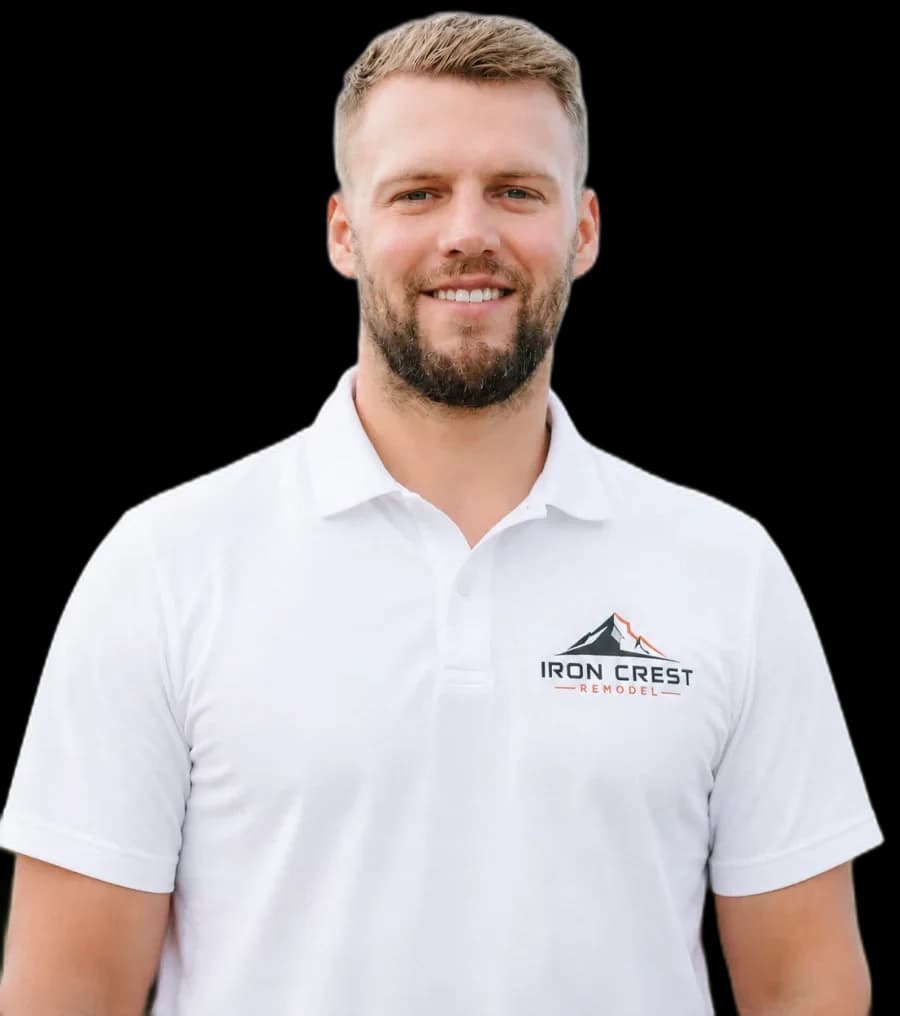
Talk to a real project manager
Have Questions? Call Now for a Free In-Home Consultation.
Mon–Fri 7 AM–6 PM · Idaho registered & insured · No obligation
Russ Shloma — Project Manager
Russ Shloma — Project Manager
Start your shower remodeling in Boise
Get a free, no-obligation estimate for shower remodeling in Boise, ID. We handle design, permits, and every detail of construction.
Get Your Free Estimate