

Shower Remodel in Emmett, ID
From tub-to-shower conversions to luxury walk-in designs with frameless glass, rain showerheads, and built-in niches — we handle every detail from waterproofing to finish hardware.
Quick answer
Iron Crest Remodeling Group LLC provides shower remodeling in Emmett, ID. Most Emmett shower remodeling projects cost $8,000 – $55,000. Emmett labor rates run modestly below comparable Ada County pricing for the same scope, offset by a Freezeout Hill factor on tile, glass, and waterproofing systems hauled from Treasure Valley suppliers — so a like-for-like Emmett shower lands a little under its Boise equivalent, while the top of the band here reflects scope rather than rates.
Shower remodeling in Emmett, Idaho lives or dies on two things national guides ignore: waterproofing executed with zero tolerance over the wood-framed crawlspace floors of an old fruit-valley town, and material choices that survive Emmett's hard deep-well water. Emmett's orchard-era homes near downtown frequently have showers that were retrofitted into 1930s and 1940s bathrooms decades after the house was built — original tub locations tiled over with inadequate or absent waterproofing, now leaking quietly into subfloors above a crawlspace. The town's municipal water is drawn from deep city wells, and the mineral scale it leaves on shower glass and tile is the complaint Emmett clients raise first; the City publishes an annual water quality report with the actual figures for your service area. A shower built without solving both problems fails — invisibly for years on the waterproofing, visibly within weeks on the glass. Iron Crest Remodel (Iron Crest Remodeling Group LLC, Idaho RCE-6681702) builds Emmett showers to a strict waterproofing standard under the City's adopted 2018 IRC, for the valley's hard water, and around the City of Emmett versus Gem County jurisdiction split. Registered with Idaho DOPL and insured, free in-home estimates, three-year workmanship warranty.
Design and build the shower you have always wanted — from custom tile work to barrier-free walk-ins.
A shower remodel transforms one of the most-used spaces in your home — from a basic, builder-grade enclosure into a custom-designed space that fits your daily routine, aesthetic preferences, and long-term needs. Shower remodeling involves demolition of the existing shower or tub, plumbing rough-in for new drain and supply locations, structural preparation, waterproofing membrane installation, tile or panel application, glass enclosure installation, and fixture mounting. In the Treasure Valley, many homes built in the 1990s and 2000s have small, dark, builder-grade showers with fiberglass surrounds, poor drainage, and inadequate waterproofing that leads to hidden water damage over time. A properly planned shower remodel addresses all of these issues while creating a space that is both beautiful and built to last. The most critical element of any shower build is waterproofing — every surface that receives water must be properly membraned, sealed, and sloped to prevent moisture from reaching the framing and subfloor behind the finished surface.
Emmett homeowners pursue shower remodeling for a variety of reasons. Here are the most common situations we see:
- ✓Homeowners who want to convert an unused bathtub into a spacious walk-in shower
- ✓Families who need a larger, more functional shower with better water pressure, storage, and lighting
- ✓Aging-in-place homeowners who need a barrier-free, zero-threshold shower with grab bars and bench seating
- ✓Anyone with a dated or failing shower that has grout problems, leaks, mold, or inadequate waterproofing
- ✓Homeowners who want a spa-like shower experience with rain showerheads, body sprays, and custom tile design
Not every shower remodeling project is the same. Here are the most common project types we complete in Emmett:

Tub-to-Shower Conversion
Remove an existing bathtub and replace it with a custom walk-in shower. Includes new drain placement, curb or zero-threshold entry construction, waterproofing, tile installation, glass enclosure, and updated fixtures.

Walk-In Shower Remodel
Redesign and rebuild an existing shower with new tile, fixtures, glass enclosure, niches, and lighting. May include expanding the shower footprint, adding a bench, or changing the layout.

Barrier-Free / ADA Accessible Shower
Design and build a zero-threshold shower with curbless entry, linear drain, anti-slip tile flooring, grab bars, fold-down bench seating, and handheld showerhead for accessible daily use.

Luxury Shower Upgrade
High-end shower build with premium tile, rain showerhead, body sprays, thermostatic valve system, LED lighting, large-format niches, and frameless glass enclosure. Designed for a spa-like daily experience.

Shower Panel or Solid Surface Installation
Install grout-free solid surface shower panels for a clean, low-maintenance alternative to tile. Ideal for homeowners who want a fresh shower without the upkeep of grout cleaning and sealing.

Emmett's housing is sharply bimodal: a genuine pre-1945 orchard-and-mill-town core of wood-sided homes over crawlspaces, a layer of 1950s–1970s ranches, and a large wave of post-2020 production subdivisions, with comparatively little in between at scale.
Pre-1945 (Historic Core / Orchard & Mill Era)
Wood-sided farmhouses built for cherry growers, packing-shed workers, and Boise Payette mill families. Single bathrooms, galvanized supply lines, cast-iron drains, knob-and-tube remnants, 60–100-amp service, plaster walls, original fir floors, minimal insulation, and showers retrofitted decades after construction with inadequate waterproofing over wood-framed crawlspace floors.
1950s–1970s (Mid-Century Ranches)
Ranch and split-level homes off Washington and Substation Avenues, generally on copper supply with 100-amp panels, original tile baths, single-pane or early aluminum windows, and marginal insulation. Frequently single-bath; strong candidates for second-bath additions and comprehensive modernization.
1980s–2010s (Scattered Infill)
Limited-volume infill and rural homes of mixed construction and cladding, often on county acreage with well and septic; varied condition.
2020s–present (Subdivision Growth Wave)
Production homes in developments such as Payette River Orchards and the Substation Road corridor with modern PEX plumbing, current electrical, fiber-cement siding, and builder-grade fixtures, finishes, and tub-shower units that owners upgrade quickly.
Common issues in Emmett homes
- •Galvanized supply lines and failing cast-iron drains in pre-1945 homes
- •Subfloor and framing rot over crawlspaces from leaking retrofitted showers and old plumbing
- •Inadequate or absent shower waterproofing in the historic and mid-century stock
- •Asbestos (flooring, mastic, joint compound) and lead paint in pre-1980 homes
- •Undersized 60–100-amp electrical service for modern kitchen and bath loads
- •Single-pane windows and minimal insulation driving poor comfort and high energy use
- •Hard deep-well municipal water causing scale on glass, tile, and fixtures
- •Septic capacity limiting additions and ADUs on county acreage parcels

Material selection affects the look, durability, and cost of your shower remodeling. Here are the most popular options we install in Emmett:

Porcelain Tile (Walls and Floor)
$8–$25 per sq ft installedThe most popular shower surface material. Dense, water-resistant, available in hundreds of styles including large-format, wood-look, stone-look, and mosaic options. Large-format tiles (12x24 and up) create a modern, seamless look.
Best for: Shower walls, floors, niches, and accent features

Natural Stone Tile (Marble, Travertine)
$15–$50+ per sq ft installedPremium tile option that delivers a luxurious, one-of-a-kind look. Marble hexagon floors, marble slab walls, and travertine accents create a spa-like atmosphere. Requires sealing and careful maintenance.
Best for: Feature walls, luxury shower floors, accent strips, and niche interiors

Waterproofing Membrane (Schluter Kerdi / Laticrete)
$1,500–$3,500 per shower (material and labor)Bonded waterproofing membrane system applied to every shower surface. Available as sheet membrane, liquid-applied membrane, or foam board panels. The single most critical material in any shower build — it prevents water from reaching the structure.
Best for: Every shower floor, wall, curb, niche, and bench surface — no exceptions

Frameless Glass Enclosure
$1,200–$3,500 installedCustom-measured and fabricated clear tempered glass panels and door with minimal hardware for a clean, modern look. Available in 3/8-inch and 1/2-inch glass thicknesses with various hardware finishes.
Best for: Walk-in showers where visual openness and modern design are priorities

Shower Valve and Fixture Set
$300–$1,500 per setPressure-balancing or thermostatic shower valve with trim, showerhead, and optional handheld sprayer. Quality fixtures from Moen, Delta, Kohler, or Grohe provide reliable temperature control and water delivery.
Best for: Every shower — the valve is the functional heart of the shower system

Here is how a typical shower remodeling project works from first contact to final walkthrough:
Shower Design Consultation
We visit your bathroom, evaluate the existing shower or tub space, discuss your daily routine and wish list, and review layout options, material choices, and fixture selections. You receive a design concept and detailed estimate.
Design Finalization and Material Selection
We finalize the shower layout, tile design, niche locations, fixture selections, glass enclosure style, and any accessibility features. Materials are ordered and lead times are confirmed. A fixed-price contract is prepared.
Demolition and Plumbing Rough-In
The existing shower or tub is demolished, and we inspect the framing, subfloor, and drain condition. New plumbing rough-in is completed for the reconfigured drain location, supply lines, and valve placement. Framing modifications for niches, benches, and shower size are completed.
Waterproofing
This is the most critical phase. We apply a bonded waterproofing membrane system (Schluter Kerdi, Laticrete Hydro Ban, or equivalent) to every shower surface — floor, walls, curb, niches, and bench. The shower pan is sloped to the drain and tested for leak-proof integrity before tile begins.
Tile Installation
Floor tile is installed first with proper slope to drain, followed by wall tile, niche tile, bench tile, and any accent or feature tile. Grout is applied, cleaned, and sealed. Large-format tiles, mosaics, and accent patterns are laid out precisely per the design plan.
Glass, Fixtures, and Hardware Installation
The glass enclosure (frameless, semi-frameless, or framed) is measured, fabricated, and installed. Showerhead, valve trim, diverter, handheld sprayer, grab bars, towel hooks, and all hardware are mounted and tested.
Final Testing and Walkthrough
We run the shower for an extended test to verify drainage, water pressure, valve operation, and leak-free performance. Grout sealant is applied, and a final walkthrough ensures every detail meets expectations.
Here is what to expect for project duration when planning shower remodeling in Emmett:
| Phase | Duration | Details |
|---|---|---|
| Design and Material Selection | 1–3 weeks | Consultation, design development, tile and fixture selection, and contract finalization. Material lead times for specialty tile and glass can add 2-4 weeks. |
| Demolition and Plumbing Rough-In | 2–3 days | Remove existing shower or tub, inspect framing and subfloor, complete plumbing rough-in for new drain and supply locations, and frame any niches or benches. |
| Waterproofing | 1–2 days | Apply waterproofing membrane to all shower surfaces. Test the shower pan for leak-proof performance. This phase must be completed and verified before tile begins. |
| Tile Installation | 3–6 days | Floor tile, wall tile, niche tile, and accent tile installation. Grouting and sealing. This is typically the longest phase of active construction. Complex designs take longer. |
| Glass and Fixture Installation | 1–2 days | Glass enclosure measurement, fabrication (if not pre-ordered), and installation. Showerhead, valve trim, hardware, and accessories are mounted and connected. |
| Final Testing and Walkthrough | 1 day | Extended shower test, drainage verification, grout sealing, and homeowner walkthrough to confirm quality and function. |
Emmett range: $8,000–$15,000 – $30,000–$55,000
Most Emmett projects: $14,000–$26,000
Emmett labor rates run modestly below comparable Ada County pricing for the same scope, offset by a Freezeout Hill factor on tile, glass, and waterproofing systems hauled from Treasure Valley suppliers — so a like-for-like Emmett shower lands a little under its Boise equivalent, while the top of the band here reflects scope rather than rates. The low band covers a straightforward tub-shower-unit-to-tiled-shower conversion in a sound newer home. The high band covers a large custom curbless walk-in with linear drain, multi-niche tile, premium frameless glass, bench, and body sprays. The average reflects the common Emmett job: a full tiled walk-in shower with a continuous bonded membrane over an approved backer, frameless glass, and quality fixtures. The dominant Emmett cost driver is the old-house reality: in orchard-era homes, demolishing a failed retrofitted shower routinely reveals rotted subfloor and framing over the crawlspace that must be rebuilt before any new waterproofing — frequently adding $1,500–$6,000 of structural remediation invisible in the finished shower but decisive for whether it lasts.
The final cost of shower remodeling in Emmett depends on several factors. Here are the biggest cost drivers:
Shower Size and Configuration
high impactA standard 3x4 foot shower costs significantly less than a 4x6 or 5x8 foot walk-in. Larger showers require more tile, more waterproofing, larger glass enclosures, and more labor.
Tile Selection and Design Complexity
high impactStandard subway tile on walls with mosaic floor tile is the most affordable option. Large-format tiles, natural stone, intricate mosaic patterns, accent bands, and niche detailing increase material and labor costs significantly.
Plumbing Modifications
medium impactKeeping the drain and supply lines in their existing locations is the most affordable approach. Moving the drain, adding supply lines for multiple showerheads, or converting from a tub configuration adds plumbing labor and material cost.
Glass Enclosure Type
medium impactA shower curtain is the least expensive enclosure. Semi-frameless glass doors run $800-1,500. Frameless glass enclosures with custom panels range from $1,200-3,500+ depending on size and configuration.
Accessibility Features
medium impactZero-threshold entries with linear drains, built-in bench seating, grab bar blocking, and anti-slip flooring add cost but provide essential function for aging-in-place planning.
Fixture Quality
low impactBuilder-grade showerheads and valves start around $150-300. Mid-range fixtures from Delta, Moen, or Kohler run $400-800. Premium thermostatic systems with rain heads and body sprays can exceed $2,000.
These are the real-world projects we see most often from Emmett homeowners:
Tearing Out a Failed Retrofitted Shower in an Orchard-Era Bathroom
A 1925–1945 Emmett home where a shower was added to the original tub bathroom decades ago with inadequate waterproofing, now leaking into the crawlspace-supported subfloor. Scope: demo, subfloor and framing remediation, a continuous bonded membrane (Schluter KERDI, Laticrete Hydro Ban, or equivalent) over an approved backer, tile, and a frameless or framed enclosure. The remediation is the real project; the finished shower is what's visible. Lead and asbestos handling apply on the pre-1980 stock.
Builder Tub-Shower-to-Tiled-Walk-In Conversion (New Subdivision)
A post-2020 Payette River Orchards or Substation Road home where the owner converts a fiberglass or acrylic builder tub-shower unit to a tiled walk-in. Sound modern subfloor, no environmental hazards — scope is demo, framing as needed, full waterproofing system, tile, and frameless glass. Predictable, fast, and a large jump in a young bathroom's quality and value.
Curbless Roll-In Accessible Shower Conversion
For a longtime Emmett resident aging in place: a high-curb tub or cramped original shower converted to a curbless roll-in with a linear drain, blocked-and-mounted grab bars (not towel-bar substitutes), a folding or teak bench, slip-resistant tile, a handheld on a slide bar, and a comfort-height control valve. Over a crawlspace floor, the curbless drain and slope require careful structural and waterproofing detailing. A genuine independence-and-safety project, in high demand here.
Hard-Water-Resilient Frameless Glass Shower
An Emmett homeowner who wants the frameless-glass look but not constant scale maintenance from the valley's hard well water. Scope pairs the waterproofed tiled shower with factory-hydrophobic-coated glass, scale-resistant surface choices, and often a recommendation for water treatment. Designing around Emmett's water chemistry up front is what keeps this shower looking new.
Acreage / Well-Water Shower Build
An Emmett-addressed home on Gem County acreage with a private well, where shower performance depends on well pump, pressure tank, and water chemistry, and where added fixtures interact with septic. Scope includes pressure assessment, appropriately specified valves and heads, and material choices tuned to the parcel's water. Permitting through Gem County.

Problem: Leaking shower with water damage behind walls and under the floor
Solution: We demolish to studs, inspect and repair all water-damaged framing and subfloor, and rebuild with a proper waterproofing membrane system that prevents future moisture intrusion.
Problem: Small, dark shower that feels cramped and uninviting
Solution: We expand the shower footprint where possible, use light-colored large-format tile to open up the space, install a frameless glass enclosure for visual openness, and add recessed LED lighting for a bright, spacious feel.
Problem: Outdated fiberglass or acrylic shower surround
Solution: We remove the old surround, inspect the substrate, install proper waterproofing, and build a custom tile shower that transforms both the look and feel of the space.
Problem: Poor water pressure and single-showerhead limitation
Solution: We evaluate your water supply capacity and install a pressure-balancing or thermostatic valve system with options for rain showerheads, handheld sprayers, and body jets — significantly improving the shower experience.
Problem: Mold and mildew in grout joints and silicone seams
Solution: We use mold-resistant grout, properly sealed tile joints, and premium silicone caulk at all change-of-plane transitions. A properly waterproofed shower with adequate ventilation prevents mold from developing behind the finished surface.

Semi-arid high-valley climate (Köppen BSk) at ~2,380 feet: hot dry summers with intense UV, cold moist winters with snow load and freeze-thaw, a wide seasonal indoor-humidity swing, and valley inversion conditions.
Ground snow load (30 lb/sf, City of Emmett)
Decks, covered structures, additions, and roof framing must be engineered to the city's 30 lb/sf ground snow load; county-jurisdiction criteria confirmed separately with Gem County.
Frost depth (24 inches, City of Emmett)
Footings for decks, additions, and ADUs must extend below the 24-inch frost depth to prevent heave through valley freeze-thaw.
Design wind speed (115 mph) and Seismic Design Category C
Structural openings, headers, additions, and lateral systems must reflect a 115 mph design wind speed and Seismic Design Category C.
High-elevation UV and freeze-thaw
Intense summer solar load fails exterior coatings and wood siding on south/west elevations; wet-winter freeze-thaw peels under-primed wood from behind.
Wide indoor-humidity swing
Seasonal humidity range moves solid-wood flooring and stresses old plaster and finishes; on-site acclimation and dimensionally stable products are required.
Hard deep-well water
Municipal water from city wells 380–500 ft deep (and county private wells) is hard, scaling shower glass, tile, and fixtures and driving material, glass, and softener choices.
Downtown Emmett / Historic Core
The original townsite around Main Street, holding Emmett's oldest concentrated housing — orchard-era and mill-era homes from the 1910s–1940s on deep lots, served by municipal water and sewer.
Common projects in Downtown Emmett / Historic Core:
- •Whole-home modernization of obsolete systems in pre-1945 farmhouses
- •Bathroom and shower rebuilds over wood-framed crawlspace floors
- •Open-concept kitchen conversions through load-bearing walls
- •Original-fir floor restoration and period-respectful interior repaints
Payette River Orchards / East 12th Street Growth Area
Emmett's largest new-housing wave — the approved 242-home Payette River Orchards subdivision on the east end of 12th Street and surrounding recent construction.
Common projects in Payette River Orchards / East 12th Street Growth Area:
- •Builder-grade kitchen and bath upgrades in post-2020 homes
- •Tub-shower-to-tiled-walk-in conversions
- •Builder-deck expansion into real outdoor living space
- •Flooring upgrades from builder carpet to LVP
Substation Road / South SH-16 Corridor
The active growth edge south of town where municipal water and sewer were extended under State Highway 16; the newest residential and commercial construction in Emmett.
Common projects in Substation Road / South SH-16 Corridor:
- •Finish-level kitchen and bath personalization in new homes
- •Window and exterior color upgrades on modern fiber-cement homes
- •Deck and outdoor-living additions
- •Interior color personalization of builder-white interiors
Mid-Century Ranches off Washington & Substation Avenues
1950s–1970s ranch and split-level pockets between the historic core and new subdivisions, generally on copper supply with 100-amp service and original tile baths.
Common projects in Mid-Century Ranches off Washington & Substation Avenues:
- •Second-bathroom additions to original single-bath homes
- •Comprehensive ranch modernization and electrical service upgrades
- •Curbless accessible shower conversions for aging-in-place
- •Fiber-cement re-siding with envelope energy upgrades
Gem County Acreage & River-Bottom Parcels
Emmett-addressed homes on unincorporated Gem County acreage on private well and septic, including working agricultural properties and low parcels in the Payette River corridor.
Common projects in Gem County Acreage & River-Bottom Parcels:
- •Working harvest kitchens and utility/mudroom wings
- •Additions constrained by well and septic capacity
- •Acreage home plus shop/outbuilding exterior packages
- •Floodplain-aware work on river-corridor lots
Every Emmett neighborhood has different housing stock, homeowner priorities, and project considerations. Here is what shower remodeling looks like in each area:
Downtown Emmett / Historic Core
Payette River Orchards & Substation Corridor
Mid-Century Ranches off Washington & Substation Avenues
Homes of Longtime / Aging Residents (Citywide)
Gem County Acreage Parcels
Permit authority: City of Emmett Building Department (within city limits); Gem County Development Services (unincorporated Gem County parcels — common for Emmett-addressed acreage)
Online portal: www.cityofemmett.org/building-department
- ✓City of Emmett Building Department located at 601 E. 3rd St., Emmett, ID 83617.
- ✓Gem County Development Services located at 109 S. McKinley Ave., Emmett; administers unincorporated-area permits and the county floodplain program.
- ✓City of Emmett adopted codes: 2018 IRC and 2018 IECC.
- ✓City of Emmett design criteria: 30 lb/sf ground snow load, 115 mph wind, Seismic Design Category C, 24-inch frost depth.
- ✓Jurisdiction must be verified at the parcel level — the Emmett city limit weaves through orchard and acreage land and neighboring properties can fall under different authorities.
- ✓Portions of the Payette River corridor are within FEMA-mapped flood hazard areas; Gem County administers floodplain development standards (county Title 13) and elevation certificates.
- ✓Pre-1980 homes: Idaho DEQ asbestos handling and EPA RRP lead-safe practices apply to disturbed materials.
Helpful ID resources
- City of Emmett Building Department (within city limits); Gem County Development Services (unincorporated Gem County parcels — common for Emmett-addressed acreage) — permit applications, inspections, and code resources
- Idaho DEQ — Asbestos Program — testing and abatement requirements for pre-1980 homes
- EPA Lead Renovation, Repair and Painting (RRP) Program — required certification for work in pre-1978 homes
- ●Niche placement and sizing — position shower niches at a usable height (typically 48-60 inches from the floor), sized to fit standard product bottles, with tile that complements or contrasts the main wall tile
- ●Showerhead height and placement — rain showerheads should be at least 80 inches high; handheld brackets should be reachable while seated on a bench if applicable
- ●Tile layout planning — dry-lay tile patterns before installation to center patterns, plan cut tiles at edges, and verify grout line alignment across walls and floors
- ●Drain location and type — center drains work for standard showers; linear drains allow large-format floor tile and enable curbless entries for accessible design
- ●Lighting — recessed LED downlights rated for wet locations provide essential illumination; consider a lighted niche or accent lighting for a premium touch
- ●Ventilation — ensure your exhaust fan is rated for the bathroom's cubic footage; inadequate ventilation is the primary cause of mold and moisture damage in showers
Here are the design trends we see most often in Emmett shower remodeling projects:
- →Tiled curbless and low-threshold walk-in showers for aging-in-place
- →Open-concept kitchen conversions in walled-off orchard-era farmhouses
- →Original old-growth fir floor restoration in historic-core homes
- →Hard-water-resilient frameless glass with hydrophobic coatings
- →Fiber-cement re-siding paired with envelope energy upgrades
- →View-oriented elevated decks toward the Payette River and the butte north of town
- →Second-bathroom and primary-suite additions to single-bath homes
- →Period-respectful interior repaints over plaster and original fir trim
Emmett's housing market was reshaped by post-2020 Treasure Valley spillover: as buyers priced out of Ada County moved north over Freezeout Hill, the city's population rose roughly 21% from the 2020 Census (7,647) and the median sale price reached the high-$300,000s by 2025 (around $389K in April 2025 per Redfin data), with continued year-over-year gains. New subdivision inventory around 12th Street and Substation Road has reset buyer expectations, making dated single-bath orchard-era and mid-century homes visible value liabilities and supporting strong returns on bathroom, kitchen, and whole-home renovation.
Avoid these common pitfalls Emmett homeowners encounter with shower remodeling projects:
Mistake: Tiling a shower without a continuous bonded waterproofing membrane
Better approach: The adopted 2018 IRC requires an approved backer (R702.4.2) and a watertight shower receptor lining (P2709.2), for which an ANSI A118.10 bonded membrane is one accepted method. A membrane over the walls goes beyond the code minimum, and over Emmett's crawlspace floors it is the difference between a shower that lasts and one that silently rots structure. Install Schluter KERDI, Laticrete Hydro Ban, or an equivalent ANSI A118.10 membrane — this is where durability is made.
Mistake: Rebuilding a shower over rotted crawlspace subfloor without remediation
Better approach: Failed retrofitted showers in old Emmett homes have usually damaged the subfloor and framing. Remediate the structure before new waterproofing; new tile over compromised structure fails and conceals the problem.
Mistake: Specifying clear glass and natural stone without addressing hard water
Better approach: Emmett's hard well water scales clear glass within weeks and etches unsealed stone. Specify hydrophobic-coated glass, porcelain over stone, scale-hiding fixture finishes, and discuss a softener up front.
Mistake: Doing a curbless conversion without crawlspace structural detailing
Better approach: A curbless entry over a wood-framed crawlspace floor requires recessed structural detailing and exacting pan slope and drainage. Done without that, the curbless transition leaks. Treat the structure and slope as the core of the job.
Mistake: Using towel bars and surface anchors as grab bars in accessible builds
Better approach: Accessible Emmett conversions need real blocking and properly mounted grab bars rated for load — not decorative bars or drywall anchors. Block walls for current and future bar locations during the rebuild even if bars aren't all installed day one.
Most popular remodeling projects in Emmett
- ✓Whole-home modernization of pre-1945 farmhouses
- ✓Tub-to-tiled-walk-in shower conversions
- ✓Builder-grade kitchen and bath upgrades in new subdivision homes
- ✓Curbless accessible bathroom and shower conversions
- ✓Primary-suite and second-bath additions on orchard-legacy lots
- ✓River- and butte-view deck builds
- ✓Full-frame window replacement with egress correction
- ✓Fiber-cement siding with continuous insulation

See Your Remodel Before You Build.
Upload a few photos of your kitchen, bathroom, flooring, or exterior and get AI-generated concept visuals tailored to your space, style, and materials — free, no obligation, in about five minutes. Then request a real estimate from our Idaho registered Boise team.
Free concept preview · No credit card · Licensed Idaho contractor
Why does my older Emmett shower remodel cost more than expected after demo?
Because in orchard-era and mid-century Emmett homes, showers were usually retrofitted decades after the house was built with little or no waterproofing, and over a wood-framed crawlspace floor a leaking shower silently rots subfloor and framing for years. Demo reveals that damage, which must be rebuilt before new waterproofing. This remediation is the real project, which is why we budget a contingency on the older stock — honest budgeting, not padding.
Will frameless glass scale up in Emmett's water?
Untreated clear glass spots and scales quickly here — Emmett's municipal supply is deep-well groundwater that leaves heavy mineral deposits, as the City's annual water quality report will confirm for your service area. We strongly recommend factory-applied hydrophobic-coated glass, scale-resistant tile and fixture finishes, and often a water softener. Designed around the valley's water chemistry up front, a frameless shower stays looking new; ignoring it guarantees a maintenance problem.
Can you convert my tub to a curbless walk-in so I can age in place?
Yes, and it is one of the most-requested projects in Emmett given how many residents stay in homes they've owned for decades. Scope includes a curbless or low-threshold entry, linear drain, properly blocked-and-mounted grab bars, a bench, slip-resistant tile, and a comfort-height valve. Over a crawlspace floor the curbless drain and slope require careful structural and waterproofing detailing — which is exactly where it has to be done right.
Is a waterproofing membrane really required, or can we tile directly?
Tiling directly on drywall is a code violation: the adopted 2018 IRC requires an approved backer in shower areas (R702.4.2) and bars water-resistant "green" gypsum where water hits it. The shower floor must have a watertight receptor lining under P2709.2, and an ANSI A118.10 bonded membrane is one of the accepted ways to build that. A bonded membrane over the shower walls is our standard rather than a code minimum — and over Emmett's crawlspace floors we will not build a shower without one, because backer board alone passes water through to framing that then rots for years before anyone sees it.
Is my shower remodel permitted by Emmett or Gem County?
A shower remodel with plumbing changes needs a plumbing permit and inspections, and whether the City of Emmett or Gem County Development Services reviews it depends on whether the property is in city limits or unincorporated county — many Emmett-addressed acreage homes are county. We confirm jurisdiction at your parcel before permit work.
How long does an Emmett shower remodel take?
A builder tub-shower-to-tiled-walk-in conversion in a newer home: 2–3 weeks. A full tiled walk-in or curbless accessible conversion: 2–4 weeks. An orchard-era rebuild with subfloor and framing remediation: 2–4 weeks plus remediation. Waterproofing and tile work have mandatory cure and inspection steps we don't compress.
How much does a shower remodel cost in Boise?
A shower remodel in the Boise area typically costs $6,000-12,000 for a standard tub-to-shower conversion with tile, $10,000-18,000 for a mid-range custom walk-in shower, and $18,000-30,000+ for a luxury shower with premium tile, frameless glass, and multi-head fixtures.
How long does a shower remodel take?
A typical shower remodel takes 2-3 weeks from demolition to completion. Simple tub-to-shower conversions with panel systems can be faster. Complex custom tile showers with specialty glass take longer. Design and material ordering before construction adds 2-4 weeks.
Is a walk-in shower better than a bathtub?
Walk-in showers are preferred for daily use, accessibility, and modern design. However, having at least one bathtub in the home is recommended for families with young children and for resale value. Many homeowners convert a secondary tub to a shower while keeping one tub elsewhere.
What is the most important part of a shower remodel?
Waterproofing. Every square inch of the shower — floor, walls, curb, niches, and bench — must be properly membraned to prevent water from reaching the framing and subfloor. Proper waterproofing prevents leaks, mold, rot, and structural damage that are extremely costly to repair.
Can you make a shower accessible without it looking institutional?
Absolutely. Modern accessible shower design uses curbless entries with linear drains, decorative grab bars in matching finishes, teak fold-down benches, and the same premium tile and glass as any custom shower. The result is a beautiful shower that happens to be accessible.
What tile is best for shower floors?
Small mosaic tiles (2x2 or penny rounds) are the traditional choice because they conform to the shower pan slope and provide grip with many grout lines. Large-format tiles with linear drains are increasingly popular for a modern, seamless look but require precise slope and installation.
Talk to a real project manager
Have Questions? Call Now for a Free In-Home Consultation.
Mon–Fri 7 AM–6 PM · Idaho registered & insured · No obligation
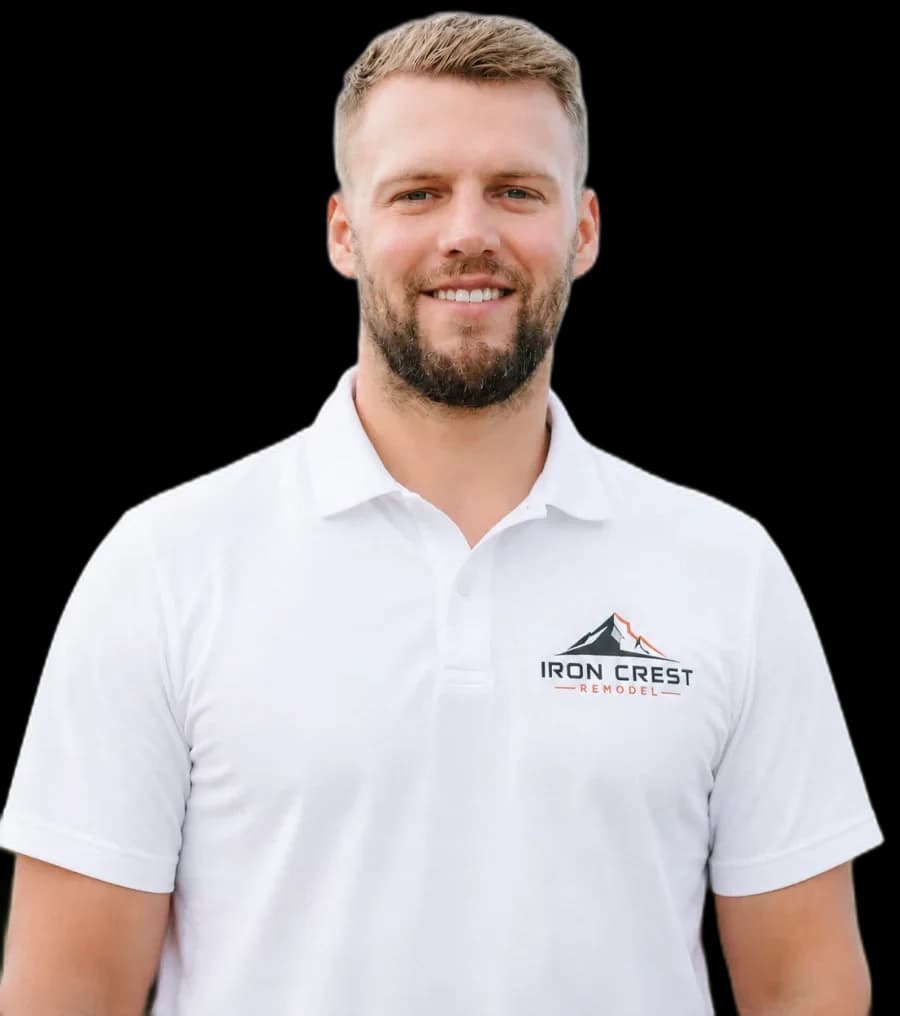
Russ S. — Project Manager
Russ S. — Project Manager
Start your shower remodeling in Emmett
Get a free, no-obligation estimate for shower remodeling in Emmett, ID. We handle design, permits, and every detail of construction.
Get Your Free Estimate