

Shower Remodel in Parma, ID
From tub-to-shower conversions to luxury walk-in designs with frameless glass, rain showerheads, and built-in niches — we handle every detail from waterproofing to finish hardware.
Quick answer
Iron Crest Remodeling Group LLC provides shower remodeling in Parma, ID. Most Parma shower remodeling projects cost $8,500 – $60,000. Parma shower remodeling costs are driven by waterproofing scope, hidden water-damage remediation, and water-chemistry-appropriate materials more than by tile price.
Shower remodeling in Parma, Idaho is a waterproofing-and-water-chemistry discipline before it is a tile-selection exercise, because this western Canyon County farming town's older homes and private wells make how a shower is built and what it must resist the real project. Parma has roughly 2,096 residents (2020 Census), sits at about 2,238 feet near the Boise–Snake confluence, and is set in agricultural country defined by onions, sugar beets, seed crops, and dairy. Its housing is overwhelmingly pre-1980 — 1940s–1970s ranch homes and older farmhouses — meaning the showers Iron Crest Remodel rebuilds here are frequently original cast-iron-tub-with-tile-surround combos or aging fiberglass units over decades-old subfloors, often with failed waterproofing already rotting framing. Critically, a large share of Parma properties draw from private wells, and that water is frequently hard and mineral- or iron-rich — which dictates glass, fixture, and surface choices far more than in the softened municipal valley. Iron Crest Remodel (Iron Crest Remodeling Group LLC, Idaho RCE-6681702) builds Parma showers around a bonded waterproofing assembly, the property's actual water chemistry, and the realities of older Canyon County homes — never a generic template.
Design and build the shower you have always wanted — from custom tile work to barrier-free walk-ins.
A shower remodel transforms one of the most-used spaces in your home — from a basic, builder-grade enclosure into a custom-designed space that fits your daily routine, aesthetic preferences, and long-term needs. Shower remodeling involves demolition of the existing shower or tub, plumbing rough-in for new drain and supply locations, structural preparation, waterproofing membrane installation, tile or panel application, glass enclosure installation, and fixture mounting. In the Treasure Valley, many homes built in the 1990s and 2000s have small, dark, builder-grade showers with fiberglass surrounds, poor drainage, and inadequate waterproofing that leads to hidden water damage over time. A properly planned shower remodel addresses all of these issues while creating a space that is both beautiful and built to last. The most critical element of any shower build is waterproofing — every surface that receives water must be properly membraned, sealed, and sloped to prevent moisture from reaching the framing and subfloor behind the finished surface.
Parma homeowners pursue shower remodeling for a variety of reasons. Here are the most common situations we see:
- ✓Homeowners who want to convert an unused bathtub into a spacious walk-in shower
- ✓Families who need a larger, more functional shower with better water pressure, storage, and lighting
- ✓Aging-in-place homeowners who need a barrier-free, zero-threshold shower with grab bars and bench seating
- ✓Anyone with a dated or failing shower that has grout problems, leaks, mold, or inadequate waterproofing
- ✓Homeowners who want a spa-like shower experience with rain showerheads, body sprays, and custom tile design
Not every shower remodeling project is the same. Here are the most common project types we complete in Parma:

Tub-to-Shower Conversion
Remove an existing bathtub and replace it with a custom walk-in shower. Includes new drain placement, curb or zero-threshold entry construction, waterproofing, tile installation, glass enclosure, and updated fixtures.

Walk-In Shower Remodel
Redesign and rebuild an existing shower with new tile, fixtures, glass enclosure, niches, and lighting. May include expanding the shower footprint, adding a bench, or changing the layout.

Barrier-Free / ADA Accessible Shower
Design and build a zero-threshold shower with curbless entry, linear drain, anti-slip tile flooring, grab bars, fold-down bench seating, and handheld showerhead for accessible daily use.

Luxury Shower Upgrade
High-end shower build with premium tile, rain showerhead, body sprays, thermostatic valve system, LED lighting, large-format niches, and frameless glass enclosure. Designed for a spa-like daily experience.

Shower Panel or Solid Surface Installation
Install grout-free solid surface shower panels for a clean, low-maintenance alternative to tile. Ideal for homeowners who want a fresh shower without the upkeep of grout cleaning and sealing.

Parma's housing is overwhelmingly pre-1980 — 1940s–1970s ranch homes on the in-town grid and older farmhouses on surrounding acreage — with limited modern subdivision and infill construction. Older homes commonly carry galvanized plumbing, undersized electrical, single-pane windows, and original or minimal waterproofing and insulation.
Pre-1940 (Older Farmhouses)
Early-twentieth-century farmhouses on surrounding agricultural land, frequently single-bathroom, with aged framing, plank subfloors, galvanized supply lines, and original wood siding and windows. Lead paint and asbestos materials are common; structural and systems remediation is typically required in any substantial remodel.
1940s–1970s (In-Town Ranch & Bungalow)
The bulk of Parma's stock: compact mid-century ranch and bungalow homes with closed floor plans, original tile-and-cast-iron baths, undersized electrical service, and minimal ventilation. Pre-1978 homes carry lead paint; pre-1980 homes commonly contain asbestos in flooring and finishes.
1980s–2000s and Newer (Subdivision & Infill)
Limited newer construction such as the Trail Ridge area off Highway 26 and scattered infill, with code-compliant systems and no environmental hazards. Remodeling here is finish-and-fixture upgrading rather than systems remediation.
Common issues in Parma homes
- •Galvanized supply lines corroded to minimal flow
- •Undersized/dated electrical service lacking modern circuits
- •Asbestos in pre-1980 flooring, mastic, and finishes; lead paint pre-1978
- •Failed or minimal original shower/tub waterproofing rotting subfloors
- •Single-pane windows and out-of-square, non-standard openings
- •Hard, often iron-rich private well water on rural properties
- •Septic-capacity limits on rural fixture additions

Material selection affects the look, durability, and cost of your shower remodeling. Here are the most popular options we install in Parma:

Porcelain Tile (Walls and Floor)
$8–$25 per sq ft installedThe most popular shower surface material. Dense, water-resistant, available in hundreds of styles including large-format, wood-look, stone-look, and mosaic options. Large-format tiles (12x24 and up) create a modern, seamless look.
Best for: Shower walls, floors, niches, and accent features

Natural Stone Tile (Marble, Travertine)
$15–$50+ per sq ft installedPremium tile option that delivers a luxurious, one-of-a-kind look. Marble hexagon floors, marble slab walls, and travertine accents create a spa-like atmosphere. Requires sealing and careful maintenance.
Best for: Feature walls, luxury shower floors, accent strips, and niche interiors

Waterproofing Membrane (Schluter Kerdi / Laticrete)
$1,500–$3,500 per shower (material and labor)Bonded waterproofing membrane system applied to every shower surface. Available as sheet membrane, liquid-applied membrane, or foam board panels. The single most critical material in any shower build — it prevents water from reaching the structure.
Best for: Every shower floor, wall, curb, niche, and bench surface — no exceptions

Frameless Glass Enclosure
$1,200–$3,500 installedCustom-measured and fabricated clear tempered glass panels and door with minimal hardware for a clean, modern look. Available in 3/8-inch and 1/2-inch glass thicknesses with various hardware finishes.
Best for: Walk-in showers where visual openness and modern design are priorities

Shower Valve and Fixture Set
$300–$1,500 per setPressure-balancing or thermostatic shower valve with trim, showerhead, and optional handheld sprayer. Quality fixtures from Moen, Delta, Kohler, or Grohe provide reliable temperature control and water delivery.
Best for: Every shower — the valve is the functional heart of the shower system

Here is how a typical shower remodeling project works from first contact to final walkthrough:
Shower Design Consultation
We visit your bathroom, evaluate the existing shower or tub space, discuss your daily routine and wish list, and review layout options, material choices, and fixture selections. You receive a design concept and detailed estimate.
Design Finalization and Material Selection
We finalize the shower layout, tile design, niche locations, fixture selections, glass enclosure style, and any accessibility features. Materials are ordered and lead times are confirmed. A fixed-price contract is prepared.
Demolition and Plumbing Rough-In
The existing shower or tub is demolished, and we inspect the framing, subfloor, and drain condition. New plumbing rough-in is completed for the reconfigured drain location, supply lines, and valve placement. Framing modifications for niches, benches, and shower size are completed.
Waterproofing
This is the most critical phase. We apply a bonded waterproofing membrane system (Schluter Kerdi, Laticrete Hydro Ban, or equivalent) to every shower surface — floor, walls, curb, niches, and bench. The shower pan is sloped to the drain and tested for leak-proof integrity before tile begins.
Tile Installation
Floor tile is installed first with proper slope to drain, followed by wall tile, niche tile, bench tile, and any accent or feature tile. Grout is applied, cleaned, and sealed. Large-format tiles, mosaics, and accent patterns are laid out precisely per the design plan.
Glass, Fixtures, and Hardware Installation
The glass enclosure (frameless, semi-frameless, or framed) is measured, fabricated, and installed. Showerhead, valve trim, diverter, handheld sprayer, grab bars, towel hooks, and all hardware are mounted and tested.
Final Testing and Walkthrough
We run the shower for an extended test to verify drainage, water pressure, valve operation, and leak-free performance. Grout sealant is applied, and a final walkthrough ensures every detail meets expectations.
Here is what to expect for project duration when planning shower remodeling in Parma:
| Phase | Duration | Details |
|---|---|---|
| Design and Material Selection | 1–3 weeks | Consultation, design development, tile and fixture selection, and contract finalization. Material lead times for specialty tile and glass can add 2-4 weeks. |
| Demolition and Plumbing Rough-In | 2–3 days | Remove existing shower or tub, inspect framing and subfloor, complete plumbing rough-in for new drain and supply locations, and frame any niches or benches. |
| Waterproofing | 1–2 days | Apply waterproofing membrane to all shower surfaces. Test the shower pan for leak-proof performance. This phase must be completed and verified before tile begins. |
| Tile Installation | 3–6 days | Floor tile, wall tile, niche tile, and accent tile installation. Grouting and sealing. This is typically the longest phase of active construction. Complex designs take longer. |
| Glass and Fixture Installation | 1–2 days | Glass enclosure measurement, fabrication (if not pre-ordered), and installation. Showerhead, valve trim, hardware, and accessories are mounted and connected. |
| Final Testing and Walkthrough | 1 day | Extended shower test, drainage verification, grout sealing, and homeowner walkthrough to confirm quality and function. |
Parma range: $8,500–$16,000 – $32,000–$60,000
Most Parma projects: $15,000–$28,000
Parma shower remodeling costs are driven by waterproofing scope, hidden water-damage remediation, and water-chemistry-appropriate materials more than by tile price. The low band covers a straightforward tub-to-shower or surround rebuild in a smaller bathroom with a properly waterproofed tile shower and quality fixtures, no major substrate damage. The high band reflects a large curbless primary-suite shower with premium tile, frameless or specialty glass, multiple water outlets, and the subfloor/framing repair older Parma homes frequently need. The average band is the typical Parma shower: full demo of an original combo or fiberglass unit, continuous bonded membrane waterproofing, large-format porcelain, a glass enclosure suited to the home's water, new valve and fixtures, and the moderate substrate repair pre-1980 homes commonly require. Parma-specific drivers: hidden subfloor/framing rot behind old waterproofing is common discovery work warranting a contingency; well-water properties may need water testing and point-of-use treatment factored in; pre-1980 bathrooms are tested for asbestos and lead before anything is disturbed, with abatement priced separately if material is confirmed; and Parma's distance from the metro core means tight trip scheduling. A shower quote with no waterproofing detail or contingency is quoting a riskier, lesser project.
The final cost of shower remodeling in Parma depends on several factors. Here are the biggest cost drivers:
Shower Size and Configuration
high impactA standard 3x4 foot shower costs significantly less than a 4x6 or 5x8 foot walk-in. Larger showers require more tile, more waterproofing, larger glass enclosures, and more labor.
Tile Selection and Design Complexity
high impactStandard subway tile on walls with mosaic floor tile is the most affordable option. Large-format tiles, natural stone, intricate mosaic patterns, accent bands, and niche detailing increase material and labor costs significantly.
Plumbing Modifications
medium impactKeeping the drain and supply lines in their existing locations is the most affordable approach. Moving the drain, adding supply lines for multiple showerheads, or converting from a tub configuration adds plumbing labor and material cost.
Glass Enclosure Type
medium impactA shower curtain is the least expensive enclosure. Semi-frameless glass doors run $800-1,500. Frameless glass enclosures with custom panels range from $1,200-3,500+ depending on size and configuration.
Accessibility Features
medium impactZero-threshold entries with linear drains, built-in bench seating, grab bar blocking, and anti-slip flooring add cost but provide essential function for aging-in-place planning.
Fixture Quality
low impactBuilder-grade showerheads and valves start around $150-300. Mid-range fixtures from Delta, Moen, or Kohler run $400-800. Premium thermostatic systems with rain heads and body sprays can exceed $2,000.
These are the real-world projects we see most often from Parma homeowners:
Original Cast-Iron Combo to Waterproofed Walk-In Shower
The signature Parma shower project: a pre-1980 ranch or farmhouse bathroom with an original cast-iron tub and tile surround converted to a fully waterproofed walk-in tile shower. Scope: full demo, subfloor and framing inspection with repair of the rot commonly found behind old waterproofing, a continuous bonded membrane system (Schluter, Hydro Ban, or equivalent), large-format porcelain, a glass enclosure specified to the property's water chemistry, a new pressure-balanced valve and fixtures, and pre-1980 environmental testing. The waterproofing and remediation are the substance; the finished shower is the visible result.
Hard-Well-Water Shower Built for Mineral Resistance
On a Parma acreage property on a private well, a shower designed around tested water chemistry: surfaces and grout chosen for mineral and iron resistance (porcelain over stone, epoxy or sealed grout), glass selected as hydrophobic-coated or textured to manage etching and spotting, brushed/matte fixture finishes, serviceable valve cartridges, and point-of-use treatment integrated where testing warrants. Built on a fully bonded waterproofing assembly that goes past the code minimum. This water-first design discipline is specific to Parma's well-served properties.
Curbless Accessible Shower for Aging in Place
For a long-tenure Parma household intending to stay through retirement, a curbless roll-in or low-threshold shower with a linear drain, slip-resistant porcelain, properly blocked and anchored grab bars, a bench, a hand shower with a slide bar, and lever controls. Scope integrates accessibility with the full waterproofing and the substrate remediation older Parma bathrooms need, delivered as one disciplined project rather than two.
Failed Fiberglass Unit Replacement with Tile Shower
A 1970s–1990s Parma home with an aging one-piece fiberglass shower or surround that has cracked, yellowed, and leaked at seams. Scope: removal, subfloor/framing inspection and repair, continuous bonded membrane waterproofing, tile, glass appropriate to the home's water, and new fixtures. Modernizes the bathroom and eliminates the seam-failure leak path the fiberglass unit created.
Clean Shower Upgrade in a Newer Parma Home
In Parma's limited newer construction off Highway 26, upgrading a builder-grade shower on a sound, code-current home — demo, proper membrane waterproofing (still verified, not assumed adequate), tile, glass, and fixtures, with the water enclosure and finishes specified for the home's supply. Predictable scope and cost, no substrate or environmental surprises; the value is a durable, modern shower for a household staying long-term.

Problem: Leaking shower with water damage behind walls and under the floor
Solution: We demolish to studs, inspect and repair all water-damaged framing and subfloor, and rebuild with a proper waterproofing membrane system that prevents future moisture intrusion.
Problem: Small, dark shower that feels cramped and uninviting
Solution: We expand the shower footprint where possible, use light-colored large-format tile to open up the space, install a frameless glass enclosure for visual openness, and add recessed LED lighting for a bright, spacious feel.
Problem: Outdated fiberglass or acrylic shower surround
Solution: We remove the old surround, inspect the substrate, install proper waterproofing, and build a custom tile shower that transforms both the look and feel of the space.
Problem: Poor water pressure and single-showerhead limitation
Solution: We evaluate your water supply capacity and install a pressure-balancing or thermostatic valve system with options for rain showerheads, handheld sprayers, and body jets — significantly improving the shower experience.
Problem: Mold and mildew in grout joints and silicone seams
Solution: We use mold-resistant grout, properly sealed tile joints, and premium silicone caulk at all change-of-plane transitions. A properly waterproofed shower with adequate ventilation prevents mold from developing behind the finished surface.

Parma has a cold semi-arid climate (Köppen BSk) with intense high-desert UV, hard freeze-thaw cycling, low humidity, and wind across open farmland. Recorded extremes range from -35°F (1924) to 110°F (2002).
Extreme temperature range
A recorded ~145-degree swing drives large expansion-contraction cycling, magnifies single-pane window energy loss, and demands climate-grade coatings, siding, and glazing.
Hard freeze-thaw
Requires deck and foundation footings to the regional ~24-inch frost depth; punishes any compromised waterproofing, caulk, or unsealed wood.
Intense UV and low humidity
Degrades under-spec exterior coatings and decking; very low heated-season indoor humidity moves wood substrates and flooring, requiring acclimation.
Open-country wind exposure
Many properties on open acreage have no sheltering structures, making wind loading a real structural input and worst-case exposure the design basis on all elevations.
In-Town Core (3rd Street / Grove Avenue Grid)
Parma's compact municipal core near City Hall on 3rd Street, dense with 1940s–1970s ranch and bungalow homes on city water and sewer.
Common projects in In-Town Core (3rd Street / Grove Avenue Grid):
- •Bathroom and shower remodels in original mid-century homes
- •Kitchen modernization and opening of closed plans
- •Whole-home systems modernization (plumbing, electrical, envelope)
- •Interior and exterior painting with lead-safe prep
Roswell / Apple Valley Rural Acreage
Rural farmhouse and ranch acreage associated with greater Parma, almost entirely on private well and septic systems.
Common projects in Roswell / Apple Valley Rural Acreage:
- •Well-water-appropriate bathroom and shower remodels
- •Home additions and multigenerational wings (septic-capacity driven)
- •Detached ADU construction on acreage
- •Durable flooring for working rural households
Old Fort Boise Area / East Edge
The eastern edge of town near the Old Fort Boise replica and the Boise/Snake river bottomland, with older homes and parcel-specific floodplain considerations.
Common projects in Old Fort Boise Area / East Edge:
- •Flood-aware additions and structural tie-in work
- •Moisture-driven flooring and substrate remediation
- •Whole-home renovation of older homes
- •Window replacement with rot/opening repair
Trail Ridge / Newer Subdivision Pockets
Parma's limited newer construction, including the Trail Ridge subdivision area off Highway 26 with up to half-acre homesites.
Common projects in Trail Ridge / Newer Subdivision Pockets:
- •Finish-and-fixture kitchen and bath upgrades
- •Clean flooring and interior painting refreshes
- •Decks and exterior updates on sound modern homes
- •Window and siding upgrades
Every Parma neighborhood has different housing stock, homeowner priorities, and project considerations. Here is what shower remodeling looks like in each area:
Roswell / Apple Valley Rural Acreage
In-Town Core (3rd Street / Grove Avenue Grid)
Old Fort Boise Area / East Edge
Trail Ridge / Newer Subdivision Pockets
River-Bottom Farmland Toward the Snake
Permit authority: Canyon County Development Services (building/structural/plumbing/electrical); City of Parma (planning & zoning)
Online portal: www.canyoncounty.id.gov/building-department/
- ✓The City of Parma administers planning, zoning, and its municipal code but does not operate its own building department; building permits defer to Canyon County Development Services, 111 N. 11th Ave, Caldwell.
- ✓City Hall: 305 North 3rd Street, P.O. Box 608, Parma, ID 83660; (208) 722-5138.
- ✓Parcels near the Boise/Snake confluence may fall within FEMA-mapped floodplain; flood-zone status must be verified per parcel with Canyon County, not assumed from proximity.
- ✓Pre-1980 homes require asbestos/lead testing (Idaho DEQ / EPA RRP) before disturbance.
- ✓Rural properties on private septic require septic-capacity confirmation for fixture/dwelling additions.
- ✓Regional design criteria: ~20 psf ground snow load, 115 mph design wind speed, 24-inch minimum frost depth, and the seismic design category assigned by the county.
Helpful ID resources
- Canyon County Development Services (building/structural/plumbing/electrical); City of Parma (planning & zoning) — permit applications, inspections, and code resources
- Idaho DEQ — Asbestos Program — testing and abatement requirements for pre-1980 homes
- EPA Lead Renovation, Repair and Painting (RRP) Program — required certification for work in pre-1978 homes
- ●Niche placement and sizing — position shower niches at a usable height (typically 48-60 inches from the floor), sized to fit standard product bottles, with tile that complements or contrasts the main wall tile
- ●Showerhead height and placement — rain showerheads should be at least 80 inches high; handheld brackets should be reachable while seated on a bench if applicable
- ●Tile layout planning — dry-lay tile patterns before installation to center patterns, plan cut tiles at edges, and verify grout line alignment across walls and floors
- ●Drain location and type — center drains work for standard showers; linear drains allow large-format floor tile and enable curbless entries for accessible design
- ●Lighting — recessed LED downlights rated for wet locations provide essential illumination; consider a lighted niche or accent lighting for a premium touch
- ●Ventilation — ensure your exhaust fan is rated for the bathroom's cubic footage; inadequate ventilation is the primary cause of mold and moisture damage in showers
Here are the design trends we see most often in Parma shower remodeling projects:
- →Curbless, accessible walk-in showers for aging-in-place
- →Opening closed mid-century plans with engineered beams
- →Farmhouse-honest finishes (shaker, apron sinks, period hardware)
- →Hard-water-resistant surfaces and treated/textured shower glass
- →Durable quartz and porcelain over maintenance-heavy stone
- →Heated tile floors for cold winters
- →Large acreage decks oriented to farmland views with covered sections
- →Multigenerational and on-property accessory dwellings
The Parma market is characterized by long-tenure, often agricultural ownership and a deeply dated pre-1980 baseline stock, so remodeling is predominantly a stay-in-place quality-of-life and structure-protection investment rather than resale-driven turnover. The wide gap between original-condition older homes and competently modernized ones supports strong perceived value from quality renovation, though specific cost-recovery percentages should not be stated as fixed local figures.
Avoid these common pitfalls Parma homeowners encounter with shower remodeling projects:
Mistake: Skipping the bonded wall membrane to cut cost
Better approach: Code requires an approved backer and a watertight shower-floor lining, and the county verifies both; a bonded membrane over the walls exceeds that minimum and is where cheap bids economize. In older Parma homes inadequate waterproofing has often already rotted framing, and tile over bare board fails invisibly and causes structural damage far exceeding the membrane's cost. It is non-negotiable scope for us, not a savings opportunity.
Mistake: Designing the shower as if it's on softened city water
Better approach: Many Parma showers run on hard, iron-rich well water. Test first, then specify hydrophobic-coated or textured glass, porcelain over stone, epoxy/sealed grout, and brushed/matte fixtures. Clear frameless glass and stone on untreated Parma well water etch and stain within a season.
Mistake: Quoting an older-home shower with no substrate contingency
Better approach: Hidden subfloor and framing rot behind old waterproofing is common in pre-1980 Parma homes. Inspect the substrate and carry a contingency. A fixed quote with no remediation allowance either plans to skip the damage or to bill it as change orders.
Mistake: Reusing the old exhaust setup in an older Parma bathroom
Better approach: Many older Parma bathrooms have no exhaust at all, or one dumped into the attic — the second is a code problem and a moisture source in its own right. The code accepts an openable window or a fan, and any fan installed must discharge outdoors; correct the termination and install a properly sized fan as part of the remodel rather than rebuilding a shower into a room that cannot dry out.
Mistake: Disturbing pre-1980 bathroom materials without environmental testing
Better approach: Pre-1980 Parma bathrooms can contain asbestos and lead. Test before demo and use a licensed abatement contractor where asbestos is found, disposing of it under Idaho DEQ's rules, and work to EPA RRP lead-safe practice — sequenced before the rebuild, not discovered mid-demo.
Most popular remodeling projects in Parma
- ✓Bathroom and shower remodels in pre-1980 homes
- ✓Whole-home systems modernization of older farmhouses
- ✓Kitchen reconfiguration and modernization
- ✓Primary-suite and multigenerational additions
- ✓Detached ADU construction on acreage
- ✓Window replacement and re-siding for the climate envelope
- ✓Durable flooring over remediated subfloors
- ✓Interior and exterior painting with lead-safe prep

See Your Remodel Before You Build.
Upload a few photos of your kitchen, bathroom, flooring, or exterior and get AI-generated concept visuals tailored to your space, style, and materials — free, no obligation, in about five minutes. Then request a real estimate from our Idaho registered Boise team.
Free concept preview · No credit card · Licensed Idaho contractor
My Parma home is on a well — how does that change the shower?
Substantially, and it is the first design question. Many Parma properties draw from private wells whose water is frequently hard and often iron- or mineral-rich, which etches and spots glass, stains and scales surfaces, and shortens valve-cartridge life. We test the water, then specify hydrophobic-coated or textured glass, porcelain over stone, epoxy or sealed grout, brushed/matte fixtures with serviceable cartridges, and point-of-use treatment where the results warrant it. We also confirm your well pump delivers the flow the shower design needs. A shower built for softened city water degrades quickly on a Parma well.
Why is waterproofing such a big deal in a Parma shower remodel?
Because the membrane, not the tile, is what protects your home, and in older Parma homes inadequate original waterproofing has frequently already rotted subfloor and framing. Code requires an approved backer behind the tile and a watertight lining on the shower floor, and county inspectors verify both — tile set over drywall is a straight violation. A bonded membrane over the walls goes beyond that minimum, which is exactly why cheap bids leave it out. Bare backer board fails invisibly for years, then causes structural damage that dwarfs the cost of doing it right.
Will you find water damage when you open my old Parma shower?
In a pre-1980 Parma home, frequently yes — deteriorated subfloor and framing from years of slow infiltration behind minimal original waterproofing is common, not exceptional. None of it is visible before demo and all of it must be repaired before the new shower is built. We inspect the substrate as part of scope and carry a contingency for this remediation because in this housing stock it is expected, not a surprise to absorb mid-project.
Should I convert my tub to a walk-in shower in Parma?
Often yes, especially for long-tenure households. If no one regularly uses the tub and the home has another bathtub, converting the primary to a curbless or low-threshold walk-in shower delivers far better daily function and supports aging in place — a priority for Parma's many owners planning to stay through retirement. In a single-bath older Parma farmhouse, weigh the resale implications of removing the only tub before deciding. We build the new shower with the full bonded waterproofing assembly and water-appropriate materials regardless of configuration.
Who permits a shower remodel in Parma?
A shower remodel involving plumbing changes requires permits through Canyon County Development Services in Caldwell, because the City of Parma defers building permitting to the county while administering its own zoning. We coordinate the county permit and inspections and confirm current fees. We also make sure the bathroom's exhaust fan discharges outdoors rather than into the attic — which the code does require, and which is a common correction needed in older Parma homes.
How much does a shower remodel cost in Boise?
A shower remodel in the Boise area typically costs $6,000-12,000 for a standard tub-to-shower conversion with tile, $10,000-18,000 for a mid-range custom walk-in shower, and $18,000-30,000+ for a luxury shower with premium tile, frameless glass, and multi-head fixtures.
How long does a shower remodel take?
A typical shower remodel takes 2-3 weeks from demolition to completion. Simple tub-to-shower conversions with panel systems can be faster. Complex custom tile showers with specialty glass take longer. Design and material ordering before construction adds 2-4 weeks.
Is a walk-in shower better than a bathtub?
Walk-in showers are preferred for daily use, accessibility, and modern design. However, having at least one bathtub in the home is recommended for families with young children and for resale value. Many homeowners convert a secondary tub to a shower while keeping one tub elsewhere.
What is the most important part of a shower remodel?
Waterproofing. Every square inch of the shower — floor, walls, curb, niches, and bench — must be properly membraned to prevent water from reaching the framing and subfloor. Proper waterproofing prevents leaks, mold, rot, and structural damage that are extremely costly to repair.
Can you make a shower accessible without it looking institutional?
Absolutely. Modern accessible shower design uses curbless entries with linear drains, decorative grab bars in matching finishes, teak fold-down benches, and the same premium tile and glass as any custom shower. The result is a beautiful shower that happens to be accessible.
What tile is best for shower floors?
Small mosaic tiles (2x2 or penny rounds) are the traditional choice because they conform to the shower pan slope and provide grip with many grout lines. Large-format tiles with linear drains are increasingly popular for a modern, seamless look but require precise slope and installation.
Do you handle the plumbing for a shower remodel?
Yes. We coordinate all plumbing work through licensed plumbers. This includes drain relocation, supply line modifications, valve installation, and fixture connections. All plumbing work is permitted and inspected per local code requirements.
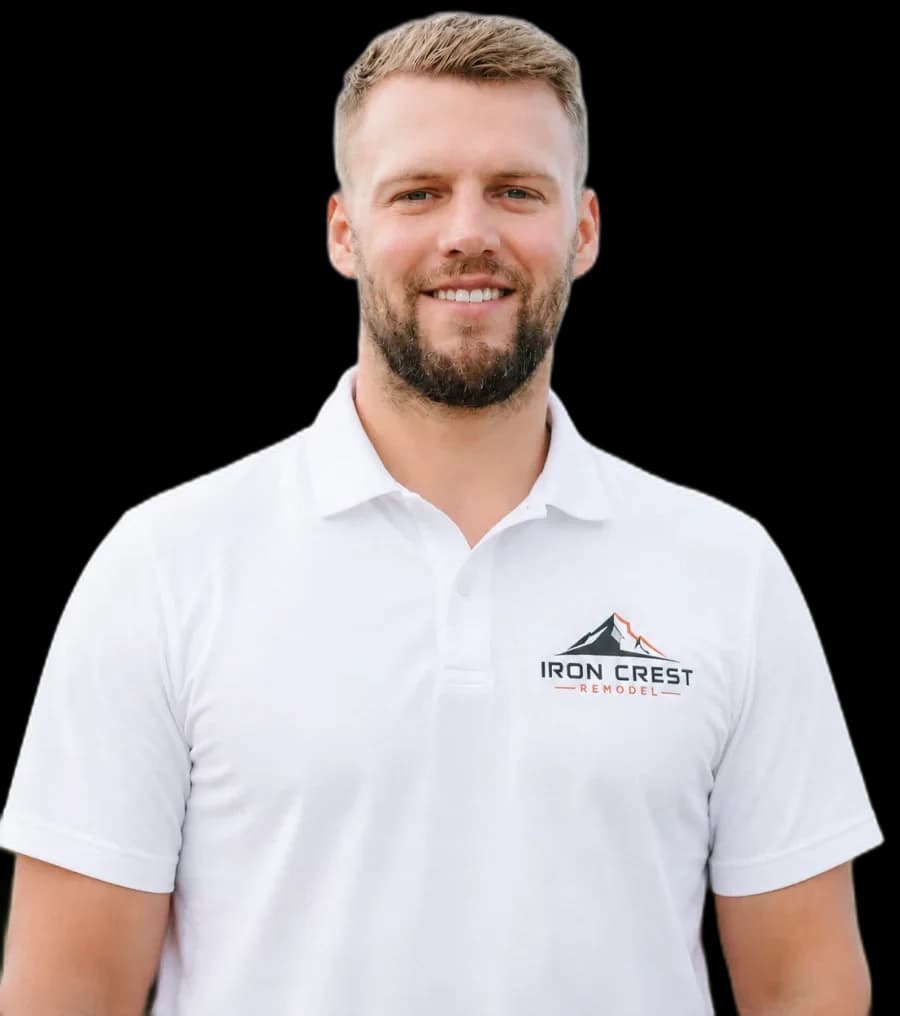
Talk to a real project manager
Have Questions? Call Now for a Free In-Home Consultation.
Mon–Fri 7 AM–6 PM · Idaho registered & insured · No obligation
Russ S. — Project Manager
Russ S. — Project Manager
Start your shower remodeling in Parma
Get a free, no-obligation estimate for shower remodeling in Parma, ID. We handle design, permits, and every detail of construction.
Get Your Free Estimate