Shower Remodeling Design Ideas for Boise
Get inspired with shower remodeling design ideas tailored to Boise homes, from trending styles to practical layout considerations.
Quick answer
Can you make a shower accessible without it looking institutional? Absolutely. Modern accessible shower design uses curbless entries with linear drains, decorative grab bars in matching finishes, teak fold-down benches, and the same premium tile and glass as any custom shower.
Boise, ID · Shower Remodeling
Planning shower remodeling in Boise?
Read the full guide below — or get your project priced now. Free, no-obligation estimates from an Idaho registered local team, backed by a 1-year workmanship warranty.
- Licensed Idaho RCE-6681702
- 1-Year Workmanship Warranty
- $2M Liability Coverage
- Free, No-Obligation Estimates


Boise's shower remodel market is differentiated from other Treasure Valley cities by the combination of an older and more architecturally varied housing stock, a client base that has moved from tub-focused to shower-focused living preferences at a rapid rate, and a real estate market where bathroom quality is a primary driver of buyer preference in a competitive resale environment. The pre-war housing stock in the North End and on the Bench creates remodel conditions that simply do not exist in Meridian or Nampa to the same degree. Mud-bed tile installations from the 1930s and 1940s, non-standard bathroom footprints, cast iron tubs that have been in place for 70 years, and plumbing rough-ins from before modern plumbing codes require a level of experience and adaptability that production-oriented remodelers — who primarily work in Meridian's and Eagle's newer housing stock — may not bring to these older Boise projects. This is a genuine differentiator in the local market: the ability to handle the discovery conditions and design challenges of Boise's older homes separates experienced local contractors from those primarily practiced in new-construction-style production remodeling. The comparison a buyer makes is also sharper in Boise's older neighborhoods. A North End home with a beautifully executed tile shower is being shown against homes of the same era and footprint where the 1950s tub surround is still in place, and that is a side-by-side judgment a buyer makes standing in the room. We do not publish a figure for what that difference is worth — it depends on the home, the comparable set and the appraiser — but it is the reason so many Boise sellers address the bathroom before the listing photographs are taken.
North End
North End shower remodels operate in one of the most rewarding and most challenging environments in Boise's renovation landscape. The homes are architecturally rich — original tile work in some of these bathrooms has genuine historic character, and the Craftsman aesthetic of the surrounding architecture establishes a design context that excellent tile work can honor beautifully. But the structural realities of 80-to-120-year-old framing, non-standard plumbing, and decades of piecemeal repairs create discovery conditions during demolition that require an experienced team to navigate. The most common discovery in North End bathroom demolitions is a mortar-bed (mud-bed) tile installation over metal lath that was applied directly to the wood framing — the standard technique of the era but one that has now been subjected to decades of moisture cycling. The mortar bed itself is typically still intact (it is essentially a concrete shell), but the wood framing behind it has often been affected by the moisture that has migrated through failed grout and caulk over the years. We document every framing condition discovered during demolition and present the homeowner with a remediation scope and cost before proceeding. On average, North End shower demolitions add $1,200–$2,800 in substrate remediation to the project scope — a range we communicate upfront as a typical contingency rather than a surprise. The design dimension of North End shower remodels is where the most interesting work happens. These are homes with architectural detail — original wainscot tile profiles, hexagonal mosaic floors, clawfoot tubs in some cases — that creates a context for shower tile selection that rewards thoughtful specification. We work with clients in the North End to develop tile specifications that feel native to the Craftsman aesthetic: 3-by-6-inch subway tile in a running bond or herringbone pattern, handmade-look ceramics with slight surface variation, architectural mosaic borders as accent transitions, and matte or satin finishes rather than high-gloss. These choices honor the home's character without being a literal reproduction of original materials, and they photograph beautifully for the listing when the home eventually sells. Space planning is a genuine challenge in many North End primary bathrooms, which were sized to 1920s standards and do not accommodate the large walk-in shower footprints that contemporary buyers expect in primary suites. We work within the constraints of these floor plans creatively — sometimes borrowing space from an adjacent closet, sometimes eliminating the separate toilet compartment to gain square footage, sometimes accepting a 32-by-36-inch shower footprint and making it as beautifully executed as possible within that dimension.
Boise Bench
Boise Bench shower remodels are the workhorse of Iron Crest's portfolio — practical projects driven by genuine need rather than luxury aspiration, with outcomes that dramatically improve daily life for homeowners who have been living with 50-to-70-year-old original bathrooms. The Bench demographic tends to be pragmatic: homeowners want a shower that works properly, looks clean and current, and does not require constant maintenance. They are less interested in the premium material specifications of Harris Ranch clients and more interested in understanding why a proper waterproofing system matters and how the tile selection affects long-term maintenance. The single most common Bench shower condition we encounter is the original cast iron or acrylic tub in a three-wall surround configuration with failing grout, failed caulk at the tub-to-tile junction, and often visible mold in the silicone caulk bead that has been applied repeatedly over the original caulk without ever fully removing the prior application. This is not a maintenance failure on the homeowner's part — it is the predictable result of a design that creates a structural gap between the tub rim and the tile above it, a gap that expands and contracts with the tub's thermal movement and cannot be permanently sealed with any caulk product. Converting this configuration to a walk-in shower with a properly waterproofed shower pan eliminates the structural gap problem entirely — there is no longer a seam between a moveable tub rim and fixed tile. For Bench homeowners who want to retain a tub — either because they have young children or because they are conscious of resale marketability in a single-bathroom home — we recommend replacing the original tub and completely re-waterproofing and re-tiling the surround rather than tiling over the existing installation. Tile-over-tile applications in tub surrounds are a common budget remodel approach that we do not recommend, because the added weight of a second tile layer over an original mortar bed installation exceeds what the original setting material was designed to carry, and the underlying waterproofing failures remain unaddressed. Bench homeowners also tend to have practical questions about the process that we address directly in our project proposals: how long will we be without a shower, can we stay in the house during the project, and what is the contingency plan if demolition reveals unexpected problems. Our standard answer is that most Bench shower remodels take 7–12 business days, the home remains occupiable throughout (the work is confined to the bathroom being remodeled), and we communicate any demolition discoveries in writing within 24 hours with a revised scope and cost for client approval before any additional work proceeds.
West Boise
West Boise's shower remodel market is driven primarily by the aging of the 1990s-era fiberglass and acrylic module installations that were standard in the production homes of that decade. These modules — one-piece or multi-piece fiberglass or acrylic assemblies that drop into a framed opening — were efficient to install during new construction but are difficult to maintain as they age. The gel coat surface crazes and loses its gloss within 15–20 years, creating a surface that is almost impossible to restore to a clean appearance regardless of how frequently it is cleaned. The base modules crack at stress points, particularly at the curb-to-floor transition and at the drain fitting, allowing water to seep into the subfloor beneath. Removal of an aging fiberglass module in West Boise homes is almost always an exploratory process. The subfloor beneath a module that has had any base cracking or drain fitting issues for even a short period shows at minimum surface saturation, and frequently shows OSB subfloor delamination or — in the worst cases — compromised floor joist top edges. We inspect and document subfloor conditions as a standard part of the demolition phase and provide remediation costs in writing before proceeding. On a positive note, West Boise's newer framing (2x6 construction in most 1990s homes, well-maintained structural quality) means the remediation scope is typically more limited than what we find in pre-war North End and Bench homes. The West Boise primary suite market is also the strongest in Boise for the fiberglass-module-to-custom-tile upgrade that delivers the most dramatic before-and-after visual transformation available in bathroom remodeling. Homeowners who have been looking at a crazed, yellowing fiberglass module for 25 years and then see their shower space replaced with a custom large-format porcelain tile installation with frameless glass tell us the change is more dramatic than they expected. The visual transformation is so complete that it resets the perception of the entire primary suite — and often leads directly to requests for vanity replacement, flooring, and lighting upgrades that extend the scope into a full primary bathroom remodel. West Boise also has a strong retiree-in-place population in its older subdivisions, and accessible shower design — zero-threshold entries, grab bar blocking installed during the waterproofing phase for future grab bar addition, and bench seating — is a genuine priority for this demographic. We build blocking for future grab bars into every West Boise shower project as a standard included detail, at minimal additional cost, because the alternative — retrofitting blocking after tile is installed — requires opening finished walls.
SE Boise / Harris Ranch
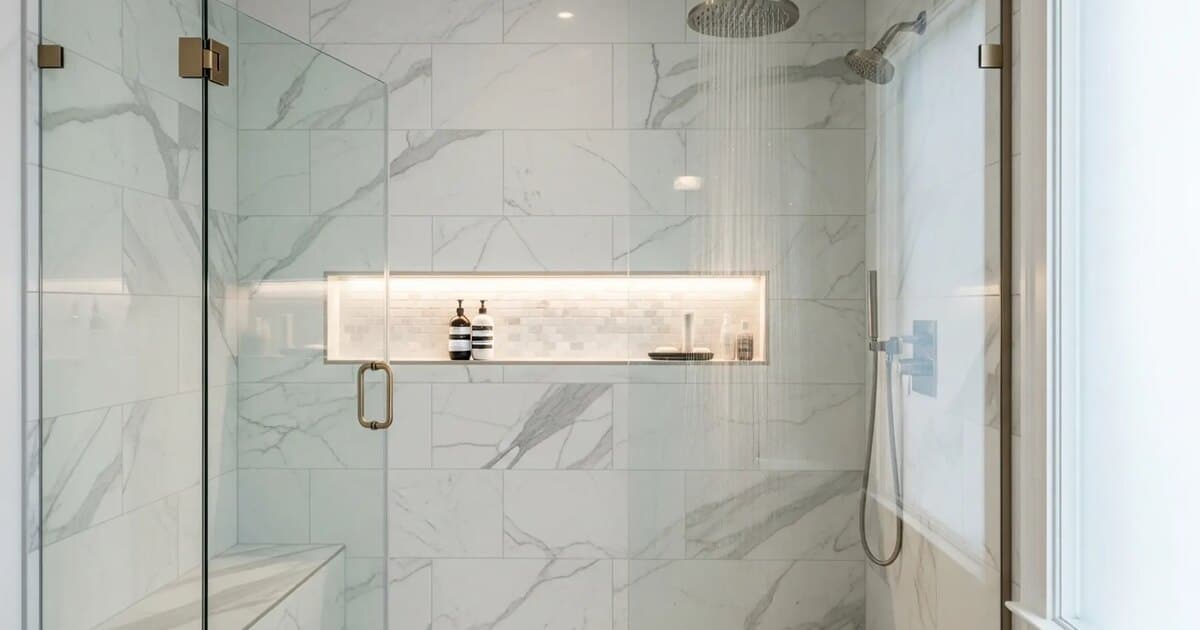
Harris Ranch and SE Boise represent the premium end of Boise's shower remodel market, and the projects in this corridor push the boundaries of what residential shower design can accomplish. Primary suites in Harris Ranch homes are generously proportioned — 200 to 400 square feet is not uncommon — and they attract homeowners who have the design vision and budget to realize the spa-quality shower experience that defines high-end residential bathroom design nationally. The defining characteristics of Harris Ranch shower remodels are material specification and execution quality. Large-format tile in 24x48 or larger formats, book-matched vein-match installations across walls using rectified porcelain with stone-look veining, linear drain systems with tile-insert covers that allow continuous large-format tile across the shower floor without interruption, and multi-function shower systems with ceiling rain heads, wall-mounted body sprays, and handheld wands on thermostatic valve systems are the specification vocabulary of this market. Each of these elements requires coordination, expertise, and attention to execution detail that meaningfully exceeds the standard of a basic tub-to-shower conversion. The linear drain installation deserves specific attention because it is both a premium specification and a technically demanding one. A linear drain requires a shower floor that slopes uniformly in a single plane toward the drain channel — as opposed to the four-way slope of a center-drain shower floor — which requires either a specialized sloped mortar bed fabricated to precise pitch or a pre-sloped foam system designed for linear drain use. When large-format tile is being installed on the floor and the installation must achieve near-zero lippage at each tile joint, the slope of the substrate must be absolutely consistent — variation in slope creates lippage variation in large tiles. We use precision laser levels during sloped substrate installation to achieve the tolerances that large-format linear-drain floors demand. Steam shower systems are an increasingly common Harris Ranch specification, and they require coordination across trades that is the general contractor's responsibility to manage. The steam generator (typically mounted in the adjacent vanity cabinet or in a mechanical space) requires a dedicated 240V circuit, a water supply, and a condensate drain. The shower enclosure must be fully enclosed — steam cannot escape the shower without defeating the purpose of the system — which affects glass panel design, door sealing, and any ceiling openings. The shower ceiling should be sloped to prevent steam condensation dripping onto bathers. All of these details are resolved in the design phase, not discovered mid-installation, which is why Harris Ranch steam shower projects require the most thorough pre-construction planning of any shower scope we execute.

The design phase is where your shower remodeling goes from a general idea to a specific plan. Good design balances aesthetics, functionality, budget, and the unique characteristics of your home and neighborhood in Boise. Here are the most popular design approaches and trends we see in Boise and the surrounding Treasure Valley.
Boise homeowners tend to favor designs that blend modern functionality with the regional character of Idaho homes. Here are the most requested design elements:
These design factors are specific to shower remodeling projects and affect both the look and function of the finished space:
Niche placement and sizing — position shower niches at a usable height (typically 48-60 inches from the floor), sized to fit standard product bottles, with tile that complements or contrasts the main wall tile
Showerhead height and placement — rain showerheads should be at least 80 inches high; handheld brackets should be reachable while seated on a bench if applicable
Tile layout planning — dry-lay tile patterns before installation to center patterns, plan cut tiles at edges, and verify grout line alignment across walls and floors
Drain location and type — center drains work for standard showers; linear drains allow large-format floor tile and enable curbless entries for accessible design
Lighting — recessed LED downlights rated for wet locations provide essential illumination; consider a lighted niche or accent lighting for a premium touch
Ventilation — ensure your exhaust fan is rated for the bathroom's cubic footage; inadequate ventilation is the primary cause of mold and moisture damage in showers
The materials and finishes you choose bring your design to life. Here are the options most commonly selected for shower remodeling projects in Boise:

Porcelain Tile (Walls and Floor)
$8–$25 per sq ft installedShower walls, floors, niches, and accent features

Natural Stone Tile (Marble, Travertine)
$15–$50+ per sq ft installedFeature walls, luxury shower floors, accent strips, and niche interiors
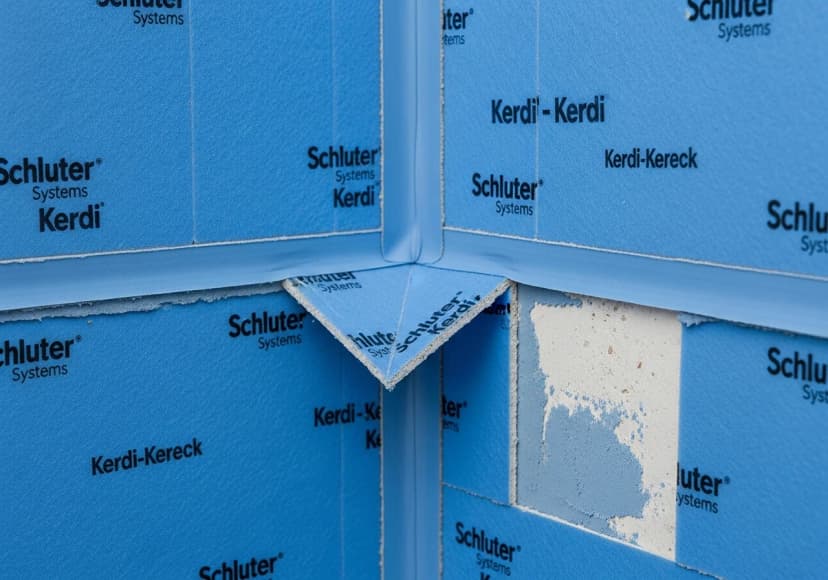
Waterproofing Membrane (Schluter Kerdi / Laticrete)
$1,500–$3,500 per shower (material and labor)Every shower floor, wall, curb, niche, and bench surface — no exceptions

Frameless Glass Enclosure
$1,200–$3,500 installedWalk-in showers where visual openness and modern design are priorities
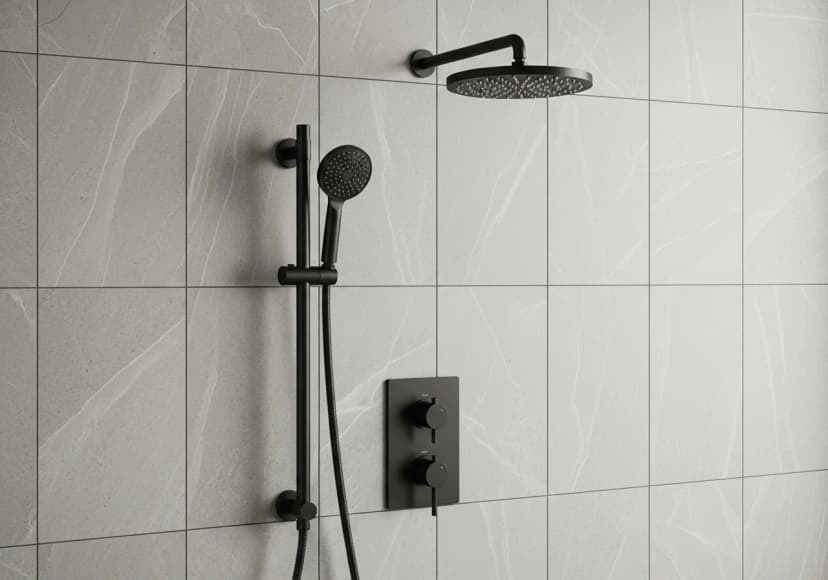
Shower Valve and Fixture Set
$300–$1,500 per setEvery shower — the valve is the functional heart of the shower system
Learning from others' mistakes saves time and money. Here are the most common shower remodeling design pitfalls we see in Boise:
Leaking shower with water damage behind walls and under the floor
We demolish to studs, inspect and repair all water-damaged framing and subfloor, and rebuild with a proper waterproofing membrane system that prevents future moisture intrusion.
Small, dark shower that feels cramped and uninviting
We expand the shower footprint where possible, use light-colored large-format tile to open up the space, install a frameless glass enclosure for visual openness, and add recessed LED lighting for a bright, spacious feel.
Outdated fiberglass or acrylic shower surround
We remove the old surround, inspect the substrate, install proper waterproofing, and build a custom tile shower that transforms both the look and feel of the space.
Poor water pressure and single-showerhead limitation
We evaluate your water supply capacity and install a pressure-balancing or thermostatic valve system with options for rain showerheads, handheld sprayers, and body jets — significantly improving the shower experience.
Mold and mildew in grout joints and silicone seams
We use mold-resistant grout, properly sealed tile joints, and premium silicone caulk at all change-of-plane transitions. A properly waterproofed shower with adequate ventilation prevents mold from developing behind the finished surface.
For shower remodeling projects in Boise, you have two main approaches to the design process: hiring a separate interior designer then a contractor, or working with a design-build firm that handles both under one roof.
Design-build (our approach)
- ✓ Single point of contact
- ✓ Design informed by real construction costs
- ✓ Faster project delivery
- ✓ Budget aligned from day one
Separate designer + contractor
- ● More specialized design expertise
- ● Independent design perspective
- ● Requires coordination between parties
- ● Can result in budget surprises
Local factors — Boise's housing stock and typical construction eras, the climate conditions that drive material and scheduling choices, and permitting through City of Boise Planning and Development Services — are covered in full on our Boise page for this service, alongside 5 common project types.
Shower Remodeling in Boise: housing stock, climate & permits →Can you make a shower accessible without it looking institutional?
Absolutely. Modern accessible shower design uses curbless entries with linear drains, decorative grab bars in matching finishes, teak fold-down benches, and the same premium tile and glass as any custom shower. The result is a beautiful shower that happens to be accessible.
How do I keep my new shower looking good long-term?
Use a daily shower spray to prevent mineral and soap buildup, squeegee glass after each use, and reseal grout annually. We use premium grout and silicone that resist mold and staining, and our waterproofing system ensures the structure stays dry and damage-free behind the tile.
Does the North End have special remodeling rules?
Yes. The North End Historic District has additional design review requirements for exterior modifications. Interior work is not affected, but changes to the exterior appearance — siding, windows, roofing, and additions — may require Historic Preservation Commission review.
Planning shower remodeling in Boise?
Get expert guidance and a free estimate for your shower remodeling project in Boise, ID.
Get Your Free Estimate