
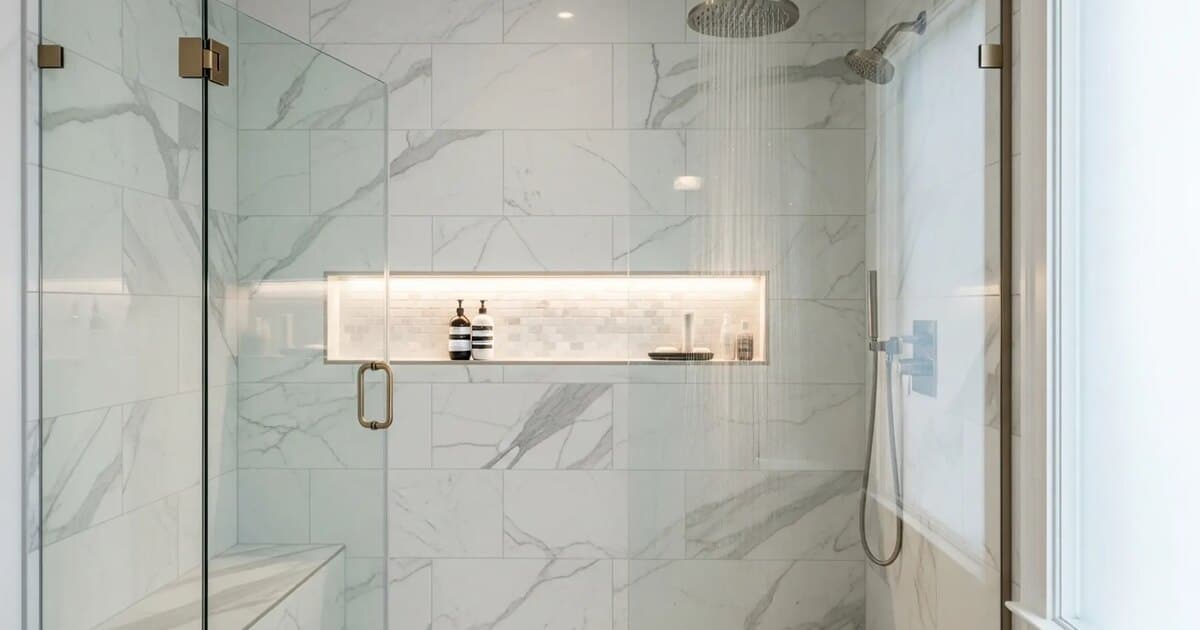
Shower Remodeling Design Ideas for Meridian
Get inspired with shower remodeling design ideas tailored to Meridian homes, from trending styles to practical layout considerations.
Quick answer
Can you make a shower accessible without it looking institutional? Absolutely. Modern accessible shower design uses curbless entries with linear drains, decorative grab bars in matching finishes, teak fold-down benches, and the same premium tile and glass as any custom shower.
Meridian, ID · Shower Remodeling
Planning shower remodeling in Meridian?
Read the full guide below — or get your project priced now. Free, no-obligation estimates from an Idaho registered local team, backed by a 1-year workmanship warranty.
- Licensed Idaho RCE-6681702
- 1-Year Workmanship Warranty
- $2M Liability Coverage
- Free, No-Obligation Estimates


Meridian's shower remodel market differs from Boise's in ways that reflect the cities' distinct housing histories and demographic profiles. The housing vintage is the most consequential difference. Boise's shower remodel market spans a century of construction — from the mud-bed tile showers in 1920s North End bungalows to the fiberglass modules in 1990s west Boise production homes to the newer construction of Harris Ranch. Meridian's market is far more concentrated in the 1995-to-2010 construction vintage, where the dominant shower type is the production-grade fiberglass module. This concentration creates a predictable and consistent failure pattern — the same reasons and the same structural discovery conditions appear across project after project in Meridian — that allows Iron Crest to deliver more consistent scope accuracy and more reliable budget estimates for Meridian shower projects than for the more varied Boise market. The HOA dimension affects Meridian shower remodels primarily at the notification and permit coordination level. While interior remodels generally don't require HOA design review, some Meridian associations have permit notification requirements that add a step to the project process. More importantly, the HOA landscape in Meridian means that exterior visual changes associated with a bathroom remodel — adding a window, changing a vent location, or modifying exterior surfaces to accommodate new plumbing — require HOA review that a Boise homeowner outside an HOA community would not need to navigate. The most practically significant difference is the subfloor material. Meridian's production homes use OSB subfloor almost universally, while Boise's older homes have plywood or original plank subfloors that handle moisture exposure differently. OSB's greater sensitivity to moisture means that the discovery rate of subfloor damage requiring replacement is higher in Meridian than in Boise's older stock — an important budget contingency consideration that Iron Crest communicates explicitly at the proposal stage for every Meridian shower remodel.
South Meridian
South Meridian's shower remodel market is the highest-volume segment of Iron Crest's Meridian shower business, driven by the sheer number of 1995-to-2008 production homes whose original fiberglass modules have reached the end of their service life simultaneously. The renovation driver in South Meridian is overwhelmingly practical: these homeowners are not driven primarily by aesthetic aspiration (though the finished result consistently exceeds their expectations) but by the visible and functional failure of the original installation. The most common South Meridian shower condition is the primary suite three-piece fiberglass module with cracked base sections and a growing mold problem in the tub-surround caulk bead. The crack is typically at the drain fitting — where daily flex from user weight concentrates on the same small area of fiberglass — and allows water to seep into the OSB subfloor beneath. By the time the homeowner calls Iron Crest, the subfloor shows at least some moisture saturation and in many cases early delamination. The demolition inspection is always documented photographically, and the subfloor remediation scope is presented to the homeowner before any additional work proceeds. The combination of structural remediation and custom shower installation typically runs $11,500 to $17,000 — a larger investment than homeowners initially anticipate, and one where the remediation half is not optional once the demolition has exposed it. The finish expectations in South Meridian are realistic rather than aspirational. Homeowners in this submarket typically select mid-range materials — 12x24 or 24x24 porcelain wall tile in a neutral stone-look or solid color, a 2x2 mosaic or 4x4 porcelain shower floor, a single built-in niche, and a semi-frameless or frameless glass enclosure. The result looks genuinely contemporary and high-quality without the premium cost of large-format rectified tile or thermostatic valve systems, and it photographs well, which matters in a submarket where several comparable homes are often listed at once.
North Meridian
North Meridian's shower remodel market sits between South Meridian's practical-driven replacements and Paramount's premium-aspirational projects. The homes in North Meridian's active development corridors — built from 2005 to 2015 in many cases — are slightly newer than South Meridian's stock and have somewhat more generous primary suite floor plans that accommodate larger shower footprints. The most interesting North Meridian shower dynamic is the first-upgrade cycle for homes built in the 2008-to-2012 post-recession era. These homes were built during a period of compressed construction budgets and feature some of the lowest-quality builder specifications of any Meridian construction vintage — thinner fiberglass modules, lower-grade plumbing fixtures, and in some cases reduced framing quality. The 15-to-17-year failure timeline is arriving for this vintage now, and the homeowners are discovering that the original installation was even less robust than the typical production home standard. Iron Crest consistently finds subfloor damage in these projects that begins at the module seams rather than just the drain area, indicating wider-than-typical moisture infiltration across the module's base. North Meridian homeowners also show stronger interest in accessible design features than South Meridian's demographic — the neighborhood attracts more buyers in the 55-and-over age range who are building or renovating with long-term occupancy in mind. Zero-threshold shower entries, built-in benches at the correct accessible height (17 to 19 inches), and blocking installed in the walls for future grab bar addition are features Iron Crest incorporates at the design phase for these clients.
Paramount / Lochsa Falls
Paramount and Lochsa Falls represent Meridian's premium shower remodel market, where more generously proportioned primary suite bathrooms and homeowners with higher finish expectations create demand for the same quality tier of shower work that defines Boise's Harris Ranch market. The defining characteristic of Paramount and Lochsa Falls shower remodels is the premium material specification. Large-format rectified porcelain in 24x48 or larger formats, stone-look products with realistic veining, linear drain systems with tile-insert covers, frameless glass enclosures with premium hardware (Sugatsune, Dorma, or equivalent), and thermostatic shower valve systems with ceiling rain heads and body sprays are the standard vocabulary of this market. These specifications require execution quality that is meaningfully higher than a basic South Meridian conversion — the tolerances for large-format tile installation, the precision of linear drain slope, and the quality of frameless glass fabrication all need to perform at a level consistent with the premium material investment. HOA considerations in Paramount and Lochsa Falls affect shower remodels primarily through the bathroom remodel notification requirements that some associations include in their architectural guidelines. While interior remodels generally do not require HOA approval, some Paramount sections require notification for any project involving plumbing permits — because plumbing permits are pulled as part of shower remodel scope in any project involving drain relocation or valve rough-in changes, these notification requirements must be followed. Iron Crest reviews each HOA's applicable CC&Rs for interior remodel notification requirements before pulling permits, ensuring compliance from the outset.

The design phase is where your shower remodeling goes from a general idea to a specific plan. Good design balances aesthetics, functionality, budget, and the unique characteristics of your home and neighborhood in Meridian. Here are the most popular design approaches and trends we see in Meridian and the surrounding Treasure Valley.
Meridian homeowners tend to favor designs that blend modern functionality with the regional character of Idaho homes. Here are the most requested design elements:
These design factors are specific to shower remodeling projects and affect both the look and function of the finished space:
Niche placement and sizing — position shower niches at a usable height (typically 48-60 inches from the floor), sized to fit standard product bottles, with tile that complements or contrasts the main wall tile
Showerhead height and placement — rain showerheads should be at least 80 inches high; handheld brackets should be reachable while seated on a bench if applicable
Tile layout planning — dry-lay tile patterns before installation to center patterns, plan cut tiles at edges, and verify grout line alignment across walls and floors
Drain location and type — center drains work for standard showers; linear drains allow large-format floor tile and enable curbless entries for accessible design
Lighting — recessed LED downlights rated for wet locations provide essential illumination; consider a lighted niche or accent lighting for a premium touch
Ventilation — ensure your exhaust fan is rated for the bathroom's cubic footage; inadequate ventilation is the primary cause of mold and moisture damage in showers
The materials and finishes you choose bring your design to life. Here are the options most commonly selected for shower remodeling projects in Meridian:

Porcelain Tile (Walls and Floor)
$8–$25 per sq ft installedShower walls, floors, niches, and accent features

Natural Stone Tile (Marble, Travertine)
$15–$50+ per sq ft installedFeature walls, luxury shower floors, accent strips, and niche interiors
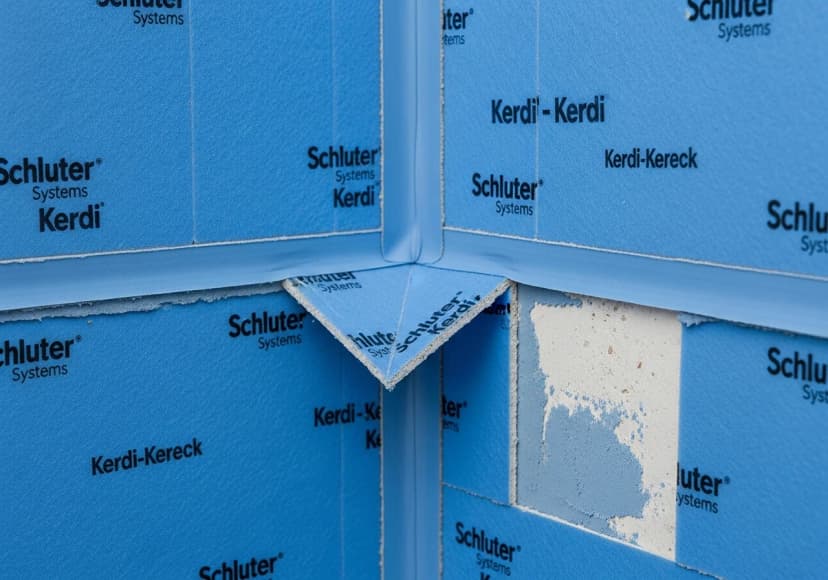
Waterproofing Membrane (Schluter Kerdi / Laticrete)
$1,500–$3,500 per shower (material and labor)Every shower floor, wall, curb, niche, and bench surface — no exceptions

Frameless Glass Enclosure
$1,200–$3,500 installedWalk-in showers where visual openness and modern design are priorities
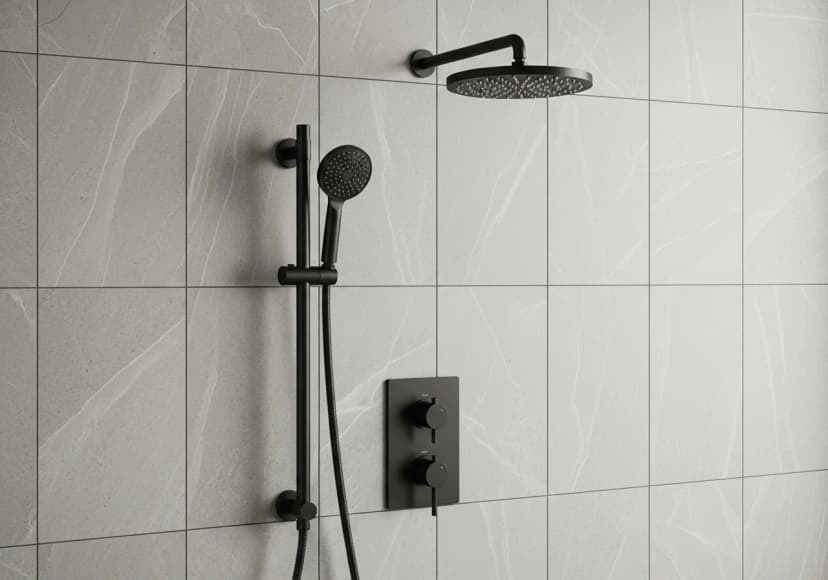
Shower Valve and Fixture Set
$300–$1,500 per setEvery shower — the valve is the functional heart of the shower system
Learning from others' mistakes saves time and money. Here are the most common shower remodeling design pitfalls we see in Meridian:
Leaking shower with water damage behind walls and under the floor
We demolish to studs, inspect and repair all water-damaged framing and subfloor, and rebuild with a proper waterproofing membrane system that prevents future moisture intrusion.
Small, dark shower that feels cramped and uninviting
We expand the shower footprint where possible, use light-colored large-format tile to open up the space, install a frameless glass enclosure for visual openness, and add recessed LED lighting for a bright, spacious feel.
Outdated fiberglass or acrylic shower surround
We remove the old surround, inspect the substrate, install proper waterproofing, and build a custom tile shower that transforms both the look and feel of the space.
Poor water pressure and single-showerhead limitation
We evaluate your water supply capacity and install a pressure-balancing or thermostatic valve system with options for rain showerheads, handheld sprayers, and body jets — significantly improving the shower experience.
Mold and mildew in grout joints and silicone seams
We use mold-resistant grout, properly sealed tile joints, and premium silicone caulk at all change-of-plane transitions. A properly waterproofed shower with adequate ventilation prevents mold from developing behind the finished surface.
For shower remodeling projects in Meridian, you have two main approaches to the design process: hiring a separate interior designer then a contractor, or working with a design-build firm that handles both under one roof.
Design-build (our approach)
- ✓ Single point of contact
- ✓ Design informed by real construction costs
- ✓ Faster project delivery
- ✓ Budget aligned from day one
Separate designer + contractor
- ● More specialized design expertise
- ● Independent design perspective
- ● Requires coordination between parties
- ● Can result in budget surprises
Local factors — Meridian's housing stock and typical construction eras, the climate conditions that drive material and scheduling choices, and permitting through City of Meridian Building Department — are covered in full on our Meridian page for this service, alongside 5 common project types.
Shower Remodeling in Meridian: housing stock, climate & permits →Can you make a shower accessible without it looking institutional?
Absolutely. Modern accessible shower design uses curbless entries with linear drains, decorative grab bars in matching finishes, teak fold-down benches, and the same premium tile and glass as any custom shower. The result is a beautiful shower that happens to be accessible.
How do I keep my new shower looking good long-term?
Use a daily shower spray to prevent mineral and soap buildup, squeegee glass after each use, and reseal grout annually. We use premium grout and silicone that resist mold and staining, and our waterproofing system ensures the structure stays dry and damage-free behind the tile.
Planning shower remodeling in Meridian?
Get expert guidance and a free estimate for your shower remodeling project in Meridian, ID.
Get Your Free Estimate