
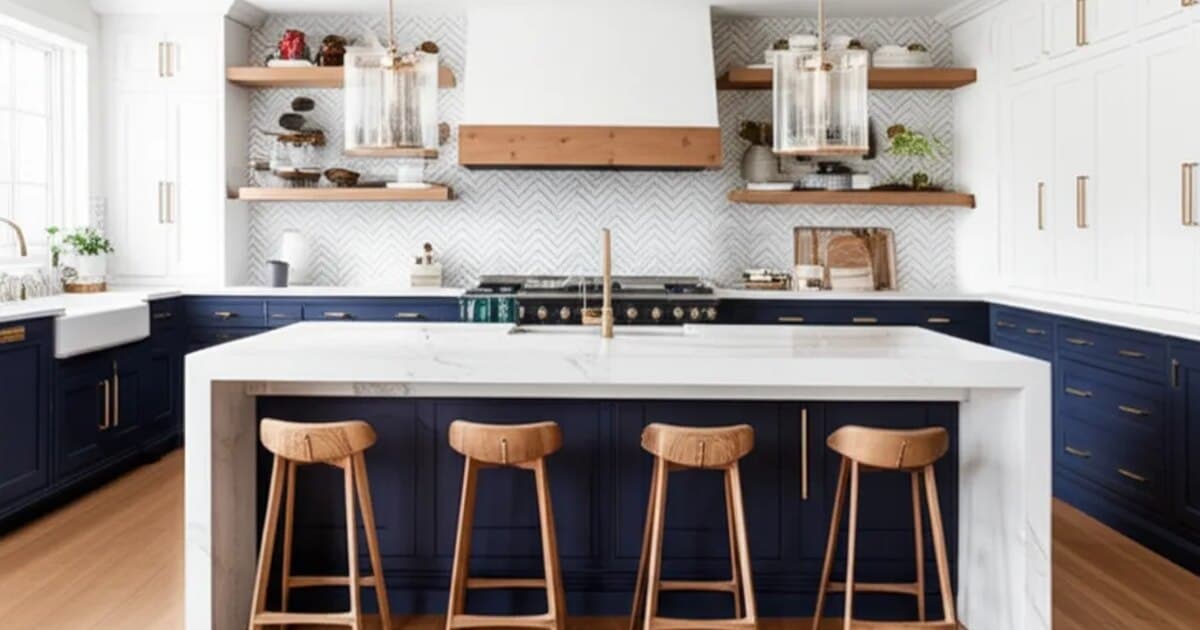
Kitchen Remodeling Design Ideas for Garden City
Get inspired with kitchen remodeling design ideas tailored to Garden City homes, from trending styles to practical layout considerations.
Quick answer
Can you open up my kitchen to the living room? Yes. If the wall between the kitchen and living room is load-bearing, we install a structural header (beam) to carry the load. This is a common modification in Treasure Valley homes and creates a dramatic improvement in light, flow, and entertaining function.
Garden City, ID · Kitchen Remodeling
Planning kitchen remodeling in Garden City?
Read the full guide below — or get your project priced now. Free, no-obligation estimates from an Idaho registered local team, backed by a 1-year workmanship warranty.
- Licensed Idaho RCE-6681702
- 1-Year Workmanship Warranty
- $2M Liability Coverage
- Free, No-Obligation Estimates


Garden City kitchen remodeling is categorically different from kitchen work in Meridian, Nampa, or even most of Boise. The difference isn't just demographic — it's philosophical. Garden City attracts people who moved here specifically because they didn't want to live in a subdivision, didn't want a builder-grade home, and don't want a kitchen that looks like it came from a catalog. These clients bring design vision to the table and want a contractor who can translate that vision into reality without watering it down. The housing stock itself demands creativity. There is no "standard" Garden City kitchen — the range from 900-square-foot river cottages to 3,000-square-foot live-work lofts means that every project begins from a completely different baseline. A Garden City kitchen contractor must be genuinely skilled at space planning in compact environments, at structural assessment for mid-century open-concept conversions, and at designing for the industrial-modern aesthetic that the Live-Work-Create District demands. Generic kitchen contractors who apply the same layout solutions and the same material palettes from one project to the next will produce work that feels out of place in Garden City — and their clients will know it. The Greenbelt context also creates opportunities for indoor-outdoor kitchen connection that simply don't exist in landlocked suburban communities. A kitchen that opens to a deck overlooking the Greenbelt or that captures the cottonwood-shaded microclimate of a river-adjacent yard is a genuinely special thing, and designing for that connection requires thinking about the kitchen not as an isolated room but as part of a larger indoor-outdoor living sequence. Iron Crest's approach to Garden City kitchen design always begins with understanding how the kitchen relates to the outdoor environment and lifestyle of the property.
Greenbelt Corridor
The Greenbelt Corridor encompasses Garden City's river-adjacent properties — cottages, bungalows, and small ranches within a few blocks of the Boise River and the paved multi-use path that makes this area one of the most desirable low-car-optional addresses in the Treasure Valley. Kitchens in these properties are defined by their compact footprints and their orientation toward the outdoors: owners here are accustomed to cooking in tight spaces, but they want those spaces to feel intentional and well-designed rather than merely tolerant of the constraints. The moisture variable is real in this micro-area. Spring runoff from March through May brings elevated humidity to properties closest to the river, and some of the older cottages have experienced minor flood events that have left moisture in their floor systems and exterior walls. Any kitchen remodel in the Greenbelt Corridor should begin with a moisture assessment — particularly for homes on crawlspaces — to ensure that new cabinets and flooring are installed over a dry, stable substrate. Iron Crest's pre-construction process in this area includes checking for moisture indicators and addressing any remediation before new materials go in. Design sensibility in the Greenbelt Corridor leans toward the warm and natural: wood accents, open shelving with personally curated collections, butcher block or honed stone countertops, and a color palette drawn from the riverine environment of sage, warm grey, deep green, and weathered wood tones. These kitchens are meant to connect indoors to the Greenbelt lifestyle, not to feel like they were transplanted from a Meridian model home. The challenge and the reward of working in this area is creating a kitchen that feels completely at home in its specific place — a design achievement that requires genuine local knowledge.
Live-Work-Create District
The Live-Work-Create District is Garden City's most architecturally adventurous zone — a flexible-zoning area where residential, commercial, and creative uses coexist in buildings that range from converted commercial structures to purpose-built live-work units. Kitchen remodeling here operates at a completely different design frequency from the rest of Garden City and, frankly, from most of the Treasure Valley. Clients in the Live-Work-Create District are typically artists, designers, food entrepreneurs, consultants, and creative professionals who have strong, well-developed aesthetic opinions and want their kitchen to function as both a serious workspace and a design statement. Open shelving is almost universally preferred over closed upper cabinets — these clients want to display their cast-iron collection, their ceramics, their curated pantry goods. Industrial materials like blackened steel, raw concrete, exposed brick, and smoked glass are not just acceptable but actively desired. Appliance specifications often run toward commercial or semi-commercial: 48-inch ranges, pot filler faucets, deep prep sinks, integrated wine storage. The permitting process for kitchen work in the Live-Work-Create District requires attention to the use classification of the property. Some live-work units are permitted with commercial kitchen-capable electrical service; others are permitted as residential and require an electrical assessment before commercial-grade appliances can be installed. Iron Crest navigates the City of Garden City's flexible zoning framework to ensure that every project is properly permitted for its actual use, which protects homeowners from insurance and resale complications that can arise from work done under the wrong permit classification.
Garden City Core
The Garden City Core — the central residential area away from the river and the Live-Work-Create District — contains Garden City's most conventional housing stock: 1960s and 1970s ranches, modest mid-century homes, and the newer infill and townhome development that has brought fresh investment into the community. Kitchens here span a wide range of conditions, from completely original 1970s installations that have been maintained but never updated to partial renovations that mixed eras uncomfortably. The most common kitchen project in the Garden City Core is the mid-century open-concept conversion — removing the partition wall that separated the kitchen from the dining or living area to create a flowing main floor. These walls are almost always non-load-bearing, though Iron Crest always verifies this with a structural assessment before any demolition begins. The resulting open layout transforms the functional and social experience of the home, making a modest 1,200-square-foot house feel significantly more spacious without adding a single square foot. The Garden City Core also has a growing contingent of newer townhome owners who purchased builder-grade units and want to differentiate their space from the identical units in their development. These clients often come to Iron Crest with a specific aesthetic in mind — they've done their design research, they know their preferred cabinet brand, they've chosen their countertop slab. Serving these clients well means executing their vision with precision rather than steering them toward easier or cheaper alternatives, which is a skill that separates design-capable contractors from purely execution-focused ones.
Chinden Corridor
The Chinden Corridor runs along the commercial-residential transition zone on the north edge of Garden City, where businesses, light industrial uses, and residential properties exist in a density that reflects Garden City's historically informal approach to zoning. Homes in this area tend to be older and more modest, occupied by long-term Garden City residents who have an attachment to the community that predates the current wave of creative and professional interest. Kitchens in the Chinden Corridor often reflect decades of owner-maintenance rather than professional remodeling — functional but showing the accumulation of budget-driven updates over the years. The approach here is thoughtful value: using cabinet repainting to transform the visual character without the cost of full replacement, specifying quartz countertops that provide a lasting upgrade, and focusing the design energy on the elements that have the highest visual impact per dollar. These are not clients who want to blow their savings on a kitchen renovation, but they do deserve — and respond enthusiastically to — a space that finally feels put-together and intentional. The Chinden Corridor's location also means that some properties have experienced greater traffic noise and urban heat than the Greenbelt Corridor. Kitchen ventilation is an important consideration in these homes, both for cooking odors and for summer heat management. A quality range hood vented to the exterior is not just a cooking convenience but a meaningful comfort upgrade in a Chinden Corridor kitchen.

The design phase is where your kitchen remodeling goes from a general idea to a specific plan. Good design balances aesthetics, functionality, budget, and the unique characteristics of your home and neighborhood in Garden City. Here are the most popular design approaches and trends we see in Garden City and the surrounding Treasure Valley.
Garden City homeowners tend to favor designs that blend modern functionality with the regional character of Idaho homes. Here are the most requested design elements:
These design factors are specific to kitchen remodeling projects and affect both the look and function of the finished space:
Work triangle efficiency — the relationship between sink, stove, and refrigerator determines daily cooking workflow
Island sizing — a functional island needs 36 inches of clearance minimum (42–48 inches on working sides) and a 12–15 inch overhang for seating
Cabinet height — standard uppers are 30 or 36 inches tall; going to the ceiling eliminates dust-catching gaps and adds storage
Backsplash height — full-height backsplash from counter to upper cabinets creates a cleaner, more modern look
Hardware coordination — pulls vs knobs, bar vs cup style, and finish (matte black, brushed brass, satin nickel) set the design tone
Pantry planning — a dedicated pantry cabinet or walk-in pantry dramatically improves kitchen organization
The materials and finishes you choose bring your design to life. Here are the options most commonly selected for kitchen remodeling projects in Garden City:
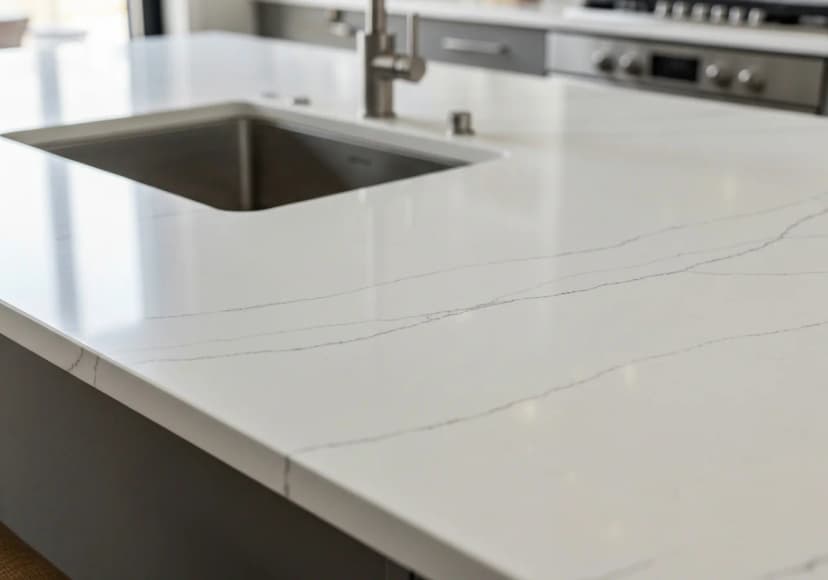
Quartz Countertops
$55–$100 per sq ft fabricated and installedMost kitchen applications — especially busy households
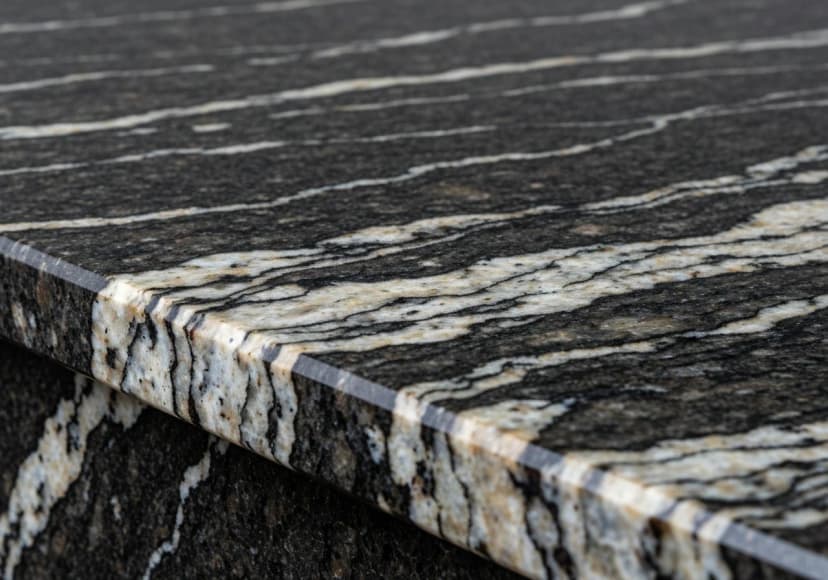
Granite Countertops
$45–$90 per sq ft fabricated and installedHomeowners who want natural stone with unique veining
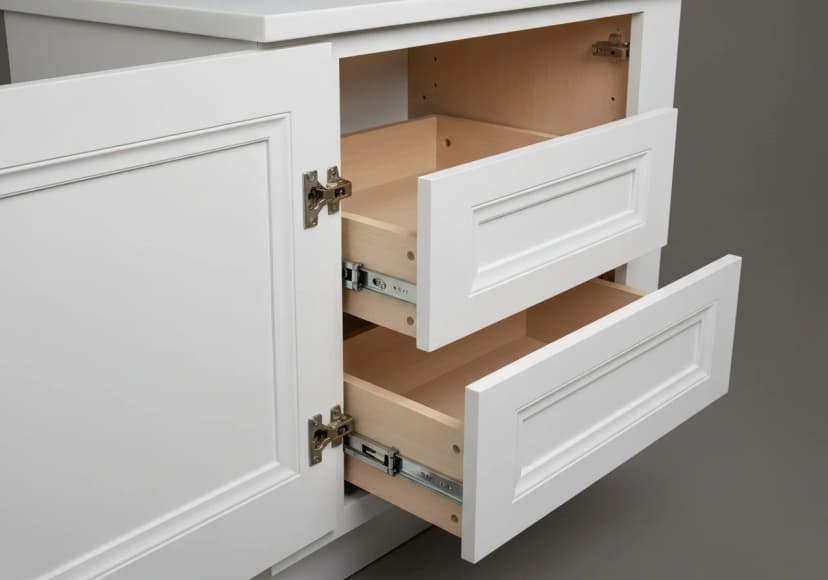
Semi-Custom Cabinets
$300–$650 per linear foot installedMost kitchen remodels — best balance of customization and value
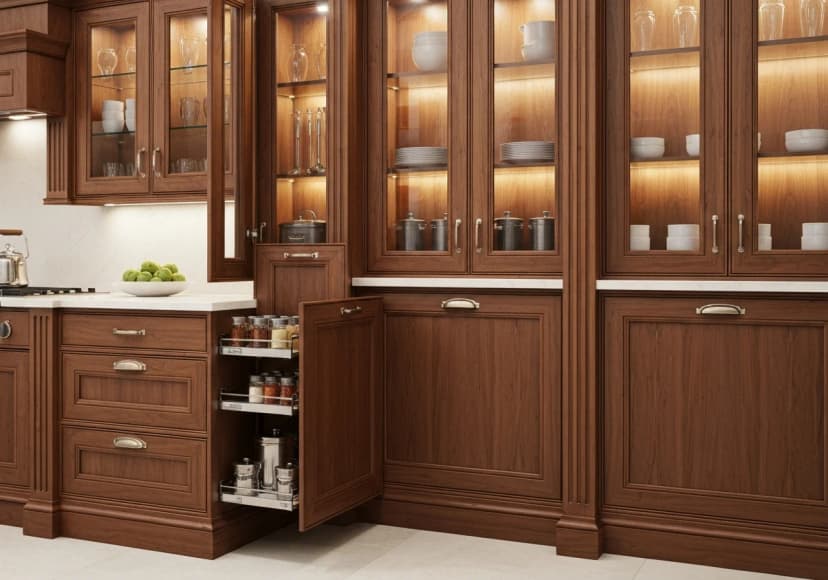
Custom Cabinets
$600–$1,200+ per linear foot installedHigh-end kitchens, unusual layouts, and specific design visions
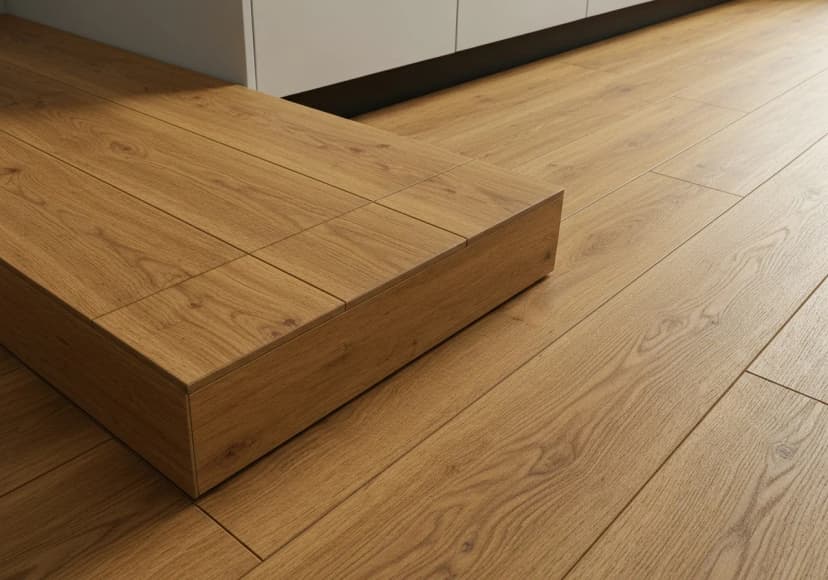
Luxury Vinyl Plank (LVP) Flooring
$5–$12 per sq ft installedKitchen floors — especially homes with pets and children
Learning from others' mistakes saves time and money. Here are the most common kitchen remodeling design pitfalls we see in Garden City:
Closed-off kitchen with poor flow to living spaces
We evaluate load-bearing walls, design structural solutions, and open the kitchen to adjacent rooms for better light, flow, and entertaining function.
Not enough counter space or storage
We redesign cabinet layouts to maximize storage with pull-out shelves, drawer organizers, pantry towers, and optimized island configurations with more usable counter surface.
Outdated builder-grade finishes and worn surfaces
We replace cabinets, countertops, backsplash, lighting, and hardware with current, durable materials that reflect your style and improve daily function.
Poor lighting — dark corners and shadows on work surfaces
We layer recessed ceiling lights, under-cabinet task lighting, and pendant fixtures over islands and sinks to eliminate shadows and brighten the entire space.
Insufficient electrical capacity for modern appliances
We upgrade circuits, add dedicated appliance outlets, install GFCI protection, and ensure the panel can support a modern kitchen's electrical load.
For kitchen remodeling projects in Garden City, you have two main approaches to the design process: hiring a separate interior designer then a contractor, or working with a design-build firm that handles both under one roof.
Design-build (our approach)
- ✓ Single point of contact
- ✓ Design informed by real construction costs
- ✓ Faster project delivery
- ✓ Budget aligned from day one
Separate designer + contractor
- ● More specialized design expertise
- ● Independent design perspective
- ● Requires coordination between parties
- ● Can result in budget surprises
Local factors — Garden City's housing stock and typical construction eras, the climate conditions that drive material and scheduling choices, and permitting through City of Garden City Building Department — are covered in full on our Garden City page for this service, alongside 5 common project types.
Kitchen Remodeling in Garden City: housing stock, climate & permits →Do kitchen remodels require permits?
Yes. Most kitchen remodels that involve electrical, plumbing, or structural changes require permits from your city or county building department. Cosmetic-only updates (painting cabinets, new hardware, replacing a faucet) typically do not. We handle all permit applications and inspections.
Can you open up my kitchen to the living room?
Yes. If the wall between the kitchen and living room is load-bearing, we install a structural header (beam) to carry the load. This is a common modification in Treasure Valley homes and creates a dramatic improvement in light, flow, and entertaining function.
Planning kitchen remodeling in Garden City?
Get expert guidance and a free estimate for your kitchen remodeling project in Garden City, ID.
Get Your Free Estimate