
Best Materials for Deck Builder in Boise
Explore the most popular material options for deck building in Boise, with pricing, durability, and style comparisons to help you choose.
Quick answer
Quality composite decking from brands like Trex, TimberTech, and AZEK typically lasts 25-50 years with minimal maintenance. The boards resist fading, staining, scratching, and moisture damage. The pressure-treated framing underneath should be inspected periodically.
Boise, ID · Deck Builder
Planning deck building in Boise?
Read the full guide below — or get your project priced now. Free, no-obligation estimates from an Idaho registered local team, backed by a 1-year workmanship warranty.
- Licensed Idaho RCE-6681702
- 1-Year Workmanship Warranty
- $2M Liability Coverage
- Free, No-Obligation Estimates


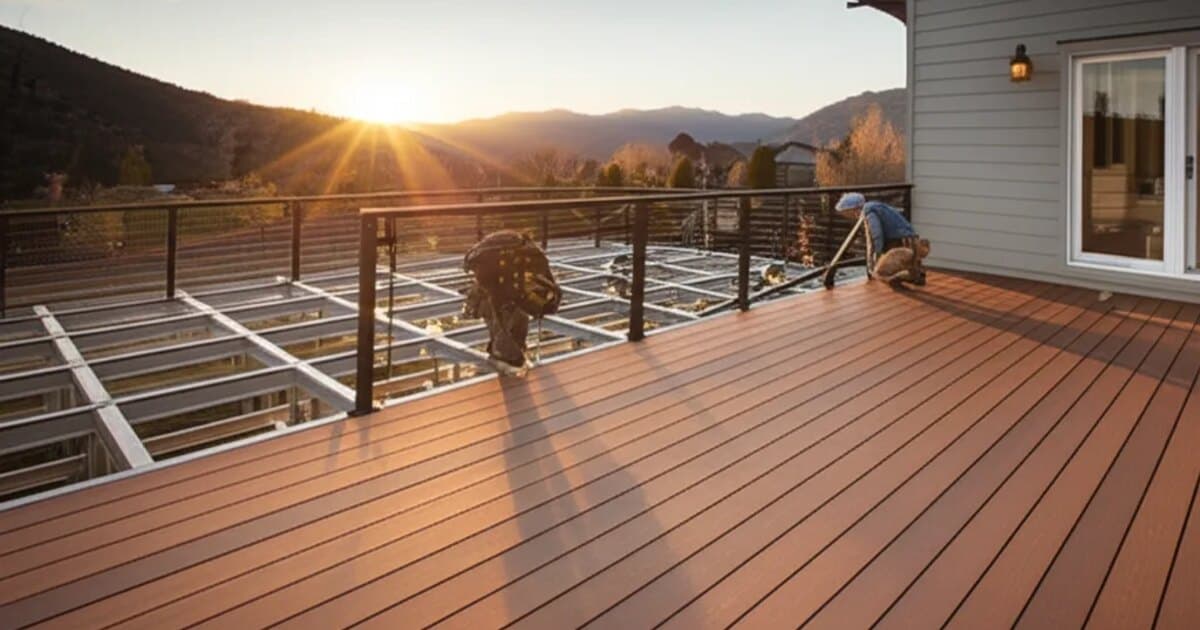
Material selection for a Boise deck is not a catalog exercise — it is a climate engineering decision. A high-desert sun, a median-year temperature swing from roughly 8°F to 104°F, and about 87 freeze-thaw cycles a year — days on which the temperature crosses the freezing mark (NOAA KBOI daily records, 1996–2025, via the Iowa Environmental Mesonet; 30-year mean 87, range 56–108) create a performance environment that separates durable materials from ones that fail prematurely. Composite decking has earned its dominant position in the Boise deck replacement market through demonstrated performance rather than marketing. Trex and TimberTech — the two brands most commonly specified by Boise deck builders — have both engineered their core compositions to address the thermal expansion that Boise's temperature range demands. A south-facing Boise deck can sit in direct sun on a 100°F+ afternoon and drop toward single digits on a January night. Gap spacing and fastener selection have to account for that full range: we set gaps from the manufacturer's published table for the temperature at the time of installation, and hidden fastener systems that let the board move prevent the buckling and surface waviness that occur when boards are installed too tightly. Trex's Transcend line and TimberTech's Terrain collection both use capped composite technology — a protective polymer shell bonded over the wood-fiber core — that resists the UV fading that was a legitimate complaint about first-generation composite products in the 1990s and early 2000s. Between Trex and TimberTech, the performance difference in Boise's climate is marginal; the selection typically comes down to color range and price point. TimberTech's AZEK line — made from 100% cellular PVC rather than wood-fiber composite — is the premium choice for homeowners who want the absolute maximum resistance to moisture, UV, and thermal cycling. AZEK's all-PVC composition means there is no wood fiber to absorb moisture in Boise's occasional high-humidity periods (late-summer monsoon flow and spring snowmelt), which makes it the preferred material for deck surfaces adjacent to grade or in areas with limited drainage. It carries a price premium over wood-composite Trex, which is offset over the deck's life by eliminated refinishing and board replacement. Pressure-treated lumber remains the standard and appropriate choice for structural framing — posts, beams, joists, and ledger boards — regardless of what material is used for the deck surface. Modern CA (copper azole) treated lumber, which replaced the arsenic-bearing CCA treatment that manufacturers voluntarily withdrew from most residential uses at the end of 2003 under an EPA agreement, provides adequate rot and insect resistance for Boise's climate when properly installed with post bases that keep post ends off concrete and away from standing water. Post bases are non-negotiable in Boise: setting a pressure-treated post directly into concrete, as older deck construction often did, creates a moisture trap at the wood-concrete interface that accelerates rot even in treated lumber. Every Iron Crest deck uses Simpson Strong-Tie or equivalent adjustable post bases that hold the post end above the concrete surface. Cedar and redwood are the premium natural wood choices for Boise decks where material authenticity matters — primarily in North End Craftsman projects and higher-end custom designs where the warm color and grain of real wood is part of the design intent. Western red cedar is the more available and cost-effective of the two in Treasure Valley lumber yards; it is naturally resistant to rot and insect damage and takes oil-based finishes beautifully. The honest maintenance requirement for cedar in Boise's climate: a penetrating oil finish every 2–3 years to replace the UV protection that Boise's intense sun burns off faster than in cloudier markets. Homeowners who are committed to that maintenance schedule get a deck with irreplaceable aesthetic character; homeowners who aren't should choose composite. Railing systems are the second-most-visible material choice in a Boise deck and the one most affected by the view-orientation culture of Boise's elevated properties. Cable railing — horizontal stainless-steel cable tensioned between steel posts — provides near-transparent sightlines with a contemporary aesthetic that complements both the modern and transitional design languages common in Boise's remodel market. Glass panel railings provide the maximum view transparency for elevated Bench and South Boise foothills decks but require regular cleaning in Boise's dusty, pollen-heavy spring and summer seasons — a maintenance factor that not all homeowners anticipate. Aluminum railing systems (Westbury, TimberTech's Impression Rail) provide low-maintenance performance with good aesthetics at a lower cost than cable or glass. Composite and wood railings can be appropriate in North End and Bench contexts where architectural continuity with the home's character is a priority. Footing and foundation material for Boise decks is not optional specification territory — it is structural engineering executed in concrete. Tube-formed concrete piers are the standard footing type; the tube diameter and concrete quantity are determined by the tributary load of the posts they support and the soil bearing capacity at the site. Boise's 24-inch minimum frost depth means that a standard residential deck pier is poured to at least that depth, and deeper where the approved plans or soil conditions call for it. Sonotube-formed piers are the most common approach; helical piers (screw piles) are an increasingly used alternative that eliminates excavation and concrete curing time, allowing framing to begin the same day foundations are installed.
Choosing the right materials is one of the most important decisions in any deck building project. The materials you select affect the look, durability, maintenance requirements, and overall cost of the finished project. Here is a detailed look at the most popular material options for deck building in Boise and the Treasure Valley.
These are the most commonly used materials for deck building projects in Boise. Each has different characteristics that affect cost, durability, and style:

Trex Composite Decking
$8–$16 per sq ft (material only)The most popular composite decking brand in the Treasure Valley. Made from recycled materials, available in multiple color lines (Enhance, Select, Transcend), fade- and scratch-resistant with a 25-year limited warranty.
Best for: Homeowners who want a low-maintenance, long-lasting deck surface with consistent color

TimberTech / AZEK Composite Decking
$10–$22 per sq ft (material only)Premium composite and PVC decking with realistic wood grain patterns, excellent fade and stain resistance, and industry-leading warranties up to 50 years. AZEK PVC boards offer superior moisture resistance.
Best for: Premium projects where appearance, longevity, and warranty are top priorities

Cedar Decking
$6–$12 per sq ft (material only)Natural western red cedar provides a warm, beautiful deck surface with natural resistance to rot and insects. Requires staining or sealing every 2-3 years to maintain its color and prevent graying.
Best for: Homeowners who prefer natural wood appearance and are willing to maintain it

Pressure-Treated Lumber (Framing and Economy Decking)
$3–$6 per sq ft (material only)Chemically treated pine or fir that resists rot and insect damage. Used for all deck framing (posts, beams, joists) and available as an economy decking surface option. Requires staining or sealing.
Best for: Deck framing, budget-conscious projects, and utility decks

Aluminum or Composite Railing Systems
$30–$80 per linear foot installedPre-engineered railing systems that provide clean lines, code-compliant baluster spacing, and low maintenance. Available in multiple colors and styles including cable rail, glass panel, and traditional baluster designs.
Best for: All deck railing applications — especially with composite decking for a unified low-maintenance design

Boise has a semi-arid, four-season climate with hot, dry summers (90-105°F), cold winters (15-35°F), and low annual precipitation. This climate directly affects material choices, construction scheduling, and long-term durability of remodeling work.
Temperature Extremes (15°F to 105°F range)
Exterior materials must handle dramatic temperature swings. Windows need strong thermal performance. Interior comfort depends on insulation quality and HVAC sizing.
Low Humidity and Dry Air
Wood materials can dry, shrink, and crack. Hardwood floors may develop gaps in winter. Bathroom ventilation is still critical because bathrooms create localized high-humidity environments.
Freeze-Thaw Cycles
Exterior tile, concrete, and masonry must handle freezing and thawing without cracking. Foundation work has specific frost-depth requirements in the Boise area.
UV Exposure (300+ sunny days)
Exterior paint, siding, and stain fade faster under constant UV. South-facing and west-facing surfaces require UV-resistant materials and more frequent maintenance.
Construction Season
Foundation and exterior work is best scheduled March through November. Interior remodeling can happen year-round. Winter concrete pours require special cold-weather precautions.
In Boise, the combination of dry summers, cold winters, and variable humidity levels means that material selection should prioritize durability and climate resistance. We recommend choosing materials rated for the temperature extremes and moisture conditions typical of Ada County.
Material availability affects both timeline and cost. Standard materials are typically available within 1-2 weeks from local suppliers in Boise. Custom or specialty materials may have lead times of 4-14 weeks. We recommend selecting materials early in the design phase to avoid schedule delays.
Typical lead times
- ● Standard/stock materials: 1-2 weeks
- ● Semi-custom orders: 3-6 weeks
- ● Full custom/specialty items: 6-14 weeks
- ● Imported or artisan materials: 8-16+ weeks
Local factors — Boise's housing stock and typical construction eras, the climate conditions that drive material and scheduling choices, and permitting through City of Boise Planning and Development Services — are covered in full on our Boise page for this service, alongside 5 common project types.
Deck Builder in Boise: housing stock, climate & permits →How long does a composite deck last?
Quality composite decking from brands like Trex, TimberTech, and AZEK typically lasts 25-50 years with minimal maintenance. The boards resist fading, staining, scratching, and moisture damage. The pressure-treated framing underneath should be inspected periodically.
Is composite or wood decking better?
Composite costs more upfront but requires virtually no maintenance and lasts 25-50 years. Wood costs less initially but requires staining or sealing every 2-3 years and typically lasts 15-25 years. Most Boise homeowners choose composite for the long-term value and low maintenance.
What are the most popular remodeling projects in Boise?
Kitchen remodels, primary bathroom remodels, ADU construction, and whole-home renovations of 1980s-1990s homes are the most common projects we complete in Boise. Open-concept kitchen conversions and walk-in shower installations are especially popular.
Planning deck building in Boise?
Get expert guidance and a free estimate for your deck builder project in Boise, ID.
Get Your Free Estimate