
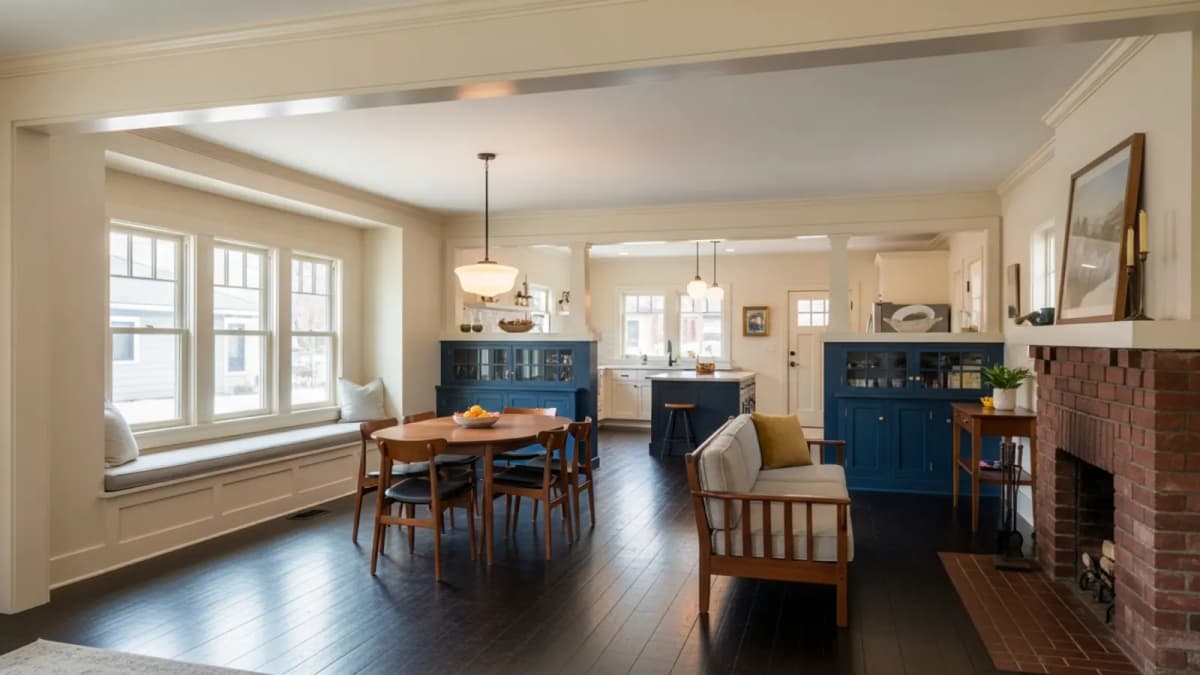
Whole-Home Remodeling Across the North End — Hyde Park, Harrison Boulevard, Camel's Back & Beyond
Comprehensive renovations of 1905–1925 Craftsman bungalows around 13th Street, 1925–1940 Tudor Revivals along Harrison, and post-war infill on the lower-numbered streets — interior scope moves at City of Boise speed; exterior change requires a Certificate of Appropriateness from the Historic Preservation Commission.
Quick answer
Depends on scope. Comprehensive single-phase remodels of the entire house (all rooms simultaneously) require relocation — there's no realistic way to live in a home without functional kitchen, bathrooms, or HVAC for 6–12 months.
A whole-home remodel of a North End house lives at the intersection of three things you don't get at the same intensity in any other Boise neighborhood: housing stock that predates the modern building code by 70–120 years (balloon framing, knob-and-tube wiring, lath-and-plaster walls, single-pane wood windows, original galvanized supply, original cast iron drain stacks), a Historic Preservation Commission that reviews every exterior change inside the District boundary (Certificate of Appropriateness adds 4–8 weeks to permit timeline for any window enlargement, new wall penetration, exterior color change, addition, or substantial siding work), and a per-square-foot resale environment that supports the highest material specifications in the city. The work is anchored on a critical permit fact: interior-only scope is exempt from HPC review regardless of how aggressive — wall removals, full mechanical modernization, kitchen and bath gutting, primary-suite reconfiguration upstairs all proceed on standard City of Boise building permit processing. The HPC overlay enters the picture only when scope crosses the exterior wall — a new range hood vent through siding, a window enlarged for natural light, a new bay or addition off the rear, a side-door relocation. Iron Crest's North End whole-home work is anchored on this distinction: we tell you upfront which scope items will require Certificate of Appropriateness, what the architectural drawings will need to show, and how to sequence the HPC submittal so it doesn't gate the construction start. The four eras represented in the District (1905–1925 Craftsman, 1925–1940 Tudor / Colonial / Prairie, 1945–1960 post-war infill, 1985+ modern infill north of Hill Road) each have different structural realities, different mechanical baselines, and different architectural sensibilities — the strategy isn't transferable between them.
North End whole-home strategy varies sharply by era because the structural realities, mechanical baseline, and architectural sensibilities are entirely different — and because Historic Preservation review applies to most of the District but with different intensity depending on the home's contributing-resource status.
1905–1925 original Craftsman bungalows (13th Street, Hyde Park, Camel's Back)
Single or one-and-a-half story homes typically 1,200–1,800 sq ft on tight 50' frontages. Original construction: balloon framing throughout, lath-and-plaster walls, fir flooring on heavy joists (sometimes original 2¼-inch oak strip on the better blocks around Hyde Park), single-pane wood double-hung windows (often with original ropes still functional), minimal wall insulation, no central HVAC. Knob-and-tube wiring almost universal until later partial rewires. Galvanized supply throughout. Whole-home scope: full mechanical modernization (200A panel + whole-house rewire to Romex, full repipe of supply to PEX, HVAC system addition with mini-split or low-profile ducting), insulation upgrade where walls open, structural openings on the load-bearing walls between original kitchen-dining-living, preservation of period millwork, original built-ins refinished and reintegrated. Period vocabulary: Schoolhouse Electric, Rejuvenation, House of Rohl, original-pattern hex-and-subway tile, 4¼-inch wide oak strip flooring matched. Timeline: 6–10 months.
1925–1940 Tudor Revival, Colonial Revival, Prairie (Harrison Boulevard, Fort Boise area)
Two-story homes typically 2,200–3,800 sq ft on the larger Harrison Boulevard or Fort Boise lots. Better insulated and ventilated than Craftsman bungalows because original construction practices had advanced — but still requires substantial mechanical updating. Original wiring sometimes already partially upgraded to early Romex; supply lines often still galvanized. Plaster walls almost universal — generally in better condition than Craftsman because slightly newer. Whole-home scope: kitchen and bathroom modernizations across multiple floors, opened floor plan on the main level (common move: kitchen-dining wall removal with engineered LVL), primary suite reconfiguration upstairs (the original primary on these homes is often adequate but the bath is small), basement finish on the homes with full-height basements, full mechanical update. Architectural brief leans toward sympathetic restoration — Tudor steel-leaded windows, brass hardware in unlacquered finishes, period interior trim. Timeline: 8–14 months.
1945–1960 post-war ranch and minimal traditional infill (lower-numbered streets, parts of Fort Boise)
Single-story homes typically 1,000–1,800 sq ft on smaller lots. Mid-century construction with slab or short-crawlspace foundations, copper supply mostly (galvanized fading out), cast iron drain stacks, original gas forced-air heat with 100-amp electrical service that's undersized by modern standards. Drywall + plaster-skim walls, simpler demolition than the pre-1925 stock. Whole-home scope: galley kitchen open-up, bath modernization, primary suite addition or expansion (most ranches lack a true primary suite), system updates. Sometimes the only North End scope where Historic Preservation review is lighter because the home isn't a contributing resource within the District — verification at consultation. Timeline: 5–8 months.
1985+ modern infill north of Hill Road and on a few non-contributing parcels
Modern construction with current mechanical systems and current envelope performance. Whole-home remodel here is essentially aesthetic and layout reconfiguration rather than mechanical modernization. Often outside the Historic Preservation District boundary, which means standard City of Boise permitting without HPC overlay even on exterior scope. Timeline: 4–7 months for substantial scope.
Five recurring whole-home shapes account for nearly every North End project. Era of the original house, owner-relocation capacity, and whether scope crosses the exterior wall (triggering HPC review) all drive which one fits.
1. The Comprehensive Single-Phase Remodel (Owners Relocated)
All work happens in one continuous push — kitchen, bathrooms, mechanical systems, structural openings, finishes throughout the home. Owners typically move out for the duration. Most efficient construction approach (no remobilization, contractors stay engaged), shortest total calendar time, highest disruption to daily life. The right answer for owners who can secure alternative housing for 6–12 months and want the project done. Common on recently-purchased Hyde Park or Camel's Back bungalows where the new owner is doing the renovation before move-in.
Target homes: Owners with capacity to relocate. Vacant homes recently purchased. Permit: comprehensive City of Boise building permit + all trade permits; HPC Certificate of Appropriateness for any exterior scope element.
2. The Phased Live-In Remodel
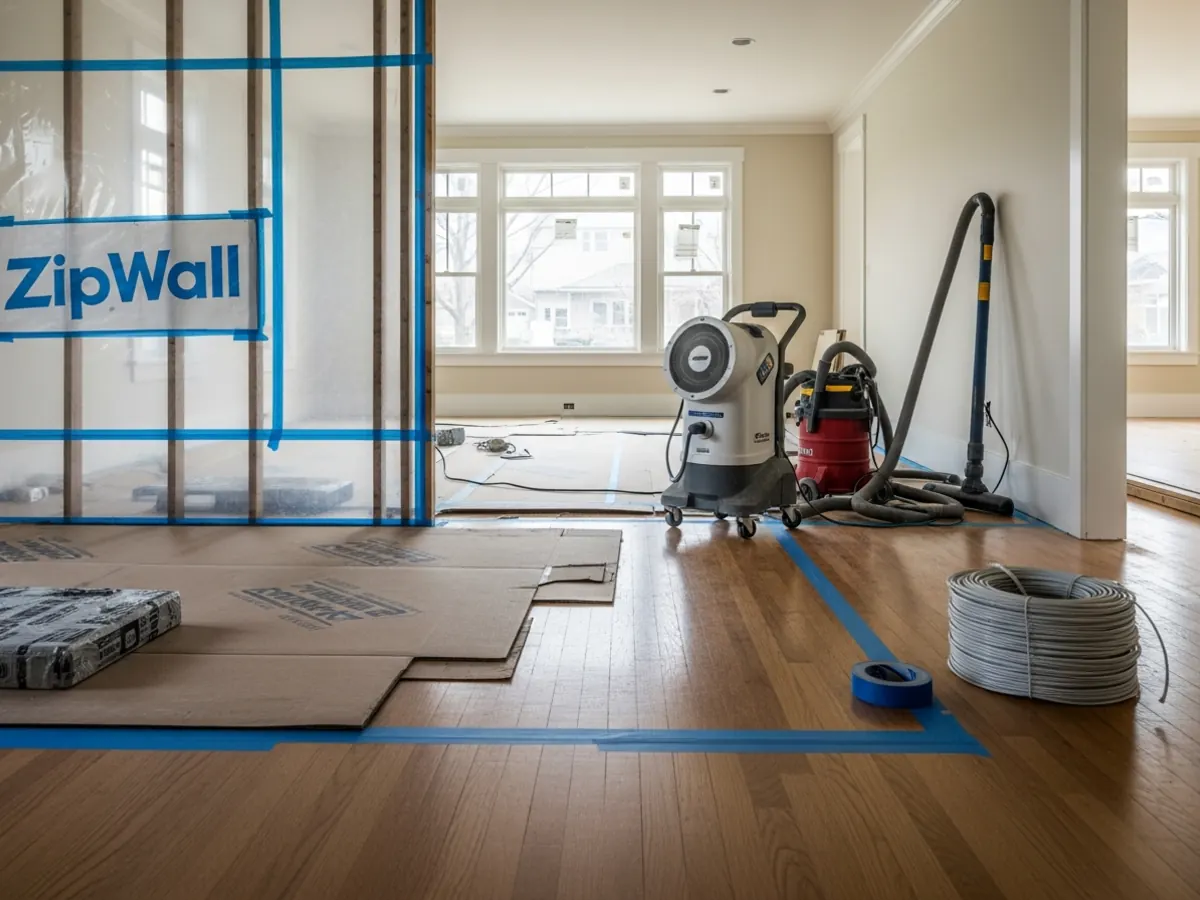
Work happens in zones — main floor first while owners live upstairs, then upstairs while owners use the renovated main floor. Adds 2–4 months to calendar time but allows the owner to remain in residence — an important option on the Harrison Boulevard scope where alternate housing in the District is hard to find at scale. Requires careful dust control (ZipWall + HEPA scrubbers — universal in pre-1978 lead-paint homes), temporary kitchen setups in dining or basement, and bathroom-zone scheduling. Higher labor cost than single-phase due to remobilization between phases.
Target homes: Owners who cannot or prefer not to relocate. Two-story Tudor and Colonial Revival homes large enough to support zone-by-zone construction. Permit: phased City of Boise building permit with separate inspection schedules per phase; HPC Certificate of Appropriateness for any exterior scope.
3. The Main-Floor-Only Whole Remodel
Comprehensive renovation of the main floor only — kitchen, dining, living, often a powder bath, mechanical updates that cross zones — leaving the upstairs bedrooms and bath untouched. Allows owners to live upstairs throughout construction. Most common North End whole-home scope by count, especially on Hyde Park bungalow streets where the upstairs is often a half-story with limited floor area not worth renovating yet.
Target homes: Owners who want the high-impact spaces (kitchen, living areas) modernized but don't need bedroom-level changes. Permit: building permit for main floor; HPC review only if exterior scope is part of the project.
4. The Down-to-Studs Restoration
Deepest possible whole-home scope: original interior surfaces removed, original framing inspected and reinforced where 100-year-old fir joists have sagged, full re-insulation, complete mechanical replacement, new windows (Marvin Signature divided-light or restored original wood double-hungs depending on HPC requirements), sometimes structural reconfiguration. Common on Harrison Boulevard Tudors where the house has been poorly renovated previously and the owner wants to start fresh while preserving the exterior shell. Approaches new-construction cost per square foot; HPC review is at its most demanding here because so much of the exterior scope is in play.
Target homes: Homes with multiple failed previous renovations, severe deferred maintenance, or owner desire for absolute quality control. Permit: full City of Boise building permit suite + HPC Certificate of Appropriateness for exterior scope.
5. The Kitchen + Primary Suite Bundle
Two-room focused scope addressing the most-used and highest-impact rooms simultaneously. Kitchen (or kitchen + opened dining), plus primary bedroom and primary bathroom (often expanded by absorbing an adjacent closet or smaller bedroom on the second floor of a Tudor or Colonial Revival). Captures most of the ROI of a whole-home remodel at half the scope. Common on Camel's Back bungalows where the budget is calibrated for two excellent rooms rather than a moderate whole-home job.
Target homes: Owners with limited budget for whole-home but wanting both daily-driver spaces addressed. Permit: building permit for the affected zones; HPC review only if any exterior change is part of scope.
The North End is made up of distinct sub-neighborhoods, each with its own remodeling personality.
13th Street & Hyde Park
The cultural and commercial heart of the North End — boutique shops and restaurants along 13th between Brumback and Eastman, with the densest concentration of original Craftsman bungalows on the surrounding blocks. Lots are tight (typically 50' frontage), alley access is common, and the neighborhood is heavily walked. Most homes here are 1905–1925 Craftsman.
Camel's Back & Heron Streets
The streets immediately around Camel's Back Park, climbing slightly into the lower foothills. Mostly Craftsman bungalows with some Tudor Revival mixed in. Lots get larger toward the park edge, and some homes back to the Foothills Reserve with significant trees. Project budgets here tend to be higher — these are some of the most coveted blocks in the city.
Harrison Boulevard corridor
The grand divided boulevard running south-to-north through the heart of the North End, lined with the neighborhood's largest historic homes. Tudor Revival, Colonial Revival, and a few notable Prairie-style houses sit on deep lots with mature plantings. Projects here lean toward sympathetic upgrade rather than reconfiguration — these homes already have generous floor plans.
Fort Boise & Capitol-area North End
The streets around Fort Boise Park and stretching toward the State Capitol grounds — a mix of original Craftsman bungalows, larger 1920s and 1930s homes, and a higher proportion of post-war infill. Lots vary widely. Project scopes span the full range depending on house age and homeowner intent.
North of Hill Road / new infill
The northern fringe of the historic North End, where construction continued through the 1950s and where modern infill has been most active. Newer (1945–present), larger, less constrained by historic-district considerations. Projects here look more like SE Boise or Harris Ranch in scope and material strategy.
Lower-numbered streets (3rd–9th)
The streets between the State Capitol grounds and Fort Boise — traditionally a more working-class section of the North End, with a mix of smaller Craftsman bungalows, post-war houses, and some converted multi-family. Increasingly being renovated as North End demand pushes outward from the 13th Street core. Excellent value if you can find an unrenovated home here.
Pricing reflects the three layers that drive North End whole-home cost: working in 80–120-year-old housing stock with universal mechanical and environmental discovery, navigating Historic Preservation Commission review on any exterior scope, and the operational complexity of the District's tight 50' lot pattern with limited curbside staging.
North End whole-home remodeling ranges
Kitchen + primary suite bundle (Focused two-room scope capturing highest-ROI rooms): $165,000–$310,000 / 5–8 months end to end
Main-floor-only whole remodel (Comprehensive remodel of main level, upstairs untouched): $185,000–$385,000 / 4–8 months end to end
Comprehensive single-phase (All rooms, mechanical, structural, finishes — owners relocated): $285,000–$650,000 / 6–12 months end to end
Phased live-in (Comprehensive scope across multiple phases with owners in residence): $320,000–$720,000 / 9–14 months end to end
Down-to-studs restoration (Deepest possible scope, often near new-construction cost per sq ft): $450,000–$850,000+ / 12–18 months end to end
Pricing assumes Iron Crest's standard North End scope: full City of Boise building, electrical, plumbing, and mechanical permits, HPC Certificate of Appropriateness submittal handled in-house when exterior scope is involved, environmental testing and licensed asbestos abatement when triggered, EPA RRP lead-safe practices throughout (universal in pre-1978 housing), structural engineering for any wall removal or addition, comprehensive mechanical updates (200-amp service, whole-house rewire, full supply repipe to PEX, HVAC modernization), period-sympathetic material selections, right-of-way permits for dumpster and material staging on tight District streets, and our 3-year workmanship warranty. Contingency budget of 15–18% above contract value should be held for older-home discovery — whole-home remodels surface more discovery items than focused projects because more walls open.
The North End Historic District boundary covers most — but not all — of the North End. The district is administered by the City of Boise Historic Preservation Commission, which reviews exterior modifications within the district boundary. Interior work, including comprehensive remodels, is exempt from Historic Preservation review. This is the single most important permitting fact to internalize: your interior work doesn't need historic review, regardless of how aggressive the scope.
Where Historic Preservation review enters the picture is when your project includes any exterior change. Examples we encounter regularly: enlarging a window, relocating an exterior door, adding an exterior-vented hood that requires a new wall penetration, building a small addition or bump-out, or replacing a side-yard window with a different style. Any of these requires a Certificate of Appropriateness from the Historic Preservation Commission, which can add several weeks to the permit timeline (confirm current timelines with PDS) and typically requires architectural drawings showing the proposed change in context.
For interior-only projects, the standard City of Boise permits apply: a building permit for structural work (wall removal, beam installation), an electrical permit for new circuits or panel work, a plumbing permit for fixture relocation or new water lines, and a mechanical permit for ducting or HVAC modifications. Permit fees for a typical mid-range project run several hundred to a few thousand dollars depending on scope. Processing times: electrical and plumbing permits are often same-day or next-day; building permits go through plan review, about two weeks for online plan review per Boise PDS and longer when structural drawings are involved.
One North End-specific permit consideration: parking and right-of-way. Placing a dumpster on the street or parking a construction trailer at the curb requires an ACHD temporary-use permit (fee varies), since North End residential streets are ACHD right-of-way. Some North End streets have additional restrictions related to the historic neighborhood designation. Iron Crest pulls all required temporary-use permits as part of project setup.
Whole-home material strategy in the North End is about visual continuity across rooms within an architecturally specific home — not about chasing trends or mixing vocabularies. The decisions made in a remodeled kitchen need to read as part of the same Craftsman bungalow as the bathrooms, the bedrooms, and the original built-ins. Era-of-house drives most of the choices.
Flooring — refinish original where it exists, period-matched where it doesn't
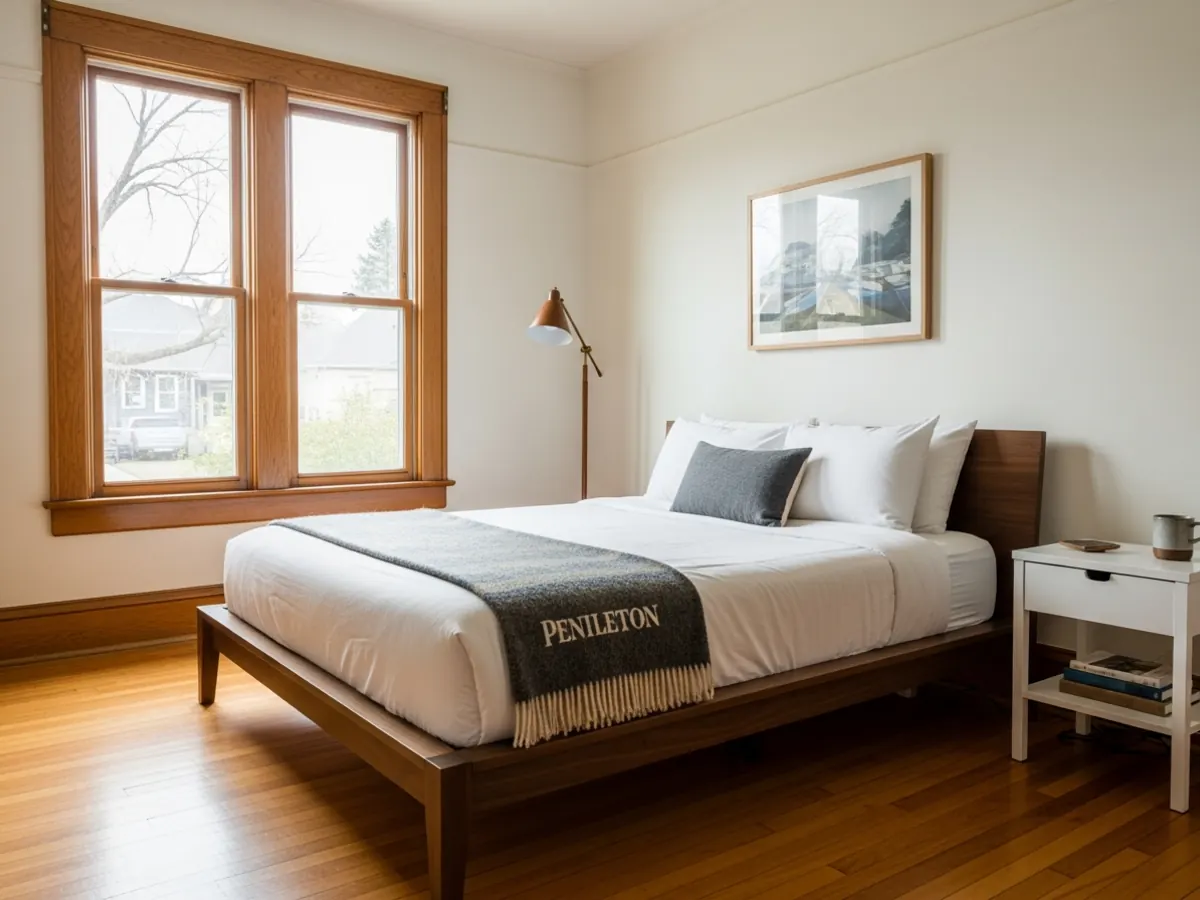
If original oak or fir flooring exists in good condition, refinish and preserve it throughout — the strongest single decision in a North End whole-home remodel. Original 2¼-inch oak strip on the better Hyde Park and Camel's Back blocks; original heart-pine or 4-inch fir on the older 1905–1915 stock. Original flooring carries through every room and ties the house together visually in a way no new material can replicate. Where original is missing or damaged beyond rescue, engineered oak in matching tone and width (4¼-inch for Craftsman; 3-inch for Tudor) is the right replacement. For wet areas, period-pattern porcelain tile (1-inch hex, basket weave, large square) installed over a properly prepared subfloor.
Trim and millwork — original profiles preserved, custom-milled to match where new
Original North End trim profiles define the architectural character. Craftsman: square-edge wide casing with a head detail and a base of similar mass. Tudor: bullnose or modest molding profiles, sometimes with leaded-glass-embedded interior doors. Colonial Revival: dentil molding at the cap, more refined casing. New trim in spaces being remodeled or added must match the original profile exactly — custom-milled fir or pine to the same dimensions and reveal. This is the single most important visual continuity decision in a whole-home remodel and the place where lower-quality contractors most visibly cut corners.
Wall finishes — preserve plaster where intact, Level 5 drywall where new
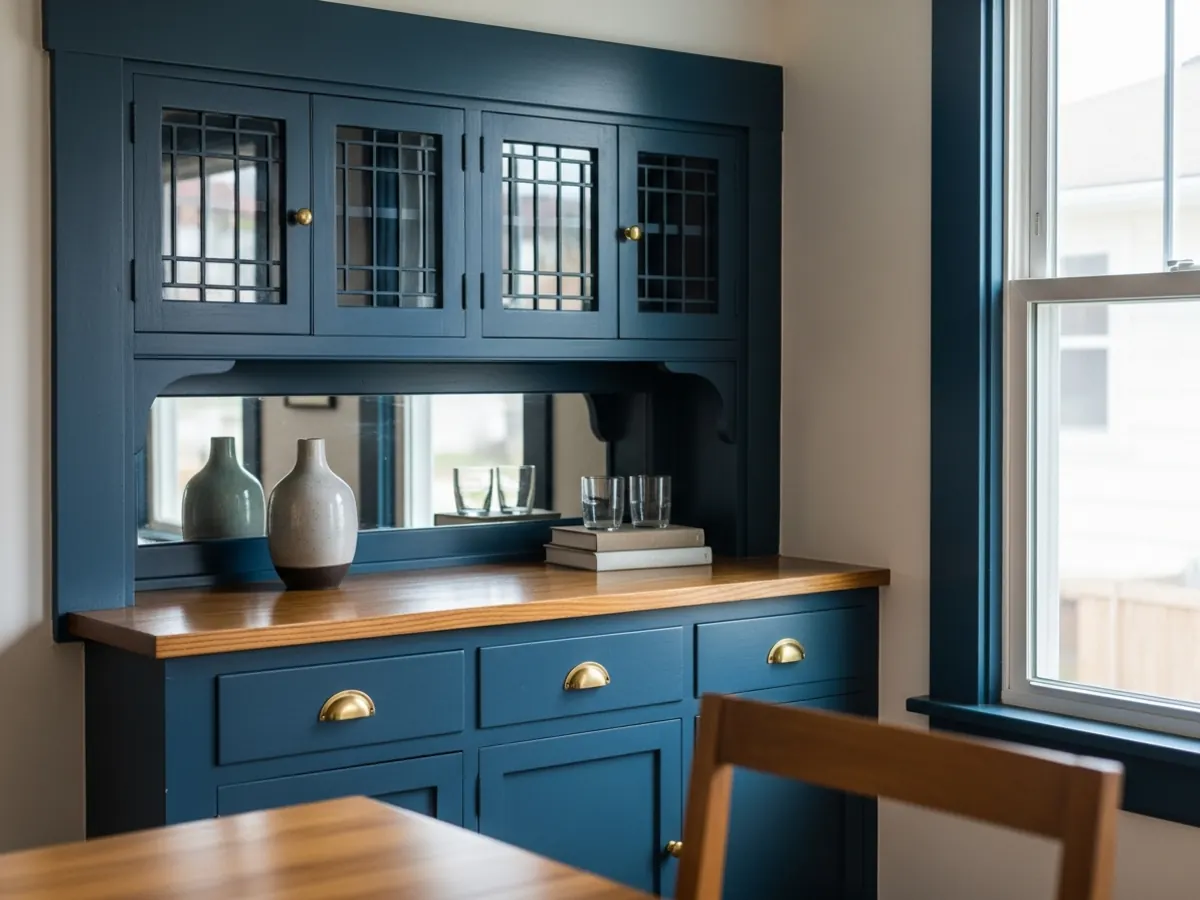
Original lath-and-plaster walls, where intact and not severely cracked, can be skim-coated and painted — preserving the slightly imperfect surface texture that drywall doesn't have. Where new drywall is required after wall openings or insulation upgrades, Level 5 finish to match the smoothness of skim-coated plaster. Paint colors: warm whites, muted greens, soft blues for primary spaces; deeper saturated colors (Hale Navy, Forest Green, Studio Green, plum) for accent walls and built-ins.
Cabinetry across rooms — inset Shaker or flat-panel, painted, consistent across kitchen and baths
Inset Shaker or flat-panel cabinets in painted finishes are the through-line for kitchen, bathrooms, mudroom, laundry, built-ins. Same door profile, same paint specification, same hardware family across the house. Painted finishes (white, deep green, Hale Navy, charcoal). Result is visual coherence that makes the house feel intentional rather than rooms-by-different-decorators. Cost: $1,200–$2,500 per linear foot for inset cabinetry; semi-custom Shaker is the budget alternative at $500–$1,200 per linear foot.
Lighting — coherent plan across rooms
Schoolhouse Electric, Rejuvenation, Hudson Valley, House of Troy, or Cedar & Moss in matching finish (oil-rubbed bronze, polished nickel, or unlacquered brass family) throughout. Layered lighting in every room (general + task + accent), 2700K–3000K color temperature throughout. Avoid the visual chaos of mixing finishes and styles across rooms — a Tudor with brass fixtures in the kitchen and chrome in the bath reads as design-by-committee.
Mechanical systems — modern Romex on 200A, full PEX repipe, period-sensitive HVAC
200-amp electrical service standard, all knob-and-tube replaced with modern Romex on dedicated AFCI/GFCI circuits to current code. Full repipe of supply lines from main shutoff to fixtures with PEX. HVAC: high-efficiency furnace and central air on the homes with crawlspaces or basements; for Craftsman bungalows where ducted systems would compromise original floors, ductless mini-split heat pump systems are the right answer (Mitsubishi M-Series or Daikin Aurora). Insulation: closed-cell spray foam in walls being opened, blown cellulose in attic to R-49 or higher, rigid foam at rim joists.
Windows — restored original wood double-hung where viable, Marvin Signature where not
Original 1905–1925 wood double-hung windows, where structurally sound, are the strongest preservation move — restored ropes and weights, weatherstripped, glazed with restoration-quality glass. HPC review favors restoration over replacement when the home is a contributing resource within the District. Where original windows can't be saved, Marvin Signature divided-light wood-clad replacements with HPC-acceptable profiles. Cost: $1,800–$3,200 per opening installed for Marvin Signature; restoration of original sashes runs $400–$1,200 per opening.
Whole-home remodels in the North End surface more discovery items than focused projects — more walls open, more systems are touched, and more of an 80–120-year-old building's history is revealed. Build a 15–18% contingency for these.
- •Whole-house galvanized supply lines requiring full repipe (universal in pre-1960 stock) Pre-1960 North End homes typically have galvanized steel supply throughout. Whole-home remodel is the right time to repipe everything from main shutoff to all fixtures with PEX. $8,500–$18,000 typical for a 2,000 sq ft home.
- •Knob-and-tube wiring throughout (universal on pre-1950 stock) Pre-1950 North End homes that haven't been comprehensively rewired typically still have original K&T in many circuits. Whole-house rewire to modern Romex on a 200-amp panel with current-code AFCI/GFCI: $14,000–$28,000 typical.
- •Severely undersized electrical panel and inadequate service Most North End homes need a 200-amp panel upgrade as part of a whole-home remodel. Some Hyde Park and 13th Street stock still has 60-amp service that requires meter base upgrade and Idaho Power coordination. Service upgrade: $4,500–$9,000.
- •Foundation issues — settling cracks, mortar failure, water infiltration Original perimeter foundations 80–120 years old often show settling cracks, areas where mortar has failed, and signs of water entry on the corners or grade-level elevations. Whole-home remodel is the time to address. Foundation repair: $3,500–$28,000 depending on extent.
- •Insufficient or non-existent insulation throughout pre-1980 stock Pre-1980 North End homes typically have minimal wall insulation (often just kraft-paper-faced batts in partial fill) and inadequate attic insulation. Whole-home remodel that opens walls is the only opportunity to insulate to current code. Wall closed-cell spray foam in opened walls + attic blown cellulose: $8,500–$18,000.
- •Asbestos in flooring, joint compound, pipe insulation, ducts Pre-1980 homes frequently contain asbestos in multiple materials — vinyl asbestos floor tile under existing flooring, asbestos in pipe insulation around basement steam or hot-water lines, occasional asbestos in original duct wrap. Whole-home remodel surfaces all of them. Comprehensive licensed abatement: $4,500–$12,000.
- •Lead paint throughout — universal in pre-1978 homes Universal in pre-1978 homes. Whole-home EPA RRP lead-safe work practices add labor cost throughout — full HEPA containment, wet-paste paint scraping, lead-safe disposal. Built into pricing on every pre-1978 North End job rather than added as discovery.
- •Original cast-iron drain stack failure 80–120-year-old cast iron drain stacks sometimes have advanced corrosion that warrants full replacement during a whole-home job. Main stack replacement: $4,500–$9,500.
- •Foundation-to-floor connection issues (mudsill rot, sill plate damage) Older homes occasionally show rot at the connection between foundation and first-floor framing — most common on the south- and west-facing elevations of the older Hyde Park and Camel's Back stock where decades of rain runoff have penetrated. Repair: $2,500–$8,500 typical.
- •HPC Certificate of Appropriateness review delays for exterior scope Adds 4–8 weeks to permit timeline when scope crosses the exterior wall. Iron Crest sequences the HPC submittal so it doesn't gate the construction start where possible — but late-discovery exterior scope (a hood vent that has to penetrate the exterior wall, an unanticipated window enlargement) can require HPC submittal mid-project.
Initial consultation and scope discovery (Weeks 1–2)
Multiple in-home walkthroughs covering every room. Existing-conditions photography. HPC contributing-resource verification. Mechanical assessment by our HVAC, electrical, and plumbing partners. Structural engineer's pre-design walk if any structural changes are anticipated. Period-character preservation list compiled.
Environmental testing (Weeks 2–3)
Comprehensive asbestos and lead testing across all suspect materials — sheet flooring, joint compound, pipe insulation, original siding products, original window paint. Results inform what abatement is required and when in the project timeline.
Design development and detailed estimating (Weeks 3–10)
Full design package across all rooms in scope: floor plans, elevations, material specifications, fixture selections, lighting plan, mechanical drawings. Iterative review. Detailed line-item estimate with contingency called out separately.
Permitting and HPC review (Weeks 10–18)
Comprehensive City of Boise building permit application with structural drawings to Planning & Development Services. HPC Certificate of Appropriateness submittal in parallel for exterior scope. City permit processing typically 6–10 weeks for whole-home scope. HPC review adds 4–8 weeks. Cabinet, custom millwork, windows, fixtures, and tile ordered with phased delivery aligned to construction sequence.
Mobilization and abatement (Weeks 18–22)
Site setup: dumpster placement (with City right-of-way permit, which has additional restrictions on some North End streets), portable toilet, material staging area, ZipWall containment if owners are in residence. Licensed abatement contractor handles any required asbestos work. Lead-safe practices begin and stay in effect through the entire project.
Demolition, structural, mechanical rough-in (Weeks 22–34)
Selective demolition by zone. Structural openings with new engineered LVL beam installations. Comprehensive plumbing repipe — galvanized to PEX. Electrical rewire and panel upgrade. HVAC rough-in or replacement. City of Boise rough-in inspections at each milestone.
Insulation, drywall, and plaster preservation (Weeks 34–42)
Closed-cell spray foam or batt insulation in opened walls. Blown cellulose in attic. Drywall installation with Level 5 finish in primary spaces. Original plaster skim-coated and prepped for paint where preserved.
Cabinetry, tile, flooring, finish carpentry (Weeks 42–52)
Cabinet installations across all rooms. Tile work in kitchens and bathrooms. Original-flooring refinish (where preserved) and new flooring install (where required). Finish carpentry — trim custom-milled to match original profiles, doors, hardware, built-ins. Painting throughout.
Final fixtures, inspections, walkthrough (Weeks 52–60+)
Lighting and plumbing fixtures installed. Appliances installed. Final mechanical inspections. Final building inspection. HPC final inspection on exterior scope. Comprehensive punch-list walk. Items addressed within 2 weeks. Final walkthrough and sign-off. 3-year Iron Crest workmanship warranty begins on the entire project.
Whole-home remodels of older houses are a different category of work from kitchen or bathroom remodels. The contractor managing a 6-to-12-month North End project needs project management depth, financial stability through a long-duration engagement, the technical experience to navigate dozens of unknowns in a 100-year-old building, and a working relationship with the City of Boise Historic Preservation Commission for the exterior scope items.
- City of Boise Historic Preservation Commission — Design review information, district maps, and Certificate of Appropriateness application.
- City of Boise Planning & Development Services — Building, electrical, plumbing, and mechanical permits. Online portal and in-person plan check.
- Idaho DEQ Air Quality (Asbestos) — Testing and abatement guidance for pre-1980 homes via the Idaho Department of Environmental Quality.
- EPA Lead Renovation, Repair and Painting (RRP) Program — Required certification and work practices for renovation in lead-paint homes.
- Preservation Idaho — Statewide nonprofit advocating for historic preservation. Resources and educational events.
Do I need to move out for a North End whole-home remodel?
Depends on scope. Comprehensive single-phase remodels of the entire house (all rooms simultaneously) require relocation — there's no realistic way to live in a home without functional kitchen, bathrooms, or HVAC for 6–12 months. Phased live-in remodels allow you to remain in residence by working in zones, but extend the calendar by 2–4 months and add labor cost from remobilization. Main-floor-only whole remodels often allow you to stay if you can use upstairs bathrooms and tolerate dust controls. We discuss the options in detail at consultation.
How long does a North End whole-home remodel take?
4–8 months for main-floor-only whole remodel. 6–12 months for comprehensive single-phase whole-home with owners relocated. 9–14 months for phased live-in. 12–18+ months for down-to-studs restoration. Permit processing alone takes 6–10 weeks for whole-home scope; HPC review adds 4–8 weeks for any exterior scope. Cabinetry and custom millwork lead times often run 8–14 weeks and are the longest material lead time. We build the full schedule with all dependencies upfront so the completion date is realistic.
What does a whole-home North End remodel actually cost?
$165K (kitchen + primary suite bundle in a smaller bungalow) to $850K+ (comprehensive down-to-studs restoration of a Harrison Boulevard Tudor). Most North End whole-home remodels we complete fall in the $285K–$520K range. Per-square-foot cost varies $130–$320 depending on scope depth, material specifications, and the extent of mechanical modernization required. Detailed line-item estimates show exactly where every dollar goes.
Does Historic Preservation review apply to my whole-home remodel?
Only if your scope crosses the exterior wall. Interior-only whole-home scope — kitchen and bath gutting, wall removals, full mechanical modernization, primary-suite reconfiguration — is exempt from HPC review regardless of how aggressive. HPC enters the picture when scope includes a new range hood vent through siding, a window enlargement for natural light, a new bay or rear addition, a side-door relocation, exterior siding work, or exterior color change. We tell you upfront which items will need a Certificate of Appropriateness and sequence the submittal so it doesn't gate the construction start where possible.
How do you handle change orders during a long project?
Every change order is documented in writing with cost, schedule impact, and clear scope description before work begins. Discovery items (things found in walls during demo) draw against the contingency budget defined at contract signing — not from your contract value. Owner-initiated changes are quoted as separate change orders. Weekly written summary of all change orders and contingency draws keeps the financial picture transparent throughout the project.
What contingency budget should I plan for?
15–18% of contract value for a whole-home remodel of a pre-1980 North End home. Reality-based budgeting reflecting predictable older-home discovery — galvanized supply lines, knob-and-tube wiring, undersized electrical service, asbestos, lead paint, foundation issues, insulation gaps, drain stack deterioration. A $400K contract should plan on $60K–$72K available contingency. Contracts that don't include explicit contingency budgeting are either pricing it invisibly (which becomes 'we ran into problems' billing later) or are going to surprise you mid-project.
Can you preserve original Craftsman or Tudor character during a whole-home remodel?
Yes — and this is what distinguishes North End-fluent contractors from generic remodelers. Preserving original character requires deliberate decisions throughout: refinishing original floors rather than replacing, salvaging and reusing original trim where possible, custom-milling new trim to match original profiles where required, retaining built-in cabinetry and refreshing rather than removing, choosing modern fixtures with period-sympathetic profiles (Schoolhouse and Rejuvenation lighting, polished nickel or unlacquered brass plumbing, inset cabinet doors), and respecting original layout proportions even when opening walls. The goal is a home that reads as 'thoughtfully modernized' rather than 'gutted.'
What's the ROI on a North End whole-home remodel?
North End homes have appreciated faster than the broader Boise metro for the last decade and continue to command the highest per-square-foot prices in the city. Whole-home remodels in the District typically appraise at 60–75% cost recovery (the lower end of national averages because of the older-home premium for project costs). Actual sale-price impact in a competitive North End listing environment frequently exceeds appraisal-based recovery because buyers pay premiums for properly updated historic homes that other buyers haven't experienced before. For owners planning to stay 10+ years, the daily quality-of-life return makes the math even more compelling.
Ready to start your North End whole-home remodeling project?
Free in-home consultation, honest contingency-based budgeting, and the experience Boise homes require. Iron Crest Remodel — Idaho RCE #6681702, EPA RRP lead-safe work practices, $2M general liability, 3-year workmanship warranty.
Get Your Free Estimate