
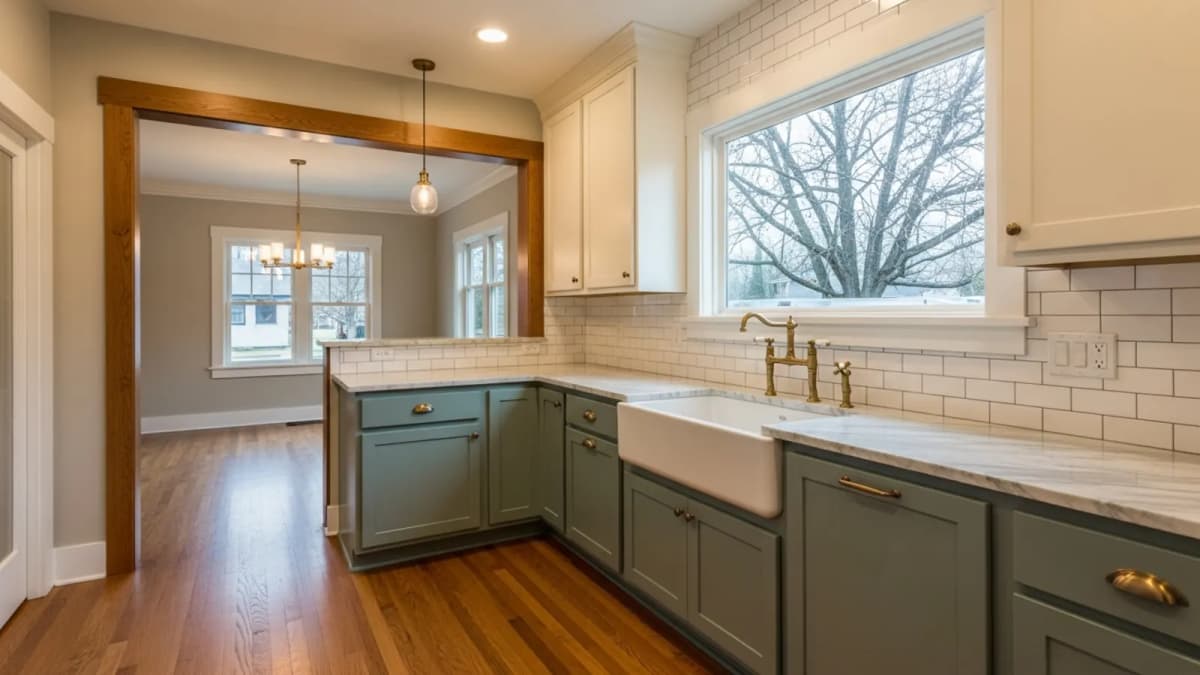
Kitchen Remodeling in Boise's North End
Craftsman bungalows, Tudor revivals, mid-century ranches — period-sensitive kitchen design with the structural and historic-district experience these homes require.
Quick answer
No. The City of Boise Historic Preservation Commission reviews exterior modifications within the North End Historic District boundary, but interior kitchen remodels — including wall removals, cabinet replacement, plumbing and electrical changes — are exempt from design review.
The North End is Boise's oldest, most architecturally distinctive, and most-protected residential neighborhood — and remodeling a kitchen here is genuinely different from kitchen work anywhere else in the city. The houses are 80 to 120 years old. The walls hide knob-and-tube wiring, galvanized supply lines, and paint layers from every American decade. The streets are narrow, the lots are tight, the neighbors are close, and the neighborhood culture cares — sometimes intensely — about how you treat the building you bought into. Iron Crest Remodel works in the North End through every season Boise throws at us, and we've developed the specific operational rhythm these homes and this neighborhood require. Below is a comprehensive guide to what kitchen remodeling actually looks like in the North End — what to expect, what it costs, what to watch for, and how to choose a contractor who understands what "done right" means in this part of Boise.
"The North End" isn't architecturally homogeneous. It's four overlapping waves of construction, and the right kitchen remodeling approach depends on which wave your home belongs to.
1900–1925: Original Craftsman bungalows
The defining housing type of the North End. One-and-a-half-story bungalows with deep front porches, exposed rafter tails, tapered porch columns, and craftsman millwork inside. Kitchens were small (80–110 sq ft), tucked behind the dining room, and almost always separated by a load-bearing wall. Original features still found include built-in flour bins, drop-down ironing boards, and pantry closets. Plumbing is original galvanized; wiring is original knob-and-tube; subfloors are 1x6 fir over heavy joists. Remodeling these kitchens is partly construction and partly archaeology.
1925–1940: Tudor Revival, Colonial Revival, Bungalow refinement
The North End's second wave — concentrated along Harrison Boulevard and the streets around Fort Boise. These are bigger homes, often two-story, with more formal floor plans. Kitchens are slightly larger (110–150 sq ft) but still closed off, often with a butler's pantry connecting to a formal dining room. The architectural detailing — leaded glass, plaster crown molding, oak or maple flooring throughout — sets a high aesthetic bar that the kitchen remodel needs to respect. Mechanical systems are mostly upgraded by now but still warrant inspection.
1945–1965: Post-war ranch and minimal traditional
The post-war infill that filled in the eastern and northern fringes of the North End. Single-story ranches and minimal-traditional homes — smaller, simpler, and built quickly to house returning veterans and their families. Kitchens are typically 100–140 sq ft, configured as galleys or small L-shapes, with steel slab cabinets, single overhead light fixtures, and the original linoleum still on the floor if the home hasn't been touched. Mechanicals are mid-century: copper or galvanized supply lines, cast-iron drains, 100-amp panels with original fuse boxes occasionally still in service.
1985–present: Infill and rebuilds
Recent infill construction — primarily on lots where original homes were too far gone to save, or on rare empty lots — built to be sympathetic to the surrounding North End character. These homes have modern mechanical systems, larger kitchens (160+ sq ft), and don't carry the structural and environmental complications of the older stock. They benefit from the North End location and neighborhood character without the renovation challenges of the older homes.
Iron Crest's North End kitchen work tends to fall into one of five recognizable project shapes. Knowing which shape your project most resembles helps with planning, budgeting, and timeline expectations.
1. The Wall Opening — Craftsman bungalow kitchen-to-dining
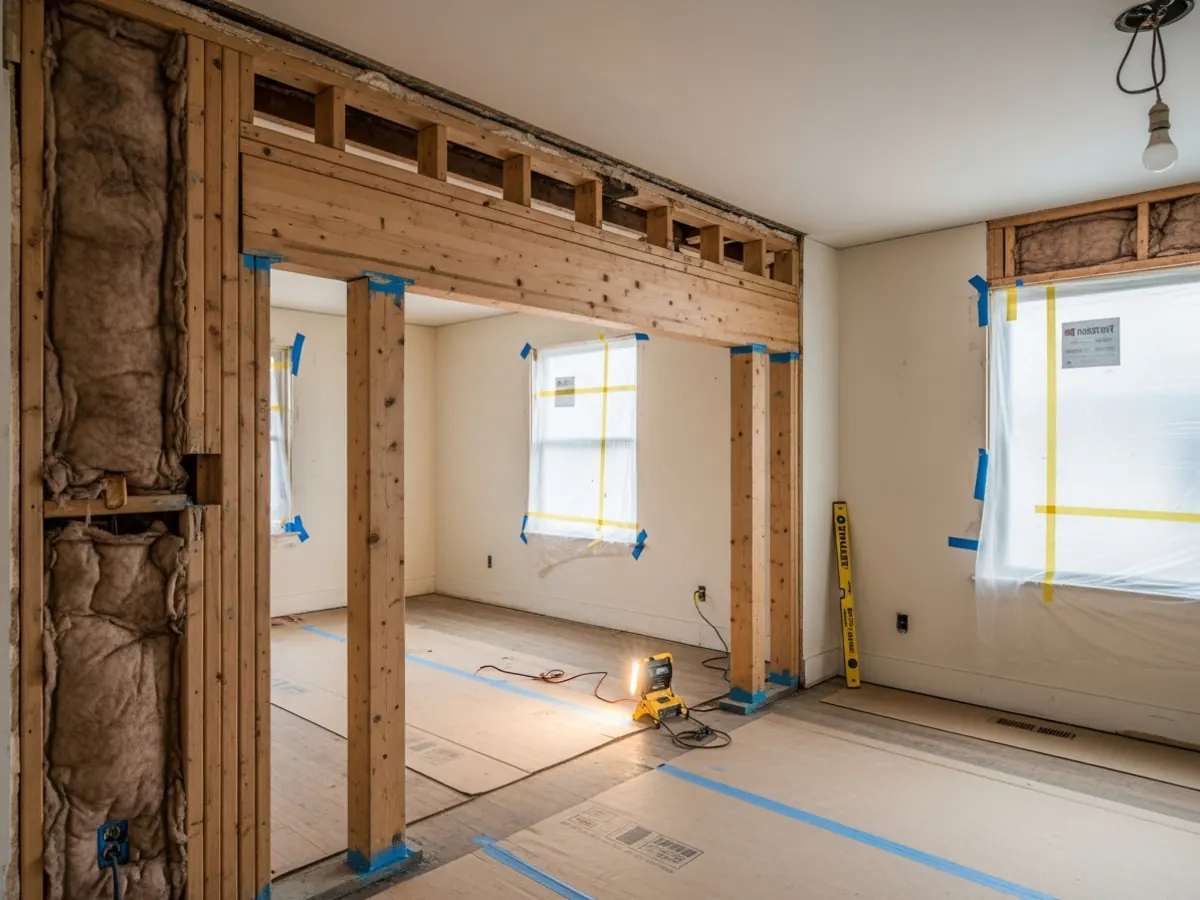
The single most-requested North End project. The wall between the original kitchen and the original dining room comes down (or opens with a partial cased opening), an LVL or PSL beam takes the load, and the two cramped rooms become one connected, light-filled cooking-and-gathering space. This conversion is common on 13th and 14th Street bungalows, on the streets around Camel's Back, and throughout the Hyde Park residential pocket. Combined with a full cabinet, counter, and flooring refresh, all-in cost typically lands at $62,000–$85,000 with a timeline of 10–14 weeks end to end (1–2 weeks on site).
Target homes: 1905–1935 Craftsman bungalows. Permit: building permit with structural drawings required. Lead/asbestos testing: required.
2. The Period-Correct Restoration — preserving Craftsman character
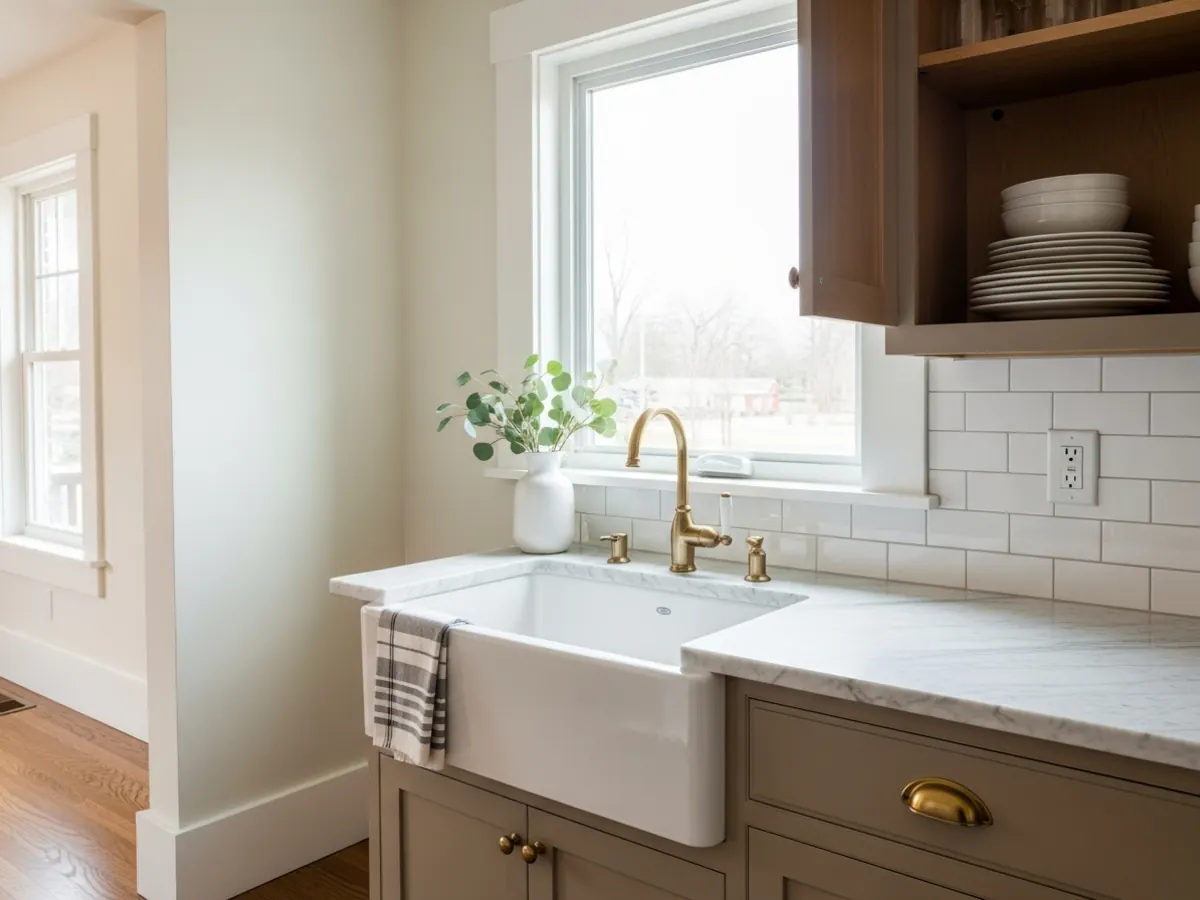
For owners who bought a North End home specifically because of its architectural character, the kitchen remodel is an exercise in sympathetic modernization rather than open-plan transformation. Inset cabinet doors in painted shaker or flat-panel profiles, period-correct hardware (oil-rubbed bronze or unlacquered brass cup pulls), butcher block or honed marble countertops, subway tile or handmade ceramic backsplash, exposed open shelving on iron brackets, and a deep apron-front sink. The original layout is largely respected — the kitchen stays a kitchen — but every surface is refreshed in materials that look like they belong in the home.
Target homes: Any pre-1940 North End home with original character to honor. No structural work required. Cabinet lead time often extends timeline due to custom inset specifications.
3. The Galley Conversion — post-war ranch open-up
Mid-century ranches in the eastern and northern North End almost universally have galley kitchens between the front of the house and the back yard. The conversion: remove one wall (usually the wall between the galley and the living room), install a beam, and reconfigure the resulting space as an L-shape with a peninsula or island. This adds genuine functional square footage without an addition, and dramatically improves the home's circulation and natural light.
Target homes: 1945–1965 ranches and minimal-traditional homes. Permit: building permit required. Often includes electrical service upgrade.
4. The Butler's Pantry Reactivation — Tudor and Colonial Revival
The 1925–1940 larger homes along Harrison Boulevard and around Fort Boise often retain a small butler's pantry between the kitchen and dining room — a transitional space with original cabinetry, sometimes a secondary sink, that fell out of use over the decades. Reactivating this space — adding a beverage refrigerator, espresso station, or wet bar with new cabinetry that matches the main kitchen design — meaningfully expands the home's entertainment functionality without altering any original load-bearing structure.
Target homes: 1925–1940 Tudor Revival and Colonial Revival homes with intact butler's pantries. No permit required if no plumbing or electrical relocation.
5. The Mechanical Modernization — invisible but essential
A subset of every North End kitchen remodel: bringing the supporting infrastructure up to current code and capability. Replacing galvanized supply lines with copper or PEX, replacing knob-and-tube wiring in kitchen circuits with modern Romex on dedicated breakers, upgrading the electrical panel from 100 to 200 amps to handle modern kitchen loads, replacing cast-iron drains where deterioration is advanced, adding a code-compliant range hood with proper exterior venting (which in some Historic District homes requires creative routing through interior chases). This work is rarely the headline of the remodel but it's the foundation of everything else.
Target homes: Any pre-1970 North End home. Bundled into the broader remodel; permits required for electrical and plumbing work separately from the building permit.
The North End is made up of distinct sub-neighborhoods, each with its own remodeling personality.
13th Street & Hyde Park
The cultural and commercial heart of the North End — boutique shops and restaurants along 13th between Brumback and Eastman, with the densest concentration of original Craftsman bungalows on the surrounding blocks. Lots are tight (typically 50' frontage), alley access is common, and the neighborhood is heavily walked. Most homes here are 1905–1925 Craftsman.
Camel's Back & Heron Streets
The streets immediately around Camel's Back Park, climbing slightly into the lower foothills. Mostly Craftsman bungalows with some Tudor Revival mixed in. Lots get larger toward the park edge, and some homes back to the Foothills Reserve with significant trees. Project budgets here tend to be higher — these are some of the most coveted blocks in the city.
Harrison Boulevard corridor
The grand divided boulevard running south-to-north through the heart of the North End, lined with the neighborhood's largest historic homes. Tudor Revival, Colonial Revival, and a few notable Prairie-style houses sit on deep lots with mature plantings. Projects here lean toward sympathetic upgrade rather than reconfiguration — these homes already have generous floor plans.
Fort Boise & Capitol-area North End
The streets around Fort Boise Park and stretching toward the State Capitol grounds — a mix of original Craftsman bungalows, larger 1920s and 1930s homes, and a higher proportion of post-war infill. Lots vary widely. Project scopes span the full range depending on house age and homeowner intent.
North of Hill Road / new infill
The northern fringe of the historic North End, where construction continued through the 1950s and where modern infill has been most active. Newer (1945–present), larger, less constrained by historic-district considerations. Projects here look more like SE Boise or Harris Ranch in scope and material strategy.
Lower-numbered streets (3rd–9th)
The streets between the State Capitol grounds and Fort Boise — traditionally a more working-class section of the North End, with a mix of smaller Craftsman bungalows, post-war houses, and some converted multi-family. Increasingly being renovated as North End demand pushes outward from the 13th Street core. Excellent value if you can find an unrenovated home here.
Pricing in the North End tends to land toward the upper part of the Boise range for an equivalent project scope. The differential isn't margin — it reflects real cost drivers specific to working in this neighborhood: longer permit cycles, environmental testing and abatement, structural complexity in older homes, period-sympathetic material selections that often run higher than mainstream alternatives, and the operational overhead of staging in tight, established blocks.
North End kitchen remodeling ranges
Cosmetic refresh (cabinet repainting, new counters, new flooring, no structural or mechanical changes): $22,000–$38,000 / 4–6 weeks end to end
Standard remodel (new cabinets, quartz, LVP, lighting, backsplash, appliance package, no structural): $45,000–$70,000 / 6–9 weeks end to end
Wall-opening remodel (above plus load-bearing wall removal, beam installation): $62,000–$85,000 / 10–14 weeks end to end
Period-correct full remodel (custom inset cabinetry, premium materials, sympathetic detail work): $85,000–$115,000 / 12–16 weeks end to end
Premium / addition-included (combined kitchen remodel with small addition, butler's pantry build, or combined dining-room expansion): $110,000–$145,000 / 14–20 weeks end to end
All ranges assume Iron Crest's standard scope: full City of Boise permitting, environmental testing and required abatement, EPA RRP lead-safe work practices, structural engineering when required, semi-custom or custom cabinetry, quartz or comparable countertops, LVP or engineered hardwood flooring, all new fixtures and lighting, and a 3-year workmanship warranty. Contingency budget of 12–15% above contract value should be held for older-home discovery work.
The North End Historic District boundary covers most — but not all — of the North End. The district is administered by the City of Boise Historic Preservation Commission, which reviews exterior modifications within the district boundary. Interior work, including comprehensive remodels, is exempt from Historic Preservation review. This is the single most important permitting fact to internalize: your interior work doesn't need historic review, regardless of how aggressive the scope.
Where Historic Preservation review enters the picture is when your project includes any exterior change. Examples we encounter regularly: enlarging a window, relocating an exterior door, adding an exterior-vented hood that requires a new wall penetration, building a small addition or bump-out, or replacing a side-yard window with a different style. Any of these requires a Certificate of Appropriateness from the Historic Preservation Commission, which can add several weeks to the permit timeline (confirm current timelines with PDS) and typically requires architectural drawings showing the proposed change in context.
For interior-only projects, the standard City of Boise permits apply: a building permit for structural work (wall removal, beam installation), an electrical permit for new circuits or panel work, a plumbing permit for fixture relocation or new water lines, and a mechanical permit for ducting or HVAC modifications. Permit fees for a typical mid-range project run several hundred to a few thousand dollars depending on scope. Processing times: electrical and plumbing permits are often same-day or next-day; building permits go through plan review, about two weeks for online plan review per Boise PDS and longer when structural drawings are involved.
One North End-specific permit consideration: parking and right-of-way. Placing a dumpster on the street or parking a construction trailer at the curb requires an ACHD temporary-use permit (fee varies), since North End residential streets are ACHD right-of-way. Some North End streets have additional restrictions related to the historic neighborhood designation. Iron Crest pulls all required temporary-use permits as part of project setup.
The right material decisions for a North End kitchen are not the same as for a 2010 Harris Ranch home, and using off-the-shelf showroom recommendations developed for newer construction frequently produces results that look out of place in an older Boise home. Here's what actually works here.
Cabinetry
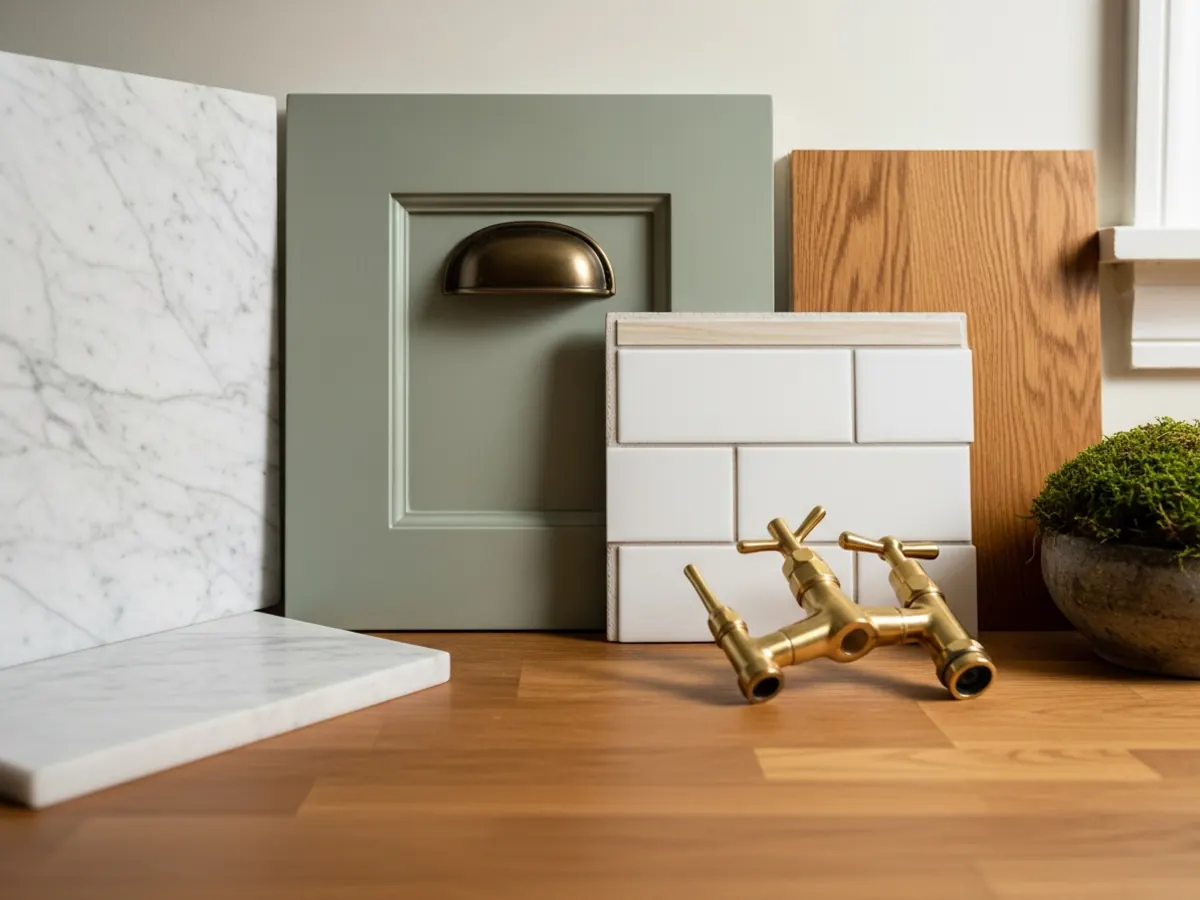
Inset cabinet doors over full-overlay or partial-overlay. Inset construction was the standard for the era and reads as architecturally honest in a Craftsman or Tudor home. Door style: shaker is the most broadly compatible; flat-panel works for stricter Craftsman homes; raised-panel can work for Tudor and Colonial Revival. Painted finish over stained — North End homes typically have other stained wood features (built-ins, trim, floors) and a painted kitchen creates compositional contrast that flatters both. Color palette: muted greens, soft whites, and deep blues all read as period-sympathetic.
Countertops
Quartz works but isn't always the right call. Honed (not polished) marble reads more authentic to the era and is increasingly chosen by North End owners willing to accept its maintenance profile. Butcher block on islands or coffee stations adds warmth that quartz can't replicate. Soapstone is an underused option — historically appropriate, develops a beautiful patina, and performs well around heat. For homeowners who do want quartz, choose patterns with subtle veining rather than high-contrast modern looks; the busiest quartz patterns can fight with surrounding period detail.
Flooring
If the original oak or fir flooring extends into the kitchen and is in good condition, refinish and preserve it — period authenticity that can't be replicated. If new flooring is required, engineered oak hardwood (3/8″ to 1/2″ with thick wear layer) in a 4″ or 5″ plank width matches Craftsman-era proportions better than wide-plank LVP. Where moisture exposure is a concern, large-format porcelain in a stone or terrazzo look can read as period-appropriate. Avoid modern vinyl plank patterns with high-contrast graining.
Backsplash & tile
Subway tile in 3x6 or 4x12 with traditional grout joint and color is the safe choice. Handmade-look ceramic with intentional irregularity reads more authentic. Zellige (handmade Moroccan tile) has period precedent and is increasingly popular in North End kitchens. For backsplash behind the range, an exhibition tile pattern (basket weave, herringbone with small subway, or a hand-painted decorative tile) creates a focal point that respects the era. Avoid large-format porcelain slab in pre-1940 homes.
Lighting
Layered lighting is essential — original North End kitchens had a single overhead globe and the result was flat, harsh, depressing illumination. Plan for: recessed cans for general task lighting, pendants (schoolhouse, milk-glass, or industrial styles work well) over the island or sink, under-cabinet LED strips for counter task lighting, and an accent fixture (sconces flanking a window, a chandelier over an eat-in area). Dimmers on every circuit. Color temperature: 2700K–3000K reads as warm and historic.
Hardware & fixtures
Cabinet hardware matters disproportionately in a period-sympathetic kitchen. Cup pulls, bin pulls, and small knobs in oil-rubbed bronze, unlacquered brass, or polished nickel all work well. Avoid brushed stainless or modern matte black, which read as contemporary. Faucets: a bridge faucet, gooseneck with cross-handles, or articulating arm faucet in matching finish. Apron-front sink (fireclay or stainless) in 30″–33″ width fits Craftsman proportions.
Honest accounting of the discovery work that happens during nearly every North End kitchen remodel. Knowing this list before you start helps you build an accurate contingency budget and prevents mid-project surprises that derail timelines and finances.
- •Galvanized steel supply lines. Original to most pre-1960 North End homes. Internal corrosion has reduced flow capacity to 30–50% of original. Remodel includes replacement from shutoff to fixture with copper or PEX. $1,200–$3,500 typical.
- •Knob-and-tube wiring. Common in pre-1950 homes that haven't had whole-house rewiring. Insurers and inspectors commonly require exposed knob-and-tube to be replaced or de-energized, and the NEC prohibits it where insulation is added. Replacement to modern Romex on dedicated breakers: $2,500–$6,000 for the kitchen circuits alone.
- •Undersized electrical panel. 100-amp service is common in North End homes, sometimes with original fuse boxes still in place. Modern kitchens (induction range, dishwasher, microwave, refrigerator with ice maker, garbage disposal, lighting circuits) need 200-amp service. Panel upgrade: $2,800–$5,000 with City of Boise electrical permit.
- •Asbestos in flooring or joint compound. We test suspect pre-1980 materials to identify extent and use EPA/AHERA-accredited abatement crews when asbestos is confirmed. $1,500–$5,000 depending on quantity and material type.
- •Lead paint. Universal in pre-1978 North End homes. EPA RRP lead-safe work practices for any disturbance, which Iron Crest follows. Cost is built into contractor labor rates rather than a separate line item.
- •Out-of-plumb framing and out-of-square rooms. Original construction tolerances were generous. Modern cabinet installation requires shimming, scribing, and sometimes filler panels to accommodate framing that's out of plumb by 1/2″ or more over 8′. Added carpentry time: $500–$1,500.
- •Subfloor damage. Original 1x6 fir subfloors over heavy joists are usually still excellent, but localized water damage under sinks, dishwashers, or refrigerators (from old leaks) is common. Patch repair: $400–$1,200.
- •Range hood venting challenges. Many original kitchens have no exterior wall on the cooking elevation, requiring creative duct routing through ceilings, soffits, or interior chases to reach the exterior. Custom ducting work: $800–$2,500 above standard hood install.
- •Original cast-iron drains. Often still serviceable but joints sometimes leak when disturbed. Inspection during plumbing rough-in identifies whether replacement is warranted. Spot replacement: $400–$1,200 per fitting.
Consultation and home assessment (Week 1)
In-home walkthrough at no cost. We measure the kitchen, photograph existing conditions, identify obvious mechanical concerns (panel age, supply line type, visible knob-and-tube), discuss your goals, and confirm whether your home is in the Historic District (it affects exterior scope only).
Environmental testing and structural assessment (Weeks 1–2)
Asbestos and lead testing on suspect materials. Structural engineer's assessment of any wall proposed for removal — typically a 90-minute site visit followed by stamped drawings within 1–2 weeks.
Design finalization and detailed estimate (Weeks 2–3)
Cabinet layout, material selections, fixture and appliance specifications, and a line-item estimate with the contingency budget called out separately. We don't move forward until you've approved every line.
Permitting and material ordering (Weeks 3–7)
We submit the building permit application with structural drawings to City of Boise Planning & Development Services. Cabinet order placed simultaneously (typical 4–8 week lead). ACHD temporary-use permits pulled if curbside dumpster placement requires them.
Asbestos/lead abatement and demolition
EPA/AHERA-accredited abatement crews handle any confirmed asbestos. Once cleared, containment and demolition begin. ZipWall barriers and HEPA air scrubbers protect the rest of your home.
Structural work and rough-ins
Wall removal, beam installation, framing modifications, plumbing rough-in, electrical rough-in (including any panel upgrade and dedicated kitchen circuits), HVAC adjustments, range hood ducting. City of Boise inspections at each rough-in milestone.
Insulation, drywall, and finish prep
Open exterior walls insulated to current energy code (existing 2×4 cavities filled). Drywall installation with attention to tying into existing plaster where applicable. Prep for paint and finish work.
Cabinet, countertop, and finish installation
Cabinet delivery and installation. Countertop template and install. Backsplash, flooring, lighting, fixtures, appliances. Final paint.
Final inspections and walkthrough
City of Boise final inspections (electrical, plumbing, building). Punch-list walk with you. Any items addressed within 1 week. Final walkthrough and sign-off. 3-year workmanship warranty begins.
Most Treasure Valley remodeling contractors do excellent work — in newer homes. The skill set required for North End kitchens is genuinely different, and contractors who don't routinely work in pre-1960 housing stock are often surprised, expensive, or both when they take on these projects.
- City of Boise Historic Preservation Commission — Design review information, district maps, and Certificate of Appropriateness application.
- City of Boise Planning & Development Services — Building, electrical, plumbing, and mechanical permits. Online portal and in-person plan check.
- Idaho DEQ Air Quality (Asbestos) — Testing and abatement guidance for pre-1980 homes via the Idaho Department of Environmental Quality.
- EPA Lead Renovation, Repair and Painting (RRP) Program — Required certification and work practices for renovation in lead-paint homes.
- Preservation Idaho — Statewide nonprofit advocating for historic preservation. Resources and educational events.
Do North End interior kitchen remodels need Historic Preservation Commission review?
No. The City of Boise Historic Preservation Commission reviews exterior modifications within the North End Historic District boundary, but interior kitchen remodels — including wall removals, cabinet replacement, plumbing and electrical changes — are exempt from design review. You still need a standard Boise Planning and Development building permit for structural work, plus electrical and plumbing permits as scope dictates. If your project includes any exterior change, that exterior portion does require Historic Preservation review, which can add several weeks; confirm current timelines with PDS.
What does it cost to open a load-bearing wall in a North End kitchen?
Plan on $8,500–$14,000 for the structural portion alone — that covers the structural engineer's calculations and stamped drawings ($600–$1,200), demolition and temporary support walls during the work ($1,500–$2,500), the LVL or PSL beam material ($800–$2,200 depending on span and loading), framing labor with two-to-three carpenters for two-to-three days ($3,500–$5,500), and finish work to integrate the new beam with the existing plaster or drywall plus period millwork ($2,000–$3,500). Combined with a full kitchen remodel the all-in for an opened-wall project lands at $62,000–$85,000.
Is it worth investing in a high-end kitchen for an older North End home?
In the current Boise market, yes. North End homes are among the most sought-after in the city, and a well-executed kitchen remodel with period-sympathetic design ($85,000–$115,000) on a North End Craftsman or Tudor is the kind of work buyers pay for. Remodeling Magazine's Cost vs. Value report has consistently shown a minor kitchen remodel recovering close to its full cost at resale, and a major mid-range remodel roughly half; local agents report that renovated North End homes sell faster.
What about asbestos and lead paint in North End kitchens?
Both are extremely common in the North End and both must be addressed before demolition. Pre-1980 vinyl floor tiles, sheet flooring, and joint compound frequently contain asbestos; pre-1978 paint layers are likely lead-based. We test suspect pre-1980 materials and use EPA/AHERA-accredited abatement crews when asbestos is confirmed. The EPA RRP rule requires lead-safe work practices for any renovation in lead-paint homes. Iron Crest follows EPA RRP lead-safe work practices and coordinates environmental testing as part of pre-construction. Budget $300–$600 for testing and $1,800–$5,000 for abatement depending on scope.
How do you handle parking, dumpsters, and staging in the North End?
Carefully. North End streets are narrow, parking is at a premium, and a curbside dumpster on most North End streets requires an ACHD temporary-use permit (fee varies). We minimize curbside footprint by sequencing material deliveries to align with installation windows rather than stockpiling on site. Crew vehicles park on permitted streets only. We coordinate with neighbors before placing dumpsters, and we use smaller dumpsters with multiple swap-outs rather than one large container blocking traffic for weeks.
Which North End sub-areas do you work in?
All of them. We work throughout the North End Historic District and adjacent areas: the original 1900s Craftsman blocks east of Harrison Boulevard along 13th, 14th, and 15th Streets; the Hyde Park business district and surrounding residential pocket; Camel's Back Park area near 13th and Heron; the Harrison Boulevard corridor; the streets around Fort Boise and the State Capitol grounds; and the newer infill areas north of Hill Road.
What's the typical North End kitchen remodel timeline?
12–16 weeks from contract signing to final walkthrough is typical end to end for a comprehensive North End kitchen remodel including structural work. Most of that time is design finalization, environmental testing, structural drawings, City of Boise permit processing, and cabinet lead time (8–12 weeks for custom cabinetry), all of which happen before the crew arrives. On-site construction typically takes 1–2 weeks, and often just 5–6 days, because Iron Crest does not begin demolition until cabinets and appliances are confirmed en route. Cosmetic-only North End kitchen refreshes can complete in 4–6 weeks end to end.
Do you offer fixed-price contracts for North End remodels?
Yes — with a clearly defined contingency line for older-home discovery work. Every Iron Crest contract for a North End project includes a 12–15% contingency budget specifically for the surprises that almost always emerge when walls open in a 100-year-old home. The base contract price is fixed; the contingency is drawn against only when documented discovery issues arise, with itemized change orders.
Ready to start your North End kitchen remodeling project?
Free in-home consultation, honest contingency-based budgeting, and the experience Boise homes require. Iron Crest Remodel — Idaho RCE #6681702, EPA RRP lead-safe work practices, $2M general liability, 3-year workmanship warranty.
Get Your Free Estimate