
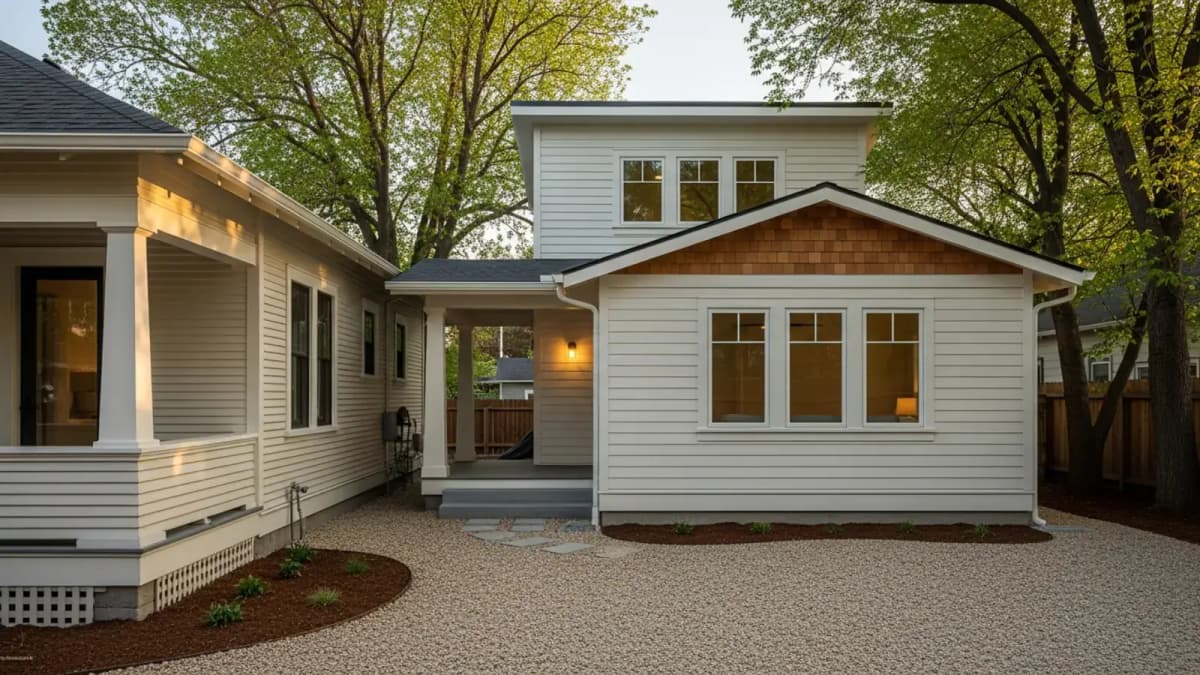
Home Additions on 13th Street, Hyde Park, Harrison Boulevard & Camel's Back
Rear additions on tight 50' Hyde Park bungalow frontages, two-story additions on Harrison Boulevard's deeper Tudor and Colonial Revival lots, basement-finish additions on 1925–1940 stock, and detached carriage houses off the alley — designed inside the North End Historic District at premium spec.
Quick answer
If your home is within the North End Historic District boundary and your addition has any exterior visible from a public way, yes. The HPC reviews exterior modifications for compatibility with the historic character of the neighborhood.
Home additions in the North End operate inside two design constraints that don't apply anywhere else in Boise: the North End Historic District overlay (HPC Certificate of Appropriateness required for any exterior change visible from a public way) and the 1900–1940 plaster-and-lath wall system that demands different connection detailing than drywall scope on newer homes. Beyond the regulatory and material overhead, the North End splits sharply by sub-area lot geometry. The 13th Street and Hyde Park bungalow streets sit on tight 50-foot District frontages with shallow rear yards — most rear additions there are 200–400 sq ft single-story bump-outs constrained by setback envelopes, and right-of-way permits for dumpster placement on tight District streets sometimes get restricted because of the historic streetscape. Harrison Boulevard's deeper lots support the substantial Tudor and Colonial Revival mansions and accommodate two-story rear additions of 800–1,400 sq ft without overwhelming the lot. The 1925–1940 Tudor and Colonial Revival housing stock often has full basements that support basement-finish additions (sometimes the right answer when above-grade addition would compromise the home's massing or trigger hostile HPC review). Iron Crest's North End addition playbook anchors on premium spec ($1,800–$2,800 per square foot — appropriate to North End comparable sales), pre-application HPC consultation to minimize redesign cycles, plaster-and-lath connection detailing on pre-1925 bungalow tie-ins, and whole-home modernization (knob-and-tube replacement, galvanized-to-PEX, cast iron drain stack) coordinated at addition time when the existing systems are at end-of-life.
North End addition strategy depends on what era of home you own — original construction, foundation system, wall material, and HPC scrutiny all behave differently across the four eras.
1900–1925 original Craftsman bungalows (13th Street and Hyde Park core)
1,100–1,800 sq ft single or one-and-a-half-story bungalows on perimeter foundations with crawlspaces. Tight 50' District frontages and shallow rear yards constrain addition envelope. Plaster-and-lath wall system universally — connection detailing is different protocol than drywall ($35–$85 per square foot plaster repair where new addition opens existing wall). Pre-1925 balloon framing connects to modern platform framing through specific engineered details. Original knob-and-tube wiring and galvanized supply universal. Universal pre-1978 EPA RRP. HPC scrutiny most stringent on this era — period architectural matching is mandatory.
1925–1940 Tudor Revival and Colonial Revival (Harrison Boulevard, parts of Camel's Back)
1,800–3,400 sq ft two-story homes on substantial foundations, often with full basements. Deeper lots support expansive scope. Tudor exteriors require half-timbering, stucco, and steep-pitch roof matches. Colonial Revival requires careful symmetry consideration. Original full basements often support basement-finish additions in lieu of above-grade addition. Cast iron drain stack and galvanized supply common — whole-home modernization at addition time typical. HPC scrutiny stringent — period match required.
1945–1965 Fort Boise post-war ranch and minimal traditional
1,200–2,000 sq ft single-story homes on slabs or short crawlspaces. Drywall + plaster-skim walls — simpler tie-in than bungalow scope. Aluminum branch wiring on early-1960s subset. Post-war ranches' simpler architecture is easiest to add to sympathetically — design language tolerates more variation than Craftsman or Tudor without looking patched-together. Some lots in this era are outside the District overlay (north of Hill Road). HPC scrutiny moderate.
1985+ infill and rebuilds (north of Hill Road, lower-numbered streets infill)
Modern construction. Often outside the Historic District boundary entirely. Additions are essentially new-construction work and follow modern building science straightforwardly. Less likely to need a major addition since these homes were built to current size expectations.
North End additions fall into five recurring shapes set by sub-area lot geometry, the era of the original house, and what HPC review allows on visible exterior elevations.
1. The Tight 50' District Frontage Rear Bump-Out (Hyde Park / 13th Street Bungalow Scope)
200–400 sq ft single-story rear addition off a 1905–1925 Hyde Park bungalow, constrained by setback envelope on the tight 50' District frontage and shallow rear yard. Extends kitchen or adds family/breakfast room. Period-correct exterior matching: 7-inch reveal painted lap siding (Hardie or LP SmartSide), exposed rafter tails on the addition matching the original eave detail, divided-light wood-clad casement or double-hung windows (Marvin Signature, Sierra Pacific H3) matching original 4-over-1, 6-over-1, or 9-over-1 grid patterns, custom-milled trim. Plaster-keyed connection at existing wall.
Target homes: 1905–1925 Hyde Park / 13th Street Craftsman bungalows with rear-yard depth meeting setback. Permit: building permit + HPC Certificate of Appropriateness.
2. The Harrison Boulevard Two-Story Rear Addition
600–1,100 sq ft two-story rear addition on a Harrison Boulevard Tudor Revival or Colonial Revival home — kitchen expansion and family room below, primary suite above. The deeper Harrison Boulevard lots accommodate this scope without overwhelming the lot. Tudor scope requires half-timbering, stucco panels, and steep-pitch roof matching the original; Colonial Revival requires careful symmetry consideration. Highest-impact North End addition by ROI. HPC scrutiny stringent — pre-application consultation mandatory.
Target homes: Harrison Boulevard and select Camel's Back Tudor Revival or Colonial Revival homes with deeper lots. Permit: building permit with structural drawings + HPC Certificate of Appropriateness.
3. The Basement-Finish Addition (1925–1940 Tudor / Colonial Revival Specific)
Convert full basement of a 1925–1940 Tudor Revival or Colonial Revival home into legal bedrooms, family room, home theater, wine cellar, or guest suite. Often the right answer when above-grade addition would compromise massing, trigger hostile HPC review, or exceed lot coverage. Scope is conditioning, finishing, egress windows for legal bedrooms ($5,500–$8,500 per opening on stone or concrete foundation), full bathroom rough-in tied to existing stack, and code-compliant ceiling height verification.
Target homes: 1925–1940 Harrison Boulevard, Camel's Back, and Heron Street Tudor / Colonial Revival homes with full basements. Permit: building permit. HPC review only triggered if egress window wells visible from public way.
4. The Primary Suite Addition Over Existing Garage (Camel's Back / Heron Specific)
Second-story addition over an existing detached garage — 350–550 sq ft new primary suite (bedroom, walk-in closet, full Schluter-tiled bath) accessed via new staircase from main house or breezeway. Common solution on Camel's Back and Heron Street homes whose original primary bedroom is small and shares a hall bath. Period architectural matching of garage exterior elevation to original house vocabulary mandatory.
Target homes: Camel's Back, Heron Street, and select Hyde Park homes with detached garages suitable for over-build. Permit: building permit with structural drawings + HPC Certificate of Appropriateness.
5. The Detached Carriage House Off the Alley
New 600–900 sq ft detached structure built off the alley — typically two-car garage with finished second-floor space (home office, studio, guest suite, or ADU-ready scope). Different from a true ADU in zoning intent, though sometimes scoped to permit conversion later. Excellent solution for owners who want extra functional space without modifying the main house's HPC-protected envelope. Period architectural matching to main-house vocabulary required for any elevation visible from public way.
Target homes: Hyde Park, Camel's Back, Harrison Boulevard, and Fort Boise homes with alley access and rear-yard space. Permit: building permit + HPC review for elevations visible from public way.
The North End is made up of distinct sub-neighborhoods, each with its own remodeling personality.
13th Street & Hyde Park
The cultural and commercial heart of the North End — boutique shops and restaurants along 13th between Brumback and Eastman, with the densest concentration of original Craftsman bungalows on the surrounding blocks. Lots are tight (typically 50' frontage), alley access is common, and the neighborhood is heavily walked. Most homes here are 1905–1925 Craftsman.
Camel's Back & Heron Streets
The streets immediately around Camel's Back Park, climbing slightly into the lower foothills. Mostly Craftsman bungalows with some Tudor Revival mixed in. Lots get larger toward the park edge, and some homes back to the Foothills Reserve with significant trees. Project budgets here tend to be higher — these are some of the most coveted blocks in the city.
Harrison Boulevard corridor
The grand divided boulevard running south-to-north through the heart of the North End, lined with the neighborhood's largest historic homes. Tudor Revival, Colonial Revival, and a few notable Prairie-style houses sit on deep lots with mature plantings. Projects here lean toward sympathetic upgrade rather than reconfiguration — these homes already have generous floor plans.
Fort Boise & Capitol-area North End
The streets around Fort Boise Park and stretching toward the State Capitol grounds — a mix of original Craftsman bungalows, larger 1920s and 1930s homes, and a higher proportion of post-war infill. Lots vary widely. Project scopes span the full range depending on house age and homeowner intent.
North of Hill Road / new infill
The northern fringe of the historic North End, where construction continued through the 1950s and where modern infill has been most active. Newer (1945–present), larger, less constrained by historic-district considerations. Projects here look more like SE Boise or Harris Ranch in scope and material strategy.
Lower-numbered streets (3rd–9th)
The streets between the State Capitol grounds and Fort Boise — traditionally a more working-class section of the North End, with a mix of smaller Craftsman bungalows, post-war houses, and some converted multi-family. Increasingly being renovated as North End demand pushes outward from the 13th Street core. Excellent value if you can find an unrenovated home here.
North End addition pricing reflects four cost drivers that don't apply at the same intensity elsewhere in Boise: HPC pre-application consultation and Certificate of Appropriateness review (4–8 weeks added to permit timeline), plaster-and-lath connection detailing on pre-1925 bungalow tie-ins ($35–$85 per square foot plaster repair), period architectural matching with custom-milled trim and divided-light wood-clad windows ($1,800–$3,200 per opening for Marvin Signature), and whole-home modernization (knob-and-tube replacement, galvanized-to-PEX, cast iron stack) coordinated at addition time. Premium spec ($1,800–$2,800 per square foot) is appropriate to North End comparable-sale market.
North End home additions ranges
Tight 50' District frontage rear bump-out (200–400 sq ft single-story Hyde Park bungalow rear addition with HPC review): $95,000–$185,000 / 5–9 months end to end
Basement-finish addition (1925–1940 Tudor / Colonial Revival) (Full basement conversion to legal bedrooms, family room, or guest suite): $135,000–$245,000 / 5–9 months end to end
Primary suite addition over existing garage (350–550 sq ft second-story addition with period architectural matching): $185,000–$315,000 / 7–11 months end to end
Detached carriage house off the alley (600–900 sq ft new detached structure with garage and finished upper): $215,000–$385,000 / 8–12 months end to end
Harrison Boulevard two-story rear addition (600–1,100 sq ft kitchen + primary suite, premium HPC-reviewed period match): $285,000–$480,000 / 9–14 months end to end
Pricing assumes Iron Crest's standard North End scope: full City of Boise plan-review permit, Historic Preservation Commission Certificate of Appropriateness review and approval where applicable (4–8 weeks added to permit timeline), structural engineering for foundation and framing integration with pre-1925 balloon-framed walls or post-war platform framing, EPA RRP lead-safe work practices on every existing-house tie-in (universal in pre-1978 North End stock), pre-1980 asbestos pre-screen on disturbed existing-house materials, plaster-and-lath demolition and connection detailing on pre-1925 tie-ins, period-correct exterior finishes (lap siding profile, custom-milled trim, divided-light wood-clad windows in Marvin Signature, matched roofing), whole-home modernization coordination (knob-and-tube replacement, galvanized-to-PEX, cast iron drain stack) at addition time, full mechanical and finish work in the new space at premium North End spec, and a 3-year workmanship warranty. Contingency budget of 15–18% above contract value should be held for connection-to-existing discovery work — the upper end of standard contingency reflects the higher rate of surprises in pre-1925 stock.
The North End Historic District boundary covers most — but not all — of the North End. The district is administered by the City of Boise Historic Preservation Commission, which reviews exterior modifications within the district boundary. Interior work, including comprehensive remodels, is exempt from Historic Preservation review. This is the single most important permitting fact to internalize: your interior work doesn't need historic review, regardless of how aggressive the scope.
Where Historic Preservation review enters the picture is when your project includes any exterior change. Examples we encounter regularly: enlarging a window, relocating an exterior door, adding an exterior-vented hood that requires a new wall penetration, building a small addition or bump-out, or replacing a side-yard window with a different style. Any of these requires a Certificate of Appropriateness from the Historic Preservation Commission, which can add several weeks to the permit timeline (confirm current timelines with PDS) and typically requires architectural drawings showing the proposed change in context.
For interior-only projects, the standard City of Boise permits apply: a building permit for structural work (wall removal, beam installation), an electrical permit for new circuits or panel work, a plumbing permit for fixture relocation or new water lines, and a mechanical permit for ducting or HVAC modifications. Permit fees for a typical mid-range project run several hundred to a few thousand dollars depending on scope. Processing times: electrical and plumbing permits are often same-day or next-day; building permits go through plan review, about two weeks for online plan review per Boise PDS and longer when structural drawings are involved.
One North End-specific permit consideration: parking and right-of-way. Placing a dumpster on the street or parking a construction trailer at the curb requires an ACHD temporary-use permit (fee varies), since North End residential streets are ACHD right-of-way. Some North End streets have additional restrictions related to the historic neighborhood designation. Iron Crest pulls all required temporary-use permits as part of project setup.
North End addition material strategy is fundamentally about period-correct match to the existing house. Every visible exterior material must read as continuous with the original construction, and the HPC reviews material choices closely on visible elevations. Premium spec applies — lap siding profile, custom-milled trim, divided-light wood-clad windows, and matched roofing are baseline rather than upgrade.

Exterior siding — period-correct profile and material
Craftsman bungalow scope: 7-inch reveal painted lap siding (Hardie fiber cement or LP SmartSide for new construction; original wood lap can be matched if budget allows). Tudor Revival scope: half-timbered stucco panels with painted timber accents — must be custom-built to match original detail (most expensive North End siding scope by far). Colonial Revival scope: lap siding similar to Craftsman but with corner boards and specific trim details. The HPC scrutinizes siding material and reveal carefully — vinyl siding is rejected outright on visible exterior elevations.
Roof and trim — match original pitch, eave detail, and rafter tails
Roof pitch matches existing original — typically steeper on Tudor, moderate on Craftsman, varies on Colonial Revival. Architectural composite shingle in matching color is the practical default; cedar shake matches original Craftsman style if budget supports it. Bungalow eaves get exposed rafter tails on the addition matching original profile (depth, spacing, taper). Tudor scope requires steep-pitch roof match and copper or matching metal flashing detail. Custom-milled trim casings to match original profiles.
Windows — divided-light wood-clad to match original grid patterns
Craftsman: divided-light wood-clad double-hung windows (Marvin Signature, Sierra Pacific H3, or Andersen E-Series) matching original 4-over-1, 6-over-1, or 9-over-1 patterns. Tudor: wood-clad casement with diamond or rectangular leaded-glass divisions where authentic. The HPC scrutinizes window choice carefully on additions — vinyl windows typically don't pass review for visible exterior elevations. $1,800–$3,200 per opening for Marvin Signature. Rear-elevation-only windows sometimes accept fiberglass-clad alternatives at lower cost.
Foundation — match settlement profile of pre-1925 stock
Pre-1925 bungalow foundations have settled differentially over a century — addition foundation must accommodate without inducing structural problems. New concrete foundation poured to match existing depth and bearing. Engineered transitions are mandatory ($2,500–$8,500 typical). For Tudor / Colonial Revival with full basements, addition can extend basement (more usable space, more cost) or sit on its own crawlspace foundation (simpler).
Interior finishes — match original plaster, trim, and floor
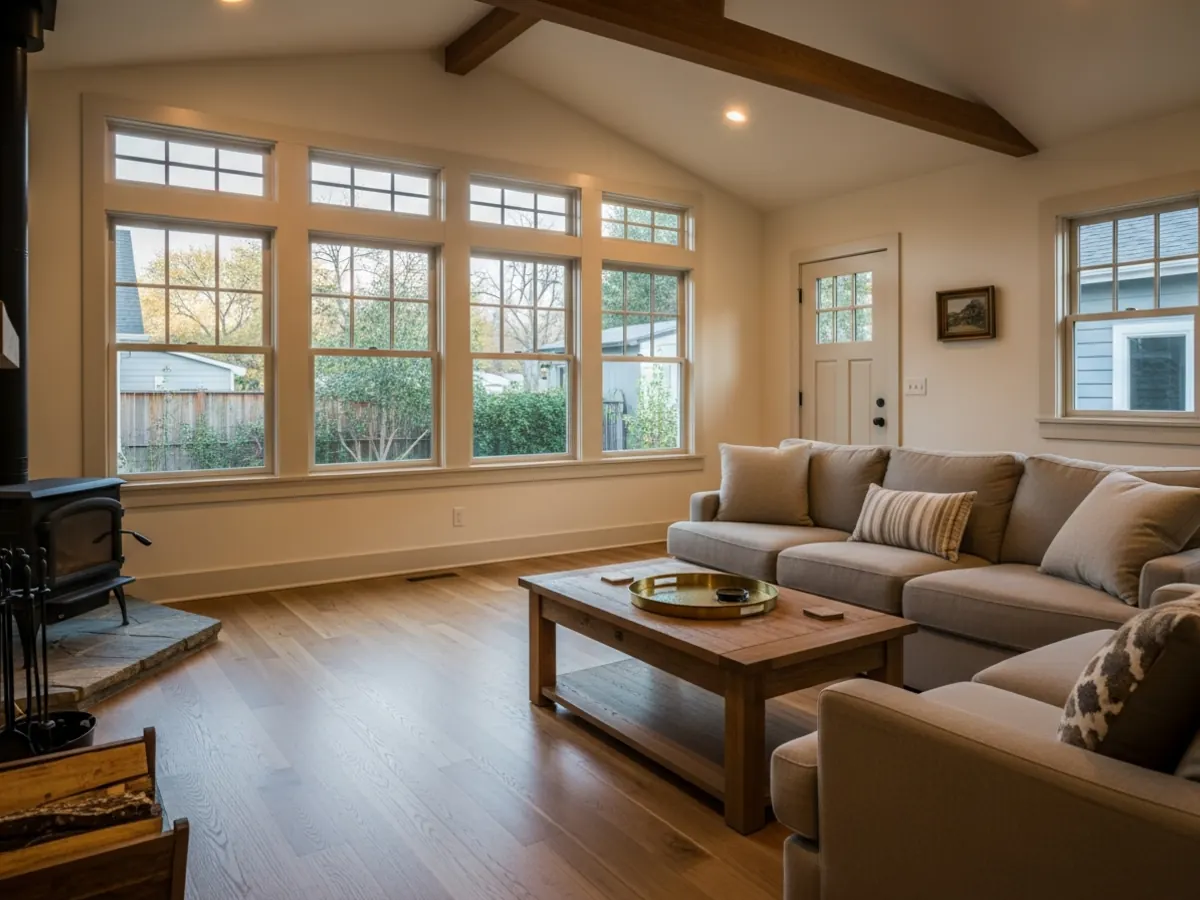
Engineered red oak (2¼-inch to 4-inch plank) matching adjacent original refinished red oak for visual continuity, or quarter-sawn white oak for premium Tudor / Colonial scope. Custom-milled trim to match original profiles, painted to match. Wall finish: drywall finished to match original plaster smoothness (Level 5 finish typical). Doors and hardware: match original profiles and finishes. Lighting and fixtures from same family as rest of house.
Mechanical integration — whole-home modernization at addition time
Existing knob-and-tube wiring (universal pre-1925 bungalow), aluminum branch (early-1960s subset), galvanized supply, and cast iron drain stack are all at end-of-life on most North End stock. Whole-home rewire ($28,000–$58,000), galvanized-to-PEX re-pipe ($18,000–$45,000), and cast iron stack replacement ($14,000–$32,000) are typically coordinated at addition time — substantially cheaper than separate later projects requiring wall demolition twice. HVAC: existing systems usually undersized; mini-split heat pump for the new space is the cleanest solution.
North End additions surface a recurring set of conditions related to the connection between new and pre-1925 construction. Pre-1925 stock has the highest rate of discovery-driven surprises in Boise — pre-screen during consultation and budget honestly.
- •Plaster-and-lath demolition and connection on pre-1925 bungalow tie-ins Different protocols than drywall demolition — plaster repair where new addition opens existing wall, plaster-keyed connection details at junction. $35–$85 per square foot plaster repair scope.
- •Knob-and-tube wiring requiring whole-home rewire at addition time Universal in pre-1925 Hyde Park bungalow stock. Often surfaces in attics during framing connection. Whole-home rewire as part of addition project rather than partial: $28,000–$58,000 — substantially cheaper than separate later project requiring wall demolition twice.
- •Galvanized supply and cast iron drain stack requiring whole-home re-pipe Pre-1960 North End stock universally has galvanized supply and cast iron drain stack at end-of-life. Coordinating whole-home re-pipe at addition time: galvanized-to-PEX $18,000–$45,000, cast iron stack replacement $14,000–$32,000.
- •HPC pre-application required modifications Initial Certificate of Appropriateness application sometimes triggers HPC-requested modifications to material, proportion, or detail. Iron Crest's pre-application consultation with HPC staff minimizes this risk, but occasional modifications happen. $2,500–$15,000 in design and material adjustment.
- •Pre-1925 balloon framing requiring engineered connection detail Original balloon framing connects to modern platform framing through specific engineered details. Sistering, reinforcement, or replacement at the connection zone: $3,500–$9,000 typical.
- •Pre-1980 asbestos in original siding, sheathing paper, popcorn ceilings Universal in pre-1980 North End stock. Licensed abatement before disturbance at tie-in: $3,500–$8,500.
- •Lead paint on every pre-1978 surface (universal North End) EPA RRP lead-safe containment, HEPA-only sanding, lead-safe disposal at every tie-in. Built into Iron Crest's North End pricing rather than added as discovery: $4,500–$12,500 depending on disturbance scope.
- •Tight 50' District frontage right-of-way restrictions for dumpster placement Some Hyde Park and 13th Street District streets have right-of-way restrictions related to historic streetscape. Sometimes warrants alley-only material staging or rolling dumpster (delivered fresh weekly rather than parked). $0 if alley access viable; $1,500–$3,500 added cost when rolling dumpster needed.
- •Existing 60A or 100A service requiring 200A upgrade Pre-1965 North End stock universally has undersized service. 200A panel upgrade: $3,500–$5,500.
- •Egress window scope on Tudor / Colonial Revival basement-finish addition Code-compliant egress window on stone or concrete foundation with stairwell well: $5,500–$8,500 per opening — higher than standard daylight basement scope because foundation cutting is more involved.
Initial consultation and feasibility (Weeks 1–3)
On-site walkthrough, lot assessment with HPC overlay verification (most North End is in District; north of Hill Road and some Fort Boise sections are not). Tight 50' Hyde Park frontage setback envelope check vs. deeper Harrison Boulevard lot envelope check. Era walkthrough — 1905 Craftsman bungalow vs. 1930 Tudor Revival vs. 1955 Fort Boise post-war ranch. Pre-screen for asbestos and lead at tie-in.
Pre-application Historic Preservation consultation (Weeks 3–5)
Informal pre-application meeting with HPC staff to discuss the proposed addition and identify any concerns before formal design. Saves redesign time later. Most stringent on pre-1925 bungalow scope and Harrison Boulevard Tudor / Colonial scope.
Design development (Weeks 5–14)
Architect or designer develops floor plans, exterior elevations showing addition in context with existing house, structural drawings. Iterative review. Period-correct material specifications and finish selections. Whole-home modernization scope decisions made here (cheaper at addition time than separate later projects).
Permitting (Weeks 14–24)
Building permit application to City of Boise Planning & Development Services. Certificate of Appropriateness application to HPC (typically reviewed at monthly HPC meetings; 2–4 months for full process). Material orders placed during permit processing — Marvin Signature window lead time 8–14 weeks.
Site preparation and foundation (Weeks 24–28)
Site setup with right-of-way permit for dumpster placement on tight District streets where alley access not viable. EPA RRP containment at tie-in. Excavation. Concrete foundation pour with engineered transitions to match existing settlement profile.
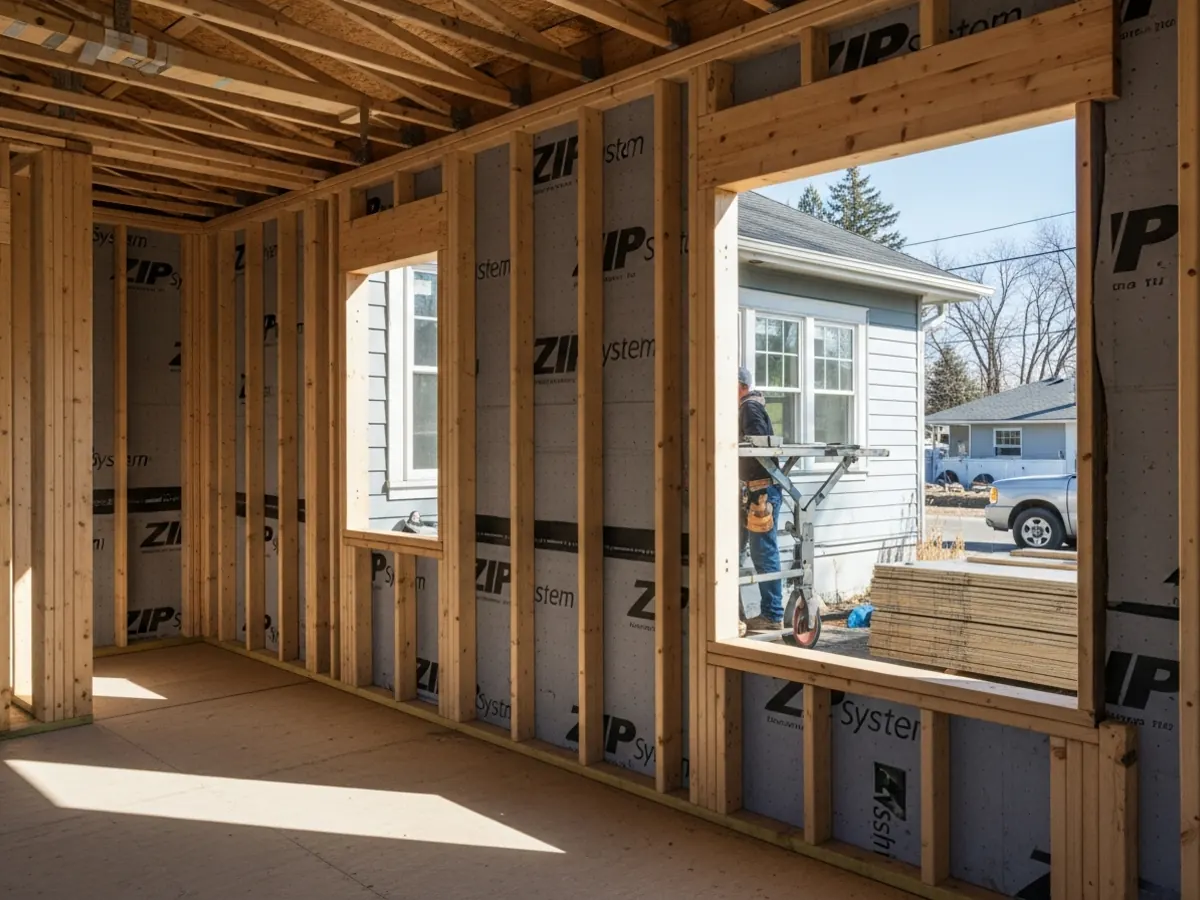
Framing and shell (Weeks 28–34)
Framing per structural engineering. Plaster-keyed connections at existing pre-1925 walls. Roof transition framing matching original eave detail (exposed rafter tails on Craftsman scope, steep pitch on Tudor scope). Window and door installation. Roofing matching original color and profile.
Connection to existing house and whole-home modernization (Weeks 34–38)
Cutting through existing exterior wall under EPA RRP containment, structural reinforcement at connection, plaster-and-lath repair at junction, weatherproofing the junction. Whole-home rewire if scoped. Galvanized-to-PEX re-pipe if scoped. Cast iron stack replacement if scoped. ZipWall containment of construction zone.
Mechanical rough-in and insulation (Weeks 38–44)
Plumbing, electrical, HVAC rough-in throughout the new space. Mini-split heat pump or new zone for existing system. High-R insulation. Drywall hang and finish to match original plaster smoothness.
Finishes, fixtures, and final inspections (Weeks 44–60)
Engineered red oak or quarter-sawn white oak flooring matched to adjacent original. Custom-milled trim painted to match. Schluter-Kerdi waterproofing in any new bath. Cabinetry, paint, lighting, fixtures, hardware. Final mechanical and building inspections. Punch-list walk. Final walkthrough and sign-off. 3-year Iron Crest workmanship warranty begins.
North End additions require fluency with the HPC Certificate of Appropriateness process, plaster-and-lath connection detailing on pre-1925 bungalow tie-ins, period architectural matching at premium spec, and whole-home modernization coordination at addition time when knob-and-tube, galvanized supply, and cast iron drain stack are all at end-of-life.
- City of Boise Historic Preservation Commission — Design review information, district maps, and Certificate of Appropriateness application.
- City of Boise Planning & Development Services — Building, electrical, plumbing, and mechanical permits. Online portal and in-person plan check.
- Idaho DEQ Air Quality (Asbestos) — Testing and abatement guidance for pre-1980 homes via the Idaho Department of Environmental Quality.
- EPA Lead Renovation, Repair and Painting (RRP) Program — Required certification and work practices for renovation in lead-paint homes.
- Preservation Idaho — Statewide nonprofit advocating for historic preservation. Resources and educational events.
Will my North End addition need Historic Preservation Commission approval?
If your home is within the North End Historic District boundary and your addition has any exterior visible from a public way, yes. The HPC reviews exterior modifications for compatibility with the historic character of the neighborhood. The review takes 4–8 weeks added to the standard permit timeline, and sometimes requires modifications to design, material, or proportion. Iron Crest's pre-application consultation with HPC staff minimizes redesign cycles. Interior-only changes (no exterior visible modifications) don't require HPC review even within the District. Some sections (north of Hill Road, parts of Fort Boise) sit outside the District boundary entirely.
How tight is the 50' Hyde Park frontage for a rear addition?
Tight enough that most Hyde Park and 13th Street bungalow rear additions are constrained to 200–400 sq ft single-story bump-outs by setback envelope and shallow rear yard. Side-yard additions are almost never viable on 50' District frontages — no side-yard depth exists. Right-of-way permits for dumpster placement on tight District streets sometimes get restricted because of the historic streetscape; alley material staging or rolling-dumpster scheduling is sometimes the workaround.
How long does a North End addition take?
5–9 months for a tight 50' Hyde Park rear bump-out; 5–9 months for a basement-finish addition on a Tudor / Colonial Revival home; 7–11 months for a primary suite over an existing garage; 8–12 months for a detached carriage house off the alley; 9–14 months for a Harrison Boulevard two-story rear addition. HPC review adds 4–8 weeks to permit processing (concurrent with material ordering, so doesn't always extend total timeline). Marvin Signature window lead time (8–14 weeks) and custom-milled trim are the longest material poles.
What does a North End addition cost per square foot?
$1,800–$2,800 per square foot for North End addition spec — appropriate to the comparable-sale market. Tight 50' Hyde Park bungalow rear bump-outs at the lower end ($1,800–$2,200/sf) because scope is smaller; Harrison Boulevard two-story Tudor or Colonial Revival additions at the upper end ($2,200–$2,800/sf) because of period architectural matching cost (custom-milled trim, divided-light wood-clad Marvin Signature windows, half-timbering or symmetry detail). Cost variation driven by HPC scrutiny on visible elevations, plaster-and-lath connection scope, and whole-home modernization coordination.
Can you match my Craftsman bungalow trim, siding, and windows on a new addition?
Yes — and we do this on every Hyde Park / 13th Street bungalow addition. Custom-milled trim to match existing profile (depth, taper, reveal), Hardie or LP SmartSide lap siding in matching reveal and exposure, Marvin Signature divided-light wood-clad windows in matching grid pattern (4-over-1, 6-over-1, or 9-over-1), exposed rafter tails matched in profile and spacing. Period match needs to be deliberate — close-but-not-quite reads wrong even to non-specialists, and the HPC catches it.
Should I add to my Tudor / Colonial Revival or finish the basement instead?
Sometimes the basement-finish addition is the right answer on 1925–1940 Tudor / Colonial Revival stock. Full basements support legal bedrooms, family room, home theater, wine cellar, or guest suite scope at $135,000–$245,000 — substantially less than a $285,000–$480,000 above-grade two-story addition. Egress windows for legal bedrooms cost $5,500–$8,500 per opening on stone or concrete foundation. The basement-finish path also avoids HPC scrutiny if egress wells aren't visible from public way.
Why coordinate whole-home modernization at addition time?
Pre-1925 North End stock universally has knob-and-tube wiring, galvanized supply, and cast iron drain stack — all at end-of-life. Whole-home rewire ($28,000–$58,000), galvanized-to-PEX re-pipe ($18,000–$45,000), and cast iron stack replacement ($14,000–$32,000) are substantially cheaper coordinated at addition time than as separate later projects requiring wall demolition twice. Most of the disruption is already happening; the marginal scope cost is much lower than starting fresh.
Can I live in the home during a North End addition?
Sometimes. Standard rear bump-outs and basement-finish additions are usually compatible with continued occupancy because most disruptive work happens away from your living space. The connection phase (2–4 weeks typically) is the most disruptive and may require temporary relocation or specific dust-control measures. EPA RRP containment at the tie-in protects the rest of the house. Whole-home modernization scope (rewire, re-pipe, stack replacement) usually warrants temporary relocation during the most disruptive 4–8 week window.
Ready to start your North End home additions project?
Free in-home consultation, honest contingency-based budgeting, and the experience Boise homes require. Iron Crest Remodel — Idaho RCE #6681702, EPA RRP lead-safe work practices, $2M general liability, 3-year workmanship warranty.
Get Your Free Estimate