
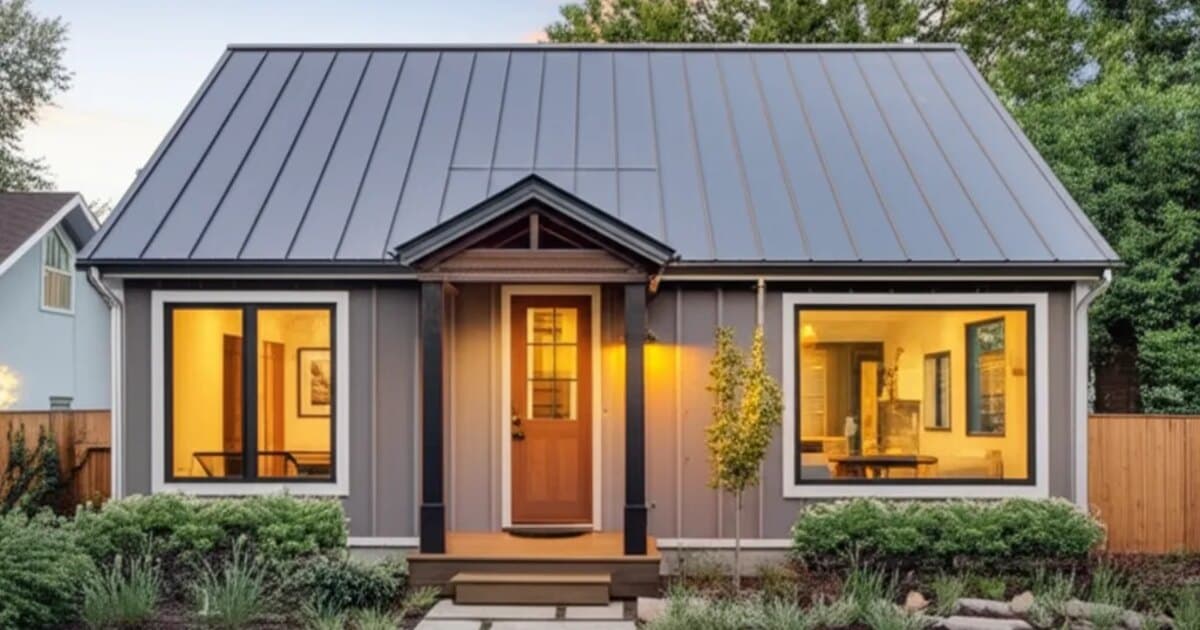
ADU Construction Cost in Boise
Understand the major budget considerations for ADU construction in Boise, including site work, utilities, and finish level.
Quick answer
Most Boise ADU construction projects cost $95,000 to $320,000, with a typical Boise project landing near $165,000. Boise ADU construction costs reflect Ada County's labor market, Boise's 24-inch frost depth (which drives foundation cost), the City of Boise's permit and inspection requirements, and the architectural and utility complexity that each specific project demands.
Boise, ID · ADU Construction
Planning ADU construction in Boise?
Read the full guide below — or get your project priced now. Free, no-obligation estimates from an Idaho registered local team, backed by a 1-year workmanship warranty.
- Licensed Idaho RCE-6681702
- 1-Year Workmanship Warranty
- $2M Liability Coverage
- Free, No-Obligation Estimates


Typical range in Boise: $95,000 – $320,000
Typical Boise project: $165,000
Boise ADU construction costs reflect Ada County's labor market, Boise's 24-inch frost depth (which drives foundation cost), the City of Boise's permit and inspection requirements, and the architectural and utility complexity that each specific project demands. A detached garage conversion to a finished ADU — where the structure exists and utilities are already partially in place — runs $95,000 to $145,000 depending on the quality of the original structure, the extent of utility work required, and the finish specification. A new detached ADU built from the foundation up on a Boise residential lot runs $145,000 to $220,000 for a 600-square-foot one-bedroom unit, depending on site conditions, foundation type, and finish level. Attached ADU additions (second story above the garage, ground-floor addition with private entrance) run $120,000 to $260,000 depending on structural complexity and scope. Utility connection costs — water, sewer, electrical service panel addition — vary significantly based on the distance from existing connections and the age of the existing home's utilities, and represent one of the most variable cost elements in any Boise ADU project.
Permit costs and review times in Boise
Permit fees and plan-review turnaround are set by Boise, not by the contractor, and they differ across the Treasure Valley. They belong in your budget and your schedule from the start.
- How Boise calculates the fee
- Valuation-based (Table 1-A). Up to $500: $26.37; $501–$2,000: $26.37 plus $2.95 per additional $100. $2,001–$25,000: $70.76 for the first $2,000 plus $12.71 per additional $1,000. $25,001–$50,000: $362.80 plus $9.30 per $1,000. $50,001–$100,000: $595.30 plus $6.35 per $1,000. Over $100,000: $913.09 plus $5.17 per $1,000 (each "or fraction thereof"). Residential plan review adds 20% of the permit fee. The FY27 schedule (Oct 1, 2026) left this table unchanged and raised several smaller fees such as reinspections.
- Plan-review turnaround
- Published first-review targets (working days): single-family Level 1 under 10, Level 2 under 14; additions/alterations Level 1 under 1, Level 2 under 10. The city's Jun–Aug 2026 report shows actual averages of 10, 12, 1 and 8 working days respectively. Total time to a ready-to-issue permit, including applicant resubmittals, ran longer (e.g. 42 days for single-family Level 1).
Figures quoted from Boise's published scheduleFY27 fee schedule eff. Oct 1, 2026 (Table 1-A unchanged since 2021)
Idaho adopts building codes by statute, so the code editions are the same statewide — the 2018 IRC with Idaho amendments and the 2023 NEC. What changes between cities is the fee formula, the review queue, and which office holds the file.
The cost of adu construction in Boise depends on the scope of work, materials selected, complexity of the layout, condition of existing systems, and the finish level you choose. Every project is different, but understanding the major cost drivers helps you plan a realistic budget and make informed decisions about where to invest and where to save. The ranges above reflect the full spectrum of projects we complete in Boise — from straightforward updates to comprehensive renovations with premium materials and significant structural changes.
Common project types we take on in Boise, with the typical investment and timeline for each:
North End — Detached Garage Conversion to ADU
$95,000–$145,0003–4 monthsThe North End's alley-accessed lots frequently feature detached garages at the rear of the property that are underused as vehicle storage and ideally positioned for ADU conversion. These structures — typically 20 by 24 feet or larger — can accommodate a studio or one-bedroom ADU with a full kitchen, bathroom, and private entrance without requiring new foundation construction. The conversion scope includes: structural assessment and reinforcement as needed, insulation of walls and ceiling to meet Idaho Energy Code minimums, HVAC installation (typically a mini-split system for the ADU's independent climate control), kitchen and bathroom installation, window additions for egress and natural light compliance, electrical panel upgrade or subpanel addition, and finish work to a habitability standard appropriate for rental or family use. Boise requires an ADU's materials, colors, and design motif to be compatible with and complement the principal structure (Zoning Code 11-03-03.2.B), which the North End's Craftsman aesthetic accommodates well.
Boise Bench — New Detached ADU on Oversized Lot
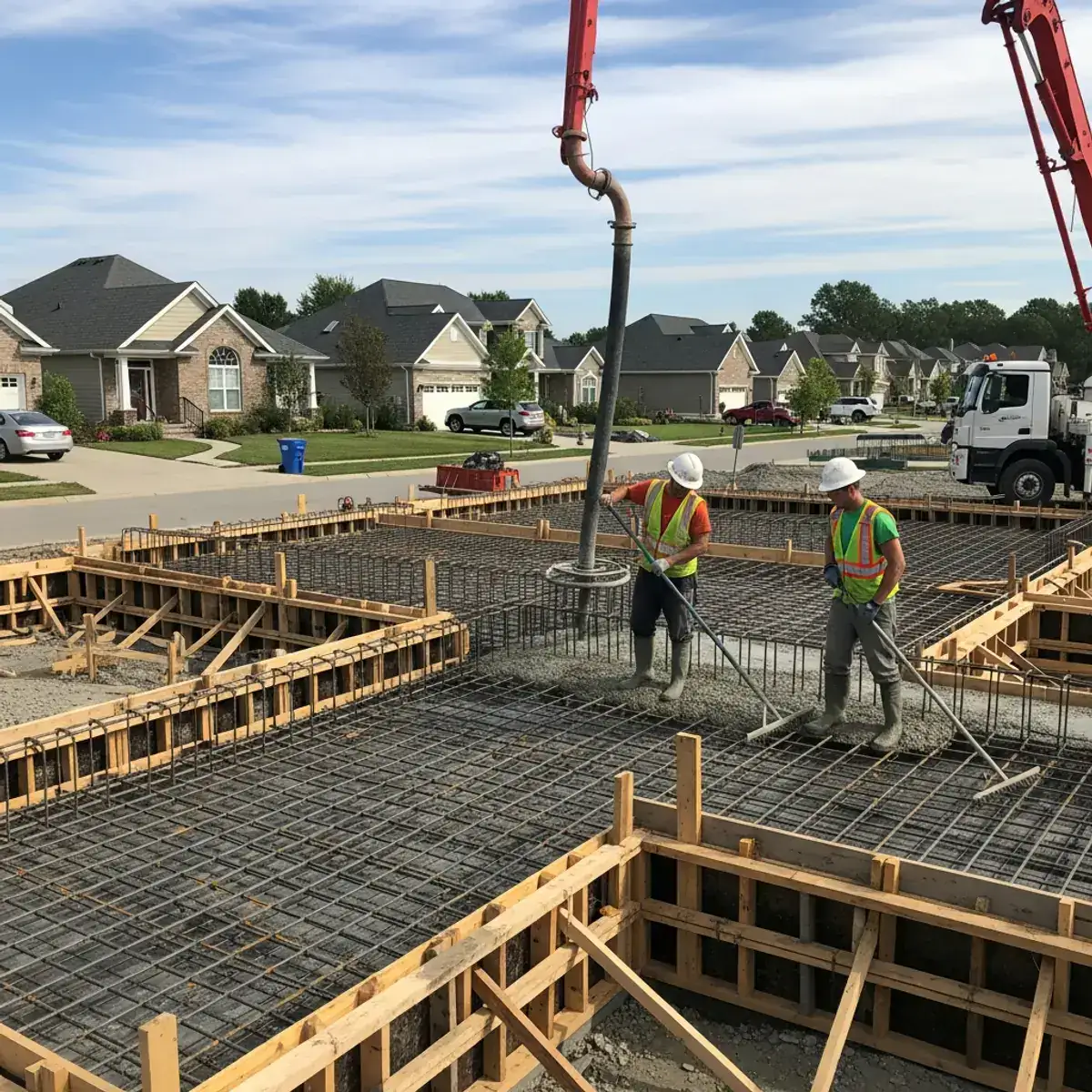
$150,000–$210,0004–6 monthsBench ranches on lots larger than the typical 6,000 square feet — lots of 8,500 square feet or larger that are common in certain Bench blocks — have room to add a new detached ADU without eliminating the yard space that makes these properties desirable. A new detached ADU built from a poured concrete foundation provides complete architectural independence from the primary home while generating rental income or family housing on land already owned. Design requirements for new detached ADUs in Boise are more stringent than for garage conversions — foundation footings below the 24-inch frost depth, energy code compliance for all wall, roof, and window assemblies, full utility connections, and architectural compatibility with the primary dwelling — and the permit and inspection process is more involved. Iron Crest manages the full design-permit-build sequence for new detached ADUs.
West Boise — Above-Garage ADU Addition
$145,000–$220,0004–5 monthsWest Boise two-story homes with attached two-car garages often have structural capacity for a second-story addition above the garage — an attached ADU configuration that adds living space without consuming yard area for a new detached structure. These projects require structural assessment of the existing garage framing, engineered beam and bearing upgrades where needed, stair construction for exterior access (to maintain the ADU's separate entrance requirement), and full finish work to meet Boise's ADU habitability standards. Above-garage ADUs in West Boise are well-suited to in-law suite use because they are connected to the main home's structure while maintaining a private entrance and independent utilities. The configuration also adds permitted, finished square footage to the property without giving up any of the yard.
North End — Attached ADU Addition with Private Entrance
$135,000–$210,0004–6 monthsNorth End bungalows on lots where a rear detached structure is not feasible — due to tree root systems, setback constraints, or lot dimensions — can often accommodate an attached ADU addition off the rear of the primary home, with its own private exterior entrance, kitchen, bathroom, and living area. These attached additions require more design creativity than detached structures to maintain the visual integrity of the primary home while providing functional independence for the ADU occupant. Inside North End historic districts, exteriors go through historic design review, so attached ADU additions there are designed to those guidelines from the first drawing; outside a historic district, Boise still requires the ADU's design to be compatible with the principal structure.
East Boise — ADU for Multigenerational Family Housing
$155,000–$240,0004–6 monthsEast Boise neighborhoods — foothills-adjacent properties in Harris Ranch, Southeast Boise, and the Boise Bench's eastern extension — increasingly host multigenerational ADU projects where the goal is providing quality independent housing for a family member rather than generating rental income. These ADUs are typically specified to a higher finish quality than market-rate rental units: quartz countertops, tile showers, hardwood or LVP flooring, and quality cabinetry selections that match the standard of the primary home. The scope, timeline, and cost are similar to market-rate ADU construction, but the finish selections and livability features (wider doorways, grab bar blocking, accessible shower configuration) are tailored to the specific family member who will occupy the unit.
These are the factors that have the biggest impact on your ADU construction budget in Boise. Understanding each one helps you make better decisions during the planning phase.
ADU Type (Detached vs. Conversion)
high impactA detached new-construction ADU costs significantly more than a garage conversion because it requires a new foundation, full framing, roofing, and all-new utility connections. Garage conversions leverage the existing structure.
Size (Square Footage)
high impactADUs range from ~300 sq ft studios to Boise's current 900 sq ft cap (the state floor under Idaho Code § 67-6541 rises to 1,000 sq ft or 75% of the primary home by February 1, 2027). Larger units cost more but provide more rental income potential and livability.
Utility Connections
high impactConnecting water, sewer, electrical, and gas to the ADU site involves trenching, new service lines, and potentially utility upgrades. Distance from the main house to the ADU affects cost.
Kitchen and Bathroom Complexity
medium impactEvery ADU needs at least a bathroom and kitchen. The finish level — basic vs. mid-range vs. premium — significantly affects the mechanical and finish costs.
Site Conditions and Access
medium impactSloped lots, limited access for equipment, rocky soil, or mature trees in the building area can increase site preparation and foundation costs.
Permitting and Impact Fees
medium impactADU permit fees, impact fees, and utility connection fees vary by jurisdiction. Under Idaho Code § 67-6541(2)(c), cities over 10,000 residents may not charge an ADU higher impact or utility-connection fees than a single-family home.
Materials are one of the most controllable parts of your budget. Here is how popular options compare for ADU construction in Boise:
| Material | Price Range | Best For |
|---|---|---|
| Concrete Slab or Stem Wall Foundation | $8,000–$20,000 | Detached ADU new construction |
| Standard Wood Framing | $12–$22 per sq ft framed | All ADU types |
| Mini-Split HVAC System | $3,500–$7,000 installed | Detached ADUs and garage conversions |
| Compact Kitchen Package | $5,000–$15,000 complete | Studio and one-bedroom ADUs |
| Matching or Complementary Siding | $5–$15 per sq ft installed | Seamless property aesthetic |
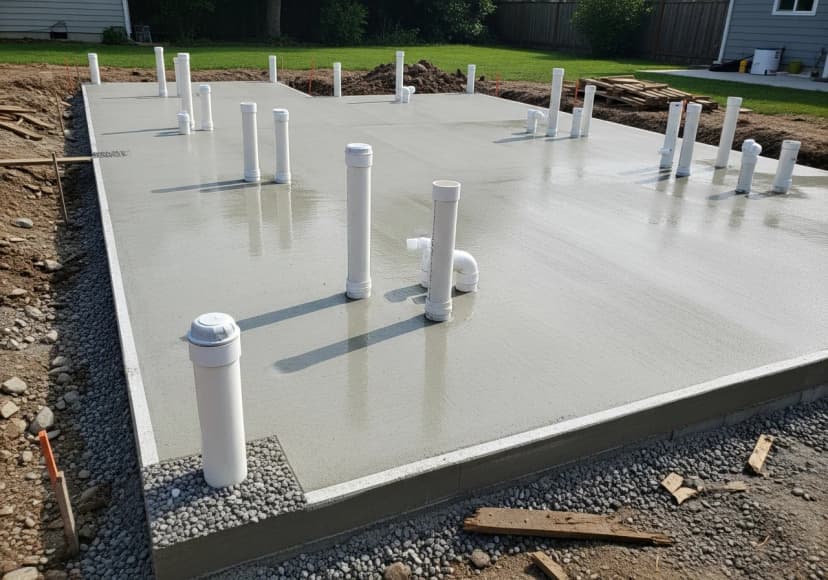
Concrete Slab or Stem Wall Foundation
$8,000–$20,000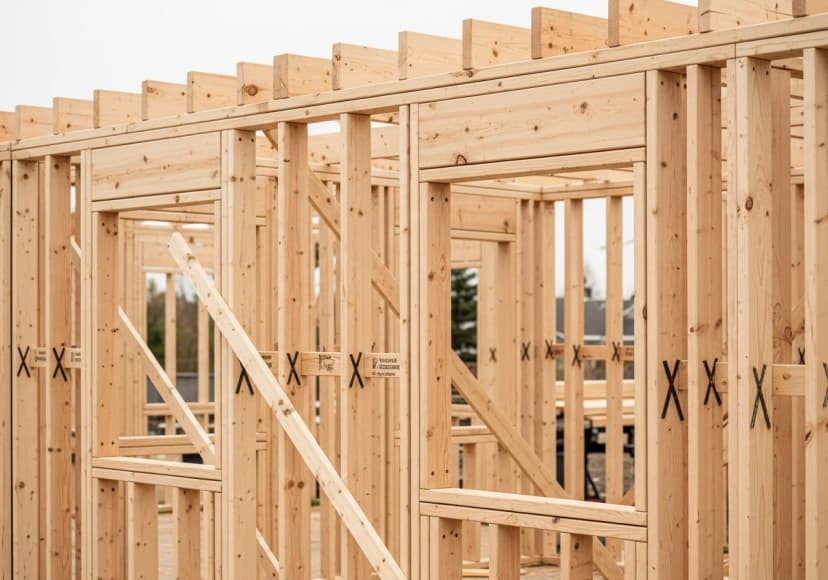
Standard Wood Framing
$12–$22 per sq ft framed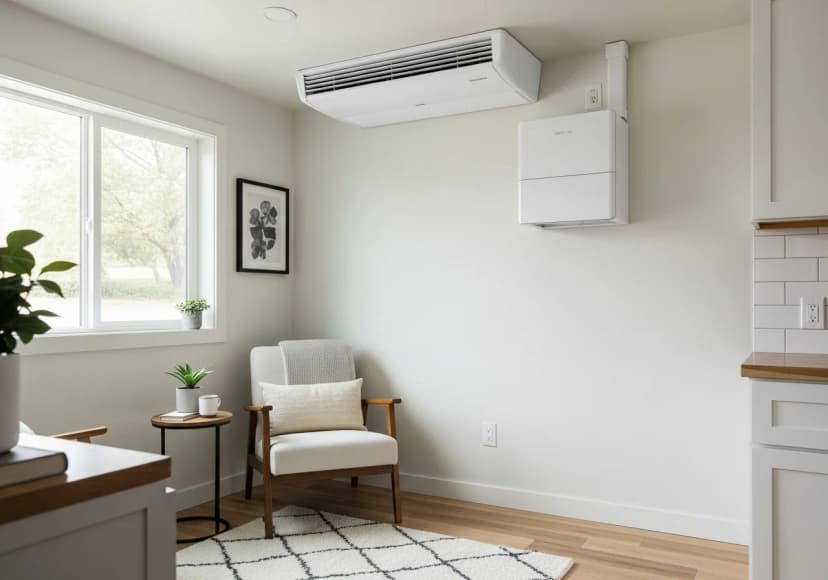
Mini-Split HVAC System
$3,500–$7,000 installed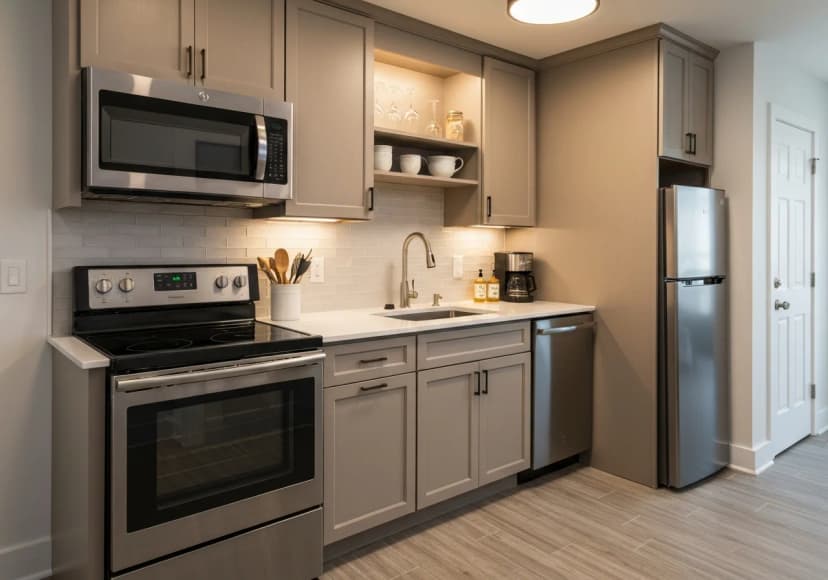
Compact Kitchen Package
$5,000–$15,000 complete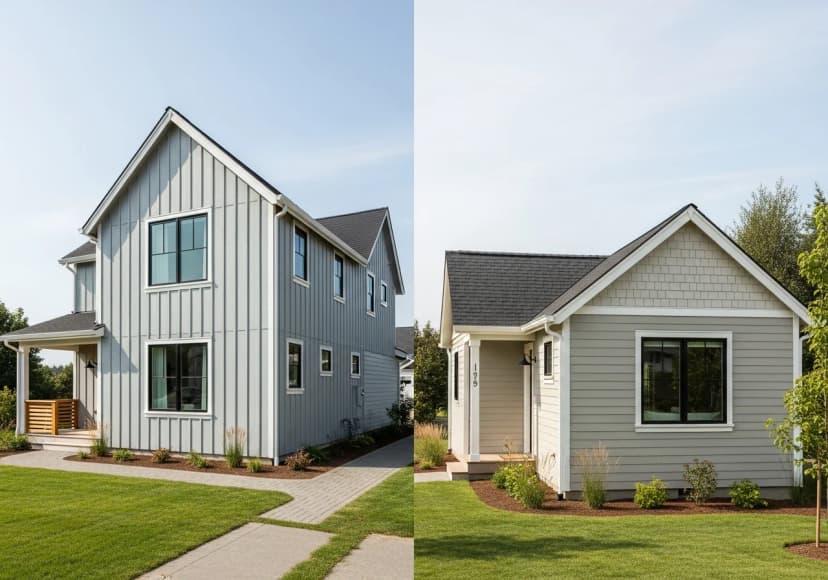
Matching or Complementary Siding
$5–$15 per sq ft installedLabor costs in Ada County reflect the local construction market, trade availability, and seasonal demand. Spring and summer are the busiest seasons for remodeling in the Treasure Valley, which can affect scheduling and occasionally pricing. Planning your project during the fall or winter months may provide more scheduling flexibility.
The most reliable way to understand what your specific ADU construction will cost in Boise is to schedule an in-home consultation. During this visit, we measure the space, discuss your goals and material preferences, evaluate existing conditions, and prepare a detailed scope and estimate based on your specific project.
What to have ready for your estimate consultation:
- ✓ A general idea of your budget range
- ✓ Examples of styles and finishes you like (photos, Pinterest boards, etc.)
- ✓ Any known issues with the current space (leaks, mold, outdated systems)
- ✓ A list of must-haves vs nice-to-haves for the finished project
- ✓ Your preferred timeline for starting and completing the work
Local factors — Boise's housing stock and typical construction eras, the climate conditions that drive material and scheduling choices, and permitting through City of Boise Planning and Development Services — are covered in full on our Boise page for this service, alongside 4 common project types.
ADU Construction in Boise: housing stock, climate & permits →How much does it cost to build an ADU in the Boise area?
Most Boise ADUs cost $95,000–$320,000, with a typical project near $165,000. A garage conversion typically runs $95,000–$145,000, and a new 600 sq ft one-bedroom detached ADU $145,000–$220,000; utility connection costs vary with distance to existing services and are one of the most variable line items. Our 600 sq ft detached North End ADU ran $120,000–$150,000.
How much rental income can an ADU generate in Boise?
It depends on location, size, finish level, and market conditions — check current listings for comparable units. Our 600 sq ft North End one-bedroom ADU has a recorded rental potential of $1,400–$1,600 per month.
Do you work on older homes in Boise?
Yes. We regularly remodel homes from every era of Boise construction — from 1900s Craftsman homes in the North End to 1970s ranch homes on the Bench to 2000s builder-grade homes in West Boise. Each era presents different structural, plumbing, and electrical considerations that we plan for during the design phase.
Planning ADU construction in Boise?
Get expert guidance and a free estimate for your adu construction project in Boise, ID.
Get Your Free Estimate