
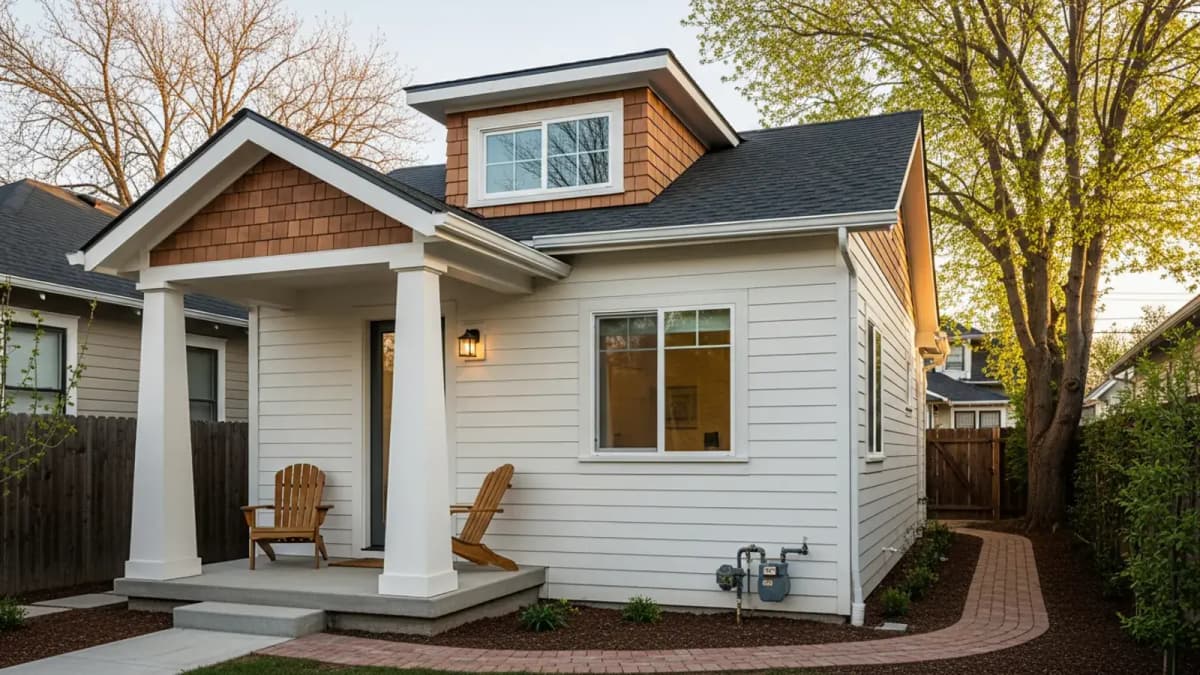
ADU Construction Across the North End — Carriage Houses Off the Alley, Garage Conversions, Basement ADUs
New detached carriage-house ADUs off the 13th Street and Hyde Park alleys, 1920s detached single-stall garage conversions on Camel's Back and Heron Streets, basement ADUs in Harrison Boulevard Tudors and Colonial Revivals with full basements (not Craftsman bungalow shallow crawlspaces). Every exterior element visible from any public way inside the District requires HPC Certificate of Appropriateness — we sequence the submittal so it doesn't gate the construction start.
Quick answer
Most North End lots can support an ADU under current City of Boise zoning, but the specifics depend on lot size, setbacks, lot coverage limits, existing structures, and the District's tight 50' frontage geometry.
Building an accessory dwelling unit on a North End lot is one of the highest-ROI property investments a Boise homeowner can make right now, but the shape of the project is constrained by three specific North End realities that don't apply elsewhere in the city. First, the dominant ADU shape is the new detached carriage-house off the alley — the District's tight 50' frontage lots with universal alley access make rear-of-lot detached construction the natural fit, and the 1920s vintage of the original detached single-stall garages on the Hyde Park, Camel's Back, and Heron Streets blocks means many of those garages are already approaching the end of useful life and primed for replacement with garage-plus-ADU two-story new builds. Second, basement ADUs work well on the 1925–1940 Tudor Revival and Colonial Revival homes along Harrison Boulevard and parts of Fort Boise because those homes have full-height basements with grade-out potential — but basement ADUs do not work on the 1905–1925 Craftsman bungalows that dominate Hyde Park and Camel's Back, because Craftsman bungalow construction used shallow crawlspaces 4–6 feet deep rather than full basements. The era of the original house determines whether basement ADU is even on the table. Third, every exterior element of the proposed ADU that's visible from any public way (street or alley) inside the District boundary requires a Certificate of Appropriateness from the Historic Preservation Commission — and the alley counts as a public way. The HPC reviews siding, windows, roof, scale, proportion, and trim for compatibility with the historic neighborhood character. North of Hill Road infill is often outside the District boundary entirely, which removes the HPC overlay but otherwise looks like SE Boise or Harris Ranch in scope. Lower-numbered streets (3rd–9th) include both contributing and non-contributing parcels — verification per property is essential before design commits. Rental math on a properly built North End ADU is genuinely strong: $1,800–$2,800/month for 600–800 sq ft units in walkable locations near Hyde Park or 13th Street, and $250,000–$400,000 in property value added against $245,000–$385,000 typical construction cost.
North End ADU strategy varies sharply by era of the original house because lot configuration, alley access patterns, original detached garage presence and condition, and basement viability all differ across the District's housing waves. The 1905–1925 Craftsman dominance forces detached carriage-house and garage-conversion shapes; the 1925–1940 Tudor and Colonial Revival stock opens up basement ADU as a viable third option.
1905–1925 original Craftsman bungalows (13th Street, Hyde Park, Camel's Back, Heron Streets)
Single-story or one-and-a-half-story homes typically 1,200–1,800 sq ft on tight 50' × 130' lots with universal alley access. Original detached single-stall garages from the 1920s — when present — are 240–300 sq ft structures in varying condition; many are at end of useful life. Foundation: shallow crawlspace 4–6 feet deep with original concrete or stone perimeter. Basement ADU is not viable on this stock because the crawlspace is too shallow for habitable space. ADU strategy: new detached carriage-house off the alley (typically 600–800 sq ft single-story or 600–800 over a new garage), or replacement of the deteriorating 1920s garage with a new garage-plus-ADU two-story build. Most flexible neighborhood for ADU construction. Foundation engineering for the new build typically straightforward — most 13th Street and Hyde Park lots have adequate soil bearing in the rear yard.
1925–1940 Tudor Revival, Colonial Revival, Prairie (Harrison Boulevard, Fort Boise area)
Two-story homes typically 2,200–3,800 sq ft on the deeper Harrison Boulevard or Fort Boise lots. Original detached garages occasionally exist; sometimes attached garages from the late 1930s onward. Critical structural difference from Craftsman bungalows: full-height basements with poured concrete or block perimeters and 7'+ ceiling heights are common, which makes basement ADU a genuine third option. Walkout potential exists on the homes whose lots slope toward the rear or sides. ADU strategy expands to three viable shapes: detached carriage-house at the back of the lot, basement ADU with separate entry through a walkout or window-well egress, or — on the homes with attached garages from the late 1930s — garage conversion plus addition. Historic Preservation Commission scrutiny is at its most demanding on Harrison Boulevard because these are the most architecturally significant homes in the District.
1945–1965 post-war ranch and minimal traditional infill (lower-numbered streets 3rd–9th, parts of Fort Boise)
Single-story homes typically 1,000–1,800 sq ft on smaller lots. Mid-century construction with slab or short-crawlspace foundations and frequently attached single-car garages. Basement ADU is not viable on slab homes. ADU strategy: garage conversion (the existing attached garage repurposed as ADU living space, with a new detached or attached garage built elsewhere on the lot), or new detached structure where lot size allows. HPC scrutiny varies — many of these homes are non-contributing resources within the District, which means in-kind requirement is lighter or absent. Verification at consultation. Lower-numbered streets are increasingly being renovated as North End demand pushes outward from the 13th Street core, which makes ADU additions on these properties a particularly strong investment.
1985+ modern infill (north of Hill Road, isolated non-contributing parcels)
Modern construction with current foundations, framing, and mechanical systems. Often outside the Historic Preservation District boundary entirely, which removes the HPC overlay. ADU shapes look more like SE Boise or Harris Ranch — new detached structures or basement ADUs on homes with full finished basements. Standard City of Boise permitting without HPC Certificate of Appropriateness adds 2–4 months back to the project schedule compared to District work. Less likely to need an ADU since these homes were built to current expectations, but the math still works on properties where rental income is the goal.
Five recurring ADU shapes account for nearly every North End project. Era of the original house, alley access, original garage condition, basement viability, and HPC contributing-resource status all drive which one fits.
1. The Detached Carriage-House ADU Off the Alley (Dominant North End Shape)
A new 600–800 sq ft single-story detached structure built at the rear of the lot off alley access — by far the dominant ADU shape across Hyde Park, 13th Street, Camel's Back, and Heron Streets blocks. Designed to read as a sympathetic carriage-house: painted lap siding matching main house body color, divided-light windows matching the main house's 4-over-1 or 6-over-1 Craftsman grille pattern, gabled or hipped roof in matching profile and shingle. Includes full kitchen, full bathroom, living/sleeping area, separate entry off the alley. New foundation, full mechanical systems, separate utility metering optional. The most common North End ADU shape and the one with the highest design flexibility — also the one with the most consistent HPC approval track record because the typology of carriage-house off the alley is well-precedented in the District's architectural history.
Target homes: North End lots with alley access and 600+ sq ft of unbuilt rear-yard area meeting setback requirements. Permit: building permit + HPC Certificate of Appropriateness for all exterior elements visible from the alley (which counts as a public way).
2. The 1920s Detached Garage Conversion ADU
Convert an existing 1920s-vintage detached single-stall garage to ADU living space. Lower cost than new construction because the foundation and shell are typically retained. Original 1920s garages are typically 240–300 sq ft — too small on their own for full ADU function — so the conversion is often combined with a small addition (typically a 200–400 sq ft expansion off the rear or side) to achieve usable living, kitchen, and bathroom area. Requires substantial reframing for habitable space (insulation per current code, drywall over original studs, new windows, new doors, mechanical), plus addition of kitchen, bathroom, and finish work. Common shape on Camel's Back and Heron Streets blocks where the original garages still exist and the foundations are sound. HPC scrutiny on the addition portion if visible from any public way.
Target homes: North End lots with structurally sound 1920s detached garages of 240+ sq ft. Permit: building permit; HPC Certificate of Appropriateness for any exterior changes affecting public-way visibility (alley counts as public way).
3. The Garage-Plus-ADU New Build (Replace Deteriorating 1920s Garage)
Replace an unsalvageable 1920s detached single-stall garage with a new two-story structure: two-car garage on the ground floor and 600–800 sq ft ADU on the second floor. Excellent solution for owners who need vehicle storage AND want an ADU. The two-story configuration uses the tight 50' District lot footprint efficiently. Common across Hyde Park, 13th Street, and Camel's Back where the existing garage is at end of useful life and the owner wants both garage replacement and rental income. Exterior design references the carriage-house typology — the upper-floor ADU reads as a habitable level above a working garage, in keeping with historic precedent.
Target homes: North End lots with alley access and an existing garage that's beyond economic repair. Permit: building permit + HPC Certificate of Appropriateness.
4. The Basement ADU (Tudor Revival and Colonial Revival Only)
Convert the basement of an existing North End home into a separate ADU with its own entry, kitchen, bathroom, and living area. Critical era constraint: this shape works on 1925–1940 Tudor Revival and Colonial Revival homes along Harrison Boulevard and parts of Fort Boise because those homes have full-height basements with poured concrete or block perimeters and 7'+ ceiling heights. It does not work on 1905–1925 Craftsman bungalows that dominate Hyde Park and Camel's Back, because Craftsman bungalow construction used shallow crawlspaces 4–6 feet deep rather than full basements. Requires walkout entry or window-well egress, full mechanical separation from the main house, and code-compliant ceiling height. Lowest-cost ADU shape but limited to the homes whose era and lot grading support it. Often minimal exterior change, which keeps HPC review light.
Target homes: 1925–1940 Tudor Revival and Colonial Revival homes with full-height basements (7'+ ceilings), walkout potential, and adequate lot grading. Permit: building permit; minimal exterior change so usually no HPC review beyond entry-door notification.
5. The Multigenerational Suite (Functionally an ADU, Zoning-Different)
Different from a true ADU in zoning terms but functionally similar: an addition to the main house or basement conversion that creates a primary-suite-style space with kitchenette, full bath, separate entry, and living area for a parent, adult child, or guest. Doesn't require ADU-specific zoning compliance because it's not legally a separate dwelling unit, but provides similar functional separation. Useful on Harrison Boulevard Tudors where multigenerational living is the goal rather than rental income, and on lower-numbered street homes where lot constraints don't allow a true detached ADU.
Target homes: North End homes where multigenerational living is the goal rather than rental income. Permit: building permit; HPC Certificate of Appropriateness if the connected space involves any exterior change visible from a public way.
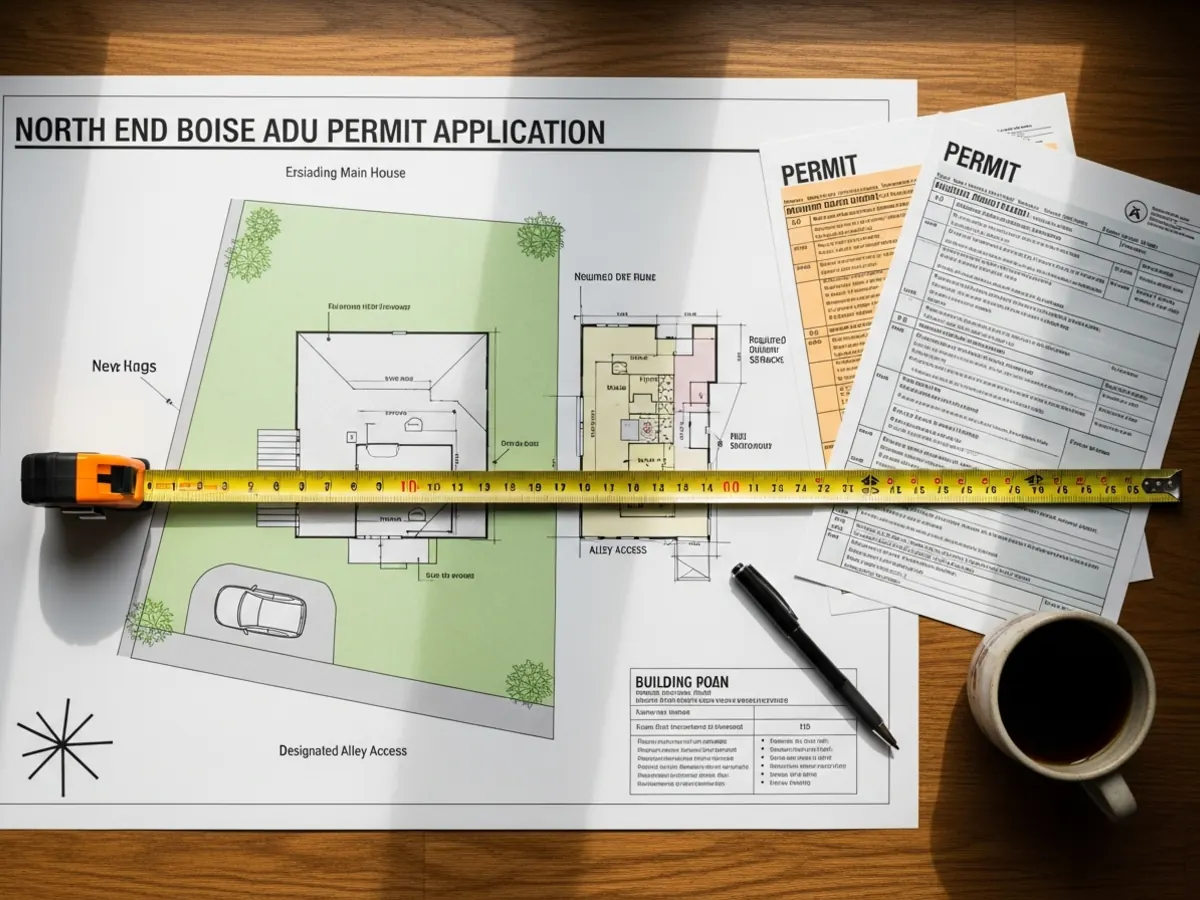
The North End is made up of distinct sub-neighborhoods, each with its own remodeling personality.
13th Street & Hyde Park
The cultural and commercial heart of the North End — boutique shops and restaurants along 13th between Brumback and Eastman, with the densest concentration of original Craftsman bungalows on the surrounding blocks. Lots are tight (typically 50' frontage), alley access is common, and the neighborhood is heavily walked. Most homes here are 1905–1925 Craftsman.
Camel's Back & Heron Streets
The streets immediately around Camel's Back Park, climbing slightly into the lower foothills. Mostly Craftsman bungalows with some Tudor Revival mixed in. Lots get larger toward the park edge, and some homes back to the Foothills Reserve with significant trees. Project budgets here tend to be higher — these are some of the most coveted blocks in the city.
Harrison Boulevard corridor
The grand divided boulevard running south-to-north through the heart of the North End, lined with the neighborhood's largest historic homes. Tudor Revival, Colonial Revival, and a few notable Prairie-style houses sit on deep lots with mature plantings. Projects here lean toward sympathetic upgrade rather than reconfiguration — these homes already have generous floor plans.
Fort Boise & Capitol-area North End
The streets around Fort Boise Park and stretching toward the State Capitol grounds — a mix of original Craftsman bungalows, larger 1920s and 1930s homes, and a higher proportion of post-war infill. Lots vary widely. Project scopes span the full range depending on house age and homeowner intent.
North of Hill Road / new infill
The northern fringe of the historic North End, where construction continued through the 1950s and where modern infill has been most active. Newer (1945–present), larger, less constrained by historic-district considerations. Projects here look more like SE Boise or Harris Ranch in scope and material strategy.
Lower-numbered streets (3rd–9th)
The streets between the State Capitol grounds and Fort Boise — traditionally a more working-class section of the North End, with a mix of smaller Craftsman bungalows, post-war houses, and some converted multi-family. Increasingly being renovated as North End demand pushes outward from the 13th Street core. Excellent value if you can find an unrenovated home here.
Pricing reflects the four layers that drive North End ADU cost: working on tight 50' District lots with limited curbside staging and right-of-way restrictions, navigating Historic Preservation Commission Certificate of Appropriateness review on every exterior element visible from any public way, era-specific basement viability (Tudor and Colonial Revival open it up; Craftsman bungalow shallow crawlspaces close it), and the universal pre-1978 EPA RRP lead-safe work practices required when scope touches the main house.
North End adu construction ranges
Basement ADU (Tudor Revival or Colonial Revival only) (Convert existing full-height basement of 1925–1940 main house): $95,000–$165,000 / 5–9 months end to end
1920s detached garage conversion ADU (Convert existing 1920s single-stall garage with addition for full ADU function): $165,000–$245,000 / 6–10 months end to end
Multigenerational suite (connected primary suite + kitchenette) (Addition or basement conversion as connected primary suite, not legally a separate unit): $135,000–$245,000 / 6–10 months end to end
Detached carriage-house ADU off the alley (New single-story 600–800 sq ft structure off alley access): $245,000–$320,000 / 9–13 months end to end
Garage-plus-ADU new build (Two-story new build with garage below and ADU above, replacing deteriorating 1920s garage): $285,000–$385,000 / 10–14 months end to end
Pricing assumes Iron Crest's standard North End scope: full City of Boise building permit, zoning compliance verification (lot setbacks, lot coverage maximums, alley vs. street setback distinctions on the District's tight 50' frontage lots), HPC Certificate of Appropriateness submittal handled in-house when any exterior element is visible from a public way, foundation engineering, full mechanical systems (electrical service, plumbing, HVAC mini-splits), kitchen and bathroom finishes, all interior finishes, right-of-way permits for dumpster placement on tight District streets where curbside staging is restricted, EPA RRP lead-safe work practices when scope touches the pre-1978 main house, and our 3-year workmanship warranty. Critical permit fact: HPC Certificate of Appropriateness applies to all exterior elements visible from any public way — and the alley counts as a public way, which means even a rear-of-lot carriage-house ADU triggers HPC review on its alley-facing elevation. Interior basement ADU work is largely exempt from HPC review because no exterior change. North of Hill Road infill is often outside the District boundary entirely. Contingency budget of 10–13% above contract value should be held — ADU projects have less discovery work than additions to old houses because most ADU shapes are new construction, but tight District lot conditions occasionally surface unexpected utility tie-in or right-of-way issues.
The North End Historic District boundary covers most — but not all — of the North End. The district is administered by the City of Boise Historic Preservation Commission, which reviews exterior modifications within the district boundary. Interior work, including comprehensive remodels, is exempt from Historic Preservation review. This is the single most important permitting fact to internalize: your interior work doesn't need historic review, regardless of how aggressive the scope.
Where Historic Preservation review enters the picture is when your project includes any exterior change. Examples we encounter regularly: enlarging a window, relocating an exterior door, adding an exterior-vented hood that requires a new wall penetration, building a small addition or bump-out, or replacing a side-yard window with a different style. Any of these requires a Certificate of Appropriateness from the Historic Preservation Commission, which can add several weeks to the permit timeline (confirm current timelines with PDS) and typically requires architectural drawings showing the proposed change in context.
For interior-only projects, the standard City of Boise permits apply: a building permit for structural work (wall removal, beam installation), an electrical permit for new circuits or panel work, a plumbing permit for fixture relocation or new water lines, and a mechanical permit for ducting or HVAC modifications. Permit fees for a typical mid-range project run several hundred to a few thousand dollars depending on scope. Processing times: electrical and plumbing permits are often same-day or next-day; building permits go through plan review, about two weeks for online plan review per Boise PDS and longer when structural drawings are involved.
One North End-specific permit consideration: parking and right-of-way. Placing a dumpster on the street or parking a construction trailer at the curb requires an ACHD temporary-use permit (fee varies), since North End residential streets are ACHD right-of-way. Some North End streets have additional restrictions related to the historic neighborhood designation. Iron Crest pulls all required temporary-use permits as part of project setup.
North End ADU material strategy is driven by HPC's compatibility review on every exterior element visible from a public way, the visual integration with the main house (Craftsman, Tudor, or Colonial Revival), and the rental-grade durability requirements of a unit that will see tenant turnover. The right approach uses durable mid-tier materials with deliberate period-sympathetic details on every visible exterior surface.
Exterior siding & trim — match the main house's typology, not generic
The single most important visual integration decision is matching the main house's siding type, color, reveal, and trim profile. On a Hyde Park Craftsman bungalow, the ADU's siding reveal must match the main house's 7-inch lap reveal — not a generic 6-inch or 8-inch from a stock catalog. Hardie or LP SmartSide lap siding in matching painted color is the durable mid-tier choice; original cedar lap matching is the premium choice for the most architecturally significant Harrison Boulevard or Hyde Park properties. Trim profiles must echo the main house's exposed rafter tails (Craftsman), bullnose trim (Tudor), or formal molding (Colonial Revival). Roof: composite architectural shingles in matching color, gabled or hipped to match main house roof form. HPC reviews siding match, color, and trim for compatibility — generic stock spec from a big-box destroys both visual integration and HPC approval prospects.
Windows & doors — divided-light grilles must match main house
Mid-tier vinyl-clad wood windows or fiberglass-clad windows with divided-light grilles matching the main house's pattern: 4-over-1 or 6-over-1 for Craftsman bungalow ADUs in Hyde Park and Camel's Back, 6-over-6 or 12-over-12 for Colonial Revival ADUs along Harrison Boulevard, casements with diamond or rectangular leaded for Tudor ADUs. Front entry door: simple Craftsman or Colonial Revival style in painted finish with period-appropriate hardware. Window product: Marvin Essential, Pella ProLine, Sierra Pacific H1 for the rental-grade tier; step up to Marvin Signature or Pella Architect Reserve on the Harrison Boulevard ADUs where HPC scrutiny is highest. The window choice is HPC's most-scrutinized review item — design with their approval in mind from the start.
Interior layout — efficiency for 600–800 sq ft footprint
ADU interiors prioritize functional efficiency in compact footprints. Open studio or one-bedroom layouts with kitchen along one wall, living/dining centered, bedroom or sleeping area separated by a partial wall or pocket door. For two-story garage-plus-ADU configurations: bedroom and full bath upstairs, living/kitchen down with the staircase along an interior wall to maximize usable floor space. Storage built in wherever possible — bench seating with hidden storage, built-in shelving along load-bearing walls, Murphy bed in studios. Ceilings: 9' on new detached construction is the standard; 8' or 7'6" minimum on basement ADU and 1920s garage conversions where existing height is constrained.
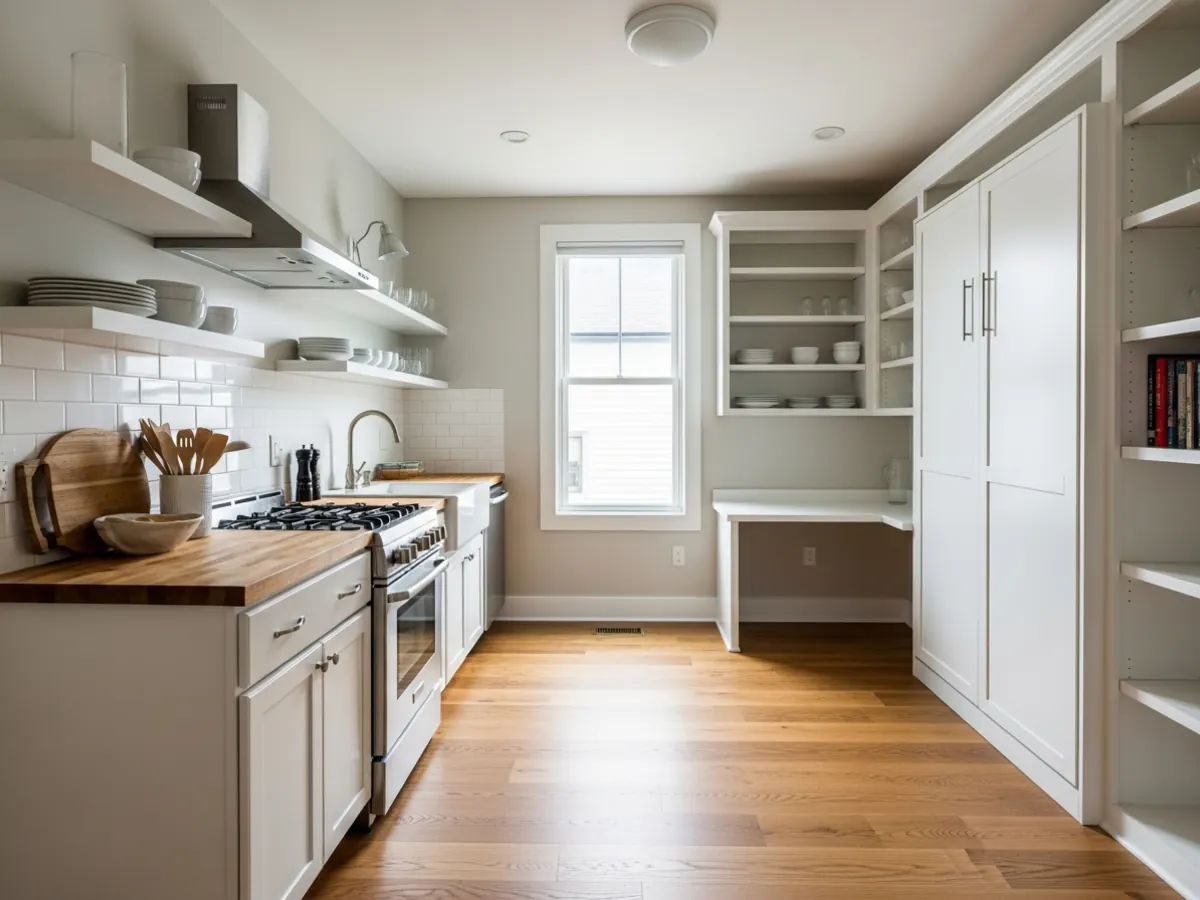
Kitchen — apartment-scale, full-function
Compact apartment-style kitchen calibrated for a 600–800 sq ft unit: 18-inch apartment-size dishwasher, 24-inch or 30-inch range, full-size refrigerator (rentability requires this — 24-inch fridges read as student-housing and depress rents), apron-front or undermount single-bowl sink with single faucet, butcher block or quartz counter. Cabinets in painted Shaker for visual coherence with main house style — the cabinet door profile should echo whatever style the main house uses inside. Open shelving above counter for an airier feel in the small space. Hardware in simple pulls matching main house family.
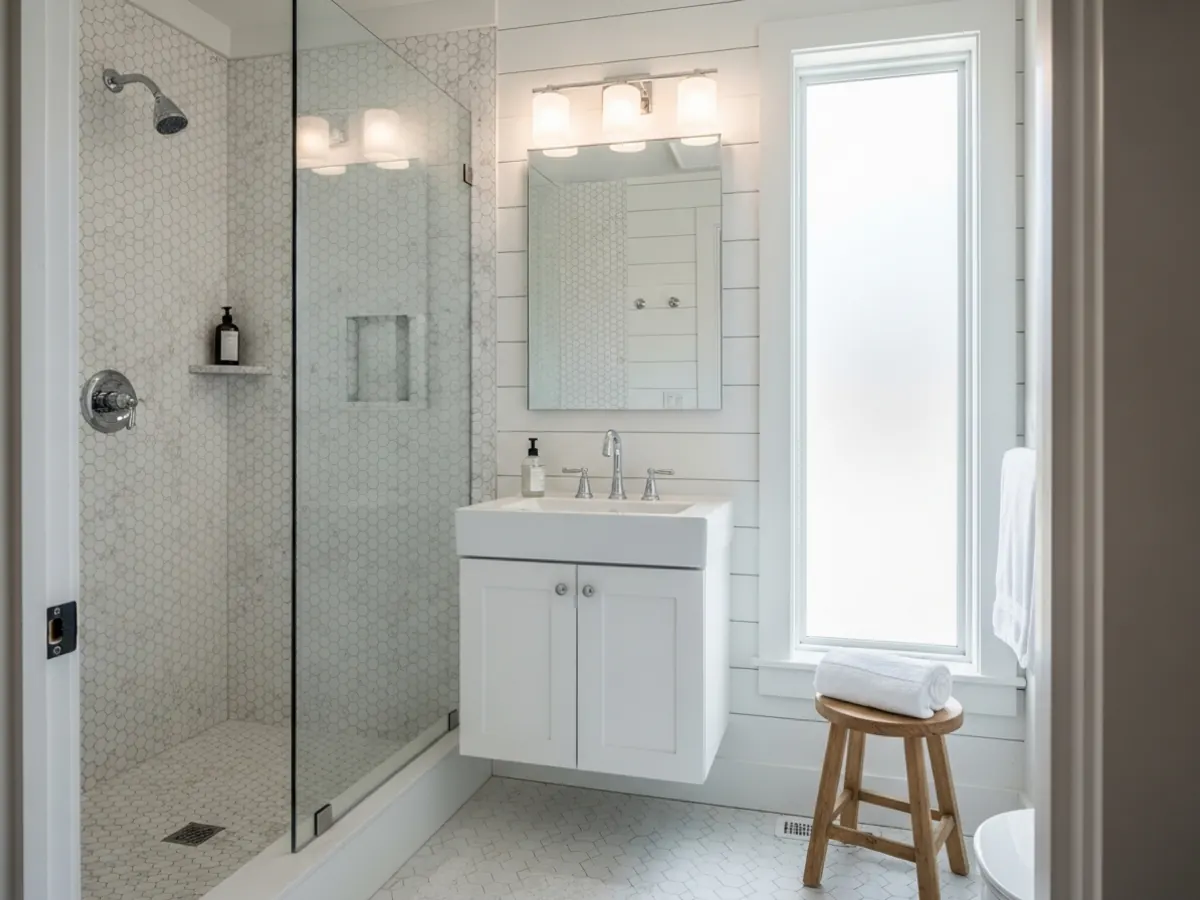
Bathroom — rentable + aging-in-place flexible
Full bathroom with curbless walk-in shower (no tub — ADU bathrooms rarely justify a tub's footprint, and curbless walk-in shower preserves aging-in-place flexibility), wall-hung or compact 30–36-inch vanity, comfort-height toilet, exhaust fan vented to exterior. Tile floor in porcelain or hex matching the main house's bathroom tile vocabulary, tile shower walls, simple polished chrome or brushed nickel fixtures. Designed for both rentability and the option of converting to multigenerational use in the future.
Mechanical systems — mini-splits dominate
Mini-split ductless HVAC (one or two heads depending on size — typically Mitsubishi M-Series or Daikin Aurora) is the right choice for nearly every North End ADU because it's efficient, quiet, requires no ducting that won't fit in compact framing, and the outdoor unit can be tucked discreetly to satisfy HPC review. Electric water heater (tankless or compact tank) — gas tie-in to the existing main house service is typically not worth the complexity for an ADU. 100-amp electrical sub-panel served from main house service when main house has 200-amp capacity, or separate Idaho Power meter when separate billing is desired (separate meter adds $1,500–$3,500 but allows direct billing to tenants). Plumbing tied into main house supply and drain is typical; separate connection from city is more expensive but sometimes required by setback or routing on the District's tight 50' lots.
North End ADU projects have less mid-project discovery work than remodels of old houses because most ADU shapes are new construction. The discovery items below relate primarily to tight 50' District lot conditions, utility tie-ins to pre-1960 main-house infrastructure, alley right-of-way considerations, and zoning interpretation.
- •Lot setback or coverage issues identified during survey City of Boise zoning sometimes flags issues not apparent from initial site review on the District's tight 50' frontage lots — corner-lot setback rules, lot coverage maximums, alley vs. street setback distinctions, side-yard easements. $0 if caught early in design; $5,000–$15,000 if requires substantial redesign mid-project.
- •Soil conditions requiring engineered foundations Some North End lots — particularly in lower elevations near the State Capitol grounds and parts of Fort Boise — have poor soil bearing in the rear-yard area (water table close to surface, fill from old structures, sometimes legacy clay backfill). Geotechnical investigation: $1,500–$3,500. Engineered foundation solutions: $3,500–$12,000 above standard.
- •1920s detached garage structurally inadequate for conversion Original 1920s single-stall garages in Hyde Park, Camel's Back, and Heron Streets sometimes have foundation, framing, or roof issues that make conversion uneconomical. Discovery during initial structural assessment typically results in pivot to garage-plus-ADU new build rather than conversion — $40,000–$80,000 difference in scope but a better long-term outcome on a property where the existing garage was at end of useful life anyway.
- •Existing basement ceiling height below code minimum Boise requires 7'+ ceiling for habitable basement space (7'6" in primary living areas). Tudor Revival and Colonial Revival homes from 1925–1940 typically have adequate height; Craftsman bungalow crawlspaces are universally too shallow. Lowering the basement floor by excavating and underpinning: $35,000–$80,000 — often pivots project away from basement ADU shape on borderline cases.
- •Pre-1960 galvanized supply and cast iron drain at main house tie-in point Pre-1960 North End homes typically have galvanized steel supply lines and cast iron drain stacks throughout. ADU plumbing tie-in at the main house exposes the condition of these original lines — sometimes the right time to coordinate a partial repipe at the tie-in point. $2,500–$8,500 above standard ADU plumbing scope when triggered.
- •Existing main-house electrical service inadequate for ADU load Main house typically needs 200-amp service to support a 100-amp ADU sub-panel. Many pre-1960 North End originals are still at 100-amp or even 60-amp service that requires meter base upgrade and Idaho Power coordination. Service upgrade: $4,500–$9,000.
- •Knob-and-tube wiring at main house tie-in point Pre-1950 North End originals often have knob-and-tube wiring still in service. ADU electrical tie-in at the main house panel sometimes surfaces K&T that needs partial replacement before connection is code-compliant. $1,200–$4,500 above standard ADU electrical scope.
- •Sewer and water line capacity at city connection Adding an ADU sometimes requires a city-side review of sewer and water line capacity at the home's connection. Rare but adds $5,000–$15,000 if line upgrade required.
- •HPC Certificate of Appropriateness modifications on visible exterior Initial Certificate of Appropriateness application sometimes triggers HPC-requested changes to siding match, window grille pattern, roof pitch, scale, or trim detail. Iron Crest pre-meets with HPC staff before formal submittal to minimize redesign risk on Harrison Boulevard or Hyde Park sites where scrutiny is highest. Modifications: $2,500–$15,000 in design and material adjustment.
- •Alley right-of-way and curb cut conditions Garage-plus-ADU builds sometimes require new or expanded alley curb cut, with City of Boise public works approval. Tight alleys in the older Hyde Park and Camel's Back blocks occasionally have right-of-way restrictions that limit construction-vehicle access — coordination with neighbors and city public works adds 1–2 weeks. $3,500–$8,500 for curb cut work; right-of-way coordination is included in standard scope.
- •Tree preservation requirements (Foothills-edge lots) City of Boise has tree preservation rules for protected species, particularly relevant on the Camel's Back and Heron Streets blocks that back to the Foothills Reserve where mature trees are more common. ADU footprint may need to shift to accommodate protected trees, or arborist consultation may be required. $500–$2,500 in arborist work plus possible design adjustments.
Initial consultation and lot feasibility (Weeks 1–3)
In-home walkthrough, lot survey review, setback and coverage analysis on the District's tight 50' frontage lots, ADU shape recommendation. Confirm zoning compliance and Historic District contributing-resource status. Era of original house drives whether basement ADU is even on the table (Tudor and Colonial Revival yes; Craftsman bungalow no). Initial budget range and timeline estimate.
Design development and HPC pre-application (Weeks 3–10)
Floor plans, exterior elevations showing alley-facing and street-facing surfaces, site plan showing setbacks and lot coverage. Window grille pattern matched to main house. Siding reveal matched to main house. Roof form matched. Pre-application meeting with Historic Preservation Commission staff to surface concerns before formal Certificate of Appropriateness submittal — this is the single highest-leverage step in compressing the eventual HPC review timeline.
Permitting and HPC Certificate of Appropriateness review (Weeks 10–22)
City of Boise building permit application + HPC Certificate of Appropriateness application. HPC review at monthly meetings adds 2–4 months to permit timeline. Iron Crest sequences this concurrent with material orders so the HPC review doesn't gate construction start where possible. Material orders placed concurrently — windows, cabinets, fixtures all have lead times that fit inside the HPC review window.
Site preparation and foundation (Weeks 22–28)
Site setup with right-of-way permits for dumpster placement on tight 50' District streets. Demolition of any structures being replaced (deteriorating 1920s garages on garage-plus-ADU builds). Excavation. Foundation pour. Backfill. Utility trenching for electrical, water, sewer connections — careful coordination with the main house's pre-1960 galvanized supply and cast iron drain locations.
Framing and shell (Weeks 28–34)
Floor framing, wall framing, roof framing, sheathing, weather barrier. Window and door installation with HPC-compliant divided-light grilles. Roofing in matching shingle profile and color.
Mechanical rough-in (Weeks 34–40)
Plumbing rough-in with main house tie-in. Electrical rough-in including connection to main house panel or new Idaho Power meter base. HVAC mini-split rough-in. Exhaust ducting. City of Boise rough-in inspections at each milestone.
Insulation, drywall, trim (Weeks 40–46)
Spray foam or batt insulation per current code (substantially better than the original 1920s garage's lack of insulation on conversion scope). Drywall installation and Level 4 finish. Window and door trim, baseboards, doors hung.
Finishes and fixtures (Weeks 46–52)
Cabinetry installation in kitchen and bathroom. Quartz or butcher block countertops. Tile in bathroom and kitchen splash. Flooring (hardwood, LVP, or tile depending on spec). Paint. Lighting fixtures, plumbing fixtures, appliances.
Final inspections and walkthrough (Weeks 52–60)
Final mechanical inspections. Final building inspection. HPC final inspection on Certificate of Appropriateness scope. Certificate of Occupancy issued. Punch-list walk with you. Items addressed within 1 week. Final walkthrough and sign-off. 3-year Iron Crest workmanship warranty begins. ADU ready for occupancy or rental at $1,800–$2,800/month.
ADU construction in the North End requires the combined skills of a new-construction builder, a remodeler experienced with pre-1960 utility tie-ins to galvanized supply and cast iron drain, and a contractor who knows the City of Boise zoning and Historic Preservation Commission Certificate of Appropriateness processes. That's a specific intersection — and the contractor managing a 9–14-month North End ADU project also needs financial stability through a long-duration engagement and a working relationship with HPC staff.
- City of Boise Historic Preservation Commission — Design review information, district maps, and Certificate of Appropriateness application.
- City of Boise Planning & Development Services — Building, electrical, plumbing, and mechanical permits. Online portal and in-person plan check.
- Idaho DEQ Air Quality (Asbestos) — Testing and abatement guidance for pre-1980 homes via the Idaho Department of Environmental Quality.
- EPA Lead Renovation, Repair and Painting (RRP) Program — Required certification and work practices for renovation in lead-paint homes.
- Preservation Idaho — Statewide nonprofit advocating for historic preservation. Resources and educational events.
Can I build an ADU on my North End lot?
Most North End lots can support an ADU under current City of Boise zoning, but the specifics depend on lot size, setbacks, lot coverage limits, existing structures, and the District's tight 50' frontage geometry. The ADU must meet setback requirements (typically 5' from side lot lines, 5' from rear lot lines for detached structures, varying by zoning district). Maximum ADU size is 900 sq ft or 70% of the primary structure's floor area, whichever is smaller. Idaho's 2026 ADU law (Senate Bill 1354) raises the statewide floor to 1,000 sq ft or 75% by October 1, 2026, but historic districts are exempt — so inside the North End Historic District, Boise's existing ADU standards and HPC review continue to apply; confirm with Planning & Development Services. Iron Crest's initial consultation includes a lot-feasibility assessment confirming what shape and size of ADU your specific lot can accommodate, including whether basement ADU is viable based on era of the original house — Tudor and Colonial Revival yes, Craftsman bungalow no.
How much rent can I get for a North End ADU?
Well-built North End ADUs in walkable locations rent at $1,800–$2,800/month for 600–800 sq ft units. Highest rents are on the blocks immediately around 13th Street, Hyde Park, and Camel's Back where walkability to restaurants, shops, and the Foothills Reserve commands premium pricing. Furnished short-term rentals (where allowed by City of Boise short-term rental rules) can generate higher revenue but require more management. The North End's walkability, proximity to downtown, and access to the Foothills make it one of the strongest rental submarkets in the Treasure Valley.
Will an ADU affect my property value?
Yes, substantially. North End ADUs typically add $250,000–$400,000 in property value for $245,000–$385,000 typical construction cost. The math: a $300,000 detached carriage-house ADU build can add $300,000–$400,000 to property value plus generate $20,000–$30,000 in annual rental income (or save the equivalent in housing costs for a multigenerational arrangement). The ROI is one of the strongest of any residential construction project in Boise — particularly on the blocks around Hyde Park where rental demand is strongest and resale comparables for properties with quality ADUs are increasingly well-established.
Does an ADU need Historic Preservation Commission approval?
Yes, if your property is inside the North End Historic District boundary AND the ADU has any exterior elements visible from a public way — and the alley counts as a public way, which means even a rear-of-lot detached carriage-house ADU triggers HPC Certificate of Appropriateness review on its alley-facing elevation. The HPC reviews siding match to main house, divided-light window grille pattern match, roof form match, scale, proportion, and trim detail for compatibility with the historic neighborhood character. Adds 2–4 months to permit timeline. Iron Crest pre-meets with HPC staff before formal application to minimize redesign risk. Basement ADUs with no exterior change are largely exempt from HPC review beyond entry-door notification. North of Hill Road infill is often outside the District boundary entirely.
Can I do a basement ADU in my Craftsman bungalow?
No — and this is one of the most common questions we field. Original Craftsman bungalows on Hyde Park, 13th Street, and Camel's Back have shallow crawlspaces 4–6 feet deep rather than full basements. Basement ADUs require 7'+ ceiling height (7'6" in primary living areas) for code-compliant habitable space, which means basement ADUs work on 1925–1940 Tudor Revival and Colonial Revival homes along Harrison Boulevard and parts of Fort Boise that have full-height basements. The right ADU shape on a Craftsman bungalow is a detached carriage-house off the alley or a 1920s garage conversion. Lowering the basement floor on a Craftsman bungalow by excavating and underpinning is theoretically possible but typically costs $35,000–$80,000 above standard ADU construction and rarely makes economic sense.
How long does an ADU take to build?
5–9 months for a basement ADU on a Tudor or Colonial Revival; 6–10 months for a 1920s garage conversion ADU; 9–13 months for a detached carriage-house off the alley new build; 10–14 months for a garage-plus-ADU two-story new build. Inside the District boundary, add 2–4 months for HPC Certificate of Appropriateness review (concurrent with design and material order to compress total timeline where possible). Permit processing — including HPC review — is typically the longest single activity outside of construction itself.
Can I have a separate utility meter for the ADU?
Yes — both Idaho Power (electrical) and Veolia (water) support separate metering for ADUs. Separate metering allows you to bill tenants directly for their utility usage and is generally preferred for rental ADUs where tenant usage varies. Adds $1,500–$3,500 to construction cost (Idaho Power meter base, trenching, panel for the ADU). For owner-occupied multigenerational arrangements, single-meter (with utilities billed inclusive in rent or shared) is often simpler. We discuss the tradeoff at design stage.
What about the 1920s garage on my lot — can I convert it?
Sometimes. Original 1920s detached single-stall garages in Hyde Park, Camel's Back, and Heron Streets are typically 240–300 sq ft — too small on their own for full ADU function — so conversion is usually combined with a 200–400 sq ft addition to achieve usable living, kitchen, and bathroom area. Conversion makes economic sense when the existing foundation and shell are structurally sound. When the original 1920s garage has foundation failure, framing rot, or roof issues that make conversion uneconomical, the right answer is to demolish and replace with a new garage-plus-ADU two-story build — a $40,000–$80,000 difference in scope but a better long-term outcome. Iron Crest assesses structural viability at consultation.
Ready to start your North End adu construction project?
Free in-home consultation, honest contingency-based budgeting, and the experience Boise homes require. Iron Crest Remodel — Idaho RCE #6681702, EPA RRP lead-safe work practices, $2M general liability, 3-year workmanship warranty.
Get Your Free Estimate