
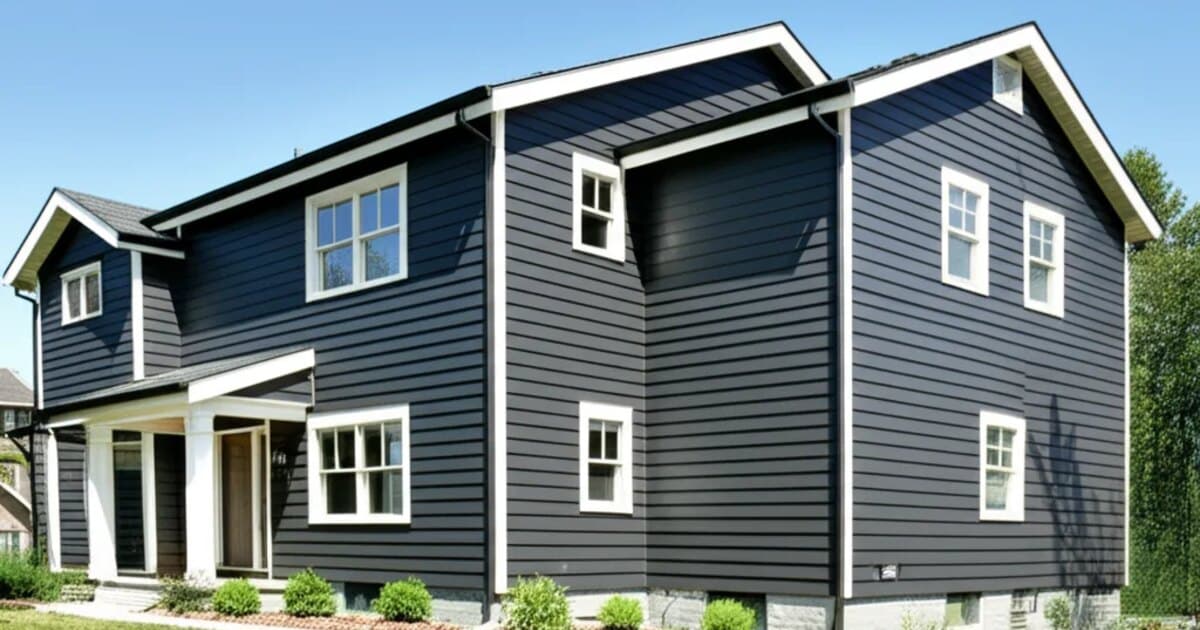
Best Materials for Siding Installation in Eagle
Explore the most popular material options for siding installation in Eagle, with pricing, durability, and style comparisons to help you choose.
Quick answer
James Hardie fiber cement siding is the top choice for durability, fire resistance, and long-term value in the Boise climate. LP SmartSide offers similar performance at a lower cost with a more wood-like texture. Vinyl is the most budget-friendly but offers less impact resistance and aesthetic quality.
Eagle, ID · Siding Installation
Planning siding installation in Eagle?
Read the full guide below — or get your project priced now. Free, no-obligation estimates from an Idaho registered local team, backed by a 1-year workmanship warranty.
- Licensed Idaho RCE-6681702
- 1-Year Workmanship Warranty
- $2M Liability Coverage
- Free, No-Obligation Estimates


Eagle's luxury home market and demanding climate create a specific hierarchy of siding materials where performance and aesthetic requirements converge at the premium end of the product spectrum. James Hardie Fiber Cement is the dominant recommendation for Eagle siding projects for reasons that go well beyond brand recognition. Fiber cement's inorganic composition — it contains no wood fiber for moisture to swell, no organic binders susceptible to mold, and no polymer components that UV radiation degrades — makes it the most climate-appropriate material for Eagle's foothills environment. The HZ5 product line is specifically engineered for freeze-thaw climates, and the ColorPlus factory finish system provides a level of UV resistance that no field-painted product can match. In Eagle's market, where exterior quality is expected to match the rest of the house, James Hardie's 30-year non-prorated limited warranty on the substrate and 15-year limited finish warranty on ColorPlus (against peeling, cracking and chipping — not fade) provide documentation a buyer's inspector can check. Both are Hardie's terms; confirm them with the manufacturer. The full Hardie product ecosystem — HardiePlank in several widths including 5.25, 6.25, 7.25 and 8.25 inches, HardiePanel for vertical applications, HardieShingle for shake texture, and HardieTrim for every trim application — allows complex Eagle home exterior profiles to be executed under a single manufacturer warranty structure. LP SmartSide Engineered Wood is appropriate when field-applied color flexibility is important — either because the homeowner wants the ability to repaint in future years in custom colors not available in factory finish programs, or because the project scope involves matching an existing LP SmartSide installation where a partial replacement is required. LP SmartSide's engineered strand construction delivers dimensional stability that exceeds solid wood significantly, and the borate treatment provides decay and insect resistance appropriate to Eagle's climate. LP's limited warranty is a 5/50 — five years at 100% of labour and material, then 50 years prorated on material only — with a separate 15-year finish warranty on the ExpertFinish prefinished line. Those are LP's terms; confirm them with LP. The specific installation discipline required — back-priming all cut ends, maintaining minimum 6-inch clearance from grade, keeping joints tight and properly caulked — must be executed rigorously in Treasure Valley conditions. Premium Vinyl is available for Eagle projects where client preference or budget parameters are a primary driver. We recommend only premium grade vinyl with heavy wall sections, welded corner construction, and multi-chamber profiles that minimize the thermal expansion behavior that causes visible wave and buckle in standard vinyl under Eagle's summer temperatures. Even premium vinyl will show more color degradation on south and west exposures over a 15-to-20-year horizon than fiber cement with a factory finish. We present the full lifecycle comparison — first cost, expected repaint or replacement interval, and total 25-year cost of ownership — in every vinyl conversation so Eagle homeowners can make a fully informed decision. PVC Trim boards — Azek, Versatex, or equivalent — are the appropriate specification for all trim applications on Eagle homes. PVC trim is completely impervious to moisture and does not require painting on cut ends, which is the primary failure point for wood trim in any climate. In Eagle's wind environment, trim boards on windward elevations take repeated impacts from airborne grit and debris; PVC's harder surface holds up better than painted wood over the long term. The cost premium of PVC over wood trim is modest and consistently recovered in reduced maintenance over the product's life.
Choosing the right materials is one of the most important decisions in any siding installation project. The materials you select affect the look, durability, maintenance requirements, and overall cost of the finished project. Here is a detailed look at the most popular material options for siding installation in Eagle and the Treasure Valley.
These are the most commonly used materials for siding installation projects in Eagle. Each has different characteristics that affect cost, durability, and style:

James Hardie HardiePlank Lap Siding
$10–$16 per sq ft installedThe gold standard in fiber cement siding. Made from cement, sand, and cellulose fibers. Non-combustible, rot-proof, termite-proof, and dimensionally stable. ColorPlus factory-applied finish provides superior color consistency and a 15-year color warranty.
Best for: Homeowners who want maximum durability, fire resistance, and long-term value

LP SmartSide Engineered Wood Siding
$8–$13 per sq ft installedTreated engineered wood siding with authentic wood grain texture. Made from wood strands bonded with resins and treated with SmartGuard process for moisture, fungal, and termite resistance. Lighter than fiber cement and easier to install.
Best for: Homeowners who want wood-grain appearance with engineered durability and lower cost than fiber cement

Vinyl Siding
$5–$10 per sq ft installedPVC-based siding that requires no painting, does not rot, and is immune to insect damage. Modern vinyl comes in many styles and colors with improved fade resistance. Insulated vinyl adds R-value and rigidity.
Best for: Budget-conscious projects, rental properties, and homeowners who want zero exterior painting maintenance

Weather-Resistive Barrier (House Wrap)
$0.50–$1.50 per sq ft installedTyvek, Henry Blueskin, or equivalent moisture barrier that wraps the exterior sheathing. Allows interior moisture to escape while blocking exterior water and wind. Critical component of a proper siding installation.
Best for: Required component beneath all siding installations for moisture and air management

PVC or Fiber Cement Trim
$4–$10 per linear foot installedRot-proof trim boards for window surrounds, corner boards, fascia, and decorative elements. PVC (Azek, Versatex) and fiber cement trim will not rot, warp, or require replacement due to moisture damage.
Best for: All exterior trim applications — especially in areas prone to moisture exposure

Eagle shares the Treasure Valley's semi-arid climate. Foothills properties may experience slightly colder winter temperatures and more wind exposure than valley-floor locations.
Foothills Exposure
Properties in Eagle's foothills areas experience more wind, greater temperature variation, and more UV exposure. Material selections for these properties should prioritize durability.
Larger Lots and More Exterior Surface
Eagle's larger homes and lots mean more siding, more roof area, and longer utility runs for ADUs and additions. This affects both material quantity and project cost.
Irrigation and Landscaping
Many Eagle properties have extensive landscaping and irrigation. Addition and ADU projects must plan around existing landscape investments.
In Eagle, the combination of dry summers, cold winters, and variable humidity levels means that material selection should prioritize durability and climate resistance. We recommend choosing materials rated for the temperature extremes and moisture conditions typical of Ada County.
Material availability affects both timeline and cost. Standard materials are typically available within 1-2 weeks from local suppliers in Eagle. Custom or specialty materials may have lead times of 4-14 weeks. We recommend selecting materials early in the design phase to avoid schedule delays.
Typical lead times
- ● Standard/stock materials: 1-2 weeks
- ● Semi-custom orders: 3-6 weeks
- ● Full custom/specialty items: 6-14 weeks
- ● Imported or artisan materials: 8-16+ weeks
Local factors — Eagle's housing stock and typical construction eras, the climate conditions that drive material and scheduling choices, and permitting through City of Eagle Building Department — are covered in full on our Eagle page for this service, alongside 5 common project types.
Siding Installation in Eagle: housing stock, climate & permits →What is the best siding material for homes in Boise?
James Hardie fiber cement siding is the top choice for durability, fire resistance, and long-term value in the Boise climate. LP SmartSide offers similar performance at a lower cost with a more wood-like texture. Vinyl is the most budget-friendly but offers less impact resistance and aesthetic quality.
Can you install new siding over existing siding?
In some cases, new siding can be installed over existing siding — but we generally recommend removing old siding so we can inspect and repair the sheathing, install a proper weather barrier, and ensure a flat, secure substrate for the new material.
Is it worth investing in premium finishes in Eagle?
Yes. Eagle buyers expect higher-end finishes. Investing in quality cabinetry, premium countertops, professional appliances, and thoughtful design details protects and enhances property value in this market. Cutting corners on finishes in an Eagle home can actually hurt resale value.
Planning siding installation in Eagle?
Get expert guidance and a free estimate for your siding installation project in Eagle, ID.
Get Your Free Estimate