
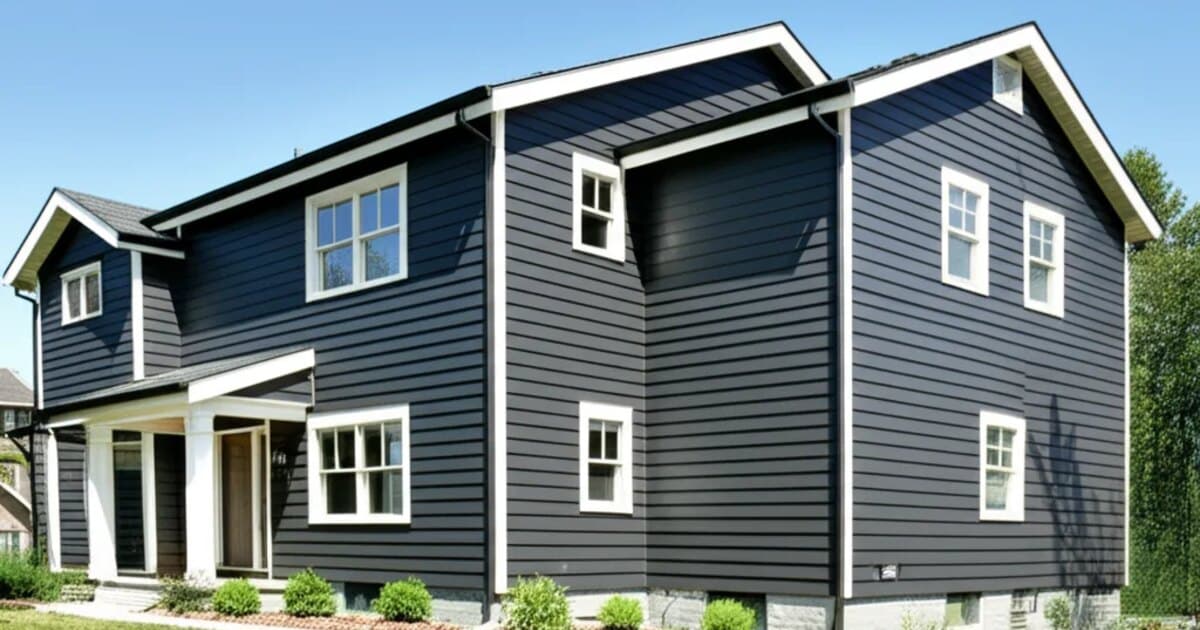
Siding Installation Design Ideas for Eagle
Get inspired with siding installation design ideas tailored to Eagle homes, from trending styles to practical layout considerations.
Quick answer
Eagle is the only Treasure Valley city where the combination of premium home values, foothills environmental exposure, and sophisticated HOA governance creates a siding market that demands genuinely elevated standards at every level — material specification, installation craftsmanship, and design sophistication.
Eagle, ID · Siding Installation
Planning siding installation in Eagle?
Read the full guide below — or get your project priced now. Free, no-obligation estimates from an Idaho registered local team, backed by a 1-year workmanship warranty.
- Licensed Idaho RCE-6681702
- 1-Year Workmanship Warranty
- $2M Liability Coverage
- Free, No-Obligation Estimates


Eagle is the only Treasure Valley city where the combination of premium home values, foothills environmental exposure, and sophisticated HOA governance creates a siding market that demands genuinely elevated standards at every level — material specification, installation craftsmanship, and design sophistication. Meridian and Nampa have larger volumes of siding replacement work, but that work is primarily driven by material aging in production-home subdivisions with relatively standardized product choices. Eagle's siding market is smaller in volume but materially different in complexity and quality standard. The foothills exposure is the most significant physical differentiator. No other Treasure Valley city has a comparable concentration of residential properties on hillside lots with direct southern and western exposure to unobstructed sun. Finishes weather faster in that position, and the material choices adequate on the valley floor are consistently outperformed by factory-finished fiber cement in Eagle's specific conditions. Eagle's custom-home architecture also creates more complex siding profiles than the production subdivisions that dominate Meridian, Nampa, and Kuna. Mixed-profile exterior systems — combining lap, shake, board-and-batten, and vertical panel profiles on a single home — are the standard in Legacy Ridge and similar communities, not the exception. Executing these profiles with the precision and design coherence that Eagle homeowners expect requires a level of product knowledge and installation craftsmanship that generalist contractors primarily working in production subdivisions do not maintain.
Legacy Ridge
Legacy Ridge is a planned community of custom and semi-custom homes on generous lots along the Boise Foothills north of Hill Road. The hillside siting and the scale of the houses are what drive the siding decisions here. The foothills exposure of Legacy Ridge properties creates the most demanding UV and wind environment of any residential neighborhood in Eagle. South and southwest-facing elevations receive intense solar radiation compounded by hillside reflection from the dry grass and rocky terrain above the neighborhood. West-facing walls catch the afternoon sun that drives peak cooling loads from June through September. A finish applied and baked at the factory holds up better on these elevations than field paint, which is why Iron Crest specifies ColorPlus as the standard finish system in Legacy Ridge. Legacy Ridge's HOA architectural review process is among the most detailed in Ada County. The committee requires full material submittals, manufacturer specification sheets, color samples evaluated in the site's specific light exposure, and in some cases photographic simulations showing the proposed exterior in context with adjacent properties. Iron Crest prepares Legacy Ridge HOA submittals as part of project management and specifies from product and color combinations that meet the committee's published guidelines. A complete first submittal avoids the revision cycle, which is the single biggest cause of schedule slip on these projects.
Banbury Meadows
Banbury Meadows occupies the large planned community development along the Boise River and Dry Creek east of Eagle Road, offering a mix of production homes and custom-adjacent homes that represent some of the highest-value residential real estate in Eagle's established neighborhoods. The neighborhood's unique feature from a siding perspective is the combination of river-adjacent lots — creating higher ambient moisture than Eagle's foothills properties — and the standard LP SmartSide siding that most production builder phases specified in the early 2000s. That siding is now squarely in the replacement window. River-adjacent and canal-adjacent lots in Banbury Meadows experience meaningfully higher moisture events than hillside properties in Legacy Ridge. Morning fog, irrigation overspray, and the higher humidity micro-climate near the Boise River mean that moisture management is more consequential in Banbury Meadows than in Eagle's dry foothills. Fiber cement's impermeability to moisture absorption is a specific performance advantage here — LP SmartSide's engineered wood substrate requires more vigilant maintenance in this micro-climate. The design aesthetic in Banbury Meadows runs toward traditional and transitional — Craftsman detailing, earth-tone palettes, and horizontal lap profiles with board-and-batten accents on gable ends. James Hardie's warm gray and earthy brown ColorPlus tones perform well in this neighborhood's light environment. Banbury's HOA architectural review is organised and responsive; we confirm the current review window with the association before committing to a construction start.
Downtown Eagle
Downtown Eagle is the city's original residential core — a walkable neighborhood centered on Eagle Road and State Street where older homes on modest lots coexist with new infill development and the community character that long-time Eagle residents identify as the city's soul. The housing stock is genuinely diverse: 1920s bungalows, 1960s ranches, 1980s contemporaries, and 2010s infill homes share streetscapes, and the siding approaches they demand differ almost as widely as the homes themselves. The siding challenge in Downtown Eagle's older homes is fundamentally similar to Boise's North End — aging wood siding on pre-1970 homes that has accumulated decades of paint failure, moisture infiltration, and deferred maintenance. The difference is scale: Downtown Eagle's homes are generally more modest in size than North End Boise, which makes the investment conversation different. Iron Crest approaches Downtown Eagle projects with a range of scope options — from targeted repair-and-repaint to full fiber cement replacement — and helps homeowners identify the approach that delivers the best return for their specific situation. Downtown Eagle does not have the same organized HOA governance as Legacy Ridge or Banbury Meadows — most lots are on individual deed ownership without active architectural review. This gives Downtown Eagle homeowners more design freedom, enabling bolder material and color choices that the planned-community HOA structure would constrain elsewhere.

The design phase is where your siding installation goes from a general idea to a specific plan. Good design balances aesthetics, functionality, budget, and the unique characteristics of your home and neighborhood in Eagle. Here are the most popular design approaches and trends we see in Eagle and the surrounding Treasure Valley.
Eagle homeowners tend to favor designs that blend modern functionality with the regional character of Idaho homes. Here are the most requested design elements:
These design factors are specific to siding installation projects and affect both the look and function of the finished space:
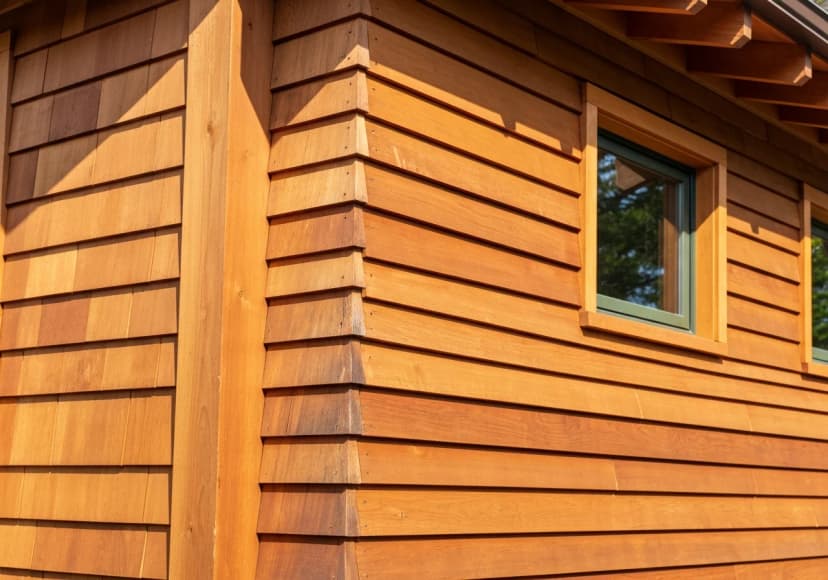
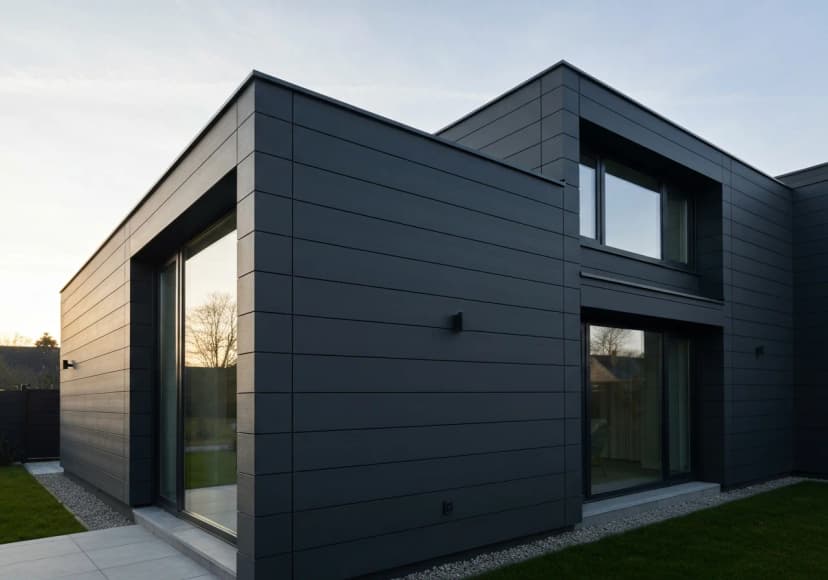
Siding profile selection — lap (horizontal), board-and-batten (vertical), shake (shingle-style), and panel each create a different architectural character
Mixed materials — combining two siding profiles (e.g., lap siding on main walls with board-and-batten on gable accents) adds visual depth and architectural interest
Color coordination — choose siding color to complement your roof, stone or brick elements, and front door; test large samples on the house in natural light
Trim proportions — wider trim boards around windows and doors create a more substantial, custom look; standard narrow trim is more economical but less distinctive
Reveal and exposure — the amount of siding visible between horizontal rows (the reveal or exposure) affects shadow lines and overall appearance
Regional style — Boise neighborhoods range from modern farmhouse to craftsman to contemporary; your siding choice should complement your home's architecture and neighborhood context
The materials and finishes you choose bring your design to life. Here are the options most commonly selected for siding installation projects in Eagle:
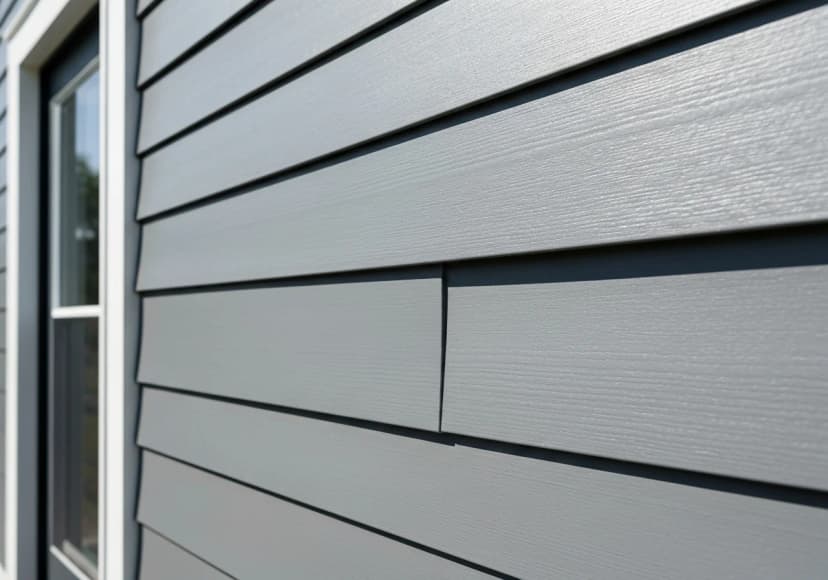
James Hardie HardiePlank Lap Siding
$10–$16 per sq ft installedHomeowners who want maximum durability, fire resistance, and long-term value
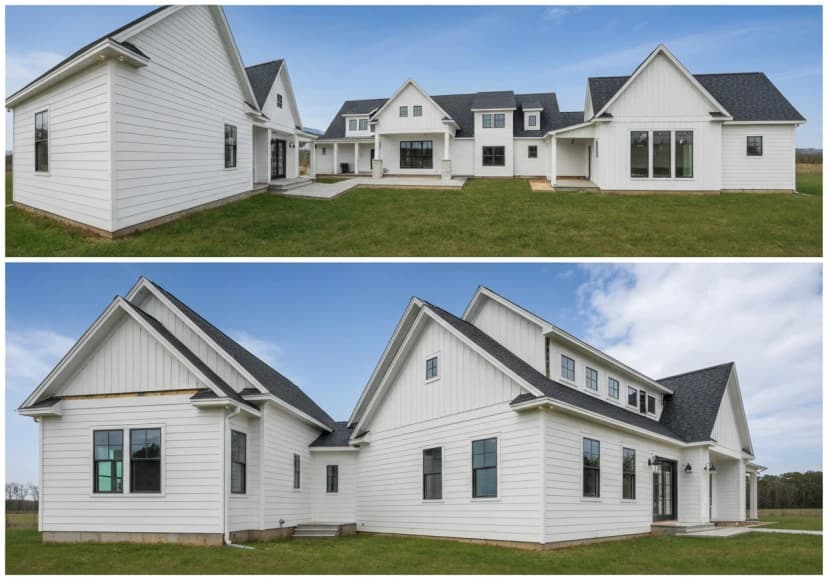
LP SmartSide Engineered Wood Siding
$8–$13 per sq ft installedHomeowners who want wood-grain appearance with engineered durability and lower cost than fiber cement
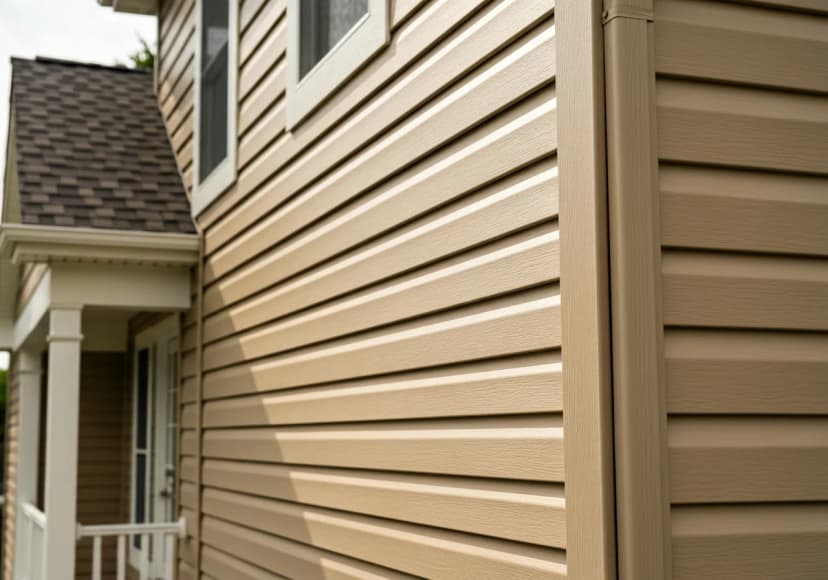
Vinyl Siding
$5–$10 per sq ft installedBudget-conscious projects, rental properties, and homeowners who want zero exterior painting maintenance
Weather-Resistive Barrier (House Wrap)
$0.50–$1.50 per sq ft installedRequired component beneath all siding installations for moisture and air management
PVC or Fiber Cement Trim
$4–$10 per linear foot installedAll exterior trim applications — especially in areas prone to moisture exposure
Learning from others' mistakes saves time and money. Here are the most common siding installation design pitfalls we see in Eagle:
Moisture intrusion behind siding causing rot and mold
We remove old siding, repair damaged sheathing and framing, install a proper weather-resistive barrier with correct lapping and sealing, and flash all openings to create a watertight exterior shell.
Fading, warping, or cracking in old vinyl or wood siding
We replace failed siding with modern materials rated for Idaho's UV and temperature extremes. Fiber cement and engineered wood hold their color and shape far longer than older vinyl or untreated wood.
Gaps and failed caulking allowing air and water infiltration
We install siding with manufacturer-specified gapping, use backer rod and premium caulk at all joints and penetrations, and ensure every seam and transition is properly sealed.
Woodpecker damage or pest intrusion in wood or foam-backed siding
We replace damaged sections and install fiber cement or other pest-resistant materials. James Hardie siding is immune to woodpecker damage, termites, and rot.
No weather barrier or inadequate flashing under existing siding
Many older Treasure Valley homes have siding installed directly over sheathing without house wrap or proper flashing. Our complete re-side includes a full weather barrier and flashing system as a standard component.
For siding installation projects in Eagle, you have two main approaches to the design process: hiring a separate interior designer then a contractor, or working with a design-build firm that handles both under one roof.
Design-build (our approach)
- ✓ Single point of contact
- ✓ Design informed by real construction costs
- ✓ Faster project delivery
- ✓ Budget aligned from day one
Separate designer + contractor
- ● More specialized design expertise
- ● Independent design perspective
- ● Requires coordination between parties
- ● Can result in budget surprises
Local factors — Eagle's housing stock and typical construction eras, the climate conditions that drive material and scheduling choices, and permitting through City of Eagle Building Department — are covered in full on our Eagle page for this service, alongside 5 common project types.
Siding Installation in Eagle: housing stock, climate & permits →Does siding replacement require a permit?
In most Treasure Valley jurisdictions, full siding replacement requires a building permit — especially if the project involves sheathing repair or weather barrier installation. We handle all permit applications and inspections.
Does new siding improve energy efficiency?
Yes. Removing old siding and installing a proper weather barrier and new siding reduces air infiltration. Adding rigid foam insulation behind the siding further improves R-value and energy efficiency — especially valuable in Boise's hot summers and cold winters.
Planning siding installation in Eagle?
Get expert guidance and a free estimate for your siding installation project in Eagle, ID.
Get Your Free Estimate